
Picture yourself floating weightlessly, not in outer space, but in a living galaxy of bizarre, glowing creatures. That’s the feeling at the heart of a black water dive in Kona. This isn't your average night dive on a reef; it's a surreal journey into the open ocean's "inner space."
Journey Into Kona’s Deep Ocean Frontier
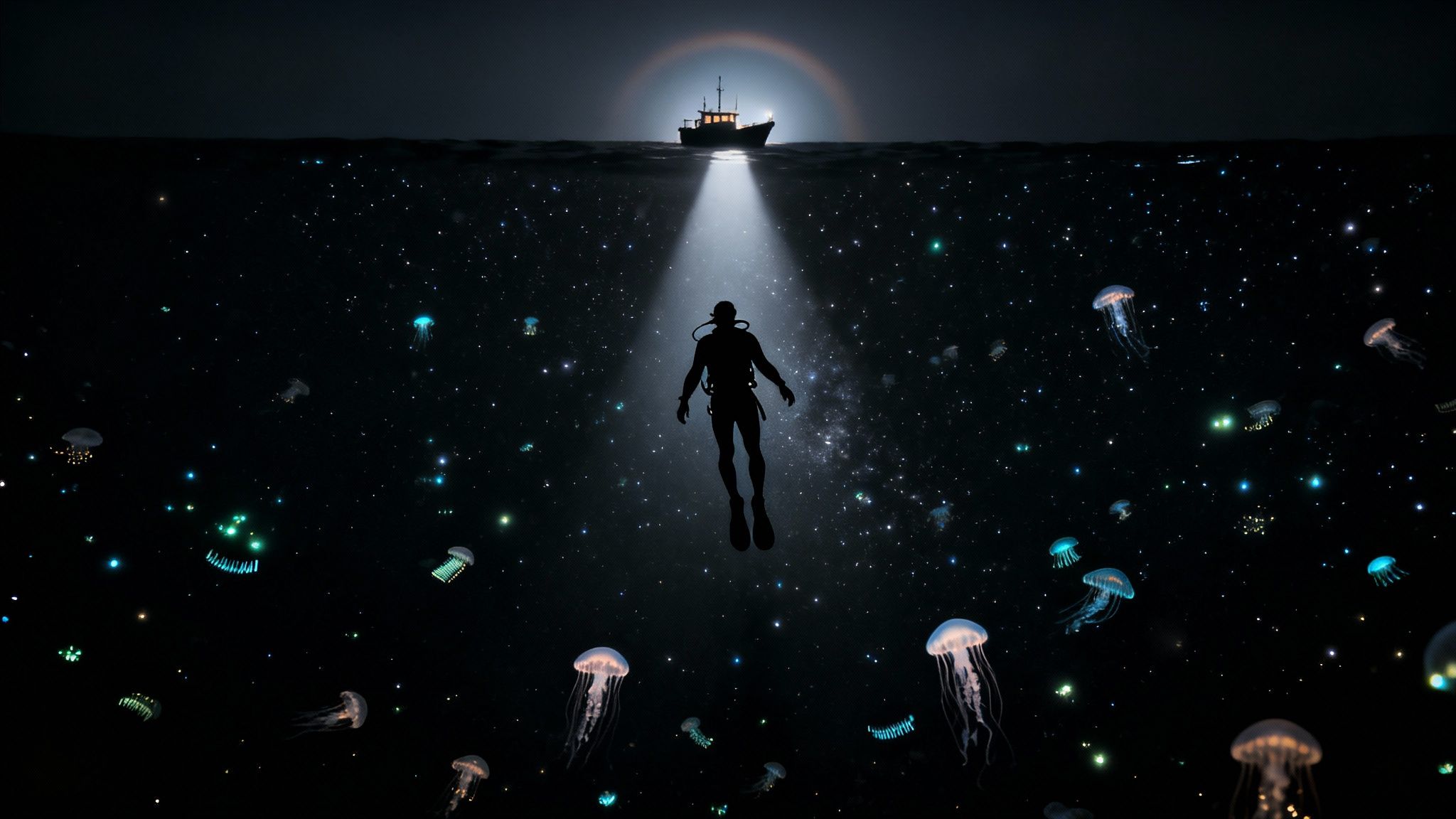
On this one-of-a-kind trip, we motor miles offshore where the ocean floor drops away to thousands of feet below. You’ll be suspended in the vast water column, a quiet observer of the planet's largest daily migration. As darkness falls, an incredible array of life rises from the abyss, and you get a front-row seat. It feels much more like a spacewalk than a scuba dive.
This guide will walk you through everything you need to know about this bucket-list adventure, a style of diving that was actually pioneered right here in Kona’s incredibly deep and accessible waters. We’ll break down why this experience, offered by expert crews like ours at Kona Honu Divers, is an absolute must for any certified diver hunting for the ultimate thrill.
A Dive Born in The Big Island's Abyss
The whole idea of blackwater diving started right here on the Big Island, and it didn't take long for Kona to become the world's go-to spot for this wild pelagic adventure. It’s what brings divers from every corner of the globe to witness the ocean’s nightly vertical migration.
It was pioneered in the waters just off the Kona coast, where the seafloor plummets to over 10,000 feet just a few miles from shore. We drift while tethered to the boat over abyssal depths of 3,000 to 8,000 feet. You can get some more great insights into this extreme Kona scuba dive and its origins over at Honolulu Magazine.
This dive reveals creatures that most people, including most divers, will never see. We’re talking about:
- Larval Fish: Tiny, often transparent, versions of familiar reef fish that look completely alien compared to their adult forms.
- Bioluminescent Jellies: Pulsing, otherworldly organisms that literally create their own light in the pitch-black water.
- Pelagic Cephalopods: Truly weird and wonderful squid and octopuses that spend their entire lives in the open ocean.
The experience is almost always described as floating through a living cosmos. The absolute darkness is punctuated by the ethereal glow of bioluminescence, turning the deep sea into a mesmerizing light show performed by creatures from another world.
Ready to take the plunge into this incredible underwater frontier? You can check out all the details on our Blackwater Dive tour page.
What Really Happens On A Black Water Dive
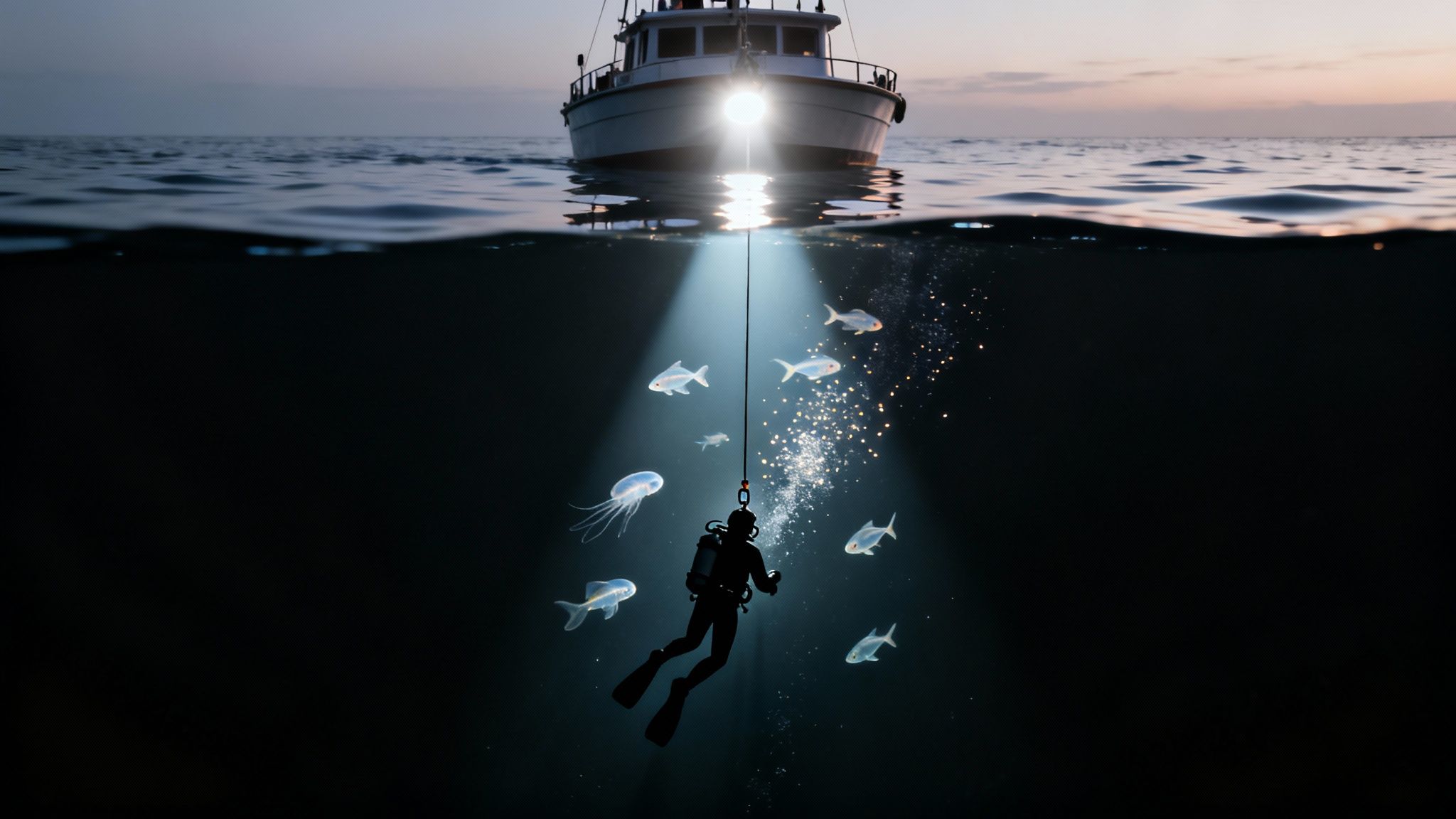
So, what is it about a black water dive in Kona that sets it so far apart from a typical night dive? It’s simple, really. You leave the reef—and every familiar landmark—far behind. This isn't just diving in the dark; it's diving in the deep, open ocean, a place most of us only ever fly over.
Instead of dropping down onto a familiar coral ledge, the boat motors a few miles offshore. The seabed isn't just out of sight; it's thousands of feet below you. You are, for all intents and purposes, floating in outer space. There’s no top, no bottom, no walls—just the deep, inky blue.
The Setup: Your Lifeline to Another World
Once we find the right spot, the crew sets up a weighted tether system that hangs vertically in the water, illuminated by a powerful down-light. You and the other divers will descend to a comfortable 40 to 50 feet and clip in. This tether is your home base, keeping everyone together and connected to the boat as you drift in the current.
More than just a safety line, the tether is your one and only reference point in a world that has none. It lets you completely relax, dial in your buoyancy, and focus on the incredible show that's about to unfold around you. The lights are the real magic-maker here, acting as a brilliant beacon in the abyss.
The light cuts through the darkness, creating an illuminated stage in the middle of the ocean. This beacon is the key to the entire experience, attracting the countless organisms participating in the largest migration on Earth.
This nightly event is called the Diel Vertical Migration. Every single night, a staggering amount of deep-water life—an almost unimaginable biomass—rises from the crushing depths to feed near the surface. You're positioned directly in their path, with a front-row seat to the greatest show on Earth.
Your Role: A Weightless Observer
Your job on a black water dive is beautifully simple: just float, watch, and try to process what you're seeing. There's no swimming from point A to point B. The action comes to you, drawn out of the darkness and into the light.
The focus shifts from the big, colorful reef fish to the tiny, the strange, and the utterly alien. You'll spend your time scanning the water column for nearly invisible creatures, many in their larval stages, that you would never see during the day. It’s a dive that rewards patience and a keen eye with sights that feel like they're from another planet.
To put it in perspective, let’s look at how this dive stacks up against a more traditional night dive.
Black Water Dive vs. Traditional Night Dive
| Feature | Black Water Dive | Traditional Reef Night Dive |
|---|---|---|
| Location | Miles offshore, over thousands of feet of water | Close to shore, over a coral reef or sandy bottom |
| Environment | Open water column (pelagic) with no references | Structured environment with reef, rocks, and sand |
| Objective | Observe the vertical migration of pelagic life | Explore the reef and see nocturnal creatures |
| Movement | Drifting passively while tethered to the boat | Actively swimming and navigating along the reef |
| Primary Life | Larval creatures, jellyfish, squid, and bioluminescence | Eels, octopus, sleeping fish, crustaceans |
As you can see, it’s a completely different world. A black water dive fundamentally redefines what scuba diving can be, trading the familiar reef for the mysterious and awe-inspiring deep.
Ready to experience this otherworldly adventure for yourself? Learn more and book your spot on our Blackwater Dive tour page.
Meeting The Creatures Of The Deep
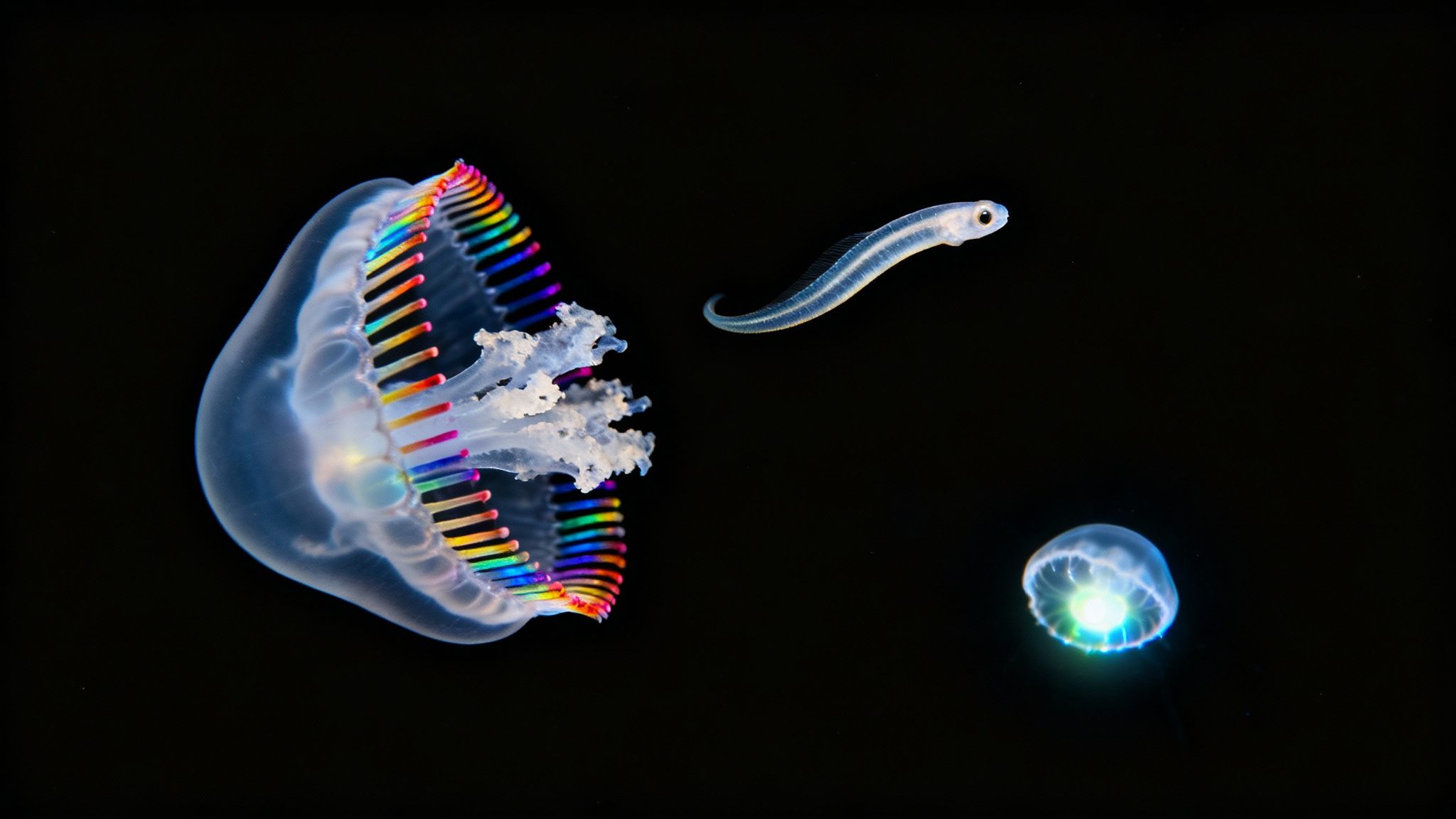
The true magic of a black water dive in Kona isn't about one big animal encounter. It’s about the endless stream of tiny, otherworldly beings that materialize right out of the darkness. You have to forget everything you know about typical reef fish. The life you’ll meet out here is bizarre, mesmerizing, and looks like it was dreamed up for a sci-fi movie.
This dive completely shifts your focus from the familiar to the fantastic. Our powerful down-lights act like a cosmic beacon, pulling in an incredible cast of characters from the deep.
The Living Constellations
A huge part of the spectacle comes from the sheer number of organisms that create their own light. This phenomenon, bioluminescence, turns the inky blackness into a living starfield. You’ll find yourself surrounded by pulsing jellyfish and shimmering ctenophores—also known as comb jellies—that drift past like tiny, living rainbows.
According to research by scientist Steven Haddock, an incredible 76 percent of the creatures found in the deep sea produce their own light. This creates a mesmerizing "nighttime snowstorm" effect that’s almost impossible to describe. To get another perspective on this, check out Honolulu Magazine's article about what makes this dive so unique.
The experience is less like watching an ecosystem and more like floating through a living galaxy. Every flicker and flash in the darkness is a life form, turning the void into an ever-shifting display of natural light.
The sheer variety is staggering. From single-celled organisms to complex jellies, the light show is constant, unpredictable, and completely captivating. It’s an underwater safari where every single moment reveals something new.
A Nursery Of The Strange
Many of the creatures you'll see are in their larval or juvenile stages, hitching a ride on the nightly vertical migration. This is one of the most fascinating parts of a black water dive, because these baby animals often look nothing like their adult selves.
You might see the larval stage of a lobster, which looks more like a delicate, transparent spider, or a baby flounder that's perfectly symmetrical before one eye migrates over to the other side of its head.
Here’s a taste of the "larval aliens" you might meet:
- Eel Larva: Called leptocephalus, these are completely see-through, ribbon-like creatures that undulate gracefully through the water column.
- Spiny Fish Larva: Many reef fish start out with ornate, defensive spines that make them look like miniature, otherworldly dragons.
- Octopus and Squid Paralarvae: These are impossibly tiny versions of their parents, often no bigger than your fingernail, complete with miniature tentacles and huge, curious eyes.
Seeing these critters gives us a rare window into the secret life cycle of the animals that call Hawaii's reefs home. It's a powerful reminder of the vast, hidden world just beyond the shore that plays a critical role in the health of the entire ocean.
Otherworldly Cephalopods And Pelagic Oddities
Beyond the larval forms, you’ll also meet animals that spend their entire lives in the open ocean. Keep your eyes peeled for pelagic cephalopods darting in and out of the light beam. Squads of small squid are a common sight, hunting smaller organisms attracted to the light, their bodies flashing with shifting colors.
If you get really lucky, you might even spot a pelagic octopus, like the beautiful and rarely seen blanket octopus or the glassy, translucent Wunderpus. These are holy-grail encounters for underwater photographers and marine life nerds. The unpredictable nature of the black water dive in Kona is what makes it so addictive—you just never know what marvel the deep will reveal next.
Ready to meet these creatures for yourself?
Your Dive Experience With Kona Honu Divers
There’s nothing quite like a black water dive in Kona, and knowing what to expect can help you soak in every incredible moment. We've fine-tuned our trips to be safe, comfortable, and absolutely mind-blowing, from the moment you step on the boat until you’re back at the dock, buzzing with excitement.
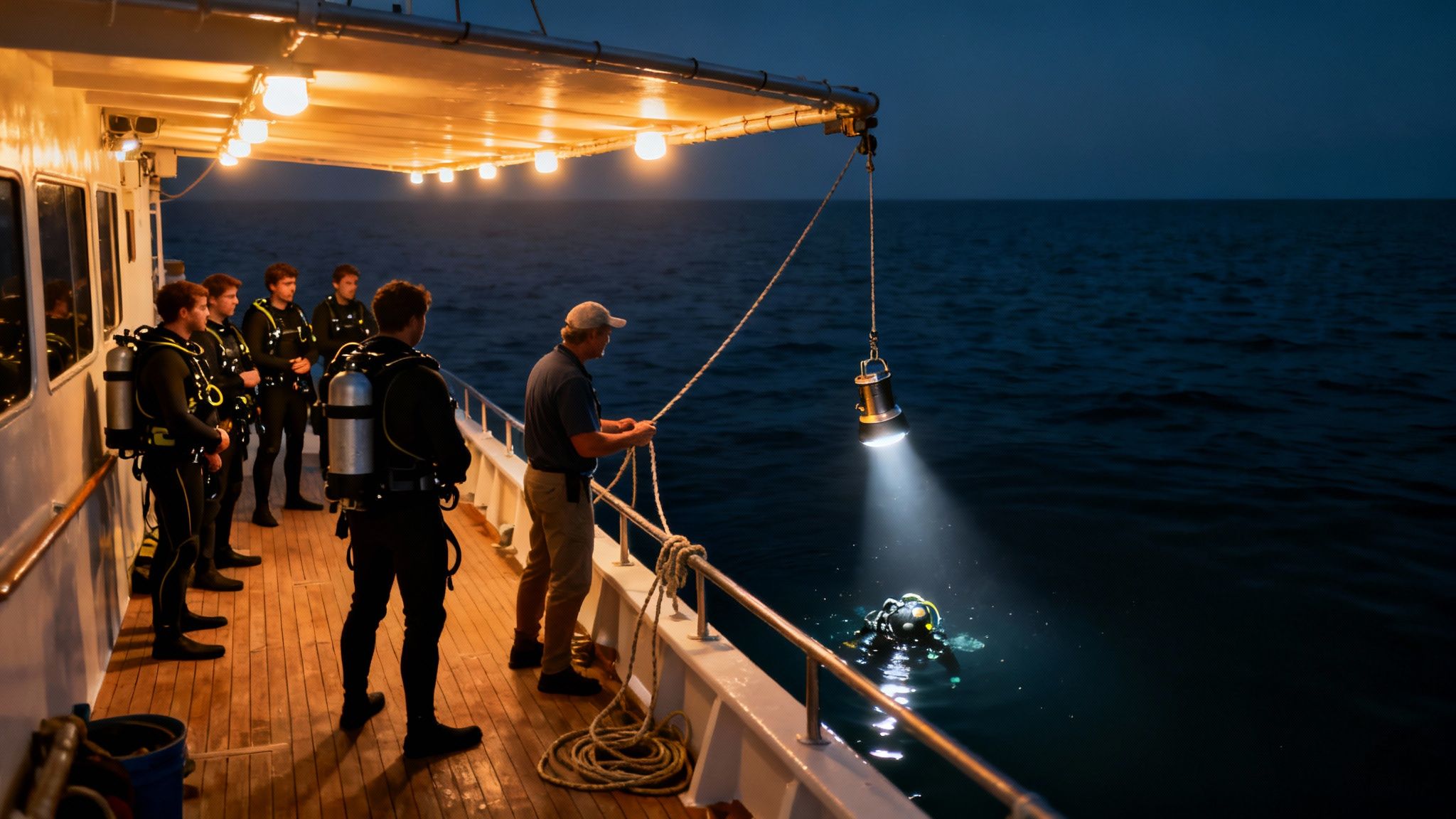
Your adventure starts on the dock with a thorough pre-dive briefing. Our crew lives and breathes this stuff, and they’ll walk you through the whole plan. We’ll cover all the safety procedures, show you how the specialized tether system works, and get you fired up about the strange and beautiful creatures you’re about to meet. This is your chance to ask anything and everything—a confident diver is a happy diver.
The Journey To Inner Space
Once the briefing's done, we'll head out on a comfortable ride, motoring a few miles offshore as the sun dips below the horizon. We're heading for a spot where the ocean floor is thousands of feet down, right over the prime real estate for the nightly Diel Vertical Migration.
As we arrive on site, the crew gets to work deploying our custom tether system. It's a series of weighted lines and lights that hang down into the dark, creating a drifting lifeline for our dive. It’s a well-oiled process, and we make sure everything is stable and secure before anyone even thinks about getting in the water.
When we give the green light, it’s time to go. You and your guide will descend into the inky blackness to about 40-50 feet, where you’ll clip your personal tether to the main downline. Once you're connected, it’s all about relaxing, dialing in your buoyancy, and letting the gentle current guide you through the void.
The feeling is hard to describe. You're just suspended there, weightless, with no sense of a top or bottom. It's like being an astronaut exploring a brand-new galaxy, with the soft glow of the lights and your guide as your only anchors to reality.
A Personalized Pelagic Safari
We are absolutely committed to keeping our groups small. That's why we take a maximum of only six divers on our black water dive kona charters.
This isn't just about comfort; it's about giving you the best, safest experience possible. A small group allows our guides—who have an uncanny ability to spot tiny, nearly invisible critters—to give you their full attention. They'll point out see-through larval fish, glowing jellies, and bizarre octopuses you’d never spot on your own. If you’re curious about our other trips, you can learn more about how we dive the Big Island of Hawaii.
After 60 to 80 minutes of exploring this alien world, your guide will signal for the ascent. We'll head up slowly and safely back to the boat, where a hot freshwater shower and warm snacks are waiting for you. It's the perfect way to warm up and share stories about the incredible things you just saw. We handle all the details so you can just focus on the adventure.
Ready for an adventure like no other?
How To Prepare For Your Pelagic Magic Dive
A black water dive in Kona is a truly advanced dive, and showing up prepared is the secret to having a safe, comfortable, and absolutely mind-blowing experience. This is a world away from a casual reef tour; it’s a genuine open-ocean adventure that demands a specific skill set and mindset.
There’s a good reason operators are strict about prerequisites. You’ll need an Advanced Open Water certification and a minimum of 50 logged dives. These aren’t arbitrary numbers—they exist to make sure every diver has the experience to safely handle this unique environment.
Mastering Your Buoyancy in the Void
When it comes to black water diving, excellent buoyancy control is completely non-negotiable. Imagine floating in a dark, bottomless world with zero visual references like a reef or the seafloor. Your ability to hang perfectly neutral in the water column becomes your single most important skill. You have to be able to hover effortlessly, making tiny adjustments without even thinking about it.
This skill is crucial for a few big reasons:
- Safety: It keeps you from drifting up or down, away from the tether system and the group.
- Enjoyment: When you aren’t struggling to stay level, you can relax and focus all your attention on the incredible creatures materializing from the darkness.
- Photography: Rock-steady buoyancy is the foundation of any good underwater shot, especially when your subjects are tiny and always on the move.
If you feel your skills are a bit rusty, the best way to prepare is simply to get in the water. Consider joining one of our advanced dive tours to get comfortable with Kona's conditions and dial in your buoyancy before taking on the black water challenge.
Recommended Gear and Certifications
Beyond the basics, a few extra things can make a huge difference. We strongly recommend diving with Enriched Air Nitrox. That higher percentage of oxygen helps extend your allowable bottom time and can even reduce fatigue, which keeps you sharper and more engaged throughout the dive. As a bonus, we provide Nitrox for free on this dive to all certified divers.
Feeling completely at home with your gear and diving at night is also key. You should know your equipment so well that you can operate it by feel. If you're wondering what to pack, take a look at our guide on the gear you will need for your Kona diving adventure.
The prep for a black water dive is as much mental as it is physical. The goal is to be so comfortable with your skills and gear that you can fully immerse yourself in the surreal, meditative experience of floating in inner space.
The pioneering methods first developed right here in Kona are now the global standard. Visual surveys conducted by NOAA off our coast from 2013-2015 set the stage for black water exploration in places like Japan, Palau, and the Philippines. Organizations like PADI even recognize that Kona’s deep offshore waters, which plunge to over 10,000 feet, provide the perfect, reliable arena that gave birth to this unique style of diving.
Tips for Underwater Photographers
For photographers, the black water dive in Kona is one of the most fascinating and rewarding challenges out there. You’re trying to capture tiny, fast-moving, and often translucent subjects against a pure black background. Getting the shot requires a specific setup.
A macro lens is absolutely essential to capture the alien-like details of these creatures. You’ll also want a fast shutter speed to freeze their motion and a good set of powerful strobes to light them up properly.
Ready to book this bucket-list dive?
Why Kona Is The World’s Black Water Capital
Divers fly in from all over the world for a black water dive in Kona, and for one simple reason: it's the best place on Earth to do it. The secret is hiding in plain sight—Kona's unique underwater geography.
The Big Island's volcanic slopes don't just stop at the shoreline; they plummet dramatically into the deep. This means we can get to incredibly deep water just a few miles offshore. You spend less time on the boat and more time hovering in the abyss, which is a massive advantage over other spots where you'd have a long, bumpy ride to get to the good stuff.
Ideal Conditions for an Otherworldly Dive
On top of that, we're on the calm, leeward side of the island. This gives us consistently great conditions, making the whole experience reliable and way more comfortable than battling rough seas. It's this perfect storm of deep, close water and calm seas that sets the stage for the planet's largest nightly migration. You can learn more about what makes the Big Island a world-class diving destination in our guide to scuba in Hawaii.
Kona isn't just a place to do a black water dive; it's the place where the dive was perfected. The predictable conditions and unique underwater topography create a reliable spectacle that is simply unmatched anywhere else in the world.
When you book this bucket-list dive with a top-tier operator like Kona Honu Divers, you’re not just going for a swim in the dark. You are witnessing a profound natural marvel in the very place it became a legendary underwater adventure. We invite you to see all of Kona's amazing underwater opportunities on our diving tours page.
Ready to see why Kona holds the crown?
Your Questions About Black Water Diving, Answered
Even if you’ve been diving for years, the thought of floating in the deep, dark ocean miles from shore can bring up a few questions. That’s completely normal. We’ve put together answers to some of the most common queries we get so you can feel totally prepared for your black water dive in Kona.
Getting the details sorted out ahead of time means you can just relax and soak in the magic of the experience once you're on the boat.
Is The Black Water Dive Safe?
Yes, absolutely. Safety is our number one priority, and the entire trip is built around a system designed specifically for this unique open-ocean environment. It's not something we take lightly.
We use a specialized tether system that keeps every diver connected to the boat while we drift. This line acts as your constant point of reference in the dark, so you always know where you are in relation to the vessel. You're never just floating out there on your own.
Plus, our expert guides are in the water with you the whole time, keeping a close eye on everything and pointing out all the cool creatures. We keep our groups small for a reason—it ensures everyone gets personal attention, making this one of the most well-supervised advanced dives you can find. Kona Honu Divers has a perfect safety record on these trips.
What Certification Do I Need For This Dive?
To join us on a black water dive, you'll need to be an Advanced Open Water certified diver with at least 50 logged dives. These aren't just arbitrary numbers; they’re in place for your safety and to make sure you have a great time.
This dive requires top-notch buoyancy control. Without a reef or a sandy bottom to orient yourself, you need to be completely comfortable managing your position in the water column. These prerequisites ensure that everyone on the trip has the skill to drift calmly, allowing the whole group to focus on the incredible marine life instead of fiddling with gear.
If you’re not quite there yet but want to build your skills, consider joining our advanced dive tour to get more experience under your belt.
Will I See Sharks?
It’s the open ocean, so anything is possible, but seeing sharks on a black water dive is extremely rare. This dive is all about the little guys—the tiny, strange, and beautiful creatures that rise from the depths each night.
Our powerful lights attract plankton and the small critters that feed on them, not big predators. On the very rare occasion a pelagic shark cruises by, they're usually just passing through and show little interest in the divers.
What Should I Bring?
Good news: packing is easy! We provide all the specialized dive gear you need.
Just remember to bring these few things:
- Your certification card and logbook.
- A towel for after the dive.
- A warm jacket or hoodie for the boat ride home—it can get chilly!
We’ll handle the rest, from tanks and weights to the high-powered dive light you'll need to spot the ocean's hidden gems.
Ready to witness the planet's largest migration for yourself? Book your unforgettable black water dive in Kona with Kona Honu Divers and see what comes up from the deep.