
Picture yourself floating in deep space, surrounded by a constellation of strange, glowing stars. Now, imagine that same feeling, but you're suspended in the warm, dark ocean off Hawaii’s Kona coast. That's the heart of a black water dive—a truly unique night dive where you hang safely over thousands of feet of water, watching a secret world of bizarre, bioluminescent creatures rise from the abyss.
What Exactly Is a Black Water Dive in Hawaii
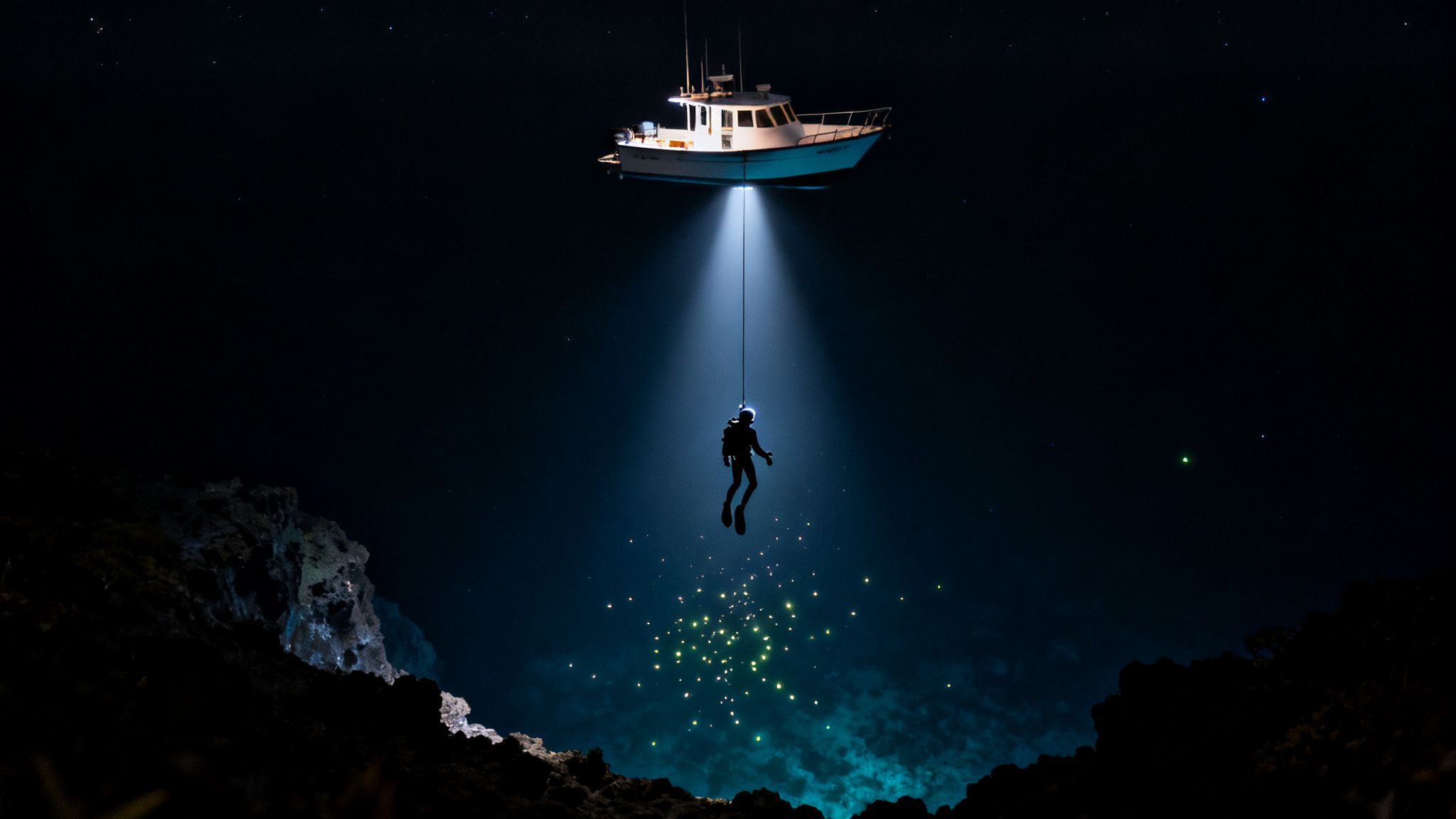
This isn't your standard night dive along a coral reef. Instead of swimming over familiar terrain, you motor miles offshore where the seafloor drops away to 5,000 feet or more. Here, you become a silent witness to the largest migration on Earth, an event that happens every single night, unseen by the world above.
This nightly pilgrimage is called diurnal vertical migration. As darkness falls, countless zooplankton and other deep-sea organisms ascend from the crushing pressure of the depths. They travel hundreds or even thousands of feet toward the surface to feed, then retreat back down before sunrise. Many of these creatures are in their larval stages—tiny, translucent, and often utterly alien-like versions of the animals they’ll one day become.
A Dive in Open-Ocean "Space"
The whole experience is unlike any other scuba dive you've done. The boat crew sets up a weighted tether system with powerful down-lights, which hangs vertically in the water. As a diver, you simply clip onto this tether and descend to a comfortable depth, usually around 40-50 feet.
The lights are key to the whole operation. They serve two crucial purposes:
- An Underwater Stage: They create a brightly lit arena in the immense darkness, attracting the weird and wonderful migrating creatures right to you.
- A Safety Beacon: The lights provide a constant visual anchor in the open ocean, keeping the group together and oriented with the boat above.
You’re not swimming around exploring a reef; you're just hovering in the blue, an observer in a vast, three-dimensional world. It’s less about propulsion and more about being perfectly still, waiting for the ocean to reveal its deepest secrets.
A black water dive in Hawaii is often described as a journey into one of Earth's last true frontiers. You’ll encounter animals that spend their entire lives in the open ocean, far from any reef—many of which are rarely, if ever, seen by human eyes.
How It Differs From a Reef Night Dive
It's easy to assume a black water dive is just another night dive, but they couldn't be more different. The only thing they really share is the time of day.
To put it in perspective, here's a quick breakdown:
Black Water Dive vs Traditional Night Dive
| Feature | Kona Black Water Dive | Traditional Reef Night Dive |
|---|---|---|
| Location | Miles offshore over deep, open ocean | Close to shore, over a shallow reef |
| Environment | Mid-water column (pelagic zone) | Bottom-oriented along the reef structure |
| Depth | Suspended at a set depth (e.g., 40-50 ft) | Varies as you explore reef topography |
| Marine Life | Strange, translucent, bioluminescent plankton | Familiar reef creatures (eels, octopus, crabs) |
| The "Feel" | Like floating in outer space | Like exploring a familiar neighborhood at night |
| Movement | Minimal; stay stationary on a tether | Actively swimming and navigating |
A traditional night dive is about rediscovering a familiar place in a new light, watching as sleeping parrotfish and hunting moray eels take center stage. A black water dive, on the other hand, is pure, unadulterated exploration into a world you never knew existed.
Kona Honu Divers has perfected this incredible adventure, blending impeccable safety with a mind-blowing encounter with the ocean's hidden mysteries. You can learn more about it on the official Black Water Dive tour page.
But don't just take our word for it—see what fellow divers have said about this one-of-a-kind experience.
From Scientific Research to an Unforgettable Adventure
Believe it or not, blackwater diving in Hawaii didn't start as a bucket-list thrill for adventurous divers. Its story is rooted in marine science, beginning as a specialized research method long before anyone thought of it as the incredible experience it is today. It’s a fascinating origin story, one that blends scientific curiosity, artistic vision, and a little bit of geographic luck.
It all started with a simple problem: how do you study the tiny, fragile, and often gelatinous creatures of the deep ocean without destroying them in a net? Researchers needed a way to observe the massive nightly vertical migration in its natural environment, and so the seeds of blackwater diving were planted.
From the Lens of a Pioneer
The leap from a scientific tool to a must-do dive really took off in the 1980s. This was thanks to the work of a few daring underwater photographers who were willing to venture out into the deep, dark waters off Hawaii's coasts to capture the surreal beauty of this hidden world.
Artists like Christopher Newbert were among the very first. His landmark 1984 book, Within a Rainbowed Sea, revealed some of the first widely seen images of this pelagic realm. His photos of bizarre larval creatures and glowing drifters floating against an infinite black backdrop sparked a fascination in the dive community like never before. People were seeing a universe they never knew existed, and they wanted in.
This evolution from a highly specialized scientific technique to a sought-after recreational dive is a testament to human curiosity and the desire to explore the unknown. It turned a research method into a profound personal experience.
Kona: The Perfect Cradle for Exploration
So, why Kona? What makes this spot on the Big Island the global epicenter for blackwater diving? The answer is all about the incredible underwater geography. The coastline here features dramatic, almost immediate drop-offs, with the ocean floor plunging to depths of 5,000 to 10,000 feet just a few miles from shore.
This unique topography means the deep, open ocean—the natural habitat for all these migrating creatures—is remarkably accessible. Throw in Kona's typically calm and warm sea conditions, and you have the perfect natural laboratory for what we now know as the black water dive Hawaii experience.
By the 1990s, innovative local operators began figuring out how to adapt this for recreational divers. They started experimenting, lowering powerful floodlights into the darkness to attract the ascending marine life and create a "stage" in the vast emptiness. For many, this is exactly what adventure tourism is all about—a perfect blend of scientific wonder and pure thrill.
Perfecting the Adventure with Kona Honu Divers
Over the following years, this once-experimental dive was refined into the safe, accessible, and utterly awe-inspiring adventure we know today. Much of that is thanks to the meticulous efforts of expert operators like our team here at Kona Honu Divers.
We helped develop and perfect the sophisticated tether systems, high-powered lighting rigs, and strict safety protocols that have become industry standards. While the dive's origins trace back to scientific studies in the 1960s, it was the passion of photographers and the innovation of Kona's dive community in the 2000s that truly transformed it. You can read more about its history and see how it became a global phenomenon.
Through this dedication, an extreme activity was made safe for certified divers from all over the world, cementing Kona's status as the home of blackwater diving. You can experience this incredible history for yourself on a Blackwater Dive tour with the team that helped pioneer it.
The Strange and Wonderful Creatures You Might See
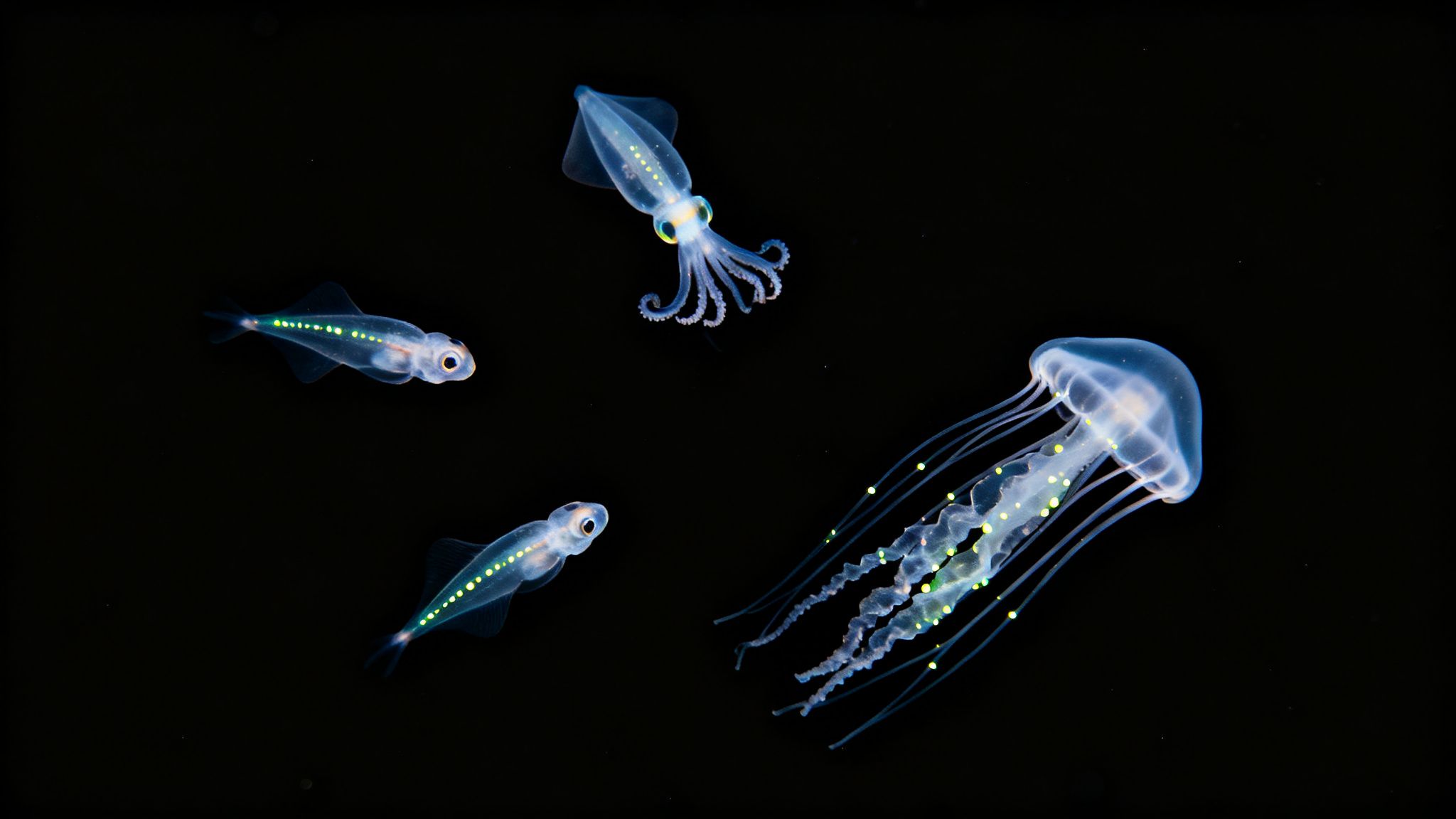
Forget everything you think you know about reef fish. A black water dive in Hawaii isn't about spotting familiar critters—it's more like a treasure hunt for aliens from another dimension. This is where you meet the true inhabitants of the deep, open ocean. They're animals that look nothing like their adult selves, often sporting otherworldly features like total transparency or the ability to glow in the dark.
The cast of characters you can encounter is genuinely astonishing. Most of what you'll see are organisms in their larval or juvenile stages, just drifting along in the water column as they grow. They are tiny, often see-through, and absolutely captivating. For many of these animals, a black water dive is the only way a human will ever see them in their natural, mid-ocean habitat.
The Gelatinous Drifters
A huge portion of the life you’ll find is gelatinous and almost hypnotic to watch. These creatures drift elegantly through the darkness, pulsing and glowing as they hunt for even smaller prey. Just how common are they? Research off the Kona coast confirmed that three groups—salps, siphonophores, and ctenophores—made up an incredible 59% of all organisms counted. You can discover more about these findings from NOAA's research.
- Siphonophores: These aren't single animals but colonies of tiny individuals all working together as one. They often form long, stringy chains that drift like a ghostly spinal column. The Portuguese man o' war is a well-known (and much bigger) example of a siphonophore.
- Jellyfish: You'll spot all sorts of true jellyfish, from tiny pulsing bells to more complex forms with long, trailing tentacles. Their rhythmic movement is mesmerizing in the beam of a dive light.
- Ctenophores (Comb Jellies): Not actually jellyfish, ctenophores are famous for the shimmering, rainbow-like patterns that ripple down their bodies. This isn't bioluminescence; it's the light refracting off the tiny hairs, or cilia, they use to swim.
The Larval Mysteries
One of the most thrilling parts of a black water dive is spotting the larval forms of animals you might already know. The catch is that these infant stages look so wildly different from their parents that you'd never guess what they are. They are nature’s little masterpieces, perfectly designed for life adrift in the vast ocean.
Floating in the dark, watching these tiny, intricate creatures drift by is a profoundly humbling experience. It’s a glimpse into the very beginning of life for many marine species and a reminder of how much of the ocean remains a mystery.
Some of the most common larval sightings include:
- Larval Fish: Many reef fish, like flounders and eels, start their lives as bizarre, transparent miniatures. You might even see a larval flounder with its eyes still on opposite sides of its head before one migrates over to the other side.
- Cephalopods: Finding a tiny, nearly transparent octopus or squid—sometimes no bigger than your thumbnail—is a highlight for any diver. If you're really lucky, the rare and coveted blanket octopus or paper nautilus might make an appearance.
Bioluminescence: The Language of the Dark
Many of the creatures you'll see have an incredible superpower: bioluminescence. It's the ability to produce their own light through a simple chemical reaction. Out here in the total blackness of the deep, light is the primary form of communication.
These animals use their internal glow for a few critical reasons:
- Attracting Prey: Some use a glowing lure to attract smaller organisms, just like a deep-sea anglerfish.
- Defense: A sudden, bright flash of light can startle a predator, giving the animal a split second to escape.
- Camouflage: On the other hand, some use a soft glow to match the faint light filtering down from the surface, hiding their silhouette from predators lurking below.
- Communication: Specific flashes and patterns can be used to find a mate or signal to others of their kind.
Seeing these intricate light shows with your own eyes is one of the most magical parts of a black water dive in Hawaii. The experience connects you to a hidden, vibrant ecosystem that comes alive every single night, just a few miles from shore. If you're interested in the unique creatures found around the Big Island, you might also enjoy our article on endemic marine animals in Hawaii.
What to Expect on Your Dive with Kona Honu Divers
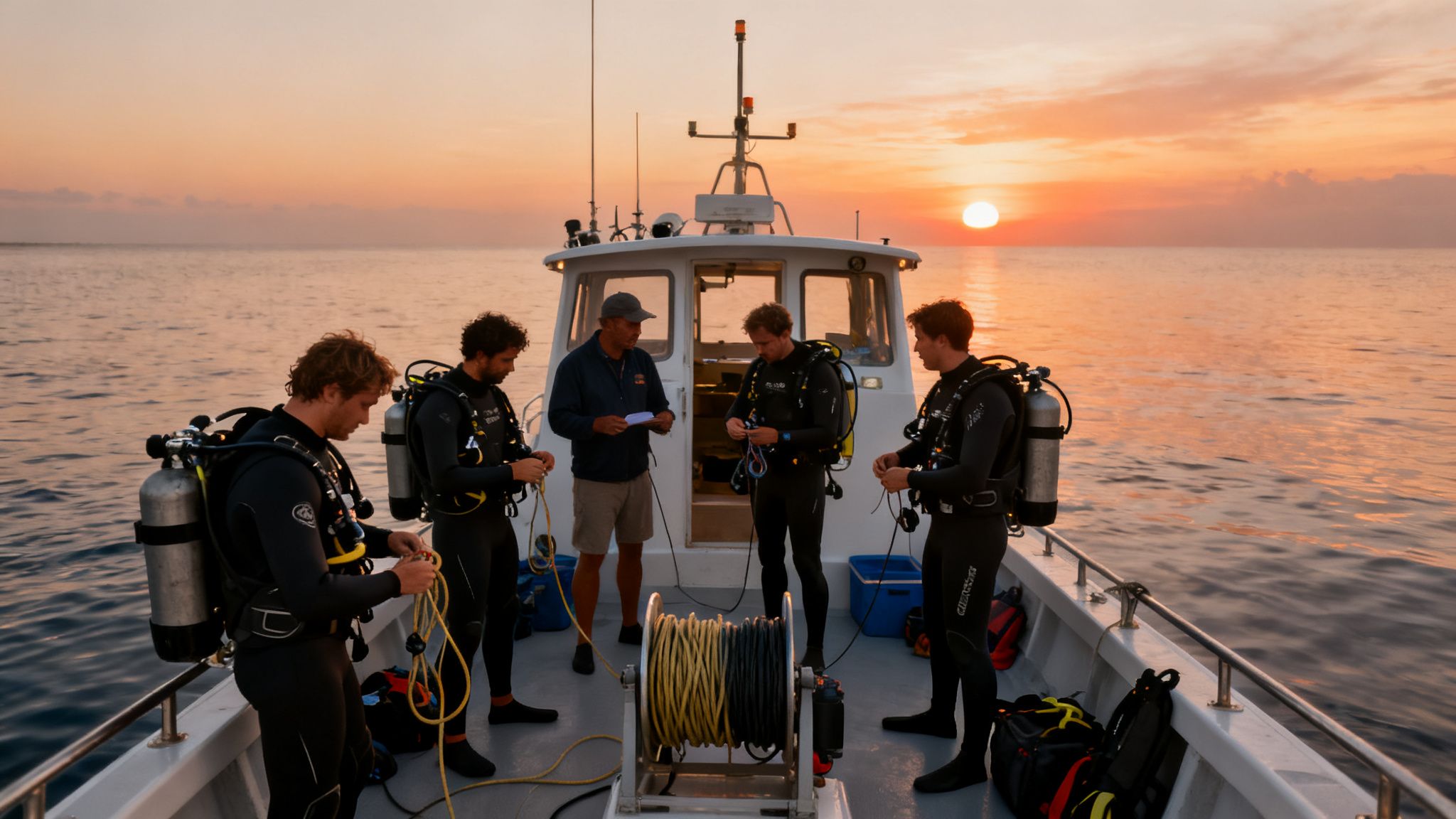
Knowing what happens on a black water dive in Hawaii helps swap any pre-dive jitters with pure excitement. At Kona Honu Divers, we've structured the entire adventure around your safety and comfort so you can fully soak in this unbelievable encounter with the deep ocean. We want you to feel prepared, confident, and ready for the magic.
Your trip starts at the dock while the sun is still up. Once you step onto our spacious, well-kept boat, you’ll meet our crew. These folks aren't just divemasters; they are passionate black water specialists who live and breathe this unique environment.
The Pre-Dive Briefing and Sunset Journey
As we head out over the deep blue, the crew gives a thorough pre-dive briefing. This is much more than your standard reef dive talk—it’s the key to making sure you have a safe and incredible time.
Here’s a taste of what we cover:
- Specialized Gear: We’ll walk you through how the powerful down-lights work and explain the robust tether system that will be your home base in the water.
- Tether System Protocol: You’ll get a hands-on feel for how to clip in and out of the tether lines. This system keeps everyone comfortably connected to the group and the boat, so there's zero chance of drifting off in the dark.
- Safety Procedures: We go over everything—how to enter and exit the water, what communication signals to use, and what to do if you ever feel disoriented. Our small group sizes mean everyone gets personal attention.
The sense of anticipation really starts to build as the sun melts into the horizon, lighting up the Kona sky with incredible colors. That sunset trip out to the dive site is a magical part of the experience, giving you a perfect moment of calm before the main event.
Descending into the Spotlight
Once we’re miles offshore, the crew gets to work deploying the lighting rig. This whole setup hangs right below the boat, creating a huge, illuminated column of water that acts as your stage for the night. Those powerful lights are what draw the strange and wonderful creatures up from the abyss.
You'll get in the water and descend along the line to a planned depth, typically around 40 to 50 feet. Once you clip your personal tether onto the main line, your only job is to relax, stay neutrally buoyant, and just watch. It's a feeling of floating weightlessly in outer space, a silent observer in another universe.
Your expert guide is right there in the water with you, using their trained eye to spot the ocean’s hidden gems. They’re amazing at pointing out the tiny, often see-through creatures you might otherwise miss.
This dive is a full sensory immersion. There's no reef to navigate, no bottom to worry about. It’s just you, the deep, and a galaxy of bizarre and beautiful life drifting by in the light. This whole meticulous process ensures a dive that sounds extreme is actually executed with the highest safety standards. For a closer look at the specifics, you can check out the Kona Honu Divers' Black Water Dive tour page.
Is a Black Water Dive the Right Adventure for You?
A black water dive in Hawaii is one of the most mind-blowing experiences you can have underwater, but let's be honest—it’s not for everyone. And that’s completely fine. Figuring out if this unique adventure fits your skills and comfort level is the key to having an incredible, and safe, time in the water.
This isn’t a dive that tests your physical strength. Instead, it challenges your mental calm and your ability to control your buoyancy with precision. While the ocean floor is thousands of feet below, you’ll be hovering at a relatively shallow depth, usually around 40 feet. The real test is the environment itself: you're suspended in a vast, dark, open ocean with absolutely no visible bottom or reference points.
Mental Readiness and Comfort in the Dark
The single most important requirement for a black water dive is being completely at ease in the water at night, far from the familiar security of a reef. Think of it as a spacewalk. It’s all about your ability to stay relaxed and focused while floating in a void. Our powerful lights cut a bright oasis in the water, but you’re always aware of the immense blackness just beyond their reach.
Ask yourself these questions honestly:
- Do you get anxious in open water or complete darkness?
- Can you keep your breathing slow and steady when things feel a little disorienting?
- Are you able to trust the tether system and your dive guide to keep you secure?
Your comfort is everything. A black water dive should be a thrilling peek into another world, not a source of terror.
Recommended Experience and Certifications
While there’s no official "black water diver" card, any reputable operator, including us at Kona Honu Divers, has clear prerequisites to make sure you’re ready for the challenge. You absolutely must have your fundamental dive skills dialed in.
Here’s what we generally look for:
- Advanced Open Water Certification: This is a great starting point, as it typically includes experience with both night and deep diving, which helps build the necessary confidence.
- Excellent Buoyancy Control: This is non-negotiable. You have to be able to hover effortlessly in mid-water without sinking or floating up. Your job is to be a stable, neutral platform for observation.
- Significant Dive Experience: We recommend divers have at least 50 logged dives. That time in the water builds the muscle memory and calm demeanor needed to handle a completely new and alien environment.
If you’re not quite there yet, this dive makes a fantastic goal to work toward! A great way to build your skills and confidence is on our premium advanced 2-tank trip, where you can really sharpen those abilities.
The psychological element of floating over thousands of feet of water cannot be overstated. The key is to trust your gear, your training, and your guide. Focus on your breathing, stay near the tether line, and just let the ocean's wonders reveal themselves to you.
Ultimately, your safety and enjoyment are what matter most. We keep our groups small and follow strict safety protocols to make this extraordinary adventure as secure as possible. And if you decide this dive isn’t for you right now, no problem! We have plenty of other incredible diving tours in Kona that show off the spectacular beauty of Hawaii's reefs, both day and night.
How to Photograph Kona’s Deep Sea Wonders
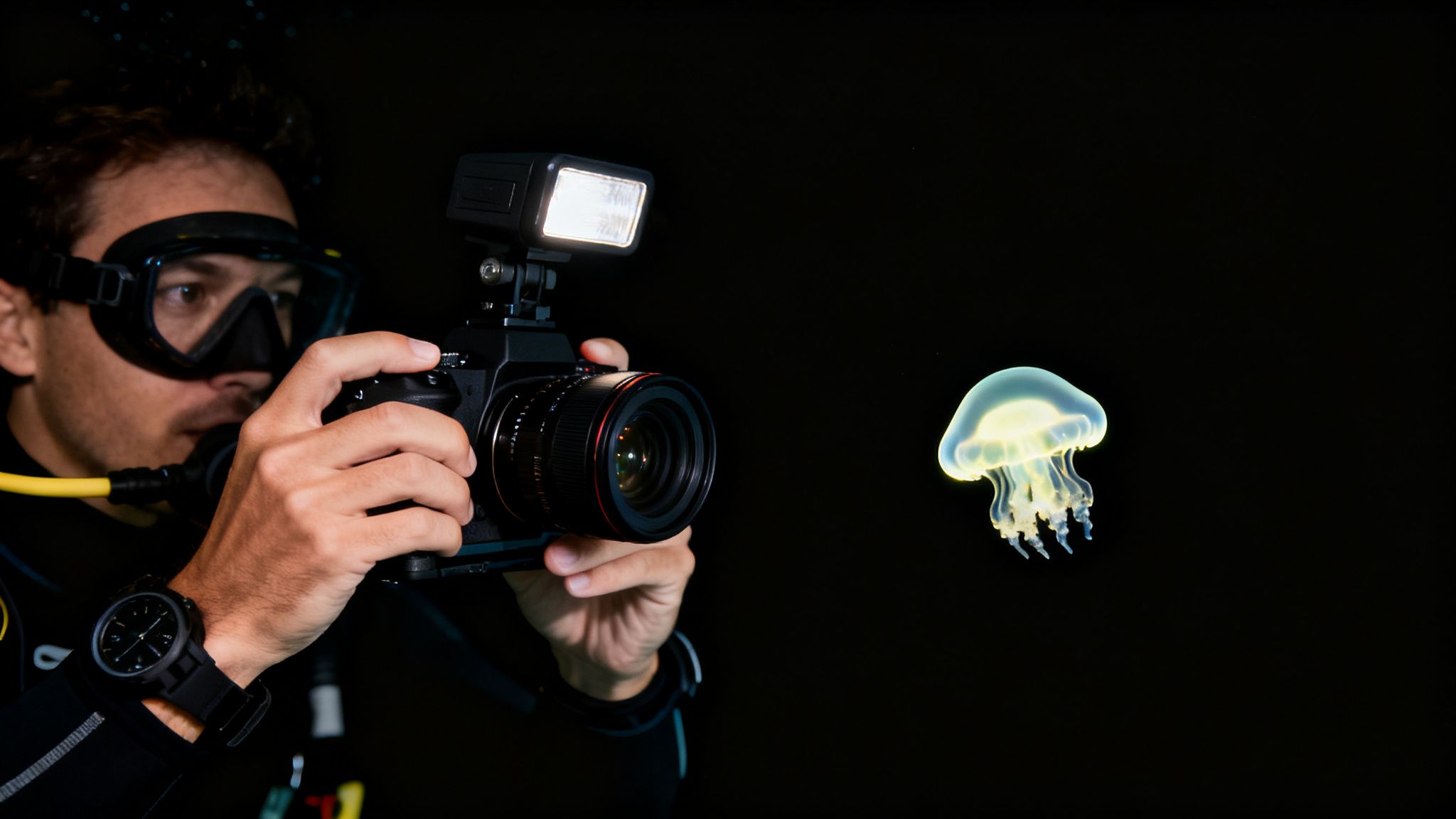
Trying to photograph the otherworldly creatures on a black water dive in Hawaii is one of the most rewarding—and frustrating—challenges in underwater photography. That deep, black ocean provides a perfect studio backdrop, but shooting tiny, fast-moving, and often transparent subjects in the dark takes a whole different approach.
Your success really hinges on your gear. While almost any decent camera can get a shot, this is macro territory. To capture the incredible details on these little aliens, you need a lens that can get in close. Most experienced shooters will tell you a 60mm or 100mm macro lens is the way to go. It lets you fill the frame without having to get so close you spook your delicate subject.
Essential Gear and Camera Settings
Lighting is everything out there. It’s pitch black, the animals are small, and you need a lot of light to make them pop. This is where powerful strobes come in. Frankly, two are better than one, as they help you create even lighting and kill any harsh shadows. You’ll want them on long arms, pointed slightly inward, to light up the animal without illuminating all the little particles floating in the water (which causes backscatter).
With your rig set up, the next piece of the puzzle is dialing in your camera settings to freeze the action and nail the focus.
- Fast Shutter Speed: You’ll want to start at 1/160s or faster. This is non-negotiable for freezing the movement of both the creature and yourself as you drift.
- Small Aperture: A higher f-stop number, like f/11 or f/16, gives you a deeper depth of field. This is a huge help in getting the entire tiny animal tack-sharp.
- Low ISO: Keep your ISO as low as you can—think ISO 100 or 200. This keeps your images clean and free of noise. Let your strobes do the heavy lifting.
- Manual Focus: Autofocus can be maddeningly slow here. Many pros prefer to use manual focus or pre-focus to a specific distance, then gently move the camera back and forth until the subject is sharp. It’s often much faster.
The real artistry comes from your composition. Use that massive black background as negative space to make your tiny subject the star of the show. If you can, get a little below your subject and shoot slightly upward to isolate it against that endless void. It makes for an incredibly powerful image.
The Art of the Black Water Shot
Blackwater diving started as a niche activity for a few adventurous photographers but has since exploded into a global phenomenon. It was those early images that brought this hidden world into the spotlight, and today, thousands of divers experience it every year. Even with its growth worldwide, Kona, Hawaii, is still considered the gold standard, and the local operators here really set the bar for the industry.
At the end of the day, success in black water photography comes down to patience. Don't chase the animals; you’ll never win. The trick is to stay calm, nail your buoyancy, and just let them drift past you. Move slowly and deliberately. When you prepare your gear and your mindset, you can turn an incredibly challenging dive into an unforgettable photoshoot.
For more ideas on what to pack for your trip, check out our guide on essential dive gear.
Your Top Questions About Black Water Diving in Hawaii
Thinking about taking the plunge? It’s only natural to have a few questions before diving into the deep blue after dark. Here are the answers to some of the most common things we get asked, giving you the confidence you need for this incredible adventure.
How Deep Do We Actually Go?
This is the biggest surprise for most divers. While you’re floating above an abyss that’s thousands of feet deep, the dive itself is quite shallow. We keep you at a controlled depth of about 40-50 feet (12-15 meters).
This isn't a deep dive; it's all about positioning. That specific depth is the sweet spot where the great vertical migration happens, putting you front and center for the nightly parade of strange and wonderful creatures rising from the depths.
Is Black Water Diving Safe?
Absolutely. With a professional crew like ours at Kona Honu Divers, safety is the foundation of the entire experience. We don't take chances out there.
You’re always securely attached to a downline, which is connected to a large floating rig. This system keeps the whole group together and oriented with the boat. Our expert divemasters are right there in the water with you, managing the lines and making sure every safety protocol is followed to the letter. You can read more about our specific safety measures on our Black Water Dive tour page.
What if I'm Scared of the Dark or the Open Ocean?
A little bit of nervousness is totally normal—it’s part of the thrill! But you won’t be in total darkness. The boat is equipped with powerful lights that shine down into the water, creating a brightly lit "stage" that attracts all kinds of life. It feels more like being in a floating underwater theater than being lost in the dark.
The tether is a huge confidence booster; it gives you a physical connection and a point of reference, so you never feel adrift. The most important skills for this dive are solid buoyancy and a calm mind.
Once you relax and start spotting the incredible critters appearing out of the blue, any initial jitters usually melt away. Our crew is there to make sure you feel secure, so you can just focus on the magic.