
So, what exactly is a black water dive in Hawaii? Forget everything you know about typical reef dives. This is a one-of-a-kind, open-ocean drift dive that happens at night, miles from shore, over literally thousands of feet of water.
Instead of exploring a coral reef, you're tethered to a boat, floating in the middle of the vast, dark ocean. You’re there to witness the largest migration on Earth, as bizarre and alien-like creatures rise from the abyss to feed near the surface. It’s often described as being more like a spacewalk than a scuba dive.
What Makes a Black Water Dive So Special?
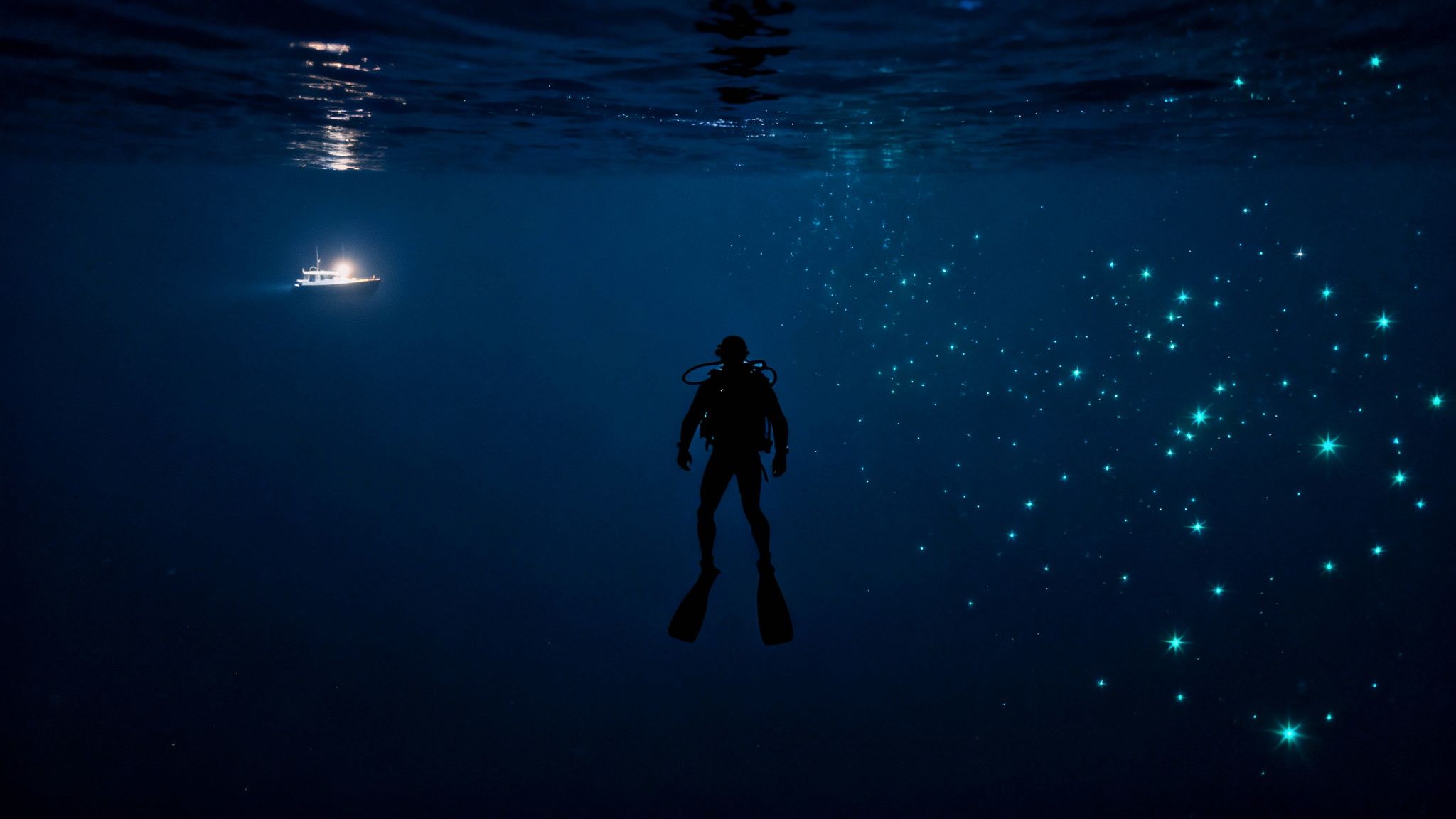
Picture this: you’re floating weightlessly in the pitch-black Pacific with nothing but an endless expanse of deep blue below you. This isn’t just a dive; it’s a front-row seat to one of the planet's most fundamental and mysterious processes. It's surreal, humbling, and completely mesmerizing.
A black water dive is fundamentally different. Your focus shifts from the familiar coastal life to the strange and wonderful organisms of the deep sea, known as the pelagic zone. You're not exploring a static location; you're drifting through a living, moving soup of alien life.
Drifting Through an Alien World
The heart of the experience is the Diel Vertical Migration. Every single night, an unimaginable number of creatures—from tiny larval fish and translucent jellies to predatory squid—make the long journey from the crushing pressure of the depths toward the surface. They come up to feed under the cover of darkness, and your dive lights act like a magnet, drawing them into view.
What makes this dive so incredible is that you never know what’s going to float out of the darkness.
- Bizarre Life Forms: You'll see creatures in their larval stages that look absolutely nothing like their adult forms.
- Bioluminescent Displays: Many of these deep-sea animals create their own light, putting on a stunning natural light show right before your eyes.
- Translucent Creatures: Expect to see ghostly octopuses, delicate siphonophores, and glass squid drift past, offering a peek into a hidden world.
This dive is less about swimming and more about pure observation. You hang suspended from your tether, letting the ocean's current and the massive vertical migration bring the show directly to you. It's both meditative and incredibly exhilarating.
Why Kona Is the Global Epicenter for Black Water Diving
While this migration happens in oceans all over the globe, Kona, Hawaii, is uniquely perfect for it. The Big Island's volcanic slopes drop off steeply just a short distance from the coast, meaning you don't have to motor for hours to get over truly deep water.
This easy access to a deep, calm, and predictable environment is precisely why black water diving was pioneered here. It's why Kona remains the undisputed best place in the world to experience it. This incredible journey gives you a chance to see a part of the ocean that very few people ever will. For any adventurous diver visiting the Big Island for scuba diving Kona, Hawaii, a black water dive in Hawaii is an absolute must.
Understanding the Science of the Deep
The otherworldly experience of a black water dive in Hawaii isn't just magic; it's driven by one of the most incredible natural phenomena on the planet: the Diel Vertical Migration (DVM). Think of it as the ocean's daily commute, and in terms of sheer biomass, it’s the largest migration on Earth.
Every single night, a staggering number of tiny, strange, and often larval creatures begin an epic journey. They rise from the crushing darkness of the deep sea, traveling thousands of feet up to the surface to feed under the cover of night.
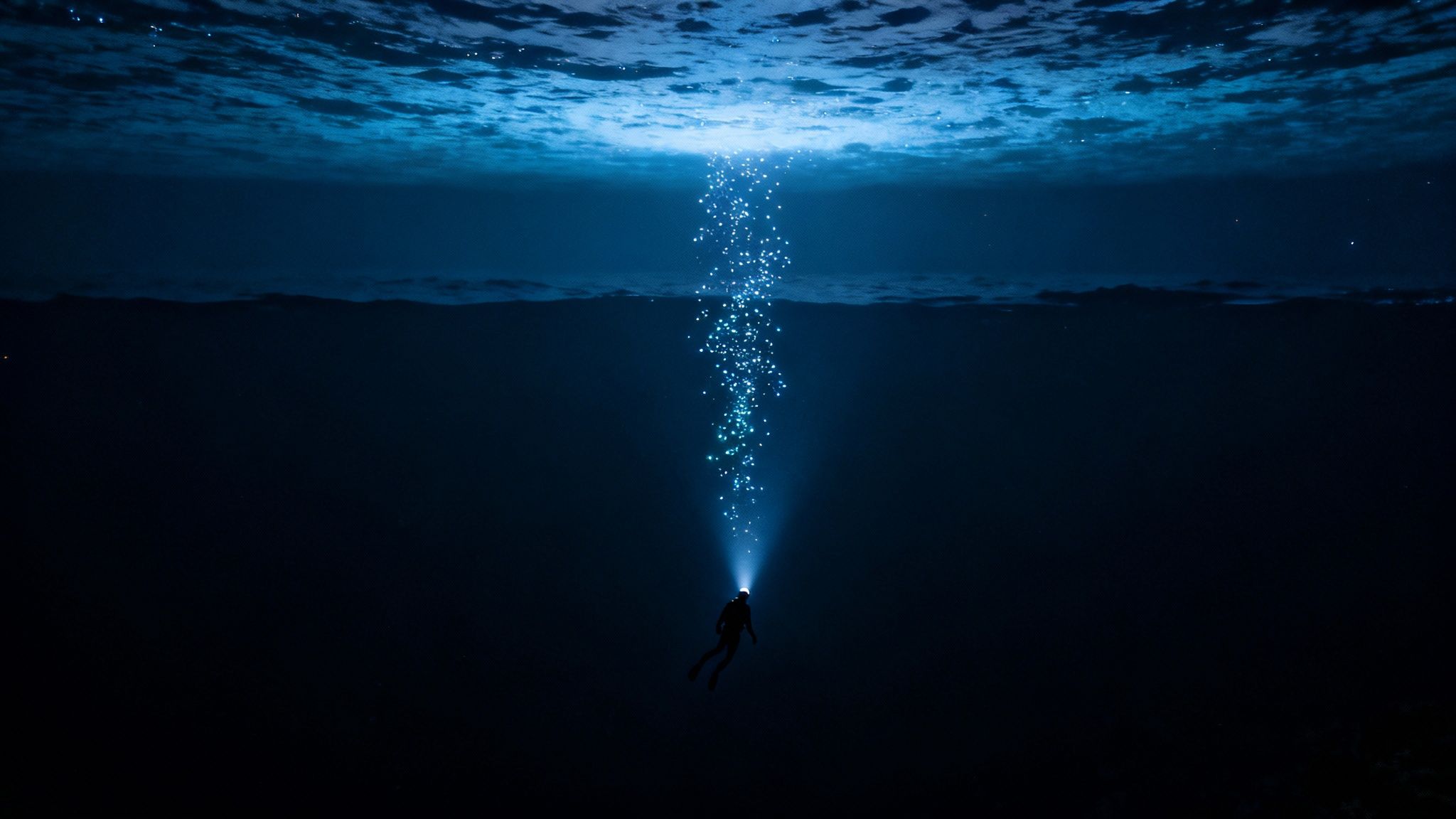
When you're out there, floating in the dark, you're essentially placing yourself right in the middle of this massive upward current of life. The powerful lights we hang from the boat create an oasis in the void, attracting the smallest plankton, which in turn draws in the slightly larger critters that prey on them. You become the center of a temporary, brilliant food web.
Kona's Unique Underwater Landscape
So, why is Kona the world's best spot for this? It all comes down to its unique underwater geography, or bathymetry. The Big Island is a massive volcanic mountain, and its steep slopes don't just end at the beach—they plummet dramatically into the deep ocean.
This means we have access to water thousands of feet deep just a few miles offshore. In other places, you'd need a long, arduous boat ride to get over truly deep water. Here in Kona, the abyss is practically in our backyard.
This incredible proximity is what allows us to reliably and safely open a portal to a world that's otherwise completely hidden from us. Knowing the science behind it all elevates the dive from just seeing cool, weird creatures to truly appreciating a fundamental process that fuels the entire ocean.
A World of Pelagic Wonders
The variety of life that shows up on these dives can be mind-boggling. Scientific research off the Kona coast has confirmed just how rich this pelagic ecosystem is. In fact, during surveys from 2013 to 2015, researchers found that gelatinous creatures like salps, siphonophores, and ctenophores were the most common, making up 59% of everything they counted. You can dive into the full study on these Kona pelagic community findings to learn more.
This isn't just a dive; it’s an intersection with a global-scale biological event. By understanding the migration and Kona's unique geography, you gain a profound appreciation for the intricate and hidden life that thrives in the deep, dark waters of Hawaii.
No two nights are ever the same. Each dive introduces a completely different cast of characters rising from the depths. You're not just an observer; for a brief time, you become part of one of the most mysterious and vital cycles of life on our planet. This is what truly makes a black water dive in Hawaii an unforgettable experience.
Meeting the Ocean’s Strangest Creatures
Get ready to meet life forms that look like they belong on another planet. A black water dive in Hawaii isn't about seeing sharks or turtles; it's a safari into a hidden world of bioluminescent, see-through, and larval creatures that often look nothing like their adult selves. This is where the open ocean reveals its deepest secrets, one bizarre and beautiful organism at a time.
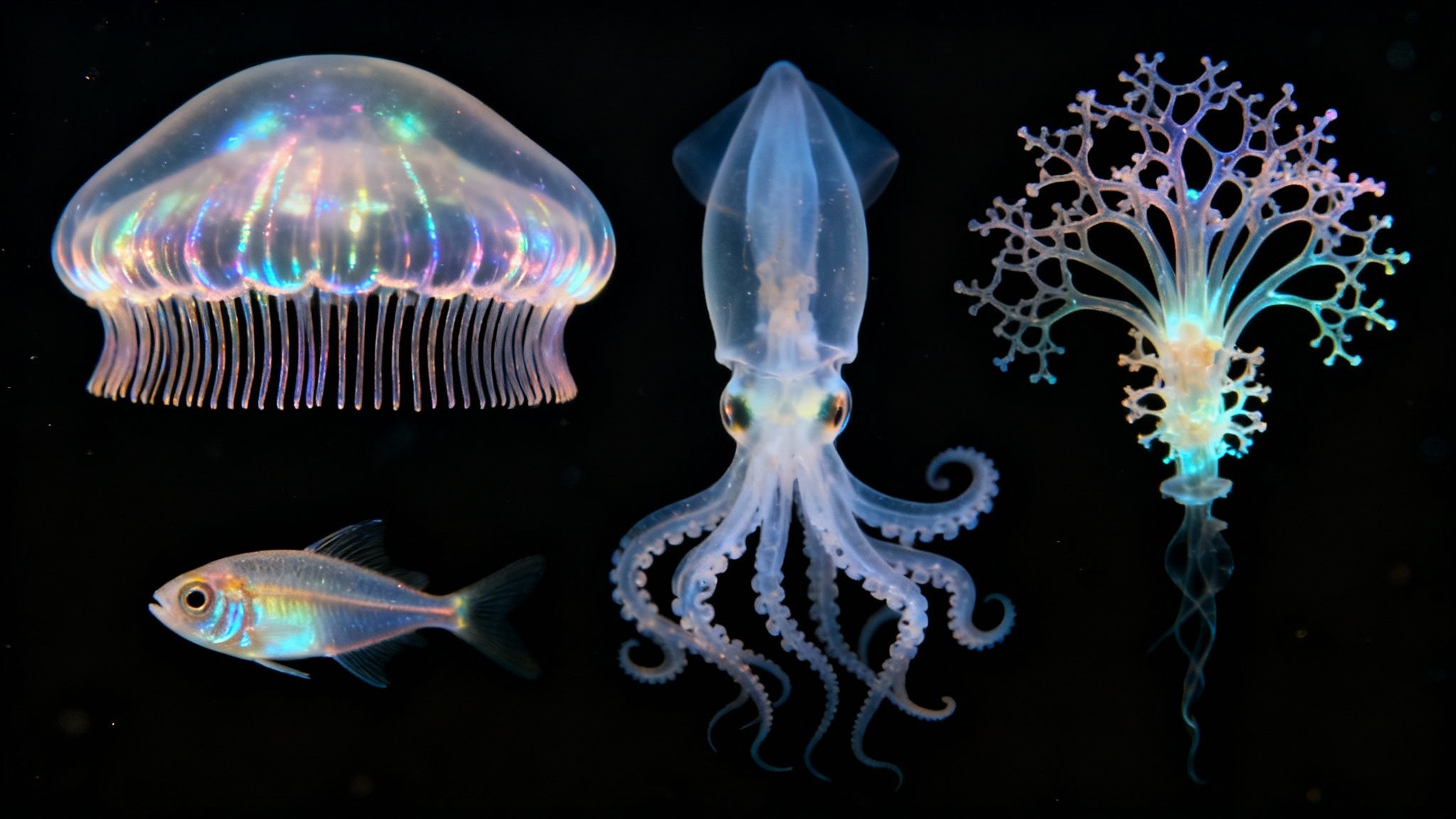
As you hang suspended in the immense darkness, your dive light slices through the void, illuminating a blizzard of activity. The stars of this nightly show are some of the most delicate and otherworldly beings imaginable. Every single dive is a completely unique and mesmerizing experience, offering a rare glimpse into the secret life cycle of the ocean.
The Stars of the Pelagic Show
The animals you'll encounter here aren't the ones you see on the reef. These are true drifters, spending their entire lives in the vast, open blue.
Pulsating Jellies: One of the most common and captivating sights is the ctenophore, or comb jelly. These aren't true jellyfish. Instead, they are gelatinous predators that shimmer with hypnotic, rainbow-colored light as they propel themselves through the water with tiny cilia.
Larval Mysteries: A huge portion of what you'll see are babies. Imagine a tiny, transparent flounder with its eyes still on opposite sides of its head, or a larval lobster that looks more like a spiny, alien insect. These juveniles provide a rare window into the earliest chapters of marine development.
Ghostly Cephalopods: Keep your eyes peeled for pelagic octopuses and squid. You might cross paths with the incredible glass squid, a cephalopod so transparent you can see its internal organs, or a juvenile octopus no bigger than your thumbnail.
Predatory Wonders and Alien Life
While many creatures are small and delicate, make no mistake—the black water is a hunting ground.
Among the most fascinating hunters is the siphonophore. It might look like a single, long jellyfish, but it's actually a colony of individual, specialized organisms chained together. Some handle propulsion, others digestion, and some are armed with a potent sting, all working in perfect concert.
You'll also run into impossibly intricate crustaceans, otherworldly worms, and countless other organisms that simply defy easy description. The sheer diversity is staggering, and a huge part of the thrill is trying to identify each new creature that drifts into your beam.
This dive is a constant exercise in discovery. Just when you think you’ve seen the strangest thing possible, another, even more bizarre creature will drift into the beam of your light. It’s an experience that fundamentally changes your perspective on what kind of life exists on our planet.
To give you an idea of what’s out there, here’s a quick look at some of the fascinating pelagic creatures you might encounter drifting in the deep.
Common Black Water Sightings Off Kona
A quick look at the fascinating pelagic creatures you might encounter drifting in the deep.
| Creature | Description | Fascinating Feature |
|---|---|---|
| Comb Jelly (Ctenophore) | A gelatinous, often spherical or ribbon-like creature. | Does not sting; creates a shimmering rainbow light effect as it moves. |
| Siphonophore | A long, string-like colony of individual organisms working as a single entity. | Some species are among the longest animals in the world, stretching for many feet. |
| Pelagic Octopus | Small, often translucent octopuses that live their entire lives in the open ocean. | Can display incredible bioluminescence and color-changing abilities for camouflage. |
| Larval Fish | The juvenile stage of various reef and deep-sea fish, often looking alien. | Many are transparent, offering a clear view of their internal skeletal structure. |
| Heteropods | Free-swimming sea snails that hunt in the water column. | Often have transparent shells and wing-like feet for propulsion. |
| Phronima | A type of crustacean that hollows out salps to create a barrel-like home. | Famously known as the "pram bug," it inspired the look of the alien in the movie Alien. |
And this is just a tiny sample of the life that awaits. The true magic of a black water dive lies in its complete and total unpredictability. Are you ready to meet the ocean's strangest and most wonderful inhabitants?
What to Expect on Your Dive with Kona Honu Divers
Joining a black water dive in Hawaii with us at Kona Honu Divers is more than just a dip in the ocean after dark—it's a carefully choreographed ballet designed for your safety, comfort, and utter astonishment. Knowing the flow of the evening, from the moment you step foot at the harbor to when you descend into the deep, helps set the stage for one of the most unique experiences you'll ever have. We've built our entire process around professionalism and a profound respect for the open ocean.
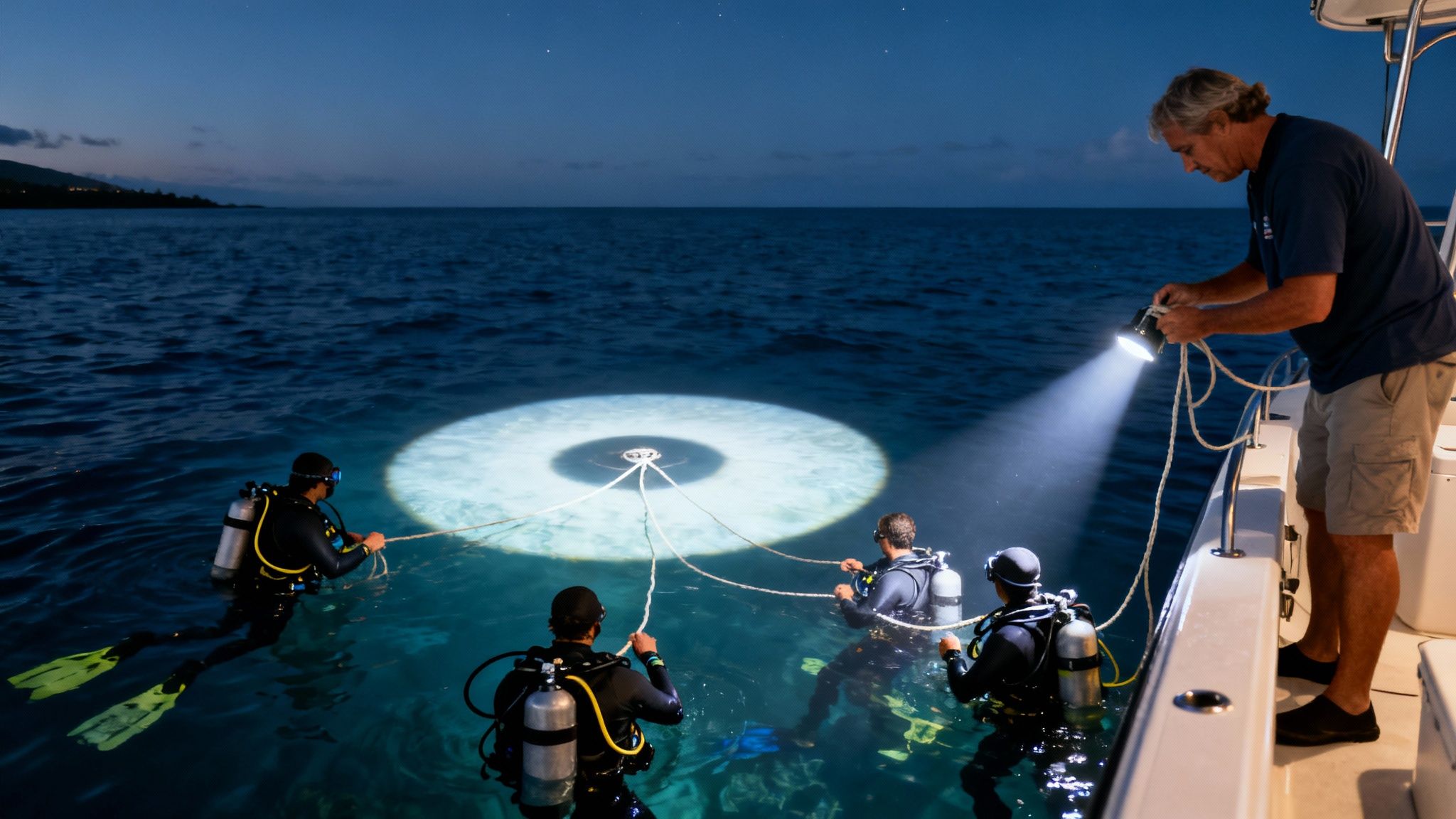
Your adventure kicks off at Honokohau Harbor, where our experienced crew will be waiting to welcome you. We keep our groups small and intimate on purpose. It ensures every diver gets personal attention and feels like part of the team. This is the perfect time to ask any last-minute questions, get to know your fellow adventurers, and familiarize yourself with the boat.
The Pre-Dive Briefing and Journey Out
Before we even think about leaving the harbor, your guide will lead a detailed pre-dive briefing. This isn't your standard dive plan rundown; it's tailored specifically to the strange and wonderful dynamics of black water diving.
We’ll walk you through everything:
- The Tether System: You'll get a hands-on explanation of how the safety lines work, how to clip in your personal tether, and how to comfortably maintain your position in the water column.
- Communication: We'll review night diving signals and cover special techniques for communicating in the dark. Keeping everyone connected is priority one.
- Marine Life Etiquette: This is all about how to observe the incredibly delicate creatures you'll meet without causing them any stress.
- Safety Procedures: A complete overview of our safety protocols, from emergency plans to specific boat procedures, so you know we’ve got your back.
Once the briefing is done and everyone's feeling confident, we motor out. The great thing about Kona is that deep water is incredibly close to shore, so the boat ride is surprisingly short. In just a few minutes, we’ll be miles offshore, floating above thousands of feet of water and positioned perfectly in the path of the great vertical migration.
The Specialized Dive Setup
When we arrive at our spot, the crew gets to work setting up the specialized gear that makes this dive possible. A large, weighted down-line is deployed from the boat, equipped with a series of powerful lights. This whole setup hangs vertically in the water, usually down to a depth of about 40-50 feet.
Think of this rig as our "stage in the abyss." It serves two critical functions: it's a constant visual reference point in the vast darkness, and its light acts like a giant beacon, attracting the zooplankton that kicks off the entire food chain, bringing the show directly to you.
You and the other divers will connect to this central hub using individual tethers. These lines are your ticket to a stress-free dive, keeping you at a consistent, safe depth and preventing anyone from drifting away from the boat and the group.
The tether system is the key to a relaxed and safe experience. It allows you to focus completely on the incredible marine life appearing out of the darkness, without worrying about buoyancy, depth, or orientation. You simply become a weightless observer in a cosmic sea.
Your Guided Experience in the Deep
With Kona Honu Divers, you’re never just dropped in the water and left on your own. Our guides are true experts in the pelagic ecosystem and live for sharing its secrets. They're right there in the water with you, pointing out bizarre and beautiful creatures you might otherwise miss and making sure the dive goes off without a hitch. Their knack for identifying larval fish and otherworldly invertebrates turns a cool dive into a fascinating educational expedition.
The commercial blackwater diving scene here in Kona has really blossomed, becoming a well-oiled and accessible operation. Today, you’ll find several top-notch companies running trips almost every night, a testament to the high demand for this mind-blowing dive. Leading operators like Kona Honu Divers have woven these excursions into our regular schedules, making a once-in-accessible adventure available to any qualified diver. You can learn more about the evolution of Kona's black water diving industry and how it became so popular.
We’re proud to be a cornerstone of this community, offering a world-class experience from start to finish. Our dedication to small groups, expert guides, and unwavering safety standards makes our Blackwater Dive tour an adventure you'll be talking about for years to come.
Find out more about our black water night dive here.
Essential Gear and Photography Tips
When you're drifting through the deep, dark ocean, your gear is more than just equipment—it's your lifeline and your window into another world. Getting comfortable with your setup before you hit the water is the single best thing you can do to prepare. You want to be focused on the incredible creatures appearing from the black, not fumbling with a finicky light or a BCD that isn't quite right.
Of all the skills you'll need, rock-solid buoyancy control is at the top of the list. You'll be hovering in the middle of the water column with no seafloor to reference, so being able to hang effortlessly and neutrally buoyant is a must. Practice until it's second nature. This skill alone can turn a challenging dive into a breathtaking, meditative experience.
Your Personal Dive Kit
While we at Kona Honu Divers handle the specialized tether system and the main lighting rig that attracts the critters, you'll need to bring your own personal dive gear. Make sure it's equipment you know and trust.
- Dive Computer: A reliable computer is non-negotiable. Choose one with a bright, backlit screen that’s easy to read at a glance in total darkness.
- Lights, Lights, and More Lights: Bring a powerful primary dive light for spotting animals, and just as importantly, a reliable backup. You can never have too much light out there.
- Exposure Protection: Even with Kona's balmy water temperatures, you'll be pretty still for most of the dive. A 3mm or 5mm full wetsuit is a good call to stay warm and comfortable for the whole hour.
Think of your gear as an extension of your own body. The less you have to actively manage your equipment, the more you can simply be present and soak in the mind-blowing spectacle happening all around you.
Tips for Capturing the Abyss
Photographing a blackwater dive is one of the most difficult, yet wildly rewarding, challenges in underwater imagery. You're trying to nail focus on tiny, fast-moving, and often transparent subjects in pitch-black conditions. It takes patience and a specific approach to get it right. For a deeper dive into our gear recommendations, check out our guide on the gear you will need for your Kona diving adventure.
Your macro lens is your best friend on this dive. A 100mm or 105mm macro lens is pretty much the gold standard, allowing you to get those amazing, frame-filling shots of the tiniest ocean aliens.
Camera Settings for Success
Your camera settings are what separate a blurry photo from a tack-sharp keeper. Think of these settings as a solid starting point, and don't be afraid to tweak them based on what you're seeing.
- Fast Shutter Speed: To freeze the frantic motion of larval fish and jellies, start with a shutter speed of 1/160s or faster.
- Small Aperture: An aperture of f/16 or smaller creates a deeper depth of field. This gives you a little more wiggle room for focusing on a subject that won't stay still.
- Go Manual on Focus: Don't even bother with autofocus; it will just hunt endlessly in the dark. Instead, pre-set your focus to the minimum distance your lens allows. Then, gently move your entire camera setup forward and backward until your subject pops into sharp focus. We call this "rocking in."
- Strobe Placement: To avoid lighting up all the particles in the water (backscatter), position your strobes close to your lens port and aim them slightly outward.
Nailing the perfect shot during a black water dive in Hawaii is an incredible feeling. It's a true test of your skills, but with the right gear and a bit of practice, you can come away with stunning photos from a world most people don't even know exists.
Discovering the Origins of Black Water Diving
Imagine being one of the first to do something truly new. That’s exactly what happened right here in Kona, where a handful of gutsy underwater photographers in the 1980s decided to venture miles offshore at night, chasing a hunch. They were looking for a world no one had ever really seen, let alone photographed.This wasn't just a spooky night dive along a familiar reef. They were pioneering an entirely new kind of exploration: drifting in the open ocean, over thousands of feet of inky black water. Back then, this was seen as downright crazy. There were no guidebooks, no specialized gear, and certainly no experienced guides to lead the way. It was pure, unscripted adventure.
From Daring Experiment to Global Phenomenon
The whole idea started with a simple question: what comes up from the deep when the sun goes down? The answer turned out to be more incredible than they could have imagined—a hidden universe of strange, beautiful, and utterly alien-looking creatures. The roots of modern blackwater diving trace back to these photographers, with trailblazers like Christopher Newbert leading the charge.
In his groundbreaking 1984 book, Within a Rainbow Sea, Newbert described making solo descents as deep as 150 feet at night. In an era when Jaws had everyone on high alert, this was an exceptionally bold move. The battle of the blackwater guides that followed is a fascinating story of competition and innovation.
Over the decades, those risky first forays evolved. Techniques were polished, safety protocols were invented from scratch, and our understanding of the nightly vertical migration grew. What began as a dangerous pursuit for a few obsessed photographers has since become a must-do dive for thrill-seekers worldwide.
Knowing this history makes the experience even more profound. You’re not just going on a cool dive; you’re following in the footsteps of the divers who first dared to turn away from the reef and face the vast, mysterious dark.
Kona’s geography was the secret ingredient. The island’s steep volcanic slopes plunge dramatically into the abyss, bringing the deep sea incredibly close to shore. Paired with our calm, predictable waters, Kona became the perfect natural laboratory for this unique type of diving to be born and perfected.
Your Black Water Diving Questions, Answered
Heading out into the open ocean at night is an incredible thought, but it’s natural to have a few questions bubble up. Getting a handle on the details of a **black water dive in Hawaii** is the last step before you commit to what is truly a once-in-a-lifetime adventure.We get these questions all the time, so we've put together some straightforward answers to help you feel confident and ready to take the plunge.
What Certifications Do I Need for a Black Water Dive?
Because we’re in the deep open ocean, this isn’t a dive for beginners. Most shops, and that includes us at Kona Honu Divers, will require you to have at least an **Advanced Open Water certification**. If you don’t have the card but have logged plenty of similar dives, proof of equivalent experience can also work.The single most important skill you need is rock-solid buoyancy control. You’ll be floating in the middle of the water column for the whole dive, with no seafloor to reference. It’s also a really good idea to have a recent night dive under your belt so you're already comfortable in the dark before we head miles offshore.
If you want to sharpen your skills beforehand, our premium advanced dive trips are a fantastic way to build that confidence.
Is Black Water Diving Safe?
Yes, it absolutely is—as long as you’re with a professional, experienced crew that knows what they’re doing. Here at Kona Honu Divers, safety isn’t just a talking point; it’s the foundation of the entire dive.Our whole operation is built around a robust safety system. Here's how it works:
- Every diver is attached to a downline with their own personal tether.
- This keeps you at a consistent, safe depth—usually around 40-50 feet.
- It also makes it impossible to drift away from the group and the boat.
Our guides are masters of this unique environment. They're right there in the water with you, keeping a close eye on everything and making sure the entire group has a secure and unforgettable experience.
What’s the Best Time of Year to Go?
This is one of the best parts about diving in Kona. We’re on the calm, leeward side of the Big Island, which means conditions are great for a **black water dive in Hawaii** pretty much any night of the year.The cast of characters that comes up from the deep can change from night to night, but there's no single "best" season. Every dive is a totally new and unpredictable show. That's the real thrill—you never know what the ocean's nightlife has in store.
Ready to book this bucket-list dive?
The Kona Honu Divers team is ready to guide you on an unforgettable journey into the deep. Find out more about our world-famous Black Water Dive tour and reserve your spot today.