
Imagine you’re floating in absolute blackness, surrounded by a universe of tiny, shimmering lights. It feels like outer space, but you're not in the cosmos—you're drifting in the deep, dark heart of the Pacific Ocean off the Kona coast. This is the incredible, otherworldly experience of a black water dive.
It’s an adventure that takes you miles from shore, over water that’s thousands of feet deep, to witness one of the planet's most spectacular and hidden events: the largest migration on Earth.
What Is a Black Water Dive?
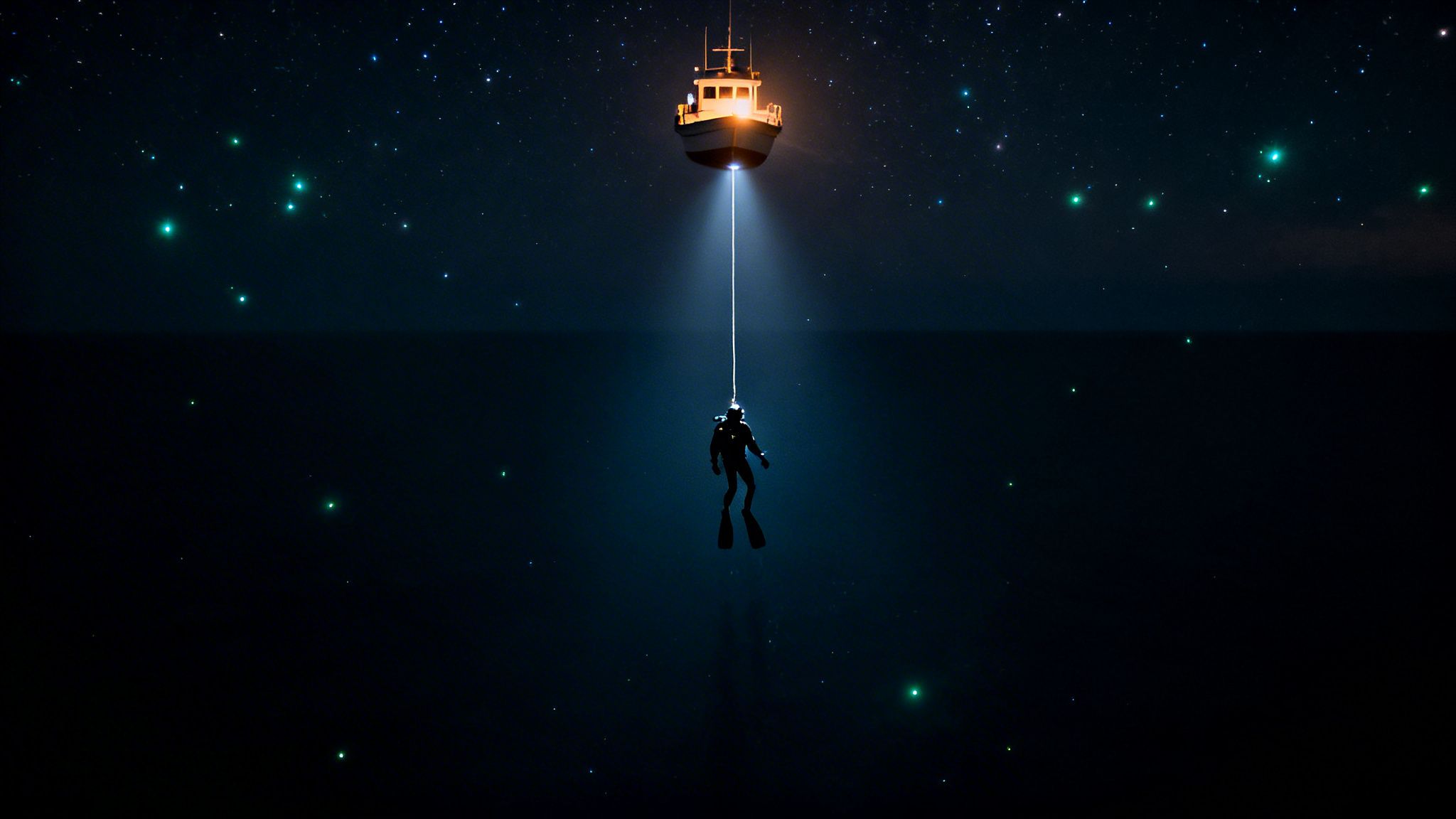
This isn’t your average night dive. Forget exploring a shallow reef. On a black water dive, we motor several miles offshore until the ocean floor is a distant memory, thousands of feet below.
Out in the open ocean, you and a small group of fellow divers are connected to a weighted downline that hangs beneath the boat. This tether system is your anchor in the abyss, keeping everyone safely together as you drift in the darkness. Powerful lights are submerged to attract the incredible deep-sea creatures making their nightly vertical migration toward the surface.
Black Water Dive At a Glance
Here’s a quick snapshot of what a black water dive in Kona entails:
| Aspect | Description |
|---|---|
| Location | Miles offshore in the deep, open waters of the Pacific Ocean |
| Diver Depth | Suspended at a shallow depth, typically around 50 feet |
| Ocean Depth | The boat drifts over water thousands of feet deep |
| The Experience | Floating in dark, open water while safely tethered to a line |
| Main Attraction | Witnessing the Diel Vertical Migration of unique pelagic life |
| Required Skill Level | Advanced Open Water certification and excellent buoyancy control |
This quick guide gives you the basics, but the real magic is in the details and the history behind this unique dive.
Kona: The Birthplace of Black Water Diving
It might surprise you, but this unique style of diving got its start right here in Kona, Hawaii. Back in the 1990s, some local diving pioneers had a brilliant idea. They took scientific research protocols for studying deep-sea life and adapted them into a thrilling excursion for certified divers.
They engineered the innovative lighting and tethering systems that make it possible to safely drift over water plunging more than 10,000 feet deep just a few miles from shore. Their ingenuity turned Kona into the official birthplace of this incredible adventure. You can learn more about the fascinating history of black water diving in Kona.
Of course, before attempting a specialty dive like a Kona blackwater dive, it's essential to have your fundamentals dialed in. Many divers get their start with a Discover Scuba Diving program to master the basics. But for certified divers with solid skills, there is simply nothing else on Earth like this.
Witnessing the Planet’s Largest Migration
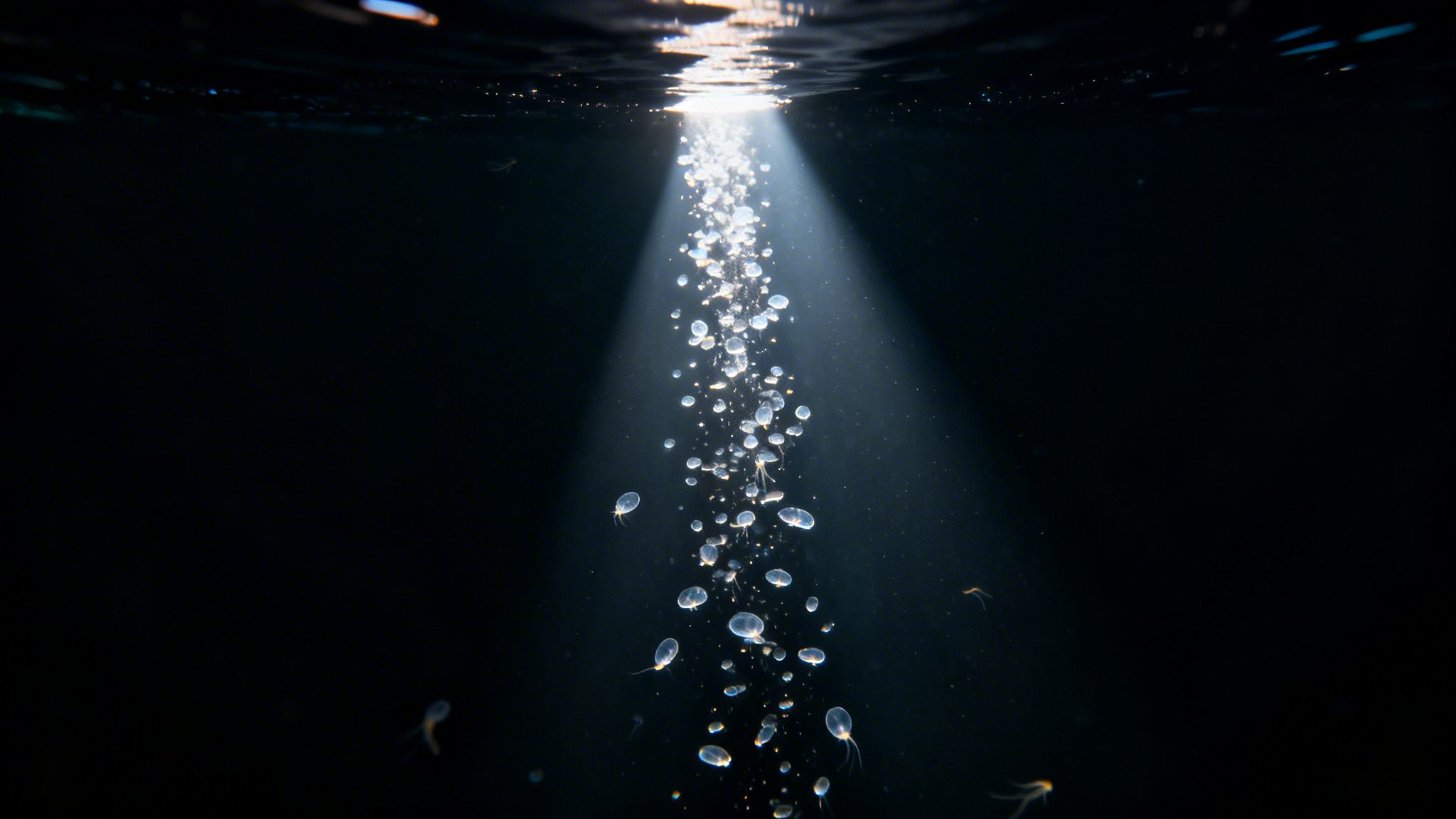 Every single night, something truly monumental happens in our oceans, and a blackwater dive puts you right in the middle of it. It’s called the **Diel Vertical Migration**, and it’s the largest daily commute by biomass on Earth. This is the silent, rhythmic pulse of the deep, an event that’s been happening for eons, completely hidden from our view.As the sun sets, just imagine countless tiny creatures beginning a colossal journey upward. Zooplankton, larval fish, otherworldly jellies, and minuscule squid ascend from the crushing pressure of the deep toward the surface. They’re coming up to feed on phytoplankton in the relative safety of darkness, far from the sight-hunting predators of the day.
The Ocean's Great Commute
This nightly pilgrimage isn't just a cool thing to see; it's a fundamental process that supports the entire marine ecosystem. The sheer scale is almost impossible to grasp. Billions of organisms rise from depths of 1,000 meters or more, representing the world's largest daily animal movement. The total biomass is staggering—potentially 10 to 100 times the size of Antarctica's famous krill swarms. You can get a deeper sense of this incredible deep-sea migration on drenchedproductions.com.
This constant churning of life is critical for a few big reasons:
- The Food Web: It’s the primary link that moves energy from the sunlit surface, where food is made, down into the deep sea.
- Climate Regulation: These creatures eat carbon-rich food near the surface, then carry that carbon down with them at sunrise. It’s a massive, natural carbon pump.
- A Pelagic Nursery: The migration is a vital part of the life cycle for countless species, from the fish we eat to the strange creatures of the abyss.
So, what does this have to do with your dive? Everything. It’s all about the lights.
A Beacon in the Abyss
On a Kona blackwater dive, we hang a powerful light array beneath the boat, creating a brilliant beacon in the endless dark. Much like moths to a flame, the migrating animals are irresistibly drawn to this glow.
This light concentrates an incredible amount of life into one small area, creating a surreal "aquarium in the void." It gives us a chance to see a dense collection of animals that would normally be scattered across miles of open ocean.
Instead of you having to search for life, the life comes directly to you. This is what makes a blackwater dive so different from a standard night dive. You’re not just a visitor looking in; you’re floating inside the very heartbeat of the ocean.
Meeting the Aliens of the Deep
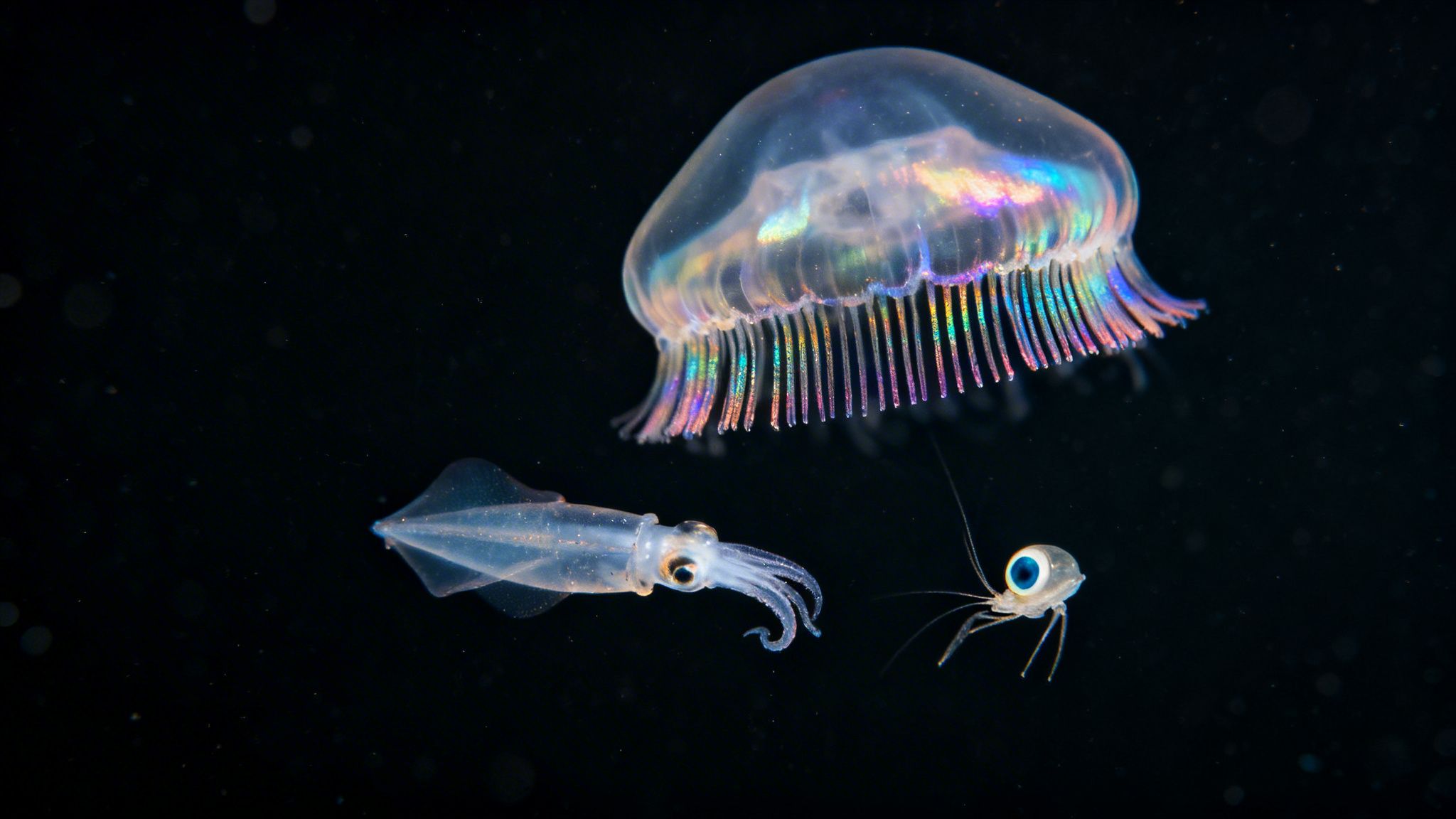
Get ready to meet the real aliens of our planet. A black water dive is more than just the thrill of hanging suspended in the dark—it's a front-row seat to a parade of life so bizarre and mesmerizing it feels like it’s from another world.
This is your chance to witness the secret early lives of animals you thought you knew. Forget what you picture when you think of a fish or a squid. Out here, their larval forms are often completely transparent, armed with intricate spikes, or shaped in ways that make them totally unrecognizable from their adult counterparts.
A Living Field Guide to the Abyss
The cast of characters you’ll meet is always changing, which means no two dives are ever the same. Still, certain spectacular creatures make regular appearances in the glow of our lights, giving us a rare window into a pelagic world where survival often means being almost invisible.
Here are just a few of the incredible finds you might come across:
- Larval Fish: You could see the utterly strange juvenile stages of flounders or tripod fish. Young flounders start with an eye on each side of their head before one migrates over. Meanwhile, larval tripod fish are see-through drifters, a far cry from the stilt-walking adults they become.
- Cephalopods: Keep an eye out for tiny, translucent squid paralarvae or even the incredibly rare Paper Nautilus. This is actually a type of octopus where the female builds a delicate, paper-thin shell to protect her eggs.
- Jellies and Ctenophores: Comb jellies are a real highlight, pulsing with bioluminescent light that ripples down their bodies in shimmering rainbow patterns. Their gelatinous forms are hypnotizing as they drift past in the dark.
The Ultimate Photographic Challenge
For underwater photographers, the black water dive is the ultimate test of skill and patience, but the rewards are immense. The subjects here are unlike anything you'll find on a reef. Capturing these tiny, often transparent, and fast-moving creatures is a challenge that brings a deep appreciation for the weird and wonderful.
A black water dive offers a rare opportunity to document the larval stages of marine life—a phase that is crucial for the ecosystem but almost never seen by humans. It's a chance to photograph subjects that truly feel like undiscovered species.
One moment you might find yourself face-to-face with a larval mantis shrimp, its eyes comically oversized for its tiny, clear body. The next, you could spot a pelagic sea slug, a vibrant speck of color against the endless black. Each encounter is fleeting, a brief glimpse into a hidden world that has existed just beyond our reach for millennia. It's this sense of discovery that makes the Kona blackwater dive a true bucket-list experience for divers looking for something extraordinary.
Your Black Water Dive With Kona Honu Divers
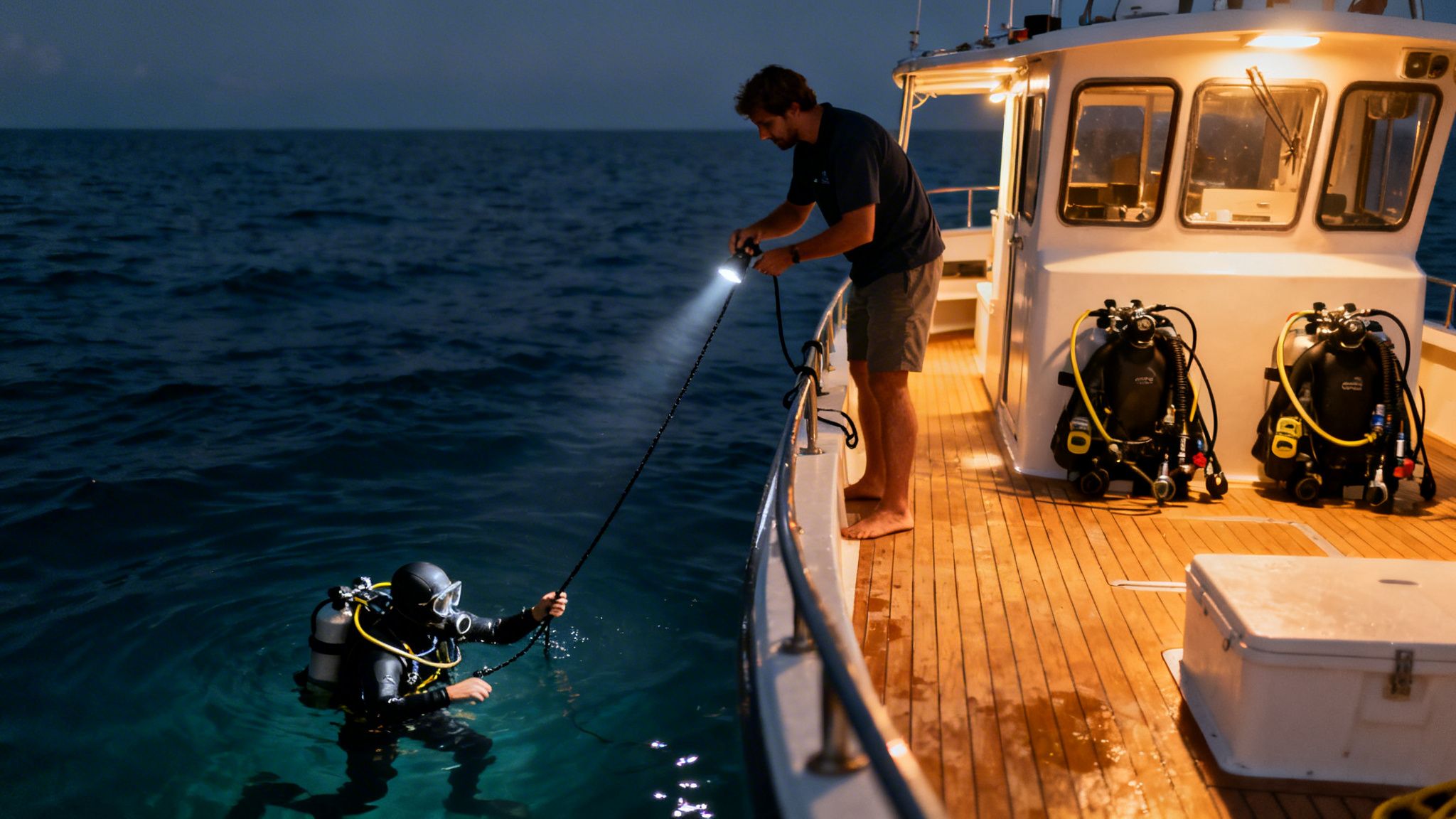 When it comes to a **black water dive**, the most important decision you’ll make is choosing the right operator. This isn’t your average dive. It demands specialized knowledge, an unwavering commitment to safety, and a crew that knows how to turn a potentially intimidating drift in the dark into a genuinely breathtaking experience.Here at Kona Honu Divers, we’ve spent years perfecting our black water excursions. We believe the adventure begins long before you even hit the water. On the boat ride out into the deep, open ocean, our guides run a comprehensive safety briefing. We walk you through every detail, from how the tether system works to what you can expect when you’re suspended in the vast darkness. By the time you gear up, you’ll feel confident and ready.
Our Commitment to Safety and Comfort
In an environment as unique as this, safety is everything. It’s the foundation of every single black water dive we run, and we've put meticulous protocols in place to manage the experience from start to finish.
The heart of our operation is a robust tethering system. Each diver is securely connected to a downline that hangs directly from our spacious boat. This simple but critical setup ensures you stay with the group and the vessel at all times. There’s no chance of drifting away in the current, but you still have plenty of freedom to explore the column of illuminated water around you.
We also know that a great dive involves more than just what happens underwater. Our gear is top-of-the-line and impeccably maintained, and our boat is built for comfort. A smooth, enjoyable trip to and from the site is all part of the experience.
Expert Guides Who Know the Deep
What truly sets a Kona Honu Divers trip apart is our guides. They aren't just dive leaders; they are passionate naturalists who are pros at spotting the ocean's most elusive creatures.
In that vast blackness, their trained eyes can pick out nearly invisible larval fish, shimmering comb jellies, and bizarre cephalopods that most people would swim right past. They are your personal connection to this strange and beautiful world, pointing out incredible organisms while ensuring the entire dive remains safe and controlled. Their expertise transforms what could be a simple drift into a fully guided tour of ‘inner space.’
Ready to see it for yourself? You can explore all the details of our Black Water Dive tour page.
Don't just take our word for it—see what fellow divers have to say about their experience with us.
For certified divers who love a good challenge and are looking for other thrilling opportunities, we also offer a variety of advanced dive tours designed to explore Kona's most dynamic underwater environments.
Photography Tips for Capturing the Abyss
Taking a camera on a black water dive is, without a doubt, one of the most rewarding challenges you can find in underwater photography. You're hunting for subjects that are incredibly small, often see-through, and dart around in the dark. Nailing the perfect shot comes down to a mix of the right gear, solid technique, and, above all, rock-steady buoyancy.
This isn't like shooting on a reef where you might be able to brace yourself for a moment. Out in the open ocean, you're completely suspended in the water column. Your ability to hang motionless and make tiny adjustments without even thinking about it is everything. One jerky movement and your subject is gone. Worse, you could stir up backscatter or bump into another diver.
Essential Gear for the Darkness
Bringing the right setup is half the battle. While every underwater photographer has their favorite kit, a few pieces of gear are absolutely essential for this kind of specialized work. A good macro lens, usually in the 60mm to 105mm range, is a must-have for framing these minuscule creatures.
A powerful focus light will be your new best friend. Seriously. Many of these animals are practically invisible in the dark, and you need a strong, steady beam to help your camera lock focus. A lot of experienced black water shooters use a red focus light because it's less likely to spook the more skittish, light-shy critters.
Camera Settings and Strobe Positioning
When it comes to camera settings, your goal is to freeze motion in an environment with almost no ambient light. You'll want to start with a fast shutter speed—think 1/160s or higher—to prevent any motion blur from you or your subject. Open up your aperture (f/2.8 to f/8 is a good range) to let in plenty of light, and keep your ISO low (around 100-200) to get those clean, noise-free, inky-black backgrounds.
Strobe positioning is where the real artistry comes into play. To light up translucent animals and avoid that dreaded, ugly backscatter, you need to get creative. A great technique is to push your strobes out wide, maybe even a little behind your camera handles, and angle them inward toward your subject. This side-lighting makes transparent bodies pop with contrast and detail against the black.
Getting the hang of these settings takes a few dives, but the photos you'll come back with are unlike anything else. To get a better idea of what to bring on your trip, check out our guide on the gear you will need for your Kona diving adventure.
For those new to black water photography, here are some recommended starting points for your camera settings. Remember, these are just a baseline—you'll want to adjust them based on your specific camera, lens, and the conditions of the dive.
Recommended Photography Settings for Black Water Diving
| Setting | Recommendation | Reason |
|---|---|---|
| Shutter Speed | 1/160s or faster | Freezes the fast, erratic movement of both the diver and the subject. |
| Aperture | f/8 to f/16 | Provides a decent depth of field to keep tiny, moving subjects in focus. |
| ISO | 100 – 200 | Minimizes digital noise, ensuring the black background is truly black. |
| Focus Mode | Continuous (AF-C) | Helps track subjects as they move unpredictably through the water column. |
| Strobes | Manual Mode | Gives you full control over light output to perfectly expose your subject. |
Ultimately, capturing a razor-sharp photo of a larval fish or a rare pelagic octopus is a trophy very few photographers can claim. It's a true test of skill, but the reward is a portfolio of images that are genuinely out of this world.
Why Kona Is the World Capital of Black Water Diving
You can technically do a **black water dive** in a few places around the globe, but Kona is, without a doubt, the world’s capital for this unique adventure. It’s not just a lucky accident. A few very specific factors—geology, geography, and ocean conditions—come together here on the Big Island to create the perfect stage for meeting the creatures of the deep.The magic really starts with the island itself. Kona's underwater landscape drops off dramatically, plunging thousands of feet just a few miles from the coastline. This steep topography means we don't have to spend hours on a boat to get to the "spot." We're there quickly, which means more time in the water watching the planet's largest migration unfold.
Kona's Unbeatable Conditions
Easy access to deep water is one thing, but Kona offers something even more critical: consistently calm seas. Our coastline is on the leeward (sheltered) side of the island, which shields us from the strong, persistent trade winds that buffet other areas. The result is reliably smooth water, making the trip out—and the dive itself—far more comfortable and safe, no matter the time of year. For a deeper dive into our local conditions, check out this guide on visibility in Big Island scuba diving.
This powerful combination is what sets Kona apart from anywhere else.
- Deep Water Access: The abyss is practically at our doorstep, which means less time traveling and more time diving.
- Protected Waters: The leeward coast acts as a natural shield, giving us incredibly calm and predictable conditions.
- Dense Marine Life: Nutrient-rich currents support a vibrant ecosystem, drawing in an unbelievable concentration of pelagic animals.
When you put it all together—the best accessibility, the calmest water, and an astonishing amount of marine life—it’s easy to see why Kona is the ultimate destination for a black water dive.
Choosing Kona for this bucket-list experience is the first step. The next is picking a top-rated local operator to guide you. To see what else our amazing waters have in store, take a look at our other Kona diving tours.
Your Blackwater Diving Questions Answered
Alright, let's talk about what's really on your mind. You're intrigued, maybe a little intimidated, but definitely curious. That’s a good sign. We get these questions all the time, so let's clear the air and get you ready for one of the most incredible dives you'll ever do.
What Experience Level Do I Need?
This is definitely an advanced dive. We’re not looking for a specific number of logged dives, but we do need you to be completely solid in your skills. You should be a certified diver who is genuinely comfortable with night diving and has rock-solid buoyancy control. Think about it—you'll be floating in the dark in very deep water, so being at ease is crucial for both safety and enjoyment.
Is This Dive Actually Safe?
Absolutely. Safety is our entire focus on this charter. With a professional crew like ours at Kona Honu Divers, you’re in great hands. We use a heavy-duty tether system where every diver is connected to a downline that runs straight back to the boat. Before we even get in the water, our guides run a detailed briefing, and they’re right there with you the whole time to make sure everything goes smoothly.
What if I Get Seasick?
That's a valid concern. We're heading out into the open ocean where there's always some movement. If you even think you might be prone to seasickness, we strongly suggest taking motion sickness medication. Just make sure to take it well before we leave the harbor—follow the instructions on the box so it has time to work.
When’s the Best Time of Year to Go?
One of the best things about diving in Kona is that there’s no bad time! Blackwater diving is fantastic year-round. The cast of characters you'll see—all those tiny larval critters—changes with the seasons, which just means every trip is a unique snapshot of what's happening in the deep. You never know what you'll find.
Ready to see it for yourself?
Here at Kona Honu Divers, we live for sharing the most spectacular and safe underwater adventures the Big Island has to offer. To get all the details on this one-of-a-kind experience, check out our Blackwater Dive tour page.