
Picture this: you descend into the warm, dark Pacific waters just off the Kona coast. Your dive light cuts through the blackness, and suddenly, you're in the middle of a silent, underwater ballet. This is the magic of the Big Island's manta ray night dive—a truly unforgettable adventure where gentle giants with wingspans stretching up to 16 feet glide effortlessly, sometimes just inches above your head.
Kona: The World’s Premier Manta Ray Destination
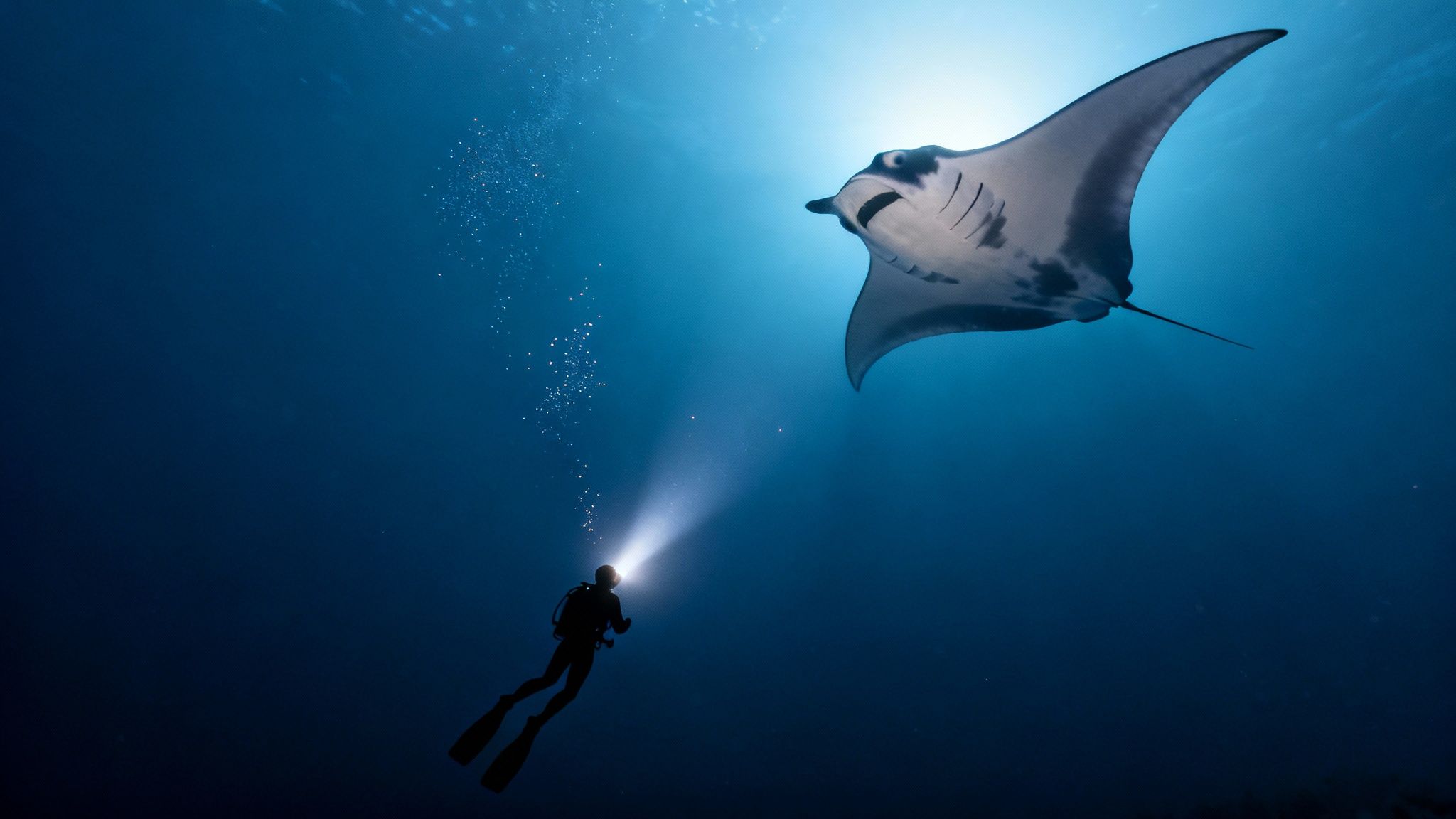
The Kona coast isn't just a good spot for a manta ray dive; it's hands-down the best place on the planet for it. What makes this corner of Hawaii so unique is the perfect storm of nutrient-rich waters and a large, year-round population of resident manta rays.
These magnificent creatures are drawn to the coastline every night to feast on plankton. Local dive operators learned years ago that by shining bright lights into the water, they could attract a buffet of these microscopic organisms, creating a reliable feeding ground. This nightly event has turned into one of the most consistent and accessible manta ray encounters anywhere in the world.
Why You’re Almost Guaranteed to See Mantas
This incredible spectacle has become a global phenomenon, attracting over 80,000 divers and snorkelers each year. The draw? An unbelievable sighting success rate that hovers between 80% and 90% on any given night, cementing its place on every ocean lover's bucket list. You can dive deeper into the magic of Kona's manta ray tourism to learn more.
Most divers will tell you the experience feels completely surreal. You settle on the sandy ocean floor, look up, and watch as these majestic rays perform graceful barrel rolls right above you, scooping up plankton in the beams of your lights. It’s a peaceful, awe-inspiring interaction that truly showcases the beauty of the ocean after dark.
To get a quick sense of what makes this dive so special, here’s a quick rundown.
Kona Manta Ray Night Dive At A Glance
| Feature | Details |
|---|---|
| Primary Location | Kona Coast, Big Island, Hawaii |
| Typical Depth | 25-45 feet (7-14 meters) |
| Average Sighting Rate | 80-90% Year-Round |
| Main Attraction | Pelagic Manta Rays feeding on plankton |
| Best Time to Go | Encounters are consistent all year |
As you can see, the conditions are just right for an incredible experience.
Choosing a top-tier operator like Kona Honu Divers is key to making sure your trip is safe, respectful to the animals, and truly mind-blowing. Our experienced guides know these sites like the back of their hand and work to get every diver a front-row seat to the show.
Why Garden Eel Cove Is The Superior Manta Dive Site
When you start planning your **Big Island scuba diving w manta ray night** adventure, you’ll quickly hear about two main spots: Manta Village and Garden Eel Cove. While you can see mantas at both, any seasoned Kona diver will tell you they aren’t created equal. For scuba divers, Garden Eel Cove—also known as Manta Heaven—is consistently the superior choice for a [manta ray dive tour](https://konahonudivers.com/diving-tours/2-tank-manta-dive-snorkel/?ref=blog) due to its protected location, better viewing area, and healthier reefs.
Let's break down why.
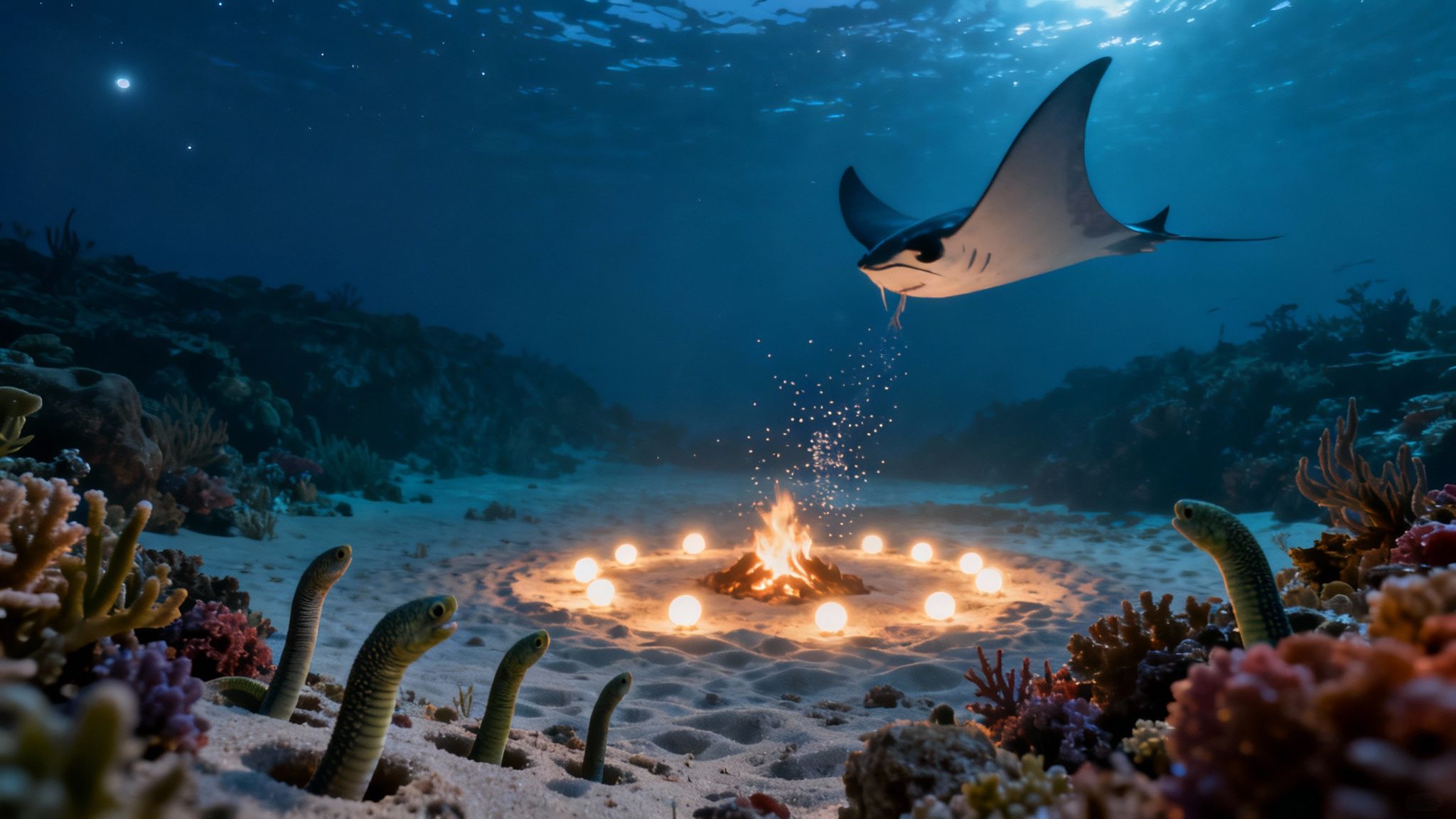
It really starts with geography. Tucked away near the Kona airport, Garden Eel Cove is naturally sheltered from the big open-ocean swells that can roll into Manta Village. This means calmer, more predictable conditions, which is a huge deal. It leads to fewer cancellations and a much more comfortable, stable experience once you're on the bottom.
A Better Viewing Experience
Beyond just smoother water, the entire setup at Garden Eel Cove is designed for an incredible show. Divers settle into a designated sandy patch, and a powerful light array—our "campfire"—is placed in the center. This light attracts a thick cloud of plankton, which in turn brings the mantas swooping in right over everyone's heads.
This 'campfire' setup is the real game-changer. It creates a natural underwater amphitheater, giving every diver a front-row seat. You're not chasing the action; it's happening just inches above you as the mantas perform their hypnotic, looping barrel rolls.
This organized approach keeps things from feeling chaotic and focuses the entire experience into one breathtaking spectacle, solidifying its status as the best viewing area.
Healthier Reefs and More to See
Finally, the dive site itself is just more interesting. The surrounding coral reefs at Garden Eel Cove are vibrant and full of life. Most manta trips are two-tank dives, with the first happening at dusk before the main event. Here, that first dive is a fantastic tour of a healthy reef, letting you see all sorts of other marine critters.
It adds a whole other dimension to the trip. While Manta Village has historically had a slightly higher success rate, the overall quality of the dive from start to finish—from the protected cove to the superior viewing setup and healthier reefs—is hands-down better at Garden Eel Cove.
You can learn more about this incredible site by reading our detailed guide to Manta Ray Heaven (Garden Eel Cove).
What To Expect On Your Manta Ray Scuba Adventure
Your **Big Island scuba diving w manta ray night** adventure kicks off just as the sun begins to kiss the horizon. You’ll start at the harbor, meet the crew, and get a thorough boat briefing that goes over all the safety stuff, the dive plan, and what you’re about to see. It’s the perfect time to get your gear sorted, get comfortable, and ask any last-minute questions before we head out on the water.
Most of these trips are two-tank dives. Your first dive is a beautiful dusk exploration of the reef right next to the manta viewing site. This is a great chance to get your weighting just right, check your buoyancy, and watch the reef transform as the daytime fish head for bed and the nocturnal critters start to wake up.
The Main Event: The Manta Ray Encounter
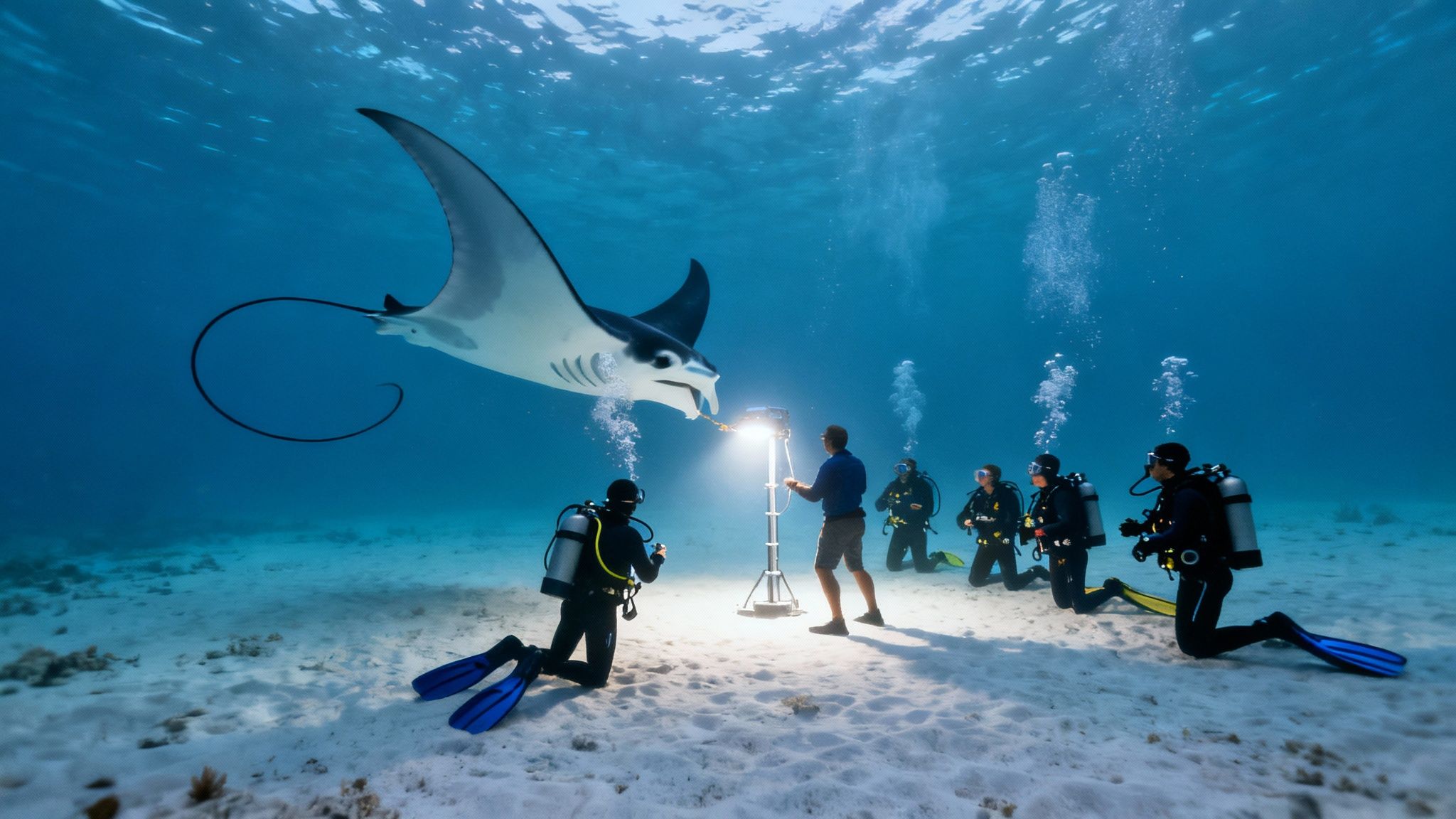
After a short surface interval, it's time for the showstopper. You’ll follow your guide back down for the second dive, heading to a specific spot on a sandy patch of the ocean floor, usually around 30-40 feet deep. This is where the magic happens. A powerful underwater light, which we affectionately call the 'campfire,' is set up in the middle of the group.
This bright light is a dinner bell for plankton, the manta rays' favorite meal. As clouds of plankton swarm to the light, the mantas glide in from the darkness to feast. You'll settle onto the sand, look up, and watch in awe as these massive, graceful creatures perform an incredible underwater ballet, swooping and barrel-rolling just inches over your head.
It's an experience of passive observation; you are a visitor in their dining room. The number one rule is simple: no touching. Your role is to relax on the bottom and simply witness one of the most breathtaking wildlife encounters imaginable.
Our guides are right there with you in the water, ensuring everyone is safe and positioned for an amazing, front-row view. The whole experience is carefully managed to be safe, respectful, and absolutely unforgettable.
Why Your Choice of Manta Dive Operator Matters
When it comes to the Big Island’s manta ray night dive, the operator you choose can make or break the experience. It’s not just about getting in the water; it’s about safety, comfort, and having a truly memorable time. Kona Honu Divers has built a reputation for excellence by focusing on the details that matter most to divers.
Our entire operation, from the crew to the vessels, is designed around creating a premium, safety-first adventure.
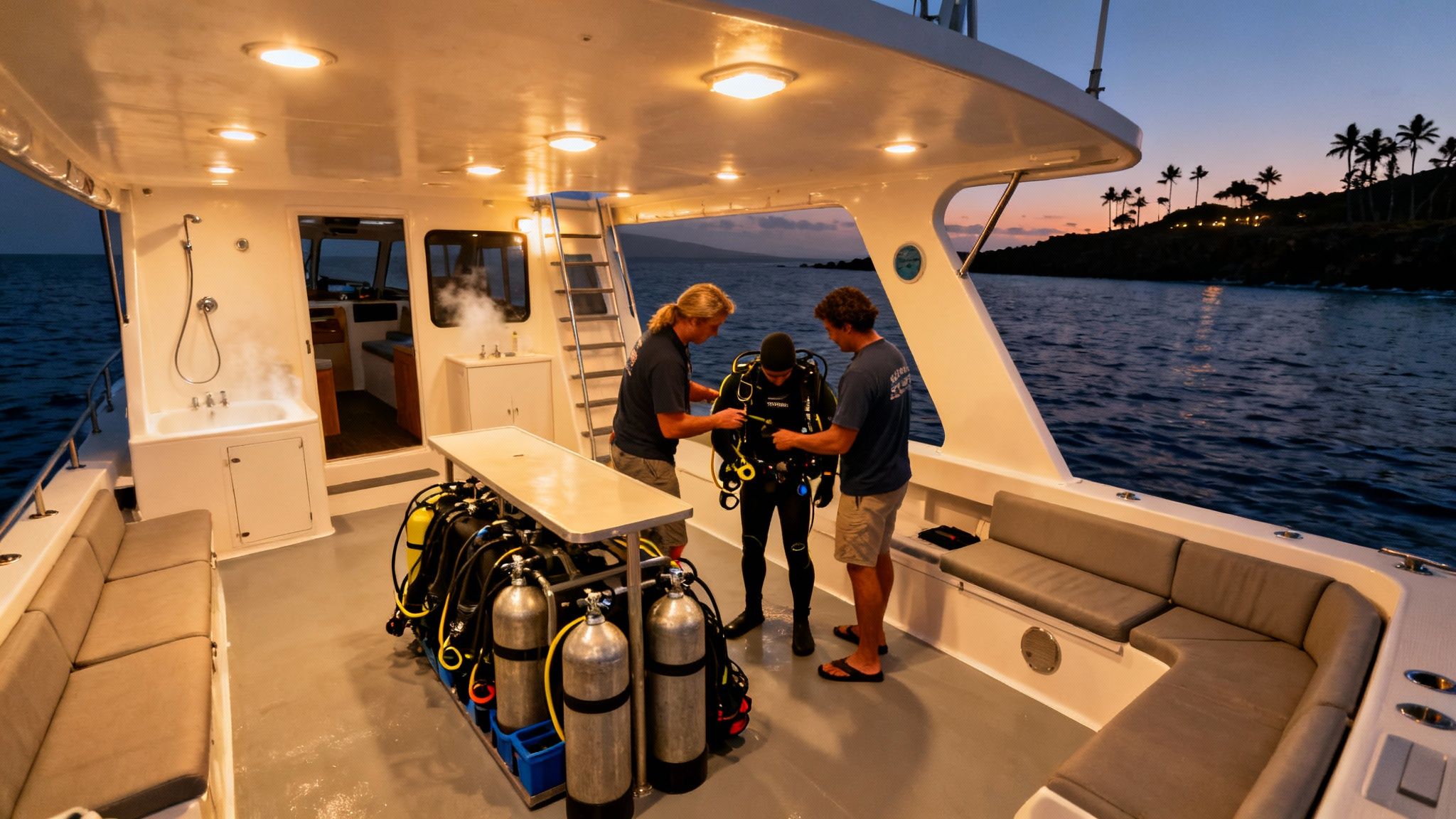
It all starts with our boats. They’re spacious and designed with a diver's needs in mind. Imagine climbing back on board after an incredible night dive and stepping into a hot freshwater shower—it’s a small luxury that makes a world of difference. We also offer free nitrox for all certified divers, which means you get more bottom time with the mantas and feel less tired afterward.
Expert Guides and a Commitment to Quality
Our dive guides are the heart of our operation. They're seasoned professionals who know the Kona coast inside and out, from the behavior of our local manta rays to the hiding spots of other fascinating critters you might otherwise miss. Their expertise is your key to a richer, safer dive.
We also take equipment seriously. All our rental gear is top-of-the-line and meticulously maintained, so you can dive with complete confidence. This dedication to quality is why thousands of divers from around the globe have left us five-star reviews.
Proven Success in a World-Class Destination
The numbers don’t lie. The Kona coast is a global hotspot for manta ray encounters, and we’re proud to be part of an industry that sees an 85-90% sighting success rate. It’s an incredibly reliable dive, drawing around 80,000 people each year to witness the magic.
While the mantas are the main event, we offer a full range of diving tours for every skill level. Whether you're interested in a private charter or exploring advanced reef sites, we can help build your perfect Hawaiian dive trip. To get a closer look at what to expect on our signature tour, check out our in-depth guide to the Kona Honu Divers manta ray night dive.
Ready to see the show for yourself?
Exploring Other Big Island Night Dives
The **Big Island manta ray night dive** is legendary, and for good reason. It’s an absolute must-do. But once the sun goes down, Kona’s underwater world has more than one secret to share.
For certified divers hungry for a different kind of thrill, the adventure doesn't stop at the manta feeding sites. There are some truly unique advanced dives that reveal a side of Hawaii's marine life you simply won't see anywhere else.
Venture into the Abyss on a Blackwater Dive
Picture this: you’re floating in the deep, dark ocean, tethered to a boat suspended over thousands of feet of water. As you drift, you watch bizarre, bioluminescent creatures rise from the abyss. This is the Kona Blackwater Dive. It’s less of a dive and more like a journey to another planet.
These tiny, often transparent critters make a nightly vertical migration toward the surface, creating a light show that feels completely surreal.
The Kona Blackwater Dive is a highly specialized, advanced experience. It gives underwater photographers and serious marine life junkies a chance to see creatures that almost never appear on a reef. It’s a completely different kind of night diving magic.
If you're ready for this unique challenge, you can learn more and book a guided Kona Blackwater Dive tour.
Beyond the open ocean, other advanced diving opportunities let you explore Kona’s dramatic underwater terrain. Seasoned divers can navigate ancient lava tubes and deep-water pinnacles, coming face-to-face with nocturnal hunters and critters that stay hidden during the day.
Your Manta Ray Night Dive Questions Answered
As you start planning your **Big Island scuba diving with manta rays** adventure, you’ve probably got a few questions. Let’s get them answered so you can feel completely prepared for one of the most incredible dives of your life.
Do I Need To Be An Advanced Diver?
Nope! This is one of the most common misconceptions. The standard manta ray night dive is actually perfect for most certified divers, even those who are newly certified.
The dive sites are quite shallow, usually between 25 and 45 feet, and the whole operation is very controlled. As long as you have good buoyancy control and are comfortable in the water at night, an Open Water certification is all you need to join in.
How Safe Is The Manta Ray Dive?
When you go with a professional, reputable operator like Kona Honu Divers, it’s incredibly safe. Safety is always the number one priority.
The crew gives a detailed pre-dive briefing, and expert guides are in the water with you the entire time. They enforce a strict no-touching rule for the manta rays. This keeps both the divers and the mantas safe and makes for a respectful, amazing encounter for everyone.
What Is The Best Time Of Year To See Manta Rays in Kona?
This is the best part—there's no bad time! The resident manta ray population here in Kona doesn't migrate, and their primary food source, plankton, is present all year long.
While the day-to-day ocean conditions can always change, there’s no "off-season" for the mantas. Your chances of a spectacular show are excellent no matter when you decide to visit. And while the manta dive is a can't-miss experience, you'll want the rest of your trip to be just as memorable, so it's worth checking out tips for crafting a personalized travel itinerary.
Can Non-Divers Come On The Boat?
Absolutely! Most dive boats are thrilled to have snorkelers join the trip, making it a fantastic outing for families or groups with different experience levels.
Snorkelers get their own custom-built light board to hold onto at the surface. This board attracts plankton, which in turn draws the mantas right up to them. They get an incredible bird's-eye view of the feeding frenzy just a few feet below. It’s a wonderful way for everyone to share in the magic.
Ready to witness the underwater ballet for yourself? Kona Honu Divers offers premier manta ray dive tours led by expert guides to ensure a safe and unforgettable night.