
Imagine sinking into the warm, twilight waters of the Pacific. The world around you shifts from day to night, the vibrant reef fading into a deep, mysterious blue. Then, you see them—enormous, graceful shadows emerging from the darkness. This is the heart of the Big Island scuba diving w manta ray night experience, a true bucket-list adventure that feels like stepping into another world.
It's one of the most profound and memorable underwater encounters you can have, and Kona just happens to be the world's best place to witness this magical ballet.
What Is The Kona Manta Ray Night Dive?
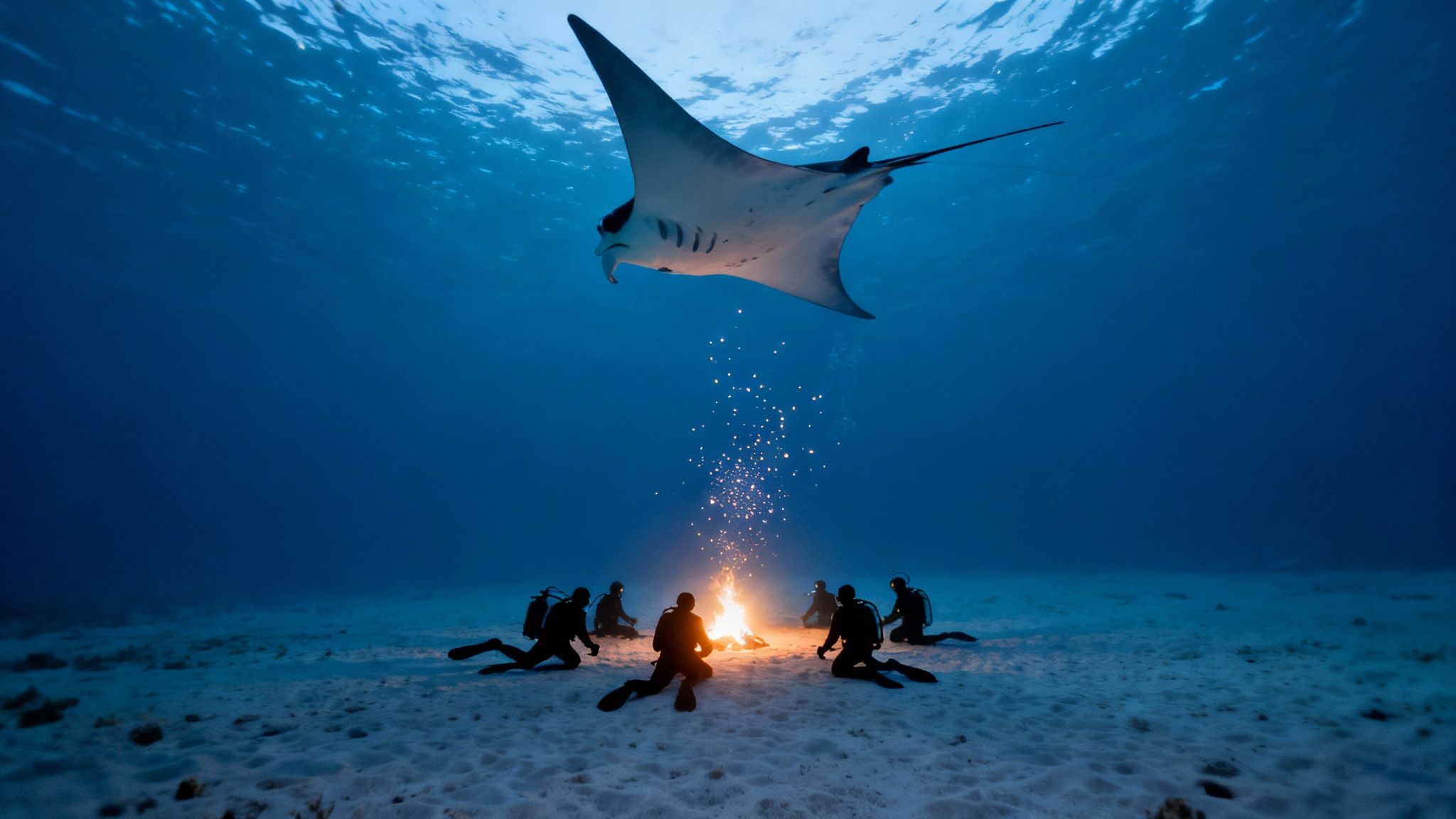
The Kona manta ray night dive is an incredible, carefully choreographed underwater spectacle. Over the years, local dive operators have perfected a method to bring these gentle giants in for a show you'll never forget. The whole thing hinges on a brilliantly simple concept: light attracts plankton, and manta rays love to eat plankton.
Think of it like building an underwater "campfire." After a short boat ride, divers descend to a sandy patch on the ocean floor, usually around 30-40 feet deep. There, you'll gather in a circle around a powerful, stationary light source that points straight up. This light acts like a giant bug zapper for the ocean, illuminating the water column and attracting a massive cloud of microscopic plankton.
The Underwater Ballet Begins
Once the plankton starts to swarm in the light beams, the real show begins. Majestic manta rays, with wingspans that can stretch over 12 feet, glide in from the open ocean. They perform a mesmerizing dance, doing effortless barrel rolls and graceful loops as they soar through the light to gulp down the concentrated plankton buffet.
As a diver, your job is easy. You simply find a comfortable spot on the sandy bottom, relax, and watch the performance unfold just inches above your head. It’s a completely passive experience that allows you to witness a natural feeding behavior in the most epic way possible.
Why Kona Is The Premier Manta Destination
What truly sets this Big Island scuba diving experience apart is just how reliable it is. The Kona coast is one of the most consistent places on Earth to see manta rays. The local population of reef mantas doesn't migrate, which means they are here year-round, ready to put on a show.
The Kona coast of Hawai‘i (Big Island) is among the world’s most reliable places for guided night manta ray encounters, with long‑term recorded sighting success rates typically reported between about 80% and 96% depending on site and year.
This incredible consistency has turned the manta ray night dive into a cornerstone of Kona's tourism, drawing in thousands of divers and snorkelers every year. It’s an experience that’s both world-famous and uniquely Hawaiian. You can get a better sense of its popularity and impact by exploring more details on Big Island manta ray tourism.
To help you get a quick sense of the two main locations for this dive, here's a quick comparison.
Manta Ray Night Dive At A Glance
| Feature | Garden Eel Cove (North) | Manta Village (South) |
|---|---|---|
| Location | Near Kona International Airport | South of Kailua-Kona |
| Typical Depth | 30-40 feet | 35-45 feet |
| Environment | Sandy bottom surrounded by healthy reef | Coral rubble and sand channels |
| Accessibility | Boat access only | Boat access only |
| Protection | Very protected from swell | Less protected, can be rough |
| Manta Population | Larger, established group of mantas | Slightly smaller, distinct group |
| Best For | High probability & best viewing experience | Can be a good alternative |
While both sites offer a chance to see mantas, Garden Eel Cove is the superior choice due to its protected location, better viewing area, and healthier surrounding reefs, ensuring a more consistent and spectacular experience.
If you're ready to see this incredible spectacle for yourself, Kona Honu Divers provides a premier, safe, and conservation-focused manta ray night dive tour to the best location. Their experienced crew will make sure you get a front-row seat to one of nature's greatest performances.
Why Garden Eel Cove Offers A Superior Manta Experience
When you're planning a manta ray dive on the Big Island, you’ll quickly learn that where you go matters just as much as when. While there are a couple of great spots, one consistently stands out from the rest: Garden Eel Cove. This place isn't just a dive site; it's the gold standard, a world-class stage for one of nature's most incredible performances.
What makes it so special? It starts with geography. Tucked away on the Kona coast, Garden Eel Cove is naturally sheltered from the big ocean swells that can roll in. This usually means calmer seas and clearer water—a huge plus for any night dive. Better conditions mean more comfort and, most importantly, a better view of the show.
A Natural Underwater Amphitheater
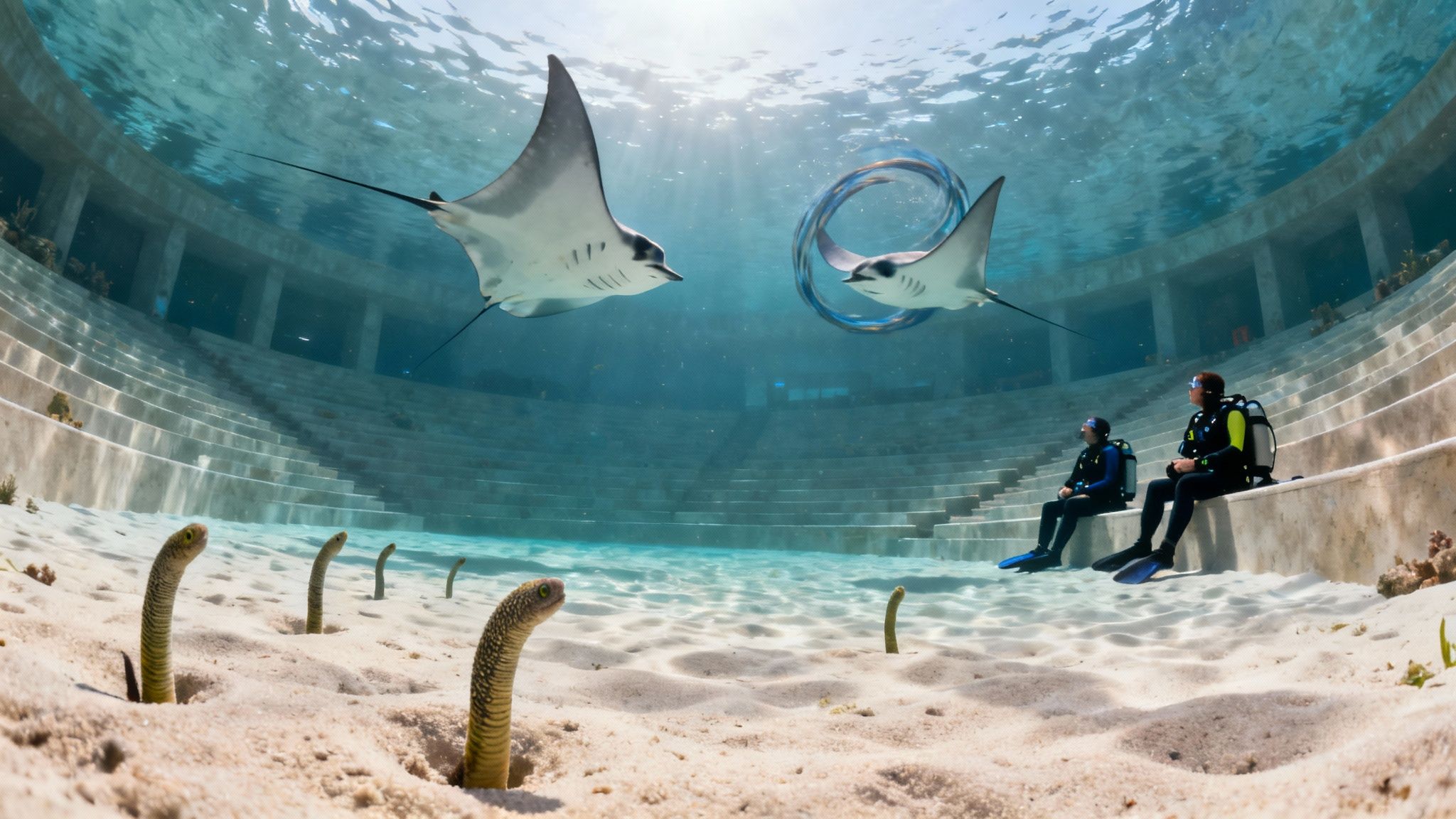
The real genius of Garden Eel Cove is its layout. The seafloor here is shaped like a natural amphitheater, with a sandy bottom that slopes gently upwards, surrounded by beautiful reefs. This design is perfect for us divers. We can settle in on the sand, find a comfortable spot, and watch without getting in the way or damaging the reef.
It's like having a front-row seat at the theater. The setup gives the mantas all the room they need to swoop, glide, and barrel roll right over our heads in the light beams. The whole experience feels massive and yet incredibly up-close at the same time. There’s a good reason many of us call this spot the manta ray heaven of the Big Island.
The Advantage of the Two-Tank Trip
Here at Kona Honu Divers, we run a two-tank trip to Garden Eel Cove, and it really is the best way to experience it. Instead of just a quick night dive, you get a full adventure.
- First Dive (Daylight): We head out in the late afternoon and jump in while the sun is still up. You'll get to explore the beautiful reefs, see all the colorful fish, and meet the funny little garden eels that the cove is named after. It’s a great way to get oriented and comfortable with the site before dark.
- Second Dive (Night): After a surface interval during a beautiful Kona sunset, we go back down for the main event. Since you already know the lay of the land, you can just relax and lose yourself in the incredible sight of the mantas dancing in the lights.
This two-tank approach gives you so much more value. It’s not just one dive; it’s a complete afternoon and evening exploring one of the most amazing places in the ocean.
A Thriving and Reliable Manta Population
So, will you actually see mantas? At Garden Eel Cove, the odds are overwhelmingly in your favor. This site is a primary feeding station for Kona's resident reef manta rays, and their attendance record is fantastic.
Years of research have gone into studying these animals. Scientists have been able to identify and name hundreds of individuals that call this coast home. In fact, cataloging efforts have confirmed in excess of 300 individual manta rays here, with some experts believing the total population might be over 450.
This huge, healthy population is why the success rate for sightings at Garden Eel Cove is so consistently high. When you dive here, you’re not just hoping for a chance encounter—you're visiting their favorite restaurant.
Your Manta Ray Dive Adventure Step By Step
So, what’s it really like to be on a big island scuba diving w manta ray night charter? It’s one thing to see the pictures, but it's a completely different feeling to be there in the water. Let’s walk through what you can expect when you join us at Kona Honu Divers for this bucket-list experience.
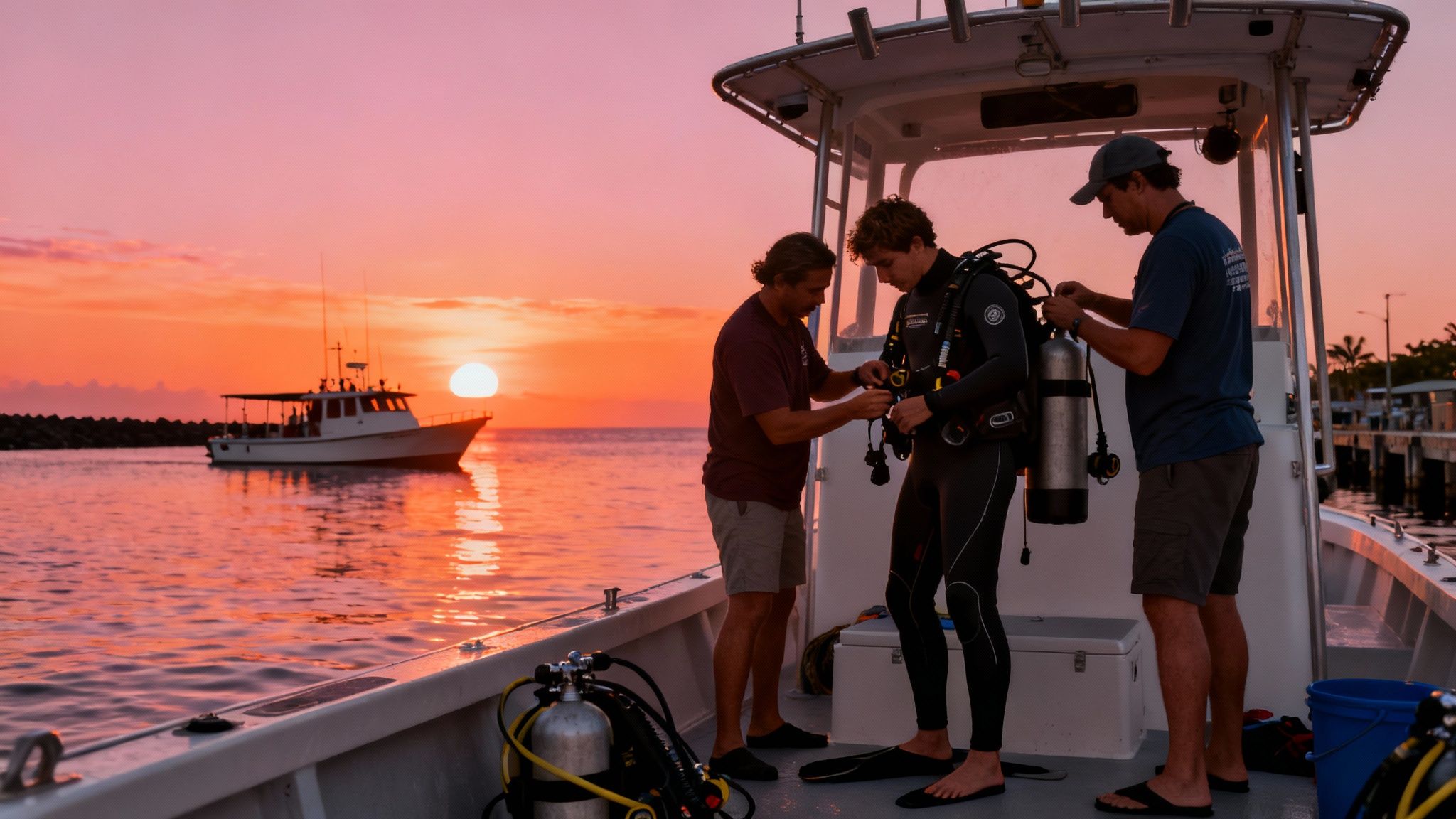
Your adventure starts on land, at Honokohau Harbor. Our crew will be right there to greet you with a genuine aloha smile, get you checked in, and make you feel like part of the family from the get-go. This isn't just about getting on a boat; it's about starting an incredible evening, and the positive energy is absolutely infectious.
Setting Sail into the Sunset
Once everyone is onboard, we’ll run through a thorough safety briefing. Our crew covers everything from the boat's layout to the specific dive plan, making sure every single person feels confident and ready. We take safety seriously, but we keep it engaging—our goal is for you to feel completely at ease.
Then, we head out. As we motor toward our dive site, Garden Eel Cove, you get front-row seats to a world-famous Kona sunset. The sky just erupts in fiery oranges, pinks, and purples. It's the perfect, peaceful cruise to get you hyped for the main event.
The First Dive: Getting Acquainted
This is a two-tank trip, and the excitement kicks off with a daylight reef dive. While the sun is still up, you'll gear up and drop into the beautifully clear, warm waters of Garden Eel Cove. This first dive is your chance to get comfortable and explore the vibrant world beneath the waves.
You'll see tons of colorful reef fish, maybe spot a sea turtle cruising by, and of course, witness the thousands of quirky garden eels that give the site its name. This isn't just a "warm-up" dive; it's an amazing experience on its own and a great way to get a feel for the underwater terrain before the sun goes down.
The Main Event: The Manta Ray Ballet
Back on the boat, you'll have your surface interval as dusk settles over the ocean. We’ll have some snacks and drinks for you while the anticipation really starts to build. As true darkness falls, it's time to gear up again, this time with your dive lights.
Slipping into the dark ocean is a thrill like no other. Your guide will lead the group down to a sandy patch on the bottom where a powerful light—our "campfire"—is already set up. Divers gather in a semi-circle, settle onto the sand, and point their lights straight up. These beams of light attract swarms of plankton, ringing the dinner bell for the mantas.
This setup is the secret sauce. By creating a concentrated plankton buffet, we can reliably invite the mantas in for a close-up feeding frenzy that is simply breathtaking.
And then, it happens. A giant, dark shadow emerges from the blackness. The first manta ray glides effortlessly into the light, its massive wingspan creating an awe-inspiring silhouette. Soon, another joins, and then another. They begin their silent, mesmerizing ballet, performing graceful barrel rolls just inches above your head as they filter the plankton from the water.
There’s truly no way to describe the feeling of a 1,000-pound animal soaring directly over you with such impossible grace. It’s humbling, powerful, and a moment you will absolutely never forget. This is the pinnacle of the big island scuba diving w manta ray night experience.
When you're ready to see it for yourself, you can book the premier 2-Tank Manta Dive with Kona Honu Divers.
Why We Recommend Booking With Kona Honu Divers
When it comes to the Big Island manta ray night dive, the single most important decision you'll make is choosing your operator. This isn't just about ticking an item off your bucket list; it's about making sure the experience is safe, respectful to the animals, and truly unforgettable. And that's exactly why we believe Kona Honu Divers is the best choice on the island.
They've earned a stellar reputation for a reason. It’s built on rigorous safety standards, a crew of genuinely passionate and experienced divemasters, and a deep, unwavering commitment to marine conservation. They don't just drop you in the water; they guide you through an incredible encounter, ensuring both you and the mantas are treated with the highest level of care.
The Best Way to Experience the Manta Dive
While many outfitters offer a single tank night dive, Kona Honu Divers has perfected the experience with their flagship 2-Tank Manta Dive trip. Think of it as a complete evening designed to give you the most value and a much deeper appreciation for the world-class dive site at Garden Eel Cove.
It’s a brilliant two-part adventure:
- Dive 1: Daylight Reef Exploration. Your first tank is a gorgeous afternoon dive. You'll get to explore the vibrant reef, see the unique marine life, and get comfortable with the dive site before the sun goes down.
- Dive 2: The Manta Ray Night Dive. After watching a spectacular Kona sunset from the boat (with snacks!), you'll descend again for the main event. This is when the magic happens, and you witness the world-famous manta ray ballet.
This two-dive approach just makes sense. It gives you more time in the water and a far richer, more complete experience than a single, rushed night dive.
A Crew That Makes All the Difference
When you dive with Kona Honu Divers, you're not just a number on a roster. You're diving with a team known for its top-tier professionalism and authentic aloha spirit. Their divemasters are more than just guides; they're fantastic storytellers and marine life experts who are eager to share their knowledge and passion with you. It’s this dedication that shines through in their countless five-star reviews.
But don't just take our word for it. Here's what fellow divers have to say about their adventures with the Kona Honu Divers team:
Booking this trip is more than just reserving a spot on a boat—it's an investment in a memory you'll cherish forever, guided by the best in the business. From the moment you check in to your final, awe-struck ascent, you’ll see why they're the #1 choice for the manta ray night dive.
Ready to see the magic for yourself? You can find all the details and book your spot directly on their 2-Tank Manta Ray Dive tour page. This is one adventure you'll be talking about for years to come.
How To Prepare For Your Manta Ray Night Dive
A little bit of prep work goes a long way in making your big island scuba diving w manta ray night experience a total success. When you've got your ducks in a row beforehand, you can relax and focus all your attention on the incredible underwater ballet unfolding just inches from your face.
First things first, let's talk about the essentials. To join the dive, you'll need at least an Open Water Diver certification from a recognized agency. While having a night dive under your belt is great, it’s not a dealbreaker. Our dives are fully guided by experienced pros in a controlled, familiar spot, so we'll be right there with you.
What To Bring On The Boat
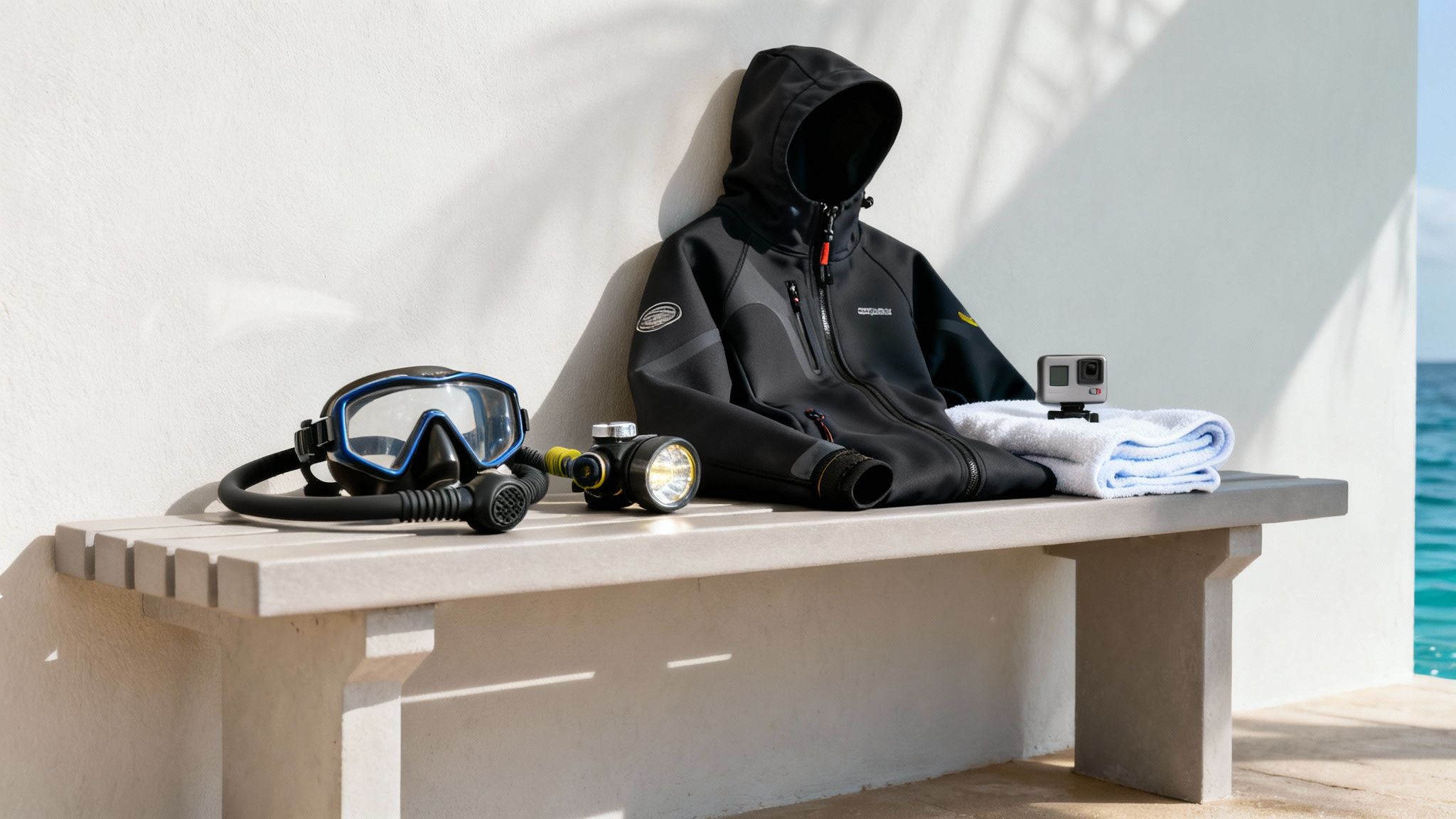
Packing a small "go bag" with a few key items will make your trip infinitely more comfortable. Trust me, that boat ride back to the harbor can get pretty chilly after you’ve been in the water at night.
Here’s what I always recommend bringing:
- A towel and dry clothes: A warm sweatshirt or jacket is non-negotiable for the ride home. You'll thank me later.
- Reef-safe sunscreen: You'll want it for the boat ride out while the sun is still setting.
- Reusable water bottle: Diving is dehydrating, so keep sipping.
- Seasickness medication: If you even think you might get seasick, take something beforehand. The ocean can feel different after dark.
- Your certification card and logbook: Can't go diving without it!
If you want a deeper dive into the equipment we provide, check out our guide on the gear you will need for your Kona diving adventure.
Capturing The Moment: Photography Tips
Getting a great shot of the mantas at night is a fun challenge, but it's totally doable. The low-light conditions just require a different mindset than your typical sunny reef photography. Whether you're rocking a GoPro or a full camera rig, a few tweaks can make all the difference.
For the GoPro crowd, these settings are a solid starting point:
- Video Mode: Shoot in the highest resolution you have, like 4K or 5.3K.
- Frame Rate: Drop it to 24 or 30 fps. This lets more light hit the sensor, which is exactly what you need.
- Shutter Speed: Try 1/60 to get a good balance between brightness and motion blur.
- ISO: Set a maximum of 800 to start. You can push it higher, but watch out for that grainy digital noise.
- Stabilization: Standard stabilization is your friend here. "Boost" can crop your shot way too much.
And good news—you can leave the red filter at home. The powerful lights we use to attract the plankton create plenty of bright, white light. The real key to a great shot is holding your camera as steady as you can and letting the mantas glide through your frame.
Manta Etiquette: Rules Of Engagement
This is the most important part of your preparation: understanding how to act around these gentle giants. The Kona dive community has worked hard to establish clear guidelines to keep both divers and mantas safe. Following this "Manta Etiquette" isn't optional—it's what makes this incredible experience sustainable.
The golden rule is simple: be a passive observer. You're a guest in their dining room. Your job is to stay put and let the mantas do their thing.
This boils down to a few simple but critical rules:
- Hold Your Ground: You'll be positioned on the sandy bottom. Don't be tempted to swim up into the water column where the mantas are swooping and feeding.
- No Touching, Ever: Manta rays are covered in a protective mucus coating. Touching them strips it away and can make them susceptible to infections. If they get close, just enjoy it—let them be the ones to initiate contact.
- Mind Your Bubbles: As a manta glides overhead, try to time your exhale so you aren't blasting a stream of bubbles right in its face.
- Lights Up: Point your dive light straight up toward the surface. This helps concentrate the plankton "chum" and keeps your beam out of everyone else's eyes.
By following these simple guidelines, you become part of the solution, helping to protect this world-class dive for generations of future divers.
Beyond the Manta Ray Ballet: More Big Island Diving Adventures
The manta ray night dive is an absolute showstopper, a true bucket-list experience. But for many divers, it's just the first taste of what makes diving in Kona so incredible. Once the awe of the manta encounter settles in, the question we always hear is, "Okay, that was amazing… what's next?"
Fortunately, the answer is just as exciting. If you're ready to explore something completely different, Kona's underwater world has a few more secrets up its sleeve.
The Kona Blackwater Dive: A Trip to Inner Space
Picture this: you're suspended in pure, inky blackness miles from shore, with thousands of feet of ocean beneath you. You’re tethered to the boat, a tiny beacon in a vast, dark universe. This isn't a reef dive. This is the legendary Kona Blackwater Dive.
Every single night, one of the planet's largest migrations happens right here, as bizarre and wonderful creatures rise from the deep to feed near the surface. You're not looking for fish you’d see on a reef; you're looking for life forms that seem to come from another world. Think bioluminescent jellies pulsing with light, translucent larval fish, and shimmering squid that look like something out of a sci-fi movie. It’s a mind-bending, almost psychedelic experience, and Kona Honu Divers offers a safe, expertly guided Kona Blackwater Night Dive that will redefine what you think is possible underwater.
Advanced Dives for the Seasoned Explorer
The same volcanic forces that shaped the Big Island created an underwater playground for experienced divers. Forget simple coral gardens; we're talking about a coastline carved with dramatic lava tubes, massive underwater archways, and deep, winding canyons just waiting to be explored.
These are not your average dive sites. They're often deeper, more exposed to currents, and demand a solid set of skills and good buoyancy control. But the reward is worth every bit of effort. You’ll navigate stunning geological formations and see rare critters that hide away from the more crowded spots, experiencing the raw, untamed beauty of Kona's volcanic coastline.
These premier dive trips are for divers with advanced certifications who want to get off the beaten path. It's a chance to see parts of the reef that most visitors miss entirely.
At Kona Honu Divers, we have something for every diver. Whether you're here for the graceful manta ballet, the mysteries of the deep on a blackwater dive, or the thrill of exploring lava tubes, we can build the perfect itinerary for you. Take a look at our full range of Big Island diving tours and start planning.
For divers who are ready for a real challenge, our Premium Advanced 2-Tank Trip is designed to show you the very best of Kona’s rugged underwater world.
Answering Your Questions About the Manta Ray Night Dive
Thinking about joining us for a manta ray night dive on the Big Island? It’s a life-changing experience, but it’s completely normal to have questions before you jump in. Let's walk through some of the most common things people ask so you can feel totally prepared for the adventure.
Is the Manta Ray Night Dive Safe?
Absolutely. When you dive with a professional, reputable operator like Kona Honu Divers, safety is the top priority. The entire experience is incredibly well-managed and controlled from start to finish.
Before you even dip a fin in the water, our experienced divemasters will give you a detailed safety briefing. They know this site inside and out. The dive itself is in a relatively shallow, protected bay, and the manta rays themselves are the definition of gentle giants. They're filter feeders, so they're only interested in the tiny plankton in the water. With no teeth, stingers, or barbs, they pose zero threat to humans.
When Is the Best Time of Year to See Manta Rays?
This is one of the best things about diving in Kona: there really is no "off-season" for manta rays! Our local population of reef mantas are residents, which means they live here year-round and don’t migrate.
This consistency means we have incredibly high success rates for sightings every single month. Sure, the water might be a few degrees warmer in the summer, but the manta action is just as spectacular in January as it is in July. Your chance of having a mind-blowing encounter is fantastic no matter when you decide to visit.
What Certification Do I Need?
To join the scuba diving portion of the tour, you’ll need at least an Open Water Diver certification from a recognized agency like PADI, NAUI, or SSI.
While having some night diving experience under your belt is helpful, it’s not required for this specific dive. Our guides lead the entire experience in a familiar spot, making it a great and accessible night dive even if you've just recently earned your certification.
Can I Touch the Manta Rays?
No, and this is the most important rule of the entire encounter. You must never touch a manta ray. It’s all about protecting these incredible animals.
Manta rays are covered in a special mucus coating that acts as a shield, protecting them from bad bacteria and infections. If you touch them, you can accidentally rub this protective layer off, leaving them vulnerable to disease. Our job is to be respectful, passive observers. We'll show you how to position yourself on the seafloor so you can relax and just let these magnificent creatures glide effortlessly right over your head.
Ready to see this underwater ballet for yourself? Kona Honu Divers offers a premier 2-Tank Manta Ray Dive tour that gives you a guaranteed front-row seat to the magic.