
You're probably in the same spot most visiting divers are in when they start planning Hawaiʻi. You've seen the manta videos, the blue water, the lava arches, and now you're trying to sort out what's real, what's worth booking, and what kind of trip suits your certification level and comfort on a boat.
Big Island scuba diving rewards good planning. The island gives you calm leeward water, dramatic volcanic structure, easy reef diving for newer certified divers, and a short list of night dives that people build whole vacations around. It also gives you a few honest trade-offs. Some dives are easy to enjoy and hard to mess up. Others are unforgettable but demanding, especially if you're rusty, underpacked, or prone to motion sickness.
A lot of visitors land on the west side, open a dozen tabs, and still don't know where to start. That's why I always point people toward operators that specialize in these conditions, starting with Kona diving on the Big Island. The right crew matters almost as much as the site.
Your Adventure into the Blue Begins Here
A first Kona dive usually starts the same way. You step onto the boat expecting warm tropical water and colorful fish. You get that. Then you drop below the surface and realize the underwater terrain is the key surprise. The reef isn't soft and gentle in the way many visitors picture Hawaii. It's volcanic, dark-edged, cut with ledges, arches, and lava features that make the coastline feel young even underwater.
That difference is why so many divers come here with one dive in mind and leave talking about five others. They book for mantas, then end up talking about turtle cleaning stations, lava tubes, open-ocean night drifts, and reef dives where the visibility makes depth and distance look misleadingly close.
Big Island scuba diving works for travelers who want both spectacle and variety. You can do a relaxed reef morning, then go back out for a night experience that feels like a different ocean entirely.
For a new visitor, that range is what makes the Big Island stand out. You don't need a hyper-technical expedition mindset to have a memorable trip here. But you do need a realistic one. Some dives are ideal for recently certified divers. Some are only smart if your buoyancy, situational awareness, and comfort in dark water are already solid.
What most visitors are really looking for
Usually it comes down to three things:
- A signature experience: Many divers want at least one dive they'll remember for years.
- Conditions that don't feel punishing: Calm water and clear visibility matter more than travelers realize until they've dived somewhere that lacks both.
- A safe, local operation: The Big Island has enough options that choosing carefully pays off.
That mix is exactly why Kona keeps coming up whenever divers talk seriously about Hawaii.
Why the Kona Coast is a Diver's Paradise
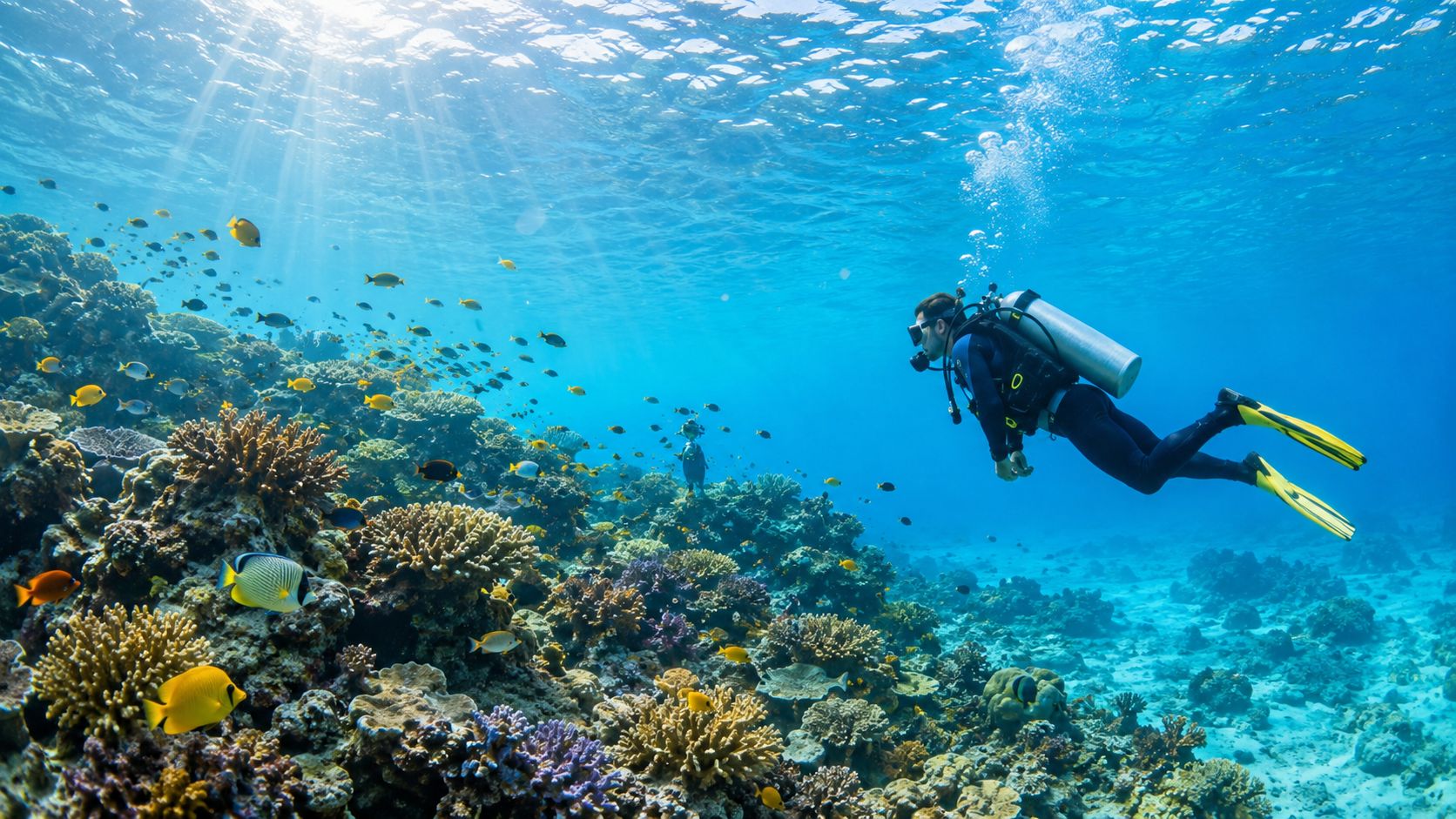
Drop into the water off Kona on a good morning and the first thing you notice is how calm the dive can feel from the start. The second is how quickly the bottom comes into view. For visiting divers, that combination changes the whole trip. You spend less energy dealing with rough surface conditions and more attention on buoyancy, marine life, and the shape of the reef in front of you.
Kona earns its reputation because the coast is dependable in ways that matter to real divers. The leeward side is often more protected than other parts of Hawaii, so boats can reach productive sites without every outing turning into a weather call. Once underwater, the lava-built terrain creates swim-throughs, shelves, fingers of reef, and abrupt relief that keep even a conservative profile interesting.
If you want a closer explanation of the conditions and terrain, what makes diving in Kona unique breaks down why this coastline dives differently from much of the rest of the state.
Why the water often feels so diver-friendly
The west side benefits from geography. It sits in the island's rain shadow, with less runoff than wetter coasts, and that usually means cleaner water after normal weather patterns. The shoreline is also shaped by relatively young volcanic rock rather than broad river-fed reef systems, so many sites feel crisp and open instead of silty.
That clarity has practical value. Buddy contact is easier. Navigation is simpler for newer divers. Photographers get cleaner backgrounds and more usable natural light. Fish and turtles also tend to show themselves sooner because you can spot movement from farther away.
What makes Kona different underwater
Kona diving rewards control more than speed. Divers who settle in, hold depth well, and scan the terrain carefully usually get more out of a site than divers who try to cover as much ground as possible.
| Feature | What you notice as a diver |
|---|---|
| Leeward coast | More dive days run as planned, with fewer rough, exposed conditions |
| Volcanic topography | Arches, cracks, boulder fields, and lava contours give sites strong visual identity |
| Clear water | Buddy awareness, light, and overall comfort are often better than visitors expect |
| Healthy mix of reef and blue water | You can enjoy small endemic life on one part of the dive and still stay alert for larger animals offshore |
There is a trade-off, and it helps to know it before booking. Kona is rarely about high-adrenaline current diving or huge wall descents. The appeal is steadier and, for many divers, better. Clear water, thoughtful site selection, and marine life encounters stack up over several days into a trip that feels consistently good instead of hit-or-miss.
That consistency is one reason so many visitors build the whole vacation around diving here, then choose one experienced local operator to organize the week well. Done right, you get easy morning reefs, a signature night dive, and advanced options matched to your skill level instead of guessing site by site.
The Big Island's Most Unforgettable Dives
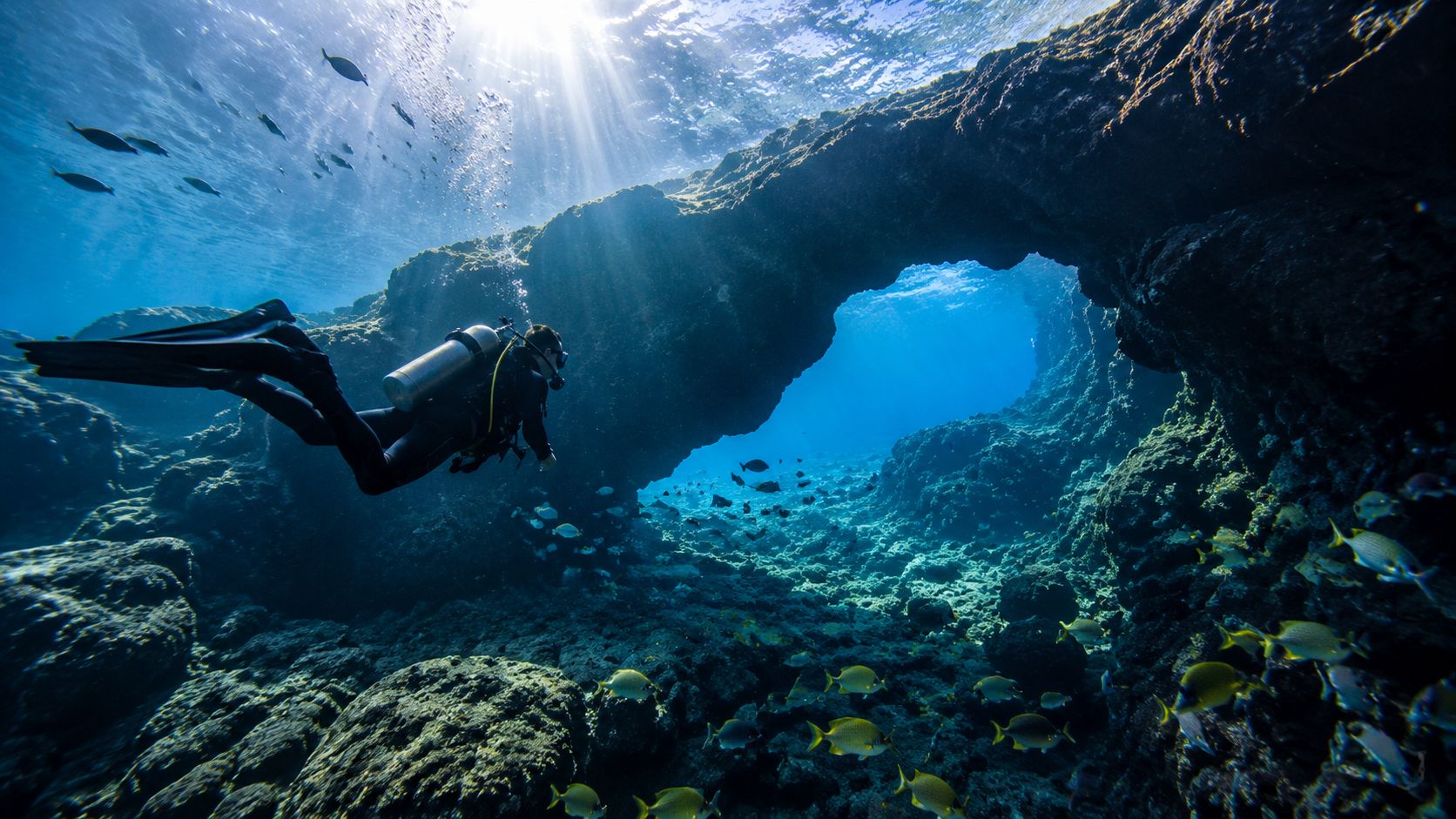
A lot of visitors arrive in Kona thinking they need to cram in as many dives as possible. The better approach is to build the trip around the dives that only make sense here, then fill the rest of the week with sites that suit your skill and energy level. That is how you get a trip that feels memorable instead of rushed.
Three experiences usually shape the whole plan. The manta night dive draws almost everyone. Blackwater attracts confident divers who want something far outside the normal reef routine. Advanced day dives round out the trip with lava structure, longer profiles, and a better chance of seeing the Kona coast at its most dramatic.
For visitors starting with the island's signature experience, this guide to diving with manta rays in Kona gives a clear picture of how the dive works and what to expect.
Manta Ray Night Dive at Garden Eel Cove
If you only do one marquee dive on the Big Island, make it this one.
The format is simple. Divers settle on the bottom or kneel in a designated area while lights attract plankton. Mantas move into the beams to feed, rolling overhead again and again. The best moments usually come after everyone stops fidgeting and the animals settle into a pattern.
Garden Eel Cove is a strong pick because the site is protected and the viewing setup is usually more controlled than at more exposed alternatives. That matters more than first-timers realize. An easier descent, steadier position on the bottom, and less surge all improve the experience. If you already know you want this dive, it makes sense to book an operator that runs a dedicated Garden Eel Cove manta dive and snorkel tour.
A few habits make a big difference on manta night dives:
- Hold your position cleanly: Good buoyancy keeps you off the reef and out of other divers' light.
- Keep your hands in and your movements small: Reaching up at mantas ruins the encounter fast.
- Listen closely to the briefing: Entry, descent, and light placement are part of the system, not suggestions.
This is a wildlife encounter with structure. Divers who treat it that way usually come back thrilled.
Blackwater diving offshore
Blackwater is the dive experienced divers talk about for years.
You leave the reef behind and descend into open water at night, suspended over very deep ocean with only the lit water column in front of you. Then the strange stuff starts drifting by. Larval fish, translucent jellies, pelagic juveniles, and animals most divers never see in their adult forms show up in the lights. It can feel surreal, but the procedure is disciplined and deliberate.
The appeal is obvious. So is the trade-off. Blackwater asks for calm trim, comfort in darkness, and the ability to stay composed without a bottom, reef, or wall to reference. Divers who are rusty, anxious in open water, or still sorting out buoyancy usually enjoy a regular night dive more. Divers who are current and confident should book a dedicated Kona blackwater night dive rather than treating it like just another boat dive after sunset.
I give simple advice here. If you have to wonder whether the dark, open ocean will get in your head, get a couple of easy dives in first and decide after that.
Advanced day dives and shore options
The daytime diving deserves more attention than it gets. Many repeat visitors come back for the mantas, then end up talking all week about the lava tubes, arches, drop-offs, and animal encounters from their morning boats.
Shore diving at places like Two Step gives independent divers flexibility, but it also demands judgment. Entries over lava are not forgiving, especially with surf, a camera, or unfamiliar fins. Boat diving takes some of that workload off your plate and usually gives access to cleaner structure and better site selection for the day's conditions.
Divers who want more than a standard recreational schedule should look at an advanced long-range dive tour. That is often the smarter way to spend a premium dive day than trying to guess which site sounds impressive on paper.
| Dive type | Best for | Main trade-off |
|---|---|---|
| Manta night dive | Certified divers with decent buoyancy and comfort at night | Boat timing and night conditions can be tough for motion-sensitive guests |
| Blackwater | Experienced divers who stay calm in open ocean and low-reference conditions | Mentally demanding, and a poor fit for rustiness or anxiety |
| Advanced day dives | Divers who want stronger topography, longer profiles, and more technical site selection | The trip only works if the operator matches the plan to your real ability |
| Shore dives | Self-sufficient divers who value flexibility and lower cost | Lava entries and exits punish bad timing and casual footing |
One practical note from years of watching visitors plan too aggressively. Do not stack every high-intensity dive at the front of the trip. A solid reef dive early on tells you a lot about your weighting, your breathing, your comfort level, and whether you are ready to enjoy the more demanding options.
Planning Your Big Island Dive Trip
Where you stay matters almost as much as what you book. If diving is the priority, staying in or near Kailua-Kona keeps mornings simpler and reduces the friction of early check-ins, night returns, and back-to-back dive days.
Timing matters too. Diving happens year-round on the Kona side, but the prime season is August to October, when conditions are especially favorable, according to this Big Island scuba planning guide. That same source notes that the island features shore sites such as Two Step, plus advanced locations where divers may encounter unique wildlife including the 14-foot female tiger shark "Laverne" near Honokōhau Harbor.
What to pack besides dive gear
Visitors usually remember mask, computer, and certification card. They forget the things that make the full day easier.
- Reef-safe sun protection: You'll spend more time on deck than you think.
- A light rain layer: Kona can be sunny at departure and wet by the time you're unloading.
- Footwear with grip: Lava rock and wet decks punish flimsy sandals.
- A dry change of clothes: Especially useful after night dives.
- Water and easy snacks: Some operators provide refreshments, but having your own backup helps.
How to shape the trip
Don't schedule every major dive on consecutive nights. Most visitors enjoy the trip more when they alternate effort. A reef morning, a rest afternoon, then a night dive usually works better than stacking demanding outings without recovery time.
A smart first itinerary often looks like this:
- Start with a daytime two-tank dive to settle your weighting and buoyancy.
- Book the manta night dive next once you feel comfortable in local conditions.
- Save blackwater or advanced sites for later after you know how you're handling the boat, current, and schedule.
The divers who enjoy Kona most aren't always the most experienced. They're the ones who leave room in the plan for weather, fatigue, and one dive running so well that they want to do it again.
If your non-diving family members are traveling with you, basing yourself on the Kona side makes the whole vacation easier. Beaches, restaurants, and departure harbors are all more straightforward.
For budgeting, it also helps to review a current overview of how expensive scuba diving in Hawaii can be before you lock in multiple boat days.
Safety Certifications and Beating Seasickness
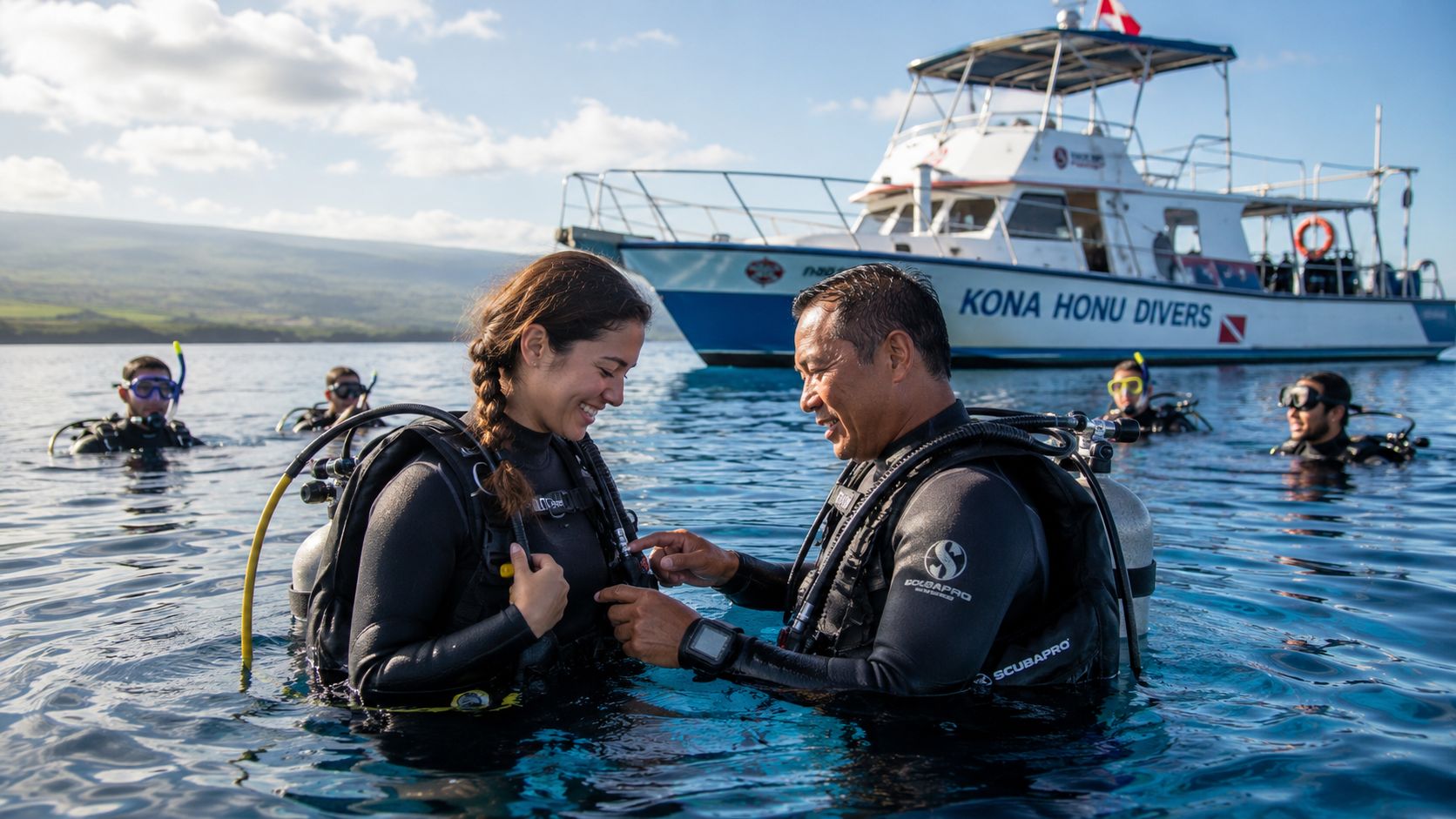
You are backrolling off a Kona boat at dusk. The ocean is calm enough, but your stomach is already off, your mask feels tighter than usual, and the dive you booked suddenly seems more ambitious than it did online. That is how small mistakes start here. The fix is simple. Match the dive to your current skill, and treat seasickness prevention as part of your gear setup.
Certifications matter, but recent experience matters just as much. I have seen plenty of certified divers have a rough first day in Kona because they had not been in the water for a year, or because they booked an advanced night trip before testing their comfort on a standard two-tank morning. Good operators will screen for that. Kona Honu Divers does, and that is one reason newer visitors usually have a better trip when they book in the right order instead of chasing the hardest dive first.
Which certification fits which dive
A realistic breakdown looks like this:
- Open Water divers: Usually well-suited for many Kona reef dives, provided buoyancy, air use, and general comfort are in decent shape.
- Night-capable, recently active divers: Better fit for the manta night dive, where darkness, surface conditions, and task loading can raise stress even though the dive profile itself is often straightforward.
- Divers with solid recent boat experience and a healthy logbook: Better candidates for blackwater, where there is no reef reference, no bottom in view, and far less room for hesitation.
Blackwater is not difficult because of depth alone. It feels different because it strips away visual reference points. At night, suspended over open ocean, a diver who is calm on a daytime reef can suddenly realize they rely more on the bottom, the shoreline, or the group than they thought.
If that sounds like you, book a daytime charter first. You will learn more from one honest checkout-style dive than from reading trip descriptions for an hour.
Boat comfort matters too, because nausea affects judgment, buoyancy, and how well you follow a briefing. If you know you get motion sick, review these practical Kona seasickness prevention tips before your dive trip.
Seasickness is common and manageable
The manta ray night dive and Kona blackwater dive are specifically identified as situations where motion sickness can hit harder because of darkness, surface movement, and the lack of a stable horizon in the Guide to Swimming with Manta Rays in Hawaii. That is consistent with what crews see every week.
Prevention works better than reacting once the boat is already moving. Visitors commonly use meclizine products such as Bonine, dimenhydrinate products such as Dramamine, ginger, acupressure bands, or prescription patches after checking with their doctor. The trade-off is straightforward. Medication can reduce nausea, but some products can also make people drowsy or dry-mouthed, which is not ideal on a dive day. Test anything new before vacation, not on the ride to the mooring.
A few habits help almost everyone:
- Eat a light, bland meal instead of diving on an empty stomach.
- Start your preferred prevention method early enough to let it work.
- Stay hydrated, but do not pound coffee right before boarding.
- Watch the horizon during the boat ride instead of staring into your phone or camera.
- Tell the crew early if you are feeling off.
That last point matters. A good crew can often move you to a better seat, help you gear up later, or suggest sitting out a dive before nausea turns into fatigue and bad decisions.
If nausea starts underwater
Keep your regulator in your mouth. If you have to vomit, do it through the regulator and continue breathing, which is the procedure explained in Divers Alert Network's guidance on seasickness and diving.
Then signal your buddy and the divemaster. In mild cases, divers can settle themselves and continue. In other cases, the right call is to end the dive calmly and get back on the boat before the problem snowballs.
No one wins by trying to tough it out underwater. The memorable Kona dives are the ones you are prepared for, comfortable on, and honest enough to book at the right time.
How to Choose the Right Big Island Dive Operator
A dive shop can have a polished website and still be the wrong fit for you. The goal isn't to find the loudest brand. It's to find the operation whose standards match the kind of diving you want to do.
I'd evaluate operators on behavior, not slogans.
What to look for first
Start with the basics that affect safety and comfort every single trip:
- Clear prerequisites: Good operators don't blur certification requirements for difficult dives.
- Well-maintained gear and boats: This shows up in small details, from tank setup flow to ladder stability.
- Thoughtful briefings: The crew should explain site behavior, not just hand-wave through entry and exit.
- Manageable group control: You want divers supervised in a way that fits visibility, current, and night conditions.
What separates a solid operator from a forgettable one
A better operation usually gets these things right:
| Question | Why it matters |
|---|---|
| Do they match divers to appropriate trips? | Honest placement prevents bad experiences and avoidable incidents |
| Do they run night and advanced dives routinely? | Repetition improves logistics and briefings |
| Is the crew easy to communicate with? | Visitors need direct answers about conditions, seasickness, and skill fit |
| Do recent guests mention professionalism, not just fun? | Fun without discipline is a weak signal |
Don't choose a shop based only on photos of mantas or turtles. Choose the crew that makes difficult dives feel organized before you ever hit the water.
Nitrox availability, comfortable deck layout, and practical scheduling also matter, especially if you're diving multiple days. None of those things rescue a sloppy operation, but they can improve a good one.
The right operator should make you feel informed, not sold to.
An Inside Look at Diving with Kona Honu Divers
If a visitor asks me which Kona operator can handle a full trip, not just a single photo-worthy dive, Kona Honu Divers is usually part of that conversation. They cover the dives people come here for, including reef trips, manta nights, and blackwater, which makes trip planning simpler if you want one shop that can carry you from your checkout dive to your biggest night in the water.
What matters on the boat is how the operation feels at 6:30 in the morning, with gear bins open, divers asking questions, and the ocean already setting the tone for the day. Kona Honu Divers says its team brings more than 200 years of combined local experience, and that kind of repetition shows up in practical ways. The crew flow is usually cleaner. Briefings are more specific. Divers tend to get better site matching because the staff knows how Kona conditions change from one area to the next.
That also affects comfort. A custom dive boat, maintained rental gear, and a crew that runs these charters every day can make entries, exits, and tank swaps much less clumsy, especially for visiting divers who are managing jet lag, rental equipment, and unfamiliar sites all at once.
There are a few trip-planning advantages too. Free Nitrox for certified divers matters if you are booking several boat days and want a little more cushion on repetitive profiles. Early diver discounts can also help if you are building a longer dive-heavy itinerary instead of adding one excursion to a beach vacation.
The bigger point is fit. A newer certified diver may want a straightforward daytime schedule with a crew that keeps things orderly and easy to follow. A returning diver who has been out of the water for a few years often does better with a shop that can start them on forgiving reef dives, then book a manta night once their buoyancy and comfort come back. More experienced visitors usually care about efficient scheduling, advanced options, and whether the operator runs specialty trips often enough to do them well.
That is where Kona Honu Divers stands out in a practical sense. They are not just selling a seat on a boat. They are one of the local operators you can book directly when you want the famous dives and the less glamorous parts of the trip handled properly too.
The growth outlook for dive travel supports that demand. According to the earlier-cited market source, Grand View Research projects the U.S. scuba diving tourism market to reach $1,585 million by 2035. On the ground in Kona, that shows up as more visitors treating this coast as a real dive destination, not a one-off activity.
Frequently Asked Questions About Big Island Diving
Can beginners go scuba diving on the Big Island
Yes, but beginners do better when they choose the right kind of dive. Calm daytime reef dives are usually a smarter first step than jumping straight into the most famous night experience. If you're newly certified or haven't been in the water lately, start easy and build up.
Do I need to be certified for the manta ray experience
For the scuba version, yes, you need to be a certified diver. For the snorkel version, certification isn't required. That makes the manta trip a strong option for mixed groups where some people dive and others don't.
Is blackwater diving only for advanced divers
It should be treated that way, yes. Even if the formal prerequisite is based on logged dives rather than a specific advanced card in every case, this is still an open-ocean night dive that rewards confidence, trim control, and comfort without a bottom reference.
Are shore dives a good idea for visitors
They can be, especially at known sites, but they aren't automatically easier than boat dives. Lava entries demand timing, footing, and local judgment. Visitors who are strong underwater sometimes underestimate how awkward a shore entry can be in surge.
What if I'm worried about seasickness
Plan for it before the trip. Night boat rides and offshore drifts are the situations where people regret being casual. If you've ever been motion sensitive, use one of the prevention options mentioned earlier and tell the crew before departure.
Can I bring my own gear or rent everything
Most visitors mix and match. Bringing your own mask, computer, and exposure items makes sense if fit matters to you. Renting the heavier kit is often easier for travel. If you're picky about fins or BCD style, ask the operator in advance rather than assuming they stock your preferred setup.
When should I schedule my most important dive
Not on your first available day if you can avoid it. Give yourself a buffer for travel fatigue, weather changes, or needing a checkout-style reef dive first. Visitors who put the must-do dive in the middle of the trip usually end up with a better experience.
If you're ready to turn research into real dive days, Kona Honu Divers is a straightforward place to start. Review the trip options, match the dives to your certification and comfort level, and book the experiences that fit how you dive.