
You're probably in one of two spots right now. You've either already booked flights to Hawaiʻi and you're trying to decide which dives are worth your limited vacation days, or you're still in the dreaming phase and wondering whether Big Island scuba diving is as good as people say.
It is. But the reason it's good isn't just “warm water and tropical fish.”
The Big Island rewards divers who plan well. Pick the right kind of trip for your skill level, schedule, and tolerance for crowds, and you can build a dive week that feels smooth from the first back roll to the last surface interval. Pick badly, and you can end up spending more time driving, waiting, or sitting on a packed boat than enjoying the water.
Your Ultimate Big Island Scuba Diving Adventure Awaits
The first thing most divers notice here is how easy the water feels. You're not wrestling thick exposure protection, bracing for cold shock, or treating every descent like a test of endurance. On the Big Island, water temperatures stay relatively steady at 75-80°F (24-27°C) year-round, which makes the whole trip feel more inviting from the start, especially if you're used to colder diving. Standard two-tank boat dives are commonly priced between $150 and $225 per person, and the islands support over 1.5 million scuba dives every year along with more than 215 licensed dive shops, which tells you this isn't a niche scene. It's a mature dive destination with lots of options and a deep local knowledge base, as noted by Kona Honu Divers in this overview of diving on the Big Island.
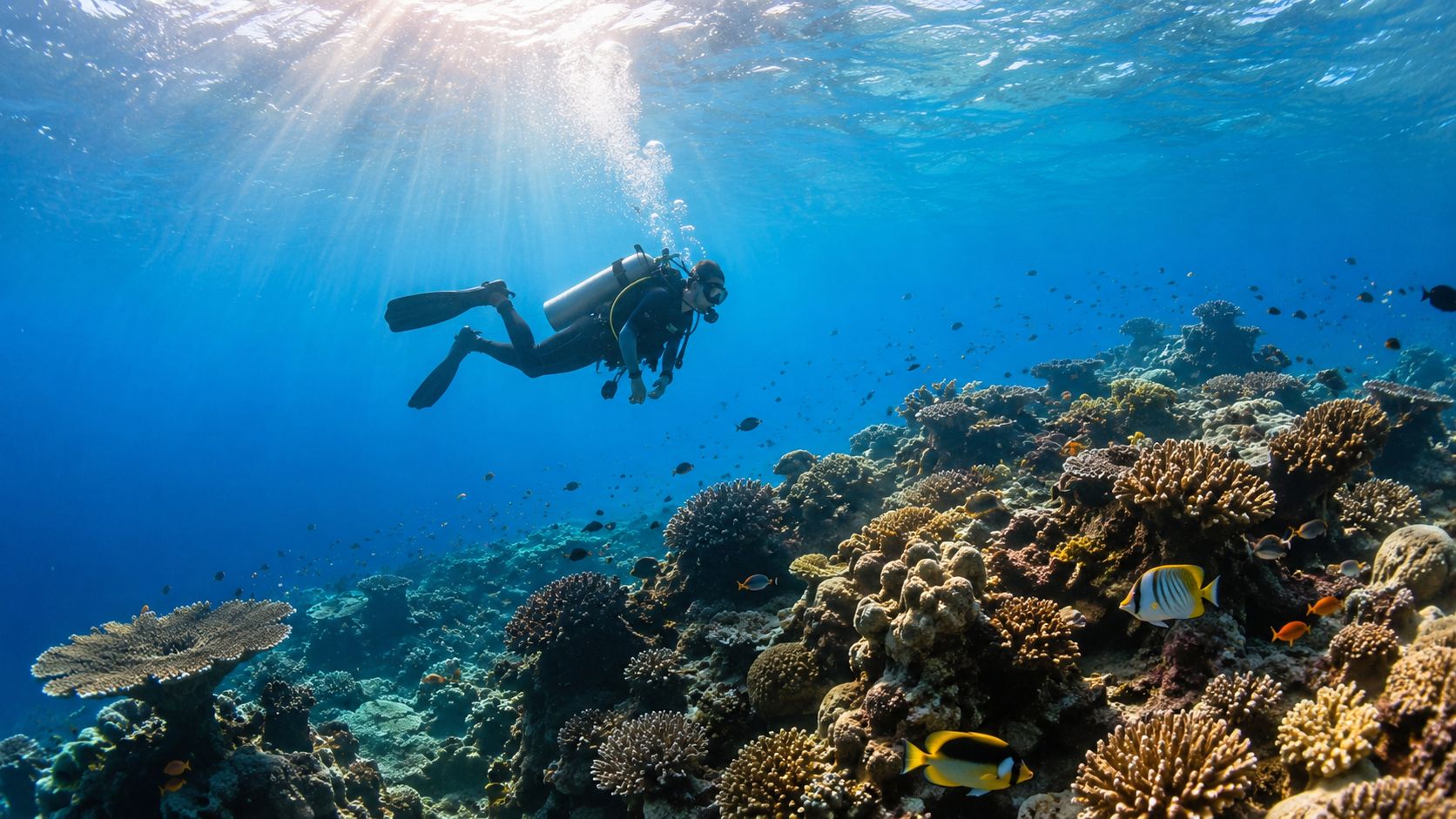
That scale matters more than people think. A busy, established dive market usually means better trip variety, more training opportunities, more rental support, and more chances to find a boat style that matches how you like to dive. Some divers want a mellow reef morning and an early lunch. Others want a full day built around manta rays or a night suspended over deep water on a blackwater line.
What makes the island so appealing
Big Island scuba diving works for a wide spread of travelers:
- Newer divers who want forgiving conditions and guided support.
- Certified vacation divers who just want beautiful, uncomplicated reef dives.
- Advanced divers chasing more technical-feeling experiences like blackwater.
- Mixed groups where one person dives and another prefers snorkeling or staying dry.
The key is not treating every dive as interchangeable.
Practical rule: Don't book “a dive trip.” Book the kind of underwater day you actually want to have.
A morning reef charter feels very different from a manta schedule. A manta schedule feels very different from blackwater. Shore diving feels different again. The island can do all of it, but you'll get the most out of the trip when you choose based on energy, comfort, and logistics, not just the coolest photo on a website.
Start with the outcome you want
Before you compare operators or sites, answer three simple questions:
- Do you want relaxed reef diving or a signature experience?
- Are you happy with night diving, or do you prefer to be done by afternoon?
- Do you value small groups more than a lower headline price?
Those answers shape everything else. On the Big Island, good planning is part of the adventure.
Why the Big Island Offers Unbeatable Diving Conditions
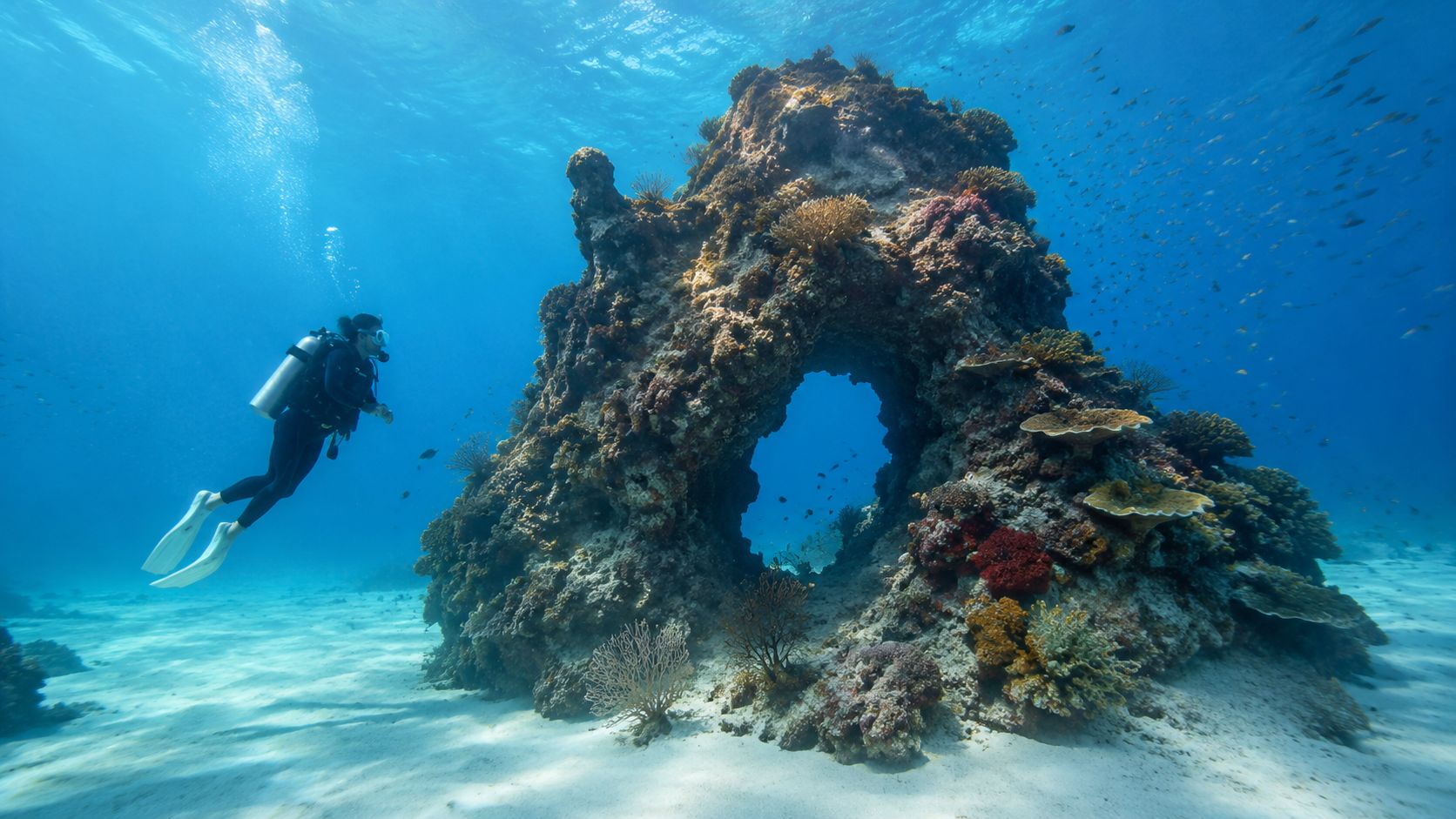
Kona's reputation didn't happen by accident. The west side of the Big Island sits in the lee of two massive seamounts, which helps keep the seas calmer while clear open-Pacific water feeds high-visibility diving conditions. That combination is a big reason so many divers focus their trips on this coast, and it's one of the clearest explanations for why the Big Island is such a strong scuba destination. Divers Alert Network also notes that the area has the world's highest rate of marine endemism for fish and invertebrates, which means many of the animals you see are highly localized and deserve careful diving practices, as described in DAN's article on Kona, Hawaii.
Why the west side usually feels easier to dive
Think of the island as creating its own shield. When the prevailing wind and swell energy hit the massive volcanic landforms, the Kona coast ends up on the more protected side. That doesn't mean every day is flat calm, and any local captain will tell you the ocean still makes the final decision. But it does explain why divers often get a more comfortable boat ride and cleaner underwater visibility here than they expect from open-ocean Pacific diving.
That has practical consequences:
- Boat diving is more approachable for people who don't love rough crossings.
- Training is more pleasant because students can focus on skills instead of fighting conditions.
- Photography gets easier when the water is clear and surge is manageable.
- Marine life spotting improves because you can scan farther across the reef.
Why local species matter
Endemism sounds academic until you're underwater. Then it becomes personal.
On many tropical dives around the world, you're looking at familiar reef communities with regional variations. Kona is different. Isolation shaped the marine life here in a way that makes the reef feel specific to Hawaiʻi, not just “another warm-water dive destination.” That's one reason experienced guides spend so much time reminding divers to maintain strong buoyancy and avoid casual contact with reef structure.
A reef with highly localized species isn't just scenic. It's fragile in a very place-specific way.
If your trim is sloppy, if your fins are stirring up the bottom, or if you're grabbing rock to steady yourself for a photo, you're not just reducing your own dive quality. You're adding pressure to an ecosystem that can't be replaced by the next bay down the coast.
What works and what doesn't
A few habits consistently work well in Kona:
| Approach | What happens |
|---|---|
| Slow descents and clean weighting | You settle in faster and disturb less habitat |
| Reef awareness during photography | You get better shots and avoid accidental contact |
| Listening closely to the briefing | Site-specific hazards and currents make more sense underwater |
What doesn't work is bringing a casual vacation-diving mindset into a place that rewards precision. Big Island scuba diving is accessible, but the divers who enjoy it most are the ones who stay calm, trim well, and treat the reef like it matters.
Must-Do Big Island Dive Experiences
You wake up with a full tank of energy, a free morning, and one night left in Kona. The right plan is not to chase every famous dive. It is to choose the experience that fits your comfort in the water, your schedule, and what you most enjoy underwater.
That matters more here than many visitors expect. Big Island scuba diving offers three very different headline experiences, and they ask different things from the diver. A manta night dive rewards patience and control. A blackwater rewards open-water comfort and curiosity. A morning reef dive rewards divers who want to settle in, see more of Hawaiʻi's reef life, and build a trip around consistent, low-stress diving.
The manta ray night dive
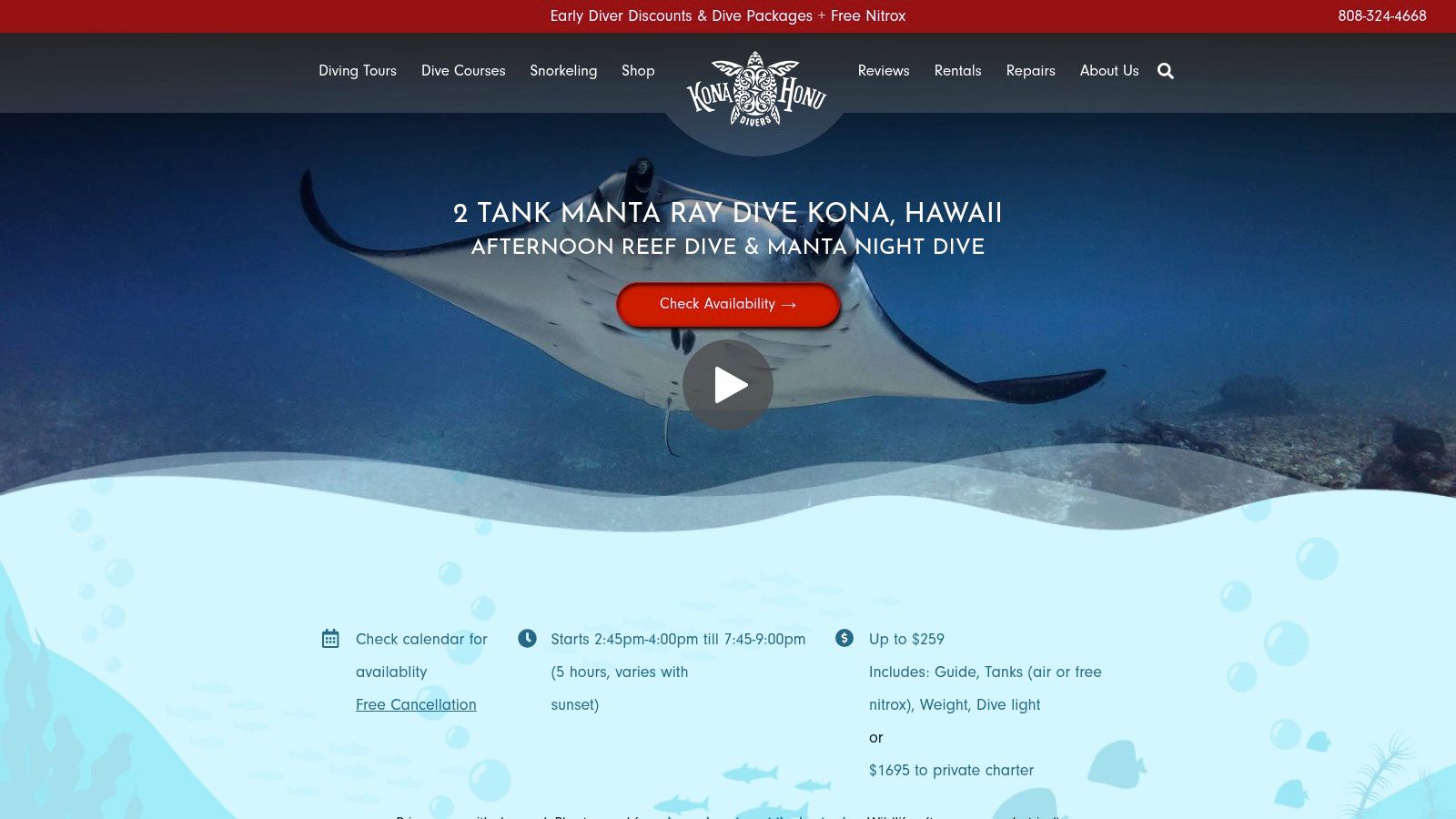
If manta rays are the reason you came to Kona, build around that first. Then place your daytime dives around it. Divers who want to compare schedules and site formats should start with these Kona manta ray tour options before locking in the rest of the week.
I usually point newer night divers toward Garden Eel Cove because the site tends to feel more controlled. That is a real advantage after sunset, when even confident divers can get distracted by darkness, lights, extra gear checks, and the general excitement of the dive. The setup is simple. Get in, settle on the bottom where the briefing puts you, keep your body quiet, and watch the mantas work the light beam above you.
That last part is the key. Divers who enjoy this dive most are rarely the ones kicking around for a better angle. They are the ones who can hold position cleanly, keep their fins off the bottom, and let the animals come through the water column without interference.
Good candidates for the manta dive usually have:
- Solid buoyancy in shallow water
- Enough night-diving comfort to stay calm and follow a fixed plan
- Realistic expectations about wildlife behavior
If a diver is still struggling with weighting, gets anxious after dark, or treats wildlife encounters like a pursuit, I would schedule a morning reef first and save mantas for later in the trip. The experience improves a lot when your basic control is already dialed in.
If mantas are your top priority, the manta night dive tour page lays out the standard trip format clearly.
The blackwater dive
Blackwater is for a different kind of diver.
You are suspended in open ocean at night, drifting over deep water with no reef beneath you and very little visual reference beyond the downline, your lights, and whatever rises out of the dark. As described in this Big Island blackwater overview, the draw is the stream of pelagic larvae and other deep-ocean life that migrates upward after dark. It is one of the most unusual dives in Hawaiʻi, and for the right diver, it is unforgettable.
The trade-off is mental, not just technical. You do not need to be an advanced trim machine, but you do need to be comfortable being still in blue water at night. Divers who rely on a reef for orientation, or who get uneasy when they cannot see a bottom, often spend the whole dive managing stress instead of enjoying what is in front of them.
I recommend blackwater to divers who:
- Stay calm without a visual bottom reference
- Enjoy unusual critters more than big scenic structure
- Want a specialty experience, not a casual night dive
I do not recommend it as someone's first night dive in Kona. A manta dive or a straightforward reef night dive is usually the better first step. Then blackwater becomes exciting for the right reasons, not overwhelming ones.
Divers who know that style suits them can review the Blackwater Night Dive tour page.
The classic Kona morning reef dive
Morning reef diving is still the foundation of a good Big Island dive trip. It just gets less attention online because it does not come with the same dramatic headline as mantas or blackwater.
That is a shame, because morning dives are often where divers end up happiest. Conditions are commonly calmer earlier in the day, the lava structure shows better in natural light, and the pace feels more relaxed. You are not waiting for one signature animal. You are taking in the full reef. Turtles under ledges, eels in cracks, endemic fish on the basalt, and long stretches where the pleasure comes from the terrain itself.
This is also the smartest choice for several groups of divers. Families with mixed experience levels do well on morning charters. So do divers returning to the water after a long break, photographers who want better ambient light, and anyone trying to get several enjoyable dives across a week without too much fatigue.
For a lot of visitors, the best itinerary is simple. Start with a morning reef dive to get comfortable with Kona conditions. Add mantas once you feel settled. Choose blackwater only if open-ocean night diving sounds exciting rather than intimidating.
If you want to compare daytime options, the Kona diving tours page is a useful place to sort through what fits your trip.
How to Choose the Right Big Island Dive Operator
You feel the difference before the boat leaves the harbor. One crew checks your certification, asks when you last dove, and tells you exactly how the day will run. Another points at a bench, takes your payment, and starts loading tanks. On the Big Island, that difference usually matters more than saving a few dollars.
Price is part of the decision, but it should come later. The better filter is fit. Pick an operator based on the kind of diving you want, how much guidance you prefer, and whether the boat is set up for your experience level and schedule. If you want a side-by-side starting point, this ranking of Kona diving companies by trip style and service model helps frame the field.
Four things to judge before you book
Start with how the operator runs the day, not how flashy the site list looks.
- Group size in the water. Small groups usually mean better supervision, less waiting at entries and exits, and a pace that can adjust if someone burns through air quickly or needs extra help.
- Trip match. Some boats are great for relaxed reef divers. Others are better for confident divers booking manta, blackwater, or more technical profiles. A good operator says who each trip is for.
- Briefing quality. Strong crews explain the site, current, entry, exit, likely depth, and what to do if you get separated. Generic briefings often lead to avoidable stress underwater.
- Boat flow and comfort. Ladder design, tank setup space, dry storage, shade, and how gear moves around the deck all affect how calm the day feels, especially for newer divers and anyone doing multiple dives.
Ask direct questions. How many divers per guide? Are dives guided or self-guided? What happens if conditions change? Can they accommodate a rusty diver, a photographer, or a mixed-experience family? Good operators answer quickly and specifically.
Choose the service model that fits your trip
Big Island operators are not all trying to deliver the same day. Some are built for volume. Some are built for instruction-heavy support. Some focus on small groups and longer, less hurried dives.
Kona Honu Divers is one example of the small-group, service-forward model. That matters because it gives you a benchmark. Even if you book elsewhere, you should know what to compare. Look for whether the company emphasizes guide attention, clear standards for specialty dives, and a boat routine that feels orderly instead of improvised.
I tell visiting divers to decide what kind of support they want before they choose a logo. A newly certified diver doing the manta night dive may want a crew that gives very hands-on guidance and keeps the group tight. An experienced diver who just wants a clean morning two-tank reef charter may care more about efficient departures and generous in-water time.
The right operator is the one whose day structure matches your skill, energy, and reasons for diving.
Red flags and green flags
A few patterns show up again and again.
Green flags
- The crew asks about your recent dive history, not just your certification card.
- The operator explains who a trip is for, and who should skip it.
- Briefings are site-specific and include real safety procedures.
- Staff answer questions clearly without sounding annoyed or rushed.
- The boat setup looks practiced, with gear, entries, and exits handled in an orderly way.
Red flags
- Every diver gets pushed toward the same trip regardless of experience or comfort.
- The company is vague about ratios, dive profiles, or conditions.
- Night and advanced dives are marketed as casual add-ons for anyone.
- The sales pitch focuses on discounts while the safety process stays fuzzy.
- Nobody asks whether you have been in the water recently.
Planning Logistics and Sample Dive Itineraries
You land in Kona, check into your hotel, and start eyeing every signature dive on the board. That is usually when trip planning goes sideways. The question isn't how many famous dives you can squeeze into a week. It is which dives fit your energy, your comfort in the water, and how much late-night boat time you enjoy.
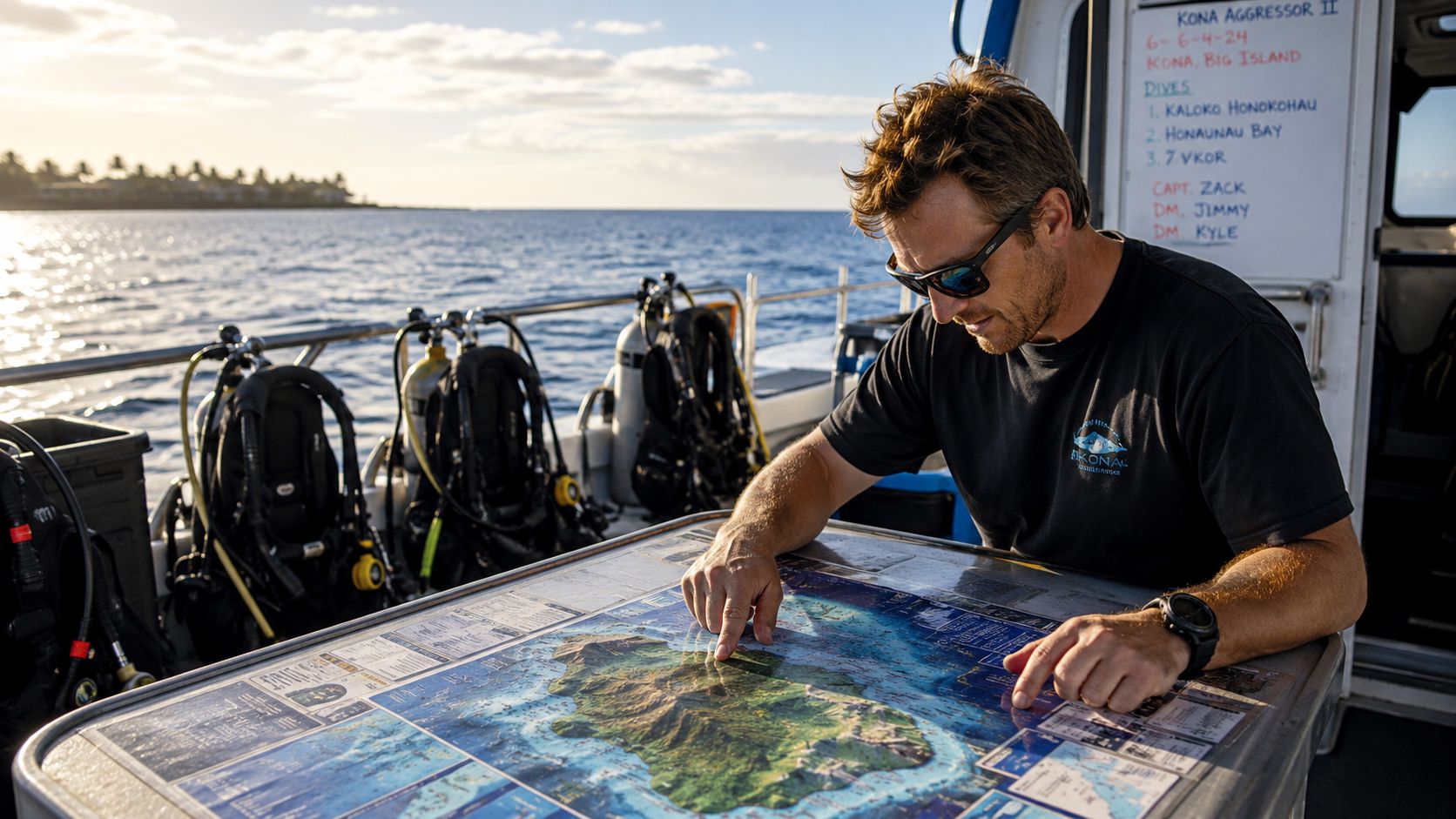
This matters most with specialty charters. A manta trip can take most of your afternoon and evening, while a morning reef charter asks for an early start and decent gas in the tank. Smaller groups often feel calmer in the water and easier on newer divers, but schedule fit usually matters more than chasing one “perfect” site. If you want to compare the shape of different days, the Kona dive and snorkel boat tour options make that easier to sort out before you book.
Build your week around recovery time
Divers get into trouble on vacation by planning with enthusiasm instead of pacing. Four big dives in three days sounds exciting at dinner on night one. By day three, it can feel like missed breakfasts, heavy legs, and a lot less patience on the second tank.
A better filter is simple. Ask three things before you book each trip:
| Question | Why it matters |
|---|---|
| How comfortable are you in open ocean conditions? | This decides whether a standard reef charter, manta night dive, or blackwater feels fun or stressful. |
| How well do you handle late returns and early check-ins? | Night dives and next-morning boats can be a rough combination if you do not recover quickly. |
| Are you here to log dives, or enjoy the whole island? | The answer changes how many boat days you should stack back-to-back. |
Sample itinerary for a newer diver
Newer ocean divers usually have a better trip when the first two days stay simple.
Day one: Arrive, hydrate, assemble gear, and skip the urge to force a same-day dive.
Day two: Morning two-tank reef charter. Focus on weighting, entries, descents, and getting comfortable with Kona's rhythm.
Day three: Either repeat a morning reef dive if day two felt easy, or take a dry day and recover.
Day four: Add manta only if night conditions sound exciting, not intimidating.
That pacing gives you room to settle in. It also leaves space for a bad night of sleep, a little sun fatigue, or the very normal feeling of needing one easy day before trying something new.
Sample itinerary for the vacation diver who wants the highlights
This is the sweet spot for certified divers who dive occasionally and want a memorable week without turning it into a training camp.
- First dive day: Two-tank morning reef dive
- Second dive day: Slow morning, then manta in the afternoon and evening
- Third day: No scuba. Eat well, explore, snorkel, or just stay out of the sun
- Fourth dive day: Another morning reef charter
- Fifth dive day: Blackwater only if you are comfortable with task loading, darkness, and open-ocean diving
That schedule works because each big experience has breathing room around it.
Sample itinerary for advanced divers
Experienced divers often overbook specialty trips because every option looks good on paper. The smarter move is to pair demanding dives with easier days.
Put blackwater or other higher-focus charters on the day when you are freshest. Book standard reef diving before or after those trips so you still get quality bottom time without turning the whole week into a grind. If you want more challenge, ask the operator which charters are intended for divers with strong buoyancy, recent experience, and comfort away from the reef. That conversation tells you more than any marketing label.
Logistics that prevent avoidable problems
- Book manta and blackwater first. Those trips shape the rest of the week.
- Leave one open day. Weather changes, bodies get tired, and sometimes your favorite dive is the one you decide to repeat at the last minute.
- Check the drive from your lodging. A charter that looks cheaper can cost you sleep if you are staying far from the harbor.
- Be realistic about nights. One late boat is fun. Two or three packed too close together can flatten the rest of your trip.
- Keep your last-flight timing in mind. Do not box yourself into awkward no-fly windows with one extra dive you did not need.
The best Kona itinerary usually looks a little conservative when you book it. In practice, it gives you better dives, better surface intervals, and a much better chance of ending the trip wanting one more day on the boat.
Getting Certified and Advancing Your Skills in Kona
A lot of divers arrive in Kona with the same question. Should they spend vacation time on training, or just book fun dives and go? The right answer depends on how much experience you already have, how many days you are here, and whether you want comfort, access, or a bigger challenge by the end of the trip.
Kona works well for training because the conditions let you pay attention to the skills that truly matter. New divers can focus on buoyancy, breathing rate, and trim instead of fighting cold water, heavy current, or poor visibility on every dive. If you are starting from zero, Open Water certification in Kona gives you a cleaner transition into the kind of boat diving you will be doing on the Big Island.
The bigger decision is what to do after that first certification card.
Newly certified divers usually get more out of Kona by building control first and novelty second. A standard reef dive may not sound as flashy as a manta night dive or blackwater charter, but it is where divers fix the habits that decide whether those advanced experiences feel calm or overwhelming. Good buoyancy makes every later choice better. It improves air use, reduces task loading, and leaves you enough mental space to enjoy the dive instead of chasing yourself through it.
For a lot of visitors, the best progression looks like this:
- Brand new diver: Finish Open Water, then log a few straightforward reef dives before adding specialty goals.
- Certified but rusty: Start with an easy guided boat dive and be honest about your recent experience. Rust shows up fast in buoyancy and gas management.
- Comfortable recreational diver: Take Advanced Open Water if you want structured practice with depth, navigation, and handling more going on at once.
- Diver planning several boat days: Nitrox often makes practical sense because it gives you more flexibility on repetitive diving days.
- Diver interested in blackwater, strong current, or long-range sites: Book those after you have recent dives, solid trim, and the ability to hold position without constant correction.
Advanced Open Water helps for a simple reason. It gives newer divers supervised exposure to the parts of diving that start to feel busy once you add depth, navigation tasks, changing light, or a less familiar site. The value is not the card itself. The value is getting coached while your workload goes up.
Nitrox is different. It does not make anyone a better diver overnight, but it is one of the most useful upgrades for vacation diving because it can widen your planning options over several days on the boat. If your schedule includes repeated morning charters, that convenience matters more than many divers expect.
Specialty dives deserve honest self-assessment. Manta night dives are often manageable for newer certified divers who can follow instructions and stay settled near the bottom. Blackwater is a different call. There is no reef for reference, and many divers discover that their buoyancy is not as automatic as they thought once they are suspended over deep water at night. That is not a reason to avoid it. It is a reason to choose it at the right point in your progression.
The smart approach in Kona is to match training to the kind of diving you want next. If your goal is confidence, choose repetition and coaching. If your goal is range, add advanced skills. If your goal is a signature experience, earn it with control first. That is how divers leave the Big Island with more than a logbook full of entries. They leave diving better than when they arrived.
Essential FAQs for Your Big Island Dive Trip
What should you pack and what should you rent
Bring the gear that affects comfort and fit most. Mask, dive computer, exposure layer if you have a favorite one, and anything prescription-related usually belong in your bag. Rentals make sense for heavier items like tanks, weights, and often BCDs and regulators if you don't want to travel with them.
If you own gear but haven't used it in a while, inspect it before the trip. Vacation is a bad time to discover your straps are brittle or your computer battery is nearly dead.
Should you worry about seasickness
You should respect it, not panic about it. Even on the protected Kona side, some people get queasy from boat motion, heat, nerves, or skipping breakfast.
A few common options people use are Ship-EEZ Seasickness Patch, Dramamine pills, Bonine pills, Sea Band wristbands, and Ginger chews. The best choice depends on how your body reacts and whether drowsiness is an issue for you. If you know you're motion-sensitive, solve that problem before the boat leaves the harbor, not after.
If you think you might get seasick, act like you definitely might. Prevention works better than recovery.
Are there sharks
Yes, this is the ocean. The right mindset is calm respect.
Most divers who ask this question are really asking whether ordinary guided diving here is recklessly dangerous. It isn't. Follow local briefings, stay with your group, avoid acting like prey, and treat wildlife encounters as wildlife encounters. The ocean is safer when divers stay observant and predictable.
How do you get the best value
Look beyond the sticker price. A cheaper boat with bigger groups, shorter dives, or a schedule that burns half your day may not be the better deal. Better value usually comes from matching the trip format to your goals, booking key dives early, and leaving enough space in the itinerary that you don't waste paid dive days because you're exhausted.
If you want a trip that's planned around the kind of diving you enjoy, not just a random list of famous sites, take a look at Kona Honu Divers. Their tour lineup makes it easy to combine morning reef diving, manta nights, blackwater, training, and advanced options into a schedule that fits your skill level and vacation pace.