
You're probably in one of two spots right now. You're either staring at flight options and wondering if the Big Island is really worth building a dive trip around, or you already know you want Hawaiʻi and you're trying to figure out whether Kona diving is beginner-friendly, advanced enough, or both.
The short answer is yes. Big Island scuba diving works unusually well for trip planners because it gives you several different vacations in one place. You can do easy shore entries, classic reef dives, manta nights, open-ocean blackwater, and longer range advanced charters without changing islands. That matters when you're traveling with mixed experience levels or trying to get the most water time out of a limited stay.
Why Dive the Big Island
The Big Island feels different the moment you start looking below the surface. This isn't just a reef destination. It's a volcanic coastline where young lava shaped the seafloor into arches, ledges, tubes, caverns, and steep contours that make even a simple reef dive feel like exploration.
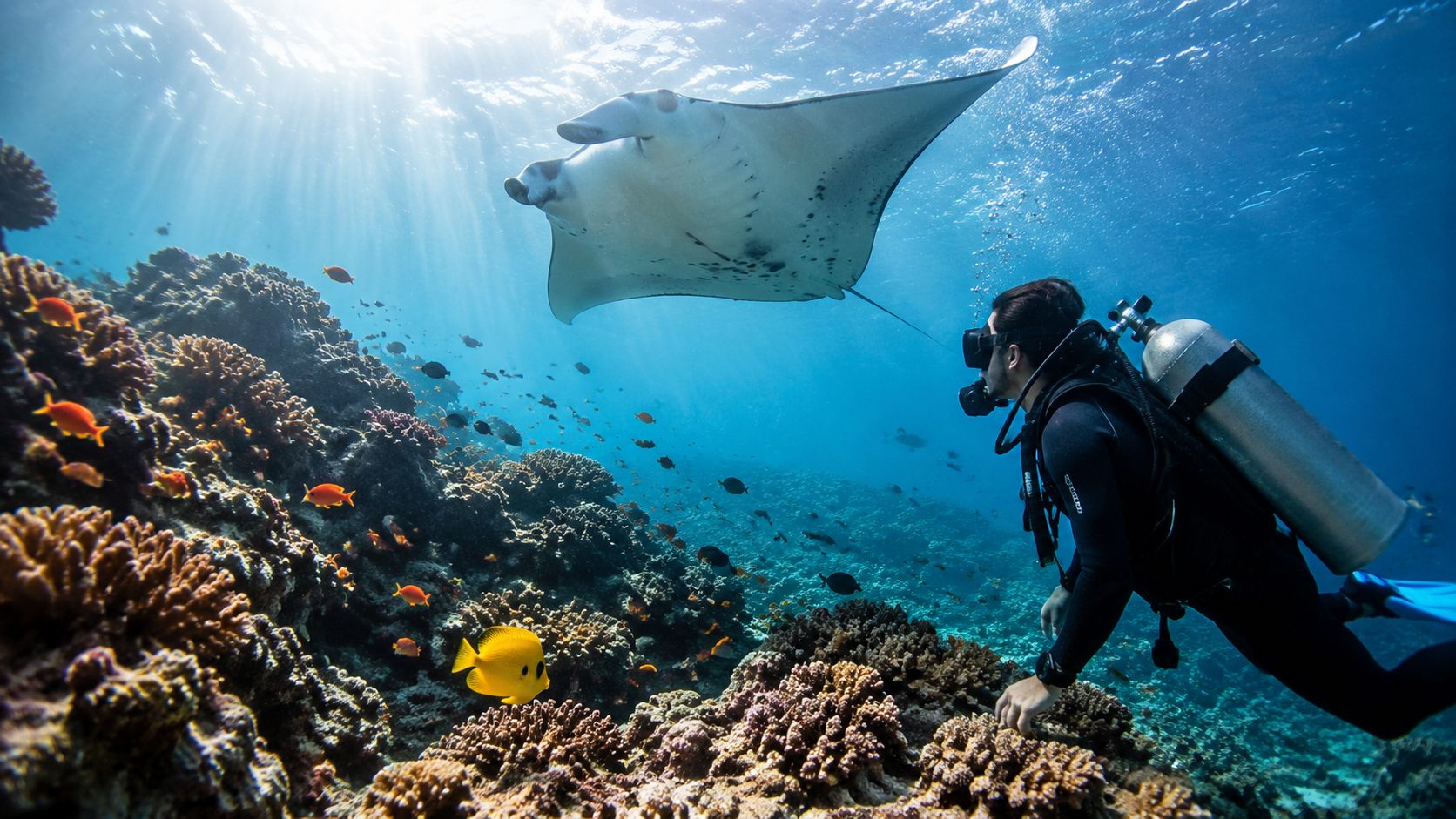
A lot of divers first come for the manta ray night dive and then realize the island offers far more range than they expected. One day you can be on a mellow reef with easy conditions and a relaxed profile. The next night you can be suspended over deep ocean watching pelagic life rise out of the dark.
What makes it stand out
Big Island scuba diving also has something many tropical destinations lack. It's easy to plan with real numbers. Independent visitor guides note that Kohala Coast visibility regularly exceeds 100 feet on clear days, and Hawaiʻi-wide diving supports 1.5 million+ scuba dives per year across 215+ licensed dive shops. They also report that typical two-tank boat dives on the island run around $169 to $219+ per person, while shore dives at sites like Puako, 2 Step, and Kealakekua Bay are often free or low-cost (Big Island scuba diving planning guide).
That combination matters. You're not booking into a tiny, unpredictable niche scene. You're stepping into a mature dive destination with enough depth for photographers, newer divers, families, and people who want one signature bucket-list dive after another.
Practical rule: If you want one island that supports both shore diving and specialized boat diving without making logistics complicated, the Big Island is hard to beat.
Who tends to love it most
Some dive destinations are strongest at one thing. The Big Island is strongest at variety.
- Newly certified divers usually do well here because there are accessible reef dives and calm-day shore options.
- Experienced divers keep coming back because the island has distinct specialty dives, not just deeper versions of the same reef.
- Mixed groups benefit because non-divers can still enjoy beaches, snorkeling, volcanic scenery, and boat days.
If you're still deciding whether this is the right island for your trip, this guide on whether the Big Island is good for scuba diving gives a useful planning overview.
Kona’s Unforgettable Dive Experiences
Kona is where Big Island scuba diving gets its reputation. Not because every site is extreme, but because the menu of dives is unusually broad and each experience feels distinct in the water.
The manta ray night dive
This is the dive people talk about for years after a Hawaiʻi trip. It's not a standard night reef dive with a chance of seeing mantas. It's a purpose-built experience. The common setup uses an underwater “campfire” at about 35 feet to gather plankton, which draws feeding manta rays into the light field (technical overview of Hawaiʻi Big Island diving).
For divers, the appeal is the viewing angle. You're settled low, looking up while mantas sweep overhead. For many people, that's more immersive than seeing them from the surface. If you're choosing a manta site, Garden Eel Cove is the smart pick because its protected location usually makes the experience more comfortable, and the viewing area and surrounding reef tend to make the whole dive feel more complete. If manta diving is on your list, the Garden Eel Cove manta dive tour is the page to review.
The blackwater dive
Blackwater is nothing like a reef dive, and that's exactly why advanced divers love it. You're not exploring structure. You're drifting in open water at night, focused on the water column itself.
The mechanics matter. Blackwater dives off Kona operate over open ocean where bottom depths are on the order of 3,000–6,000 feet, and divers are tethered to the boat on a line of roughly 55 feet. That creates a controlled drift setup for observing vertically migrating larval and pelagic organisms (blackwater dive background). It sounds strange on paper. Underwater, it feels like floating in a private planetarium full of living things.
If that kind of dive is what brought you here, the Kona blackwater dive tour is the relevant trip page.
In Kona, your “advanced dive” options aren't just deeper reefs. They're fundamentally different experiences with different skills, expectations, and rewards.
Reef diving and lava structure diving
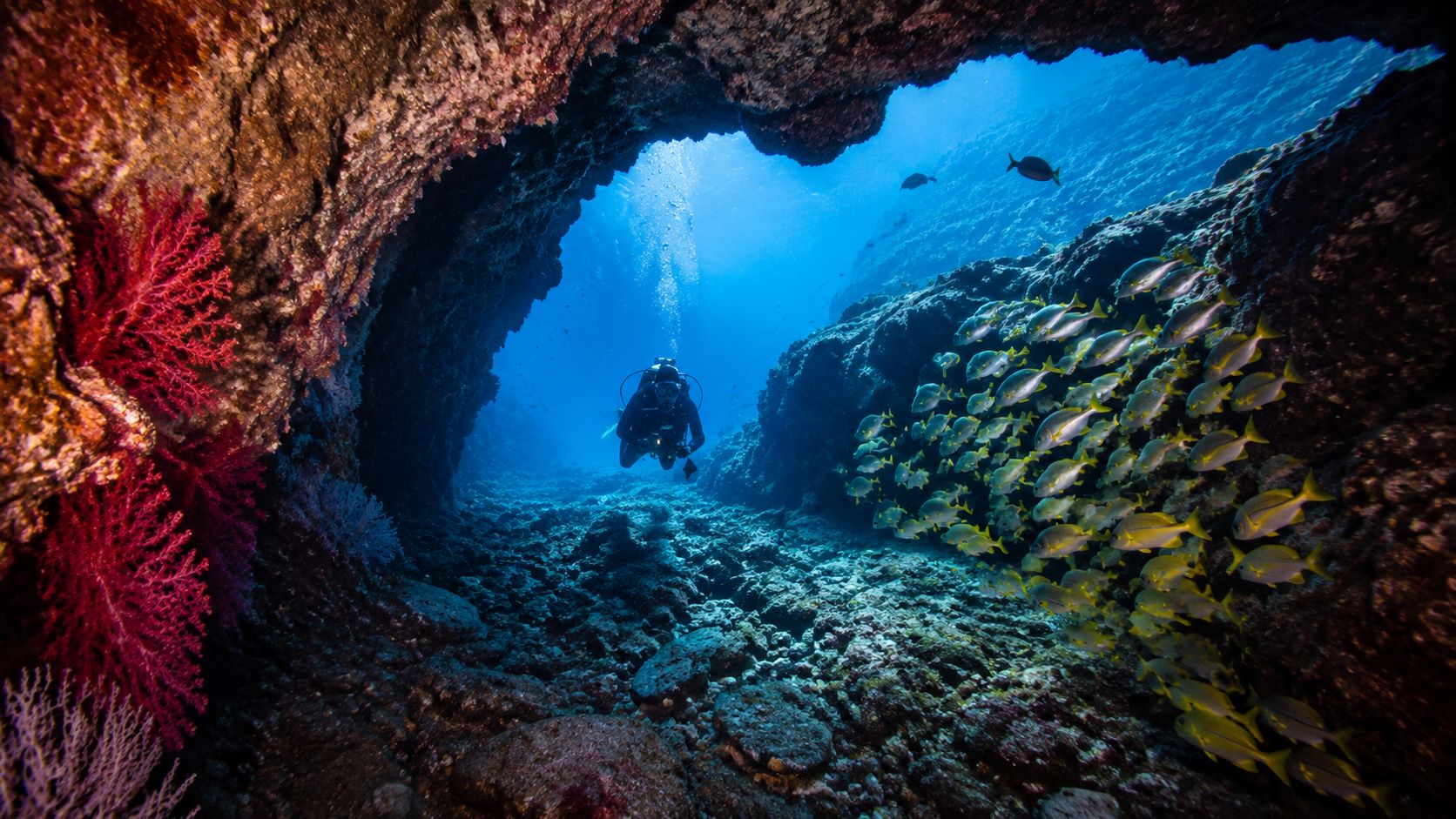
Not every memorable dive here happens at night. Kona's daytime reef and structure diving is where many visitors build confidence and where a lot of underwater photographers do their most satisfying work. Lava tubes, broken rock contours, swim-throughs, and reef edges give the coast its signature feel.
These dives are good for:
- Newer certified divers who want manageable profiles and familiar buoyancy practice
- Returning divers who need a first easy day back in the water
- Marine life lovers who care more about behavior and habitat than adrenaline
Long-range and advanced day trips
Some divers want more challenge and more commitment from the day. That's where the longer advanced charters come in. These trips suit divers who are comfortable in changing conditions, more independent in the water, and interested in sites that don't fit the standard beginner-friendly rotation.
For that style of trip, the advanced long-range dive tour is the one to look at.
Here's a simple way to match the experience to the diver.
| Big Island Dive Experience Comparison | Best For | Experience Level | Key Highlight |
|---|---|---|---|
| Manta ray night dive | Bucket-list wildlife encounters | Comfortable certified divers | Watching mantas feed overhead in illuminated water |
| Blackwater dive | Divers who want something rare and unusual | Advanced and confident divers | Pelagic and larval life in open ocean at night |
| Reef and lava tube dive | First Kona dives, relaxed exploration, photography | Beginner to advanced | Volcanic structure and classic Hawaiian reef scenery |
| Advanced long-range trip | Divers seeking more demanding site selection | Experienced divers | Access to more challenging conditions and profiles |
For a broader look at local trip styles and logistics, the Kona Big Island diving overview is a useful next read.
Discover the Top Big Island Dive Sites
Some places on the Big Island are famous because they photograph well. Others earn their reputation because they consistently deliver the kind of dive they promise. The sites below do both.
Garden Eel Cove
If your trip includes the manta ray night dive, this is the site most divers should hope for. Garden Eel Cove has the protected feel people appreciate once the sun goes down and the water gets darker. It's also a better all-around setting than a bare patch of bottom because the nearby reef adds context and interest before and after the main event.
The biggest mistake people make is treating manta diving like a generic wildlife gamble. Site choice matters. In Kona, Garden Eel Cove is the benchmark because the environment suits the format.
Pelagic Magic zone
The blackwater concept clicks. During the day, the location doesn't look like a “site” in the usual sense because the attraction isn't structure. At night, that emptiness becomes the point. Your attention shifts away from coral and terrain and onto the glowing, drifting, strange life forms suspended in the water column.
For many experienced divers, this is the most memorable dive on the island precisely because it strips away the familiar reference points.
Lava formations at sites like Golden Arches and Crescent Beach
If you like topography, Kona's lava-built sites are the defining characteristic of daytime diving here. Golden Arches is known for dramatic volcanic structure and the kind of natural framing underwater photographers love. Crescent Beach has that classic Kona mix of reef life and lava texture, with enough contour to keep the dive visually interesting from start to finish.
Good Kona site selection isn't about chasing the most famous name on the map. It's about matching sea state, diver skill, and the kind of underwater terrain you actually enjoy.
Two Step and Kealakekua Bay
Shore diving is part of what makes the island so flexible. Two Step, at Puʻuhonua o Hōnaunau, is one of the most widely known entries because it gives competent divers a straightforward way into clear water when conditions are calm. It's a favorite for good reason, but it still demands respect. Lava entries punish sloppy timing and rushed finning.
Kealakekua Bay has a different feel. The bay often rewards patient divers with beautiful visibility and a more spacious sense of place underwater. If you're planning around that part of the coast, this guide to Kealakekua Bay in Kona helps sort out what makes the area special.
How to choose the right site for you
- If wildlife is the priority, pick Garden Eel Cove for manta diving.
- If novelty matters most, choose blackwater over another reef.
- If you love geology, ask for lava structure sites.
- If you want inexpensive flexibility, shore dives like Two Step make sense on calm days.
Planning Your Trip Conditions and Seasonality
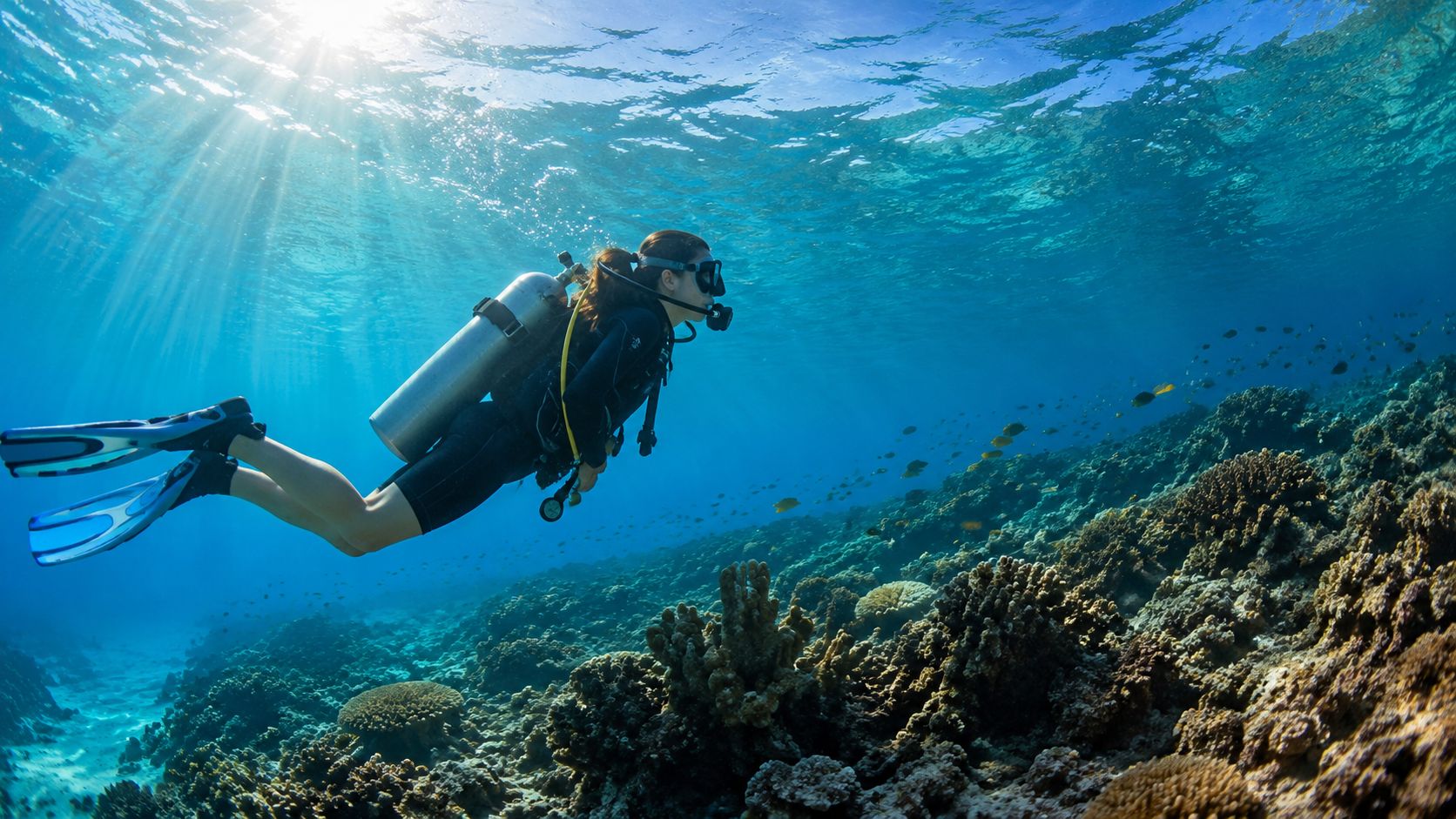
Kona is one of those places where divers can have a very good trip in any season, but that doesn't mean every day feels the same. Conditions shift. Wind, swell direction, and the specific coastline you're diving all affect how the day unfolds.
When to go
For most travelers, the honest answer is simple. Go when you can get enough days on island to stay flexible. A single fixed dive day can work out beautifully, but a few available boat days gives the operator room to match you with the best conditions.
What changes through the year usually isn't whether diving is possible. It's which sites are favored, how calm the surface is, and what marine life might be more common in the area. If you want a planning breakdown by season, this guide to the best months to scuba dive in Hawaii is a useful place to start.
What helps and what doesn't
The divers who have the smoothest Big Island scuba diving trips usually do a few basic things right.
- Build in rest time: Don't schedule every dive at the end of a packed vacation day.
- Stay conservative early: Use your first dive day to settle in, check weighting, and get comfortable.
- Ask about sea state, not just weather: A sunny day can still mean a sloppy ride.
Seasickness matters more than people admit
Many divers worry about current, depth, or night diving. More trips get derailed by motion sickness. If you know you're even slightly prone to it, handle it before you leave the dock.
Useful options include Ship-EEZ Seasickness Patch, Dramamine pills, Bonine pills, Sea Band wristbands, and Ginger chews.
A few practical notes from the boat side of things:
- Patch or medication users: Test what works for you before a major dive day, not for the first time on vacation.
- Wristband fans: These are easy to carry and don't require planning around dosage.
- Ginger users: Ginger helps some people, but it's better as part of a plan than your only plan if you know you get sick.
If you tend to get seasick, don't try to “tough it out.” Prevention is easier than recovery, especially before a night dive.
Choosing Your Dive Operator The Kona Honu Divers Difference
A lot of visitors choose a dive operator based on whichever site ranks highest in search or whichever shop has the easiest booking flow. That's not the right filter. The operator shapes your day far more than most divers expect.
What to look for first
Start with the practical stuff. A good operator should make it easy to understand how the day runs, what gear is included, who the dives are meant for, and what happens if conditions change. If that information is vague before booking, it usually stays vague on the boat.
Then look at the operation itself.
- Boat setup: Easy entries, shade, space to gear up, and a deck layout that doesn't turn every surface interval into chaos.
- Crew behavior: Clear briefings, calm supervision, and realistic site matching matter more than sales language.
- Gear maintenance: Well-kept rental gear is a direct safety issue, not a convenience feature.
- Group management: Divers of very different skill levels shouldn't all be pushed through the same profile the same way.
What separates stronger operators from weaker ones
Some boats feel organized before they even leave the harbor. Tanks are staged sensibly. Crew communication is short and clear. Divers know where to sit, where to store small gear, and what the water entry will look like. That kind of structure usually reflects a serious safety culture.
Weaker operations tend to reveal themselves in smaller ways. Rushed check-ins. Unclear return times. Briefings that cover the fun part of the dive but skip the conditions and contingency plans. Those details matter, especially on night dives and advanced profiles.
A practical example in Kona
For divers comparing local options, Kona Honu Divers dive tours show the kind of trip variety many travelers are looking for, including reef dives, manta trips, blackwater, and training. They also note free nitrox for qualified divers, which is useful if you're planning repetitive diving and want to manage the week more comfortably.
The other thing worth paying attention to is boat design. Purpose-built dive boats make boarding, gearing up, and exits smoother. That doesn't sound glamorous until you've done a rolling giant stride from a crowded deck with loose gear underfoot. Then it becomes very important.
Questions to ask before you book
Use these questions and you'll filter out most bad-fit charters fast:
| Question | Why it matters |
|---|---|
| What kind of diver is this trip designed for | Helps you avoid ending up under-challenged or over-tasked |
| How are groups organized in the water | Tells you whether the operator manages mixed experience levels well |
| What's included in the dive day | Prevents surprise rental or logistics issues |
| How do you choose sites | Shows whether the operator adjusts to conditions or runs a fixed script |
The right operator doesn't just take you to water. They reduce friction, improve safety, and match the dive to the diver.
Essential Gear and Safety for Big Island Diving
Packing for Kona is easier when you separate what you need to bring from what you prefer to have. Most professional boats can supply the core rental setup. What experienced divers usually regret forgetting are the small personal items that make the day smoother.
What to bring yourself
- Certification card and log details: Bring proof of training and be honest about recent experience.
- Mask that fits your face: Rental masks are fine until they aren't. A familiar mask solves a lot of annoyance fast.
- Dive computer: If you own one, bring it. Consistency matters over multiple dive days.
- Reef-safe sun protection: You'll spend more time on the boat than you think.
- Dry bag and towel: Keep the little stuff organized and easy to reach.
If you're still building your personal kit, this guide to the best scuba gear for beginners is a helpful starting point.
What behavior matters underwater
Good Big Island scuba diving isn't just about what you pack. It's about how you move.
Coral and lava structure don't forgive sloppy fin kicks. Poor buoyancy control turns a great site into a stressful one fast, especially in tighter volcanic topography. If your skills feel rusty, say so before the boat leaves. A decent operator would rather hear that on the dock than discover it at depth.
The safety habits worth keeping
Some reminders are basic because they work.
- Listen to the briefing fully. Local entries, exits, surge patterns, and site hazards change.
- Dive within your actual comfort level. Don't book blackwater because it sounds cool if you're still uneasy in standard night conditions.
- Protect the reef by staying off it. Good buoyancy is conservation in practice.
- Leave margin in your dive. Air, depth, and task loading all deserve more room than people give them on vacation.
Respect for Hawaiʻi's reef starts with trim, buoyancy, and patience. Touching less is part of diving better.
If you're not certified yet, the island is also a very appealing place to train. Learning in ocean conditions around real dive sites gives new divers a stronger sense of what certification is for.
Big Island Scuba Diving FAQs
Some questions always come up right before people book. Here are the answers I give most often.
What marine life will I actually see
No one can promise wildlife on demand, but Kona usually keeps divers engaged. Turtles, reef fish, eels, and other common reef life are part of many dives. The more specialized experiences change the script. Manta dives focus on manta behavior. Blackwater shifts your attention to pelagic and larval life you won't see on a daytime reef.
Do I need to be advanced to enjoy Kona
Not at all. That's one of the strongest parts of the island. You can enjoy Big Island scuba diving as a newly certified diver, a rusty vacation diver, or a highly experienced diver who wants something unusual. The key is choosing the right trip, not choosing the most dramatic-sounding one.
Is nitrox worth it
For many divers, yes. If you're doing repetitive dives over several days, nitrox can be a very useful tool within your training. It doesn't replace good planning, but it can make a multi-day schedule more comfortable. If you're not nitrox certified, it's not something to improvise on vacation. Get the training first.
What's the difference between the manta dive and manta snorkel
The perspective. Snorkelers stay at the surface and look down into the illuminated water. Divers are below, usually settled into position and looking up as mantas pass overhead. Neither format is “right” for everyone. Divers who enjoy staying still and letting the encounter unfold often love the scuba version. Families and mixed groups sometimes prefer the snorkel option.
Is shore diving enough for a full trip
It can be for the right diver, especially if you like flexibility and already know how to assess entries. But most visitors get more out of mixing shore and boat days. Shore diving keeps costs down. Boat diving opens up the signature experiences people come to Kona for.
If you want the most complete trip, combine one or two easy confidence-building dives with one standout experience such as manta or blackwater.
If you're ready to turn the planning into actual dive days, Kona Honu Divers is a practical place to start. Their site lays out local tours, training options, and specialty dives clearly, which makes it easier to match your experience level to the right kind of Big Island underwater adventure.