
You're probably in the same place a lot of divers are when they start planning Hawaii. You know you want warm water, clear conditions, and dives that feel different from what you do at home. Then you start researching the Big Island and the advice gets muddy fast. Everything sounds amazing, but not everything is the right fit for your training, comfort level, or travel group.
That's the key question with big Island scuba diving. Not whether the diving is good. It is. The practical question is which kind of diving makes sense for you once you're here.
Some visitors should prioritize a calm reef charter. Some should book the manta night dive immediately. Some should skip the headline experiences on their first day and get comfortable in local conditions first. And some advanced divers should absolutely look hard at blackwater and long-range options, but only if their buoyancy and situational awareness are dialed in.
Your Ultimate Big Island Diving Adventure Awaits
You land in Kona, check in, and start looking at dive options. Within twenty minutes you see manta ads, blackwater videos, reef charters, shore entries, and claims that every dive is a must-do. That's where a lot of visitors get turned around. The right first choice usually has less to do with hype and more to do with your comfort in current, entries, depth, and night conditions.
Hawaii supports a large, established dive industry, with more than 1.5 million scuba dives logged statewide each year and more than 215 licensed dive shops, according to Kona Honu Divers' overview of diving in Hawaii. On the Big Island, that broad appeal turns into a real planning advantage. Divers can choose between straightforward reef diving, signature night experiences, and more advanced offshore profiles without changing islands.
That variety is the point.
A newer diver who wants easy conditions and lots of reef life should not book the flashiest option by default. A confident diver with strong buoyancy and solid awareness in open water may get far more out of blackwater than a second easy reef dive. Mixed-experience groups usually do best when they build the trip around the least comfortable diver first, then add bigger experiences once everyone has settled in.
If you're trying to sort out what makes diving in Kona different from other Hawaii trips, start with the type of day you want underwater. Calm and scenic. Big-animal focused. Night diving. Blue-water adventure. That decision will steer you better than any top-10 site list.
Practical rule: Choose the experience that fits your training and interests on day one. The memorable dives usually follow from that.
Why Kona is a World-Class Diving Destination
You roll out of the harbor after sunrise, and the site is already close. That matters more than visitors expect.
Kona's coast puts good diving within a short run of the boat, so the day starts with less transit and more time in the water. Clear conditions often let divers see the structure of a site right away, and the lava topography gives even a conservative reef dive real shape and depth, as noted in Love Big Island's guide to Kona diving.
From an operator's point of view, that geography solves several common vacation-dive problems at once. Shorter runs usually mean less seasickness, less pre-dive fatigue, and fewer wasted hours sitting on a boat while newer divers get anxious about the first drop. It also makes it easier to build a smart schedule for mixed groups, where one diver wants easy reef time and another wants a more ambitious second dive later in the trip.
The coastline helps because the diving is varied without being random. Protected areas such as Puako, Kealakekua Bay, and 2 Step give divers options for easier entries or calmer profiles, while other parts of the coast offer steeper relief, stronger blue-water exposure, and a more advanced feel. That range is what makes Kona strong as a destination. Divers can choose the kind of experience that fits them instead of forcing every trip into the same mold.
Volcanic structure is a big part of that. Reefs here are often broken up by lava fingers, ledges, arches, and sharp changes in contour. Even on a simple dive, the terrain gives guides choices. We can keep a new diver on an easy line with plenty to see, or use the same site more creatively for an experienced diver who wants better composition, navigation, or fish behavior.
For many visitors, the smartest question is not "Which famous site should I book?" It's "What kind of dive day do I want, and what can I handle comfortably?" That decision usually leads to a better trip. If you want more context on what makes diving in Kona different from other Hawaii trips, start there before locking in your schedule.
What works best for different divers
Kona gets marketed as pure adventure, and that confuses a lot of people. Some dives here are very beginner-friendly. Some are not. The skill match matters more than the hype.
| Diver type | Usually works well in Kona | Usually doesn't work well |
|---|---|---|
| Newer certified diver | Calm morning reef dives, simple boat plans, protected sites | Booking a demanding night or offshore profile first |
| Rusty diver | Easy first-day dive, conservative depth, familiar gear setup | Starting the trip with the most ambitious charter |
| Marine life focused diver | Reef dives with patient pacing, night dives chosen for animal behavior | Trying to cram too many signature dives into one short stay |
| Advanced diver | Specialty dives, lava structure with more relief, dives that demand stronger awareness | Assuming every famous Kona dive is challenging for the same reason |
Kona rewards good choices. Divers who match the dive to their comfort level usually get more out of the week, see more, and finish the trip wanting another day in the water.
Signature Dives The Manta Ray and Blackwater Experience
A lot of divers arrive in Kona asking the wrong question. They ask which signature dive is more famous. The better question is which one fits the way they dive at night, because manta and blackwater ask for very different skills.
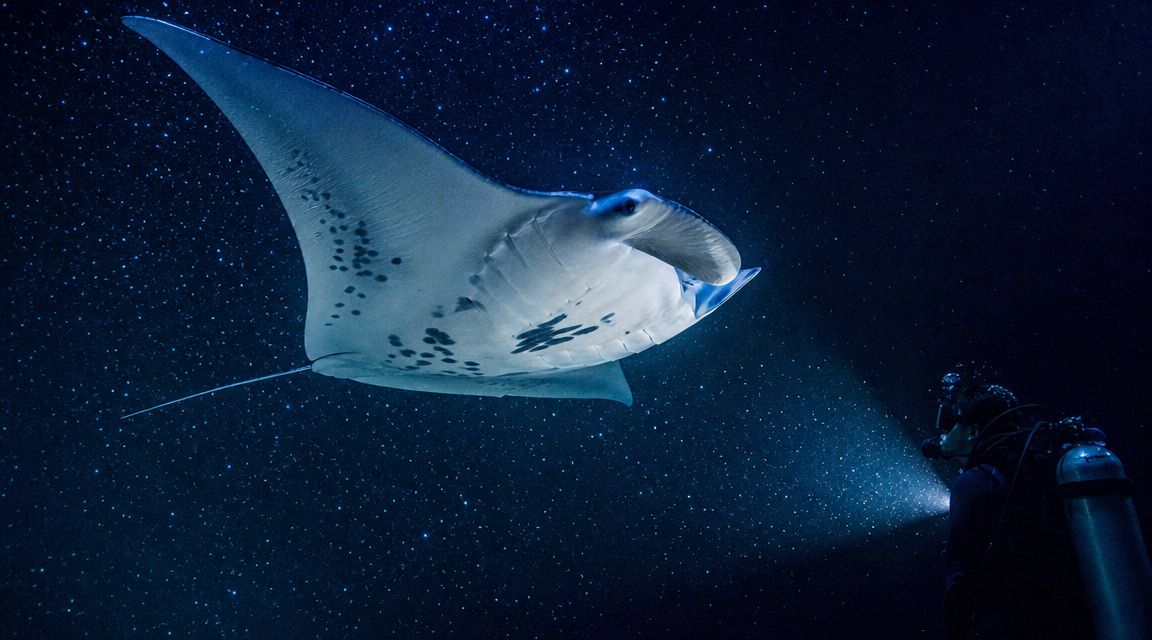
The manta ray night dive
The manta dive is usually the easier first choice for visitors who want a signature Kona experience without adding too much task load. Divers descend to a relatively shallow site, settle into a fixed viewing area, and stay controlled while lights draw in plankton and feeding mantas, as described in this Big Island Hawaii scuba overview.
That structure matters. You are not searching for the main event. You are holding position, watching your buoyancy, protecting the bottom, and letting the animals come to the light.
For newer certified divers, rusty divers, and mixed-experience groups, that format often makes the night feel manageable. It still requires comfort in the dark and decent control, but the objective is simple and the dive profile is straightforward.
Site choice matters too. I usually point most visitors toward Garden Eel Cove because the setting is often more forgiving than alternatives with more surge or a busier feel. Divers who want a better sense of how the evening works before they book should read about the manta ray night swim experience in Kona. If you are ready to compare operators and logistics, the manta dive tour details spell out the format.
The blackwater dive
Blackwater is a different commitment.
You head offshore at night, clip into a suspended lighting system, and spend the dive in open ocean water with no reef, no wall, and no bottom reference. Your job is to stay calm, hold depth, manage your position cleanly, and pay attention to small life moving through your light. The reward is strange, delicate pelagic life that very few divers ever get to see in person.
This dive tends to suit experienced divers who already know how they react to darkness, open water, and the feeling of hanging in space. Strong buoyancy helps. So does patience. Divers expecting big scenery sometimes come up underwhelmed. Divers who like unusual behavior, larval stages, and the feeling that anything might drift past often come up thrilled.
I tell divers to be honest with themselves here. Curiosity is good. Forcing a blackwater before you are comfortable at night is not. If you are ready for it, the blackwater dive tour page explains the setup clearly.
How to choose between them
Choose manta if you want a clear focal point, a more structured dive, and a signature experience that works for a wider range of certified divers.
Choose blackwater if you are already solid on trim, calm without visual reference points, and more interested in pelagic oddities than in a big animal encounter.
Choose both if you have enough trip time to space them out and stay sharp for each one.
Wait on both if night diving still feels stressful or your buoyancy needs work. Kona has plenty of excellent daytime diving, and divers usually enjoy these signature dives more when they arrive ready for them.
Exploring More Big Island Dive Sites
You finish a manta night dive buzzing, then wake up thinking, “What should I do with the rest of my dive days?” That is where a lot of visitors get stuck. Kona has enough variety that the better choice usually starts with your comfort in the water and what you enjoy seeing, not with the most dramatic site name on a schedule.
If terrain matters to you, choose lava structure
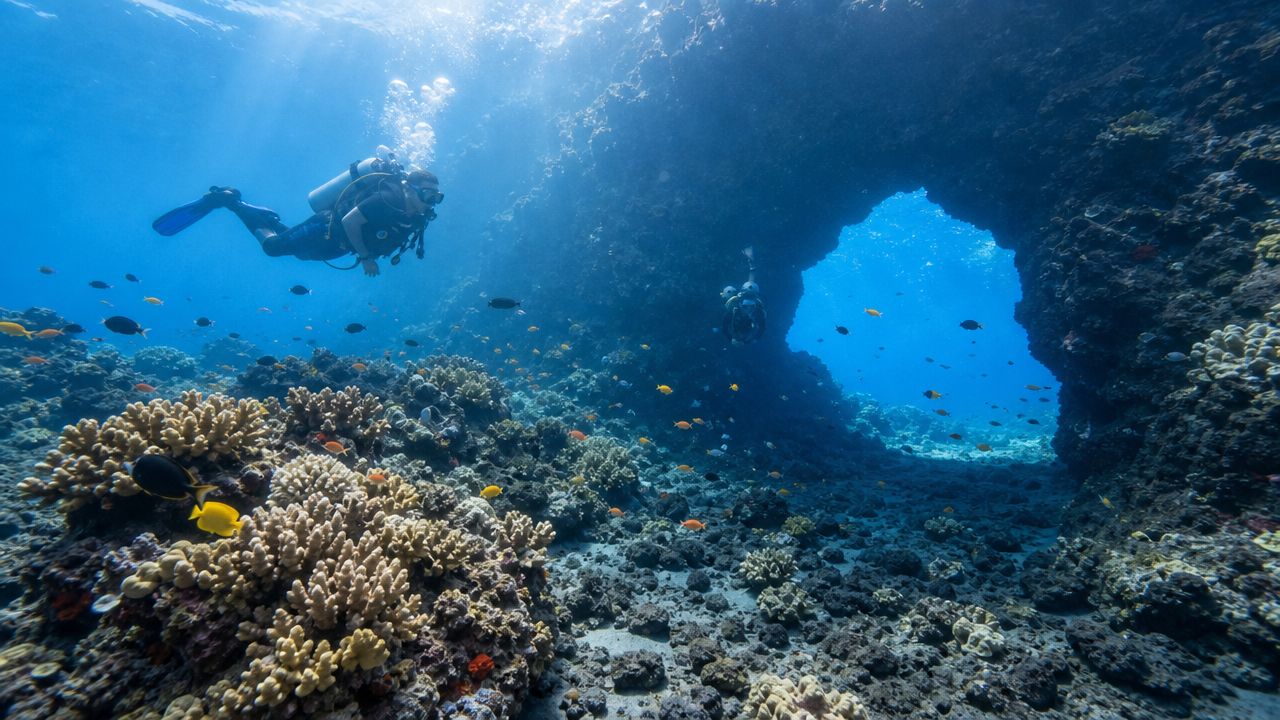
Kona's volcanic coastline shapes the dive. Arches, ledges, fingers of old lava, and swim-through features give many sites more personality than a simple reef cruise.
These dives suit divers who like to look around, adjust position carefully, and work a site slowly. Good buoyancy matters more here because the fun is close to the structure. Divers who stay flat in the water and move with small fin kicks usually get the best dive. Divers who are still sorting out trim often spend too much attention on control and miss what makes these sites special.
A few things to look for when you want that style of dive:
- Lava tubes and arches for a stronger sense of exploration
- Reef edges with relief where fish life gathers around the contour
- Sites with quick access from the mooring so more of the dive happens on the feature, not on the swim out
If you want an easy, satisfying day, choose protected reef dives
Protected reef diving is often the right call for newer divers, rusty divers, underwater photographers, and anyone who wants a low-stress first day. You can settle in, check weighting, and get comfortable with local conditions without turning the whole dive into a task list.
Kealakekua Bay and similar areas stay popular for good reason. They are scenic, usually forgiving, and enjoyable even for divers who are not chasing a challenge. If part of your group wants time on the water without scuba, these Kealakekua Bay snorkeling trips can make the trip easier to plan.
That trade-off is simple. Protected reef dives usually give you comfort, fish life, and a relaxed pace. More dramatic structure dives often give you stronger topography and a bigger sense of exploration, but they reward better control.
Choose by experience, not by site name
I always tell divers to sort the day by goal first. Site names can sound adventurous. That does not always mean they are the right fit for your first morning in Kona.
| What you want from the dive | Good match |
|---|---|
| Relaxed first day | Protected reef or easy boat dive |
| Photography and reef fish | Clear daytime site with a steady profile |
| Geology and swim-through feel | Lava tube or arch-focused site |
| Mixed group itinerary | Day reef dives plus one signature night dive |
Leave room in the schedule
The divers who enjoy Kona most are usually the ones who do a little less. They start with a daytime dive, check how they are weighting, see how their gas lasts, and decide from there.
That approach works better than cramming every famous dive into a short trip. Conditions change. Fatigue adds up. A simple reef dive on the right day can beat a more ambitious plan when your ears are slow, your buoyancy is off, or your group has mixed experience levels.
Advanced Diving Opportunities in Kona
Experienced divers often arrive in Kona asking the wrong question. They ask, “What's the hardest dive?” The better question is, “Which dives reward the skills I have?”
What advanced really means here
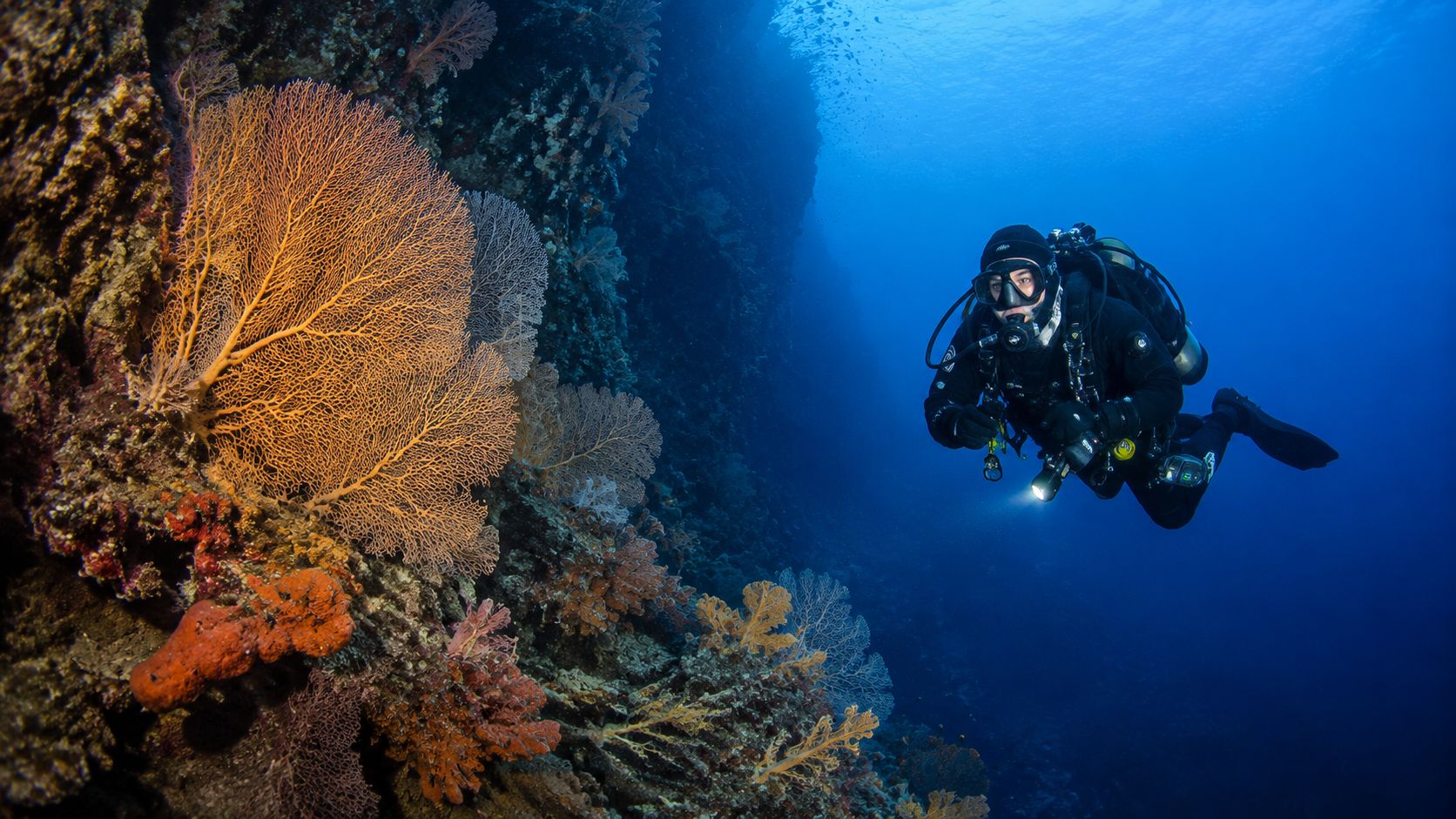
On the Big Island, advanced diving isn't just about depth. It's about composure, precision, and consistency. Offshore specialty dives and more demanding site profiles ask for better buoyancy, better gas awareness, and more honest self-assessment than many vacation divers expect.
The blackwater profile makes that clear. A hallmark of advanced diving in Kona, the Black Water Dive is conducted offshore where the seafloor is about 6,000 feet below, with divers typically suspended around 45–50 feet to observe deep-ocean larvae and bioluminescent life, according to this review reference discussing Big Island Divers and Kona diving history. That isn't difficult because of decompression complexity. It's difficult because the environment strips away the visual cues many divers rely on.
For divers considering that style of trip, this Kona blackwater dive page explains the environment well.
Trips that reward strong fundamentals
Longer-range and more advanced charters make sense when you can already do the basics cleanly without thinking about them.
That usually means you can:
- Hold position well without constant sculling or bicycle kicks
- Monitor gas and depth naturally instead of only when prompted
- Stay oriented in lower light without stress climbing
- Follow briefings exactly when the site demands tighter discipline
Advanced options can be a great fit for divers who want less hand-holding and more focus on the dive itself. The premium advanced long-range dive tour is the kind of trip to consider if you're looking for that style of day.
Strong divers don't chase challenge for its own sake. They choose dives where control stays ahead of novelty.
Booking Your Dives and Planning Logistics
You land in Kona, see manta videos all over social media, and assume that is the dive to book first. Sometimes it is. Sometimes a calm two-tank daytime charter is the smarter call, especially if you have not been in the water for a while or you are traveling with a mixed-skill group.
The planning side of big island scuba diving gets easier once you stop asking, "What is the most famous dive?" and start asking, "What kind of dive will I enjoy and handle well?" Kona works well for a wide range of divers, but the right fit depends on recent experience, comfort in current and low light, and whether your group wants easy reef time, a signature wildlife encounter, or a more technical-feeling specialty trip. A good starting point is this planning guide for Big Island scuba diving.
Start with the dive you can say yes to confidently
I tell visiting divers to book the trip that matches their current habits, not their vacation ambitions.
Ask yourself:
- How long has it been since my last dive? If the answer makes you hesitate, book an easier daytime dive first.
- How do I do in low-light or night conditions? Manta dives are usually straightforward, but they still happen at night and that changes how some divers feel.
- Do I want to move through reef or settle in and watch a show? Day charters suit active explorers. Manta dives reward patience. Blackwater suits divers who are comfortable without normal visual references.
- Am I planning for a group with different experience levels? If yes, build the trip around the least comfortable diver, then add specialty dives for the stronger ones.
That one decision saves a lot of frustration.
What to bring and what usually matters most
Bring the pieces of gear that affect comfort, fit, and familiarity. A well-fitting mask usually matters more than hauling half your closet across the Pacific. A computer you already understand is even more useful, especially if you are doing multiple dives over several days.
A practical packing list:
- Certification proof: Bring whatever your operator needs to verify training level
- Exposure protection: Pack for repeated dives, boat rides, and night chill, not just water temperature
- Boat basics: Water, reef-safe sun protection, towel, and a dry shirt or light layer
- Personal comfort items: Seasickness prevention, defog, and any prescription items you do not want to hunt down on arrival
If you are still sorting through who runs what kind of trip, this overview of Kona diving company options helps make the local operator mix easier to understand.
Choosing an operator without getting distracted by marketing
Pick based on fit and clarity.
A strong operator makes it easy to tell which trips are beginner-friendly, which ones expect better buoyancy and situational awareness, and which ones are built around a specific experience instead of general sightseeing. That matters more than flashy boat photos.
| What to check | Why it matters |
|---|---|
| Trip description | You should know before booking whether the plan is reef diving, manta, blackwater, or an advanced-focused charter |
| Skill screening | Good crews ask useful questions about recent dives, comfort level, and certification instead of treating every diver the same |
| Briefing style | Clear, specific briefings usually signal a crew that runs organized diving |
| Group fit | Mixed groups do better when the operator can suggest different trips on different days instead of forcing everyone into one option |
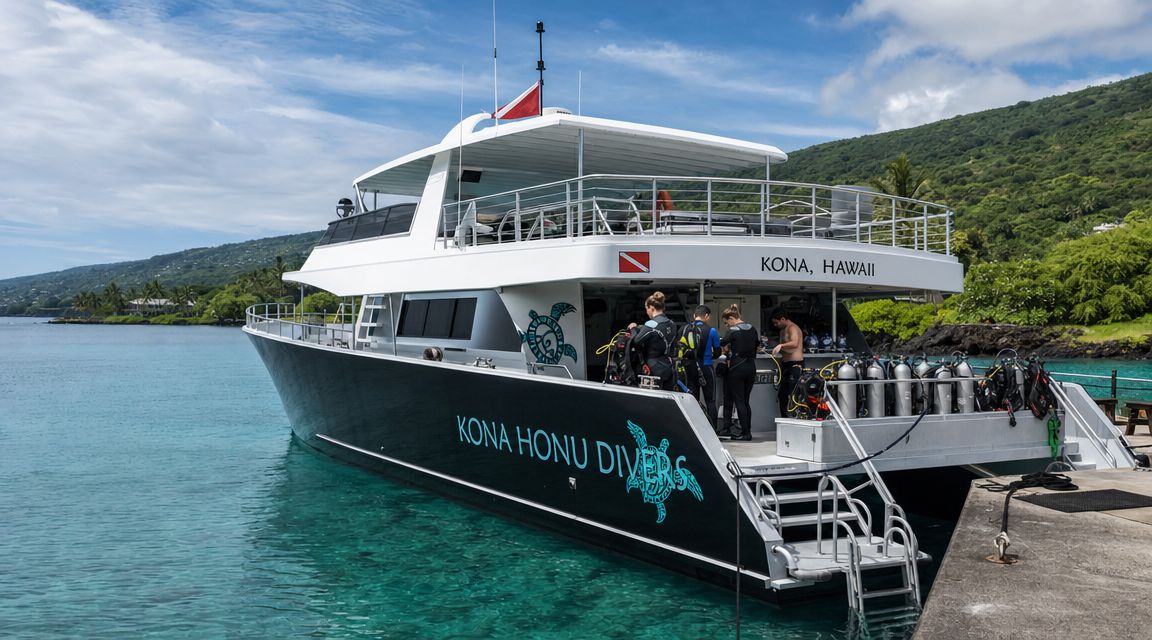
Kona Honu Divers is one example of an operator with a broad enough schedule to cover standard day diving, manta trips, blackwater, and training-based options. That range helps when one diver in the group wants a classic reef charter and another wants a specialty night dive.
Staying Safe and Comfortable While Diving
Safe diving on the Big Island starts with restraint. Don't let the destination trick you into skipping basics you'd respect at home. Do a proper buddy check, listen carefully to the site briefing, stay within the profile, and call the dive early if something feels off. No manta encounter or lava tube swim-through is worth pushing past your actual comfort level.
Night dives and offshore specialty trips deserve extra honesty. If your buoyancy is inconsistent, if your ears are slow to clear, or if you get task-loaded easily, choose the simpler dive first. That decision usually gives you a better trip, not a smaller one.
Seasickness also ruins more dives than people admit, especially when they wait to deal with it until the boat is already moving. If you know you're prone to motion sickness, plan ahead and use something you already know works for you. Options people commonly buy include Ship-EEZ Seasickness Patch, Dramamine pills, Bonine pills, Sea-Band wristbands, and Ginger chews.
Bring water, eat lightly but don't dive on an empty stomach, and stay out in the breeze if you feel queasy. Going below deck usually makes it worse.
Frequently Asked Questions About Big Island Diving
What is the best time of year for big Island scuba diving
The Big Island is generally a year-round destination. The more useful question isn't “when is diving possible?” but “what kind of trip do you want?” If your goal is a relaxed vacation with a mix of reef dives and one signature experience, you can usually build that in any season as long as you stay flexible and book the right style of trip.
What if I'm not an advanced diver
That's common, and it doesn't rule out the Big Island at all. What matters is choosing dives that match your current comfort level. Many visitors do best starting with easier daytime reef diving, then deciding whether a night dive makes sense once they've been in local conditions.
What if I'm not certified but want to try diving
Contact an operator directly and ask about entry-level training or introductory scuba options. Don't assume every advertised trip is appropriate for non-certified guests. The right path is usually a supervised beginner experience, not jumping into a standard certified-diver charter.
How far in advance should I book
Book early if you already know your dates and especially if manta, blackwater, or a specific advanced charter is important to your trip. Popular specialty dives have less flexibility than a general reef outing. Early booking also gives you time to build a smart sequence instead of taking whatever is left.
Should I do manta or blackwater first
If you qualify for both, do manta first unless you already know you love open-ocean, low-reference diving. It's usually the cleaner introduction to Kona night diving and an easier confidence builder.
If you want a clean way to sort your options, Kona Honu Divers is a practical place to start because you can compare reef, manta, blackwater, training, and advanced trip formats in one place and choose the kind of big Island scuba diving that fits your experience.