
The Big Island of Hawaii isn't just a paradise of volcanoes and lush rainforests; it's a world-class destination for underwater exploration. Sheltered by massive volcanoes from the prevailing trade winds, the Kona coast boasts exceptionally calm, clear waters year-round, making it a diver's dream. The island's unique volcanic topography has created a spectacular underwater landscape of lava tubes, arches, and ancient caverns teeming with vibrant marine life. This unique geology makes the Big Island scuba diving sites some of the most diverse and captivating in the world.
This guide is designed for certified divers of all levels, from those seeking serene coral gardens to advanced explorers ready for deep pinnacles and challenging drifts. We will provide a comprehensive breakdown of the top dive locations, detailing everything you need to plan your underwater adventure. You'll get actionable insights on specific dive profiles, including entry points, typical depths, marine life highlights, and recommended experience levels. We’ll cover everything from the world-famous manta ray night dive and the mysterious blackwater pelagic dives to vibrant reef ecosystems and unique lava tube formations.
Let's dive in and explore the aquatic wonders that make Kona a premier global diving hotspot. As you plan your adventure, remember that a top-tier operator like Kona Honu Divers can elevate your experience from great to truly exceptional, offering expert guidance and access to the best locations.
Ready to see what the Big Island has to offer? Check out our full range of diving tours to get started.
1. Manta Ray Night Dive Sites (Garden Eel Cove & Manta Village)
The manta ray night dive is the signature underwater experience of the Big Island, consistently ranked among the top dive encounters in the world. As featured in documentaries by National Geographic and the BBC, this dive offers a breathtaking ballet. Divers descend in the twilight and settle on the sandy bottom, positioning themselves around a central light source. This "campfire" of lights attracts immense clouds of plankton, creating a floating buffet for the majestic pelagic manta rays.
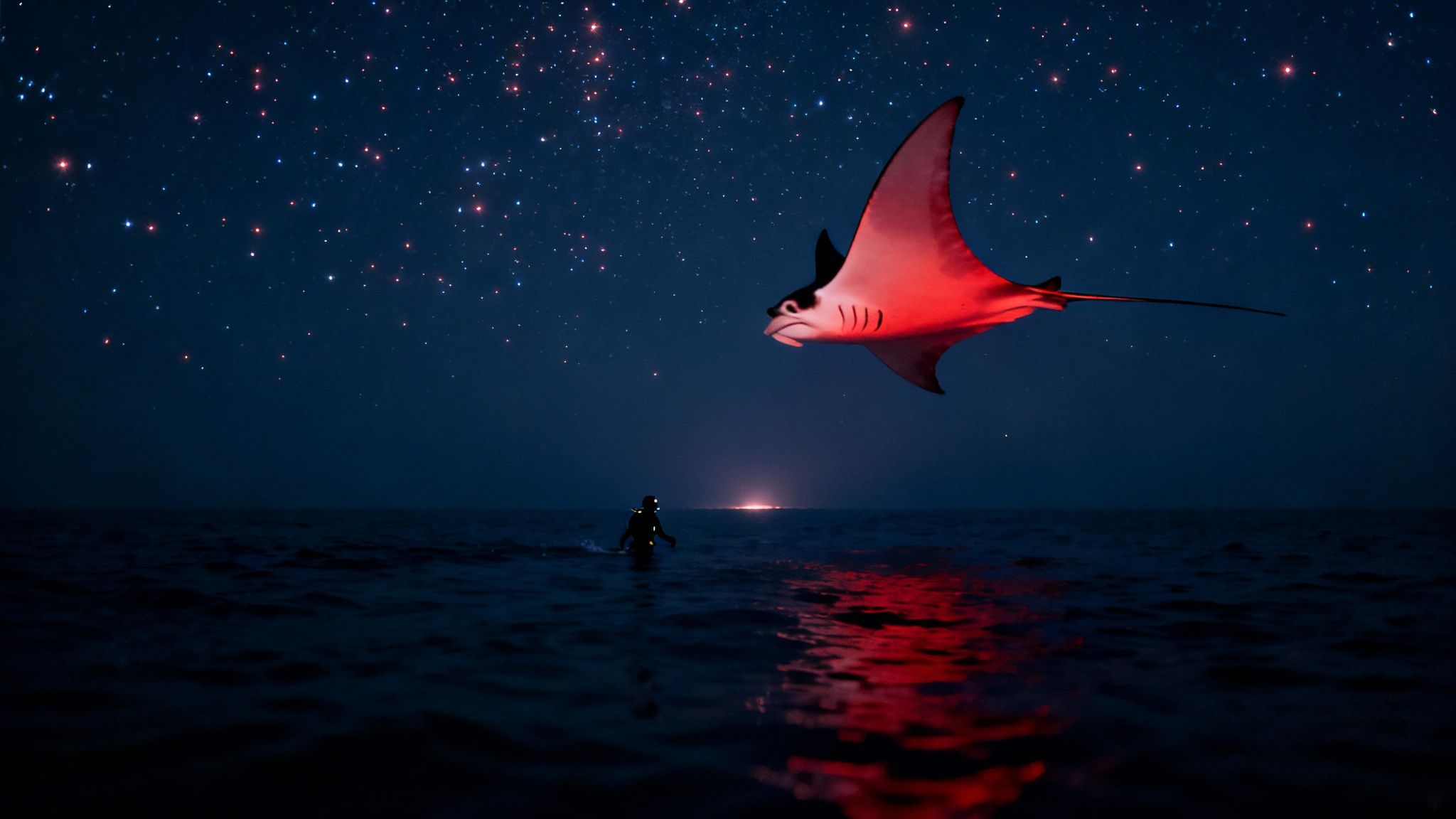
These gentle giants, with wingspans often exceeding 15 feet, glide gracefully into the light, performing barrel rolls and somersaults to scoop up the plankton. They pass just inches above divers' heads, offering an unparalleled, awe-inspiring interaction.
Why Garden Eel Cove is the Premier Site
While several locations host this dive, Garden Eel Cove is widely considered the superior choice. Its location north of Kona International Airport is more protected from the prevailing swell, resulting in calmer, more comfortable conditions for divers. The viewing area is a natural sandy amphitheater, allowing for better positioning and an unobstructed view of the spectacle. Furthermore, the surrounding coral reefs are healthier and more vibrant, adding to the site's overall appeal.
Dive Profile & Practical Tips
- Location: North of Kona Airport (Garden Eel Cove) or near Keauhou Bay (Manta Village).
- Access: Boat dive only.
- Depth & Bottom: 30-45 feet (9-14 meters) on a sandy bottom.
- Visibility & Current: Visibility is often excellent (50-100+ feet), though dependent on plankton density. Currents are typically mild due to the protected nature of the coves.
- Experience Level: Open Water Certified. Excellent buoyancy is crucial as you will be stationary on the bottom.
- Key Tips:
- Stay Low: Let the mantas come to you. Never chase or touch them.
- Bring a Wetsuit: A 45-minute stationary dive at night can get surprisingly chilly, even in Hawaiian waters. A 3mm or 5mm full suit is recommended.
- Book Ahead: This is one of the most popular Big Island scuba diving sites, so reserve your spot in advance, especially during peak season (summer months).
- Go with Experts: Operators like Kona Honu Divers specialize in this encounter, providing powerful lights and expert guidance for a safe and memorable experience.
Kona Honu Divers has perfected the manta ray night dive, ensuring an unforgettable adventure.
2. Blackwater Diving (Pelagic Night Dives)
For the truly adventurous, blackwater diving offers a journey into an alien world. This highly specialized discipline is unlike any other scuba experience. Divers are taken several miles offshore, over thousands of feet of water, and descend into the open ocean at night. Tethered to the boat, you drift in the immense water column, witnessing one of the largest migrations on Earth as deep-sea creatures ascend towards the surface to feed under the cover of darkness.
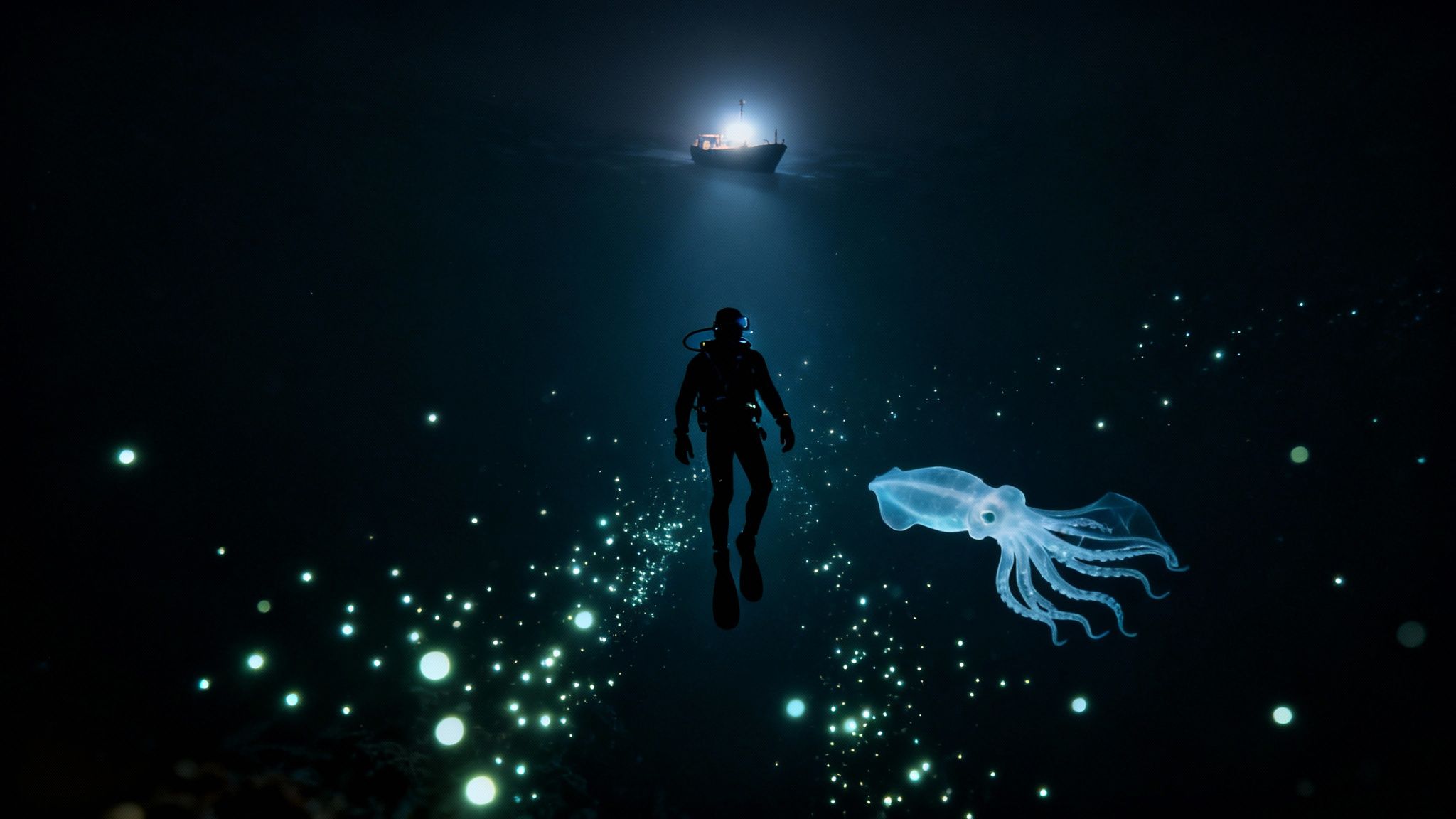
This is not a reef dive; it is an exploration of the pelagic zone. Your dive lights will illuminate a cosmos of strange and wonderful beings: bioluminescent organisms, translucent larval fish that look nothing like their adult forms, and bizarre deep-water squid. This dive is one of the most unique Big Island scuba diving sites, offering a glimpse into a mysterious ecosystem rarely seen by humans.
Why Kona is the Ideal Blackwater Location
The deep, clear, and calm waters off the Kona coast provide the perfect conditions for blackwater diving. The island's steep underwater slope means that deep-water environments are accessible just a few miles from shore. This proximity, combined with predictable currents and the expertise of pioneering local operators, has established Kona as a global hub for this thrilling type of diving.
Dive Profile & Practical Tips
- Location: 2-3 miles offshore from the Kona coast, in open ocean.
- Access: Boat dive only, with a specialized tether system.
- Depth & Bottom: 40-60 feet (12-18 meters) suspended in the water column over a bottom that is thousands of feet below.
- Visibility & Current: Visibility is determined by the reach of your dive light. Currents can vary, but you will drift with the boat and the guide.
- Experience Level: Advanced Open Water Certified with excellent buoyancy control. This dive is not for beginners due to the psychological and technical demands.
- Key Tips:
- Master Buoyancy: Your ability to maintain a stable depth in the mid-water is non-negotiable for safety and enjoyment.
- Redundant Lights: Bring a primary and at least one backup dive light. In this environment, light is your lifeline.
- Stay Calm: The experience can be sensory-depriving. Focus on slow, controlled breathing to manage the unique psychological stress.
- Trust Your Guide: Listen carefully to the briefing and follow the procedures set by experienced operators who specialize in this dive.
Pioneered in Kona, this is an advanced dive that rewards the prepared diver with an experience that feels like floating through outer space. Learn more about the Kona Honu Divers blackwater dive tour and what it takes to explore this final frontier.
3. Lava Tube & Cave Systems (Reef Edge Formations)
The Big Island's volcanic origins are spectacularly displayed underwater through a network of submerged lava tubes, arches, and caverns. These dramatic geological formations, created by ancient lava flows cooling and solidifying, offer one of the most unique Big Island scuba diving sites. Divers can explore these intricate structures, swimming through tunnels and under massive archways that provide a thrilling sense of discovery.
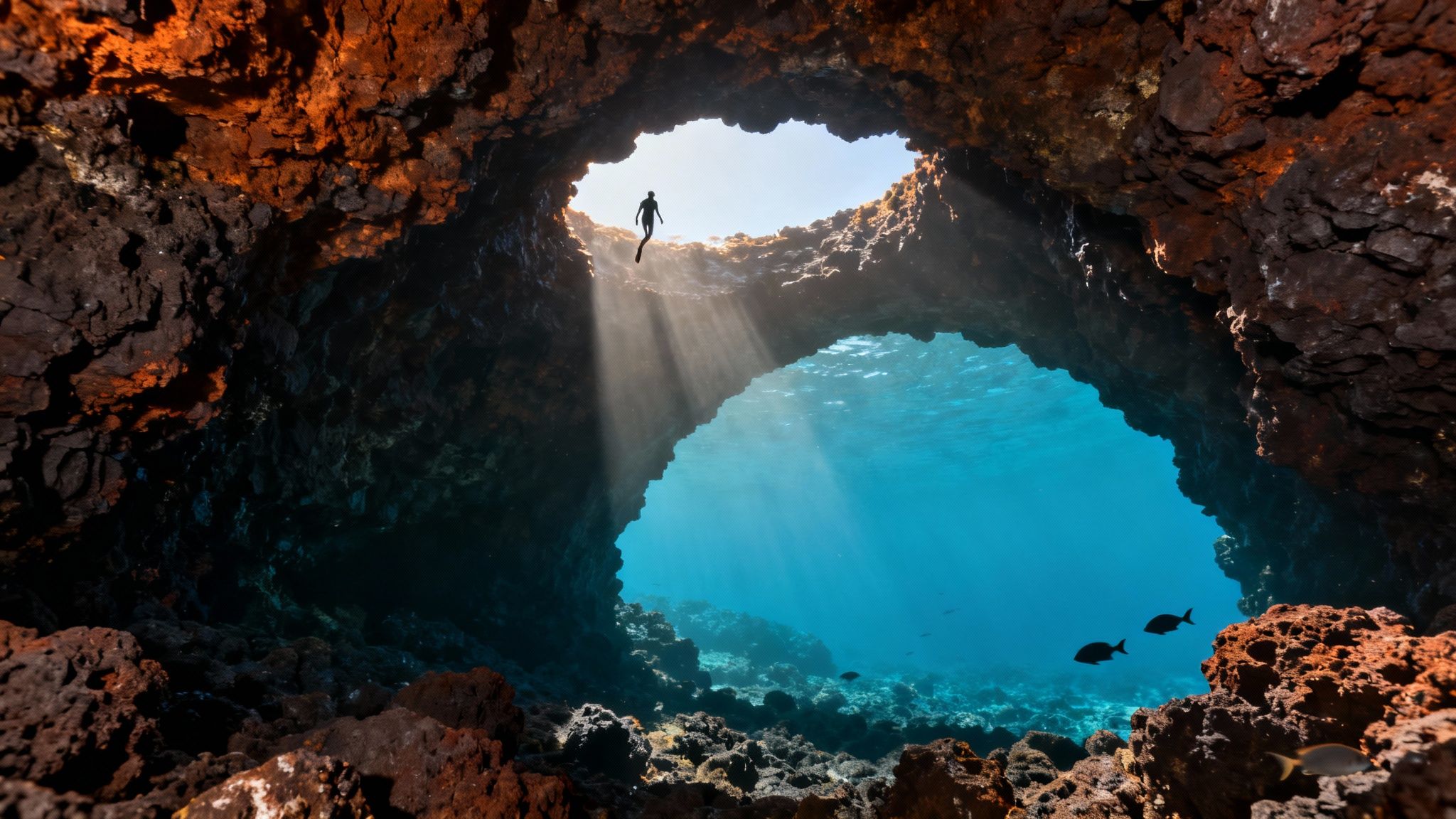
These basalt formations act as natural shelters, creating protected microhabitats that host an incredible diversity of marine life. It is common to find sleeping whitetip reef sharks, reclusive eels, and dense schools of fish taking refuge within the dark recesses. The play of light filtering through openings in the rock creates breathtaking, cathedral-like scenes perfect for underwater photographers.
Why Lava Tubes are a Must-Dive
Exploring a lava tube is like diving through a piece of Hawaiian history. It offers a completely different experience from a typical reef dive, focusing on topography and the unique interaction between geology and marine biology. Sites like Rainbow Reef and the structures near Puako provide accessible yet awe-inspiring examples of this underwater architecture. Navigating these systems with an experienced guide reveals hidden corners of the reef that many divers miss.
Dive Profile & Practical Tips
- Location: Various sites along the Kona and Kohala coasts.
- Access: Primarily boat dives, though some shore-accessible tubes exist.
- Depth & Bottom: 30-70+ feet (9-21+ meters) with a mix of lava rock, coral, and sandy bottoms.
- Visibility & Current: Visibility is generally excellent (60-100+ feet). Currents can be present at tube entrances and exits, requiring careful assessment.
- Experience Level: Open Water Certified. A Cavern Diver specialty is recommended but not required for guided tours through simple swim-throughs.
- Key Tips:
- Control Your Buoyancy: Maintain a horizontal trim and use precise fin kicks (like the frog kick) to avoid stirring up silt.
- Bring Lights: A primary and a backup dive light are essential, as natural light is limited or absent inside the tubes.
- Move Slowly: Navigate with slow, deliberate movements. Rushing can lead to contact with the structure or disturb marine life.
- Dive with a Pro: Never enter an overhead environment without proper training and a guide. Kona Honu Divers’ expert guides know these sites intimately, ensuring a safe and fascinating exploration.
- Listen to the Briefing: Pay close attention to your guide’s plan, including entry points, exit points, and emergency procedures.
Exploring these ancient formations is a highlight for more experienced divers, and Kona Honu Divers offers advanced dive tours that frequently visit these incredible sites.
4. Coral Reef Ecosystems & Shallow Reef Dives (Beginner-Friendly Sites)
Not every dive needs to be a deep, technical adventure. The Big Island is blessed with extensive shallow coral reef ecosystems that offer some of the most vibrant, life-filled, and relaxing dives available. These sites, typically between 20 and 50 feet, are perfect for new divers, families, and underwater photographers seeking abundant light and long bottom times. Gentle slopes, minimal currents, and incredible biodiversity make these reefs ideal training grounds for certification courses and fantastic introductions to Kona's underwater world.
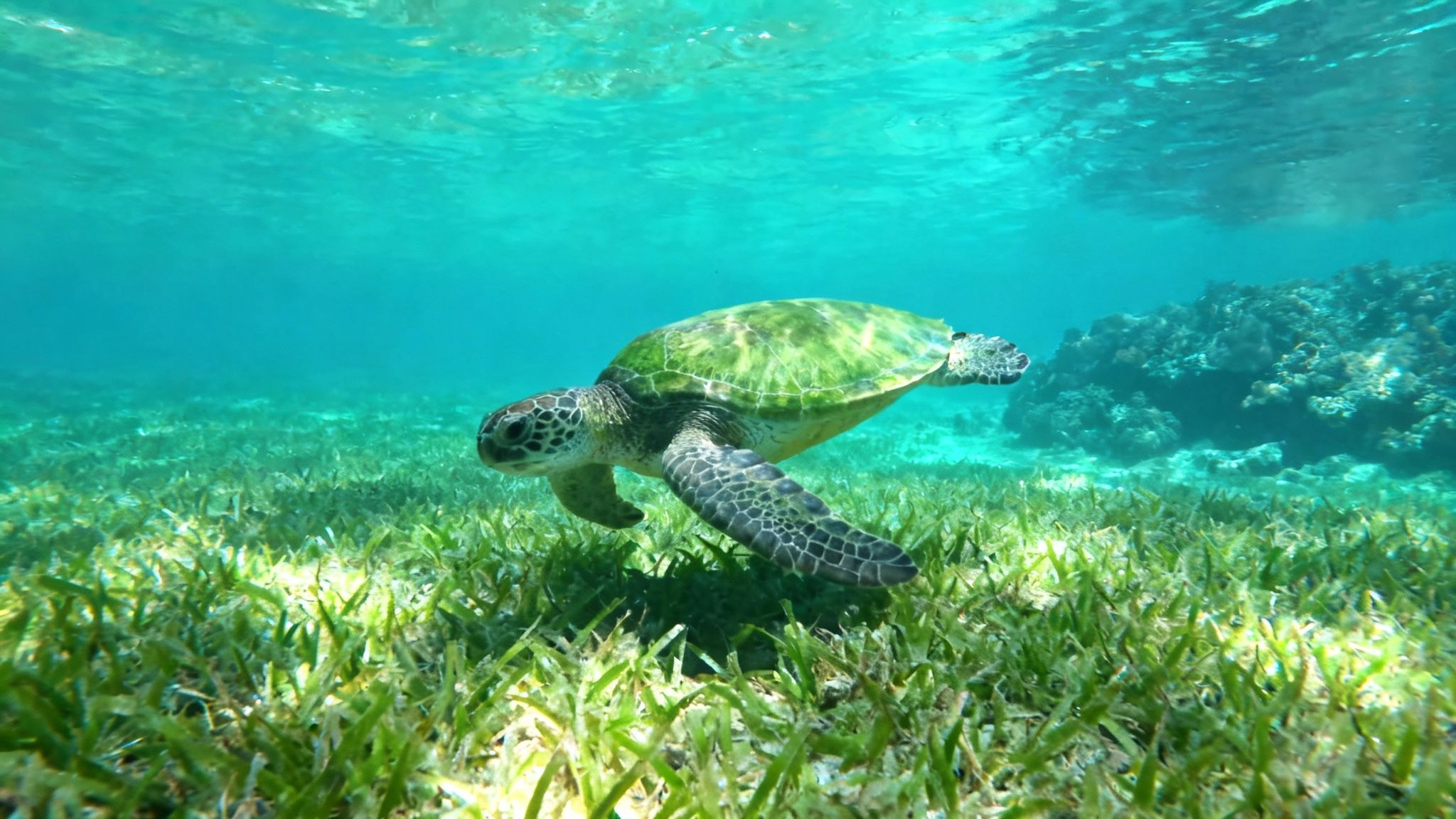
Divers can explore healthy coral gardens teeming with colorful tropical fish like butterflyfish, wrasses, and parrotfish. These accessible environments are also prime habitats for Hawaiian green sea turtles (honu), which are often seen resting on the reef or gracefully swimming by. The calm conditions provide a perfect setting for honing skills or simply enjoying a serene immersion in a thriving marine ecosystem.
Why Shallow Reefs are Essential Dive Experiences
Sites like "Turtle Town" or other protected reef gardens offer a unique opportunity to witness the foundation of the marine food web up close. They are living classrooms where divers can observe fascinating animal behaviors and appreciate the delicate balance of a coral community. For photographers, the excellent visibility and shallow depths allow for stunning wide-angle reefscapes and detailed macro shots without the need for complex lighting rigs. These sites truly showcase the beauty and importance of Hawaii's coastal habitats.
Dive Profile & Practical Tips
- Location: Numerous sites along the Kona and Kohala coasts, often in protected bays and coves.
- Access: Boat and shore dives are available, depending on the specific site.
- Depth & Bottom: 20-50 feet (6-15 meters) over coral gardens, rubble, and sand patches.
- Visibility & Current: Visibility is typically excellent (60-100+ feet). Currents are generally mild to non-existent.
- Experience Level: Ideal for all levels, from Discover Scuba Diving participants to experienced divers.
- Key Tips:
- Perfect Your Buoyancy: Practice neutral buoyancy to float effortlessly above the delicate corals. Avoid touching or kicking the reef.
- Observe Respectfully: Maintain a safe and respectful distance from all marine life, especially turtles. Never chase or block their path.
- Go Early: Morning dives often provide the calmest sea conditions and the best visibility.
- Learn and Identify: Enhance your dive by learning to identify common fish and coral species. A knowledgeable guide can turn a good dive into a great one.
- Use Reef-Safe Sunscreen: Protect your skin and the coral by using only mineral-based (zinc oxide, titanium dioxide) sunscreens.
Kona Honu Divers' beginner and family-friendly diving tours are specifically designed to explore these beautiful and gentle reef systems.
5. Deep Pinnacles & Wall Dives (Advanced Recreational Depths)
For experienced divers seeking a vertical thrill, the Big Island’s underwater topography offers dramatic deep pinnacles and sheer walls that drop into the abyss. These submerged volcanic mountains, like Red Hill and Cathedral, create stunning underwater landscapes that attract larger pelagic species and unique marine life found only in the deeper water column. Descending along these structures is like flying down the side of an underwater skyscraper.
These advanced sites, often reaching depths between 80 and 130 feet, are where you might encounter schools of amberjack, large predators like Galapagos or Sandbar sharks patrolling the blue, and unique invertebrates clinging to the rock faces. The feeling of floating in the deep blue next to a colossal, ancient lava structure is an unforgettable aspect of the Big Island scuba diving sites.
Why Dive Deep in Kona?
The deep sites offer a different perspective on Kona’s marine ecosystem. The light is different, the colors change, and the animals are often larger and less common than those on shallower reefs. These dives are a test of skill and awareness, rewarding divers with unparalleled views and exhilarating wildlife encounters. They require excellent buoyancy, gas management, and a deep respect for recreational limits.
Dive Profile & Practical Tips
- Location: Various sites along the Kona Coast, including Red Hill and Cathedral.
- Access: Boat dive only, often on advanced charters.
- Depth & Bottom: 80-130 feet (24-40 meters) along vertical walls or pinnacle structures.
- Visibility & Current: Visibility is frequently spectacular (100+ feet), but currents can be a factor and require experience to manage.
- Experience Level: Advanced Open Water certification with a Deep Diver specialty is highly recommended. You must be comfortable with deep-water physics and managing your no-decompression limits.
- Key Tips:
- Get Certified: Complete your PADI Advanced Open Water and Deep Diver specialty courses before attempting these dives.
- Mind Your Gauges: Constantly monitor your depth, time, and air supply. Nitrogen narcosis can affect judgment, so rely on your computer and training.
- Stay Conservative: Plan your dive and dive your plan. It’s wise to set your turn-around pressure and maximum depth more conservatively than the absolute limits.
- Slow Ascents: Controlled ascents with proper safety stops are critical to avoid decompression sickness.
- Go with a Pro: Dive with an experienced guide who knows the site’s specific topography and potential currents.
Kona Honu Divers offers premium advanced 2-tank trips designed specifically for these challenging and rewarding deep dives.
6. Shark Nursery & Pelagic Fish Zones
For experienced divers seeking a more adrenaline-fueled encounter, the Big Island offers access to specialized zones that serve as nurseries and feeding grounds for sharks and large pelagic fish. These dives move beyond the vibrant reefs into deeper waters, offering a glimpse into the raw, powerful world of Hawaii’s apex predators. Observing these magnificent creatures in their natural habitat is not just a thrill; it's an educational experience that dispels myths and highlights their vital role in the marine ecosystem.
These sites are often characterized by isolated rock formations or cleaning stations on sandy bottoms, where consistent fish aggregations attract whitetip reef sharks, and seasonally, even scalloped hammerheads. The encounters are respectful and observational, focused on appreciating the sharks' natural behaviors without disruption.
Why This is an Advanced Adventure
Unlike a typical reef tour, these dives require a higher level of skill and composure. The open-ocean setting and presence of large animals demand excellent buoyancy control and a calm demeanor. These are not baited or artificially created encounters; they are a privileged look into a wild ecosystem. For a broader perspective on the challenging deep-sea areas explored during these pelagic dives, you can find interesting information on the characteristics of offshore and deep-sea environments. The experience is a profound reminder of the ocean's untamed beauty.
Dive Profile & Practical Tips
- Location: Offshore sites, specific locations vary based on conditions and recent sightings.
- Access: Boat dive only; often requires a longer boat ride to deeper waters.
- Depth & Bottom: 50-100+ feet (15-30+ meters), typically over sand channels, lava rock pinnacles, or in blue water.
- Visibility & Current: Visibility is often excellent (100+ feet), but currents can be strong and unpredictable.
- Experience Level: Advanced Open Water certification with experience in deep dives and potential currents is highly recommended.
- Key Tips:
- Stay Calm: Move slowly and deliberately. Sharks are naturally curious but wary of divers; calm, predictable movements are key.
- Maintain Distance: Never chase, corner, or attempt to touch any marine life. Observe from a respectful distance to witness natural behavior.
- Listen to Your Guide: Dive with experienced operators who specialize in shark behavior and can ensure a safe and educational encounter.
- Trust the Experts: Kona Honu Divers' advanced dive tours are designed for these kinds of thrilling deep-water explorations with knowledgeable guides.
7. Wreck Diving & Historical Underwater Sites (Specialized Exploration)
Beyond the natural lava tubes and coral reefs, the Big Island offers a unique window into maritime history through its various wreck sites. These submerged vessels and structures serve a dual purpose: they are artificial reefs teeming with life and silent monuments to the past. Exploring these sites provides a different kind of thrill, blending the excitement of discovery with the solemnity of history.
Divers can glide over deteriorating hulls that have become habitats for schools of fish, eels, and invertebrates. These sites, often found in deeper waters, present a fascinating challenge and a rewarding experience for those with the proper training, offering a change of pace from typical reef dives.
Why Wreck Diving Requires Special Training
Wreck diving is considered a specialized form of scuba that demands advanced skills and awareness. Unlike open-water reef diving, wrecks can present overhead environments, potential entanglement hazards, and confined spaces. Proper training is not just a recommendation; it is essential for safety. A wreck diving specialty certification teaches critical protocols for navigating these unique environments, including techniques for line laying, managing equipment, and maintaining buoyancy in tight quarters to avoid stirring up silt.
Dive Profile & Practical Tips
- Location: Various sites around the island, often kept more discreet and accessed via specialized charters.
- Access: Boat dive only.
- Depth & Bottom: Highly variable, ranging from 40 feet to well over 130 feet (12-40+ meters).
- Visibility & Current: Visibility is generally good, but can be reduced inside a wreck by silt. Currents can be a factor depending on the wreck's location.
- Experience Level: Advanced Open Water with a Wreck Diver specialty certification is strongly recommended.
- Key Tips:
- Get Certified: Never attempt to penetrate a wreck without proper training and certification.
- Light It Up: Always carry a primary dive light and at least one backup. Wreck interiors are pitch-black.
- Look, Don't Touch: Respect these sites as historical artifacts and marine habitats. Take only pictures.
- Follow Your Guide: Dive with an experienced guide who knows the specific layout and potential hazards of the wreck. Kona Honu Divers' Premium Advanced Trips are perfect for exploring these deeper, more challenging sites safely.
Exploring these underwater historical sites is one of the most unique Big Island scuba diving sites available to properly certified divers.
8. Turtle Encounters & Protected Marine Habitat Zones
Swimming alongside the serene Hawaiian green sea turtle, or honu, is a quintessential Big Island experience. Several of Kona’s dive sites serve as protected havens where these ancient mariners congregate to feed on algae, rest on the reef, and get cleaned by endemic reef fish. These areas offer divers a unique and reliable opportunity to observe turtles in their natural habitat, behaving calmly and naturally.
Dives at sites like "Turtle Town" (Pu'uhonua O Hōnaunau) or "Turtle Pinnacle" provide an almost guaranteed encounter. Divers can watch them glide effortlessly through the water, surface for a breath, or settle down for a nap, entirely unbothered by respectful observers. The presence of these turtles is a sign of a healthy ecosystem and a testament to Hawaii's conservation efforts.
Why Turtles Thrive on the Kona Coast
The calm, protected bays and vibrant coral reefs along the Kona coast create an ideal environment for honu. The volcanic underwater topography offers numerous ledges and overhangs, known as "turtle garages," where they can rest safely from predators. The abundance of limu (algae) on the shallow reefs provides a constant food source, making these spots perfect for both novice and experienced divers to enjoy prolonged, peaceful interactions.
Dive Profile & Practical Tips
- Location: Various sites along the Kona and Kohala coasts, including Turtle Town and Turtle Pinnacle.
- Access: Primarily boat dives, though some sites are accessible from shore.
- Depth & Bottom: 15-50 feet (5-15 meters) over coral reef and lava rock formations.
- Visibility & Current: Visibility is typically excellent (60-100+ feet). Currents are generally mild, especially in protected coves.
- Experience Level: Open Water Certified. These shallow, calm sites are perfect for all experience levels, including families and new divers.
- Key Tips:
- Keep Your Distance: Always maintain at least 10 feet of distance. Never touch, chase, or block a turtle's path to the surface.
- Let Them Approach: The best encounters happen when a curious turtle approaches you. Stay calm and enjoy the moment.
- Respect Their Culture: Honu are revered in Hawaiian culture as ʻaumākua (spiritual guardians). Your respectful behavior honors this significance.
- Observe Responsibly: Proper etiquette ensures these animals remain comfortable with human presence. Learn more about responsible and considerate diver etiquette.
Kona Honu Divers, whose name reflects a deep respect for the honu, specializes in leading tours that prioritize the well-being of these magnificent creatures.
Big Island Scuba Sites — 8-Site Comparison
| Dive Site | Implementation Complexity 🔄 | Resource & Safety Needs ⚡ | Expected Outcomes ⭐ | Ideal Use Cases 💡 | Key Advantages 📊 |
|---|---|---|---|---|---|
| Manta Ray Night Dive Sites (Manta Heaven & Manta Village) | 🔄🔄🔄 — Night-diving comfort and buoyancy control required | ⚡⚡ — Night lights, boat ops, thermal protection | ⭐⭐⭐⭐ — High probability of manta encounters; excellent photo ops | Certified night divers, photographers, iconic wildlife viewing | World-renowned experience; consistent aggregations; strong safety protocols |
| Blackwater Diving (Pelagic Night Dives) | 🔄🔄🔄🔄🔄 — Advanced open-water midwater skills; psychological demands | ⚡⚡⚡⚡ — Offshore boat, redundant lights, specialized gear, trained guides | ⭐⭐⭐⭐ — Rare deep-sea species and bioluminescence; high research value | Advanced divers, researchers, specialist photographers | Exclusive, less-crowded encounters; strong scientific value |
| Lava Tube & Cave Systems (Reef Edge Formations) | 🔄🔄🔄🔄 — Overhead awareness; confined-space comfort advised | ⚡⚡⚡ — Lights, potential cavern training, experienced guide | ⭐⭐⭐⭐ — Dramatic geology and concentrated biodiversity; strong visuals | Geological exploration, photographers, divers moving toward cavern specialties | Striking formations, excellent visibility, rich microhabitats |
| Coral Reef Ecosystems & Shallow Reef Dives (Beginner-Friendly Sites) | 🔄🔄 — Low barrier; ideal for beginners and certification | ⚡⚡ — Minimal equipment, easy entries, multiple exit points | ⭐⭐⭐ — Reliable wildlife sightings; ideal for skills and learning | Certification students, families, snorkeler-to-scuba transitions | Safe, accessible, high visibility and marine diversity |
| Deep Pinnacles & Wall Dives (Advanced Recreational Depths) | 🔄🔄🔄🔄🔄 — Advanced depth management and narcosis awareness | ⚡⚡⚡⚡ — Dive computers, gas planning, strong guide support | ⭐⭐⭐⭐ — Encounters with large pelagics; dramatic topography | Experienced recreational divers, advanced photographers, deep-dive training | Thrilling terrain, rarer species, quieter sites |
| Shark Nursery & Pelagic Fish Zones | 🔄🔄🔄🔄 — Comfort with predators and calm behavior required | ⚡⚡⚡ — Good guides, standard gear, strong situational awareness | ⭐⭐⭐⭐ — High educational and behavioral observation value | Advanced recreational divers, researchers, conservation-minded tourists | Apex predator observation; conservation and education opportunities |
| Wreck Diving & Historical Underwater Sites (Specialized Exploration) | 🔄🔄🔄🔄🔄 — Penetration risks; specialty training strongly recommended | ⚡⚡⚡⚡ — Penetration gear, lines, lights, strict protocols | ⭐⭐⭐⭐ — Historical insight and artificial reef biodiversity | Trained wreck divers, history enthusiasts, technical divers | Unique historical exploration; rich artificial reef habitats |
| Turtle Encounters & Protected Marine Habitat Zones | 🔄🔄 — Beginner-friendly with respectful approach | ⚡⚡ — Minimal gear, reef-safe practices, guide-led etiquette | ⭐⭐⭐⭐ — Very high likelihood of turtle encounters; family-friendly | Families, beginner divers, photographers, eco-tourists | Reliable sightings, cultural significance, conservation-focused experiences |
Your Ultimate Big Island Dive Adventure Awaits
The volcanic coastline of Hawaii's Big Island cradles an underwater universe of unparalleled diversity and spectacle. As we've journeyed through this comprehensive guide, it's clear that the sheer variety of Big Island scuba diving sites offers something for every diver, regardless of experience or interest. From the world-famous, balletic grace of the manta ray night dive at Garden Eel Cove to the surreal, bioluminescent wonders of the Kona blackwater dive, each plunge reveals a new facet of this Pacific paradise.
We've explored ancient lava tubes that tell the story of the island's fiery birth, now providing sanctuary for a vibrant tapestry of marine life. We've navigated pristine coral gardens teeming with endemic species found nowhere else on Earth, and we've drifted alongside majestic sea turtles in their protected habitats. For the thrill-seekers, the deep pinnacles and dramatic wall dives offer a glimpse into the abyss, where pelagic hunters roam and the seascape transforms into a vertical wilderness. Each site, from Two Step to Golden Arches, presents a unique challenge and a unique reward.
From Novice to Expert: A Dive for Every Journey
What makes diving here truly exceptional is its accessibility and progression. A newly certified diver can build confidence in the calm, clear waters of sites like Pawai Bay, while seasoned veterans can push their limits on an Advanced Dive Tour exploring remote sea mounts and deeper structures. This progression is the key to a fulfilling dive career and a lifelong passion for the ocean. Mastering buoyancy in a shallow reef prepares you for the delicate navigation of a lava tube; understanding marine animal behavior during a turtle encounter enriches the awe you'll feel during the Manta Ray Night Dive.
The most critical takeaway is that your experience is profoundly shaped by the expertise and philosophy of your guide. A great dive operator doesn't just take you to a location; they unlock its secrets. They ensure your safety, respect the fragile ecosystem, and foster a connection between you and the underwater world. They know the currents, the best time of day to spot a specific creature, and the hidden corners of a reef that most divers miss.
Pro Tip: Don't just book a dive; book an experience. Look for operators with small group sizes, experienced guides who are passionate about marine conservation, and a commitment to providing a premium, personalized adventure. This is what transforms a good dive into an unforgettable memory.
Your Next Step: Plunge into Paradise
You are now equipped with the knowledge to plan an extraordinary underwater adventure. You understand the unique profiles of the top Big Island scuba diving sites, from the legendary Manta Ray Dive to the pioneering Blackwater Dive. The next step is to move from planning to action. Visualize the warm Pacific waters enveloping you, the gentle sway of the current, and the incredible creatures you're about to meet.
Whether your goal is to witness the manta ray spectacle, float through the deep ocean on a blackwater drift, or simply enjoy the vibrant reefs with your family, the Kona coast is ready to welcome you. The journey from reading about these epic dives to experiencing them firsthand is just a reservation away. Let the world-class team at Kona Honu Divers handle the logistics, the gear, and the guidance. All you need to bring is your sense of adventure.
Ready to explore the best Big Island scuba diving sites with a team dedicated to safety, sustainability, and unforgettable adventures? Visit Kona Honu Divers online to browse all our diving tours and book the underwater experience of a lifetime. Let us be your guide to the magic of the Kona coast.