
The Big Island of Hawaii is a world-renowned paradise for scuba divers, boasting a spectacular variety of underwater landscapes shaped by volcanic activity. From vibrant coral gardens teeming with endemic fish to dramatic lava tubes and the world's most famous manta ray night dive, the Kona coast offers an unparalleled aquatic experience. The island's leeward side provides consistently calm, clear waters, making it an ideal destination for divers of all experience levels.
This guide is your definitive resource for exploring the best Big Island scuba diving sites. We will dive deep into each location, providing the essential details you need to plan your adventure. You'll get practical information on dive profiles, typical visibility, and the unique marine life you can expect to encounter at each spot. We'll also cover recommended experience levels, potential hazards, and the best times to visit for optimal conditions.
Whether you're a newly certified diver eager to see your first sea turtle, an advanced explorer ready for a challenging pinnacle dive, or an enthusiast seeking the thrill of a blackwater dive, this listicle breaks down the top locations that make Kona a premier diving destination. We'll detail which sites are accessible through Kona Honu Divers' various diving tours, including their acclaimed 2-tank boat trips, manta ray charters, and private excursions. This is your ultimate guide to the underwater wonders awaiting you, ensuring you are fully prepared for an unforgettable journey into Hawaii's aquatic realm.
Night Dives: The World-Famous Manta Rays & Nocturnal Reefs
The Big Island is legendary for its night diving, and no experience is more iconic than the world-famous manta ray night dive. This bucket-list encounter, featured in documentaries by National Geographic and the BBC, is one of the most unique Big Island scuba diving sites. Divers settle on the sandy bottom in a "campfire" circle, shining their lights upward to attract plankton. This creates a concentrated food source, drawing in majestic manta rays that gracefully barrel roll and glide just inches overhead to feed.
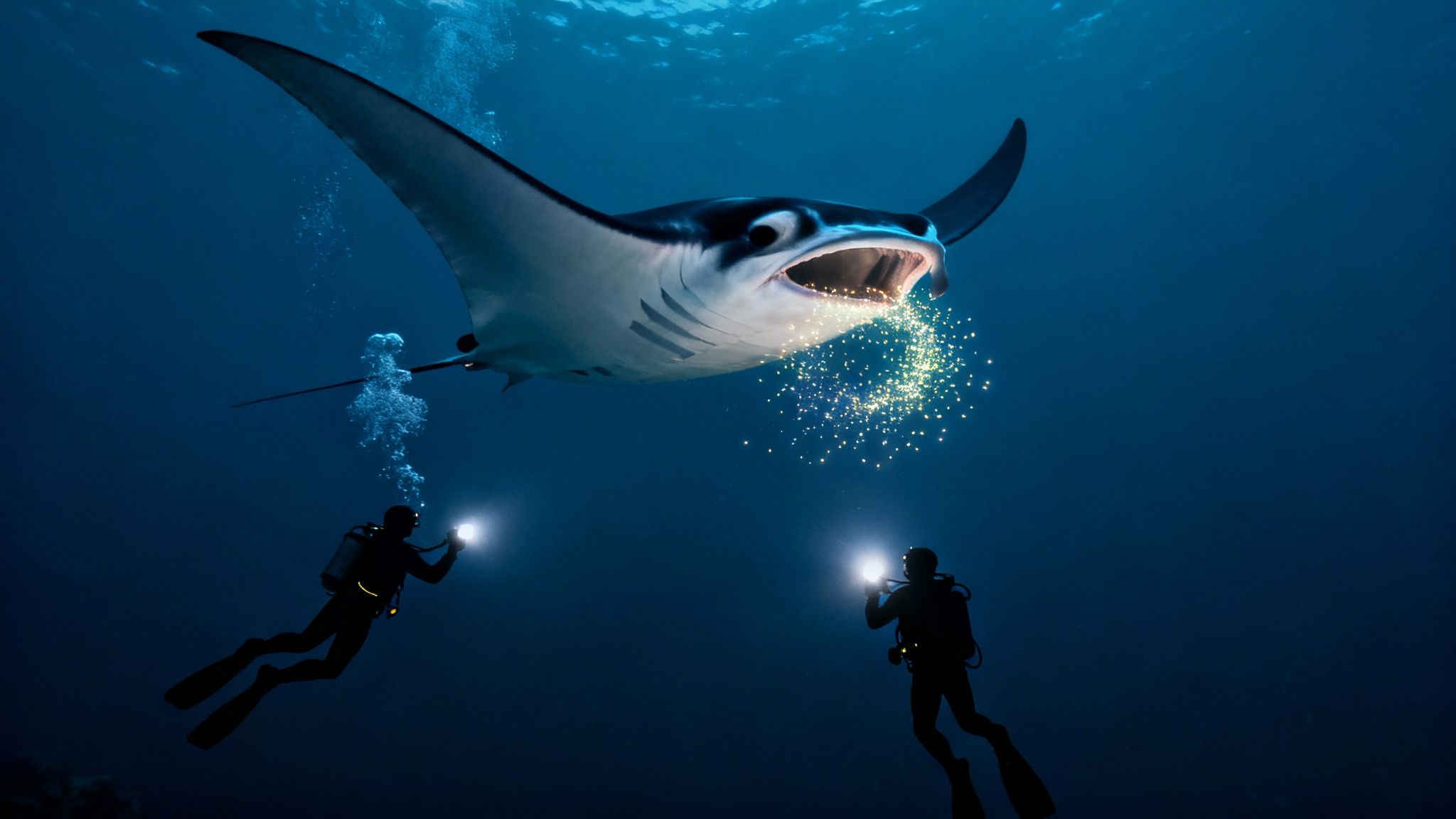
Why Garden Eel Cove is the Premier Manta Site
While there are a few locations for this dive, Garden Eel Cove stands out as the superior choice. Its geography provides natural protection from swells, resulting in consistently calmer conditions and better visibility. The viewing area is a large, comfortable sandy patch, allowing divers to relax and enjoy the show without damaging a delicate reef. Furthermore, the surrounding coral at Garden Eel Cove is healthier and more vibrant, offering a richer ecosystem to observe before and after the main event. Kona Honu Divers specializes in this premier experience with their 2-Tank Manta Ray Night Dive & Snorkel, ensuring a safe, respectful, and unforgettable encounter.
Practical Tips for Your Manta Dive
To make the most of this incredible dive, preparation is key. Good buoyancy is essential to avoid stirring up the sandy bottom and to remain clear of the mantas. It's also wise to wear extra thermal protection, as you'll be relatively stationary and water can feel cooler at night. For photographers, a wide-angle lens is a must to capture the sheer scale of these gentle giants.
- Best Time to Go: While the dive runs year-round, scheduling it during a new moon can provide darker skies, making the illuminated plankton even more vibrant.
- Gear Essentials: A reliable three-light system is crucial: a primary light, a backup, and a tank marker light for safety and visibility.
- Light Discipline: Be mindful of your light. Avoid shining it directly into the eyes of other divers or the manta rays, as this can be disruptive.
Beyond the mantas, nocturnal reef dives reveal a completely different world. Creatures hidden during the day, like octopus, squid, and colorful crustaceans, emerge to hunt. These dives offer a magical glimpse into the reef's hidden life, making night diving a must-do activity on the Big Island. You can learn more about this incredible adventure and what to expect by visiting the Kona Manta Ray Night Dive information page.
Blackwater Diving: A Journey into the Abyss
For the truly adventurous, Blackwater diving offers a surreal and unforgettable journey into the deep open ocean. This is not a reef dive; it is a specialized midwater drift dive conducted miles offshore over thousands of feet of water. Divers are suspended in the inky blackness, tethered to a boat, with a powerful downline of lights illuminating a small patch of the vast ocean. This light attracts creatures that participate in the largest migration on Earth, the nightly vertical migration, where deep-sea organisms rise to the surface to feed.
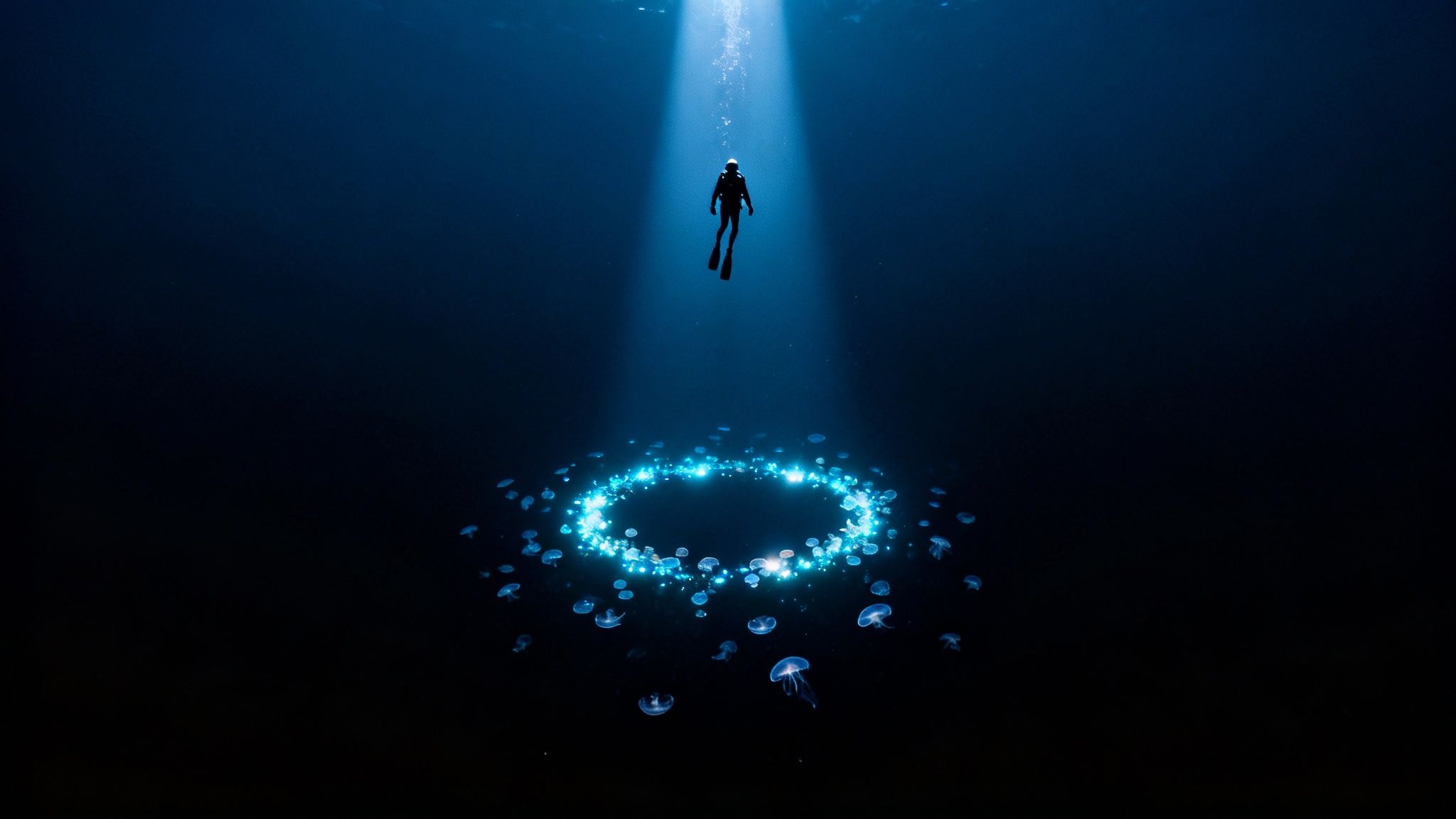
Why Blackwater Diving is a Unique Big Island Experience
Kona's deep offshore waters and calm sea conditions create the perfect environment for this unique type of dive, making it one of the most exciting Big Island scuba diving sites. You won’t see coral or reef fish; instead, you'll encounter a bizarre and beautiful world of bioluminescent creatures, larval-stage fish that look nothing like their adult forms, and strange pelagic invertebrates. Often described as diving in outer space, it’s a humbling and mesmerizing experience that provides a rare glimpse into a hidden ecosystem. Kona Honu Divers offers a dedicated Blackwater Night Dive, providing experienced guides and the specialized equipment necessary for this advanced adventure.
Practical Tips for Your Blackwater Dive
Success and safety on a blackwater dive hinge on preparation and specific skills. This is an advanced dive that requires excellent buoyancy control, as there are no visual references besides the light line and your dive buddy. Being comfortable in the darkness and open ocean is a must.
- Experience Level: This is an advanced dive. Divers should have a solid night diving background and impeccable buoyancy skills. A specialized blackwater certification is highly recommended.
- Gear Essentials: Redundancy is key. A primary dive light, a backup light, a tank marker, and a reliable dive computer are mandatory. Extra thermal protection is also recommended.
- Buoyancy is Critical: You will be floating in a featureless void. Maintaining neutral buoyancy without a visual reference is the most important skill for this dive to avoid ascending or descending uncontrollably.
This dive is a photographer's dream, offering opportunities to capture images of rarely seen marine life. The experience is also deeply valuable for marine biology enthusiasts, as you can see many fascinating endemic marine animals in their larval stages.
3. Kailua Pier & Turtle Town (Beginner-Friendly Reef Dives)
For new divers or those looking for a calm, relaxing underwater experience, Kailua Pier and the various sites known as "Turtle Town" are quintessential Big Island scuba diving sites. These protected, shallow reef systems offer consistently clear and calm conditions, making them perfect for certification dives, skill refreshers, and family outings. The gentle environments allow divers to focus on buoyancy and exploration without having to manage strong currents, all while being surrounded by an abundance of vibrant marine life.
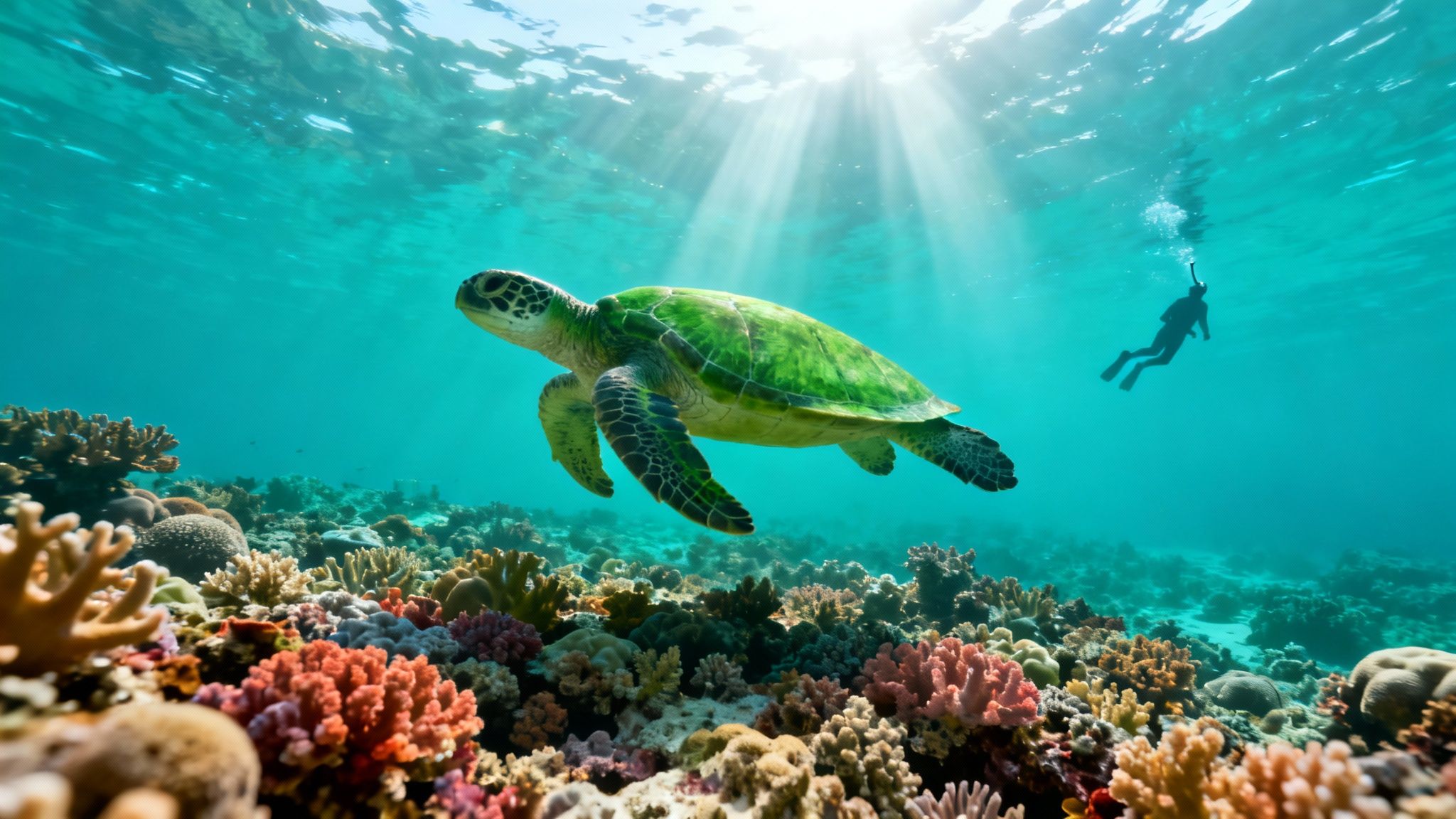
Why These Sites are Ideal for New Divers
Kailua Pier, located in the heart of Kailua-Kona, is a remarkably biodiverse shore dive often used for training due to its easy entry and contained area. Similarly, Turtle Town refers to several locations along the coast that are famous for their high concentration of Hawaiian green sea turtles (honu). Both areas feature healthy coral gardens teeming with tropical fish like butterflyfish, Moorish idols, and yellow tangs. These sites provide a safe and encouraging setting for divers to build confidence and are a cornerstone of many beginner certification programs offered by Kona Honu Divers. If you have no experience, you can learn more about getting started with a Discover Scuba Diving experience.
Practical Tips for Diving Kailua Pier & Turtle Town
Maximizing your enjoyment at these popular spots involves a bit of planning. Arriving early is key to securing good parking at the pier and avoiding the midday crowds at Turtle Town. Since these are popular locations, always practice responsible diving etiquette. This includes maintaining a respectful distance of at least 10 feet from sea turtles and never touching the delicate coral formations.
- Best Time to Go: The early morning offers the calmest water conditions and the best visibility before the afternoon winds pick up.
- Gear Essentials: A simple setup is all that's needed, but a dive computer is always recommended. Bring a waterproof fish ID card to help identify the colorful residents.
- Photography Tip: A macro lens is perfect for capturing detailed shots of small critters and intricate coral patterns, while a standard or wide-angle lens works well for turtle portraits.
These sites are not just for training; they are a fantastic way for any diver to enjoy a stress-free immersion into Hawaii’s beautiful underwater world. Their accessibility and rich marine life make them a must-visit for anyone diving on the Big Island.
4. Red Hill (Kaholo Reef) – Advanced Pinnacle & Lava Tube Dives
For experienced divers seeking a thrill, Red Hill, also known as Kaholo Reef, offers some of the most dramatic underwater topography on the Kona coast. This advanced site is characterized by steep pinnacles that rise from the depths, creating a breathtaking vertical ecosystem. Divers can explore mysterious lava tubes and swim-throughs, navigating a complex and awe-inspiring underwater mountain range. Due to its exposure to open ocean conditions, which can create strong surges and currents, Red Hill is one of the premier Big Island scuba diving sites for those with advanced training and a taste for adventure.
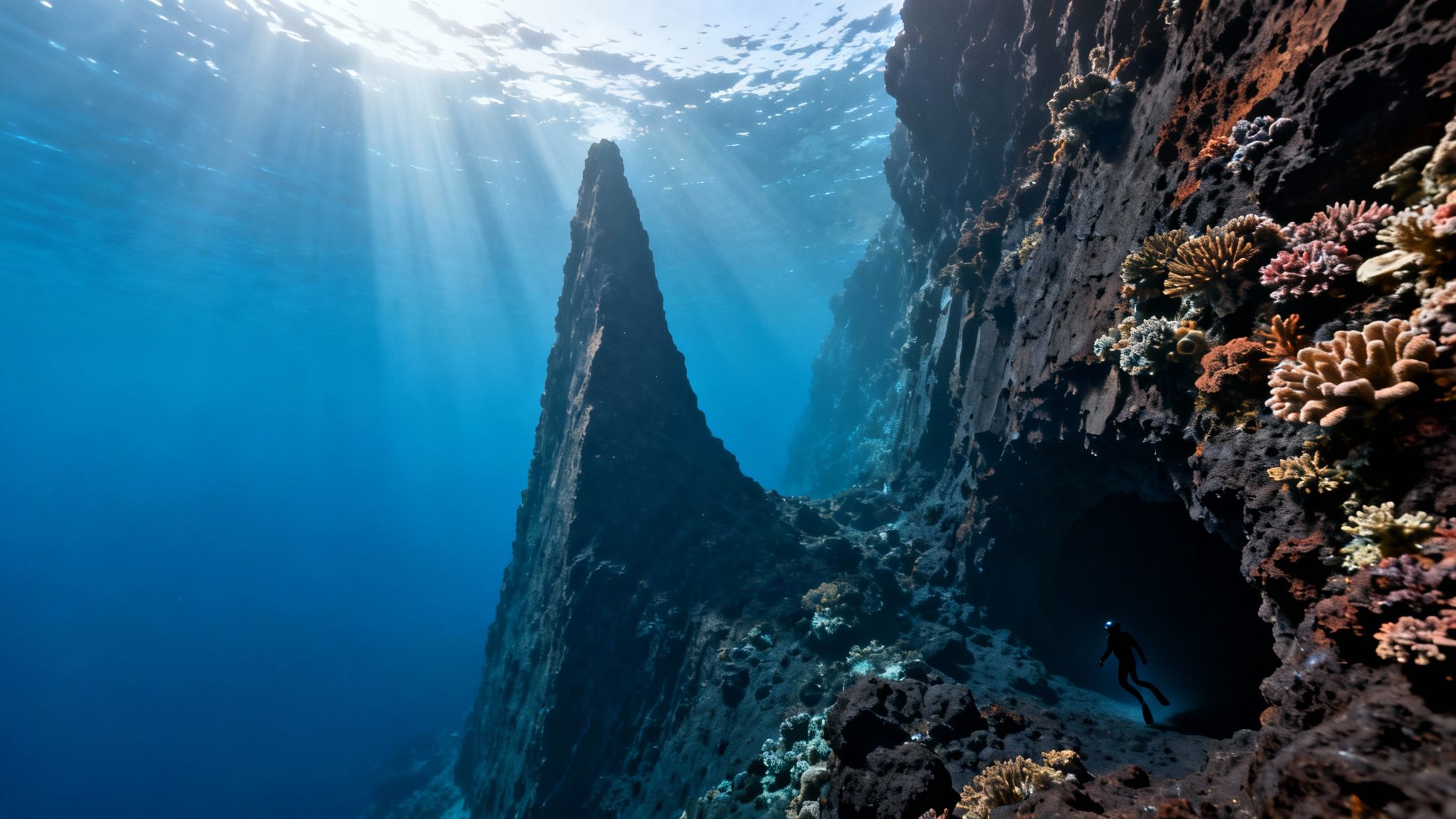
Why Red Hill is an Advanced Diver's Playground
Red Hill is not a typical reef dive; it’s an expedition. The main attraction is the dramatic geological structure itself, with deep canyons and swim-throughs that challenge even seasoned divers. The site's depth profile and potential for strong currents demand excellent buoyancy control and situational awareness. These conditions also attract larger pelagic species, such as sharks, rays, and jacks, that patrol the deep-water pinnacles. For those properly certified and experienced, it offers a profoundly rewarding dive that few others get to see. Kona Honu Divers’ Premium Advanced 2-Tank Trip is specifically designed for sites like this, led by experienced dive masters who know how to navigate its complexities safely.
Practical Tips for Diving Red Hill
Success at Red Hill requires meticulous planning and the right qualifications. This is a site where advanced certifications are not just recommended, they are essential for your safety and enjoyment. Proper gear and a conservative dive plan are paramount.
- Required Experience: An Advanced Open Water certification is the absolute minimum. Certifications in Deep Diving and Peak Performance Buoyancy are highly recommended.
- Gear Essentials: A reliable dive computer is non-negotiable for tracking depth and no-decompression limits. Consider using Nitrox to extend bottom time and reduce narcosis effects at depth.
- Navigational Skills: Strong navigational skills using a compass are crucial, especially if venturing into the lava tubes. Always dive with a guide who has intimate knowledge of the site.
The challenge of Red Hill is matched only by its beauty. The vertical walls are covered in corals and sponges, and the lava tubes offer a unique glimpse into the island's volcanic origins. For underwater photographers, the dramatic formations and potential for big animal encounters provide unparalleled opportunities for wide-angle shots.
5. Holualoa & Golden Pagoda Reefs (Diverse Fish Life & Macro Photography)
For divers who delight in the small details and vibrant ecosystems, the Holualoa and Golden Pagoda Reefs offer a captivating underwater world. These mid-range reef systems are celebrated for their incredible biodiversity, healthy coral formations, and an abundance of macro life, making them premier Big Island scuba diving sites for underwater photographers and marine life enthusiasts. The intricate topography provides shelter for a dazzling array of creatures, inviting patient observation and rewarding exploration.
Why These Reefs Are a Macro Photographer's Dream
Holualoa and Golden Pagoda Reefs stand out for their sheer density of small, fascinating critters. Unlike sites known for large pelagics, the magic here is found by moving slowly and looking closely. Divers can discover rare nudibranchs, camouflaged frogfish, secretive octopuses, and countless species of colorful shrimp and crabs. The excellent coral health provides a stunning, textured backdrop for any photo. These sites are frequently visited on Kona Honu Divers' 2-Tank Morning Dive Trips, which cater perfectly to intermediate divers looking to hone their observational skills and capture stunning images of Kona's smaller inhabitants.
Practical Tips for Your Macro Dive
To truly appreciate these sites, a slow and methodical approach is essential. Excellent buoyancy control is paramount to avoid disturbing the delicate environment while you hover to get the perfect shot or observe animal behavior. For photographers, a dedicated macro lens will reveal a universe of detail invisible to the naked eye. Bringing a fish identification slate can turn your dive into an exciting treasure hunt.
- Best Time to Dive: Mid-morning dives offer excellent natural light, which penetrates the water and makes the vibrant colors of the reef and its creatures pop.
- Gear Essentials: A good macro lens (50-105mm equivalent) is key for photography. All divers will benefit from a dive light to illuminate critters hiding in crevices, even during the day.
- Diving Technique: Move slowly and deliberately. Find a small area and spend time observing it; you'll be amazed at what emerges when you are patient and still.
Exploring these reefs is a lesson in marine biodiversity. They showcase the intricate web of life that supports the larger animals Kona is famous for. For those looking to deepen their understanding of reef ecology or capture award-winning macro photos, Holualoa and Golden Pagoda are simply unmissable.
6. Puako Bay & Coral Garden (Shore Dive Access & Family Adventures)
For those seeking independence and easy access, Puako Bay offers one of the best shore diving experiences on the island. This location is renowned for its pristine, shallow coral gardens and beginner-friendly conditions, making it one of the most versatile Big Island scuba diving sites. With excellent entry and exit points, it’s an ideal spot for families, snorkelers looking to try scuba, and certified divers who prefer to explore at their own pace without a boat.
Why Puako is a Premier Shore Diving Destination
Puako Bay stands out due to its incredible accessibility and the sheer health of its reef system. The gentle slope allows for a perfect transition from snorkeling to diving, making it an excellent training ground for new divers or a relaxing swim for the experienced. The area is a labyrinth of coral fingers, small caves, and overhangs teeming with life. Families can enjoy a mixed day of activities, with some members snorkeling in the shallows while others gear up for a dive just a few feet away.
Practical Tips for Your Puako Bay Dive
A successful shore dive at Puako starts with good planning. Arriving early allows you to secure a good spot for setting up your gear before the area gets busier. Entry should always be slow and deliberate from one of the sandy channels to avoid stepping on the sharp, delicate coral. Due to its popularity with various water users, a surface marker buoy is a crucial piece of safety equipment.
- Best Time to Go: Early mornings offer the calmest conditions and fewer crowds. Sunset dives are also spectacular, as the changing light creates a magical atmosphere and brings out different marine creatures.
- Gear Essentials: Reef-safe sunscreen is a must to protect the fragile ecosystem. A small underwater flashlight can help reveal the brilliant colors of corals and critters hiding in crevices, even during the day.
- Safety First: Always dive with a buddy and establish clear signals before entering the water. Plan your dive according to the tides to avoid strong currents, aiming for slack tide when possible.
Whether you're introducing your kids to the underwater world or embarking on an independent adventure, Puako's vibrant coral garden offers an unforgettable and accessible dive. For those who prefer a guided experience or need equipment, Kona Honu Divers provides high-quality rentals and expert-led diving tours to the area’s best spots.
7. Painted Church / Three Craters (Deep Wall & Coral Ecosystems)
For advanced and technical divers, Painted Church offers a thrilling deep-wall experience that ranks among the most dramatic Big Island scuba diving sites. The site gets its name from the vibrant splashes of colorful coral and sponges that "paint" the dark volcanic rock of a sheer vertical drop-off. This underwater cliff plunges to depths well over 120 feet, creating a breathtaking blue abyss that attracts deep-water marine life and photographers seeking unparalleled backdrops. The three distinct craters or lava tube openings along the wall add to the site's unique and complex topography.
Why This Site Challenges and Rewards
Painted Church is not for the novice diver; it is a premier destination for those with deep diving experience. The main draw is the incredible verticality and the healthy, deep-reef ecosystem that thrives where few other sites can compare. Divers can expect to see large pelagic species like sharks and jacks patrolling the edge of the wall, alongside fascinating macro life hiding in the crevices. The challenge of managing depth, gas, and potential currents is rewarded with a profound sense of exploration and awe. Kona Honu Divers offers exclusive access to sites like this on their Premium Advanced 2-Tank Trip, led by divemasters with extensive deep wall navigation experience.
Practical Tips for Your Deep Wall Dive
Proper planning and certification are non-negotiable for a safe dive at Painted Church. An Advanced Open Water certification with a Deep Diver specialty is the minimum requirement. Given the depth profile, using Enriched Air Nitrox is highly recommended to extend bottom time and reduce narcosis. Strict buddy contact and disciplined depth monitoring are crucial.
- Best Time to Go: Morning dives typically offer the best visibility and calmest surface conditions, essential for a site that can be exposed to open ocean currents.
- Gear Essentials: A reliable dive computer with decompression tracking is mandatory. A powerful primary dive light helps restore the vibrant colors of the coral at depth.
- Photography Focus: A wide-angle lens is perfect for capturing the immense scale of the wall. Focus on framing a diver against the drop-off to convey the site's dramatic nature.
This site embodies the adventurous spirit of Kona's volcanic underwater landscape. It offers a unique opportunity for experienced divers to push their limits safely and witness a deep, pristine marine environment that few ever get to see.
8. Kealakekua Bay Marine Sanctuary (Protected Ecosystem & Captain Cook Monument)
More than just a dive site, Kealakekua Bay is a protected Marine Life Conservation District and a site of immense historical and cultural importance. This sanctuary offers some of the most pristine coral gardens on the island, flourishing in clear, calm waters. Diving here is a unique opportunity to experience one of the most vibrant and historically significant Big Island scuba diving sites, where a deep respect for the aina (land) and kai (sea) is paramount.
Why This Protected Sanctuary is Unmissable
Kealakekua Bay's protected status means its coral reef ecosystem is exceptionally healthy and teeming with life. The bay is famous for its steep underwater slope near the Captain Cook Monument, which drops off into the deep blue and is covered in finger corals. This location provides a sanctuary for vast schools of yellow tang, spinner dolphins, and a diverse array of reef fish. Visibility is often outstanding, frequently exceeding 100 feet, making it a paradise for underwater photographers and marine life enthusiasts.
Practical Tips for Diving in Kealakekua Bay
Due to its protected status, access to the bay is strictly regulated and limited, so booking a trip well in advance with a permitted operator is essential. Excellent buoyancy control is not just a recommendation; it's a requirement to avoid any contact with the delicate, ancient coral formations. It's also important to familiarize yourself with the history of the area, including its significance to Native Hawaiians and the story of Captain James Cook's arrival and death here.
- Regulations: Strictly adhere to all Marine Life Conservation District rules. This means no touching, taking, or disturbing any marine life or coral.
- Cultural Respect: Treat the area with reverence. You are a guest in a place of great cultural and historical importance.
- Gear Essentials: Bring only reef-safe sunscreen. A camera with a wide-angle lens is ideal for capturing the expansive reef scenes.
Exploring Kealakekua Bay is an enriching experience that combines world-class diving with a powerful connection to Hawaiian history and conservation. A trip here is a reminder of the beauty that protection and respect can preserve. Kona Honu Divers offers guided diving tours that honor the bay's regulations and share its deep history.
Big Island Scuba Sites — 8-Site Comparison
| Experience | Implementation Complexity 🔄 | Resource Requirements ⚡ | Expected Outcomes 📊 ⭐ | Ideal Use Cases 💡 | Key Advantages ⭐ |
|---|---|---|---|---|---|
| Night Dives (Mantas & Nocturnal Behaviors) | High — night-diver skills, navigation in darkness 🔄 | High — primary/backup lights, specialized camera lighting, thermal protection ⚡ | Exceptional nocturnal wildlife viewing (mantas, bioluminescence); unique photo opportunities 📊⭐ | Photographers, researchers, adventurous certified divers 💡 | Unparalleled night behaviors; low crowding; magical visuals ⭐ |
| Blackwater Diving (Midwater Pelagic Exploration) | Very high — open-ocean midwater techniques, advanced procedures 🔄 | Very high — redundant lights, long excursions, technical kit, experienced crew ⚡ | Rare pelagic and larval encounters; research-grade observations; unique imagery 📊⭐ | Scientific research, specialist photographers, technical divers 💡 | Access to deep-sea life impossible at reefs; highly novel sightings ⭐ |
| Kailua Pier & Turtle Town (Beginner-Friendly Reef Dives) | Low — shore/short boat dives, basic skills required 🔄 | Low — standard recreational gear, minimal special kit ⚡ | Reliable turtle and reef sightings; confidence-building dives; long bottom time 📊⭐ | New divers, families, certification training, snorkel-to-scuba transitions 💡 | Easily accessible, calm conditions, high chance of turtle encounters ⭐ |
| Red Hill (Kaholo Reef) — Advanced Pinnacle & Lava Tube Dives | High — surge/current handling, deep/topography navigation 🔄 | High — deep/advanced certification, nitrox recommended, redundant navigation ⚡ | Dramatic topography, pelagic sightings, challenging photography opportunities 📊⭐ | Advanced and technical divers seeking dramatic geology and sport dives 💡 | Unique pinnacles and lava tubes; less crowded; dramatic visuals ⭐ |
| Holualoa & Golden Pagoda Reefs (Diverse Fish Life & Macro) | Moderate — intermediate buoyancy and survey skills 🔄 | Moderate — macro lenses, patient dive time, steady buoyancy ⚡ | Excellent macro encounters (nudibranchs, shrimp) and species diversity for study 📊⭐ | Intermediate divers, macro photographers, naturalist-focused trips 💡 | Rich small-life diversity; superb macro photography opportunities ⭐ |
| Puako Bay & Coral Garden (Shore Dive Access & Family Adventures) | Low — straightforward shore entries, gentle conditions 🔄 | Low — no-boat access, basic gear, family-friendly supplies ⚡ | Accessible reef exploration, flexible timing, good for snorkeler progression 📊⭐ | Families, independent shore divers, budget-conscious travelers 💡 | No boat cost; easy entries; great for mixed-skill groups ⭐ |
| Painted Church / Three Craters (Deep Wall & Coral Ecosystems) | High — deep-wall techniques, narcosis awareness 🔄 | High — deep/decompression planning, nitrox, experienced guides ⚡ | Spectacular wall dives, deep-reef species, dramatic photographic backgrounds 📊⭐ | Advanced/technical divers and wall photographers seeking visual drama 💡 | Distinctive painted coral formations; rich deep-reef biodiversity ⭐ |
| Kealakekua Bay Marine Sanctuary (Protected Ecosystem & Captain Cook Monument) | Moderate — permit and regulation compliance, boat access 🔄 | Moderate — guided trips, permits, conservation briefings ⚡ | Pristine reef health, abundant fish, cultural and educational value 📊⭐ | Eco-tourists, families, education-focused divers, cultural visitors 💡 | Marine-protected biodiversity; historical context; sustainable tourism ⭐ |
Your Ultimate Big Island Dive Adventure Awaits
The Kona coast of the Big Island is more than just a destination; it's a world-class underwater sanctuary teeming with life, geological wonders, and unparalleled diving opportunities. From the moment you descend into its clear, warm waters, you are entering an ecosystem shaped by volcanic fire and cradled by the vast Pacific. We've journeyed through a curated selection of the most remarkable Big Island scuba diving sites, each offering a unique chapter in Hawaii's aquatic story.
We've explored the world-famous Manta Ray Night Dive, a truly magical ballet of gentle giants, and plunged into the abyss on a Kona Blackwater Dive, where alien-like creatures ascend from the depths. We’ve seen how beginner-friendly sites like Kailua Pier and Puako Bay provide perfect, accessible conditions for new divers and families, offering vibrant reefs and encounters with Hawaiian Green Sea Turtles without the need for a boat. For the experienced diver, we uncovered the thrilling challenges of Red Hill's lava tubes and the deep, dramatic walls of Painted Church, proving that Kona has something to push every diver’s limits.
Key Takeaways for Your Kona Dive Trip
Mastering your Big Island dive plan means understanding the diversity available and matching it to your skill level and interests. Here are the most important takeaways:
- Diversity is the Hallmark: The Kona coast isn't a one-note destination. You can spend one day exploring shallow, sun-drenched coral gardens and the next drifting over deep volcanic pinnacles. This variety is what makes the Big Island scuba diving sites so endlessly fascinating.
- Unique Experiences are Standard: Encounters that would be the highlight of a lifetime elsewhere, like swimming with dozens of manta rays or discovering new species on a blackwater dive, are regular occurrences here. Don't just plan a dive; plan an experience.
- Preparation is Paramount: While the conditions are often idyllic, the ocean demands respect. As you plan your ultimate Big Island dive adventure, ensuring you have the right gear is essential. A reliable computer and one of the best dive watches are crucial for monitoring your depth and time, especially on multi-level profiles common to Kona’s volcanic topography.
- Guidance Makes the Difference: The true magic of these sites is often hidden in plain sight. A knowledgeable local guide can point out a perfectly camouflaged frogfish, navigate a complex lava tube safely, or position you for the best manta ray viewing. Partnering with a reputable operator like Kona Honu Divers transforms a good dive into an unforgettable one.
Turning Your Dream Dive into a Reality
Now that you're equipped with the knowledge of where to go and what you’ll see, the next step is to take action. The vibrant reefs of Golden Pagoda Reef and the protected waters of Kealakekua Bay are not just pictures on a screen; they are living, breathing ecosystems waiting for you. The real value in understanding these premier Big Island scuba diving sites is in using this guide to build a personalized itinerary that ignites your passion for exploration.
Choosing a professional, safety-conscious, and fun-loving dive operator is the single most important decision you'll make. Kona Honu Divers is a top-rated PADI 5-star IDC center dedicated to providing exceptional underwater adventures. Their experienced crew, comfortable boats, and commitment to small group sizes ensure you receive personalized attention and a first-class experience at the very sites detailed in this guide.
Your adventure beneath the waves is just a decision away. The pristine volcanic landscapes and abundant marine life of Hawaii are calling. Are you ready to answer?
Ready to explore the best Big Island scuba diving sites with a trusted and celebrated crew? Visit Kona Honu Divers online to book your Manta Ray, Blackwater, or daytime reef dive and start your unforgettable Hawaiian underwater journey today. Let their expert guides show you the magic of Kona's ocean.