
The Big Island of Hawaii is a diver's paradise, a volcanic masterpiece sculpted by fire and sea. Beneath its waves lies a world of dramatic lava tubes, vibrant coral reefs, and encounters with majestic marine life found nowhere else on Earth. The island’s unique geology has created an underwater topography that is as diverse as it is stunning, offering a new adventure at every turn.
From the world-famous manta ray night dive to serene coral gardens and thrilling blackwater drifts, the sheer variety of Big Island scuba diving sites offers something for every skill level and interest. Whether you're a seasoned pro looking for challenging lava formations or a newly certified diver eager for calm, clear waters, the Kona coast provides the perfect backdrop for unforgettable experiences. Its leeward side is particularly well-suited for diving, boasting consistently excellent visibility and protection from the trade winds.
This guide is designed to be your definitive resource for exploring the best underwater locations the island has to offer. We will dive deep into the top 8 dive areas, providing the essential details you need to plan your diving tours effectively. For each site, you’ll find a profile covering its location, depth, typical visibility, and key marine species. We’ll also outline potential hazards, recommend the ideal experience level, and suggest the best Kona Honu Divers tours to get you there safely. This comprehensive list will equip you with the actionable insights needed to choose your perfect dive adventure. Let's get started.
1. The World-Famous Manta Ray Night Dive at Garden Eel Cove
No list of essential Big Island scuba diving sites is complete without mentioning the world-renowned Manta Ray Night Dive. While several locations along the Kona coast host this spectacle, Garden Eel Cove (Manta Heaven) is the superior choice, consistently offering the most magical and reliable experience. This site’s geography provides a natural shield from ocean swells, resulting in calmer, clearer conditions for divers and a better viewing area for the majestic mantas they come to see.
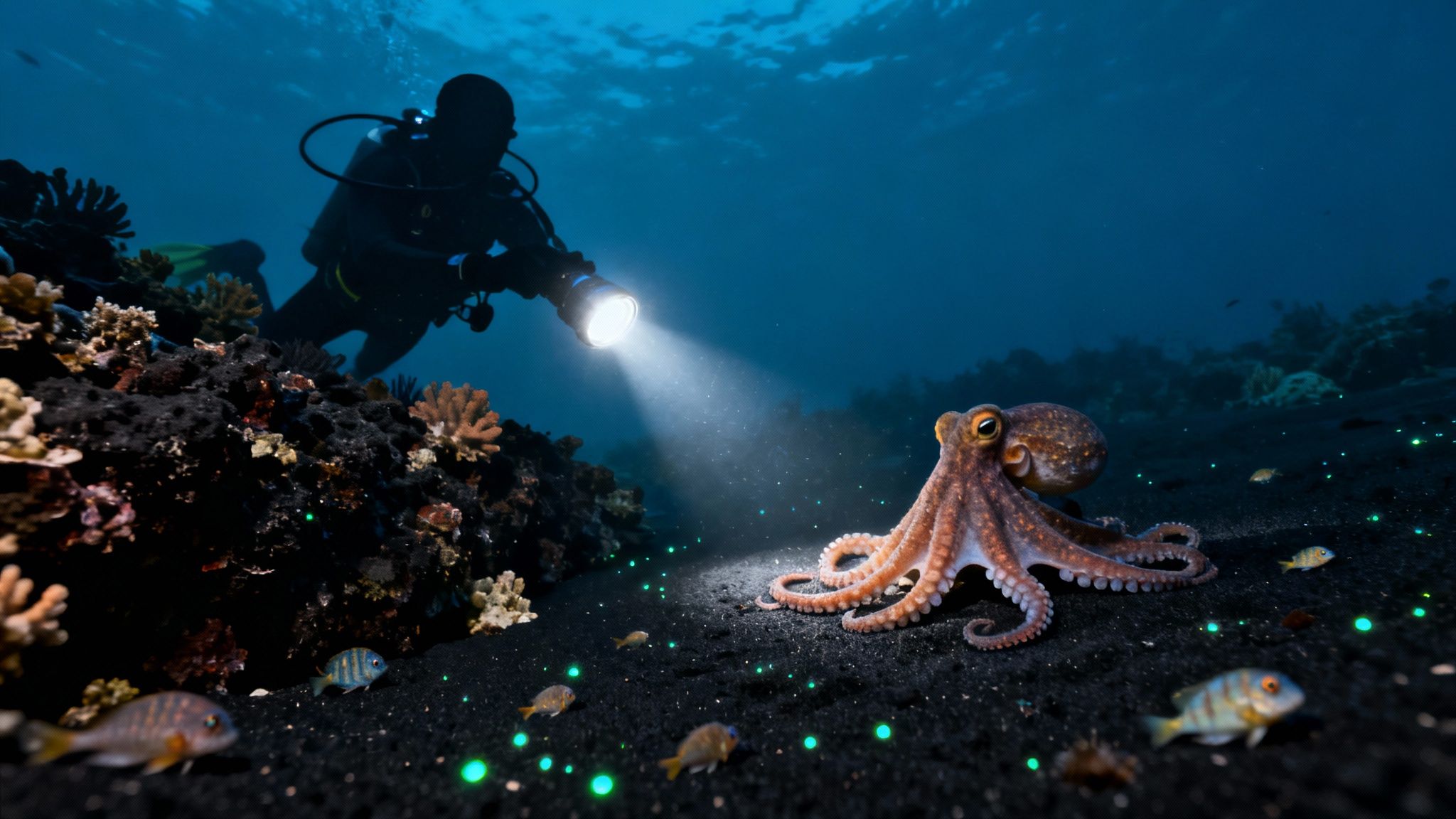
The dive centers around a unique underwater amphitheater affectionately known as "the campfire." Divers settle on the sandy bottom in a circle, placing their powerful lights in the center to attract dense clouds of plankton. Soon after, giant manta rays, some with wingspans exceeding 15 feet, descend from the darkness to feed. They perform breathtaking barrel rolls and graceful fly-bys, gliding inches above your head in an unforgettable aquatic ballet. Unlike other manta sites, Garden Eel Cove also boasts healthier, more vibrant reefs, making the entire dive, from descent to ascent, a richer and more beautiful encounter.
Why Choose This Dive Site?
- Superior Conditions: Its protected location ensures a calmer dive, minimizing the chance of cancellations due to rough seas.
- Better Viewing: The established "campfire" setup provides an unparalleled, close-up view of the feeding mantas.
- Better Reefs: The surrounding coral is teeming with nocturnal life, including eels, octopuses, and crustaceans, adding another layer to the experience.
Pro Tips for the Manta Dive
To ensure a safe and respectful encounter, always follow your guide’s instructions. Stay low to the sandy bottom, avoid exhaling bubbles directly into a manta's path, and never touch these gentle giants. For photographers, using a red-light filter can enhance your experience by not disturbing the plankton or the mantas.
Recommended Kona Honu Divers Trip
For an expertly guided and eco-conscious tour, book the Kona Honu Divers' 2-Tank Manta Dive & Snorkel. This trip provides everything you need for a truly unforgettable evening with Kona's famous manta rays.
2. Puako Reef System – Night Diving Paradise
While the manta dive often steals the nocturnal spotlight, the Puako Reef System offers a different, yet equally enchanting, after-dark adventure. Located on the stunning Kohala Coast, this expansive reef system is renowned among local divers as one of the best Big Island scuba diving sites for shore-based night dives. The reef begins in shallow, calm waters, making for easy entry, before gradually sloping into deeper territory, offering incredible biodiversity and the thrill of discovering creatures that only emerge after sunset.
As daylight fades, Puako transforms. The coral gardens and intricate lava formations become a hunting ground for a fascinating cast of nocturnal characters. Divers can expect to encounter Spanish dancer nudibranchs, slipper lobsters, and a variety of octopus species skillfully camouflaging themselves against the reef. The area is also known for its healthy populations of moray eels, which are often seen free-swimming in search of a meal. This site provides a more intimate and exploratory night diving experience compared to the structured Manta dive, appealing to divers who love the quiet hunt for hidden marine life. The experience is different every time, promising new discoveries on each visit.
Why Choose This Dive Site?
- Exceptional Nocturnal Life: A prime location for spotting octopuses, eels, crustaceans, and other creatures of the night.
- Versatile Topography: The gentle slope allows divers of various skill levels to find a comfortable depth and explore diverse habitats.
- Accessible Shore Diving: Multiple easy entry points, such as the one at Puako Beach Park, make it a favorite for independent divers.
Pro Tips for a Puako Night Dive
Always scout your entry and exit points during daylight hours to familiarize yourself with the terrain. A powerful primary dive light and a reliable backup are essential. Move slowly and deliberately, scanning the reef's nooks and crannies to spot the well-hidden inhabitants. Diving with an experienced guide or charter is highly recommended to discover the best spots and ensure a safe experience. To dive with us at this amazing site consider our premium advanced dive tour.
Recommended Kona Honu Divers Trip
For those seeking a curated adventure along this incredible coastline, the Kona Honu Divers' Premium Advanced 2-Tank Trip often explores pristine sites like Puako. This charter is designed for experienced divers looking for unique and less-crowded big island scuba diving sites.
3. Kailua Pier and Bay – Beginner-Friendly Urban Diving
For those new to the underwater world or seeking an easy, accessible shore dive, Kailua Pier and Bay is one of the most convenient Big Island scuba diving sites. Located right in the heart of Kailua-Kona, this site offers exceptionally calm and shallow conditions, making it the perfect training ground for certification courses and refresher dives. Despite its urban setting, the bay is surprisingly rich with marine life, offering a fantastic introduction to Hawaii's vibrant ecosystems without the need for a boat charter.
The dive typically begins with an easy entry from the sand or stairs next to Kailua Pier. The sandy bottom and shallow depths provide a low-stress environment to practice essential skills like buoyancy control and navigation. Divers can explore the pier pilings, which act as an artificial reef attracting schools of fish, eels, and invertebrates. Venturing further into the bay often leads to encounters with graceful green sea turtles (honu) resting on the bottom or feeding on algae. The area even features unique underwater landmarks like sunken cars, offering interesting points for orientation practice.
Why Choose This Dive Site?
- Ultimate Accessibility: As a shore dive in town, it requires minimal logistics and is perfect for a spontaneous underwater adventure.
- Ideal for Training: Calm, protected, and shallow waters create a safe and comfortable environment for new divers to build confidence.
- Surprising Biodiversity: Despite boat traffic, the bay hosts a healthy population of reef fish, eels, crustaceans, and a high chance of seeing sea turtles.
Pro Tips for the Kailua Pier Dive
Always dive with a buddy and a dive flag, as the bay is an active harbor with boat traffic. The best time to dive is early in the morning when visibility is at its peak and boat activity is low. Use the pier as a clear visual reference for navigation, and be mindful to give resting sea turtles plenty of space.
Recommended Kona Honu Divers Trip
This site is ideal for those just starting their scuba journey. If you're not yet certified, the Kona Honu Divers' Discover Scuba Diving Experience is the perfect way to safely explore this underwater classroom with a professional guide. Interested in taking your first breath underwater? Learn more about the Discover Scuba Diving experience on konahonudivers.com.
4. Honaunau Bay – Marine Sanctuary Exploration
Honaunau Bay, often called "Two Step" for its convenient lava rock entry, offers one of the most culturally and biologically rich big island scuba diving sites. Located adjacent to the Puʻuhonua o Hōnaunau National Historical Park, this protected marine life conservation district combines pristine underwater ecosystems with a profound sense of Hawaiian history. The bay is naturally shielded from large ocean swells, creating exceptionally clear and calm conditions perfect for divers of all skill levels.
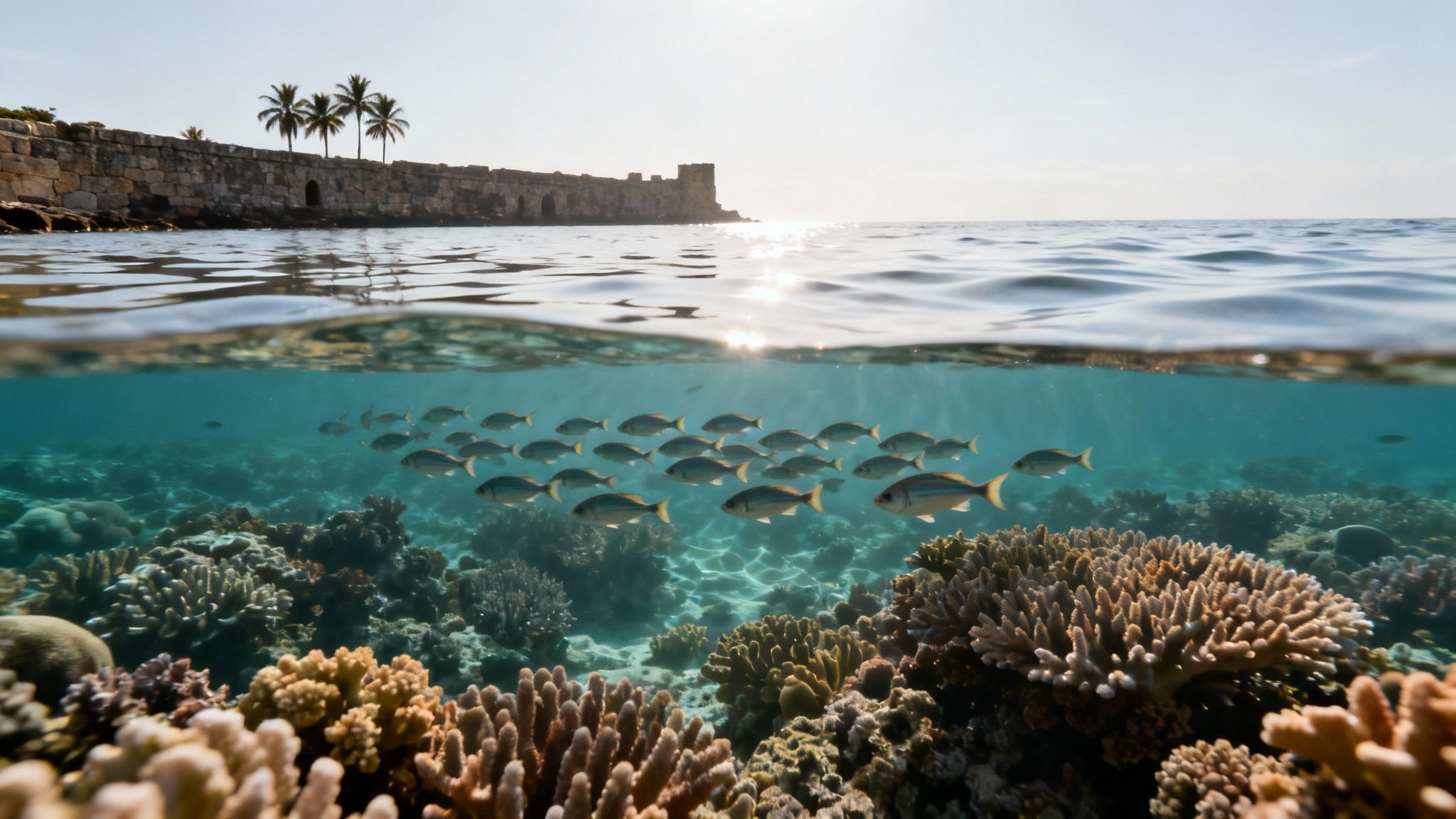
Underwater, divers are greeted by a sprawling reef of intricate coral gardens, arches, and lava tubes. The sanctuary status means the marine life is abundant and unafraid, with frequent sightings of Hawaiian green sea turtles (honu), spinner dolphins, and vast schools of colorful reef fish. Exploring along the ancient submerged walls of the national park adds a unique dimension to the dive, connecting you to the sacred history of the place of refuge. The shallow sandy areas near the shore are perfect for off-gassing and observing smaller critters, making it a comprehensive and captivating dive from start to finish.
Why Choose This Dive Site?
- Cultural Significance: Dive alongside submerged historical structures, offering a unique connection to Hawaii's past.
- Exceptional Marine Life: Its protected status ensures a high concentration of healthy coral and diverse, plentiful fish and turtle populations.
- Calm Conditions: The bay's geography provides a natural barrier, resulting in consistently clear and tranquil water ideal for both new and experienced divers.
Pro Tips for Honaunau Bay
Respect for the area is paramount. Do not touch or stand on any coral, and use only reef-safe sunscreen. Always stay outside the designated boundaries of the national historical park's sacred sites. To fully appreciate the location, consider a tour of the park before your dive to understand its deep cultural importance.
Recommended Kona Honu Divers Trip
To explore the best reefs along the South Kona coast, including gems like Honaunau Bay, consider the Kona Honu Divers' Premium Advanced 2-Tank Trip. This charter is designed to take experienced divers to the most vibrant and less-crowded sites the Big Island has to offer.
5. Milolii State Park – Remote Deep Reef Experience
For advanced divers seeking an untamed, less-trafficked adventure, the remote waters off Milolii State Park offer some of the most dramatic and pristine Big Island scuba diving sites. Located south of the main Kona dive hubs, this area is defined by its rugged underwater topography, including sheer walls, deep canyons, and towering rock pinnacles that rise from the abyss. The isolation of these sites means the reef systems are exceptionally healthy and undisturbed.
Diving at Milolii is a true expedition that rewards those willing to make the journey. The boat ride itself offers stunning views of the volcanic South Kona coastline. Underwater, divers can explore intricate lava formations and swim-throughs while encountering larger pelagic species drawn to the deep, nutrient-rich waters. Visibility is often outstanding, revealing a vast seascape that feels both ancient and wild, a stark contrast to the more frequented spots further north.
Why Choose This Dive Site?
- Pristine & Remote: Experience a healthy, untouched reef environment with minimal boat traffic and diver impact.
- Dramatic Topography: Explore breathtaking deep walls, canyons, and volcanic pinnacles that offer a unique challenge.
- Abundant Marine Life: The robust reef system supports a high density of fish, and the deep water access increases chances of seeing larger animals.
Pro Tips for Diving Milolii
Due to its remote location and advanced nature, diving Milolii requires careful planning. Always go with an experienced local operator who understands the area's specific conditions and currents. Plan conservative dive profiles, carry redundant equipment like a backup computer or pressure gauge, and always check the marine forecast before committing to the trip.
Recommended Kona Honu Divers Trip
To safely explore the incredible deep reefs of South Kona, the Premium Advanced 2-Tank Trip is the ideal choice. This charter is specifically designed for experienced divers looking to explore sites like Milolii, led by guides who prioritize safety and adventure.
6. Mahaiula Beach – Lava Tube and Cavern Diving
For certified divers seeking a truly unique experience, Mahaiula Beach offers an otherworldly adventure into the Big Island’s volcanic heart. This site is renowned for its spectacular underwater lava tubes and caverns, geological formations that create a labyrinth of swim-throughs and chambers. Unlike deep cave systems, these caverns often feature large openings and cracks in the ceiling, allowing beautiful shafts of sunlight to penetrate the darkness, illuminating the ancient rock in a dramatic display of light and shadow.
Exploring these structures is an incredible way to appreciate the raw power that formed the Hawaiian Islands. Divers can navigate multi-chamber systems, witness unique geological textures, and see how marine life adapts to these overhead environments. The feeling of gliding through a passage formed by ancient lava flows is an unforgettable highlight for many advanced divers visiting Kona. This type of specialized diving is a key reason many believe the Big Island is so good for scuba diving.
Why Choose This Dive Site?
- Unique Geology: Explore intricate lava tubes and caverns sculpted by volcanic activity, a signature of Big Island scuba diving sites.
- Stunning Light Effects: Witness breathtaking light rays filtering through openings in the cavern ceilings, perfect for photography.
- Sense of Adventure: Offers a more technical and exploratory dive compared to open-reef sites, ideal for experienced divers seeking a new challenge.
Pro Tips for Lava Tube and Cavern Diving
Due to the overhead environment, this type of diving requires specialized training and equipment. Never enter a lava tube or cavern without proper certification and an experienced guide. Always use powerful primary and backup dive lights, maintain meticulous buoyancy control, and follow your guide’s instructions regarding guide lines and penetration limits.
Recommended Kona Honu Divers Trip
For divers with the necessary experience, the Kona Honu Divers' Premium Advanced 2-Tank Trip can often accommodate a visit to sites like these. This trip is specifically designed for advanced divers looking to explore deeper, more challenging, and unique underwater environments under expert supervision.
7. Hilo Side – Black Sand and Kelp Forest Diving
For adventurous divers seeking a radically different underwater landscape, the eastern Hilo side of the Big Island offers an experience far removed from the sun-drenched Kona coast. This region is characterized by dramatic black sand slopes, unique kelp-like algae forests, and cooler, nutrient-rich waters. It’s a side of Big Island scuba diving sites that few get to see, rewarding those who make the journey with rugged, untamed beauty.
Diving here, at sites near Onekahakaha Beach Park or James Kealoha Park, feels like exploring another world. Instead of vibrant coral gardens, you'll navigate through stark volcanic topographies and patches of endemic algae that sway in the surge. The marine life has adapted to this distinct environment, offering encounters with species less common on the Kona side. The challenge and raw nature of Hilo's underwater realm provide a truly unique adventure for experienced divers.
Why Choose This Dive Site?
- Unique Topography: Explore dramatic black sand environments and underwater lava formations unlike anywhere else on the island.
- Distinct Ecosystem: Discover marine life and endemic plant species adapted to the cooler, more dynamic waters of the Hilo coast.
- Fewer Crowds: Due to its remote nature and challenging conditions, you will likely have these incredible dive sites all to yourself.
Pro Tips for Hilo Diving
The weather on the Hilo side can change rapidly, so always check forecasts and ocean reports meticulously. Diving with a local guide who understands the area's specific currents and conditions is essential. Due to the cooler water temperatures, a 5mm or 7mm wetsuit is strongly recommended for comfort and safety.
Recommended Kona Honu Divers Trip
While Kona Honu Divers primarily operates on the Kona coast, the adventurous spirit required for Hilo diving is best suited for those with advanced training. For divers looking to build the skills needed for more challenging environments, consider the Premium Advanced 2-Tank Trip to sharpen your abilities in deep water and potential currents.
8. Captain Cook Monument Area – Legendary Historical Dive
Diving in Kealakekua Bay near the Captain Cook Monument offers a unique blend of vibrant marine life and profound historical significance. This protected marine sanctuary is not just one of the Big Island’s premier snorkel spots but also an exceptional dive location. The bay is famed for its calm, crystal-clear waters and some of the most pristine coral reefs in Hawaii, all set against the backdrop of the place where Captain James Cook, the famed British explorer, met his end in 1779.
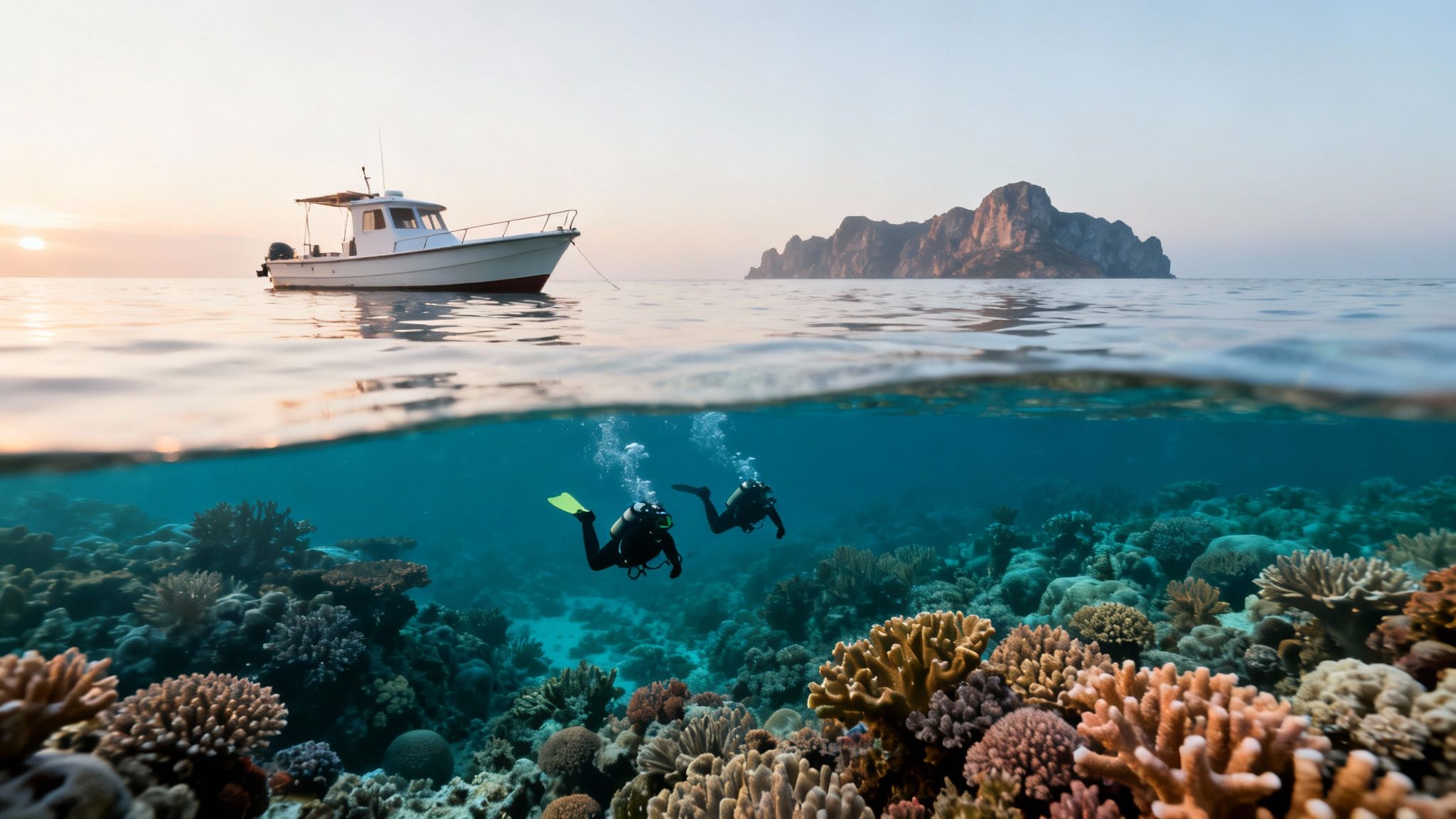
The dive itself follows a dramatic underwater slope that drops steeply from the shoreline, covered in elaborate coral formations like finger coral and lobe coral. Visibility here often exceeds 100 feet, revealing a bustling ecosystem. Divers can expect to see huge schools of yellow tang, spinner dolphins resting in the bay, and a variety of reef fish. The historical context adds a layer of depth to the experience, allowing you to explore the very waters that witnessed a pivotal moment in Hawaiian history. It’s an essential dive for anyone looking to connect with Hawaii’s past while enjoying its spectacular present.
Why Choose This Dive Site?
- Historical Significance: Dive in the waters where Captain Cook landed and died, offering a rare connection to world history.
- Pristine Reefs: As a protected Marine Life Conservation District, the bay boasts incredibly healthy and dense coral gardens.
- Abundant Marine Life: The clear, calm waters are a haven for colorful reef fish, eels, and often pods of spinner dolphins.
Pro Tips for the Captain Cook Dive
Always book with an established operator and arrive early to enjoy the best conditions before the afternoon crowds. Ask your dive guide to share some historical facts during the briefing to enrich your experience. Because this site is boat-access only, be sure to use strong, reef-safe sunscreen. Respect the area by not touching the monument or collecting any natural souvenirs.
Recommended Kona Honu Divers Trip
To explore this historic and beautiful bay, consider the Kona Honu Divers' Premium Advanced 2-Tank Trip. This charter often visits Kealakekua Bay, providing an expert-led dive that respects the site's cultural and ecological importance while ensuring a top-tier underwater adventure.
8-Site Big Island Scuba Comparison
| Site | Complexity 🔄 | Logistics & Gear ⚡ | Expected Quality ⭐ | Typical Results 📊 | Ideal Use Cases 💡 |
|---|---|---|---|---|---|
| Kona Coast – Black Sand and Lava Formations | Low–Advanced (varied depths; some boat sites) | Boat recommended for best sites; standard recreational gear; morning dives advised | ⭐⭐⭐⭐ (80–120 ft visibility; thriving coral) | Pristine coral gardens, frequent turtles & rays, excellent photo ops | Mixed skill levels, underwater photography, coral exploration |
| Puako Reef System – Night Diving Paradise | Moderate–Advanced (night skills required) | Shore entry; powerful main + backup lights; tide checks; additional training for night | ⭐⭐⭐ (50–70 ft visibility; exceptional nocturnal macro life) | Outstanding night encounters (octopus, squid), calm protected conditions | Night-diving enthusiasts, macro photography, experienced divers |
| Kailua Pier and Bay – Beginner-Friendly Urban Diving | Low (shallow, sheltered; training ideal) | Direct shore access (no boat); basic gear; dive early to avoid boat traffic | ⭐⭐ (40–60 ft visibility; sheltered but less dramatic) | Great for certification, abundant turtles, convenient town services | Beginners, certification courses, budget/shore diving |
| Honaunau Bay – Marine Sanctuary Exploration | Low–Moderate (shallow protected; permit rules) | Shore access within park; park fees/booking may apply; use reef-safe products | ⭐⭐⭐⭐ (60–100 ft visibility; well-preserved reef) | High fish densities, pristine coral, cultural context, quieter dives | Eco-conscious divers, cultural experiences, families |
| Milolii State Park – Remote Deep Reef Experience | Advanced (deep walls, possible strong currents) | Remote access; boat/guides advised; advanced/backup equipment recommended | ⭐⭐⭐⭐ (80–120 ft visibility; dramatic walls) | Less-visited pristine sites, large-animal encounters, dramatic topography | Advanced divers, wall diving, adventure seekers |
| Mahaiula Beach – Lava Tube and Cavern Diving | Advanced/Technical (cavern training required) | Shore entry; cavern-certified instructor, guideline and strong lights required | ⭐⭐⭐ (excellent cavern visibility; specialized experience) | Unique lava tubes and light shafts, high-skill satisfaction, photogenic scenes | Cavern-certified divers, technical training, geology enthusiasts |
| Hilo Side – Black Sand and Kelp Forest Diving | Advanced (variable weather, stronger currents) | Limited operators; thicker wetsuit (5–7mm); local-knowledge guides recommended | ⭐⭐⭐ (40–70 ft visibility; cooler water, unique kelp life) | Rare kelp forests and species, minimal crowds, more challenging conditions | Experienced divers seeking unique ecosystems and currents |
| Captain Cook Monument Area – Legendary Historical Dive | Moderate (boat-only; currents can occur) | Boat access required; book with established operators; guide recommended | ⭐⭐⭐⭐ (80–100+ ft visibility; iconic coral gardens) | World-famous coral gardens, historical context, excellent visibility & marine life | History enthusiasts, intermediate divers, iconic Big Island experience |
Your Big Island Diving Adventure Awaits
You've journeyed with us across the vast underwater tapestry of Hawaii's Big Island, from the rugged volcanic ledges of the Kona Coast to the serene, protected waters of Kealakekua Bay. We've explored a selection of the most incredible big island scuba diving sites, each offering a unique window into the Pacific's vibrant marine ecosystem. The sheer diversity is staggering; one day you could be navigating ancient lava tubes at Mahaiula Beach, and the next, you could be drifting over the deep, dramatic reefs near Milolii.
The key takeaway is that the Big Island isn't just a single diving destination; it's a collection of world-class underwater biomes. Whether you're a novice diver looking for a calm, shallow introduction at Kailua Pier or an advanced thrill-seeker ready for the pelagic wonders of a Kona Blackwater Dive, this island has a dive profile that will challenge, inspire, and humble you. The experiences here are truly once-in-a-lifetime, from witnessing the silent, graceful ballet of manta rays at Garden Eel Cove to exploring the rich historical waters near the Captain Cook Monument.
Your Action Plan for an Unforgettable Dive Trip
Transforming this knowledge into an actual dive plan is your next exciting step. Here’s how to get started:
- Match Your Skills to the Site: Honestly assess your certification level and comfort in the water. If you’re newly certified, focus on sites like Honaunau Bay or Kailua Pier. If you have deep diving experience and excellent buoyancy, you can start planning for the more remote and challenging sites. For those looking to push their limits, consider a charter like the Premium Advanced 2-Tank Trip to explore deeper ledges and more remote topographies.
- Prioritize Your "Must-Sees": What marine life captivates you most? If it's the gentle giants of the night, the Manta Ray Night Dive is non-negotiable. If you're fascinated by endemic species and pristine coral gardens, prioritize the marine sanctuaries.
- Plan for Logistics and Safety: Diving, especially in remote locations, comes with inherent risks. Beyond checking your gear and dive computer, it's wise to consider your preparedness for unexpected events. As you prepare for high-thrill activities like scuba diving, it's wise to explore options for specialized adventure travel insurance. This ensures you have coverage tailored to the specific activities you'll be enjoying.
- Book with a Reputable Operator: Your choice of dive operator will define your experience. A professional, safety-conscious crew with intimate local knowledge is your most valuable asset. They handle the logistics, provide top-tier rental gear, and ensure you’re diving the best sites under the best possible conditions.
Diving on the Big Island is more than just a vacation activity; it's an opportunity to connect with one of the most dynamic and powerful natural environments on the planet. The skills you hone here, from navigating complex lava formations to mastering your buoyancy during a night dive, will make you a more confident and capable diver everywhere you go. The memories of green sea turtles gliding past, of vibrant reef fish schooling in the thousands, and of the profound darkness of the open ocean will stay with you forever.
See what fellow divers have to say about their Kona Honu Divers experience:
The unparalleled big island scuba diving sites are calling. The next move is yours. Are you ready to answer?
Ready to explore the best big island scuba diving sites with a world-class team? Kona Honu Divers offers a full range of diving tours guided by passionate professionals dedicated to safety, conservation, and providing an unforgettable underwater adventure. Visit Kona Honu Divers to book the dive of a lifetime today.