
Picture this: you're descending into the warm, dark Pacific waters just off the Kona coast. As you reach the seafloor, you see a circle of lights glowing below, creating a kind of underwater campfire. Then, out of the darkness, a massive, shadowy figure glides into the light. It's a magnificent manta ray, performing a silent, weightless ballet just inches above your head.
This isn't some once-in-a-lifetime lucky sighting. This is the legendary manta ray night dive, and the Big Island is the best place on Earth to experience it.
The Ultimate Underwater Ballet Experience
The Kona coast of Hawaii hosts one of the most reliable and breathtaking wildlife encounters you can find anywhere on the planet. For any certified diver, Big Island scuba diving with manta rays is a true bucket-list adventure that delivers sheer awe, every single time. It's an experience that feels wild and untamed, yet it's been carefully and respectfully perfected over years by expert diving tours operators.
The concept behind the dive is beautifully simple. Powerful lights are set up on the ocean floor, which act like a magnet for clouds of plankton—the manta rays' favorite meal. Divers settle in on the sandy bottom, point their own lights up, and simply wait for the show to begin. Before you know it, these gentle giants arrive for their nightly feast, swooping and gliding in mesmerizing barrel rolls to scoop up the plankton. Watching a creature with a 12-foot wingspan move with such grace is simply unforgettable.
Why This Dive Is a Must-Do
Many wildlife tours are a bit of a gamble, depending on luck and seasonal migrations. The Kona manta ray dive is different. It boasts an incredibly high success rate, often over 90% year-round, making it a world-renowned adventure you can count on.
Operators like Kona Honu Divers have taken this incredible natural event and built a safe, sustainable, and comfortable experience around it. They give you a front-row seat to one of nature’s greatest performances, making sure every guest has an amazing and responsible encounter. Here's what makes their trips special:
- Expert Crew: The divemasters and boat crew know these waters inside and out. They provide thorough briefings and in-water guidance to keep both the divers and the mantas safe and comfortable.
- Commitment to Sustainability: They are serious about protecting the mantas. By following strict guidelines for passive observation, they ensure the dives don't disturb the health or natural behavior of Kona's resident manta population.
- Enhanced Diving Experience: Here's a huge plus: they offer free nitrox to certified divers. This enriched air mix means you can dive better and more safely, enjoying longer bottom times while often feeling less tired after the dive. You can just relax and soak in the magic without constantly checking your air gauge.
This underwater ballet is so much more than just another dive—it's a chance to connect with the ocean's gentle giants in a truly profound way. With a crew like Kona Honu Divers, you're not just booking a dive; you're signing up for a safe, awe-inspiring adventure you'll be talking about for years to come.
Why Kona Is the Global Manta Ray Capital
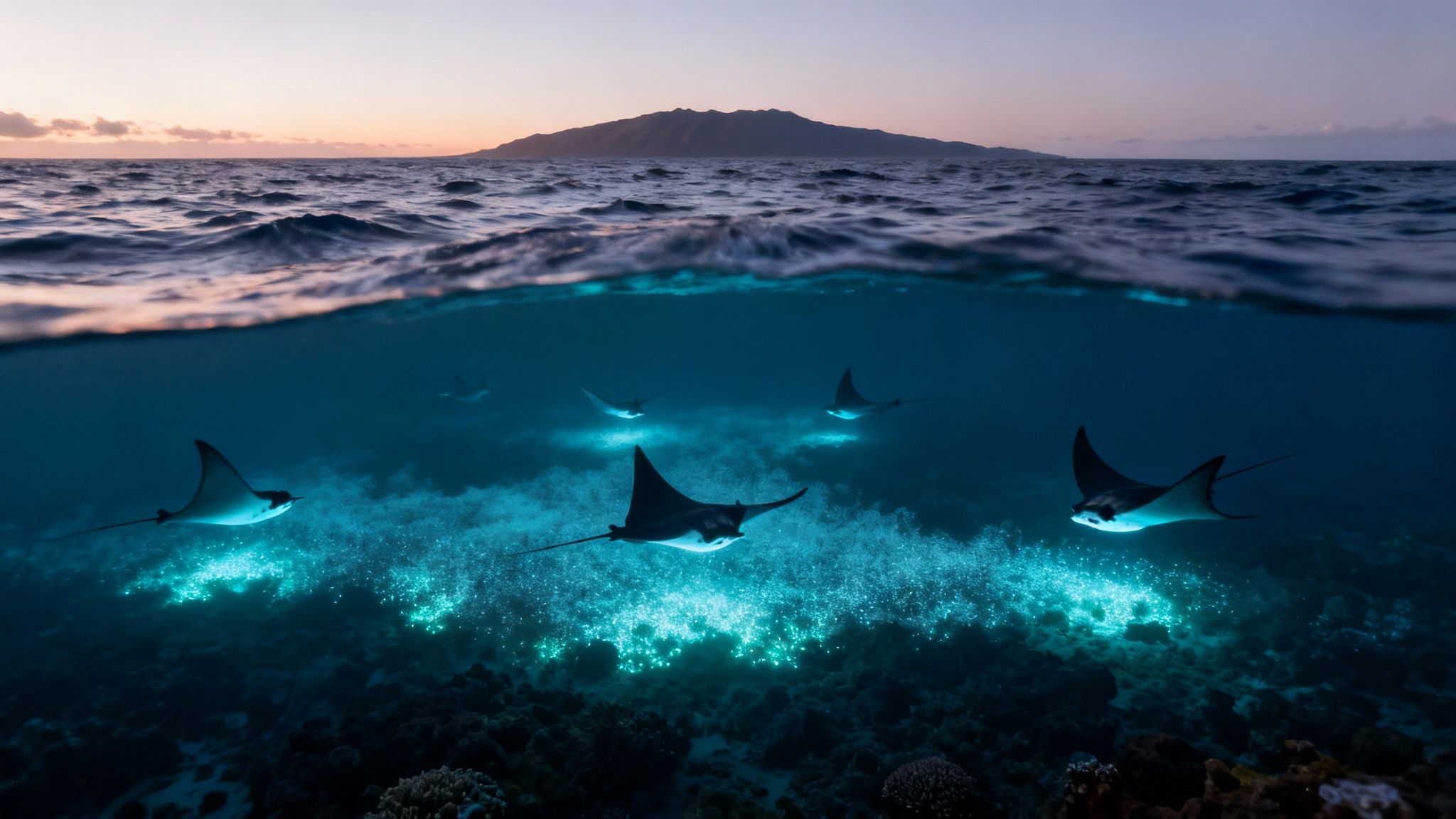
So, what makes Kona’s manta ray encounters almost unbelievably reliable? It’s not just dumb luck. It’s a perfect storm of geography, biology, and a little bit of history that has turned this specific coastline into the world’s most famous stage for these gentle giants. The secret is a unique ecological recipe that keeps the mantas coming back, night after night.
At the center of it all is a phenomenon called the 'Island Mass Effect.' The sheer bulk of the Big Island actually disrupts deep ocean currents, forcing nutrient-rich water up to the surface. This creates a constant, dense supply of plankton—the manta rays' favorite meal. It's essentially an all-you-can-eat buffet that never closes, which means the mantas have no reason to migrate for food like they do elsewhere.
This consistent food source is why the mantas here aren't just passing through; they’re full-time residents. That’s what makes Big Island scuba diving with manta rays such a dependable and truly exceptional adventure.
Meet Kona’s Resident Manta Population
When you dive in Kona, you're not just observing wildlife. You're meeting individuals with names, distinct personalities, and well-documented life stories. For decades, researchers and dive operators have been carefully identifying and tracking the local manta population. Every manta has a unique pattern of spots on its belly, which acts just like a human fingerprint, allowing us to recognize them.
This has fostered a really deep, personal connection with these animals. On your dive, you might meet "Big Bertha," one of the original matriarchs of the group, or "Lefty," known for his easily recognizable cephalic fin. This isn't just an anonymous wildlife sighting; it’s a genuine encounter with a local celebrity.
This special connection is a testament to Kona's thriving and protected local ecosystem. Operators like Kona Honu Divers are a huge part of this ongoing story, treating the mantas as the individuals they are and helping protect their home for years to come.
The Manta Pacific Research Foundation has meticulously cataloged 318 unique reef manta rays around Hawaiʻi Island between 1979 and 2023, proving there's a small but very loyal resident population. Broader databases focused just on Kona’s night dive sites have identified between 330 and 450 individuals, showing just how concentrated the community is here. Incredibly, many of the mantas we see today have been regulars for 20–30 years, creating a rich natural history you become part of the moment you get in the water. You can dive deeper into the research on Kona's unique manta population.
A Commitment to Excellence and Safety
Knowing how special this environment is makes choosing the right dive operator absolutely critical. At Kona Honu Divers, we not only respect the marine life but also put the diver's experience first. That’s why we provide free nitrox to certified divers. This enriched air blend lets you enjoy longer, safer bottom times and helps reduce post-dive fatigue, so you can spend more time marveling at the mantas and less time checking your gauges.
Our commitment to a premium experience shows in everything we do, from our knowledgeable crew to our comfortable, spacious boats. We know that a truly memorable dive is about more than just what you see—it's about feeling safe, comfortable, and well looked after from start to finish.
Ultimately, Kona's reputation as the manta ray capital is built on natural abundance and human respect. It’s a place where science, passion, and nature converge to create a truly unforgettable underwater spectacle. Ready to meet the locals for yourself?
Choosing the Best Manta Ray Dive Site
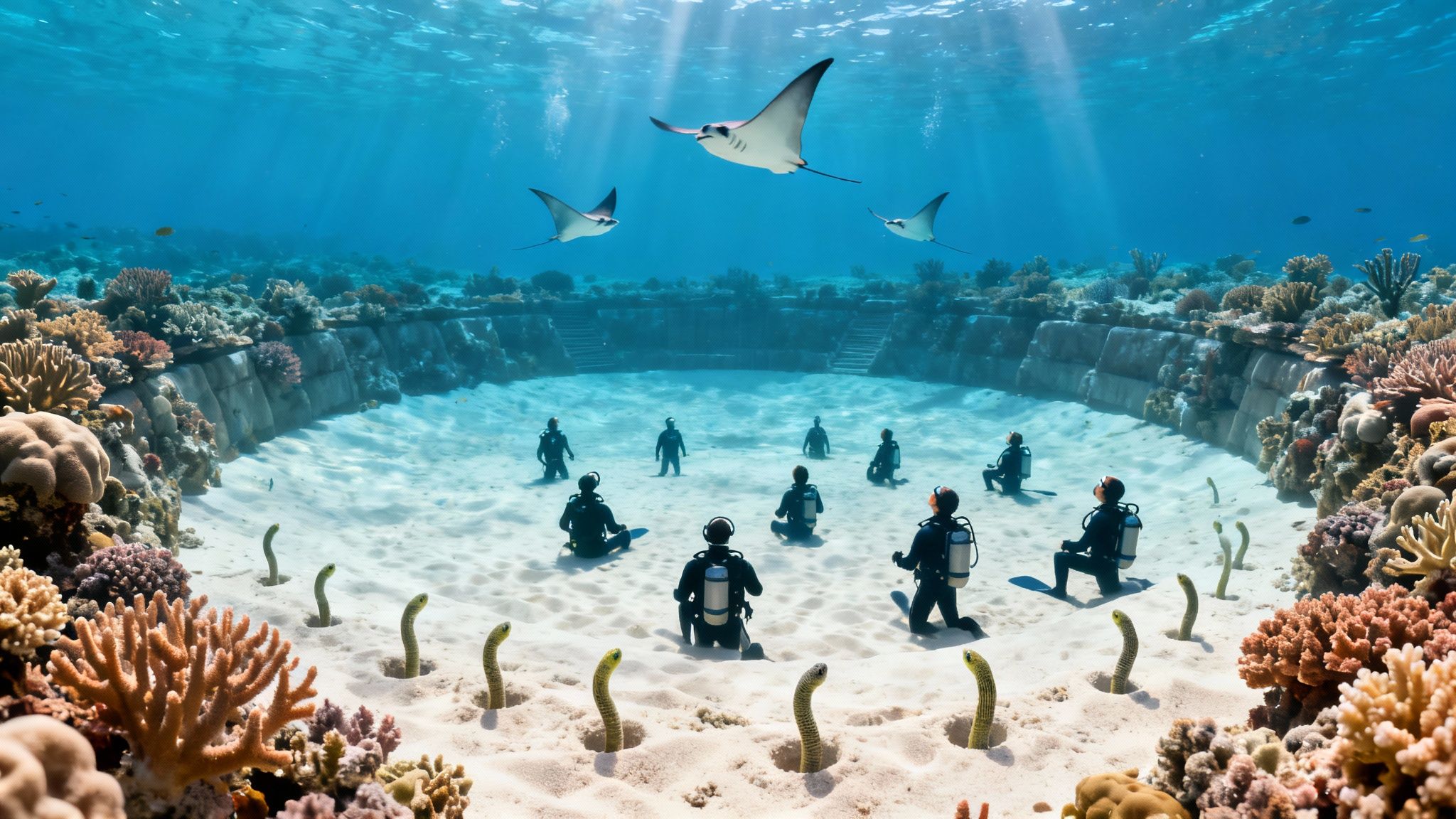
When you're planning a Big Island scuba diving manta rays adventure, you'll quickly learn that where you go matters. A lot. While Kona is lucky enough to have a couple of reliable spots where mantas gather for their nightly feast, one location consistently delivers a more magical and dependable experience: Garden Eel Cove.
There’s a reason that operators who are serious about guest experience and safety—like us at Kona Honu Divers—almost exclusively head to this spot. It’s not just a preference; it’s about knowing what site gives you the absolute best chance for an incredible, life-changing encounter. The differences between the main sites are huge, from the calmness of the water to the very layout of the seafloor.
Choosing between Garden Eel Cove and the other primary spot, Manta Village, is the first and most important decision you’ll make. It can truly be the difference between a good dive and an unforgettable one.
Why Garden Eel Cove Is The Superior Choice
The biggest advantage of Garden Eel Cove is its protected location. Tucked away on the Kona coast, it offers natural shelter from the southern swells that can churn up the water at other, more exposed locations. For divers, this protection is a game-changer.
- Calmer Waters: The boat ride is smoother, and the time you spend on the surface is far more pleasant. Underwater, calm conditions mean you can relax and focus on the show.
- Fewer Cancellations: Nothing is more disappointing than having your dive canceled due to rough seas. The protected nature of Garden Eel Cove means we have to cancel far less often, which is a massive plus when you're planning a once-in-a-lifetime trip.
- Crystal-Clear Visibility: Less surge and surface chop usually means better visibility. You’ll see the mantas appear out of the dark with stunning clarity.
But it gets even better once you're underwater. The topography at Garden Eel Cove is practically designed for watching manta rays. The site features a natural sandy-bottomed "amphitheater" that creates a superior viewing area. This brilliant layout gives everyone a front-row seat without having to jostle for position as the mantas swoop and glide just inches overhead. It creates a calm, organized, and truly immersive experience.
The unique amphitheater shape isn't just for good viewing; it's a huge safety feature. It allows everyone to have a clear line of sight to the divemasters and to the incredible animals we're there to see.
On top of all that, the reef surrounding the main viewing area at Garden Eel Cove is noticeably healthier and more vibrant. This makes the first dive of the evening—our twilight dive—a real treat. You get to explore a thriving coral ecosystem buzzing with fish as the sun goes down, which is the perfect prelude to the main event.
A Head-to-Head Comparison
So, how does Garden Eel Cove stack up against the other main site, Manta Village? Here’s a quick breakdown of what makes them different.
| Feature | Garden Eel Cove | Manta Village |
|---|---|---|
| Location | North of the airport, protected cove | South of Kona, near Keauhou Bay |
| Conditions | Consistently calm, shielded from south swells | More exposed, prone to rougher seas |
| Cancellation Rate | Very low, extremely reliable | Higher due to weather and swell exposure |
| Underwater Layout | Natural sandy amphitheater for perfect viewing | Less defined layout, can feel more crowded |
| Reef Health | Healthier, more vibrant reef for the twilight dive | Reef has experienced more historical impact |
| Our Pick | The superior choice for a safe, magical dive | A good backup, but less consistent |
While Manta Village, located near Keauhou Bay, can certainly host incredible manta encounters, its exposure to the elements makes it a bit of a gamble. The conditions can be rougher, and the underwater setup isn't as ideal for managing a group of divers.
We’ve written a more detailed breakdown if you'd like to learn more about where is the best place to dive with manta rays. At the end of the day, we choose Garden Eel Cove because it is the superior location, and we are committed to giving every single one of our guests the safest, most comfortable, and most breathtaking manta experience possible.
What to Expect on Your Manta Diving Adventure

So you’ve booked your Big Island scuba diving manta rays trip. The excitement is probably kicking in, but you might be wondering what the evening actually looks like. Knowing the flow helps you relax and just soak in the magic of the whole experience. Rest assured, the entire trip is carefully choreographed to maximize your comfort, safety, and, most importantly, your time with these gentle giants.
Your adventure starts in the late afternoon at the harbor. The first thing you'll notice is the friendly and professional crew from Kona Honu Divers greeting you. You’ll get checked in, find a spot on their roomy, well-equipped dive boat, and get to meet the other divers sharing this incredible night with you.
Once everyone’s settled, the crew runs through a comprehensive boat and safety briefing. They'll cover everything from the boat’s layout (including the much-loved hot water showers for after the dive) to the specific dive plan for the evening. This is the perfect time to ask any last-minute questions, so you’ll feel completely prepared before the boat even leaves the dock.
The First Dive: A Twilight Reef Exploration
As the boat heads out to the dive site, you get a front-row seat to a stunning Kona sunset over the water. The first of your two dives is a twilight dive on the beautiful coral reef right next to the main manta viewing area. This dive is the perfect warm-up. It gets you comfortable with your gear and lets you witness the reef as it transitions from day to night.
You’ll see a fascinating change in the local residents. Daytime fish like butterflyfish and wrasses start tucking themselves into the coral for the night, while nocturnal creatures like eels and octopuses begin to stir. It’s a peaceful, beautiful dive that really sets the stage for the main event.
One of the best perks of diving with Kona Honu Divers is the complimentary nitrox for certified divers. Using enriched air means you get longer, safer bottom times and feel less tired afterward. It helps you relax and enjoy every single moment of both dives to the fullest.
The Main Event: The Manta Ray Ballet
After a surface interval with snacks and drinks, it's time for what you came for. As darkness falls, you’ll gear up for the second dive. While you were relaxing, the crew placed a powerful light source on the sandy bottom—they call it the "campfire." This light is the magnet that attracts the plankton.
You and your group will descend and find a spot around the campfire. The instructions are simple: stay low on the bottom, get comfortable, and point your dive light straight up to create a column of light. This adds to the "plankton buffet," drawing the mantas in even closer.
And then, the magic happens.
First, you'll see the plankton swarming in your light beam, looking like a blizzard of underwater snow. It doesn’t take long for the first massive shadow to glide into view. One manta ray arrives, then another, and another. They swoop and soar, performing effortless barrel rolls just inches above your head, their huge mouths open to filter the clouds of plankton. It's completely silent, graceful, and utterly mesmerizing—a true underwater ballet that you are now a part of. The divemasters are right there in the water with you, making sure it’s a safe and controlled experience for both the divers and the mantas.
After about 45 minutes of pure awe, you'll head back to the boat. A hot shower and warm drinks are waiting for you on the ride back to the harbor, leaving you with memories of one of the planet's greatest wildlife encounters.
Getting Ready for Your Manta Ray Dive
A little bit of prep work can be the difference between a good dive and an absolutely unforgettable one. While the Big Island's manta ray scuba experience is well within reach for most certified divers, thinking ahead ensures you're comfortable, confident, and ready to soak in every single magical moment.
Let's start with your certification. You definitely don't need to be a seasoned divemaster for this adventure. A standard Open Water certification is all you need. The dive itself is fairly shallow, and you'll be stationary for most of it, which actually makes it a fantastic, low-stress night dive, even if you just got certified.
Dive Gear That Makes a Difference
Trust me on this one: staying warm is the secret to loving this dive. You'll be settled on the ocean floor for about 45 minutes, and even in Hawaii's beautiful warm water, you can start to feel a chill when you're not moving much.
- Wetsuit: We can't recommend a 5mm full wetsuit enough. It really is the sweet spot for insulation, keeping you perfectly comfortable so your mind is on the mantas, not the temperature.
- Dive Lights: A good primary dive light is non-negotiable, and a backup is always a smart move. Your light is what brings in the plankton, so a bright, reliable beam is what makes the magic happen.
- Computer and Gauges: Just like any other dive, give your computer and gauges a quick check to make sure they're in perfect working order.
Here at Kona Honu Divers, we have top-of-the-line rental equipment that's professionally serviced, so you're covered if you're traveling light. But if you're bringing your own setup, it never hurts to give it a once-over before you pack. For a full rundown of what to bring, take a look at our guide on the gear you will need for your Kona diving adventure.
Capturing the Magic: Underwater Photography Tips
Trying to photograph manta rays at night is an incredible challenge, but so rewarding when you get it right. Between their constant, graceful motion and the darkness, you’ll need to dial in your camera settings to nail that perfect shot.
The real trick is to avoid pointing a narrow, harsh beam of light right at the mantas. It can bother them and blow out your photos with ugly "hot spots." The better approach is to use a wide-angle lens and, if you have them, external strobes or video lights to paint the whole scene with softer, more even light.
Here are a few technical pointers to get you started:
- Go wide: A wide-angle lens lets you get close enough to fill the frame without cutting off those massive wingspans.
- Boost your ISO: Don't be afraid to push your ISO up to the 800-1600 range. This makes your camera's sensor more sensitive to light, which is exactly what you need in the dark.
- Keep it crisp: To freeze the mantas' elegant movements and avoid motion blur, try to keep your shutter speed at 1/125th of a second or faster.
- Mind your light etiquette: Be a good neighbor underwater. Make sure you aren't shining your light into another diver's eyes or camera, which can ruin their view of the show.
With the right gear and a little know-how, you’ll be all set for what might just be the most amazing dive of your life. All that's left is to book your spot and get ready for the underwater ballet.
How to Dive Safely and Responsibly with Manta Rays
Having an unforgettable encounter with Kona's manta rays hinges on one simple idea: we need to keep the experience safe for both the divers and the animals. Responsible tourism isn't just a buzzword here; it's the very foundation of this world-famous dive. We, along with other dedicated operators, champion a sustainable approach that puts the health and natural behavior of Kona’s resident manta population first.
The whole experience is built around a single golden rule: passive observation. Think of yourself as a quiet, respectful guest in their underwater dining room.
The guidelines are straightforward but absolutely essential. You can't touch, chase, or swim in a way that blocks a manta ray's path as it glides overhead. By staying on or near the seafloor and letting them approach on their own terms, you ensure they feel comfortable and safe. That's the secret to the breathtakingly close passes that make this dive so legendary.
Sticking to Strict Safety Protocols
Your safety is every bit as important as the well-being of the mantas. The entire Big Island scuba diving manta rays experience is managed with serious safety protocols from the moment you step on the boat. It all starts with a detailed briefing where your guide will walk you through the dive plan and the rules for interacting with the rays.
Once you’re in the water, our expert divemasters are with you every step of the way. They keep the group together and make sure the whole environment stays safe and under control. We take this a step further by keeping our group sizes small on purpose. This not only prevents the site from feeling crowded but also allows our guides to give you their full attention, making for a much more personal and enjoyable dive.
This shared dedication to safety and conservation has turned the Kona manta dive into a global model for sustainable wildlife tourism. It's a fantastic example of how we can witness nature's magic without disrupting it.
This responsible mindset is a huge reason for the dive's incredible success. Local reports estimate that around 80,000 people now snorkel or dive with the mantas each year along the Kona Coast, bringing in over $10 million in annual revenue. Even better, long-term data shows divers see an average of 4.7 manta rays per trip, and operators are now seeing 85–90% success rates in sightings. For a deeper dive into these numbers, you can discover the full story of Kona's manta ray encounters.
For our divers, this commitment to a premium experience includes the very air you breathe. We provide free nitrox to all certified divers, which is an enriched air blend that can give you longer, safer bottom times and help you feel less tired after the dive.
By weaving together strict environmental etiquette with top-tier safety measures, we make sure every dive is both magical and mindful. You can learn more about how to be a great ocean ambassador in our guide to responsible and considerate diver etiquette.
Your Manta Ray Dive Questions, Answered
Planning a trip like this is exciting, but you probably have a few questions swirling around. Let's clear things up so you can focus on the adventure ahead. Here are the answers to the questions we hear most often from divers getting ready for their Big Island scuba diving manta rays experience.
What’s the Best Time of Year to See Mantas?
This is one of the best things about diving in Kona—you can see them any time! We’re lucky to have a resident population of manta rays that sticks around all year. The island's unique underwater landscape ensures a consistent food source, so the famous manta ray night dive runs 365 days a year.
No need to plan your entire vacation around a specific "manta season." The odds of an incredible encounter are sky-high whenever you decide to visit.
Is This Dive Okay for a New Diver?
Yes, absolutely! The manta ray dive is a fantastic and surprisingly comfortable experience for newly certified Open Water divers.
The dive is fairly shallow, and you won’t be swimming around. Instead, you'll get settled in a specific spot on the sandy bottom, which takes away the stress of navigating a reef in the dark. Our expert crew is with you every step of the way, making it a controlled and safe environment to build your night diving confidence.
Here at Kona Honu Divers, we want you to be as comfortable as possible. That’s why we also offer free nitrox to certified divers. Using enriched air can help extend your bottom time and you might even feel less tired afterward, so you can just relax and soak in the magic.
Scuba Diving vs. Snorkeling: What’s the Real Difference?
Both are amazing ways to see the mantas, but they offer completely different vantage points. Snorkelers get a bird's-eye view, floating on the surface and looking down as the action unfolds below. It's beautiful, no question.
But as a scuba diver? You get the front-row seat. You'll be settled on the ocean floor, looking up as these magnificent creatures glide, swoop, and perform breathtaking barrel rolls just inches above you. It’s the difference between watching the ballet from the balcony and being right there on stage with the dancers.
What if We Don't See Any Mantas?
It's a valid question—these are wild animals, after all, and nothing in nature is ever 100% guaranteed. That said, the success rate for this dive is incredibly high, consistently over 90%. It’s extremely rare for them to be a no-show.
In the unlikely event that the mantas decide to skip dinner, most reputable dive shops have a "manta guarantee." It's always a good idea to ask about their specific policy when you book your manta ray dive tour.