
Picture this: you descend into the warm, dark Pacific, and suddenly, colossal shadows glide effortlessly through the beam of your dive light. This isn't just any dive; it's the legendary manta ray night dive, the absolute crown jewel of Big Island scuba diving manta rays. This nightly underwater ballet has become one of the world's most talked-about dives, and for very good reason.
What Makes Kona the Manta Ray Capital of the World

The Kona coast on Hawaii’s Big Island has this unique, almost magical combination of factors that set the stage for such an incredible show. It all started decades ago when lights from coastal developments began attracting massive clouds of plankton—a manta ray's favorite meal. Over time, the local manta population figured out that these bright spots meant a reliable, all-you-can-eat buffet was served every single night.
What started as a happy accident has evolved into a world-famous feeding ritual. This isn't a hit-or-miss wildlife sighting; the chances of seeing these gentle giants are incredibly high. Back in 2013, for example, tours at Manta Village—one of the go-to spots—reported a staggering 96% success rate, with divers seeing an average of four mantas on any given night. You can find out more about Kona's manta ray dive statistics to see just how consistent it is.
A Predictable and Awe-Inspiring Encounter
Unlike so many other marine life encounters that rely on seasonal migrations or just plain luck, Kona’s manta ray population is residential. They live here all year, which means any night can be the night for your unforgettable dive.
These graceful creatures, with wingspans that can stretch up to 12 feet, are completely harmless filter feeders. They're only there for the plankton, performing barrel rolls and swooping just inches above your head. It’s a truly mesmerizing experience. This guide will walk you through everything you need to know to get ready for this adventure, so you can feel confident and prepared for one of the most magical dives of your life.
For those who want the key details at a glance, here’s a quick rundown of what to expect from a Kona manta ray dive.
Kona Manta Ray Dive At a Glance
| Feature | Details |
|---|---|
| Primary Location | Kona Coast, Big Island, Hawaii |
| Main Dive Sites | Garden Eel Cove & Manta Village |
| Dive Type | Night Dive, Stationary Bottom Dive |
| Average Depth | 35-50 feet (10-15 meters) |
| Required Certification | Open Water Diver |
| Best Time to Go | Year-round with high success rates |
This table covers the essentials, but keep reading as we’ll dive much deeper into what makes this experience so special and how you can make the most of it.
Why Garden Eel Cove Is The Hands-Down Best Manta Ray Dive Site
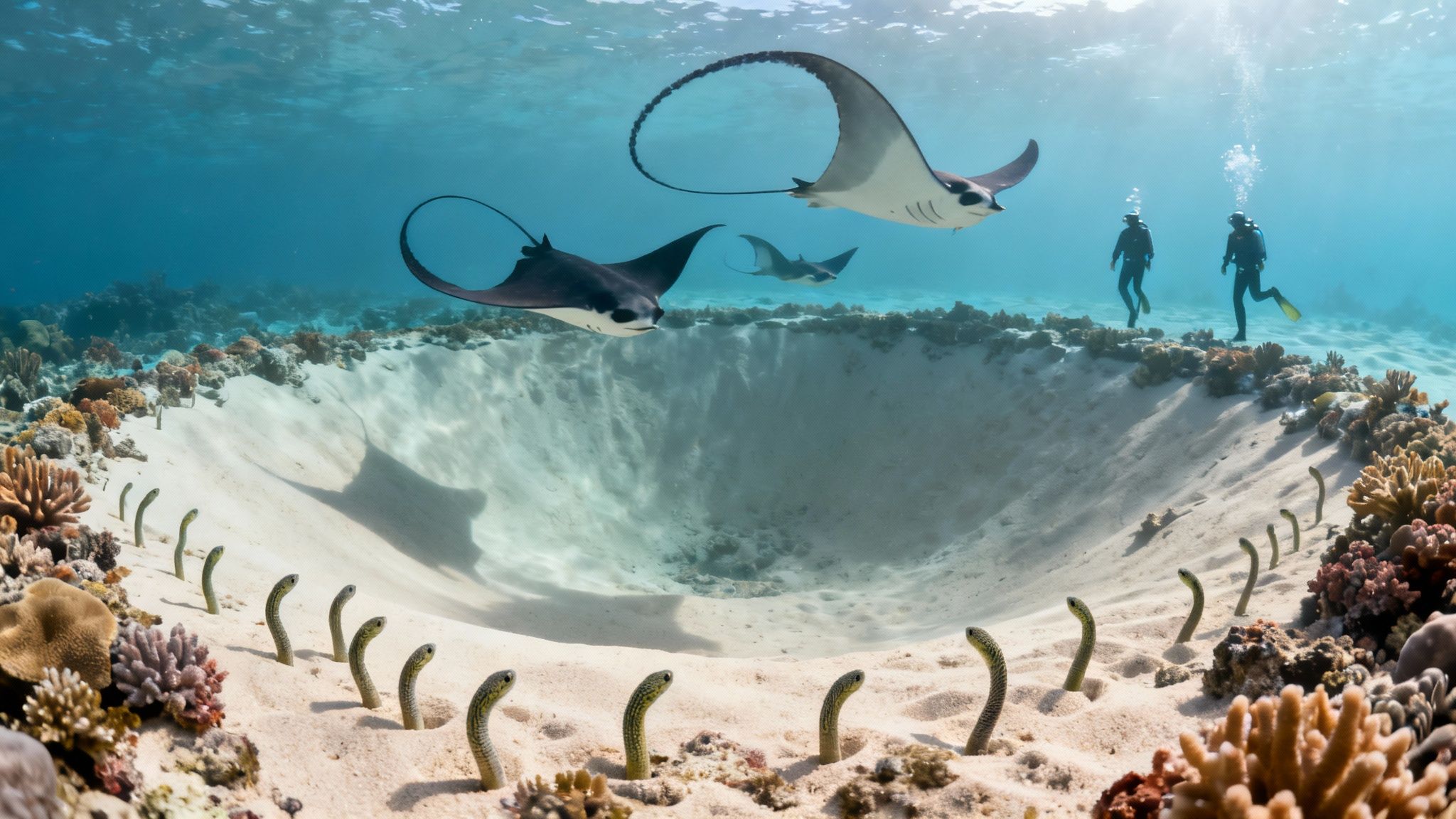
When you're planning a Big Island scuba diving manta rays trip, you'll quickly hear about two main spots. While both are good, those of us who have been in the water here for years know that one consistently delivers a better, more magical experience: Garden Eel Cove, or as we like to call it, 'Manta Heaven.'
So what makes this place so special? It really starts with its location. Garden Eel Cove is naturally tucked away and more sheltered from the open ocean swells, which means the water is often much calmer and clearer. That makes for a more relaxed and reliable dive, letting you soak in the incredible show without getting tossed around.
A Natural Amphitheater for the Show
The layout of Garden Eel Cove feels like it was designed specifically for watching manta rays. The site has a big, sandy patch surrounded by a beautiful, healthy coral reef, creating what is essentially a natural amphitheater. We place a powerful light source—our "campfire"—right in the middle of the sand to draw in the plankton.
This setup makes all the difference for a few key reasons:
- A Wider Stage: The open, sandy bottom gives everyone a front-row seat. You can find your own spot and get comfortable without feeling like you're piled on top of other divers.
- Clear Sightlines: With the light in the center, the mantas have a wide-open space to perform their famous underwater ballet. You get these incredible, sweeping panoramic views as they glide and loop right overhead.
- Less Congestion: Because of its protected location and spacious layout, Garden Eel Cove just feels more personal and less chaotic, providing a superior viewing area compared to other sites.
"The first time you see a manta ray materialize from the darkness and glide silently over the campfire, it’s a moment that sticks with you forever. The sheer size and grace are almost overwhelming in the best way possible."
It's All About the Numbers
Both of the main sites have a great track record, but Garden Eel Cove is legendary for the sheer number of mantas it attracts. The whole spectacle of the Kona manta dive hinges on a healthy food chain, and understanding the vital role of live plankton is key to knowing why they gather here.
At 'Manta Heaven,' we've seen some truly mind-blowing nights, with more than a dozen of these gentle giants swirling around us. Back in 2013, tours here averaged an incredible 11 mantas per dive, creating a vortex of activity you just don't see anywhere else.
A Healthier, More Vibrant Dive Site
The experience at Garden Eel Cove isn't just about the mantas. As the name suggests, the site is home to a huge colony of garden eels. Watching them poke their heads out of the sand and sway in the current is a fascinating sight in itself.
The reef surrounding the sandy patch is also noticeably healthier and more vibrant than at the other location. This means your first dive at twilight is a fantastic chance to explore thriving coral gardens and see all sorts of other classic Hawaiian marine life. You can discover more about why Garden Eel Cove is considered Manta Heaven on our full site breakdown.
For a truly unforgettable Big Island scuba diving manta rays experience, choosing an operator that dives at Garden Eel Cove is the most important decision you'll make. The calmer water, better viewing area, and higher manta count make it the undisputed champion for this world-class adventure.
Check Availability
Your Manta Ray Dive Experience with Kona Honu Divers
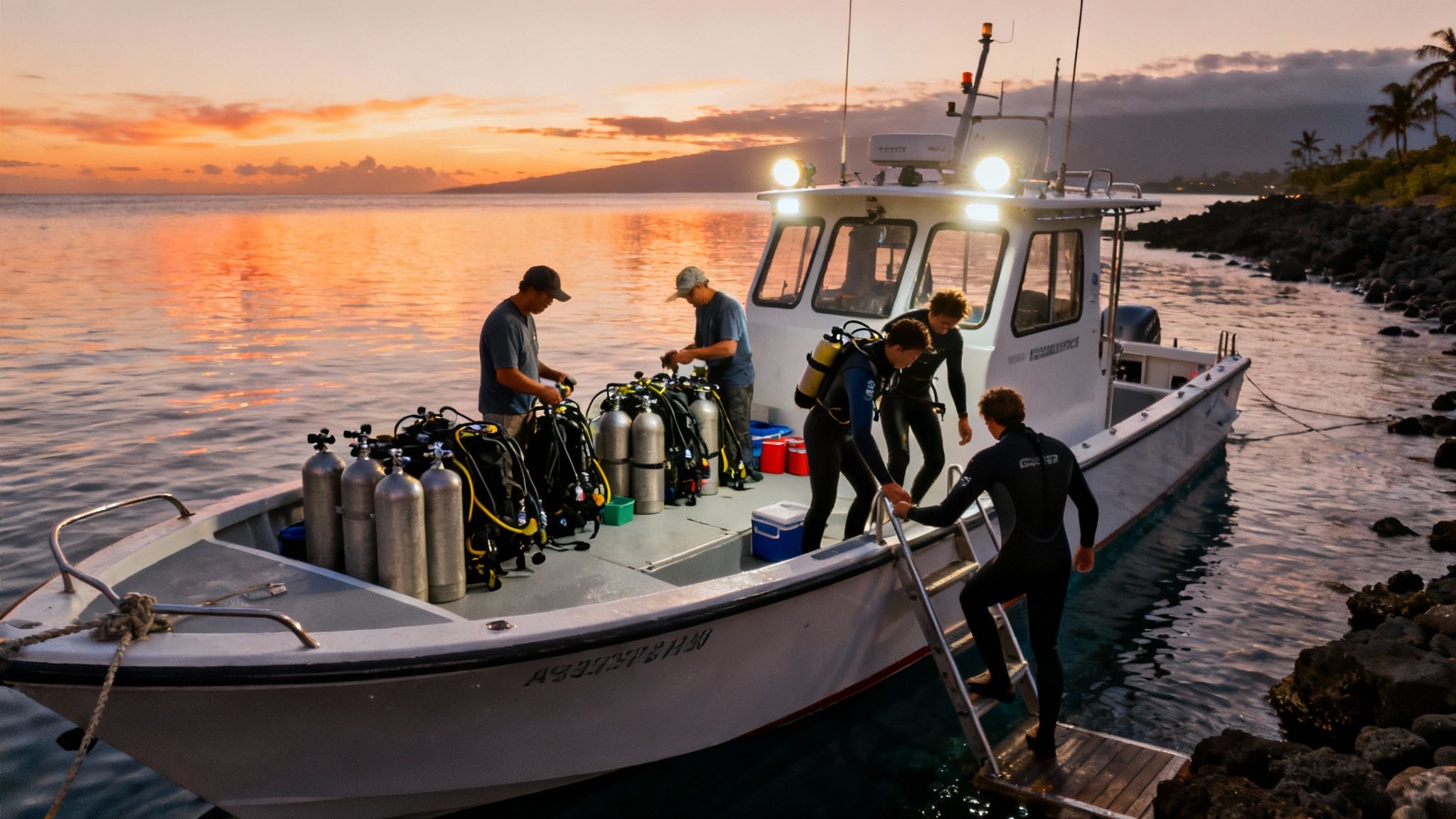
So, what’s it really like to go on one of these dives? Knowing what to expect from start to finish can help you relax and soak in every moment. When you book your Big Island scuba diving manta rays tour with an experienced crew like ours at Kona Honu Divers, you're getting more than just a dive—you’re getting a fully guided adventure designed for maximum awe and comfort.
The journey kicks off in the late afternoon with a laid-back check-in at Honokohau Harbor. The moment you step on board, our crew is there to help you settle in, stow your gear, and make you feel right at home on our custom-built dive boat.
As we cruise out along the stunning Kona coast, the sun starts to dip toward the horizon, lighting up the sky in incredible shades of orange and purple. It’s not just a boat ride; it’s a sunset cruise that perfectly sets the mood for the night ahead. Along the way, your guides will give a thorough boat and dive briefing, laying out the plan for the evening and covering all the safety procedures with a healthy dose of aloha.
The Two-Tank Dive Format
We run our manta ray tours as a two-tank dive, a format we’ve perfected over the years. It’s the best way to make sure every diver is comfortable, confident, and ready for the main event.
Your first dive is a beautiful reef dive at dusk. Just as twilight begins to settle in, we’ll descend onto a vibrant coral reef. This is your chance to dial in your buoyancy, get comfortable with your gear, and watch the reef critters transition from their daytime routines to their nighttime ones. Think of it as the perfect warm-up before the headliners take the stage.
After surfacing, you’ll have a nice surface interval to relax, grab some snacks and drinks, and chat with fellow divers about what you saw. As darkness falls, the excitement really starts to build. Meanwhile, our crew gets everything ready for the grand finale.
Creating the Underwater Campfire
Once the sun is down, it’s showtime. The guides set up what we call the "campfire"—a collection of powerful, specially designed lights placed on the sandy ocean floor. This light is the secret ingredient; it attracts a massive cloud of plankton, which is exactly what the manta rays have come to eat.
With the underwater stage set, you and your group will make a second descent. We’ll get you positioned on the sandy bottom in a semi-circle around the lights, where all you have to do is relax and look up. Staying put is key to a safe and respectful encounter.
By remaining still and observing from below, you become part of the underwater landscape. This allows the mantas to feel comfortable as they swoop, glide, and dance in the light beams, often just inches above your head.
What happens next is pure magic. The giant mantas appear out of the darkness, drawn in by the plankton buffet. They perform effortless barrel rolls and graceful loops, their massive wingspans silhouetted against the bright lights. It’s an intimate, humbling, and unforgettable experience that shows you exactly why this is one of the top-rated dives in the world.
The Kona Coast's manta ray night dive is an incredible success story, bringing in around 80,000 visitors each year with consistent sighting rates of 80-90%. Divers from the US, Canada, Japan, and Europe travel here just to see this spectacle.
Choosing an operator with a seasoned crew and comfortable, purpose-built boats really makes all the difference. Our commitment to safety and a first-class experience ensures your entire trip is one you'll never forget. To learn more about what diving with us is like in general, you can learn more about diving the Big Island of Hawaii with Kona Honu Divers.
How to Prepare for Your Big Island Manta Dive
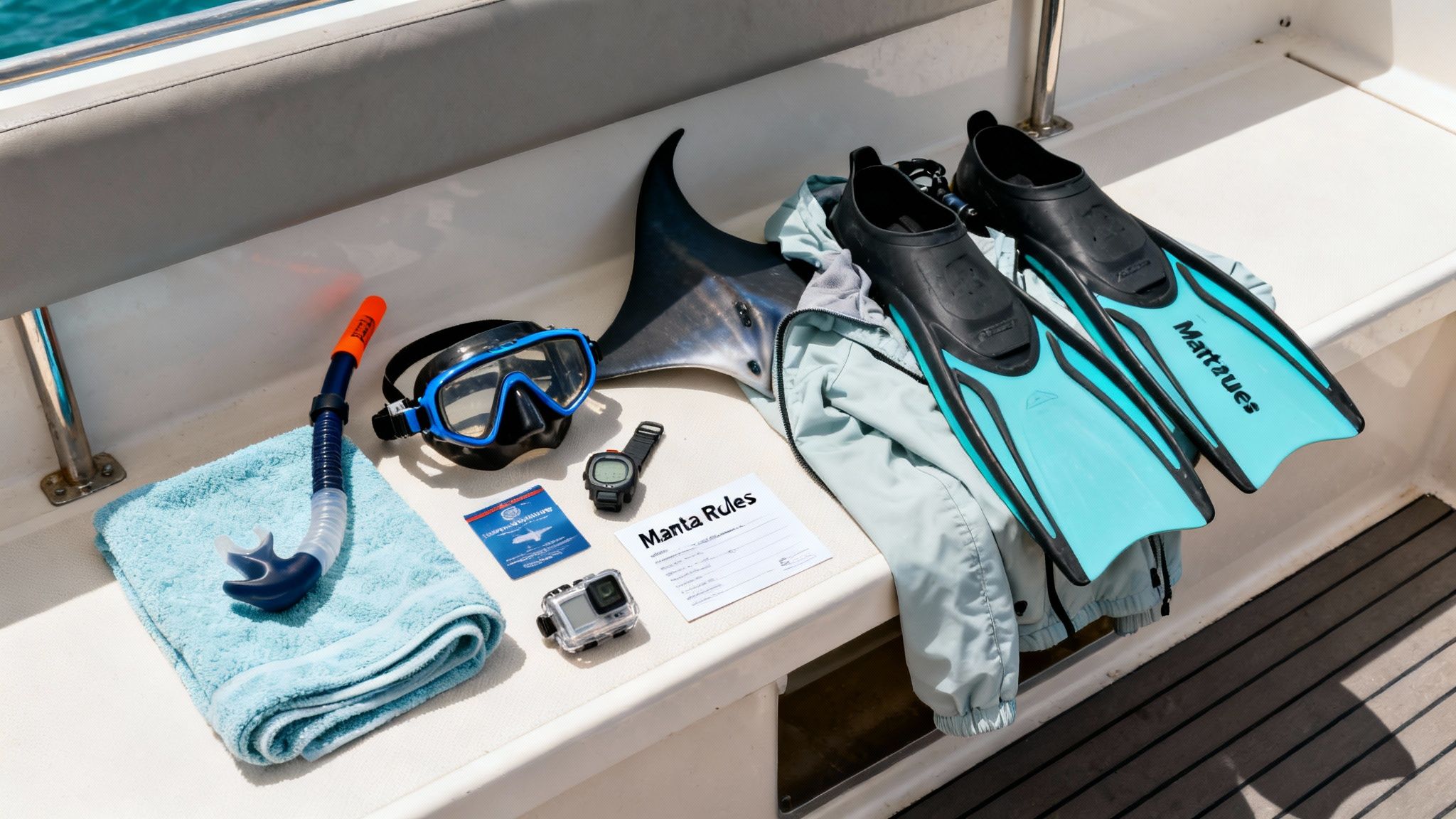
A little bit of prep work goes a long way in making your Big Island scuba diving manta rays adventure one for the books. Knowing what to bring and how to act in the water means you can stop worrying about the details and just soak in the incredible experience.
The great news is that planning for this dive is pretty simple. Kona’s weather and water conditions are famously consistent, so it’s a fantastic year-round activity. That said, the summer months often serve up the calmest seas, making for an even smoother boat ride.
Certification and Skill Essentials
To join the scuba dive, you’ll need at least an Open Water Diver certification. Don't forget to pack your certification card—we'll need to see it when you check in for the trip.
You don't need to be a divemaster, but solid buoyancy control is a huge plus. The whole dive is spent stationary on the sandy bottom, watching the show above. If you can hold your position without stirring up sand or floating upwards, you'll help protect the reef and keep the view clear for everyone else. If it's been a while since your last dive, a quick refresher course is always a good idea.
Rules of Engagement: Protecting the Mantas
Getting this close to these gentle giants is a true privilege, and we take our responsibility to them seriously. The golden rule is passive observation. This isn't just our policy; it's a non-negotiable standard for every reputable dive operator in Kona.
Here’s what that looks like in practice:
- Do Not Touch the Manta Rays: Mantas are covered in a protective mucous layer that acts as their immune system. Touching them strips this layer off, leaving them vulnerable to infections. It's a hands-off experience.
- Stay on the Bottom: All divers must stay put on the sandy seabed. This gives the mantas a clear, open water column to gracefully maneuver and feed without having to dodge people.
- Let Them Come to You: Chasing, grabbing, or trying to ride a manta is strictly forbidden. The magic happens when you relax and let these curious animals approach on their own terms.
Following these simple rules is our collective promise to the mantas, ensuring this amazing encounter can be shared for generations to come.
What to Pack for Your Trip
Packing for the manta dive couldn't be easier. We handle the heavy gear like tanks and weights, so you just need to bring a few personal items for comfort. For a more detailed breakdown of gear for all types of Kona diving, check out our guide on the gear you will need for your Kona diving adventure.
To make it simple, we've put together a quick checklist so you don't forget the essentials.
Manta Ray Dive Checklist
| Category | Essential Items & Information |
|---|---|
| Personal Items | Swimsuit (wear it under your clothes), towel, and a warm jacket or sweatshirt for the ride back. |
| Dive Gear | Your certification card is a must. A logbook and your personal mask or fins are optional. |
| Onboard Comfort | A reusable water bottle is great, and bring seasickness medication if you're prone to it. |
| Key Rules to Remember | Absolutely no touching the mantas. Stay on the bottom and follow all your guide's instructions. |
That warm jacket is a pro tip you'll be thankful for! Even after diving in Hawaii's balmy waters, the boat ride home in the night air can get surprisingly chilly. Having something dry and cozy to throw on makes the whole trip more comfortable.
Explore More Epic Dives on the Big Island
The manta ray night dive is an absolute showstopper, but trust me, the underwater adventure on the Big Island doesn’t stop when the sun comes up. This island is a world-class diving destination for a reason, offering an incredible variety of underwater landscapes that go way beyond the famous manta encounter.
Once you’ve experienced the magic of the Big Island scuba diving with manta rays, there are whole other worlds to discover just beneath the waves. We're talking ancient lava tubes, deep and dramatic reefs, and some of the most unique dive sites you'll ever see. Exploring them is the perfect way to round out your trip and understand why the Kona coast is a complete aquatic playground.
To see the full menu of what we offer, you can head over to our main diving tours page.
The Kona Blackwater Dive: An Otherworldly Experience
If you're looking for something truly surreal, nothing compares to the Kona Blackwater Dive. We often call it an "underwater spacewalk," and for good reason—it’s completely different from anything you've ever experienced. You'll drift in the deep, open ocean over thousands of feet of water, tethered to the boat, watching creatures migrate from the abyss to the surface under the cover of darkness.
This isn’t your typical reef dive. It’s a face-to-face encounter with the bizarre and beautiful world of bioluminescent and larval creatures. You'll see things that look like they belong on another planet. If the mysteries of the deep intrigue you, you can learn more about this one-of-a-kind trip on our Blackwater Dive tour page.
Advanced Dives for Experienced Divers
Are you an experienced diver looking for a bit more of a challenge? The Big Island’s volcanic origins have sculpted an underwater topography filled with thrilling structures that are perfect for advanced diving. On these trips, we explore sites with dramatic archways, cavernous lava tubes, and deep pinnacles that are just teeming with life.
These dives take you to deeper reefs where you can encounter different species, including schooling sharks and rare pelagic fish. It’s a chance to push your skills and witness a wilder side of Kona’s marine ecosystem.
These charters are specifically designed for divers who are comfortable with deeper profiles and more complex environments. If you're ready to take your Kona diving to the next level, check out all the details on our premium advanced dive tour page. Honestly, booking a few different types of dives is the best way to see everything the Big Island has to offer.
Check Availability
Your Manta Ray Diving Questions Answered
Even after reading all about it, you probably still have a few questions rolling around in your head. That's completely normal. Here are the answers to the most common things we get asked, straight from our experienced crew.
Think of this as the final chat we'd have over the phone to make sure you're feeling 100% ready for the dive of a lifetime.
Do I Need to Be an Advanced Diver for This?
Nope! This is one of the best parts about the Kona manta dive—it's incredibly accessible. As long as you have your Open Water certification, you're good to go.
The dive itself is in fairly shallow water, usually around 35-40 feet, and the main event happens while you're settled on the sandy bottom. We're not exploring complex caves or fighting currents; it's all about being still and watching the show. Our guides make sure it’s a controlled, safe, and super comfortable experience for everyone.
What’s the Best Time of Year to See Manta Rays?
The amazing answer is: any time. Seriously. The manta rays that frequent the Kona coast are residents, meaning they don't migrate. We see them year-round, and the success rate for sightings is consistently high no matter when you visit.
That said, if you're looking for the calmest possible boat ride, the summer months (think May through September) tend to have flatter seas. But the underwater ballet is spectacular 365 days a year.
Is This Dive Safe for Me and for the Mantas?
Absolutely, and this is our number one priority. First, you can relax knowing manta rays are gentle giants. They're filter feeders with no teeth, stingers, or barbs, so they pose zero threat to humans.
For their safety, we operate under strict, industry-wide guidelines. The most important rule is a firm no-touching policy. Manta rays have a delicate mucus coating that protects them from infection, and touching them can be harmful. Your guides will give you a detailed briefing before you even hit the water, so everyone knows how to interact respectfully and keep both divers and mantas safe.
What if I’m Not Scuba Certified? Can I Still Go?
Yes, you can! While we've been focused on the scuba side of things, most operators—including us at Kona Honu Divers—offer an incredible snorkeling option that’s perfect for non-divers, kids, and families.
Snorkelers hang onto a large, custom-made float on the surface that has bright lights pointing down. This gives you a fantastic bird's-eye view of the mantas as they barrel roll and feed in the light beams right below you. It's a completely different perspective but every bit as magical.
Ready to see the underwater ballet for yourself? Kona Honu Divers runs the premier manta ray night dive, taking you to the prime viewing spot at Garden Eel Cove. Our experienced crew, top-notch boats, and unwavering commitment to safety will make this the highlight of your trip to Hawaii. Book your unforgettable manta ray dive tour with us today!
Check Availability