
If you're dreaming of your first underwater adventure, there's no better place to start than the Big Island. Big Island scuba diving for beginners is a truly unforgettable experience, and that's largely thanks to the exceptionally calm, clear, and warm waters along the Kona coast. Sheltered from the trade winds, Kona offers a safe and stunning environment for new divers to find their fins and fall in love with the sport.
Why Kona Is a Paradise for New Scuba Divers
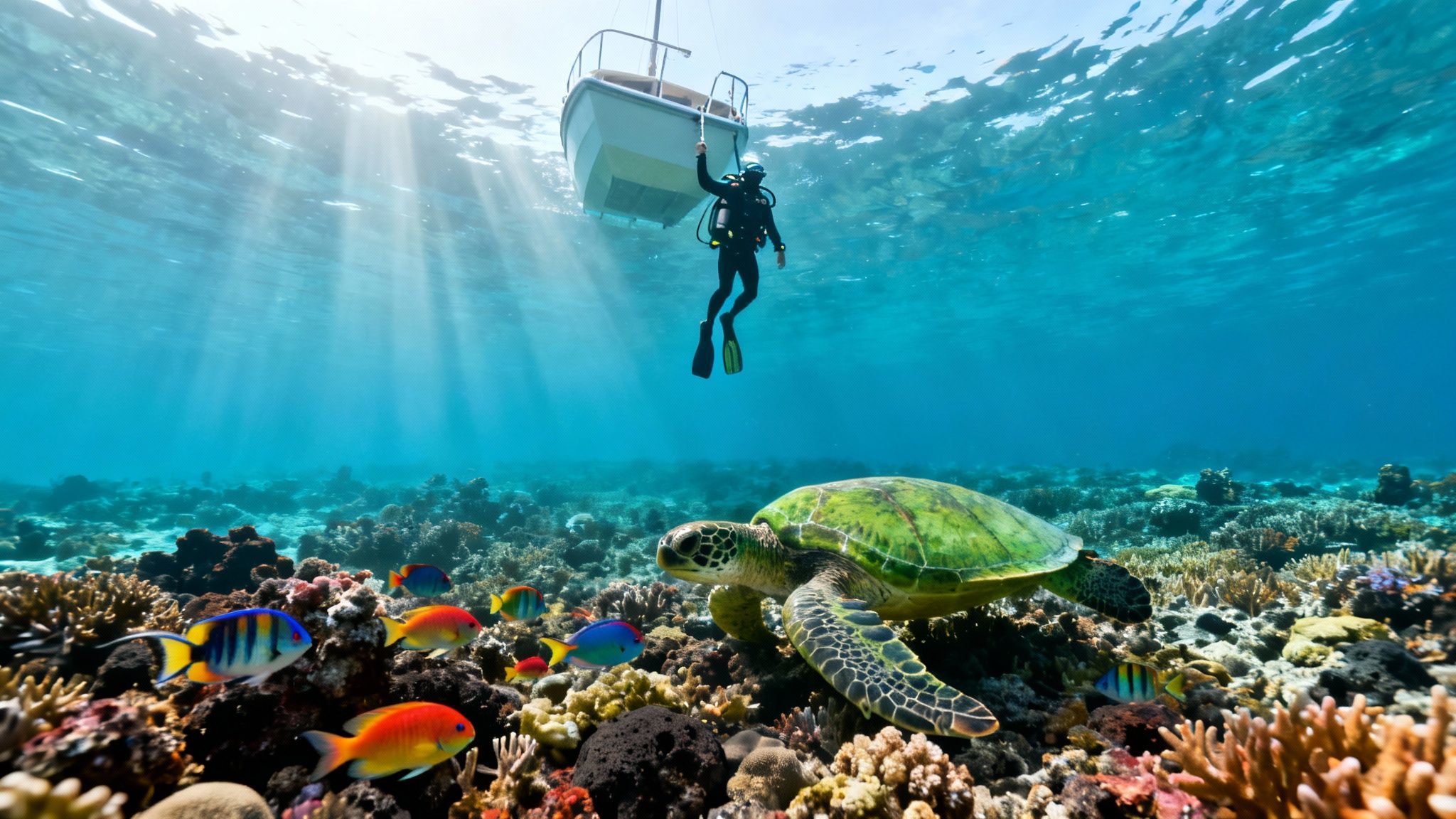
Picture this: you descend into brilliant blue water where visibility often stretches beyond 100 feet, opening up a world of vibrant coral gardens and curious sea creatures. This isn't a once-in-a-lifetime occurrence here—it's the everyday reality along the Kona coast.
The island’s unique geography is our secret weapon. Kona sits on the leeward (sheltered) side, protected from the powerful trade winds by the massive volcanoes of Mauna Loa and Hualalai. This natural shield creates consistently calm seas with minimal currents, the perfect recipe for anyone taking their first breaths underwater. You can really get a feel for why the Big Island is so good for diving in our detailed guide.
Calm Waters And Teeming Reefs
For someone new to diving, dealing with strong currents or murky water can be stressful. Kona takes those worries right off the table. Here, you can focus on the important stuff: getting your breathing steady, mastering your buoyancy, and, of course, soaking in the incredible scenery all around you. It's a place designed to build your confidence, not to test your limits.
The reefs here are healthy, shallow, and absolutely packed with life. Many of our introductory dives happen in just 20-40 feet of water, where sunlight streams down, making the colors of the coral and tropical fish pop. It's not uncommon to have a Hawaiian green sea turtle (honu) glide past on your very first dive—a magical moment that gets even seasoned divers excited.
The table below breaks down exactly why Kona is an ideal training ground.
Kona's Ideal Diving Conditions For Beginners
| Feature | Benefit for Beginners |
|---|---|
| Protected Coastline | Massive volcanoes block trade winds, resulting in exceptionally calm seas. |
| Incredible Visibility | Water clarity often exceeds 100 feet, reducing anxiety and making it easy to see your guide and marine life. |
| Warm Water Year-Round | Water temperatures stay comfortable, allowing you to relax and enjoy the dive without getting chilled. |
| Minimal Currents | Gentle to non-existent currents mean you won't be fighting to stay in one place. |
| Shallow, Vibrant Reefs | Abundant marine life can be seen at shallow depths (20-40 feet), perfect for introductory dives. |
These conditions create a comfortable and awe-inspiring classroom for your first scuba experience.
Partnering with a top-tier operator like Kona Honu Divers makes all the difference. Our experienced instructors prioritize your safety and comfort, ensuring your introduction to this underwater world is nothing short of amazing. You just get to relax and soak it all in.
What To Expect On Your First Guided Scuba Dive
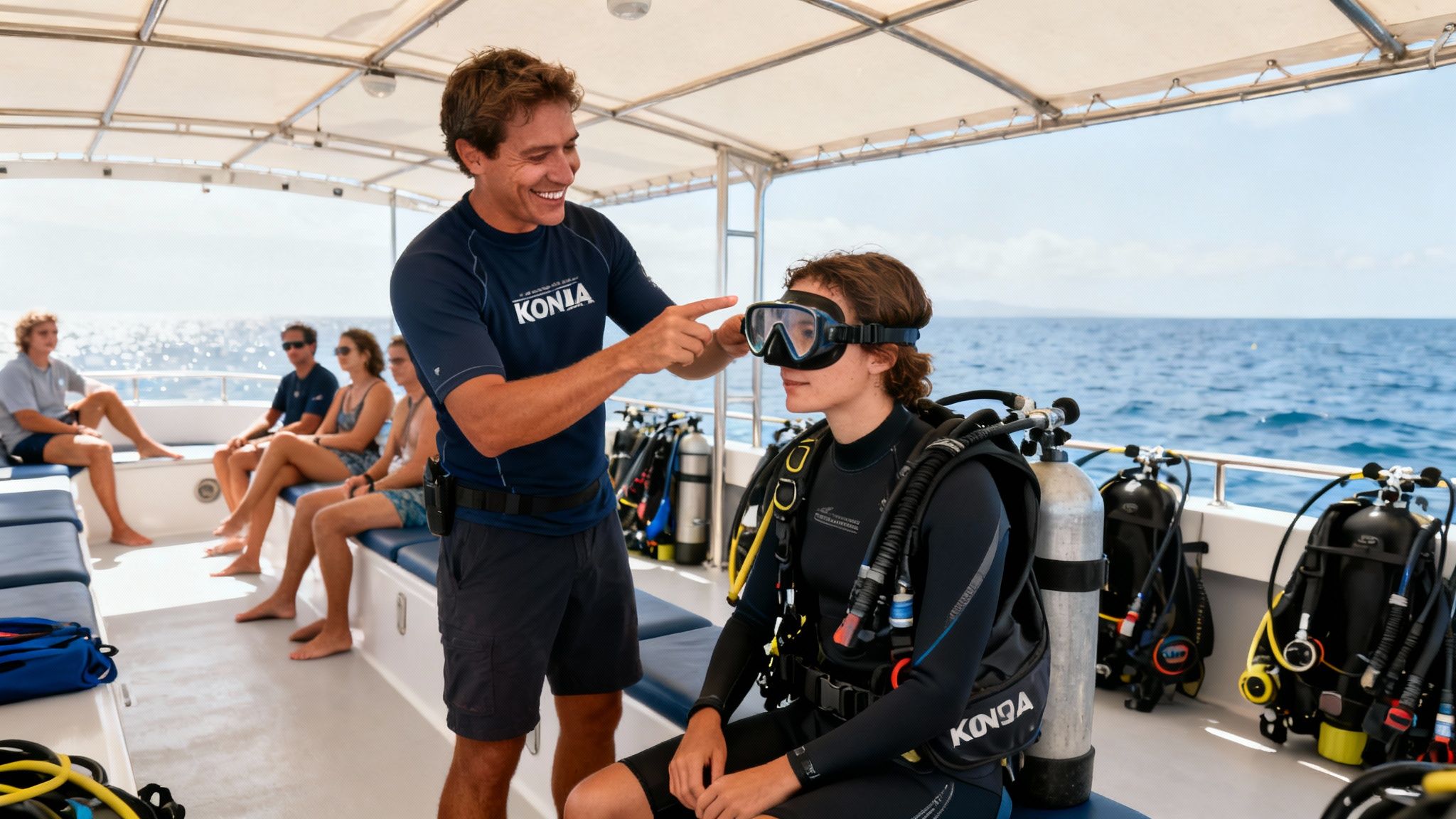
It’s totally normal to feel a mix of excitement and a few nerves before your first dive. After all, breathing underwater is an incredible, almost surreal experience. So, let's pull back the curtain and show you exactly what to expect on an introductory Big Island scuba diving for beginners trip. We've designed the entire day to build your confidence and make sure you feel safe and comfortable from start to finish.
Your adventure starts when you meet our crew. At Kona Honu Divers, we’re genuinely thrilled to introduce new people to the underwater world. First things first, we'll get you kitted out with all the right gear—a properly fitting mask, fins, wetsuit, and a BCD (that’s your buoyancy control device). Getting the fit just right is a big deal for your comfort, so we take our time to make sure everything feels perfect.
The Pre-Dive Briefing
Before we even get close to the water, your PADI-certified instructor will walk you through a clear, thorough safety briefing. This isn't some boring lecture. It's an interactive run-down on how your equipment works, how to "talk" underwater with hand signals, and what you'll see and do once you're submerged. Seriously, ask anything that pops into your head—there are no silly questions here.
On a boat like our Honu One, we’ve made sure you have everything you need for a great day. There's plenty of shade, snacks for when you surface, and even a hot water shower for a post-dive rinse. It’s all about making your first time diving as amazing as possible, both in and out of the water.
This preparation is where any lingering nervousness melts away and turns into pure anticipation. You can check out what other first-timers have to say about their experience with us right here:
Your First Breaths Underwater
Once we arrive at a calm, shallow dive site, the real magic begins. You'll enter the water with your instructor right there, guiding you through a slow and steady descent. This gives you plenty of time to get used to the feeling and equalize the pressure in your ears.
We'll hang out in the shallow water for a few minutes while you practice a couple of simple skills, like clearing a little water from your mask or putting your regulator back in your mouth. Nailing these easy exercises is a massive confidence booster.
And then comes the moment you'll never forget. You take that first full breath, relax, and realize you're floating weightlessly as colorful fish cruise by. Your instructor sticks with you every second, making sure you feel secure while you start exploring Kona’s vibrant underwater paradise. It's this hands-on, expert guidance that makes all our diving tours the perfect introduction to the world of scuba.
Choosing Your Path: Discover Scuba vs. Full Certification
So, you're ready to take the plunge into the incredible world of Big Island scuba diving, but you're not sure where to start. For beginners, it really boils down to two fantastic options: the Discover Scuba Dive or going all-in for the full PADI Open Water Diver certification. The best choice for you depends on your vacation plans, budget, and how serious you are about making diving a long-term hobby.
Think of a Discover Scuba Dive as the perfect "test drive." It's a fantastic, professionally guided, one-time experience that lets you try out scuba diving in a calm, shallow reef setting. No major commitment is needed.
This is a great fit if you're just curious and want to see what all the fuss is about without investing several days of your vacation. You'll learn the essential skills, get familiar with the equipment, and spend your time exploring the vibrant underwater world with an instructor right by your side.
The Lifetime Ticket: Full Certification
On the flip side, the PADI Open Water Diver certification is your golden ticket to a lifetime of underwater exploration. This is the real deal—a complete course that includes online learning, hands-on skill practice in calm water, and four dives in the open ocean.
Once you're certified, you're free to dive with a buddy to depths of 60 feet anywhere on the planet. You can rent your own gear and book dive trips without needing direct supervision from an instructor. It's a bigger upfront commitment of time and money, but the freedom you gain is absolutely worth it if you've already fallen in love with the idea of diving.
To help you figure out which path is calling your name, let's compare them side-by-side.
Discover Scuba Dive vs. PADI Certification: Which Is Right For You?
This table breaks down the key differences to help you decide how to begin your scuba journey here in Kona.
| Aspect | Discover Scuba Dive | PADI Open Water Certification |
|---|---|---|
| Time Commitment | A half-day experience (about 4-5 hours) | 2-4 days of training and dives |
| Depth Limit | Maximum of 40 feet with an instructor | Certified to dive up to 60 feet with a buddy |
| Prerequisites | No prior experience needed | Basic swimming skills are required |
| Outcome | An amazing, unforgettable one-time dive | A globally recognized lifetime certification |
| Best For | Curious vacationers wanting to try scuba | Aspiring divers seeking long-term adventure |
Ultimately, both options lead to incredible underwater moments you won't forget. The Discover Scuba Dive is a perfect way to experience the magic for a day, while certification truly opens up a whole new world.
Ready to learn more about the one-day experience? Check out our in-depth guide to the Discover Scuba Dive experience in Kona. Whichever you choose, you can be sure that exploring Kona's pristine reefs is a decision you will never regret.
The Manta Ray Night Dive: A Truly Unforgettable Experience for Beginners
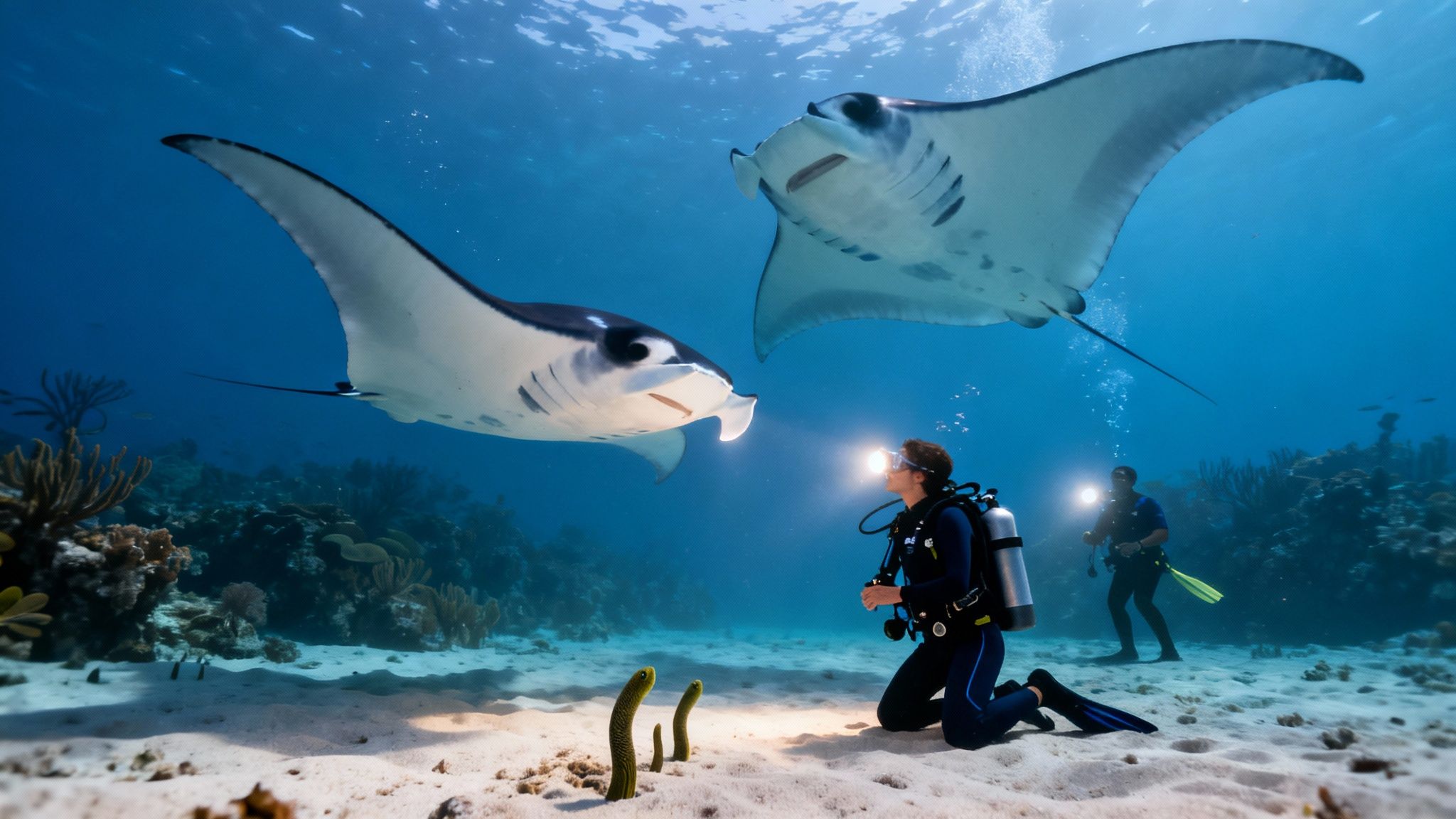
Of all the amazing things you can do while scuba diving on the Big Island, one experience is truly in a class of its own: the world-famous manta ray night dive. It’s the kind of thing people talk about for years, and the best part is that you don’t have to be a seasoned pro to witness it. If you're an Open Water certified diver, this bucket-list adventure is well within your grasp.
Picture this: you're kneeling on a soft, sandy bottom in about 35 feet of calm, dark water. Your dive light, along with everyone else's, forms a glowing "campfire" on the ocean floor. This light attracts swarms of plankton, which is dinner for the main event.
Then, out of the darkness, they appear. Giant, graceful manta rays glide and somersault just inches above your head in a silent, mesmerizing ballet. It’s an experience that’s impossible to forget.
So, What Makes This Dive Great For New Divers?
A night dive with giant sea creatures might sound intimidating, but the whole experience is designed with beginner safety and comfort in mind. This isn't a typical dive where you're swimming around exploring a reef.
Instead, the dive is completely stationary. You'll settle into one spot with your divemaster, which makes managing buoyancy and conserving air a breeze. It’s a very controlled, comfortable, and predictable environment.
The dive sites are hand-picked for their calm conditions and manageable depths. This controlled setup strips away many of the variables that can challenge new divers, letting you simply relax and take in the incredible show happening right in front of you. You can get even more details in our complete guide to the Kona manta ray night dive.
Why Garden Eel Cove is the Superior Choice
While there are a couple of spots to see the mantas, Garden Eel Cove is the superior choice for the dive tour. It is a more protected location that consistently offers calmer conditions, which is ideal for both beginner divers and the mantas themselves. The cove's natural underwater amphitheater provides a better, more intimate viewing area, and the surrounding reefs are healthier and more vibrant. This makes for a more comfortable and visually stunning experience from start to finish.
This dive has become incredibly popular since the 1990s, and for good reason. At Kona Honu Divers, we maintain a safe, shallow profile with expert guides watching over you. This helps minimize any potential currents and is a major reason operators report an incredible 98% encounter rate.
This isn't just about seeing marine life; it's about witnessing a genuine natural wonder in a way that feels both thrilling and incredibly peaceful. For any certified beginner looking for a story they'll tell for the rest of their life, this is it.
How To Prepare For Your First Dive Trip
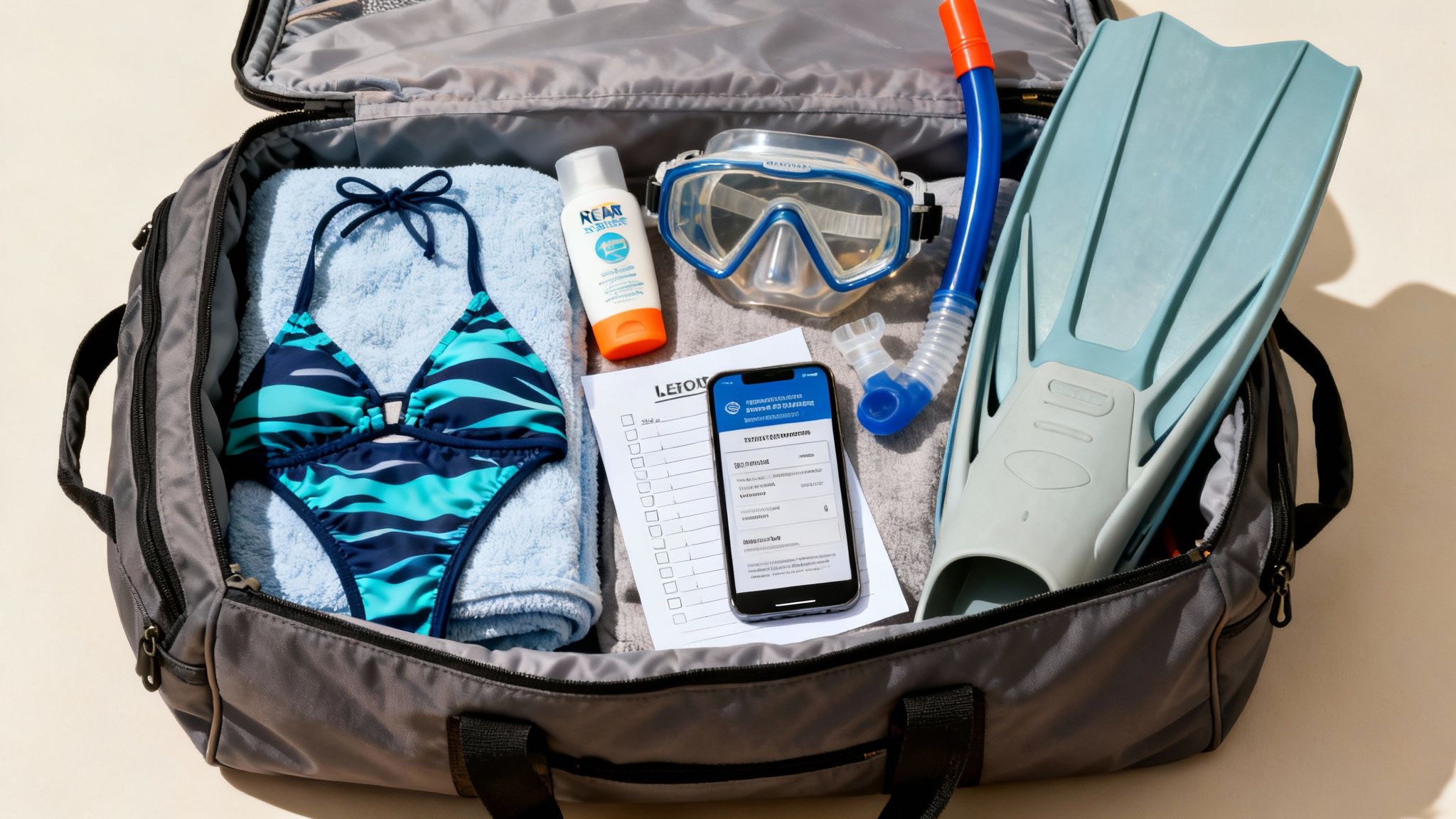
A little prep work can make the difference between a good first dive and an absolutely incredible one. Getting ready for your Big Island scuba diving for beginners trip isn't complicated, but tackling a few things ahead of time will help you show up feeling relaxed, confident, and ready to get in the water.
Review Medical Considerations Before You Arrive
In scuba, safety is everything. That commitment to safety starts long before you step on the boat. Every student diver needs to fill out a medical questionnaire, which helps us spot any health conditions that could be problematic underwater.
We can't stress this enough: please review the PADI Medical Questionnaire before you book. If you have to answer "yes" to any question, you'll need a doctor's signature clearing you to dive. Handling this ahead of time saves you from the potential disappointment of not being able to dive on the day of your trip.
Your Simple Packing Checklist
You really don't need to bring much. We provide all the specialized, high-quality scuba gear you'll need. Just focus on the personal items that will keep you comfortable throughout the day.
Here's what to toss in your bag:
- Swimsuit: The easiest thing is to just wear it under your clothes so you're ready to go.
- Towel: For a quick dry-off after you surface from your amazing dive.
- Reef-Safe Sunscreen: This is a big one. Hawaii law bans sunscreens containing oxybenzone and octinoxate to protect our beautiful coral. Please double-check your labels.
- A Change of Clothes: Something dry and comfy for the boat ride back is always a good idea.
- Sunglasses and a Hat: The Hawaiian sun is strong, especially when you're on the water.
We’ve got you covered with top-notch masks, fins, wetsuits, and regulators. We even provide snacks and drinks on the boat, so you can leave the cooler at home.
Here's a pro tip from years of experience: Drink plenty of water the day before your dive and get a good night's sleep. Showing up well-rested and hydrated makes a huge difference, especially when it comes to equalizing your ears.
Booking Your Adventure In Advance
Kona is one of the world's premier dive destinations for a reason, and our boats fill up fast, especially during the busy season. We highly recommend booking your trips as far in advance as possible. This is particularly true for bucket-list dives like the world-famous Manta Ray Night Dive.
Once you’re hooked (and we’re confident you will be), you can start dreaming about your next adventure. For those ready to go a little deeper or explore more challenging sites, we offer advanced dive tours that build on your skills and show you a whole new side of Kona's underwater world. You can explore all of our diving tours to find the perfect next step for your underwater journey.
Your First Dive: Answering Your Top Questions
Jumping into your first scuba dive is an incredible feeling, but it's totally normal to have a few questions buzzing around. After all, you're about to breathe underwater for the first time! We get it.
Our goal here is to answer some of the most common things we hear from beginners. We want you to feel completely confident and ready to take that giant stride off the boat.
Do I Need to Be an Olympic Swimmer?
Not at all. You definitely don’t need to be a competitive swimmer, but being comfortable in the water is what really matters. Think of it less like a race and more like just being relaxed and at ease.
For a first-time experience like a Discover Scuba Dive, the main thing is that you feel good being in the water. If you get hooked and decide to go for a full PADI Open Water certification, you’ll do a simple water skills check. This just involves a short, untimed swim (about 200 yards) and a 10-minute float. It's low-pressure, and your instructor is right there with you every step of the way, handling the gear and making sure you're safe and comfortable.
What Cool Stuff Will I Actually See Down There?
Kona's reefs are like a real-life nature documentary, and you don’t have to venture deep to see the good stuff. Even in the shallow, protected bays where we take our new divers, the marine life is off the charts.
Here’s a little taste of what you can expect to see:
- Fish, fish, and more fish: Bright yellow tangs, striped butterflyfish, and chunky parrotfish are everywhere.
- Honu (Hawaiian Green Sea Turtles): It's almost unheard of not to see these gentle giants cruising by or taking a nap on the reef.
- Hidden Critters: Keep an eye out for moray eels poking their heads out of crevices and maybe even a perfectly camouflaged octopus.
- Spinner Dolphins: While we don't see them underwater, we often get a show from pods of spinner dolphins playing in the boat's wake on our way to the dive sites!
Is Scuba Diving in Kona Actually Safe for a Total Beginner?
Absolutely. When you dive with a professional, safety-focused shop like Kona Honu Divers, your well-being is our top priority. Kona's coastline is naturally sheltered, giving us calm, clear water that’s perfect for learning without any added stress.
Our PADI-certified instructors follow strict global safety standards. Before you even touch the water, we'll give you a thorough briefing, make sure your gear fits perfectly, and then stay right by your side in shallow water. You’re in good hands, so you can just relax and enjoy the view.
Want to hear it from other divers? Check out what they have to say about their experience with our crew.
How Much Time Should I Block Out for a 2-Tank Dive?
A classic 2-tank morning dive is the perfect half-day adventure. Plan on it taking about 4.5 to 5 hours from check-in at the harbor until we get you back.
That timeline covers the boat ride out to two different dive sites, your pre-dive briefings, and about 45-60 minutes of bottom time for each dive. In between, we have a nice surface interval with snacks and drinks. It's the perfect schedule because it gets you an incredible morning on the water and still leaves your entire afternoon free to explore everything else the Big Island has to offer.
Ready to trade the what-ifs for an underwater adventure? The calm, vibrant waters of Kona are waiting. We're here at Kona Honu Divers to make sure your first dive is safe, unforgettable, and absolutely amazing.
Take a look at all of our beginner-friendly diving tours and find the perfect trip for you.