
So, you’re dreaming of exploring the underwater world, and you’ve chosen the Big Island to take the plunge. Smart move. The island's calm, clear waters and incredible marine life make it one of the best places on the planet for your first breath underwater.
You essentially have two ways to get started: a one-day introductory dive or a full certification course.
Your First Breath Underwater On The Big Island
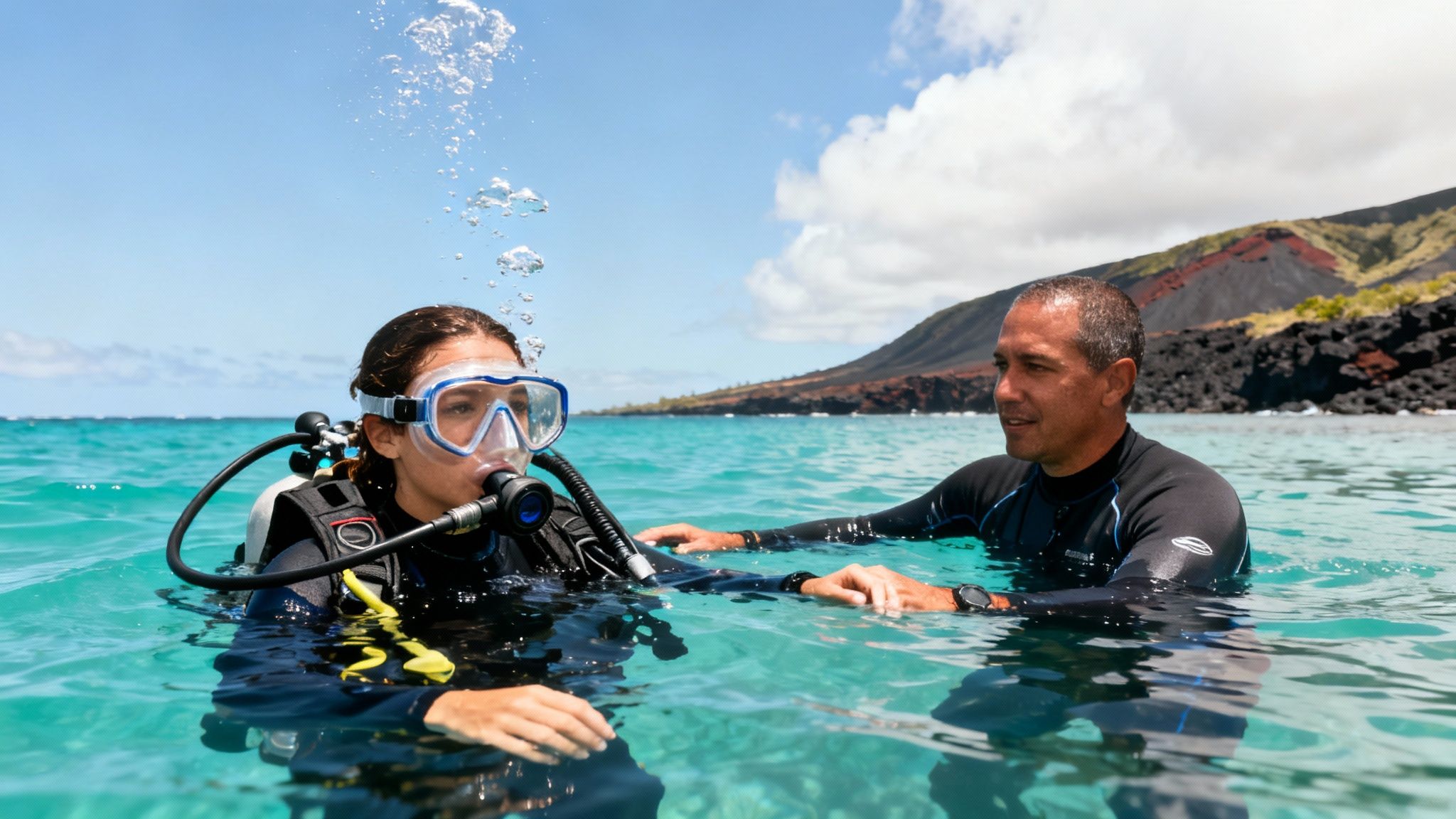
There's nothing quite like that first time you breathe underwater. It's a mix of pure magic and a little bit of "I can't believe I'm doing this!" The Kona coast, in particular, is naturally protected from the big ocean swells, which makes the conditions here incredibly forgiving for newcomers.
Your main decision boils down to this: do you want a quick taste of the scuba life, or are you ready to commit and become a certified diver? Let's break down your options so you can pick the right path for your vacation.
Discover Scuba Diving: The Quick-Start Adventure
For most vacationers who are curious about diving, the Discover Scuba Diving (DSD) program is the perfect fit. Think of it as a "scuba test drive." It’s a half-day experience designed to get you in the water and diving safely under the direct supervision of an instructor, with no prior experience necessary.
Here’s why it’s so popular:
- No Experience Needed: You'll get a crash course on the basics and practice a few key skills in shallow water before your actual dive.
- Time-Friendly: The whole thing usually wraps up in just a few hours, so it won't eat up your entire vacation.
- Guided Experience: An instructor is with you every step of the way, managing your gear and ensuring you're safe and comfortable.
This is absolutely the way to go if you're short on time or just want to see if diving is your thing before committing to a full course. You can find out more about what a Discover Scuba Dive in Kona feels like and see if it's the right highlight for your trip.
PADI Open Water Certification: The Real Deal
Ready to go all in? The PADI Open Water Diver course is your ticket to a lifetime of underwater adventures. This is a comprehensive certification that involves online learning, skill practice in a pool or calm bay, and four real open-water dives.
Getting your Open Water certification is like getting a passport to the other 71% of the planet. You’ll be certified to dive with a buddy anywhere in the world, down to a depth of 60 feet (18 meters), without needing an instructor right by your side.
This path requires a bigger time commitment—usually 2-3 full days of your trip. But the reward is huge. You’ll gain the knowledge and confidence to explore the underwater world on your own terms. For those looking for more challenging dives after certification, there are always advanced dive tours available.
Discover Scuba Diving vs Full Certification
Still on the fence? This side-by-side comparison should help you make the call.
| Feature | Discover Scuba Diving (DSD) | PADI Open Water Certification |
|---|---|---|
| Time Commitment | Half-day (3-4 hours) | Multi-day (2-3 full days) |
| Prerequisites | None (basic swimming ability) | Medical clearance, swim test required |
| Outcome | A fantastic one-time dive | A lifetime diving certification |
| Cost | Lower initial cost | A bigger investment for a skill |
| Best For | Curious beginners, tight schedules | Anyone serious about becoming a diver |
Ultimately, there’s no wrong choice. Whether you opt for a single amazing dive or decide to get the card that lets you dive forever, you're about to see why so many of us are obsessed with what lies beneath the waves.
Exploring The Best Beginner Dive Sites On The Kona Coast
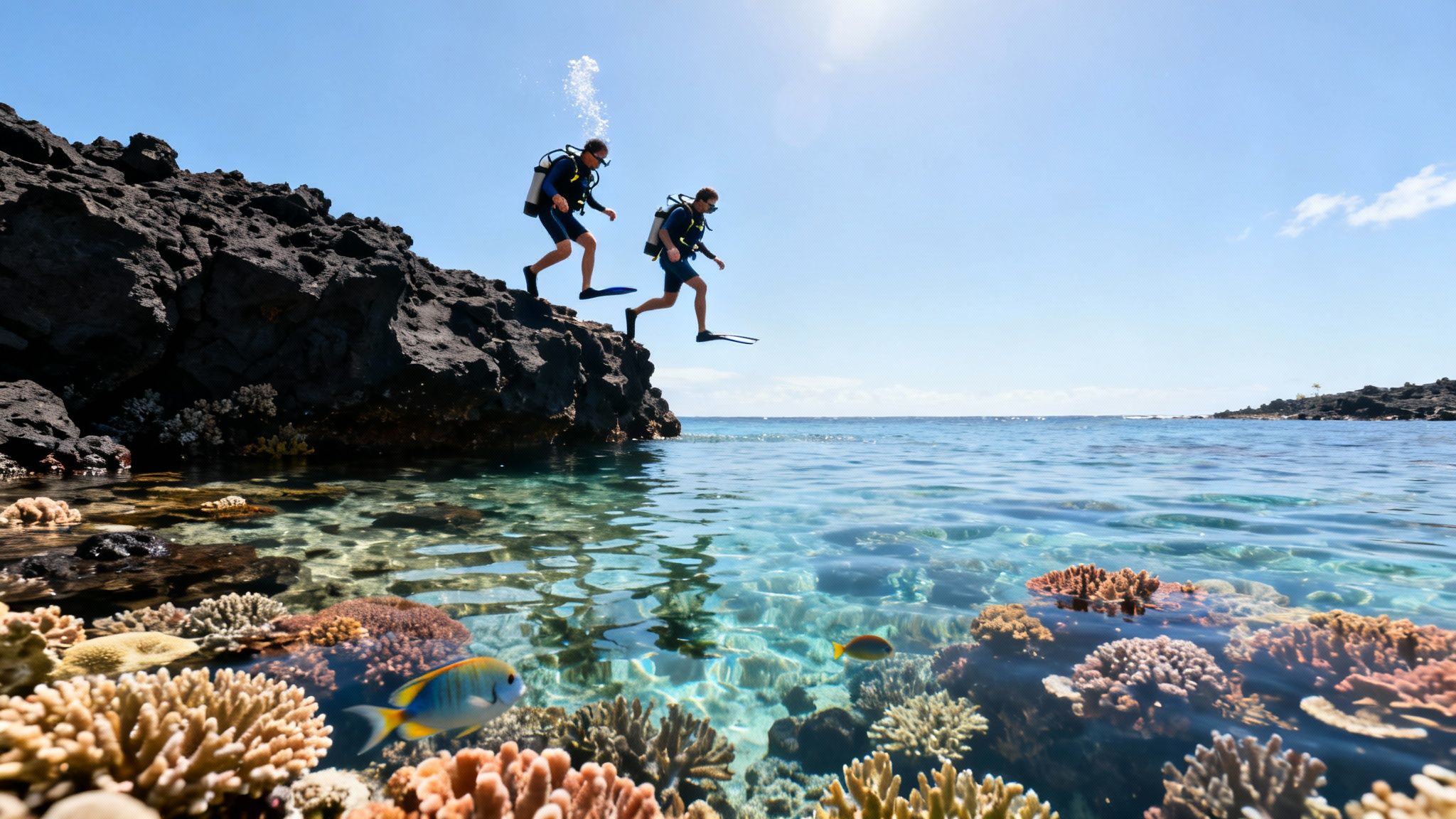
Picking the right spot for your first few dives makes all the difference. Honestly, it can be the deciding factor between a good experience and a truly incredible one. The Kona coast is a fantastic place to start because its waters are famously calm and protected from the open ocean swells.
This coastline is a geological wonder, shaped by ancient lava flows that have created some spectacular underwater landscapes. Think vibrant reefs and sheltered bays just teeming with marine life, all of which are surprisingly easy for new divers to get to. Let’s look at a couple of my favorite spots where you can build confidence and see what makes diving here so special.
Honaunau Bay (Two Steps): The Perfect Shore Dive
Ask any local diver for a recommendation, and Honaunau Bay will almost always be the first place they mention. It’s better known by its nickname, "Two Steps," which comes from two natural lava rock ledges that act as a perfect staircase right into the ocean. No fighting surf or trudging through sand—it’s about as easy an entry as you can get.
Once you slip in, the bay reveals a shallow, sandy-bottom area, giving you a great space to adjust your gear and get comfortable with your breathing. From there, you can explore the intricate coral gardens that are home to an incredible variety of reef fish. You'll almost certainly see huge schools of yellow tang, elegant butterflyfish, and maybe even a few honu (green sea turtles) gliding by.
With depths rarely going past 30 feet, it’s a low-stress environment that feels safe and endlessly fascinating—exactly what you want for a first shore dive.
Kealakekua Bay: A Protected Marine Sanctuary
If Two Steps is the king of shore dives, Kealakekua Bay is its world-class boat diving counterpart. This isn't just any bay; it's a protected Marine Life Conservation District, established way back in 1969. That long-term protection has turned it into a thriving underwater sanctuary.
What does that mean for you? Well, the fishing bans have helped fish populations explode by an estimated 300% compared to other areas. The water here is incredibly calm and clear, with visibility often stretching beyond 120 feet and depths ranging from 20 to 100 feet. It’s no wonder that over half of the island's introductory boat dives happen right here each year. You can discover more about Big Island scuba diving facts to see what makes this spot truly unique.
A boat trip out to Kealakekua is more than just a dive; it’s a whole experience. The ride along the coast often comes with a show from spinner dolphins leaping out of the water, which just adds to the magic of the day.
The coral reefs in the bay are some of the healthiest you'll find, and the sheer number of fish can be breathtaking. It genuinely feels like you’re swimming inside a massive, perfectly kept aquarium. The crews on the Kona diving tours are pros who know all the best spots, making sure your dive is not only safe but completely unforgettable.
What To Expect On Your First Dive Day
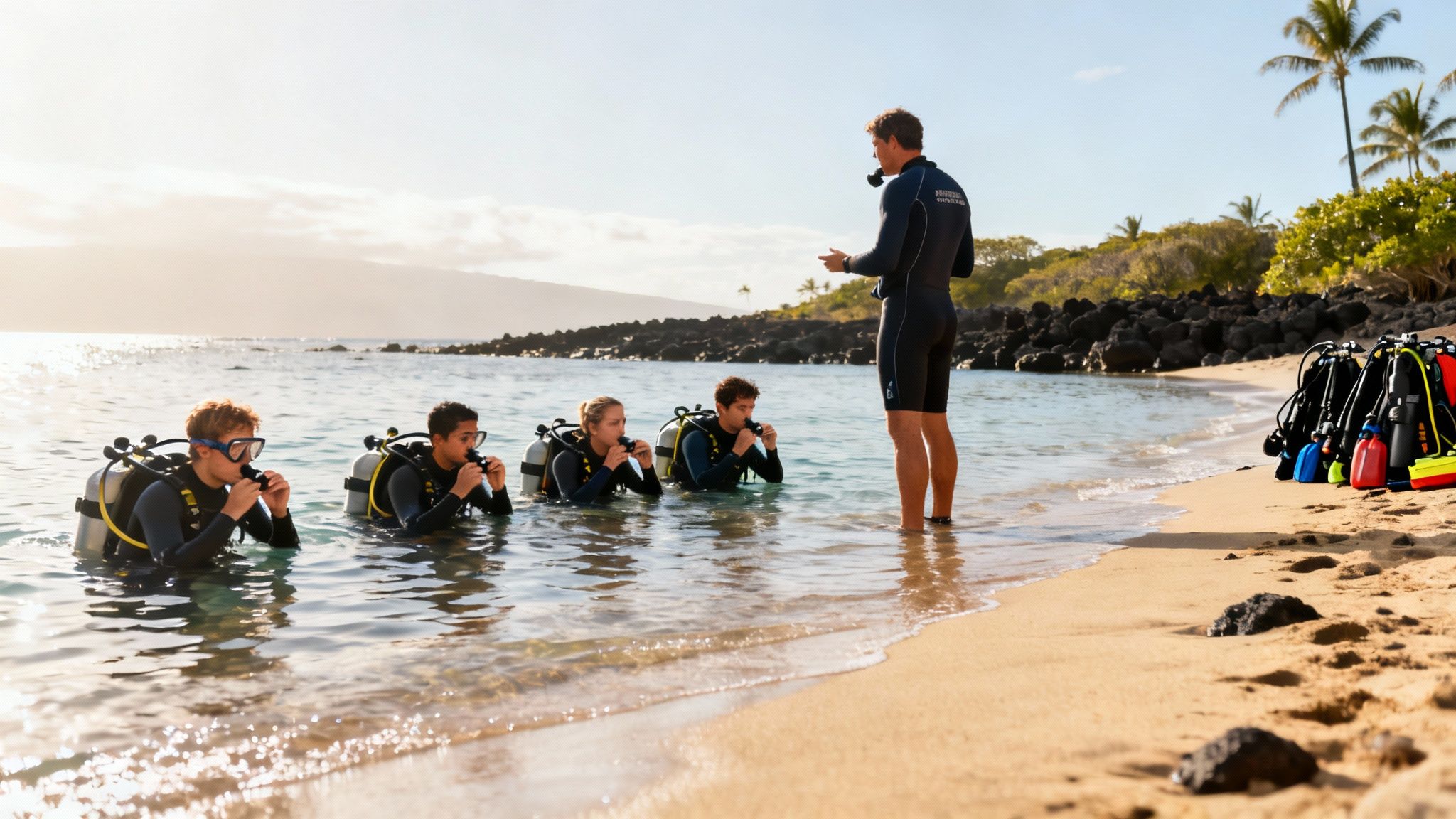
It’s completely normal to have a few butterflies before your first dive. But knowing what the day holds can turn those jitters into pure, bubbling excitement. Whether you’re trying a Discover Scuba Dive or kicking off your certification, the whole process is designed to be calm, fun, and confidence-boosting.
Your day will start on land (or on the boat) with a relaxed briefing. Your instructor isn't going to lecture you; they'll walk you through the plan, explain the basic science of diving in simple terms, and get you acquainted with the gear. Don't stress about memorizing every little detail—the goal is just to get comfortable.
Next up, you’ll get fitted for your equipment. The dive crew will help you find the right mask, fins, and wetsuit. Pay special attention to the mask; a good fit is the key to seeing clearly and feeling comfortable underwater. If it pinches or feels loose, speak up!
Your First Breaths and Basic Skills
Before heading out to the reef, you’ll practice a few essential skills in shallow, calm water where you can easily stand up. This is the fun part. Your instructor will have you kneel on the sandy bottom to try breathing from your regulator, clearing a little water from your mask, and finding your regulator if it pops out of your mouth.
This is where the magic really begins. Taking that first full, easy breath while you’re totally submerged is a feeling you will never, ever forget. You'll also learn the basics of buoyancy, which lets you float effortlessly like an astronaut. It’s a sense of weightlessness and freedom unlike anything else.
The most important thing you can do all day is trust your guide. These are highly trained professionals whose entire job is to keep you safe and make sure you have an amazing time. Stay close, follow their lead, and use the simple hand signals they teach you.
The Ultimate Beginner-Friendly Night Dive
Once you have your certification—even if it's brand new—an incredible adventure is waiting for you: the Manta Ray Night Dive. This world-famous experience is surprisingly beginner-friendly and, honestly, an absolute must-do. You'll descend at twilight and gather around a designated underwater "campfire" of bright lights, which attract swarms of plankton.
Before long, the giant, graceful manta rays arrive. They swoop and glide just inches above your head, performing an underwater ballet as they feed on the illuminated plankton. It's a breathtaking, humbling, and unforgettable spectacle.
For this encounter, Garden Eel Cove is the superior choice. The site is more protected, which usually means calmer conditions. Even better, the underwater landscape creates a natural amphitheater for viewing the mantas up close against healthier reefs. It just makes for a more comfortable and visually stunning experience. If you’re ready to see it for yourself, check out the amazing manta ray dive tours available.
Choosing The Right Dive Shop In Kona
Picking the right dive operator for your first plunge is a bigger deal than you might think. Honestly, it can make or break your entire experience. A great shop doesn't just get you in the water; they build your confidence and turn a fun day into a memory you'll never forget.
When it comes to Big Island scuba diving for beginners, you have to prioritize quality instruction and an unwavering focus on safety over just finding the cheapest deal. Think of your dive shop as your guide to a whole new world—you want a team that makes you feel comfortable, safe, and completely supported from the get-go.
What To Look For In A Kona Dive Operator
For a first-timer, nothing beats personalized attention. My advice? Hunt for operators that intentionally keep their group sizes small. A lower student-to-instructor ratio is a game-changer. It means your instructor has the time to answer all your questions, fine-tune your skills, and make sure you're feeling good every step of the way.
Here are a few things that signal you're looking at a top-notch operation:
- PADI 5-Star Designation: This isn't just a sticker on the window. It’s a hard-earned rating from PADI that means the shop meets high standards for safety protocols, training quality, and customer service. It's a reliable shortcut to finding the pros.
- Seasoned Instructors: Look for a team that has been doing this for a while. You want career instructors who are passionate about diving, not just someone working a summer gig. Their depth of experience is invaluable for making learning fun and handling any situation that might pop up.
- A Focus on Conservation: Dive shops that genuinely care about the ocean usually offer a much richer experience. They don't just teach you the mechanics of diving; they teach you how to be a respectful visitor to the reef and its inhabitants.
Why Kona Honu Divers Stands Out For Beginners
If you want a truly fantastic first dive, Kona Honu Divers is a name that comes up again and again for a reason. They are a PADI 5-Star Instructor Development Center—the highest rating a dive shop can possibly achieve. That alone speaks volumes about their dedication to exceptional training and safety.
They've built a stellar reputation for their beginner programs, and their instructors are known for being incredibly patient and genuinely excited to share their love for Kona's underwater world. They just get how to create an introduction to scuba diving that is safe, fun, and absolutely memorable.
But don't just take my word for it—see what other divers are saying.
Ultimately, you need to find a shop that feels right for you. For a more detailed breakdown and comparison, this guide on the top-rated Kona dive shops is a huge help. Choosing wisely is the first step to ensuring your first underwater adventure is everything you hoped for and more.
Essential Gear And Preparation For Your First Dive
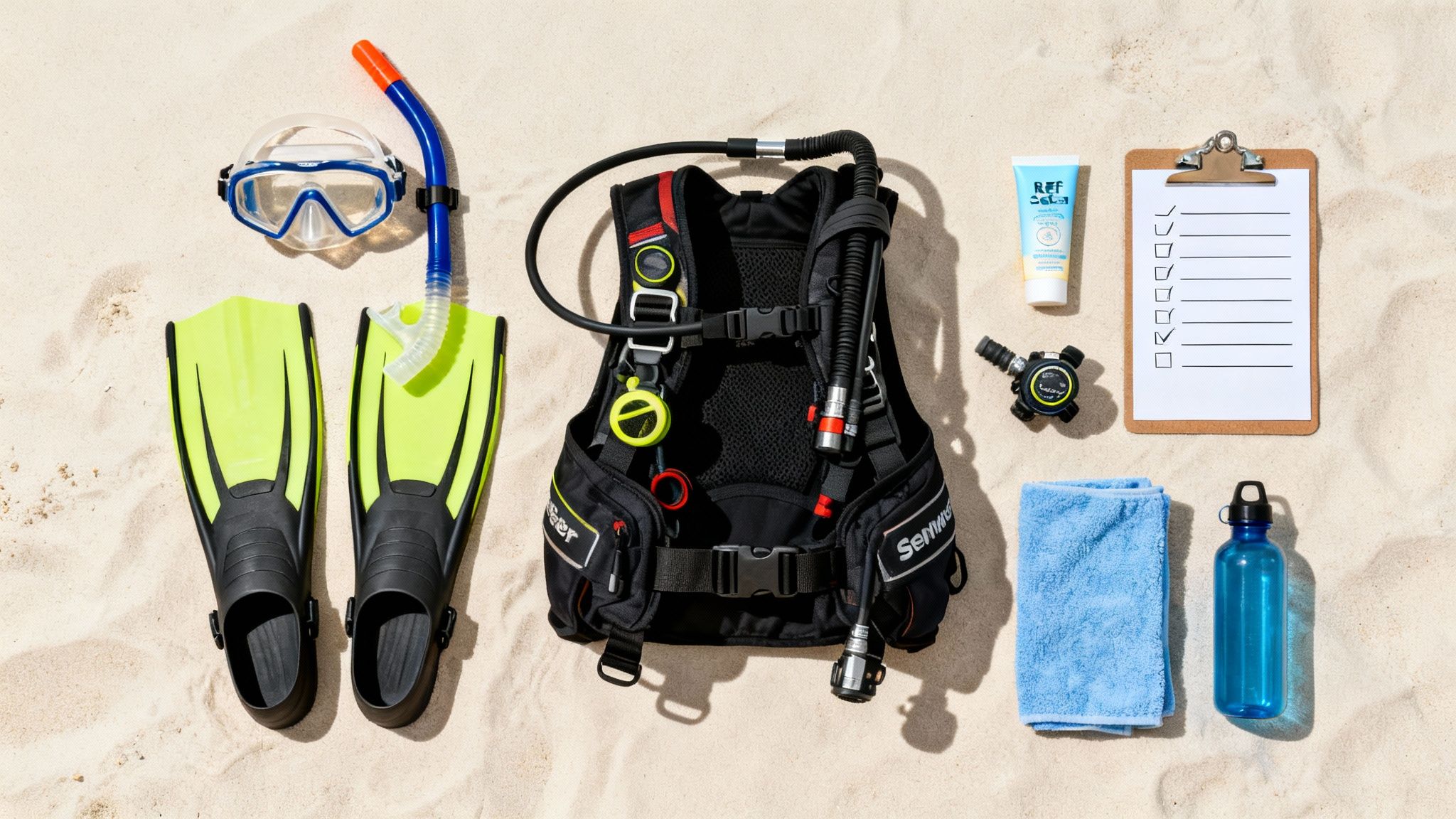
A little preparation goes a long way in turning any pre-dive nerves into pure excitement. Knowing what to expect—from the paperwork to the gear—lets you relax and just focus on the incredible experience waiting for you just beneath the waves.
The first thing you’ll do on dive day is fill out a straightforward medical questionnaire. It’s absolutely critical to answer every question honestly, as some health conditions can be risky underwater. This isn't just red tape; it’s about making sure everyone has a safe and fantastic time.
What to Toss in Your Dive Bag
Your dive operator will handle all the heavy scuba equipment, but you'll want to bring a small day bag with your personal stuff. A simple checklist can help you show up feeling cool, calm, and collected.
- Reef-Safe Sunscreen: This is non-negotiable. Standard sunscreens contain chemicals that literally kill coral reefs. Always go for a mineral-based option to protect your skin and our precious marine life.
- Towel and Dry Clothes: Nothing feels better than a warm towel and a fresh shirt after a dive. You’ll be especially glad you packed them on the boat ride back to shore.
- Reusable Water Bottle: Hydration is a diver's best friend. Bring plenty of water to sip on before and after you get in the water.
- Sunglasses and a Hat: The Hawaiian sun doesn't play around. You'll need these to stay comfortable on the boat.
For a more detailed look at other useful items, check out this guide on essential gear for your Big Island underwater adventure.
Demystifying Your Scuba Gear
Your instructor will give you a full hands-on tour of your equipment, but it helps to have a basic familiarity with the key pieces. Think of it as a "meet and greet" with the tools that will let you breathe and move underwater.
Mask & Fins: Your mask is your window to the underwater world, creating a pocket of air so you can see clearly. Your fins are your engine, giving you powerful, efficient propulsion through the water. A good fit on the mask is everything!
The Regulator is the genius piece of equipment that delivers air from your tank. It has the primary "second stage" that goes in your mouth and a backup, called an octopus, for your dive buddy.
Your Buoyancy Control Device (BCD) is the vest you'll be wearing. By adding or releasing small amounts of air, it lets you float comfortably on the surface or hover perfectly weightless over the reef, like an astronaut in inner space.
The more you understand these items, the more confident you'll feel. Imagine yourself gearing up at Honaunau Bay, a spot that's been a go-to for new divers since the early 2000s. Its lava-rock entry and calm, shallow waters are ideal for getting comfortable with everything. For a more detailed breakdown, you can learn more about the gear you will need for your Kona diving adventure to feel completely dialed in.
Answering Your Beginner Scuba Diving Questions
It's totally normal to have a few questions before you take the plunge—in fact, it's a great sign! It shows you’re taking the experience seriously. We've heard just about every question in the book, so we’ve put the most common ones right here to help you feel confident and excited before you even smell the salt air.
Think of this as your personal pre-dive briefing. We'll tackle everything from safety and swimming skills to those little butterflies you might feel.
Is Scuba Diving Safe For Beginners?
Yes, absolutely. Scuba diving has an incredible safety record, especially when you’re with a certified professional, follow their guidance, and use well-maintained gear. It's not a free-for-all down there.
Your first dives will always be in calm, shallow water chosen specifically to keep things safe and comfortable. Your instructor's number one job is your safety. They are highly trained professionals who stick by your side, manage your gear, and guide you through every single step.
Do I Need To Be A Strong Swimmer To Scuba Dive?
You definitely don't need to be an Olympic swimmer, but you should be comfortable in the water. The key is feeling relaxed, not anxious, when you're in an aquatic environment.
- For a Discover Scuba Dive: Honestly, you just need to be comfortable enough to float. Your gear does all the heavy lifting, making you buoyant and helping you move with very little effort.
- For a full certification course: You’ll have to do a basic swim and float test to show you can handle yourself in the water, but it’s not a race or a competition.
The real secret to diving isn't powerful swimming; it's all about slow, calm breathing and gentle fin kicks. Your fins provide the push and your buoyancy device handles the floating. You just get to chill and enjoy the view.
Will My Ears Hurt When I Dive?
This is probably the question we get asked the most. The answer is a firm no, as long as you equalize properly! You will feel a bit of pressure in your ears as you go down, just like when a plane takes off or lands.
Your instructor will teach you a super simple trick called "equalizing" before you even get wet. All you do is pinch your nose and blow gently. This instantly relieves the pressure. You'll do it early and often on your way down, and it becomes second nature in no time.
What If I Feel Scared Or Panicked Underwater?
Feeling a little nervous is completely understandable. After all, breathing underwater is a whole new world! It’s a feeling many new divers have at first.
The most important thing to remember is that your instructor is right there with you. They are trained specifically to help you stay calm and work through any anxiety. They’ll be in constant contact, checking in with hand signals. If you feel even a little uncomfortable, you just let them know. Breathe slow, stay steady, and trust your guide—they've got your back.
Of course, beyond the personal thrill of diving, many newcomers ask how they can be responsible ocean visitors. Learning about strategies to stop water pollution is a fantastic step. It helps protect the very reefs you're about to fall in love with, ensuring they stay vibrant for future generations of divers.
Here at Kona Honu Divers, we specialize in making that first dive an amazing, supportive, and fun experience. Our instructors are passionate about sharing the magic of Kona's underwater world. If you're ready to get your fins wet, take a look at our Big Island diving tours and book an adventure you'll never forget.