
Picture this: you're floating, completely weightless, in warm, crystal-clear water. A majestic green sea turtle glides by, and all around you, vibrant coral reefs teem with life. This isn't a dream—it's what Big Island scuba diving for beginners feels like, and the Kona coast is hands-down one of the best places on the planet to experience it.
The famously calm, protected waters and mind-blowing biodiversity here create the perfect classroom for anyone taking their first breath underwater.
Why Kona Is Perfect For Your First Dive
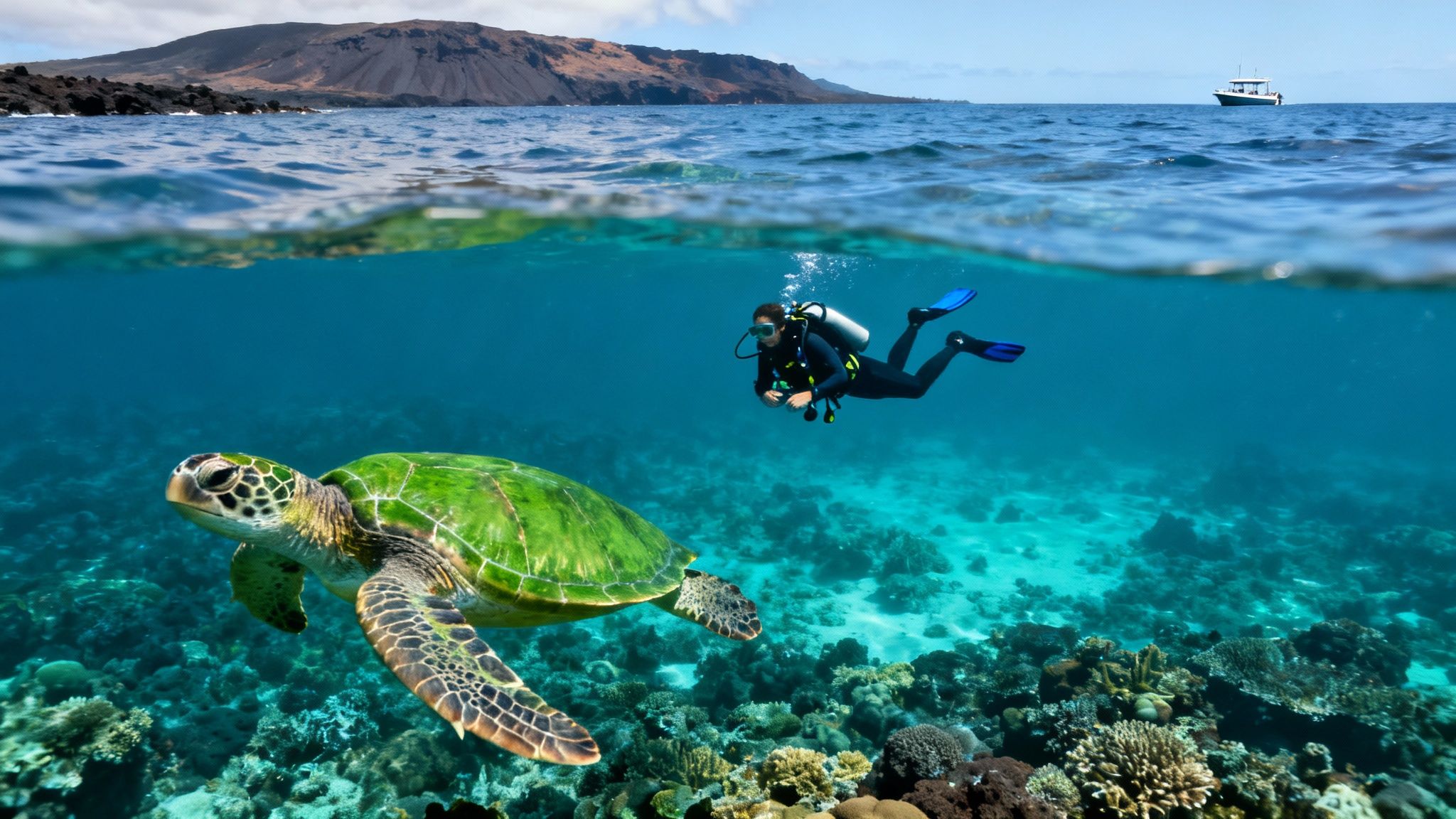
So, what makes the Big Island, and the Kona coast in particular, so special for new divers? It’s a unique combination of geography and geology that you won’t find just anywhere.
Our western shoreline is nestled in the protective shadow of the massive Mauna Loa and Hualālai volcanoes. This incredible natural barrier blocks the gusty trade winds, leaving us with exceptionally calm and clear seas pretty much year-round.
For anyone just starting out, that calm water is everything. It helps wash away any pre-dive jitters, makes practicing your skills a breeze, and lets you focus on the amazing world around you instead of battling waves. Visibility often stretches beyond 100 feet, so you get a stunning panoramic view of the underwater landscape the second you dip below the surface.
An Underwater Paradise Awaits
Beyond the glass-like conditions, Kona’s marine world is simply on another level. The island's volcanic past has sculpted a dramatic underwater playground of lava tubes, ancient archways, and sprawling coral gardens. This unique environment is home to an incredible amount of marine life, and a surprising amount of it can't be found anywhere else on Earth.
When you learn to dive in Kona, you’re not just checking skills off a list; you're on a genuine underwater safari.
- Hawaiian Green Sea Turtles (Honu): You're almost guaranteed to spot these gentle giants. Seeing one cruise effortlessly past you is a moment you'll never forget.
- Vibrant Reef Fish: The reefs are a kaleidoscope of color, with huge schools of bright yellow tangs, delicate butterflyfish, and rainbow-colored parrotfish.
- Unique Encounters: Keep your eyes peeled for moray eels poking their heads out of crevices, cleverly camouflaged octopuses, and even pods of playful spinner dolphins that frequently swing by our dive sites.
This sheer abundance of life makes every single dive an adventure. Your certification course becomes less about training and more about discovery.
The incredible density of marine life here, paired with the pristine conditions, is what makes Kona a world-class dive destination. We dive into more detail on this in our guide explaining what is unique about diving in Kona.
This guide is your complete roadmap. We'll cover everything from getting certified with a top-notch shop like Kona Honu Divers to exploring the best beginner-friendly sites and even tackling the legendary manta ray night dive. Let’s get you ready for an unforgettable journey.
Choosing Your Path To Becoming A Certified Diver
So, you're ready to explore the underwater world of the Big Island. Awesome. The first big decision is figuring out how you want to start. Luckily, there are two fantastic ways to get your feet wet, each designed for a different kind of adventurer.
Are you just scuba-curious? If you're wondering what it’s like to breathe underwater but aren't quite ready to commit to a full course, the Discover Scuba Diving (DSD) experience is perfect for you. Think of it as a "try dive"—a one-day, guided adventure where an instructor is with you every step of the way. It’s the fastest way to get face-to-face with Kona's incredible marine life.
On the other hand, if you’ve already been bitten by the diving bug and dream of exploring reefs all over the globe, then the PADI Open Water Diver course is your golden ticket. This is the world's most popular and recognized scuba certification. Once you earn this card, you're a certified diver for life, ready for adventure whenever and wherever it calls.
Discover Scuba Vs Open Water Certification At A Glance
Deciding between a quick taste and the full meal really comes down to three things: your time, your budget, and how deep you want your new hobby to go. The DSD is a fantastic, low-commitment option that easily slots into a packed vacation schedule. The Open Water course is more of an investment—a few days of your time for a lifetime of freedom.
To make it even clearer, here’s a quick breakdown to help you find the right fit for your Big Island adventure.
| Feature | Discover Scuba Diving (DSD) | PADI Open Water Certification |
|---|---|---|
| Time Commitment | Just a half-day to one full day | Typically 2-4 days, which includes online learning |
| What You Get | An incredible introduction to scuba with direct supervision | A lifetime certification to dive up to 60 feet (18 meters) |
| Depth Limit | A maximum of 40 feet (12 meters) | A maximum of 60 feet (18 meters) after you're certified |
| Prerequisites | Just need to be comfortable in the water and fill out a medical form | You'll need to swim 200m and float for 10 minutes |
| Best For | Beginners who want to try diving without the commitment | Anyone serious about becoming a certified diver to explore freely |
The Big Island is one of the best places on the planet to learn, welcoming an estimated 150,000 dive tourists every year. The dive shops here, especially in Kona, are absolute pros at making sure your first underwater breaths are safe, comfortable, and unforgettable.
No matter which path you take, your experience hinges on the quality of your instructor and dive shop. A top-notch operator like Kona Honu Divers makes all the difference, focusing on small groups and patient instruction. That kind of supportive environment is exactly what you want when you're starting out.
Ultimately, there's no wrong choice—only the one that feels right for you. If you just want a peek into the magic below, the Discover Scuba Dive is a perfect, low-pressure way to do it. But if you feel that pull to make the ocean your playground, investing in the PADI Open Water course opens up a lifetime of adventure. You can get all the details on becoming a certified diver on our Open Water Certification page.
Where to Go: Kona’s Best Dives for Beginners
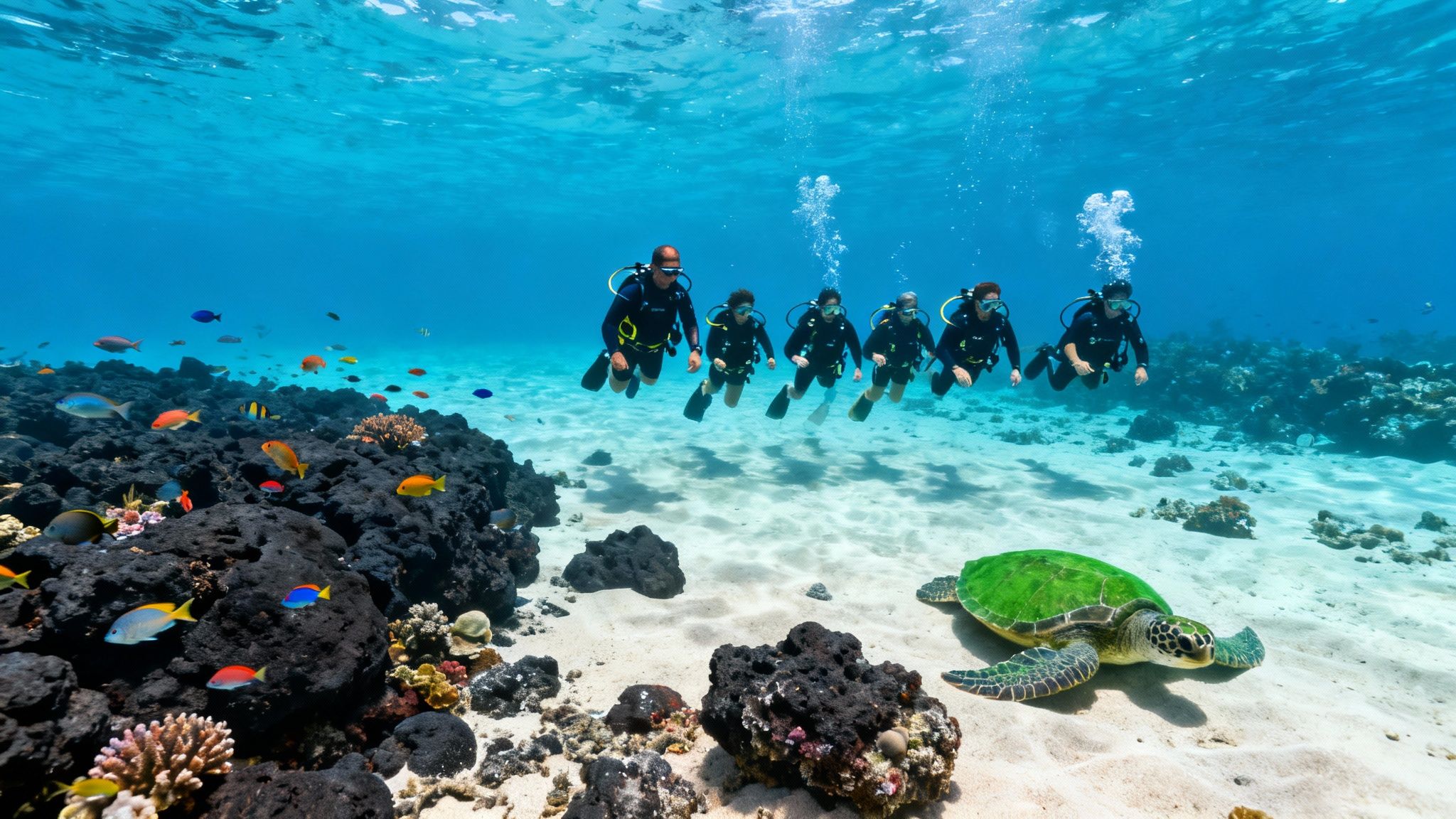
Alright, you're ready to get wet! Kona has an amazing variety of dive sites that feel like they were designed just for beginners. The Big Island's west coast is full of coves and bays shielded from the big ocean swells, which means calm, clear, and predictable conditions.
This is exactly what you want for your first few dives. Going with a seasoned local guide is the best move you can make—they know the currents, the best entry points, and exactly where to find the coolest marine life. Our goal is to make sure your first time underwater is nothing short of incredible.
The best spots for Big Island scuba diving beginners share a few key traits. Most have maximum depths between 30–60 ft and, on a good day, you'll be looking at 50–100 feet of visibility. It's like swimming in an aquarium. You can learn more about what makes these spots perfect for new divers on our full dive site guide.
Kealakekua Bay (Captain Cook Monument)
This isn't just a dive site; Kealakekua Bay is a state historical park and a marine life conservation district. That protected status means the reef is unbelievably healthy and just buzzing with fish. The water is usually crystal clear, and the reef slopes gently away from shore, giving you plenty of space to get comfortable.
- What You’ll See: Giant schools of yellow tang, playful spinner dolphins, and some of the most vibrant coral gardens you'll ever see.
- Best For: New divers who want world-class visibility and a guaranteed high-five with a ton of fish.
Pu'uhonua o Hōnaunau (Place of Refuge)
Most people know this spot as "Two Step" because of the two natural lava rock steps that make for a super easy entry into the water. It’s a shallow, protected bay where coral heads and lava formations create a fascinating underwater maze. But the real stars here are the turtles.
This place is an absolute dream for turtle lovers. You'll likely see several Hawaiian green sea turtles just chilling on the bottom or gliding gracefully past you. It makes for a first dive you’ll never, ever forget.
Kailua Bay (Pawaina Bay)
Conveniently located right near town, Pawaina Bay is a hidden gem that’s perfect for beginners. It has a shallow, sandy bottom near the entry point, which is an ideal spot to practice your skills without worrying about bumping into delicate coral. Swim a little further out, and you’ll find beautiful reef structures and a surprising amount of critters, like eels and octopuses hiding in the rocks.
Diving with a trusted operator like Kona Honu Divers makes all the difference when you're just starting out. Our guides are obsessed with safety and know all the secret nooks where the marine life congregates. Let us introduce you to Kona’s underwater magic on one of our daily dive tours.
The Unforgettable Kona Manta Ray Night Dive
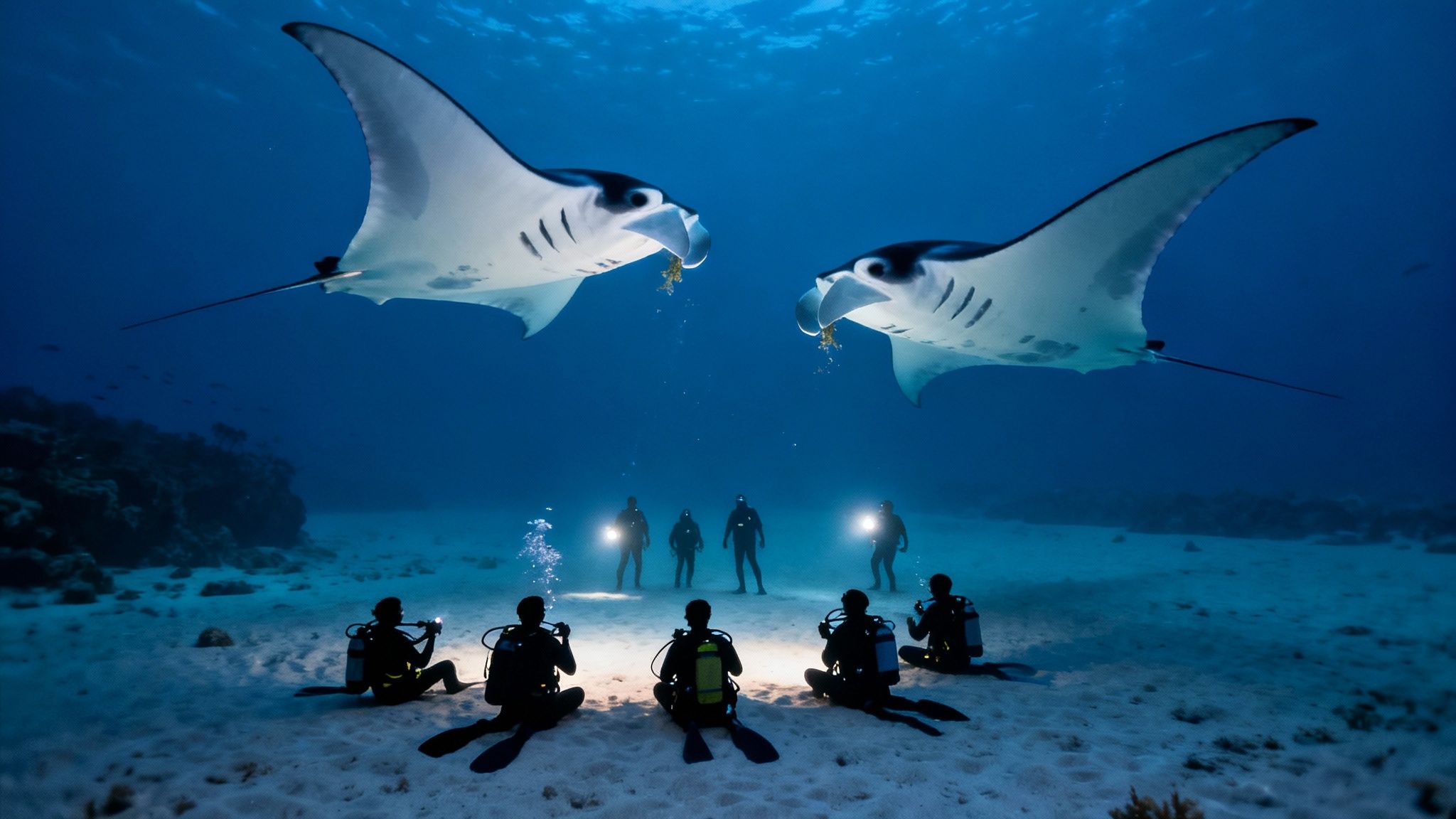
If there's one experience that defines Big Island diving, it's the Kona manta ray night dive. It’s world-famous for a reason, and the best part is that you don’t need years of experience to do it. It’s absolutely beginner-friendly and truly a must-do.
The concept behind it is pure genius. Powerful, purpose-built lights are placed on the ocean floor. These light beams attract huge clouds of plankton—the favorite meal of our local manta rays.
As a diver, you get a front-row seat. You’ll descend with your guide to a sandy spot, get comfortable, and simply watch the show unfold. Before you know it, these majestic giants, with wingspans that can stretch over 12 feet, emerge from the darkness. They glide, swoop, and perform an effortless underwater ballet, often just inches above your head. It’s a peaceful, awe-inspiring, and frankly, otherworldly spectacle.
This isn’t some hit-or-miss wildlife tour. It’s one of the most reliable large animal encounters on the planet. Operators consistently report manta sighting rates between 80–95% at the main sites. You can even check out the local manta sighting reports to see how things are going.
Why Garden Eel Cove Is The Premier Choice
You might hear about a couple of different spots for the manta dive, but for my money, Garden Eel Cove is the best, hands down. This is especially true if you're new to night diving. The site is located just north of the airport in a naturally protected bay, which almost always means calmer water and a much smoother boat ride.
At Garden Eel Cove, the viewing area has earned the nickname "the campfire." All the divers gather in a circle on a clean sand patch, creating a massive, centralized column of light that works like a magnet for plankton. This setup gives everyone an incredible, unobstructed view of the action.
Beyond the viewing experience itself, the reef here is just healthier and more vibrant than at other manta locations. That makes the sunset dive you do right before the main event a fantastic dive in its own right. When you combine the calmer seas, better viewing setup, and beautiful reef, Garden Eel Cove is the undisputed winner.
A Safe And Guided Experience For Beginners
I get it—the idea of getting in the ocean at night can sound a little intimidating at first. But trust me, the manta dive is one of the safest and most controlled night dives you could ever do.
The whole thing is stationary. There’s no swimming around in the dark trying to find your way. You just descend with your guide, find your designated spot on the sand, and enjoy the show.
When you dive with an expert crew like Kona Honu Divers, you are in the best possible hands. Their divemasters give a fantastic briefing beforehand, make sure everyone is completely comfortable in the water, and manage the entire dive with practiced precision. They handle all the lights and logistics, so your only job is to breathe and be amazed. It's this level of professional guidance that makes the dive a perfect fit for a newly certified Open Water diver.
This isn't just another thing to tick off your Big Island scuba diving beginners list. It’s a profound connection with nature you’ll be talking about for years. To get a deeper look at the whole experience, check out our complete guide to the Kona Manta Ray Night Dive.
How To Prepare For Your First Kona Dive
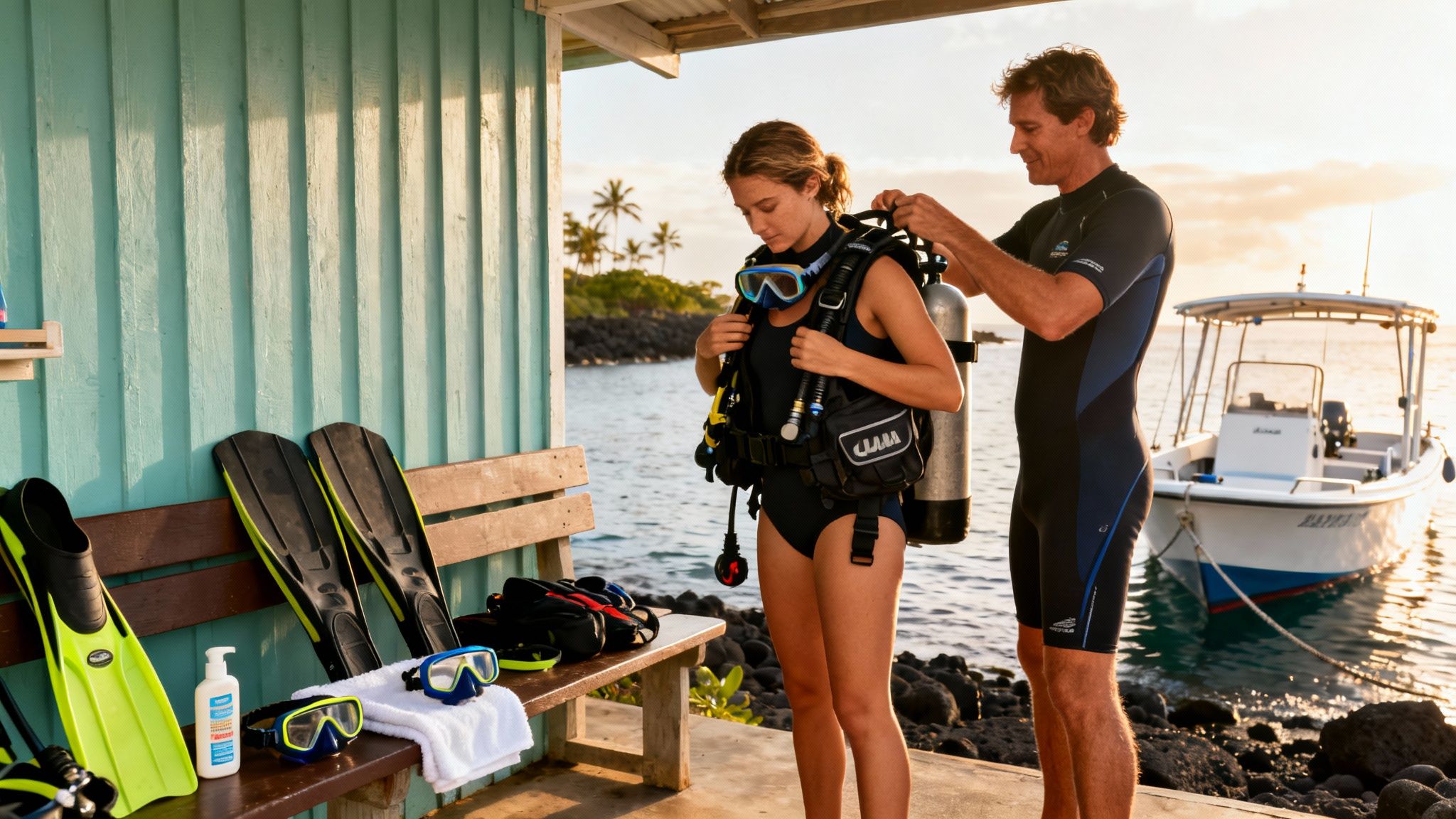
Knowing what’s coming on dive day can make all the difference. It helps turn those pre-dive jitters into pure, focused excitement. A little bit of prep goes a long way toward making your first underwater adventure on the Big Island as smooth and memorable as possible.
So, let's walk through what to expect, from what to pack to the moment you take that first giant stride into the water.
What to Pack for a Day on the Water
You really don't need to bring a ton of stuff. All the heavy, technical scuba equipment is provided for you, so your focus should be on personal comfort for a few hours out on the boat.
Here's a quick checklist of what I always tell my new divers to bring:
- Swimsuit: The easiest thing is to just wear it under your clothes when you show up.
- Towel: A small, quick-dry one is perfect.
- Reef-Safe Sunscreen: This is non-negotiable. The chemicals in regular sunscreen are incredibly damaging to our fragile coral reefs.
- A Change of Clothes: Something dry and warm for the boat ride back is always a good feeling.
- Water & Snacks: Most charters have snacks and drinks, but having your own bottle of water is never a bad idea.
Understanding Key Safety Protocols
Your safety is, without a doubt, the number one priority. Before you even think about getting in the water, a couple of crucial safety checks will happen. First, you'll fill out a standard medical questionnaire. Be honest here—it’s designed to make sure there aren't any health conditions that could cause problems under pressure. It’s all about keeping you safe.
The second big rule is about flying after you dive. Because of how your body absorbs nitrogen underwater, you need to wait at least 18 hours after your last dive before getting on a plane. This is a hard-and-fast rule. Just plan your dive for the beginning or middle of your trip, not the very last day.
Remember, these aren't just arbitrary rules. They are globally recognized safety standards that prevent serious conditions like decompression sickness. Following them ensures your dive adventure ends with a smile.
The Flow Of Your Dive Day
Once you get to the dive shop, things move along a pretty established rhythm. You'll check in, finish up any paperwork, and then get fitted for your gear.
Your instructor will grab you a wetsuit, mask, and fins. Don't be afraid to speak up if something doesn't feel right! A leaky mask or fins that are too tight can be a real nuisance, and we want you to be comfortable.
After that, it's off to the boat for a briefing. The captain and crew will go over boat safety, the dive plan for the day, and review the essential hand signals you'll use underwater. This is the perfect time to ask any final questions you might have.
Then, it's the moment you've been waiting for: time to gear up and take that giant stride off the boat and into the incredible blue of the Pacific. Your instructor will be right there with you every step of the way, guiding your descent and pointing out all the amazing marine life that makes Kona diving so special.
Frequently Asked Questions for Beginner Divers
It's completely normal to have a ton of questions before your first scuba dive. Let's run through some of the most common things people ask before exploring Kona's underwater world, so you can feel totally prepared before you even step on the boat.
Is Scuba Diving in Kona Safe for Beginners?
Absolutely. In fact, Kona is one of the best places in the world to learn. The massive volcanoes on the Big Island act as a natural barrier, shielding the coastline from the heavy trade winds you find on other Hawaiian islands. This means the water is usually calm, clear, and has very little current—perfect conditions for new divers.
Of course, the dive operator you choose makes all the difference. At Kona Honu Divers, we keep our groups small and always have certified professionals right there with you. We run through everything on the boat before you even touch the water. It’s a controlled, supportive environment designed to make your first Big Island scuba diving experience as safe and fun as possible.
What Kind of Marine Life Will I See?
Get ready for an incredible show. Kona's volcanic history created a dramatic underwater landscape full of lava tubes and arches that you just don't see anywhere else. And these structures are bursting with life.
Even on your very first dive, you’re almost guaranteed to encounter some amazing animals. We’re talking about:
- Hawaiian Green Sea Turtles (Honu): Seeing these gentle giants gracefully gliding by is an experience you'll never forget.
- Colorful Reef Fish: Expect to be surrounded by vibrant schools of butterflyfish, parrotfish, and bright yellow tangs.
- Other Encounters: Keep your eyes peeled! It's common to spot eels peeking out from crevices, octopuses camouflaging themselves, and sometimes even spinner dolphins or majestic eagle rays.
Do I Need to Be a Strong Swimmer to Scuba Dive?
You don't need to be Michael Phelps, but you do need to be comfortable in the water. Think of it less as a swimming test and more as a basic water-comfort check. We just need to know you can handle yourself in an aquatic environment before we add all the gear.
PADI, the world's leading scuba training agency, sets a clear standard for certification. You’ll need to show that you can:
- Float or tread water for 10 minutes without any help.
- Swim 200 meters (or 300 meters if you use a mask, fins, and snorkel) without stopping.
Don’t stress about this part. It’s not a race, and there’s no time limit on the swim. It’s just a practical way to ensure you have the foundational water skills needed to dive safely and confidently.
Ready to take that first breath underwater? The crew at Kona Honu Divers is excited to show you the ropes. Take a look at our full range of beginner-friendly dive tours and let's get you in the water.