
Picture this: you're floating, completely weightless, in warm, brilliantly clear water. A school of vibrant yellow tangs drifts by, and a curious turtle swims past just a few feet away. For anyone new to scuba diving, this isn't some far-off dream—it's exactly what your first dive on the Big Island can be. The Kona coast is truly a world-class spot to learn, with calm, protected bays that feel like a natural, stress-free classroom.
Taking Your First Breath Underwater
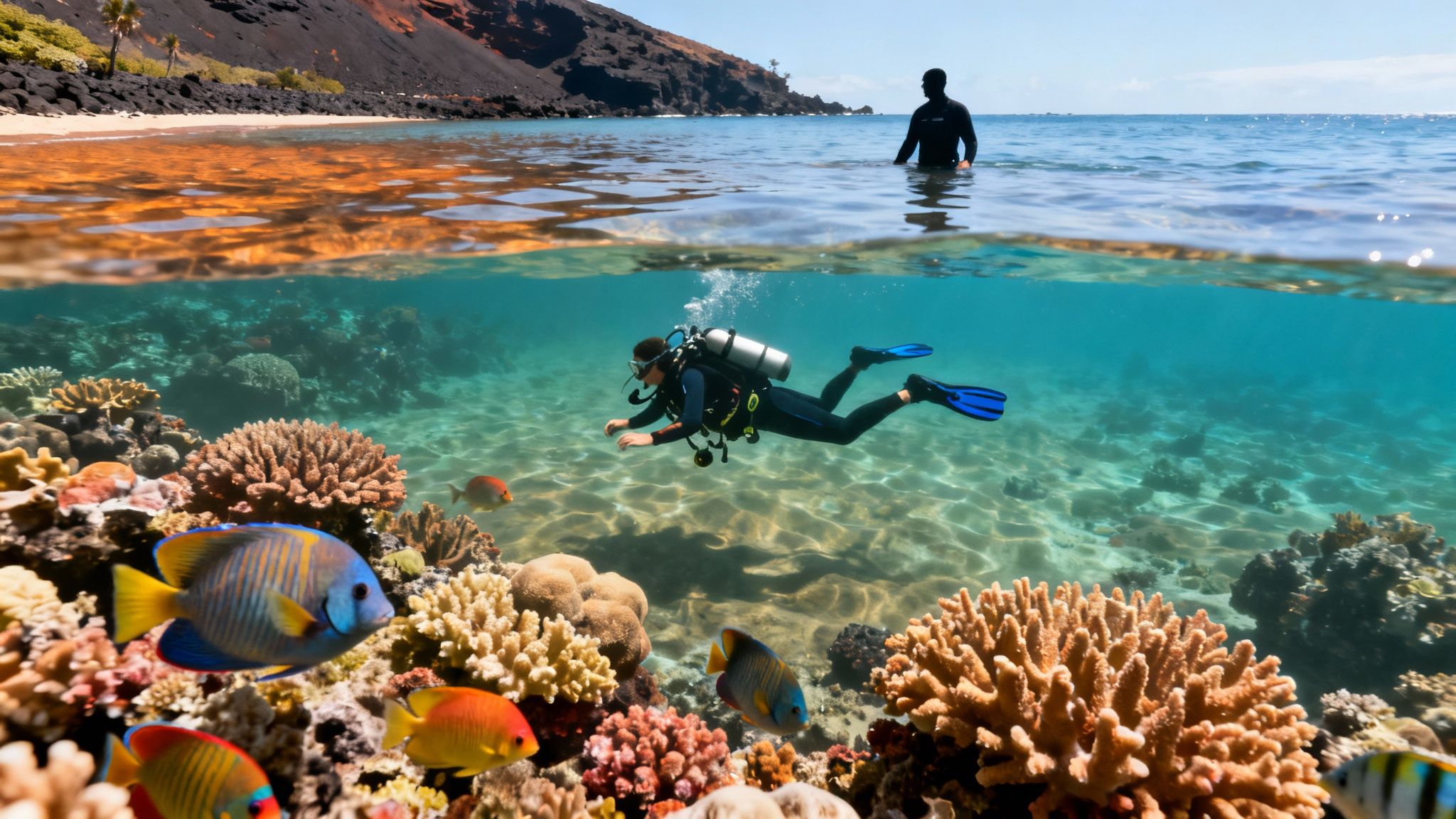
There's nothing quite like the feeling of taking your first breath underwater. It's a surreal and magical moment, and there’s no better place to experience it than right here on the Big Island. Our Kona coast is shielded from the prevailing winds by the massive volcanoes Mauna Loa and Hualalai, which means we get consistently calm and clear conditions almost every day of the year.
This natural protection means you're not fighting choppy waves or strong currents. You can just relax and focus on the incredible world unfolding around you.
The underwater landscape here is something special, shaped by ancient lava flows that have created dramatic arches, hidden caverns, and sprawling coral gardens. This unique topography isn't just stunning to look at; it creates perfectly sheltered spots that are absolutely teeming with marine life.
What Makes Kona a Beginner's Paradise
So, what makes Kona stand out? It's that perfect mix of ideal conditions and unbelievable sea life. Even on your very first dive, you can expect:
- Amazing Visibility: The water is often so clear that you can see over 100 feet ahead. For new divers, this makes a huge difference in building confidence and lets you spot wildlife from a comfortable distance.
- Warm, Comfortable Water: With ocean temperatures hovering between 75-80°F (24-27°C) year-round, you can stay in the water longer without getting chilled. Just pure comfort.
- A Ton of Marine Life: Even in the shallow, easy-to-access spots we take beginners, you're almost guaranteed to see schools of colorful reef fish, Hawaiian green sea turtles (honu), and maybe even a graceful eagle ray gliding by.
Diving Without a Certification
Not certified? No problem. The Big Island has become a go-to destination for introductory scuba training, making it super accessible for anyone who's just curious.
Programs like the Discover Scuba Diving experience let you safely explore down to 40 feet with a dedicated instructor right by your side—no need to commit to a full certification course. The island's famously calm bays, like the Kealakekua Bay Marine Life Conservation District, are the perfect setting for these first dives.
When you're starting out, choosing the right dive operator is everything. Going with a reputable shop like Kona Honu Divers ensures you're in safe hands. Our guides specialize in working with first-timers, making sure you feel comfortable, confident, and excited from start to finish. We truly believe this focus on a positive, safe experience is what makes Big Island scuba diving for beginners an adventure you'll never forget.
Certification or Discovery Dive: Which Is Right for You?
So, you're ready to take the plunge into the incredible underwater world of the Big Island. That’s fantastic! The first big decision you'll face is whether to dip your toes in with a Discover Scuba Dive in Kona or go all-in for your full PADI Open Water certification.
Honestly, there’s no wrong choice here. It really boils down to your vacation schedule, your budget, and whether you think diving might become your new favorite hobby.
What's a Discover Scuba Dive (DSD) All About?
Think of the Discover Scuba Dive as the ultimate "try before you buy." It’s a half-day adventure designed for people who have zero experience but are dying to see what it's like to breathe underwater.
You'll get a quick, straightforward briefing on the essential skills and safety basics from a professional instructor. Then, you're off to a beautiful, shallow reef for a real dive under their direct supervision. It’s all the thrill without the long-term commitment.
- Time: Perfect for a single morning or afternoon—just a few hours.
- Depth: Your instructor will guide you on a controlled dive, never going deeper than 40 feet (12 meters).
- The Takeaway: You'll leave with an incredible memory and some amazing photos, but not a certification card. It's a one-time experience.
This is the perfect option if your vacation is packed and you just want a taste of Kona's vibrant marine life.
What Does PADI Open Water Certification Involve?
If you've already been bitten by the scuba bug and can't wait to explore more, the Open Water certification is your ticket to a lifetime of adventure. This is the real deal—a comprehensive course that makes you a certified, independent diver.
The process is more involved. It starts with online learning you can do at your own pace, followed by in-water training where you'll master essential skills in a calm environment. The final step is completing four amazing dives in the open ocean to put it all into practice.
- Time: Plan for about 3-4 days of your trip dedicated to the course.
- Depth: Once you're certified, you can confidently dive with a buddy anywhere in the world to a maximum depth of 60 feet (18 meters).
- The Takeaway: You earn a permanent certification that’s recognized globally. You're officially a scuba diver!
This path requires a bigger investment of time and money, but the freedom it gives you is priceless. You'll be able to plan dive trips, explore wrecks, and join advanced dives for years to come.
Discover Scuba Diving vs PADI Open Water Certification
Making the decision can feel tough, so let's break it down side-by-side. This table highlights the key differences to help you figure out which experience fits your Big Island vacation plans.
| Feature | Discover Scuba Diving (DSD) | PADI Open Water Certification |
|---|---|---|
| Best For | Curious beginners, those short on time, or "bucket listers" | Aspiring divers who want a lifelong hobby |
| Time Commitment | A few hours (half-day) | 3-4 full days |
| Prerequisites | None! Just a willingness to try something new. | Basic swimming ability and medical fitness |
| What You Learn | The absolute basics of safety and breathing underwater | Comprehensive skills for independent diving |
| Maximum Depth | 40 feet (12 meters) with an instructor | 60 feet (18 meters) with a certified buddy |
| Outcome | An amazing, guided underwater experience | A permanent, worldwide scuba certification |
| Can you Dive Again? | No, it's a one-time experience. You'd have to repeat it. | Yes! You are certified to dive with a buddy anywhere. |
Ultimately, choosing between a discovery dive and full certification is about deciding between a single, incredible memory and unlocking a new passport to explore 70% of our planet.
Many people start with a Discover Scuba Dive, fall in love with the feeling, and immediately sign up for the full Open Water course on their next trip. Others know from the start that they're ready to become divers. Both paths lead to the same magical place: beneath the waves.
Where to Dive: The Best Big Island Spots for New Divers
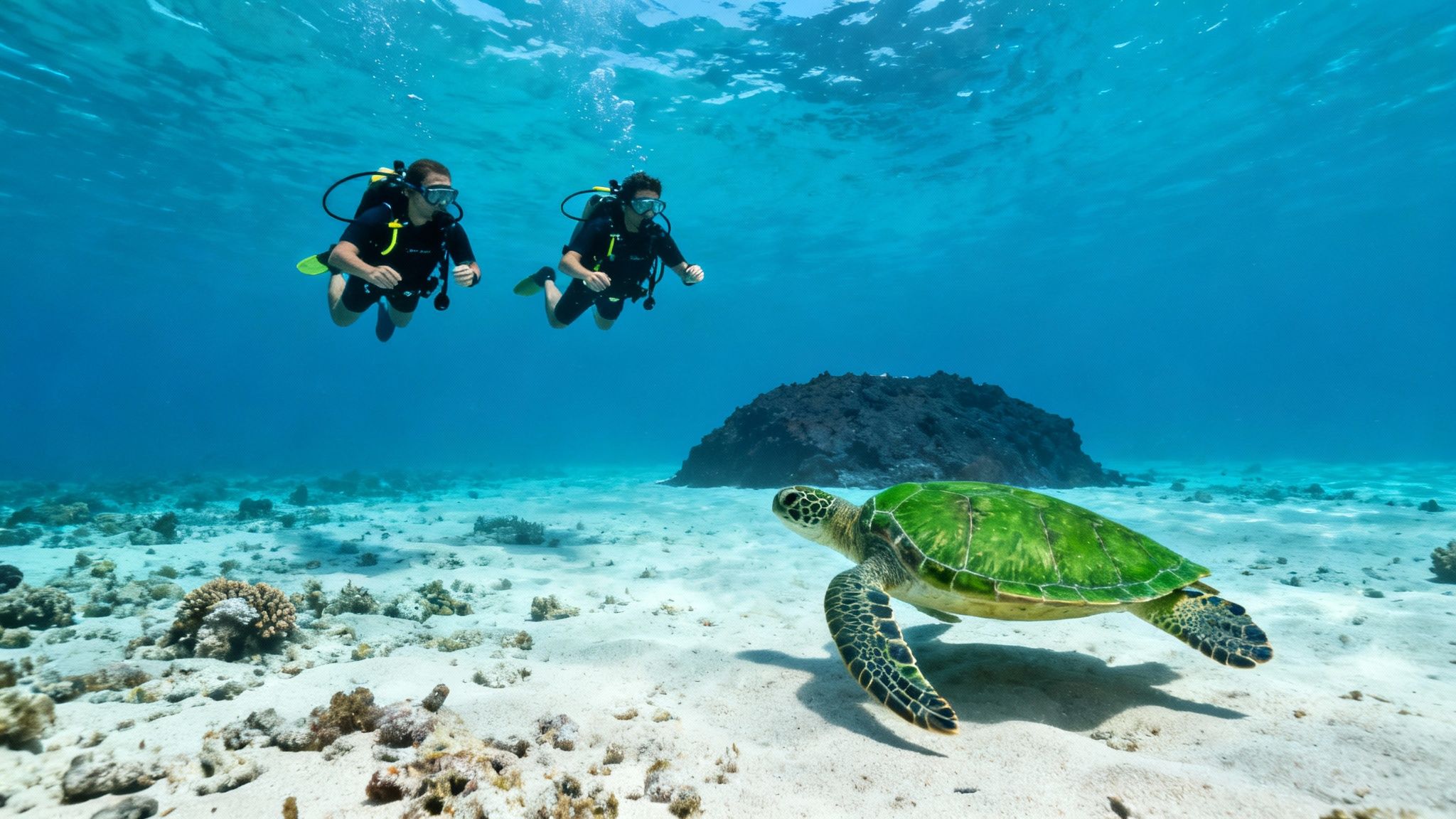
The Kona coast is legendary in the diving world, and for good reason. What many people don't realize is that some of the most spectacular sites are also incredibly beginner-friendly. You don't need years of experience to see the best of Hawaii's underwater world.
When you're starting out, you want calm water, great visibility, and plenty to see at shallower depths. That's exactly what Kona offers. Forget fighting strong currents or needing to go deep—these sites are all about relaxed exploration, letting you focus on your breathing and the incredible marine life all around you. You’ll be floating over ancient volcanic lava tubes and vibrant coral gardens in no time.
Pawai Bay and Turtle Pinnacle
One spot we return to again and again with new divers is Pawai Bay. This large, sheltered area has a handful of fantastic dive sites, but the real star of the show is Turtle Pinnacle.
They don't call it "Turtle Heaven" for nothing! It’s a natural "cleaning station" where Hawaiian green sea turtles, or honu, gather. You just settle in on the sandy bottom and watch as these graceful creatures queue up to let small reef fish nibble algae and parasites off their shells. The water is calm and the depth is perfect for your first few dives, making it an ideal place to get comfortable with your buoyancy while enjoying an unforgettable wildlife encounter.
Kealakekua Bay
Another must-see is Kealakekua Bay, which is a protected Marine Life Conservation District. The protected status means fishing is restricted, and the results are stunning. The fish are more abundant, the coral is healthier, and the whole ecosystem is teeming with life.
The bay is so well-sheltered that the conditions are nearly always pristine. The water clarity is often incredible, giving you a crystal-clear view of the entire reef city and all its bustling inhabitants.
For a first or second dive, it’s hard to beat the calm, aquarium-like conditions you’ll find here.
The World-Famous Manta Ray Night Dive
Yes, you read that right. The legendary Manta Ray Night Dive is absolutely doable for beginners, and it’s an experience you will talk about for the rest of your life. After the sun goes down, you'll descend to a well-lit underwater "campfire" where lights attract swarms of plankton—the favorite food of giant manta rays.
While there are a couple of locations for this dive, we firmly believe Garden Eel Cove is the superior choice. It’s much more protected from the ocean swell, which makes for a significantly smoother and more comfortable experience both on the boat and in the water. Plus, the viewing area is better situated over healthier reefs. Divers settle in a designated spot on the sand, and the mantas glide and somersault like acrobats, sometimes just inches over your head. It’s pure magic.
These spots are just the beginning of what the Kona coast has to offer. To get a better sense of the sheer variety, you can explore some of the other premier Big Island dive sites. The team here at Kona Honu Divers knows these sites like the back of our hand and can’t wait to show you the best spots on one of our diving tours.
How to Prepare for Your First Dive
A little prep work can make all the difference between a good first dive and an unforgettable one. It's less about intense training and more about getting your head in the game so you can relax and truly soak it all in. We’ll handle the technical stuff, but arriving with a bit of know-how will do wonders for your confidence.
Physically, the main thing is just being comfortable in the water. You definitely don’t need to be an Olympic swimmer, but being able to tread water and float calmly is key. Before we go anywhere, you'll complete a simple medical questionnaire. It’s a standard safety check to flag anything that might need a doctor's okay before diving.
Getting to Know Your Gear
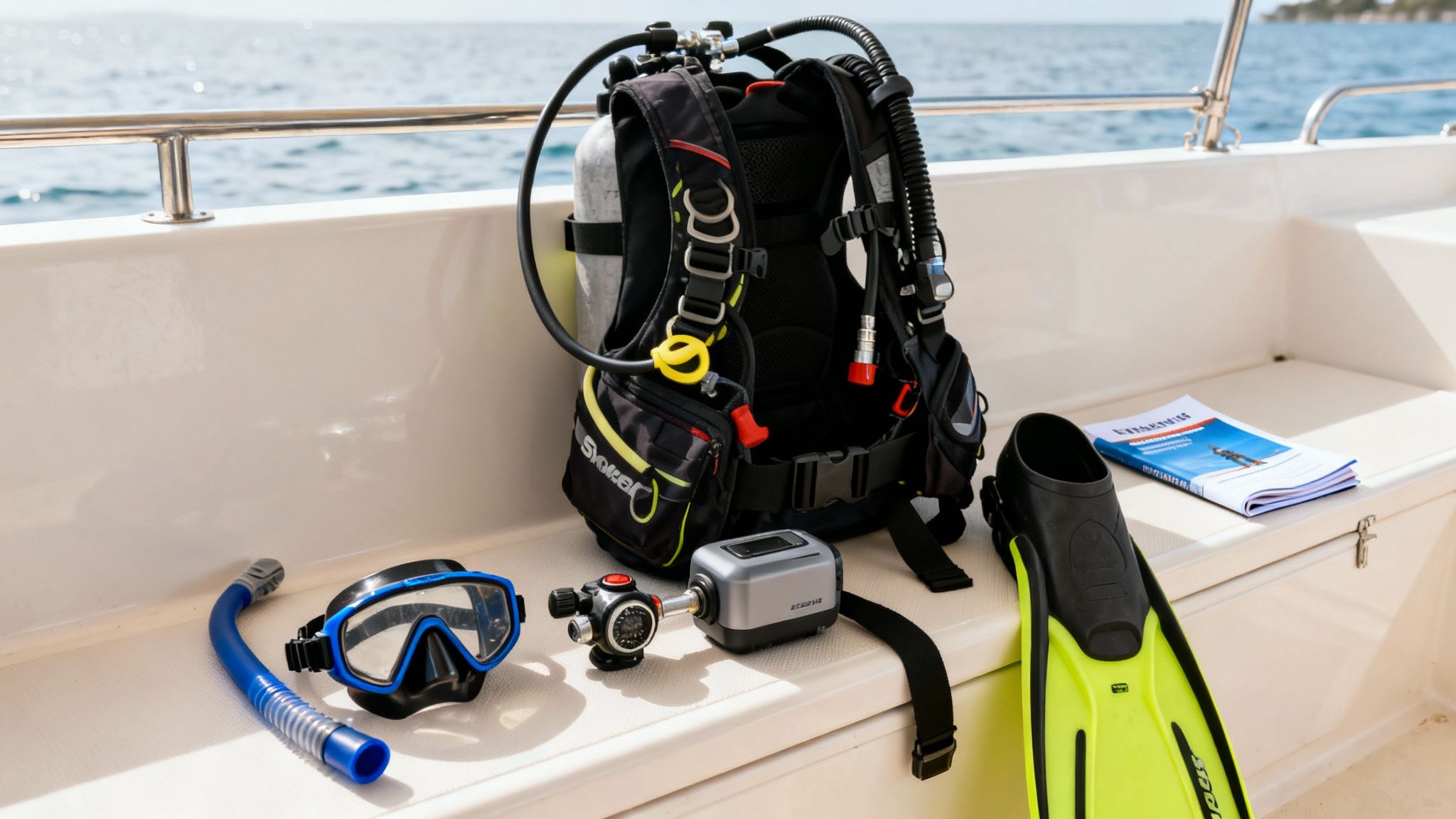
That pile of gear might look intimidating, but it’s actually a pretty straightforward life support system. Once you understand the basic parts, it all clicks into place.
- Mask: This is more than just fancy goggles. A proper dive mask creates an air pocket for clear vision and covers your nose, which is crucial for equalizing pressure as you descend.
- Regulator: This is the magic wand you breathe from. It takes the highly compressed air in your tank and delivers it to you at the perfect pressure for a normal, easy breath.
- BCD (Buoyancy Control Device): Think of this as your personal underwater elevator. It’s a vest that you can inflate or deflate with small puffs of air to float effortlessly on the surface, descend slowly, or achieve that perfect weightless hover over the reef.
We'll walk you through every piece of equipment on the boat, so you’ll feel comfortable with it long before you dip a toe in the ocean.
Calming Those First-Time Jitters
It’s totally normal to feel a bit nervous. Every diver has been there. Let’s get the two most common "what ifs" out of the way right now.
First up: ear pressure. You know that feeling you get when a plane is landing? It’s the same thing. As you go down, you’ll feel a gentle pressure. We’ll teach you a super simple trick to fix it—just pinch your nose and blow gently. It's called equalizing, and you'll do it a few times on your way down. Easy.
The second big one is the fear of running out of air. This is a non-issue, I promise. Your instructor is constantly checking your air gauge, and every single dive is planned with a massive safety buffer. We always come back to the boat with plenty of air to spare.
With those common worries sorted, you can focus on the real reason you’re here—to experience the incredible underwater world of Kona. The prep is easy, the safety is built-in, and the adventure is waiting for you. Ready to book a professionally guided Kona scuba diving tour?
Why Choose Kona Honu Divers for Your First Dive

Choosing the right dive shop for your first time underwater can absolutely make or break the experience. It’s not just about learning the skills; it's about feeling confident, safe, and genuinely excited. For anyone starting their Big Island scuba diving beginners journey, the team you dive with is everything. This is where we come in.
At Kona Honu Divers, we've built our entire operation around creating a supportive and welcoming vibe, especially for new divers. Our philosophy is pretty simple: your comfort and safety are always priority number one. You’ll feel the difference the moment you step onto one of our boats.
Small Groups and Personal Attention
We've all seen those packed dive boats. That’s not us. We run small groups for a reason—it guarantees you get the one-on-one attention you deserve from our patient and incredibly experienced instructors. You'll never be just another face in the crowd here.
Our crew has a knack for calming nerves and breaking things down in a way that just clicks, making sure you feel ready and excited before you even hit the water. This focus on individual support is why so many of our first-timers surface with huge grins, already hooked on diving. It’s the cornerstone of our reputation, and you can get a better sense of our approach in our guide to what makes the best dive shop in Kona.
More Than Just a Dive
We think about the little things that make a big difference. Our dive boats were custom-designed with comfort in mind, so you'll have plenty of space to move around, shaded areas to relax, and even hot-water showers for after your dive. Trust me, it’s a little luxury that feels amazing.
Our mission is to handle all the logistics so you can focus on the magic of the underwater world. We provide top-of-the-line, professionally maintained rental gear, so you can trust that your equipment is safe and reliable.
The fantastic feedback we get from our guests really says it all. Time and again, people highlight our crew's professionalism, friendliness, and genuine passion for creating unforgettable memories. This dedication ensures you're in the best possible hands as you start your scuba journey. See what other divers are saying for yourself.
Ready to book your adventure and dive with a team that puts you first?
Your Beginner Scuba Diving Questions Answered
It’s totally normal to have a few questions before you take the plunge. In fact, we expect it! Getting the answers you need is the best way to swap any pre-dive jitters for pure excitement. Let's tackle some of the most common things we hear from first-timers interested in Big Island scuba diving for beginners.
What's the Best Time of Year to Dive?
Honestly, any time is a great time to dive in Kona. That’s one of the best parts about our little corner of the world! The water temperature is wonderfully warm year-round, and our coastline is naturally protected from the heavy trade winds you might find elsewhere. This means we get to enjoy calm, clear water almost every single day.
What if I Get Scared or Want to End the Dive?
Your dive, your call. It's as simple as that. Your safety and comfort are our absolute number one priority, and you are always in control.
If you ever feel nervous or just decide you're done, all you have to do is give your instructor the signal. They'll immediately and safely bring you right back to the surface, no judgment and no questions asked.
Is Breathing Underwater Scary?
That first breath underwater is a unique feeling, for sure! But "scary" isn't the word most people use to describe it afterward. It's more like… "whoa."
We’ll have you practice breathing from the regulator in shallow water right beside the boat until it feels completely second nature. You'd be surprised how quickly your brain clicks over and it starts to feel incredibly peaceful and natural.
Are There Sharks and Are They Dangerous?
We might be lucky enough to spot a whitetip reef shark chilling on the sandy bottom, and if we do, it’s a real treat! These encounters are fascinating, not frightening. The sharks we see are typically shy and couldn't be less interested in divers. Your guide knows marine life inside and out and will make sure any wildlife sighting is a safe and amazing experience.
Diving is also an incredible shared experience. It’s no wonder scuba is often at the top of the list for unforgettable couples adventure vacation ideas.
Whether you're ready to see the reefs for yourself or just have a few more questions, we're here to help you get started on one of our guided Kona diving tours.