
Picture this: you're descending into warm, turquoise water, the world above fading away. All around you are ancient volcanic lava tubes and sprawling, vibrant coral reefs. This isn't a dream—it's what Big Island scuba diving is all about. This guide is your first step into an underwater world that feels like another planet, where you can glide alongside majestic sea turtles and watch the famous nightly ballet of giant manta rays.
Embark on Your Big Island Scuba Diving Adventure
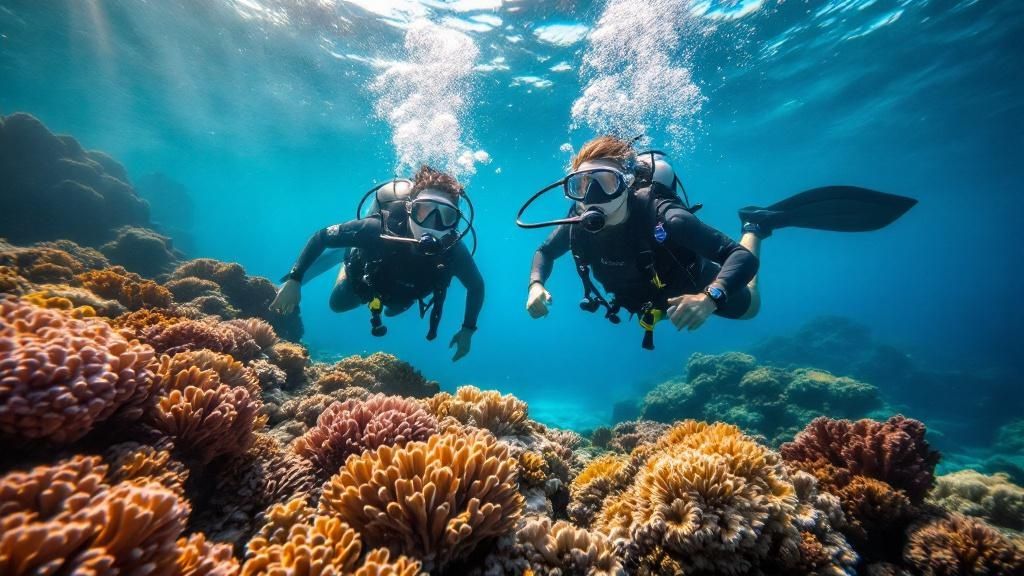
The Big Island diving scene is a true bucket-list destination for everyone, from first-timers just getting their fins wet to salty, experienced divers looking for deep-water thrills. The island's sheer size and its massive volcanoes create a unique underwater sanctuary, especially along the Kona coast. This natural shield results in incredibly calm, clear waters where visibility often stretches beyond 100 feet.
But it's not just the clarity that makes scuba diving Big Island Hawaii so incredible. The seascape itself is a work of art. Forged by lava flows from millennia past, the ocean floor is a dramatic playground of arches, caverns, and intricate lava tubes. These formations have become the perfect home for a staggering amount of marine life, including many species you can't find anywhere else on Earth.
Your Ultimate Dive Trip Awaits
Trying to plan a trip for diving Hawaii Big Island can feel like a big project, but it’s really just about knowing what's out there. Whether your heart is set on the world-famous manta ray night dive or you'd rather spend your days exploring sun-drenched reefs, we’ve got you covered. We'll dive into:
- Why Kona diving is so special.
- The must-do dive experiences you can't miss.
- The amazing marine life you’re likely to meet.
- How to choose between the top Kona diving companies.
This isn’t just about looking at fish through a mask. It’s about being in their world. The feeling of pure weightlessness as you drift past a snoozing sea turtle or watch a giant manta ray dance in the beams of your light is something that stays with you long after you've dried off.
We built this guide to help you plan the ultimate scuba Big Island adventure. We’ll walk you through everything you need to know, making sure your trip is safe, unforgettable, and packed with the unique magic that only Big Island diving can deliver. Let’s get started.
Why the Big Island Is a World-Class Dive Destination
Ever wonder what puts Big Island scuba diving on the bucket list of divers worldwide? It’s not just one thing, but a perfect storm of unique geology and geography that you just won't find anywhere else. It truly is a premier, world-class experience.
The secret is the island's volcanic backbone. The massive volcanoes that form the Kona coast act as a giant shield, blocking the powerful trade winds from hitting the leeward side. The result? Incredibly calm and clear waters that make Kona diving a dream.
But this isn't your average, sandy-bottom reef. Diving here means exploring a dramatic world carved by eons of volcanic flow. Picture yourself descending through ancient lava tubes, navigating intricate caverns, and gliding under stunning underwater arches. This dynamic terrain creates an incredible, complex habitat where marine life absolutely thrives.
Big Island Diving Highlights at a Glance
To quickly see what makes the Big Island so special for divers, take a look at this table. It breaks down the key features that define our underwater paradise.
| Feature | Description | Best For |
|---|---|---|
| Volcanic Topography | Underwater lava tubes, arches, and caverns create a dramatic, three-dimensional dive experience unlike typical coral reefs. | Exploration, photography, and adventure divers. |
| Calm, Clear Waters | The Kona coast is sheltered from trade winds, resulting in consistently calm seas and visibility often exceeding 100 feet. | All divers, from beginners to seasoned pros. |
| Unique Marine Life | Home to a high percentage of endemic species (found nowhere else) and famous for manta ray and turtle encounters. | Marine life enthusiasts and photographers. |
| Protected Sanctuaries | Areas like Kealakekua Bay are marine life conservation districts, ensuring vibrant, healthy reef ecosystems bursting with life. | Snorkelers and divers who want to see pristine reefs. |
As you can see, the combination of these elements creates an underwater environment that is both thrilling and accessible for every type of diver.
Unmatched Visibility and Pristine Conditions
The perks of the island’s geology don’t stop at the cool formations. The volcanic rock acts as a massive natural filter for rainwater, meaning there's very little sediment runoff to cloud up the coast. This is the key to the phenomenal visibility that makes diving Hawaii Big Island so breathtaking.
Visibility regularly tops 100 feet at many of our dive sites. It’s a surreal feeling, like you’re flying over a vibrant underwater city. Kealakekua Bay, a protected marine sanctuary, is a perfect example of this. The thriving coral gardens and massive schools of fish are on full display in crystal-clear water.
This one-two punch of warm, calm water and near-perfect visibility creates an incredibly safe and comfortable environment. You can spend less time fighting currents and poor viz, and more time just soaking in the unbelievable beauty all around you.
If you want to dive deeper into what to expect on your trip, check out our complete guide to Big Island diving.
A Haven for Unique Marine Life
Those protected volcanic coastlines are more than just a pretty sight—they’re a critical nursery and a safe haven for an incredible diversity of marine creatures. The scuba Big Island experience is really defined by the animals you meet, many of which thrive specifically in these conditions.
- Endemic Species: A huge chunk of Hawaii’s reef fish are endemic, which means this is the only place on Earth you can see them.
- Protected Sanctuaries: Places like Kealakekua Bay give you a peek into a truly wild ecosystem, teeming with life thanks to protections from fishing.
- Pelagic Visitors: The deep, clear waters just offshore attract the big guys. It’s common to spot dolphins, sharks, and, in the winter, migrating humpback whales.
It’s this special mix—calm waters, wild underwater landscapes, and a mind-boggling amount of unique marine life—that turns a simple dive into an adventure you’ll never forget. This is exactly why so many of us believe the Big Island is a must-dive spot.
The Most Unforgettable Big Island Dive Experiences
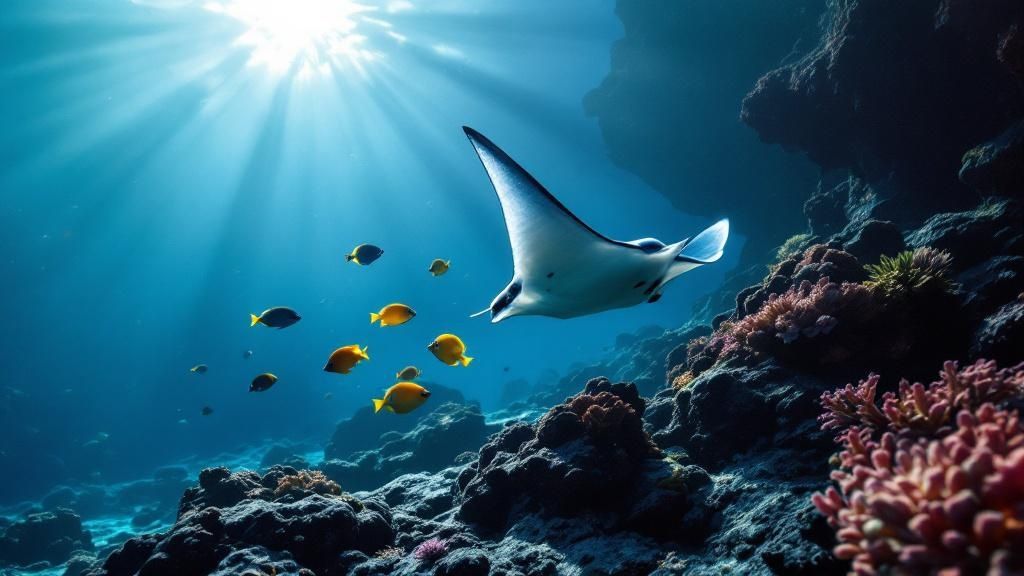
While any dive in the Pacific is special, some experiences truly define Kona diving on a global scale. These aren't just entries in a logbook; they're the legendary, bucket-list encounters that pull people in from every corner of the world. Two dives, in particular, stand out as the iconic adventures you have to plan for on a scuba diving Big Island trip.
First and foremost is the world-famous Manta Ray Night Dive. It’s often called one of the best night dives on the entire planet, and for good reason. It’s an otherworldly ballet where gentle giants with wingspans up to 12 feet glide and somersault just inches from your face. It's more than a dive—it's a genuine connection with one of the ocean's most graceful creatures.
But the adventure doesn't end there. For those craving a completely different kind of thrill, the Black Water Dive is a journey straight into the abyss. This is a surreal, almost alien experience that peels back the curtain on a side of the ocean very few people ever witness.
The World-Famous Manta Ray Night Dive
Picture this: you descend to a sandy patch on the ocean floor, about 40 feet down, just as the sun disappears. Your group settles in a circle on the bottom and points powerful lights upward, creating a "campfire" effect that attracts clouds of plankton.
Then, out of the deep blue, they arrive. Massive manta rays swoop in to feast on the plankton, performing barrel rolls right over your head. This isn't just a passive viewing; it's an immersive spectacle. The sheer size and effortless grace of these animals are absolutely awe-inspiring.
Best of all, this dive is accessible to certified divers of all levels, making it a cornerstone of the diving Big Island experience.
The Manta Ray Night Dive is like nothing else. You become a part of their world for an hour, watching a natural phenomenon unfold. It’s a humbling, magical, and unforgettable spectacle that defines Big Island scuba diving.
If you're not a certified diver but still want to see the mantas, you're in luck! You can learn more about the equally amazing Manta Ray Night Snorkel here.
The Surreal Black Water Dive
Ready to level up your Kona diving adventure? The Black Water Dive is your ticket to the deep. This is an advanced dive that takes place miles offshore, drifting over thousands of feet of water. Divers are tethered to the boat and suspended in the pitch-black water column, watching the show unfold.
The whole point is to witness the largest migration on Earth. Every single night, countless bizarre and bioluminescent creatures rise from the depths to feed near the surface. You'll see things that look like they belong on another planet: strange larval-stage fish, jellies that pulse with their own light, and tiny, alien-like squid.
It's a sensory experience that is both exhilarating and completely mesmerizing, showcasing a hidden world that comes alive after dark.
Exploring the Top Dive Sites on the Kona Coast
The Kona Coast is simply lined with incredible dive sites, each offering a totally different window into Hawaii's vibrant underwater world. The list of amazing spots for scuba diving Big Island is long, but a few places consistently stand out for their sheer beauty, easy access, and mind-blowing marine life encounters.
Knowing where to go is the real key to planning your perfect diving Big Island adventure.
Many of the best sites are only accessible by boat. This is a good thing! It allows us to reach pristine, less-crowded areas with the help of experienced guides who know these waters like the back of their hand. Our crew at Kona Honu Divers uses their local knowledge to pick the absolute best spot based on the day's conditions, guaranteeing a safe and unforgettable dive.
Let's dive into some of the must-see locations that make Kona diving a truly special experience.
Kealakekua Bay
Kealakekua Bay isn't just historically significant; it's a protected Marine Life Conservation District and an absolute jewel of the Kona Coast. The bay is famous for the Captain Cook Monument, but the real magic is just below the surface, where a sanctuary teeming with life awaits. Fishing is strictly prohibited here, so the coral gardens are unbelievably healthy and packed with massive schools of fish.
- Depth: 15 to 100+ feet
- Visibility: Excellent, often soaring past 100 feet
- Marine Life: Spinner dolphins, Hawaiian green sea turtles (honu), and a huge variety of colorful reef fish like butterflyfish and parrotfish.
The calm, crystal-clear water makes this an ideal spot for divers of all skill levels. And while you're planning your underwater adventures, don't forget the view from the surface! A Captain Cook Snorkel Tour offers another fantastic way to see this vibrant bay.
Pu'uhonua O Hōnaunau (Two Step)
If you're a fan of shore diving, "Two Step" is one of the most beloved and easily accessible sites on the entire island. It gets its name from two natural lava rock steps that offer a ridiculously easy entry into the ocean, leading you right into a stunning reef system. It’s the perfect place for a relaxed afternoon of scuba diving Big Island Hawaii.
The site starts with a shallow reef flat that gently slopes down, revealing coral heads, small caves, and sandy patches where you can often find turtles taking a nap. Its easy access makes it a popular spot, so getting there early is always a good idea.
Crescent Beach (Kua Bay)
Known for its dramatic underwater landscape, Crescent Beach delivers a completely different kind of diving Hawaii Big Island experience. The site is defined by huge volcanic rock formations that create thrilling swim-throughs, arches, and ledges to explore. This dynamic structure provides the perfect habitat for moray eels, octopus, and big schools of fish.
The real magic of diving the Kona coast lies in its diversity. One day you can be drifting over pristine coral gardens, and the next you can be navigating volcanic arches—all within a few miles of each other. This variety is what makes scuba Big Island a world-class destination.
Of course, we can't talk about Kona without mentioning the Manta Ray Night Dive. This signature experience often happens at sites like "Manta Heaven" or "Manta Village," which are famous for reliable manta encounters. If you're interested in this truly unique dive, you can learn more about our Big Island Manta Ray Night Dive and what makes it an adventure you'll never forget.
Each site tells a different story, weaving together the rich tapestry of the Kona diving experience.
Meet the Big Island’s Underwater Inhabitants
Sure, the dramatic underwater lava tubes are incredible, but the real magic of Big Island diving comes from its residents. The water here is a living, breathing aquarium, and every dive feels like a new introduction to the stars of the show.
Diving here is about more than just sightseeing; it's about being a guest in a different world. It’s a world governed by the ocean's rhythm, and we take our cues from the Hawaiian principle of Malama o ke kai—caring for the ocean. It’s our responsibility to make sure these animals are here for generations of divers to come.
The Gentle Giants of the Sea
When you think about diving Hawaii Big Island, two magnificent animals probably swim to the front of your mind. Sharing the water with them is an experience that will stick with you forever.
- Hawaiian Green Sea Turtles (Honu): Seeing a Honu glide effortlessly over the reef is a classic Kona coast moment. These ancient, revered reptiles are a common sight. You’ll often find them resting peacefully at "turtle cleaning stations," where smaller reef fish helpfully nibble algae right off their shells.
- Manta Rays (Hahalua): The undisputed superstars of Kona's nightlife. Majestic and almost otherworldly, manta rays put on a nightly feeding ballet that has become an iconic Kona diving encounter. Watching them swoop and somersault through the beams of our dive lights is simply unforgettable.
The Big Island’s protected waters support an incredible amount of life. It’s no surprise that Green sea turtles (Honu) are spotted so often around the reefs, making up a huge percentage of our animal encounters. Manta rays are drawn to specific coastal areas around Kona, making our night dives incredibly reliable. In protected zones like Kealakekua Bay, the fish biomass is 30-50% higher than in nearby fished areas—a testament to how healthy and vital these reefs are.
Reef Sharks and Colorful Residents
Beyond the big guys, the reefs are buzzing with a diverse cast of characters. Reef shark encounters are pretty common and always add a jolt of excitement to your dive.
An encounter with a Whitetip Reef Shark is a classic scuba Big Island moment. They’re usually shy and spend their days resting under ledges or in small caves. Seeing one cruise past you is a powerful reminder that you’re just a visitor in their world.
The reefs are also painted with a wild array of fish, many of which are endemic to Hawaii—you literally can't find them anywhere else on Earth. Keep an eye out for Hawaii's state fish, the famously named Humuhumunukunukuāpuaʻa (a type of triggerfish). Getting to know these vibrant communities is what Big Island diving is all about. If you want a head start on identifying your new underwater friends, check out our guide on 5 fish you will probably meet on a Hawaiian reef.
Learning a little about these animals before you even hit the water transforms the whole experience. It turns a simple sighting into a real connection with this amazing underwater world.
Why Choose Kona Honu Divers for Your Adventure
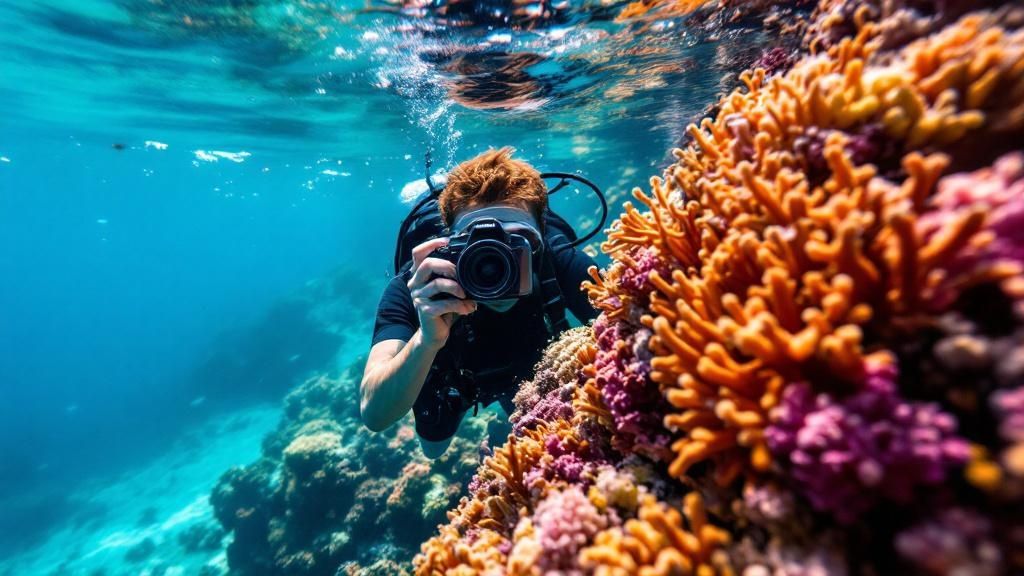
Picking the right operator from the many Kona diving companies can make or break your trip. It’s the real difference between a decent dive and a truly unforgettable Big Island scuba diving adventure. Here at Kona Honu Divers, we’re all about creating an experience that’s safe, personal, and deeply connected to the ocean we call home.
Our entire philosophy revolves around you and the quality of your dive. We genuinely believe that small groups are the only way to go for a premium Kona diving trip. This approach lets our expert guides give you personalized attention, making sure you’re comfortable and safe while they share incredible insights about the marine world below. You’re never just another face in the crowd with us; you're part of our dive family, our ‘Ohana.
Our Commitment to Excellence
What really makes us different is our absolute obsession with creating the perfect dive day. This isn't just a job for any of us—it’s a passion, and it shines through in every single detail.
- Experienced Crew: Our guides are total pros who live and breathe diving Hawaii Big Island. They know these sites like the back of their hand and have a knack for picking the perfect spot based on the day's conditions.
- Custom Dive Boats: Forget cramped, generic boats. Our vessels were built specifically for scuba diving Big Island Hawaii, which means more comfort, more space, and super easy entry and exit from the water.
- Top-Tier Equipment: We provide meticulously maintained, high-quality gear. Your safety and comfort are our number one priorities on every single dive, without exception.
When you dive with us, you're joining a team that’s as passionate about marine conservation as we are about diving. We believe in creating fun, welcoming, and respectful encounters with the underwater world.
This commitment is why so many divers choose us for their scuba Big Island adventure. We're not just tour guides; we're inviting you to share in the magic of diving Big Island with a team that truly cares. Ready to join the ‘Ohana?
Frequently Asked Questions About Big Island Diving
Is there good diving on the Big Island?
Absolutely. The Big Island, especially the Kona coast, offers world-class diving. We've got amazing visibility, calm waters, and mind-blowing underwater landscapes like lava tubes and caverns. It's famous for a reason, especially for its vibrant marine life like manta rays and sea turtles. The diving Big Island offers is truly exceptional.
What are the best months to scuba dive in Hawaii?
You can dive here year-round because the water temperatures are pretty stable. That said, the summer months (May to September) usually bring the calmest ocean conditions and warmest water, making it a fantastic time to plan your scuba diving Big Island Hawaii trip.
Is Kona good for scuba diving?
Kona is arguably the best spot for scuba diving in all of Hawaii. The coastline is shielded from the strong trade winds, which gives us incredibly calm, clear conditions that are perfect for Kona diving. It's also the home base for bucket-list experiences like the Manta Ray Night Dive.
Is it better to snorkel or scuba dive in Hawaii?
It really depends on what you're looking for. Snorkeling is awesome for seeing the colorful, shallow reefs and is super accessible for everyone. Scuba Big Island diving lets you go deeper, see different kinds of marine life, explore unique structures like lava tubes, and have much more immersive, personal encounters with the wildlife.
Which Hawaiian island is best for scuba diving?
While you can find great underwater spots on all the islands, the Big Island is widely considered the top dog for scuba. It's all about our superior water clarity, unique volcanic topography, and iconic dives like the Manta Ray Night Dive and Black Water Dives that you just can't do anywhere else.
When to dive Kona?
Kona has excellent diving conditions all year long. If you want the absolute calmest seas, aim for the summer months. But if you want a chance to hear humpback whales singing underwater during your dive—which is pure magic—then the winter months (December to March) are the time to be here. You can't go wrong when planning when to dive Kona.