
Table of Contents
- West Side Versus East Side
- Read the Forecast Like an Operator
- Boat Versus Shore on a Marginal Day
- Day Reefs and Lava Structure
- Quick Comparison of Big Island Scuba Experiences
- Where the Manta Dive Fits
- The Gates That Actually Matter
- Medical and Recency Checklist
- Kona Dive Operator Evaluation Checklist
- How the Manta Encounter Works
- Blackwater Is a Different Skill Set
- Stack Value Deliberately
- A Workable Five Day Build
- Pack and Prepare for the Boat
- The Chamber Reality
- Booking Moves That Prevent Wasted Days
The best dive on the Big Island can still become a logistical problem after you surface, because there's no recompression chamber on Hawaiʻi Island. That's not a reason to skip Kona. It's a reason to plan Big Island scuba diving by certification, conditions, site choice, and what you're doing after the dive, not by a pretty site list alone.
Why Kona Is the Center of Big Island Scuba Diving
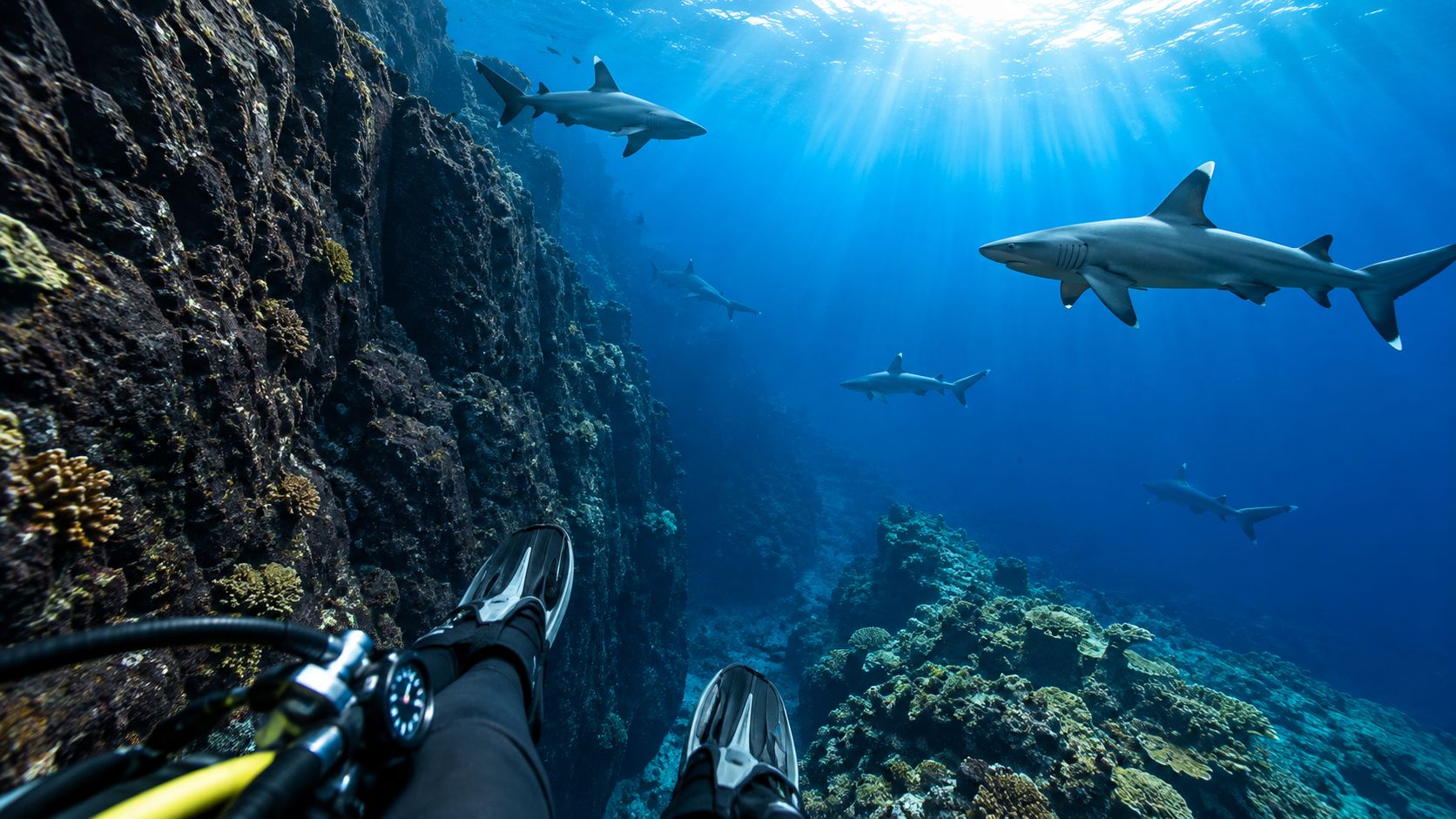
Drop down a Kona wall and the terrain tells you where you are before any fish does. Black lava fingers, arches, and coral heads give way to blue water, white-tip reef sharks resting in structure, and endemic damselfish working the reef edge. You're not diving a generic tropical reef that could be anywhere. You're diving a young volcanic coastline where the bottom composition changes your navigation, your finning, and what you should never touch.
West Side Versus East Side
Hilo side is wet, green, and exposed to windward weather and runoff. Kona side is arid, leeward, and built around harbors, boat access, and reefs that operators can reach on most dive days. That split explains why divers who are serious about getting underwater fly into Kona rather than treating Honolulu as the base and hoping to improvise. Big Island scuba diving almost always means Kona diving in practical terms, even if your hotel is up the Kohala Coast.
Mauna Loa and Hualālai shaped that underwater terrain. Old flows created the arches, tubes, ledges, and rubble fields you'll swim over. That doesn't just look dramatic. Exposed volcanic rock, sand, rubble, and live coral behave differently when a fin hits them, and the U.S. Geological Survey imagery and substrate classifications for the Kona coast classify those surfaces by live coral cover and dominant substrate for a reason.
Don't kneel on a Kona reef to get stable for a photo. Sort your trim, hover, and if you must steady yourself briefly, pick sand or already disturbed bottom away from live coral.
Kona is the hub because the decisions cluster there. Which harbor you leave from, whether you're qualified for a standard reef boat or an advanced charter, whether tonight is a manta night or a blackwater night, and whether tomorrow's flight or volcano road trip conflicts with today's profiles. Start with that map in your head. If you treat Kona as just one beach town among many, you'll book the wrong trip in the right ocean. Browse the range of Kona diving tours and you'll see how quickly those choices branch by experience level.
Kona Dive Conditions and Seasons You Should Plan Around
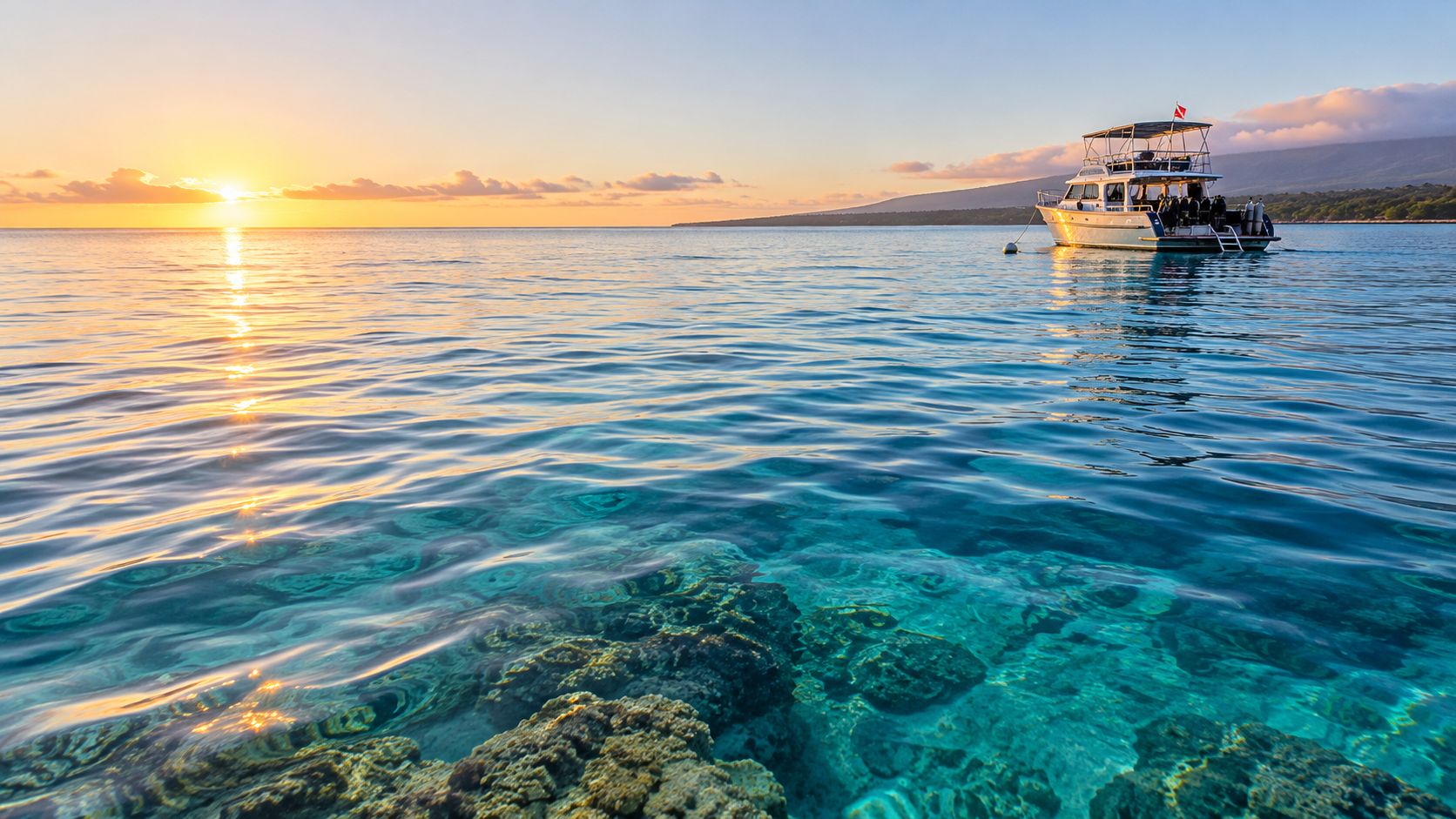
Kona gets called year round, and operators do run throughout the year. That doesn't mean conditions are interchangeable. The leeward coast gives you a real advantage, but swell, wind, rain, runoff, and ocean heat still decide whether a shore entry is sensible, whether visibility holds, and whether a famous site is the right call today.
Read the Forecast Like an Operator
Check these together the night before, not in the parking lot with your gear on:
- Swell direction and size: A lava rock entry that looked easy on a calm morning can turn with a new swell, and entries such as Two Step need a fresh look before you commit, as noted in independent Big Island dive site guidance on checking forecasts.
- Wind and surface chop: Wind affects the boat ride, your surface swim, and how clean your exit will be.
- Recent rain and brown water: Runoff can cut visibility and make a shore dive a poor use of a limited vacation day.
- Heat stress alerts: Ocean heat isn't background trivia. It changes what stress the reef is already carrying before your fins arrive.
NOAA's Coral Reef Watch provides near real time satellite products, modeled predictions, and early warnings for ocean heat stress and marine heatwaves, and NOAA's coral bleaching alert products are the kind of tool that can prompt managers to reduce stressors or close affected areas. You don't need to become a satellite analyst. You do need to understand that a heat stressed reef deserves extra distance, perfect buoyancy, and sometimes a postponed dive.
Boat Versus Shore on a Marginal Day
A boat gives the captain options. If one stretch is stirred up, a good crew can move, pick a protected site, and brief you on why. A shore entry gives you one entry, one exit, and lava under your boots. Winter north swells, whale season overlap in the colder months, and summer trade patterns all shift that calculation, but the rule holds in every season.
Go or no go rule: If you can't explain your entry, exit, and abort plan for today's swell, you're not ready for that shore dive. Take the boat or take the day off.
Postponing isn't failure. On a reef that scientists revisit across years to track bleaching effects, skipping a bad day protects you and the site. That's the part glossy guides skip when they sell every date as identical.
Top Big Island Scuba Diving Sites and Signature Experiences
Don't shop Kona as a top ten list. Shop it as three different kinds of diving that ask different things of you. Day reefs reward buoyancy and observation. The manta night dive rewards stillness and light discipline. Blackwater rewards self reliance in midwater with no bottom reference. Picking the wrong family for your current skills is how a good site becomes a bad day.
Day Reefs and Lava Structure
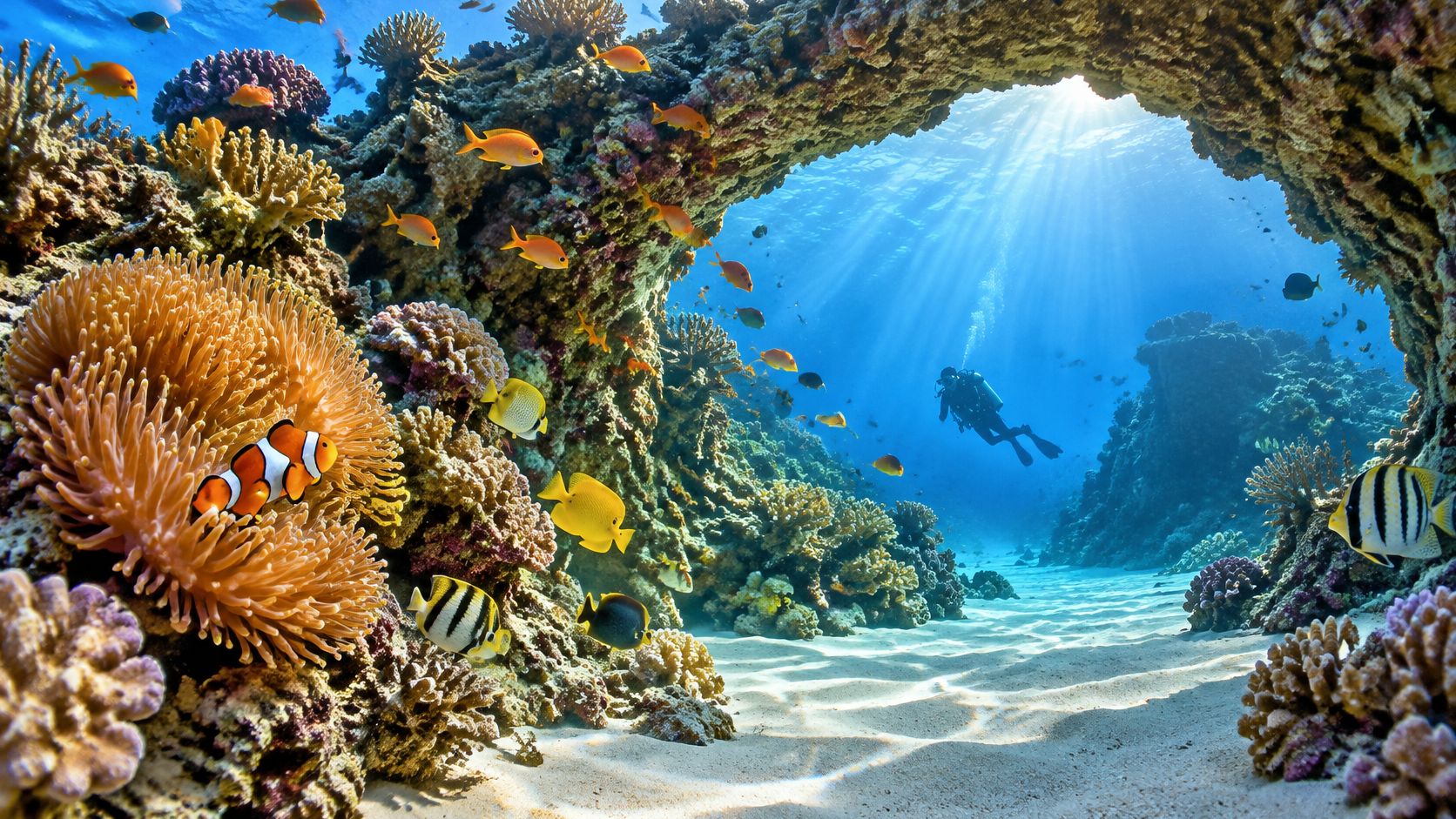
Sites such as Suck 'Em Up, Golden Arches, and Pawai Bay are where most visitors should start. You get lava formations, endemic fish, cleaning stations, eels in structure, and the chance to learn Kona navigation cues with a guide who knows where the reef turns and where the sand channel runs. These dives feel exploratory rather than theatrical. Slow down and they deliver more.
Shore diving belongs in this category too, but only when conditions and experience line up. If you're weighing that option, read up on the best shore diving on the Big Island before you treat a rental tank and a rental car as a complete plan.
Quick Comparison of Big Island Scuba Experiences
| Experience | Typical Depth | Min. Certification | Signature Sightings |
|---|---|---|---|
| Daytime reef and arches | Shallow to moderate reef profiles | Open Water for guided boat dives | Lava arches, endemic fish, eels, reef sharks |
| Manta night dive | Divers settle at approximately 30 to 40 feet at Garden Eel Cove, per independent Kona site guidance on manta dive depths | Open Water with night readiness as operator requires | Reef manta rays filter feeding in lights |
| Blackwater night dive | Midwater, tethered, no bottom reference | Advanced experience and operator screening | Pelagic larvae, jellies, salp chains, larval fish |
Where the Manta Dive Fits
Garden Eel Cove is the stronger manta choice when conditions permit. Hawaiʻi's Department of Land and Natural Resources identifies Makako Bay, also known as Garden Eel Cove, and Keauhou Bay as the two principal viewing locations, and its manta ray viewing boating and safety assessment notes Garden Eel Cove is primarily accessed by vessels from Honokōhau Harbor. Its protected airport area setting gives you a defined viewing area over shallow sand with nearby reef, not an unstructured open water scramble.
Book the signature experiences in the right order. Do a day reef first if you're rusty. Do the manta dive when your buoyancy and light handling are sorted. Save blackwater until midwater control is boringly reliable.
Certifications, Medical Rules, and Age Limits That Decide What You Can Book
Most booking disappointments in Kona don't happen underwater. They happen at check in, when a diver learns that an advanced charter isn't just a marketing label, that a medical question needs a physician's clearance, or that a child who can join a morning reef trip can't join a long range trip.
The Gates That Actually Matter
Standard guided day reefs are built around Open Water certification and recent experience. Deeper, longer range, and blackwater trips raise the bar on purpose. Published charter safety requirements state that advanced morning and blackwater participants must be able to climb a floating vertical ladder unassisted while wearing scuba equipment, exclude divers aged 10 to 11 from long range, advanced, and blackwater charters, and may require a refresher if you haven't been active within the previous two years, according to published Kona charter safety requirements.
That ladder test isn't bureaucracy. If you can't get yourself back on the boat in gear, in swell, at night, you're a rescue problem the crew has to solve while other divers are still in the water. Be honest about knees, shoulders, fitness, seasickness history, and panic in the dark. A good operator would rather move you to the right boat than refund you at the dock.
Medical and Recency Checklist
Run this well before your trip, not the week you fly:
- Medical form honesty: Asthma, cardiac history, ear and sinus problems, and certain medications can trigger a need for physician sign off. Get it early if you need it.
- Logbook reality check: Count recent dives, night dives, and dives in similar conditions. Total dives from a decade ago don't equal current readiness.
- Refresher timing: If you're near an operator's inactivity limit, book the refresher first and treat it as part of the vacation, not a penalty.
- Insurance confirmation: Dive accident coverage matters more when advanced care may involve inter island transfer.
If you need training or a refresher path, look at scuba classes in Kona and match the course to the trip you want. Don't book blackwater and then hope a quick pool session will close a two year gap. Crews can tell within minutes whether your buoyancy, mask skills, and buddy awareness are current. Sorting that out on land is cheaper, calmer, and fairer to everyone else on the boat.
How to Choose a Kona Dive Operator
Star ratings won't tell you whether you'll have a good dive. Group size, briefing quality, boat layout, gear condition, and whether the crew will cancel or move a site when conditions demand it will. Score any shop you contact against operational criteria, not against who has the nicest sunset photo.
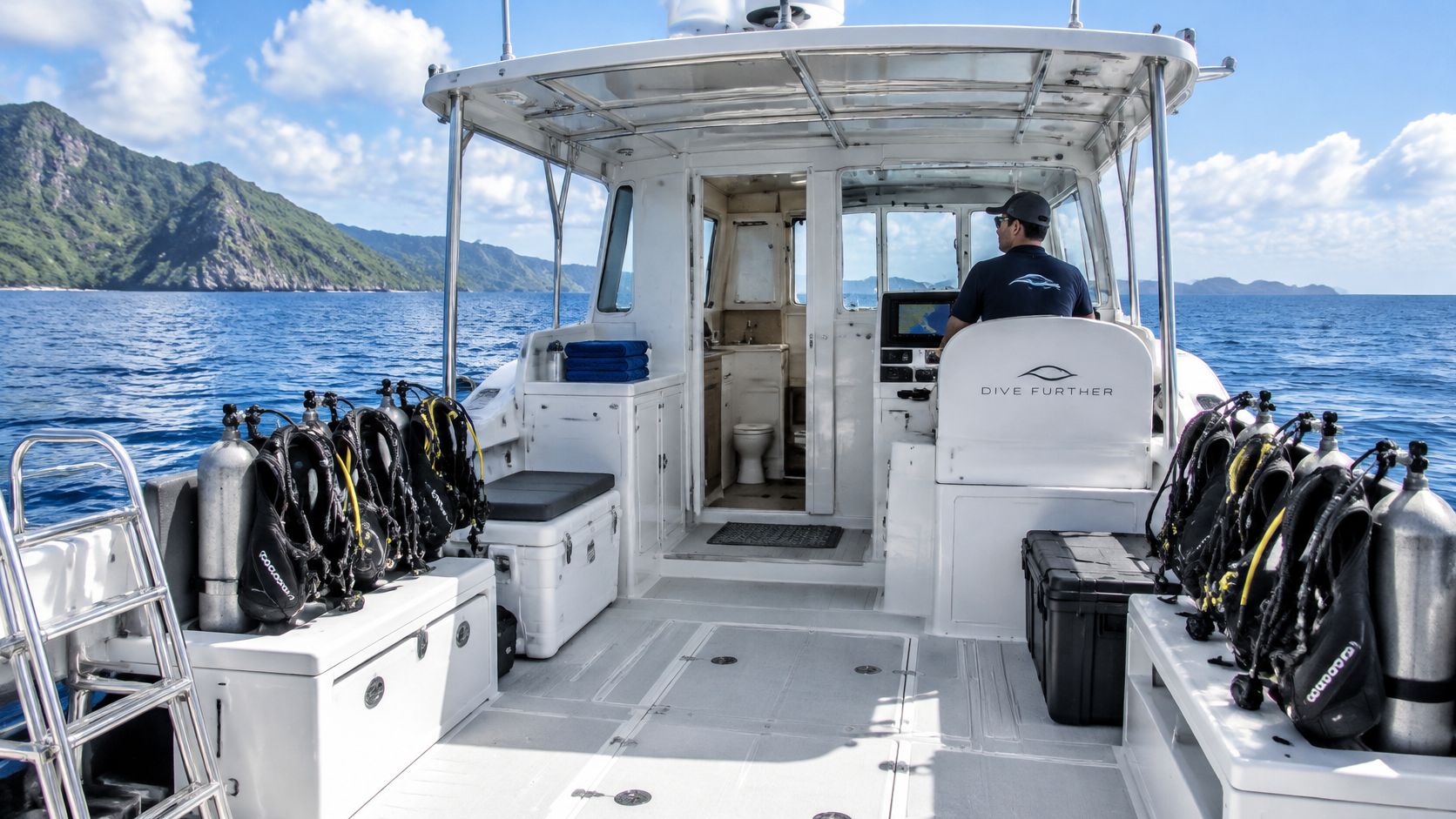
As one option in that comparison, Kona Honu Divers runs guided two tank morning dives, manta night dives, blackwater dives, and advanced trips from Kona, with courses and gear support alongside the charters.
Kona Dive Operator Evaluation Checklist
| Criterion | What to Look For | Red Flag |
|---|---|---|
| Group ratio | A published maximum divers per guide and small groups | Vague answers or a crowded boat sold as social |
| Boat setup | Covered space, marine head, stable ladder, oxygen and first aid on board | No clear answer on safety equipment |
| Briefing quality | Site specific depth, route, turn pressure, lost buddy and ascent plan | A script that could fit any site on any day |
| Gear condition | Current, serviced rental gear fitted before departure | Torn wetsuits, free flowing regs, rushed sizing |
| Weather judgment | Willingness to move sites or cancel with a clear policy | Pressure to dive because the boat is already loaded |
| Gas options | Nitrox availability explained for certified divers | Nitrox sold without checking certification |
Before you pay a deposit, work through how to choose a Kona diving company and ask direct questions. What's today's planned maximum depth. Who leads if the group splits by experience. What happens if the manta site is blown out. How do you handle a diver who hasn't dived recently.
Read reviews for patterns, not averages. Repeated comments about rushed briefings, oversized groups, or crews ignoring conditions matter more than one complaint about parking. Repeated praise for patient guides, clean gear, and honest weather calls matters too. If a shop gets defensive when you ask about safety, you've learned what you need to know.
Manta Night Diving and Blackwater Diving in Kona
Kona's manta dive isn't a lucky encounter that operators stumbled into last season. Night dives began gaining momentum in 1991, when only one boat typically visited with roughly 6 to 8 divers, and by 1993 participation had expanded to as many as five boats and approximately 50 people in the water, a history traced in Scuba Diving magazine's profile of Keller Laros and Kona manta identification. That same record notes more than 211 individual manta rays documented through the Manta Identification Project. You're watching a cataloged resident population, not hoping a migrant passes through.
How the Manta Encounter Works
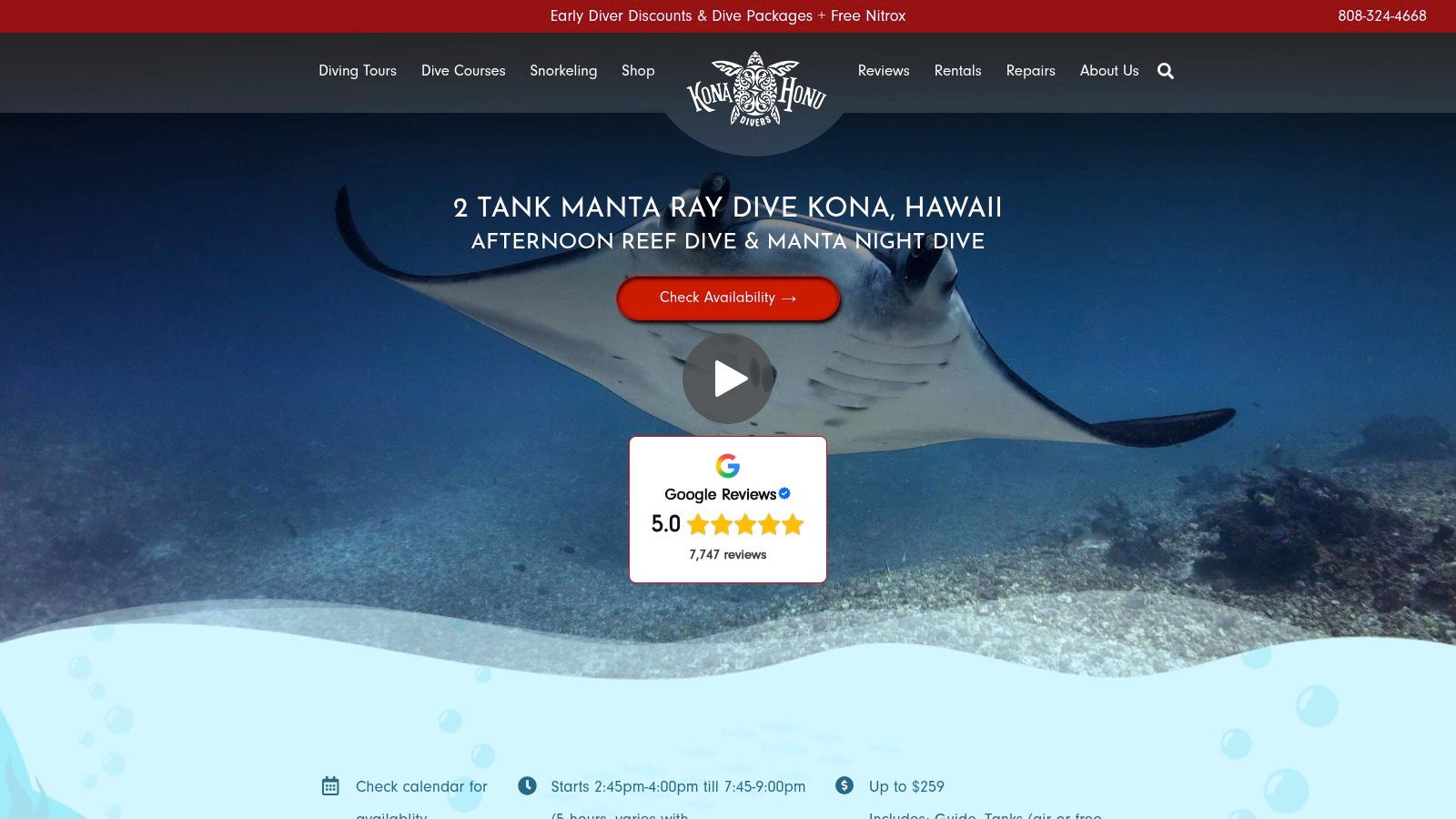
Lights positioned from the surface and near the seafloor at approximately 10 m illuminate the water column, aggregate zooplankton, and reef manta rays, Mobula alfredi, filter feed through that concentration, as described in a NOAA associated study of Kona manta site use. Nobody is feeding the mantas. The lights move the food, and the mantas decide whether to feed.
That study recorded 25,444 observations of 118 individually identified mantas. A related six year dataset from 2009 through 2014 recorded observations on 2,017 of 2,192 possible nights at Manta Heaven, or 92%, and on 1,702 nights at Manta Village, or 78%, with 19,841 observations at Manta Heaven and 5,603 at Manta Village, per the NOAA repository record of the six year Kona manta study. Sightings generally began shortly after sunset, around 6:00 p.m., and lasted about one hour. Site choice and timing aren't details. They're the dive.
At Garden Eel Cove, stay low, aim lights upward, carry a primary and backup light, keep buddy contact, and ascend only along the designated vessel line. Hawaiʻi law also matters here. Act 92, enacted in 2009, made it an offense to knowingly catch or kill a manta ray in state waters, as summarized in Hawaii Guide's overview of manta protection and marine life rules. Touching or chasing can damage the animals' protective skin layer and disrupt feeding. Let the ray control the pass.
For the full format, review the manta night dive in Hawaii and the manta ray dive tour before you choose a date.
Blackwater Is a Different Skill Set
Blackwater puts you tethered in open ocean at night while pelagic larvae, jellies, and other vertical migrators rise past your light. There's no reef to orient you and no bottom to catch a buoyancy mistake. It's closer to a spacewalk than a reef tour, which is why screening is strict. Divers ready for that profile can review the Blackwater Dive tour, and experienced divers who want more range by day can look at the advanced long-range dive tour.
Pricing, Packages, and a Sample Big Island Dive Itinerary
Price Kona by total trip value, not by the cheapest seat on a boat. A lower headline rate can disappear once you add rental gear, nitrox, a private guide for a junior diver, or a rebooked night dive. A higher rate can be the better buy if it includes the gas, gear, group size, and weather flexibility you were going to pay for anyway. For a cost framework, start with how expensive scuba diving in Hawaii is and then price your exact dates.
Stack Value Deliberately
- Multi day packages: Diving several days with one operator usually beats buying isolated trips and repeating gear fitting and paperwork.
- Early and off peak trips: Ask what early diver or multi trip pricing applies rather than assuming the first rate you see is fixed.
- Nitrox value: If you're Enriched Air certified, ask whether nitrox is included or an add on, especially on repetitive multi day schedules.
- Private guide math: For a rusty diver, a junior diver, or a photographer, a private guide can salvage a day that a group pace would waste.
A Workable Five Day Build
Day one should be a morning two tank reef dive, not your most demanding booking. Use it to dial in weighting, exposure protection, and camera trim. Day two can add a second morning of reefs or a long range trip if you qualify. Put the manta dive mid trip, when your night skills are warm but you still have a spare evening if weather intervenes. Put blackwater after that, not before. Keep the final day conservative and shallow, or make it a no dive day, especially if flights or altitude are next.
A three day version is simpler. Morning reef, manta night, buffer day. A seven day version lets you repeat a favorite reef area in different conditions instead of chasing a new name every day. Repeating a site with a guide who knows your air consumption often produces better sightings than constant novelty.
Pack and Prepare for the Boat
Pack your certification card or digital proof, logbook, mask defog, reef safe sunscreen, a dry bag for phone and camera batteries, and exposure protection that matches repetitive diving rather than a single warm splash. Bring your own mask if fit is finicky. Rental fleets can't solve every face shape.
Seasickness deserves the same planning as your wetsuit, because a harbor that looks calm can still roll offshore. Options divers commonly pack include the Ship-EEZ Seasickness Patch, Dramamine pills, Bonine pills, Sea Band wristbands, and ginger chews. Test medication on land first, follow label directions, and never let a remedy that makes you drowsy become your dive plan.
Post-Dive Safety, Booking Tips, and Common Questions
The casual version of a Kona dive trip ends at the harbor. The responsible version asks what happens if you feel wrong that evening, whether tomorrow's flight is too soon, and whether a drive over Saddle Road or up Mauna Kea belongs anywhere near a repetitive dive schedule.
The Chamber Reality
Existing independent travel coverage states that the nearest 24/7 emergency hyperbaric facility is at Kuakini Medical Center in Honolulu and that the Big Island has no recompression chamber. That means suspected decompression illness can involve inter island medical transfer. It doesn't make routine recreational diving reckless. It makes conservative profiles, hydration, slow ascents, safety stops, and honest symptom reporting non negotiable.
Learn the difference between ordinary tiredness after a boat day and symptoms that need urgent assessment. Joint pain that doesn't fit exertion, unusual fatigue, tingling, weakness, dizziness, skin changes, or breathing difficulty after diving should stop the vacation conversation and start a medical one. Call emergency services first for serious symptoms, then contact DAN for dive specific guidance. Don't drive yourself to altitude to see if it passes.
Hawaiʻi's official diving guidance also requires a diver's flag during scuba activities and limits surfacing to within 100 feet of that flag, including at night when the flag must be illuminated. That's basic boat traffic survival, especially around harbors and shared manta sites.
Built in buffer beats bravery. Leave conservative time before flying or going to altitude, and longer after multi day repetitive diving. If your itinerary only works with the minimum interval, rebuild the itinerary.
Booking Moves That Prevent Wasted Days
Book signature night dives early in your available window, not on your last night. Ask how weather calls are made, when you'll hear, and whether you can move to another date or trip type. Confirm harbor, check in time, parking, gear included, and whether your certification and recency documents are already verified. Visitors based in Honolulu should plan a proper Kona stay for diving rather than compressing flights and dives into a same day stunt.
Can non certified divers participate? Introductory experiences exist, but they aren't a shortcut into advanced, blackwater, or independent diving. Ask exactly what depth, supervision, and sites are included.
What's the best first trip? For most certified visitors, a guided morning reef dive followed later in the stay by the manta night dive at Garden Eel Cove. That order tests your skills in daylight before you add darkness, lights, and a compact viewing area.
Should you postpone for conditions? Yes, when swell, runoff, or heat stress makes the planned entry or site a poor choice. A moved site or a rest day is a better souvenir than a preventable injury or a damaged reef.
Book your Kona reef, manta night, blackwater, or advanced long range diving with a crew that will match the trip to your certification, recency, and the conditions on the day. Visit Kona Honu Divers to compare trips, sort training or a refresher if you need one, and lock in dates that leave a proper buffer before you fly.