
You land in Kona, grab your bags, and start sorting through the same questions every visiting diver faces. Which dives deserve your limited days? Which operator will keep the trip organized instead of chaotic? Which bookings need to happen first so you do not miss the experiences that make this island worth the flight?
Start with one clear decision. Base your trip on the Kona coast.
If you want memorable, efficient, high-value Big Island scuba diving, build your plan around Kona's signature dives first, then fill in the rest. That approach saves time, avoids weak last-minute choices, and gives you a trip that feels deliberate instead of patched together from leftover boat space.
The Big Island earns its reputation because Kona offers the island's strongest mix of clear water, volcanic seascapes, reliable boat diving, and standout pelagic encounters. The mistake new arrivals make is treating dive planning like a list of random options. Experienced local divers do the opposite. They choose the headline dives first, match them to the right days, and book with an operator that can handle the logistics cleanly.
That is the difference between a decent dive vacation and a Kona trip you will talk about for years.
Plan the trip like an itinerary. Put the must-do dives on the calendar early. Leave room for conditions, recovery time, and skill level. If you want a straightforward way to do that, book directly with Kona Honu Divers and build the week around the dives that are hardest to replace anywhere else.
Your Adventure into Big Island Scuba Diving Begins Here
You land in Kona, unload your gear, and start asking the usual questions. Should you do the manta dive first? Is blackwater worth it? Are shore dives better value? Do you need to bring all your gear? Can a mixed group with divers and non-divers still do the same evening trip?
Most visitors answer those questions in the wrong order. They start with price or with whatever slot is still open. That's backwards. Start with the experiences that are unique to Kona, then fill in the rest.
The right first move is simple. Treat your trip like an itinerary, not a random collection of dives. Reserve your signature dives first, then add daytime reef dives around them. If you're traveling with family or with a mixed-skill group, choose operators and schedules that keep things smooth instead of forcing everybody into a plan built for one person.
Practical rule: On the Big Island, don't book your trip around generic reef diving first. Book around the dives you can't replicate somewhere else.
That means most divers should prioritize three buckets:
- Signature wildlife encounters: The manta night dive belongs here. It's one of the island's defining experiences.
- Classic Kona boat diving: Volcanic topography, lava formations, and clear water make daytime reef dives worthwhile even if you've dived plenty of tropical destinations.
- Advanced specialty diving: If you've got the experience, Kona's blackwater dive is the one that stands apart.
This is also where operator choice matters more than many visitors realize. Good crews do more than drive a boat. They manage timing, site selection, gear handling, briefings, entries, and the countless small decisions that turn a decent day into a smooth one.
If you want one guide to get the plan right from the start, keep reading and build your trip in that order.
Why the Big Island is a World-Class Diving Destination
You feel the difference on the first descent off Kona. The bottom is not a flat tropical postcard. It is black lava, sharp relief, arches, ledges, and caverns that give every dive more shape and better orientation underwater.
The Big Island stands out because geology does a lot of the work. Old lava flows built a coastline full of structure, and that structure creates better diving than generic reef sightseeing. You get swim-throughs that feel carved into the island itself, steep drop-offs, and reef growing over dark volcanic rock that makes every yellow tang, butterflyfish, and white-tip pop.
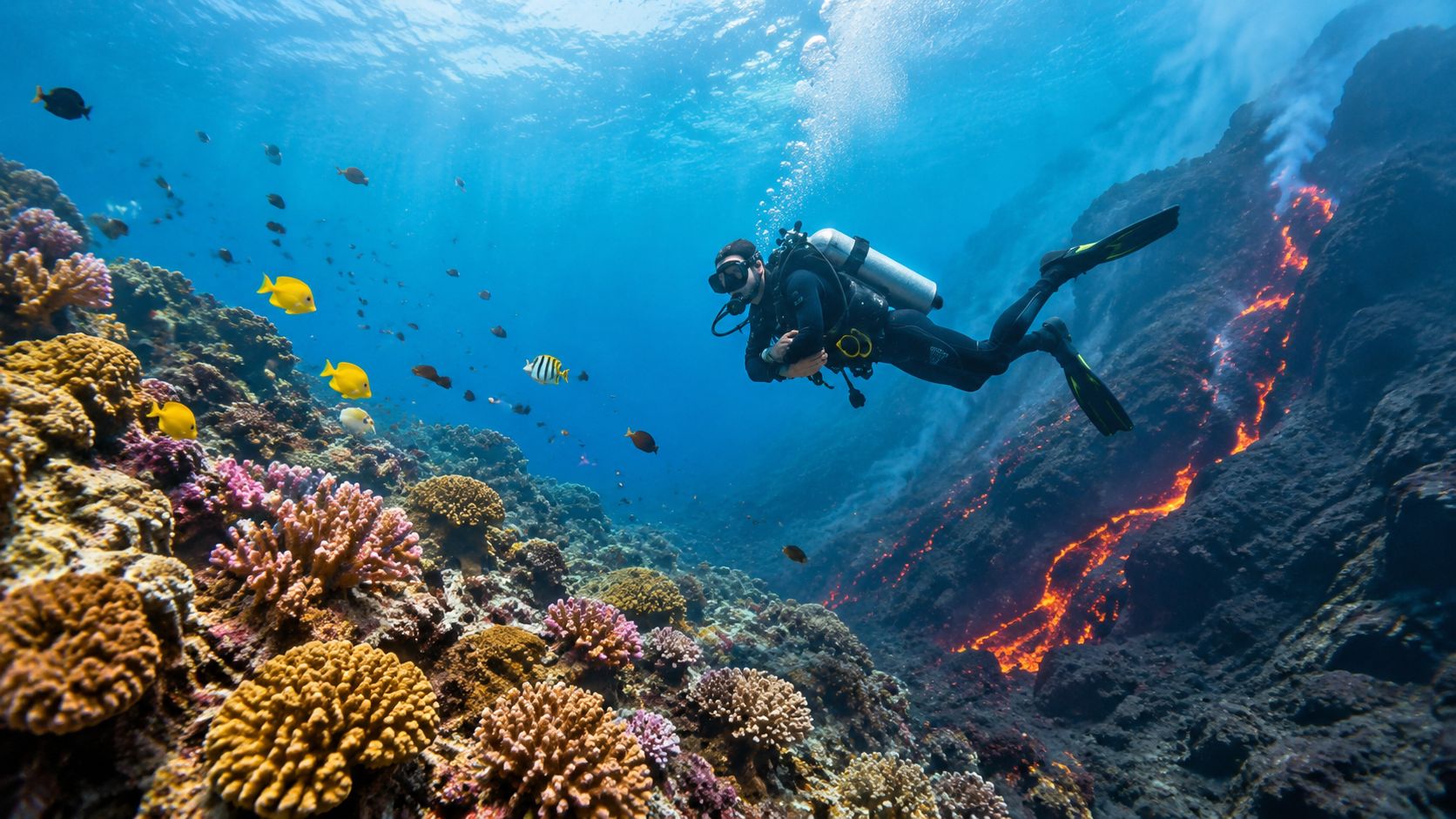
Kona also gets the kind of visibility that makes diving easier and more rewarding. As noted earlier, clear water here regularly pushes past 100 feet, which means better light, easier buddy tracking, less stress for newer divers, and stronger wide-angle photography. Hawaii also has an unusually high percentage of endemic marine life, so this is not just clear water over nice reef. It is clear water with species and terrain that feel distinctly Hawaiian.
That combination changes how you should plan your trip. On the Big Island, site selection, conditions, and boat logistics matter more than chasing a long checklist of names. A good itinerary pairs signature dives with the right daytime sites and leaves room for weather calls, current, and your certification level.
What makes Kona diving different
Kona diving is defined by three things. Structure, clarity, and consistency.
Structure gives the coast personality. Lava tubes and arches create routes worth swimming, not just scenery worth glancing at. Clarity makes those routes easy to read. Consistency matters just as much because the leeward Kona coast is protected from the trade winds that rough up many other Hawaiian shorelines, so boats can reach quality sites more reliably throughout the year.
Marine life rounds it out. Expect reef fish, eels, turtles, and frequent encounters with larger passing life, but do not come here expecting a shark-feed style destination. Come for clean water, strong topography, and signature experiences that are hard to match anywhere else. That is the right expectation, and it leads to a better trip.
When to come and how to plan it
If comfort is your priority, late summer into early fall is the easiest window. Water is warmer, the ocean is often calmer, and long multi-day schedules feel easier on newer divers and mixed-experience groups.
Year-round diving is still the main draw. Kona works in every season if you book with an operator that knows how to choose sites well and build a smart schedule. Reserve the headliner experiences first, then drop your daytime reef dives around them. If manta night diving is already on your list, book it with a crew that runs it regularly and can build the rest of your diving around it. Kona Honu Divers does exactly that, and their manta ray night dive trips in Kona make a strong anchor for the rest of your itinerary.
Konas Must-Do Dives The Manta Ray and Blackwater Experience
If you want the dives you'll still be talking about on the flight home, book the manta night dive and, if your skills are up to it, blackwater. Everything else can be arranged around those two.
One delivers Kona's signature wildlife encounter. The other gives you one of the strangest and most rewarding night dives in Hawaii.
Book the right manta ray night dive
Start with the manta dive. Book it early, and book the right format.
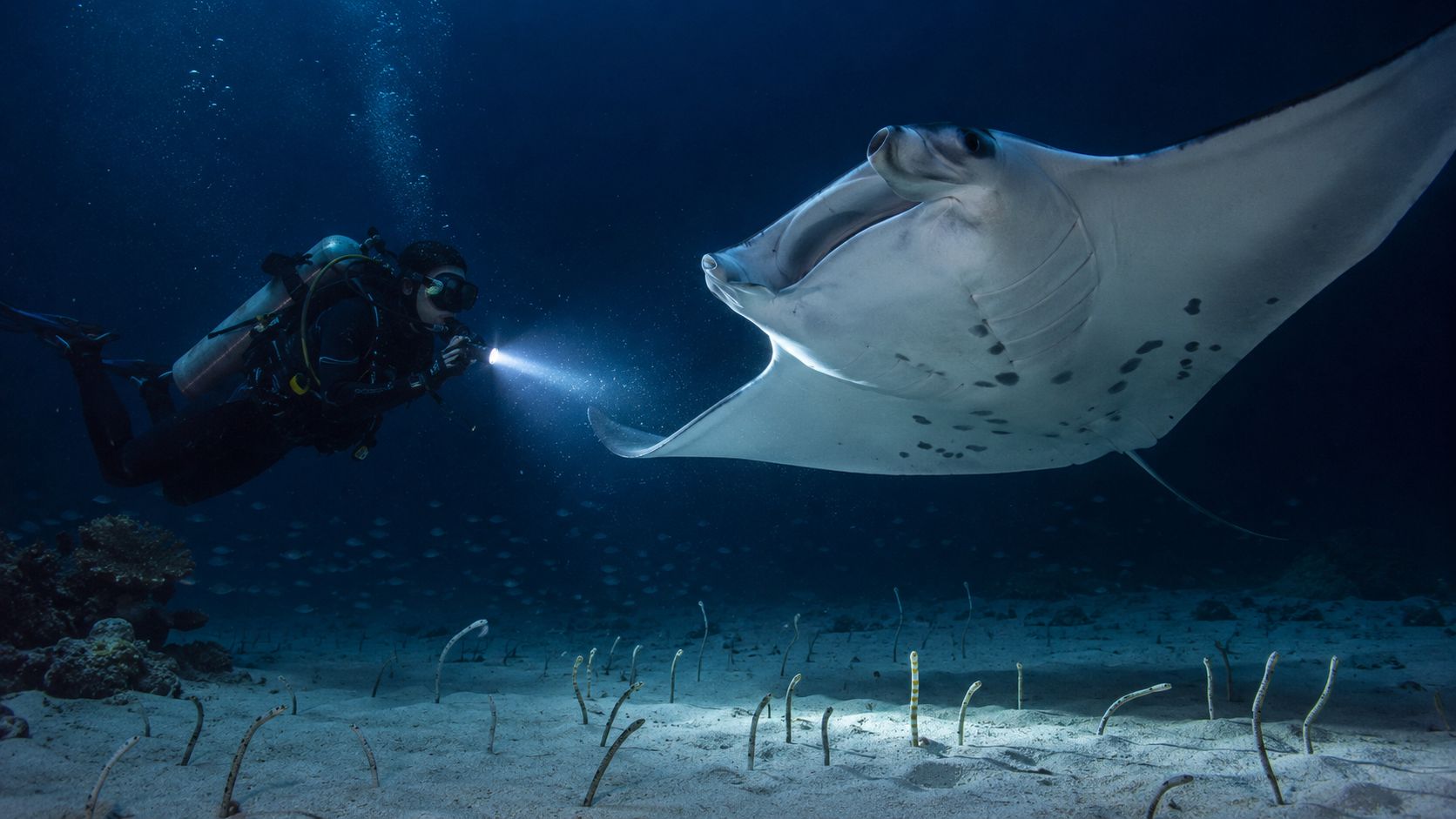
Garden Eel Cove is the smart choice. The site is protected, the setup is orderly, and the viewing area lets divers settle in instead of wasting the dive fighting position. That matters more than flashy marketing. A calm, controlled manta dive is a better manta dive.
The system is simple. Lights are placed on the bottom to attract plankton, and the mantas come in to feed through the beams above the group. Your job is not to chase them. Stay low, stay still, keep your bubbles under control, and let the animals run the show.
This dive works for a wide range of certified divers because the experience is structured, the objective is clear, and the payoff is immediate. If manta diving is on your list, book a dedicated Kona manta ray night dive first, then place your daytime boat dives around it. That is the cleanest way to build a trip.
The divers who get the best manta encounters are the ones who stay calm, hold position, and stop trying to force the interaction.
The blackwater dive for experienced divers
Blackwater is a different category altogether.
You are in open ocean at night, suspended over deep water, drifting with a lit downline while pelagic life rises toward the surface. There is no reef to reference and no lava structure to frame the dive. That is exactly why experienced divers love it.
The draw is the life in the water column. Larval fish, jellies, salps, siphonophores, and other deep-water organisms appear out of the dark, often transparent, alien-looking, and gone again in seconds. You need solid buoyancy, comfort in darkness, and enough awareness to manage yourself without the visual cues a reef dive gives you.
Do not book blackwater as a novelty if night diving already pushes your limits. Book it if you are confident, controlled, and want a dive that feels completely different from every standard tropical reef profile. Kona Honu Divers runs it as a purpose-built experience, not an afterthought, and that is the right way to do this kind of dive.
If you have the training and the mindset, put blackwater on the itinerary. It is one of the most memorable dives on the island.
Big Island Signature Dive Comparison
| Feature | Manta Ray Night Dive | Blackwater Night Dive |
|---|---|---|
| Setting | Protected site at Garden Eel Cove | Open ocean pelagic zone |
| Depth reference | Shallow viewing setup with lights on the bottom | Divers positioned on a vertical line in deep offshore water |
| Main attraction | Feeding manta rays | Pelagic larvae, jellies, and other deep-water life |
| Skill fit | Broad appeal for certified divers and snorkelers | Advanced divers only |
| Water under you | Coastal site | Deep open ocean |
| Experience style | Stable viewing area, wildlife spectacle | Drifting, surreal macro and pelagic encounter |
A Divers Guide to Top Kona Coast Dive Sites
You will remember the night dives. Your daytime dives decide whether the whole trip feels complete.
Day boats on the Kona Coast have one major advantage. They can pick the right site for the actual ocean that day, not the site you hoped would work when you planned the trip a month ago. That matters here. Conditions, current, visibility, and swell angle change the quality of a dive fast. If you want a practical overview before you book, start with this Kona scuba diving overview for the Big Island, then let the operator match the site to the conditions.
Auau Crater and Turtle Heaven
Auau Crater, often called Turtle Heaven, deserves a spot high on your list. Go here for lava terrain with real personality, not just another pleasant reef. You get broken volcanic structure, pockets of activity, and a strong chance of seeing green sea turtles working cleaning stations if you slow down and watch instead of charging across the bottom.
This site rewards divers who settle in, control their breathing, and look. Stay calm near the cleaning areas. Let the wildlife come to you.
Golden Arches and lava-formed structure
Golden Arches delivers the Kona look people come for. You are here for lava architecture, contours, shadows, and swim-through style topography that feels distinctly volcanic. It is a better choice than a flat reef if you want a dive that photographs well and feels like Hawaii, not just warm water with fish.
Book this kind of site on a daylight boat, especially if your trip already includes manta or blackwater. It gives your itinerary range. One night can be spectacle. The next day should be terrain.
Match the site to the diver
Kona is better when you stop chasing names and start choosing profiles that fit the people in your group. That is how experienced locals book.
- Newly certified divers: Choose forgiving reef sites with simple descents, moderate depth, and easy visual reference.
- Photographers: Prioritize structure, clear water, and slower-paced profiles where you are not fighting surge or rushing the group.
- Experienced divers: Ask for sites with stronger topography, deeper contours, and more demanding navigation only if your buoyancy and gas consumption support it.
One hard truth. The “best” site is the one you can dive well.
Too many visitors overbook themselves, then spend the dive task-loaded, burning air, and missing the actual reason they came. A good operator will steer you away from the wrong site and toward the right day plan. That is a feature, not a compromise. Kona Honu Divers does this well, and it is one of the biggest reasons to book your Kona diving as an itinerary instead of treating each dive like a random checkbox.
Preparing for Your Dives Certification Gear and Logistics
Trip planning gets easier once you sort out three things early. Your certification level, your gear plan, and how your group is going to function day to day.
Most mistakes happen before anybody hits the water. People book a dive beyond their comfort level, bring the wrong equipment, or assume everyone in the group can handle the same trip. Fix those issues upfront and the rest of the vacation runs smoothly.
Match the dive to your experience
Standard Kona reef dives fit most certified recreational divers. Specialty dives require more honesty.
Blackwater is the clear example. It's for experienced divers, not for someone who just got certified and feels adventurous that week. The manta night dive is much more broadly appealing, but you still need to be comfortable with night conditions, descent control, and following a briefing exactly.
If you're not certified yet, solve that first. The cleanest path is to complete an open water certification course in Kona before you start chasing specialty dives.
Decide what gear to bring and what to rent
You don't need to haul every piece of gear across the Pacific. Bring the items that affect your comfort and fit most, then rent the rest if needed.
A practical packing split looks like this:
- Bring your own mask: Fit matters too much to gamble on this.
- Bring your computer if you have one: Familiarity reduces stress.
- Bring exposure gear if you're particular: Some divers care a lot about wetsuit fit.
- Rent bulky gear if needed: BCDs, regulators, and tanks are easy to source through operators.
One planning point many divers appreciate is Enriched Air Nitrox when it's available. It can make repetitive diving more comfortable for certified Nitrox divers, especially on a dive-heavy schedule.
Plan for mixed groups and families
Families and mixed groups can absolutely make Kona work, but they need to choose carefully. For the manta night experience, the minimum recommended age is 10, and children under 14 should have constant adult supervision, according to the Guide to Swimming with Manta Rays in Hawaii.
That same guide also makes an important point for first-time snorkelers. If someone in your group is new to snorkeling, don't throw them into open ocean at night as their first attempt. Let them practice in a pool or calm daytime ocean first.
For family logistics, this is the smart order:
- Check age and comfort level early: Don't assume a child who likes the beach is ready for a night ocean activity.
- Split by activity if needed: Some people can dive while others snorkel or ride along.
- Keep the first water day easy: Confidence compounds when the first outing goes well.
The best itineraries aren't built around squeezing everybody into one perfect excursion. They're built around giving each person a trip they can enjoy.
Staying Safe and Comfortable Underwater
You feel the difference on the first drop. Divers who show up rested, hydrated, and ready to follow the briefing settle in fast. Divers who are queasy, overweighted, or trying to wing it burn through air, miss the reef, and turn an easy Kona dive into work.
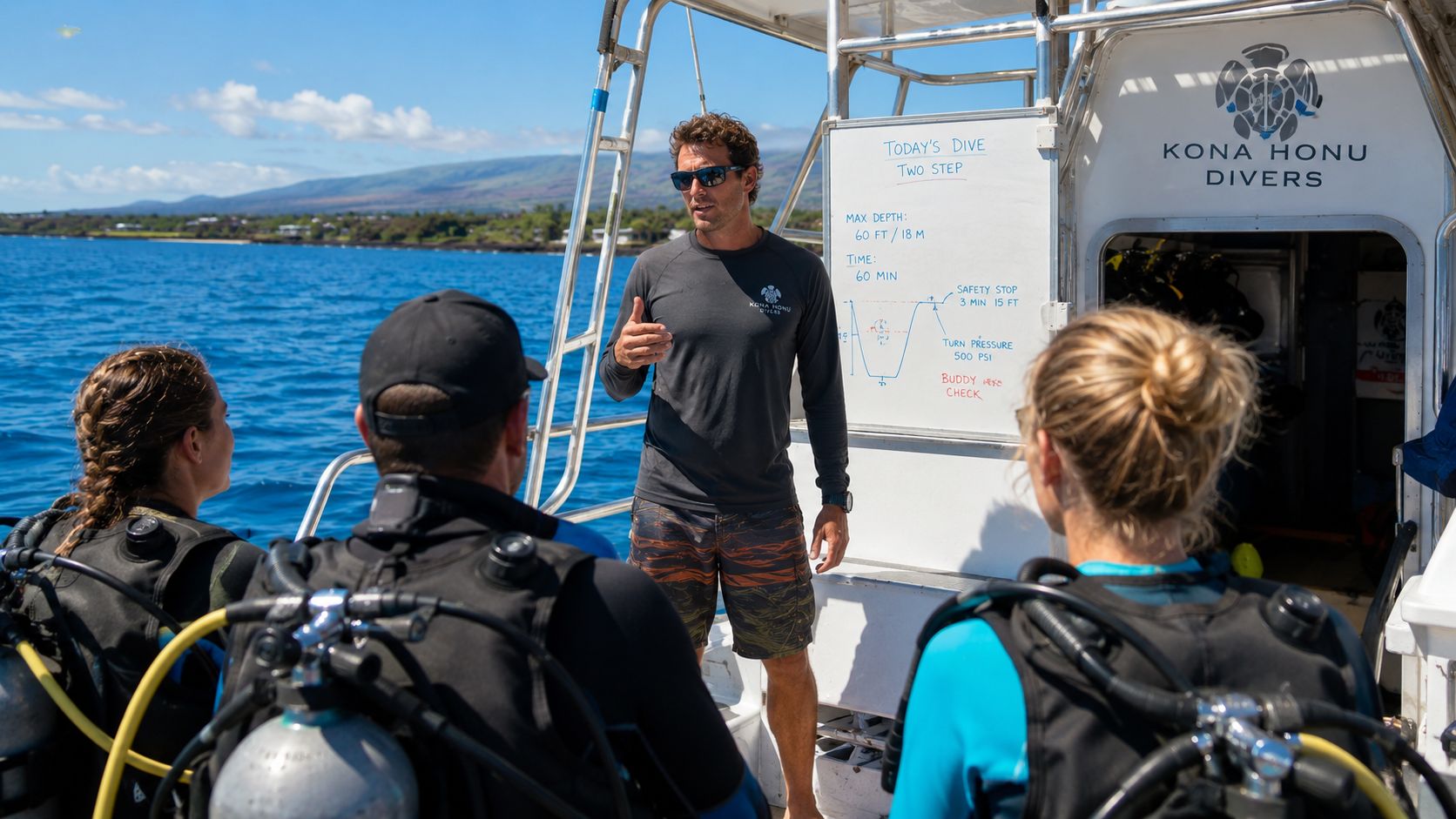
That is why I tell new arrivals to make their first dives boat dives. Kona boat operations remove the biggest avoidable problems. You get cleaner entries, site briefings from people who know the conditions that day, and a crew that can fix small issues before they become bad dives.
Shore diving punishes bad judgment
Kona shore diving rewards local knowledge and punishes casual planning. Volcanic entries can be slick, sharp, surgey, and awkward with full gear on. A site that looks manageable from the parking area can become a mess once you are timing waves with fins in one hand and a camera in the other.
If you already know the island and the entry, fine. If you do not, start from a boat and learn the conditions first. That is the smart order. Save shore dives for later in the trip, or go with a local guide who knows the entry and exit.
Seasickness needs a plan before check-in
Motion sickness is one of the easiest problems to prevent and one of the fastest ways to ruin a dive day if you ignore it. Handle it early.
Use what works for you, and use it before the boat leaves:
- Patch option: Ship-EEZ Seasickness Patch
- Classic medication: Dramamine pills
- Another medication choice: Bonine pills
- Acupressure option: Sea Band wristbands
- Non-medication backup: Ginger chews
If you use acupressure bands, place them correctly. The P6 point sits about three finger-widths below the wrist crease between the two main tendons. Sloppy placement turns a useful tool into jewelry.
Read through Kona Honu Divers' guide to avoiding sea sickness before a Kona boat dive and set your plan the night before. Eat a light breakfast. Hydrate. Avoid a hangover. Do not show up hoping fresh air will save you.
Small habits make Kona dives easier
Underwater comfort usually comes from boring, disciplined habits.
- Descend slowly and equalize early: Do not wait for pressure to build.
- Stay ahead of your breathing: Long, calm breaths settle buoyancy and air use.
- Keep your trim clean: Good positioning protects the reef and keeps you from fighting the water.
- Watch your effort level: If a fin kick feels hard, back off and let the guide adjust the route.
- Follow the briefing exactly: Kona conditions can change by site, depth, and time of day.
One more rule. End the dive with gas left and energy left. Visitors who push too hard on day one usually pay for it on day two.
Comfort is not a bonus. It is part of a good dive plan, and it is one more reason to book with an operation that runs organized boats, gives clear briefings, and matches sites to the divers on board.
Booking Your Ultimate Big Island Dive with Kona Honu Divers
You land in Kona, lose half a day to travel, then realize the manta trip you wanted is full and the operator you picked can't line up the rest of your dives cleanly. That is how a good dive vacation turns into a patchwork schedule. Book the trip in the right order and you avoid that mess.
Start with the dives that define the trip. Manta first. Blackwater next, if it is on your list. Then build your daytime boat dives around those anchors. Keep your first dive day light, especially if you arrived the same day or the night before. Kona rewards divers who pace the week properly.
If you want one shop to handle the whole plan, book your Kona diving tours with Kona Honu Divers. They cover the full lineup from regular two-tank mornings to manta dives, blackwater, and training. That matters because one operator can coordinate your schedule, confirm gear needs, and keep the trip organized instead of leaving you to stitch together separate bookings.
Use this booking plan:
- Reserve manta and blackwater early: Those trips shape the rest of the itinerary and often fill before standard day charters.
- Stack your easier diving first: Start with a relaxed reef or two-tank day before adding long or high-focus specialty dives.
- Ask about Nitrox when you book: Certified divers doing multiple boat days should set that up in advance.
- Build in one flexible day: Kona conditions change. An open slot lets you swap in a missed charter or add a favorite site.
- Keep one operator informed about your whole week: They can flag bad pairings, spacing issues, and training opportunities before they become problems.
Booking well is only half the job. Dive like you belong here. Hold neutral buoyancy, stay off the bottom, keep your fins clear of coral and lava, and leave wildlife alone. On manta and blackwater trips especially, the divers who follow directions get the best experience.
Book early, keep the plan realistic, and let Kona Honu Divers handle the hard parts. Lock in the signature dives first, add the daytime boat schedule around them, and you will end up with a Kona trip that runs clean from the first briefing to the last safety stop.