
You're probably doing what most visiting divers do. You've opened a dozen tabs, every operator says the diving is amazing, every site list looks similar, and you're trying to figure out what matters before you spend real vacation time on a boat.
That's the right question to ask.
Big Island scuba diving isn't just another Hawaii dive trip with clearer water and a manta night add-on. The west side of the island, especially Kona, offers a very specific combination of volcanic structure, quick access to deep ocean, and wildlife encounters that feel dramatically different from reef diving elsewhere in the state. If you understand why those pieces fit together, you'll make better choices about where to stay, what to book, and which dives match your experience level.
Your Big Island Diving Adventure Awaits
A lot of Hawaii dive planning starts with the wrong filter. Divers compare islands by name recognition, resort access, or whatever site gets mentioned first in travel forums. That usually leads to a shallow plan. A better approach is to ask what kind of underwater experience you want most.
If you want broad sandy reefs and easy vacation diving, several islands can work. If you want lava topography, pelagic potential, and signature night dives that people build whole trips around, the Big Island moves to the front quickly. That's why so many divers end up focusing their trip on Kona once they understand what's available offshore.
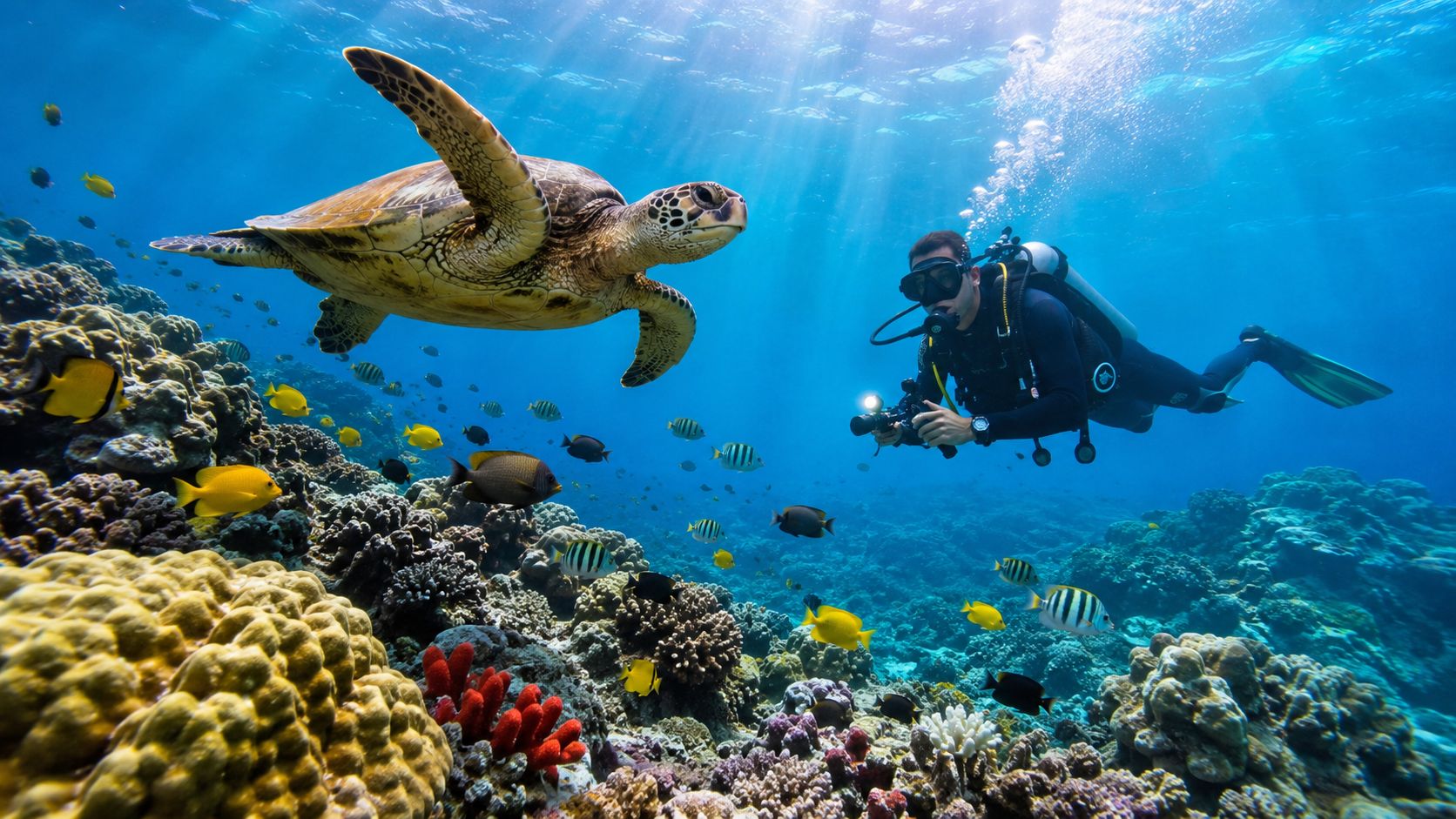
Start with the kind of trip you want
The smartest way to plan big island scuba diving is to sort your trip into one of three buckets:
- Classic Kona reef diving lets you spend your days on volcanic reefs, coral heads, lava fingers, and fish-rich sites that are suitable for a wide range of certified divers.
- Bucket-list night diving means building around the manta ray dive, which is one of the island's defining experiences.
- Advanced specialty diving points you toward options like blackwater, where the open ocean itself becomes the dive site.
Most visitors should combine at least two of those. A single-style itinerary can feel narrow, especially on a destination with this much range.
Why divers keep coming back to Kona
Kona rewards divers who want more than a checklist. The underwater scenery has texture. The terrain changes quickly. One site can feel like a calm reef cruise, while the next drops you into a darker lava-cut environment that feels older and wilder.
Practical rule: Book the dives that only Kona can deliver first. Fit standard reef dives around those, not the other way around.
That usually means reserving your manta dive early, deciding whether your experience level supports blackwater, and then filling the rest of your schedule with daytime reef diving. Once you do that, the trip stops feeling random and starts feeling intentional.
There's also a real difference between reading a site list and understanding what works in the water. Conditions change. Some experiences depend on your trim and comfort in low light. Others are ideal for a diver who hasn't been underwater in a while but wants a smooth re-entry. Kona can accommodate both, but only if you book with some strategy.
Why the Big Island Offers World-Class Diving
The short answer is geology and proximity. The long answer is more useful, because it explains why Kona doesn't just have good dives. It has a style of diving that feels distinct from other tropical destinations.
The Big Island is young in volcanic terms, and that youth shows up underwater. Instead of soft contours and long uniform reef flats, you get lava-built terrain with ledges, hard angles, arches, cracks, and abrupt changes in relief. Those features create the kind of diving that keeps experienced people engaged even when the marine life is taking a quieter day.
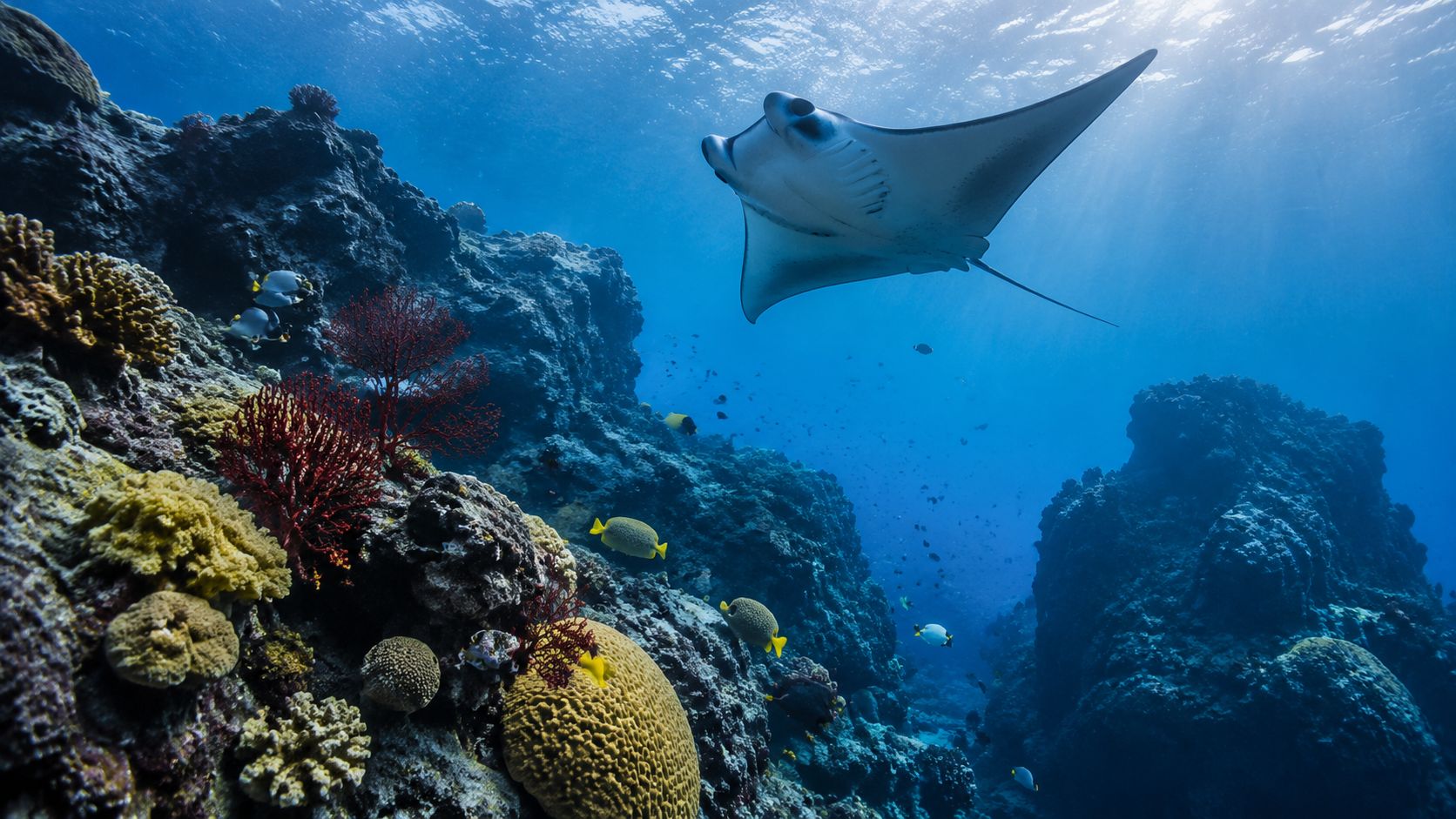
Volcanic terrain changes the whole dive
On many coastlines, the bottom develops gradually. Along Kona, it often doesn't. Lava formed the skeleton of these sites, and that gives dives a more dramatic shape. You're not just looking at fish over coral. You're navigating terrain with shelter, shadow, and natural architecture.
That matters for two reasons:
- Marine life uses structure for cleaning stations, resting spots, and ambush cover.
- Divers get variety within a single profile, which makes even modest-depth reef dives more memorable.
If you want a deeper look at the island's geology-driven dive character, this overview of what makes diving in Kona unique is worth reading.
Deep water sits close to the coast
Kona's other major advantage is how quickly the ocean gets serious. You don't need a long run to reach water that supports encounters and specialty dives that aren't realistic in many other places. That close relationship between shoreline and deep ocean shapes the whole local dive menu.
It's one reason reef dives can feel alive with passing action from the blue. It's also why night experiences here have such a strong reputation. The ocean just offshore isn't a distant backdrop. It's an active part of the dive environment.
Good Kona diving comes from the seafloor and the offshore water column working together. Most destinations have one strength or the other. Kona has both.
Clear planning beats generic planning
Visitors often assume every day of diving here works the same way. It doesn't. One operator may lean toward comfortable reef profiles. Another may cater more to independent, experienced divers. One trip may suit a returning Open Water diver perfectly. Another asks for stronger trim, situational awareness, and better gas discipline.
Here's the framework I'd use:
| Trip priority | What to prioritize |
|---|---|
| First visit to Kona | Day reef dives plus one manta night |
| Strong night-diving comfort | Add blackwater if qualified |
| Family or mixed group | Choose forgiving day sites and keep logistics simple |
| Photo-focused trip | Protected sites and calmer viewing setups matter most |
That's how you get the most out of big island scuba diving. You don't chase the longest site list. You match the island's underwater geography to the kind of diver you are.
The Big Island's Most Iconic Dives
You can tell a lot about a Kona trip by the dives someone chooses first. A diver who books mantas is usually chasing a signature Hawaii experience. A diver who asks about blackwater wants something stranger and more technical. A diver who builds around reef days often ends up with the most balanced trip, because Kona's lava structure and clear water hold up dive after dive.
These experiences are famous for different reasons. They also ask for different skills. That distinction matters more here than in destinations where every charter runs a similar profile.
The manta ray night dive
The manta night dive deserves its reputation because the setup is unusually reliable and easy to understand. Lights attract plankton. Plankton attract mantas. Divers stay settled near the bottom and let the action come overhead.
On the Kona coast, that usually means a shallow night dive with a simple profile and a very specific job for the diver. Hold position, keep your buoyancy clean, and avoid turning the site into a bubble storm. The crews that run this well spend real time on pre-dive briefing and in-water placement, because diver behavior affects the quality of the encounter.
Garden Eel Cove is the site many visiting divers ask for, and for good reason. This Garden Eel Cove in Kona feature explains why the location tends to produce consistent manta action and strong photo opportunities. If mantas are your priority, review Kona Honu Divers' manta ray night dive tour before you book so you understand the schedule, profile, and expectations.
If you are still sorting through locations, this guide to the best places to dive on the Big Island gives useful site-level context.
The blackwater dive
Blackwater is Kona at its most unusual. The boat runs offshore over deep water, the downline becomes your reference point, and the animals in front of your mask are often larval, translucent, and hard to identify even for experienced divers. It is one of the clearest examples of why Kona diving is shaped by deep ocean proximity, not just by reef quality.
This dive rewards control. Good trim, calm breathing, comfort at night, and the discipline to stay with the system matter more than chasing subjects. Divers who expect a normal night reef dive can find the environment disorienting. Divers who arrive ready for open-water procedure usually love it.
Kona Honu Divers posts the practical information on qualifications and logistics on Kona Honu Divers' blackwater dive tour details. Read that page before you commit. It will tell you quickly whether blackwater belongs on this trip or a future one.
Blackwater is for divers who stay composed without a bottom, a wall, or daylight to orient them.
Kona reef dives
Day reef diving is where many visitors finally understand Kona. The volcanic topography creates arches, fingers of lava, hard relief, and shelter that can hold a lot of life in a relatively compact area. You are not just looking at fish on coral heads. You are diving terrain.
That terrain changes how I would plan a week here. Newer or rusty divers usually do better starting with an easy morning reef dive, getting weighting and buoyancy sorted out, then adding mantas or another specialty dive later. Photographers often get better results by choosing calmer reef profiles and repeating a type of site that fits their subjects instead of trying to sample everything once.
A few practical trade-offs are worth keeping in mind:
- Photographers should favor sites with manageable surge, stable positioning, and enough structure to work a subject patiently.
- Returning divers who have not been in the water recently should use the first reef day to rebuild comfort before adding demanding night dives.
- Marine life focused divers usually see more by slowing down and working a lava feature thoroughly instead of covering a lot of ground.
If you are building a mixed schedule, the current Big Island scuba diving tours page is the cleanest way to compare what fits together.
Planning Your Trip Seasons Certifications and Training
You land on the Big Island with three dive days, a manta night booked for day one, and a blackwater spot you are tempted to add at the last minute. That plan can work for the right diver. For a lot of visitors, it is backwards.
Kona rewards good sequencing. The coast drops into deep water fast, the volcanic structure creates very different site profiles, and the signature dives ask for different skills. A strong trip plan starts with the dives you are ready for, then places them in an order that lets you settle in, judge conditions, and add challenge without turning the vacation into a skills recovery course.
Choose your season based on priorities, not just weather
Kona offers diveable conditions year-round, which is one reason people underestimate trip planning here. The main question is not whether you can dive. It is what you want the week to do.
If mantas are the headline, give yourself more than one shot. Rain can affect visibility, and night conditions never read the same way on every charter. A single booked manta night is fine if it is a bonus dive. If it is the reason for the trip, build flexibility into the schedule so one off night does not decide the whole week.
If your focus is reef diving, underwater photography, or adding training, almost any time of year can work well with the right operator and daily site selection. That is the part generic guides often miss. Kona is less about chasing one perfect season and more about matching your goals to current conditions and your skill level.
Match the dive to the diver you are right now
Honest self-assessment matters more than the card in your wallet.
| Dive type | What you should have |
|---|---|
| Standard Kona reef diving | Open Water and recent comfort in the water |
| Manta night dive | Open Water, controlled buoyancy, and calm behavior after dark |
| Blackwater | Strong situational awareness, recent experience, and any operator-specific prerequisites |
| Training-focused trip | Enough time in your schedule for academics, confined work if needed, and boat days |
I tell visiting divers the same thing all the time. Book for your current comfort, not for the version of you that existed on your last great dive trip two years ago.
That is especially true in Kona, where the exciting dives are memorable because they are different. A manta night asks you to stay still, aware, and controlled in the dark. Blackwater removes the visual references many divers rely on without realizing it. Neither dive is hard in the same way as a current-swept wall somewhere else, but both expose weak buoyancy and rusty habits quickly.
Training on the island works well if you plan for it
The Big Island is a smart place to train because the diving you do during a course connects directly to the diving you came here to enjoy. You are not learning in a pool and then guessing how that translates offshore. You can build skills, then use them on lava shelves, reef structure, and night dives that reward precision.
Divers who need a reset often get more out of a refresher than an ambitious charter lineup. New divers can turn the trip into a real starting point instead of a one-time experience. Divers who want to add formal training should sort that out before arrival so the schedule is realistic. Big Island scuba certification options are easiest to compare before you start locking in specialty dives and nonrefundable boat days.
Nitrox is another good example of planning versus assuming. If you expect to dive several days in a row and want the option, ask the operator in advance whether it is offered and whether your certification is current.
The certification card matters less than your control, comfort, and judgment underwater.
That mindset leads to better site choices, better dives, and less stress for everyone on the boat. It also leaves more room for what makes Kona special in the first place: spending your time watching marine life and reading the terrain, not working through preventable problems at 40 feet.
Essential Gear Safety and Seasickness Prep
Packing for big island scuba diving is easy if you separate comfort items from mission-critical items. Most visitors bring too much clothing and not enough personal gear they already trust.
Your own mask, computer, and exposure preferences affect your dive more than an extra dry bag ever will. Rental gear can be perfectly workable, but the items that sit on your face, track your profile, and influence your comfort deserve more thought.
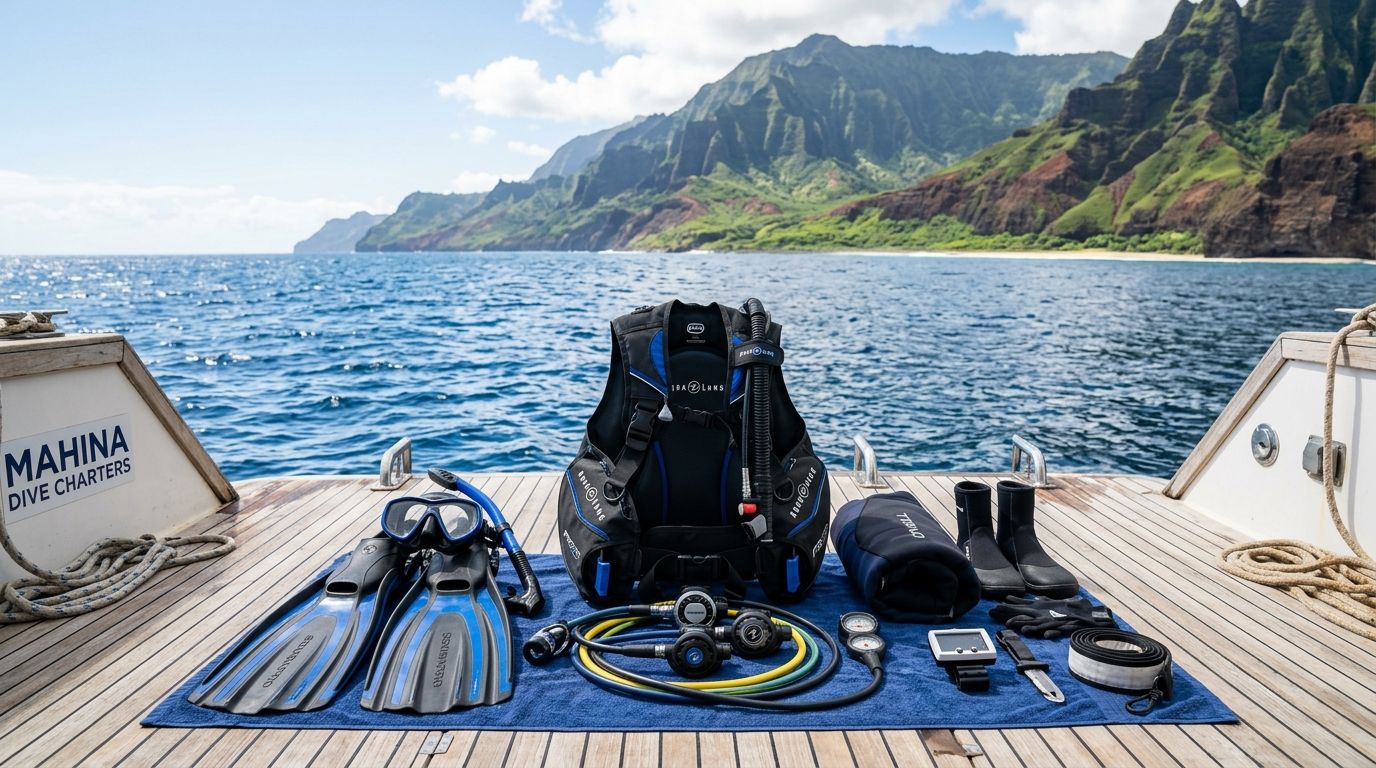
What to bring yourself
I'd strongly recommend bringing the following if you own them and they fit well:
- Mask that you know seals well. A leaking mask is a small problem on paper and an annoying problem on every dive.
- Dive computer you understand. Familiarity matters more than fancy features.
- Exposure layer that matches your comfort. Some divers run warm. Some don't. Don't guess based on what your buddy likes.
- Surface essentials such as sun protection, water, towel, and dry clothes for the ride in.
The rest can often be rented without issue, provided you book with a competent operation and communicate sizing needs in advance.
Seasickness is easier to prevent than fix
If you're prone to motion sickness, act before the boat leaves the harbor. Once nausea starts, your dive day gets harder fast. If you want product options, you can look at Ship-EEZ Seasickness Patch, Dramamine pills, Bonine pills, Sea Band wristbands, and Ginger chews.
You should also choose a plan that fits how your body reacts:
- Use medication early if that's your usual solution. Taking it late is a common mistake.
- Stay lightly fed and hydrated. An empty stomach and a heavy greasy breakfast can both go badly.
- Keep your eyes on the horizon during transit instead of staring into your lap or phone.
For a deeper rundown of what divers commonly use, this guide to the best sea sickness medication for Kona diving is a useful reference.
Safety and environmental habits that actually matter
Good Kona diving depends on diver behavior more than many visitors realize. The famous wildlife encounters here work because divers don't turn every site into a flailing photo chase.
Field note: If your buoyancy slips, your whole dive shrinks. You spend less time observing and more time fixing your position.
A few habits make a visible difference:
- Control your buoyancy before you worry about your camera.
- Keep fins and gauges off the reef. Lava and coral both deserve clearance.
- Use reef-safe sun protection and cover up when possible on the boat.
- Listen closely on night-dive briefings. Small procedural details matter more after dark.
The best divers in Kona aren't the ones who move fastest. They're the ones who stay stable, quiet, and aware.
Advanced and Family Diving Opportunities
You can see the split before the boat leaves the harbor. One diver is helping a teenage daughter with mask prep. Another is checking a camera housing and asking about current on a more exposed site. Both can have an excellent day in Kona, but they should not be booked onto the same kind of trip by default.
That is one of the advantages here. Kona is not just a place with famous dive sites. The coastline gives operators options. Sheltered reef dives, specialty night dives, and blue water experiences all sit within reach because deep ocean water presses close to the volcanic shore. Good trip planning starts with matching that range to the people in your group.
If you're traveling with family or newer divers
For mixed-experience groups, the smart play is to lower complexity and raise comfort. Calm morning reef dives usually beat ambitious schedules. Newer divers learn faster when they are not dealing with long boat rides, task loading, and pressure to keep up with stronger divers.
A family-friendly plan usually looks like this:
- Choose protected daytime sites with straightforward entries and simple profiles.
- Leave room between dive days if anyone is still getting used to boats or equalizing.
- Book training or guided beginner-focused outings for family members who need more support.
- Skip the urge to stack every signature dive into one short vacation.
I see families have their best trips when the first goal is confidence. Once that is in place, the fun part takes care of itself.
If you're an experienced diver
Kona rewards experience in a specific way. The diving does not get better because a site is harder. It gets better when your skills let you take advantage of conditions, timing, and dive format.
That matters on blackwater dives, long-range charters, and some night profiles. These are not trophy dives to collect because the name sounds good. They work for divers who are current, calm in open water, and honest about their comfort level. Blackwater in particular is a very different experience from reef diving. You are suspended over deep water with few visual references, and your awareness needs to stay sharp for the whole dive.
If that sounds like your kind of diving, compare options on the Kona diving tours schedule and look closely at prerequisites, boat style, and how the crew groups divers. The right operator fit matters more on advanced trips than people expect.
| Diver type | Better choice | Usually a poor choice |
|---|---|---|
| Newly certified | Calm reef dives with close guide support | Demanding night specialties on day one |
| Confident recreational diver | Reef dives plus manta, with recovery time between bigger outings | Booking every signature experience in a tight schedule |
| Advanced diver who is current | Blackwater or longer-range advanced charters | Beginner-oriented boats that are paced for first-timers |
| Underwater photographer | Controlled sites with stable positioning and predictable pacing | Fast-moving dives where everyone is chasing the same subject |
A note for photographers
Kona photography is shaped by the underwater terrain as much as the animals. Lava structure gives wide-angle shots real depth and contrast. The clear water helps, but only if the diver behind the camera stays still enough to use it.
The strongest shooters here are usually the most disciplined divers on the boat. They pick dives for the images they want, dial in buoyancy early, and do not spend the whole trip racing from one headline experience to the next.
That same planning mindset applies to everyone. Families do better when the trip feels manageable. Advanced divers do better when the challenge fits their actual skills, not just their certification card.
Booking Your Adventure with Kona Honu Divers
By the time you're ready to book, the main question isn't whether Kona is worth diving. It's which operation matches the kind of trip you want. Boat design, guide style, safety culture, and trip mix all matter. They shape the day more than marketing copy ever will.
The strongest operator fit for many visiting divers is the one that can support both straightforward reef diving and the more specialized side of Kona without making the experience feel chaotic. That includes clear briefings, well-maintained gear, sensible diver grouping, and a trip calendar that makes it easy to combine day diving with marquee night experiences.
The place to review those options directly is the Kona Honu Divers tour schedule. That page lets you compare standard reef charters, manta trips, blackwater, training, and advanced outings in one place.
What to look for before you click book
Don't just pick the first departure time that fits your vacation.
Check for:
- Trip fit with your certification and current comfort level
- Boat-day pacing if you're planning multiple consecutive dives
- Night-dive sequencing so you're not stacking demanding profiles poorly
- Crew communication because good briefings often predict a good day in the water
A useful shortcut is to start from the experiences that are hardest to replace. Manta, blackwater, and advanced long-range opportunities should anchor the schedule. General reef dives can fill in around them more easily.
Reviews matter when they reveal patterns
The value in reviews isn't the star rating alone. It's the consistency of what divers describe. Are they talking about smooth logistics, calm crew support, good marine life briefings, and sensible in-water organization? Those patterns tell you more than any single glowing comment.
A well-planned Big Island scuba diving trip usually comes down to three things. Book the iconic dives early, match the charter to your actual experience level, and leave enough room in the schedule to enjoy the island instead of rushing through it. If you do that, Kona tends to deliver exactly what divers come here for.
If you're ready to build your trip, Kona Honu Divers is a practical place to start for reef dives, manta nights, blackwater, and training on the Big Island.