
You're probably in the same place a lot of divers are when they start planning Hawaii. You want one trip that delivers the clear water, the big animals, the unusual night diving, and the kind of boat operation that doesn't turn every day into a gear shuffle and a cattle call. You also don't want to burn a vacation day on the wrong dive for your skill level.
That's why Big Island scuba diving keeps rising to the top. It gives you easy reef diving, signature night diving, and advanced experiences in one coastline. The island doesn't ask every diver to want the same thing. A newer diver can spend the trip on calm reef sites and come home thrilled. A seasoned diver can stack mantas, deeper profiles, and blackwater and still feel like they barely scratched the surface.
Your Ultimate Big Island Scuba Diving Adventure Awaits
You roll out of Honokohau before sunrise, drop onto a lava reef for the first dive, and by that evening you are on the bottom watching manta rays pass inches over your bubbles. A different night puts you tethered over blue water with larval creatures flashing past your light beam in open ocean. Few places let you stack those experiences into one trip without wasting time on long runs or mismatched dive plans.
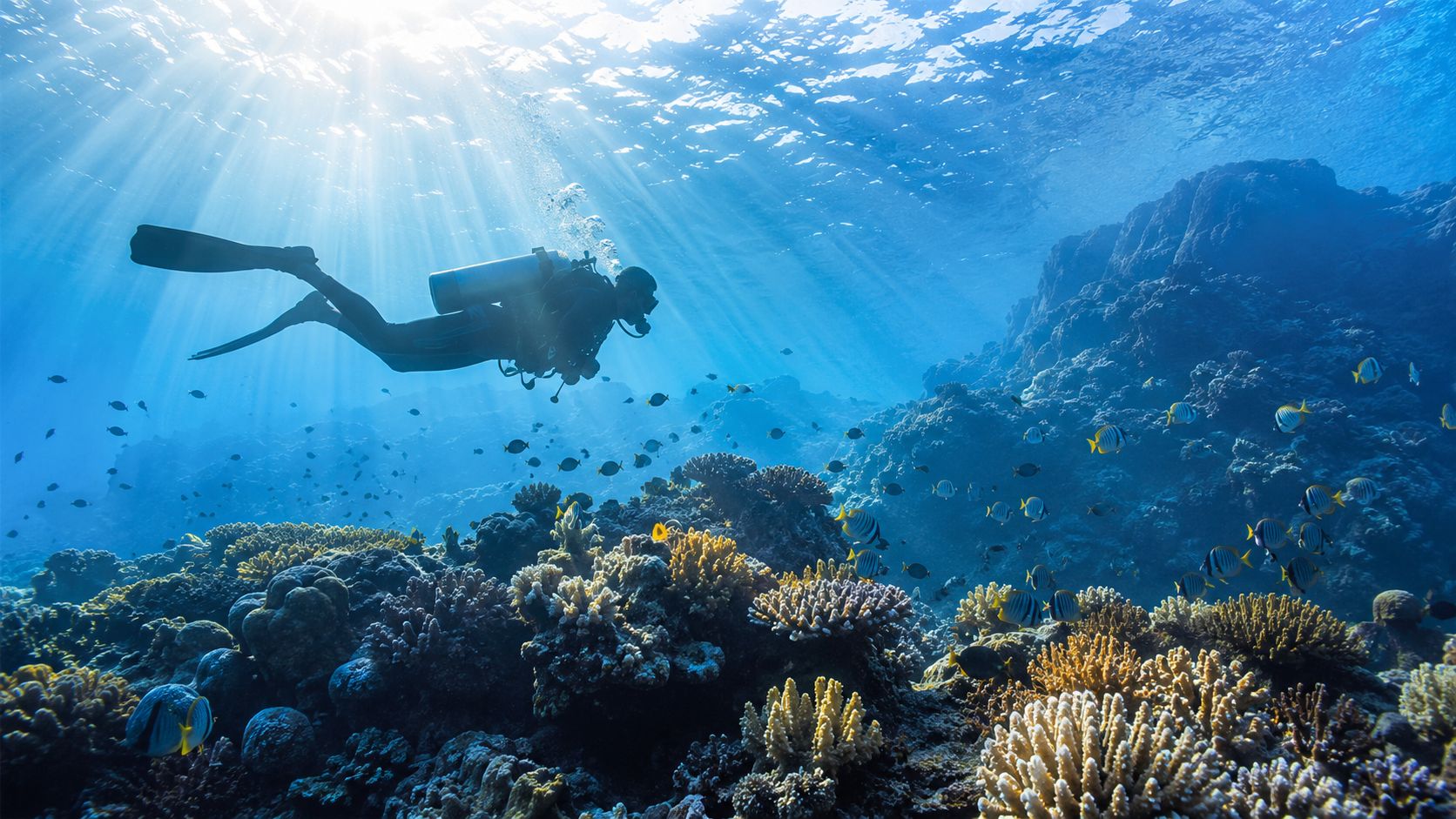
That is the primary draw of Big Island scuba diving. The variety is not just a marketing line. It changes how you should plan the week. Manta night dives, blackwater, deeper lava profiles, and easy reef mornings all ask for different skills, different gas awareness, and sometimes different gear setups. Divers who get the most out of Kona usually build the trip around what they can do well, not just what looks famous on Instagram.
The underwater terrain shapes the whole experience. Kona diving means lava fingers, arches, swim-throughs, hard bottom, and abrupt depth changes that can turn a simple reef dive into a much more technical profile if you are not paying attention. On the right day, that structure gives you dramatic topography and excellent fish life. On the wrong day, it can tempt newer divers deeper than they planned.
A smart schedule usually looks like this:
- Start with reef diving if you are new to Kona. It gives you a read on weighting, air use, and how comfortable you are in the local conditions.
- Book manta once you know you can stay settled at depth after dark. The dive is straightforward, but good buoyancy and calm finning matter.
- Save blackwater for divers who are already comfortable with night diving and open-water reference loss. It is one of Kona's signature experiences, but it is not a casual add-on.
- Choose operators by fit, not just availability. Boat handling, guide ratios, site selection, and briefing quality make a visible difference here.
That last point matters more than visitors expect.
Plenty of articles stop at site names. A better Kona plan connects each type of dive to the training, equipment, and boat operation behind it. If you are comparing options for diving Kona and the Big Island, look at the actual match between the tour and the diver. Manta needs a crew that runs an organized night setup. Blackwater needs strong briefings, disciplined procedures, and guides who know how to manage people in the dark. Standard two-tank charters should still give you good site selection, practical help with gear, and enough local judgment to adapt when conditions change.
That is how a vacation turns into a proper Kona dive trip.
Why the Kona Coast Offers Perfect Dive Conditions
On a good Kona morning, you notice it before you giant stride in. The boat ride stays comfortable, the entry is simple, and once you drop below the surface the water column often looks wide open. That combination is why this coast works so well for boat diving. It gives operators more usable days and gives divers cleaner, less stressful conditions to work in.
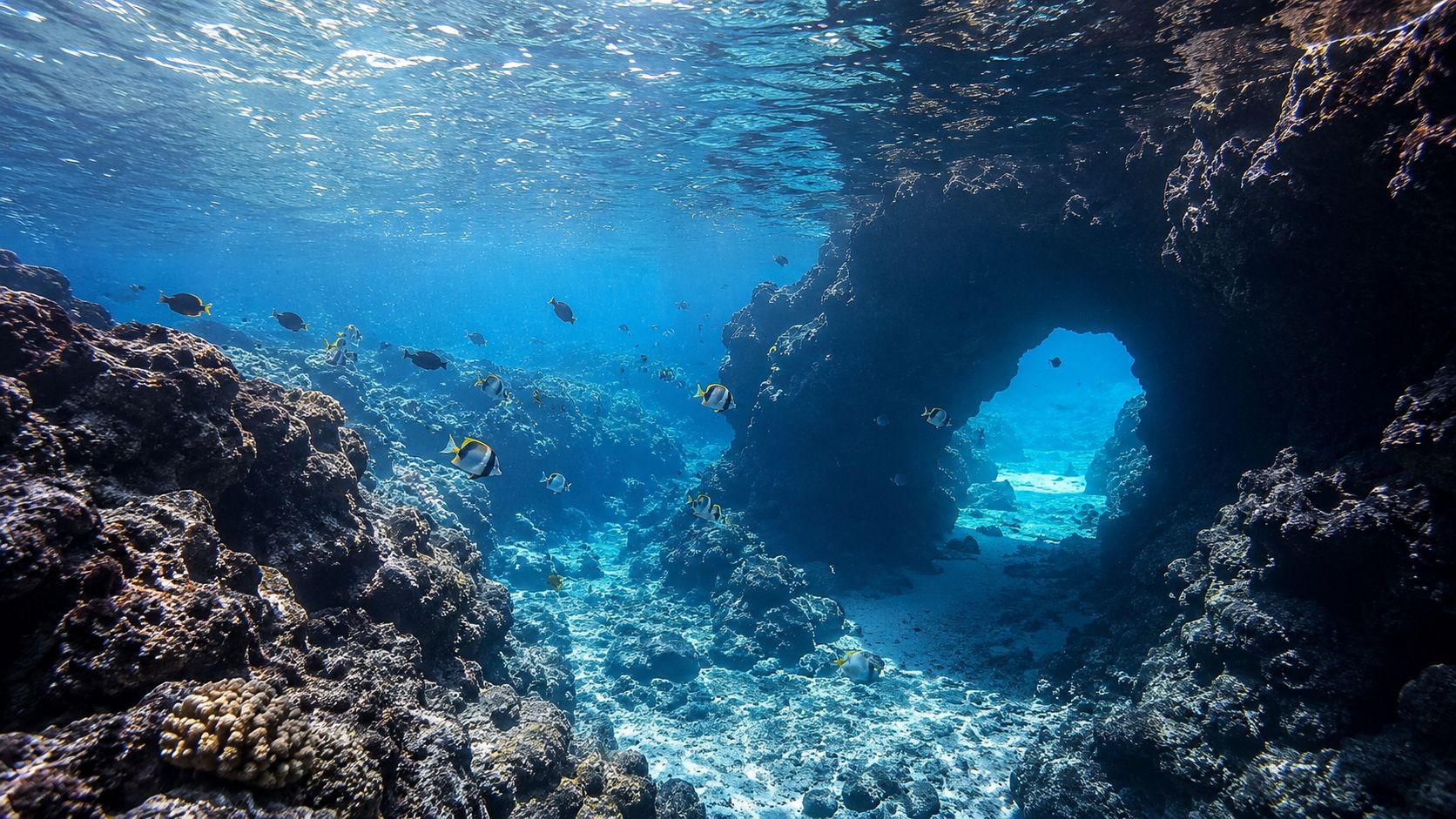
The main reason is geography. Kona sits on the leeward side of the island, tucked behind massive volcanoes that block much of the prevailing wind and swell. The result is less chop, less suspended sand, and visibility that is often excellent by Hawaii standards. You feel that in practical ways. Descents are easier to control, briefings are easier to execute, and underwater navigation is simpler for newer divers.
Local conditions also reward good planning. Calm water does not mean every site is interchangeable. Some spots stay comfortable for new divers. Others still demand solid buoyancy, good air awareness, and the judgment to call a dive early if surge or current starts to build.
The volcano shadow changes the whole dive day
Visitors usually talk about clear water first. The bigger advantage is consistency.
A protected coast gives captains more flexibility in site selection and gives instructors a better platform for training dives, refreshers, and guided reef charters. It also makes specialty dives more workable because the crew can set up entries and exits without fighting rough surface conditions every time.
| Condition factor | What it changes for divers |
|---|---|
| Leeward coastline | More reliable departures and steadier boat positioning |
| Lower surface chop | Easier giant strides, pickups, and surface intervals |
| Cleaner water column | Better buddy contact, reef awareness, and light penetration |
That last point matters at night too. Clear water makes light work better, whether you are watching reef life on a standard night dive or preparing for a more advanced experience later in the trip.
Why the underwater terrain stays interesting
Kona is not a flat, easy reef coast. It is a lava coast.
You get arches, fingers, ledges, broken rock, sand channels, and abrupt depth changes that can turn one site into several different dives depending on the route. That variety is one reason experienced divers keep coming back. A guide can keep one group shallow and relaxed along a lava shelf, while another group with the right training can handle a deeper profile or a site with more bluewater exposure.
Marine life follows that structure. Turtles rest in protected pockets. Endemic reef fish stack up along the rock. Pelagics pass the outer edges when conditions line up. Kona's signature dives exist because those patterns are dependable enough for skilled crews to build real operations around them, not just hope for a lucky sighting.
Plan for the season, then let the crew adjust the site
Late summer into early fall often brings warm water and long stretches of calm weather, which makes trip planning easier if you want multiple boat days. Winter can still produce very good diving, but the margin for change is smaller and a flexible schedule helps.
The smart move is to book with an operator that can match the day to the diver, then watch the actual marine forecast instead of assuming every calm-looking shoreline means an easy offshore dive. If you are comparing options for diving Kona and the Big Island, look for crews that talk clearly about site choice, diver experience, and backup plans. That is how you get the best out of this coast.
The World-Famous Manta Ray Night Dive Experience
You drop in at dusk, finish a calm reef dive, and settle onto the lava with your light aimed up into the water column. A few minutes later, the first manta banks through the glow, then another follows. On a good night, the whole group goes quiet except for regulators and the occasional muffled laugh.
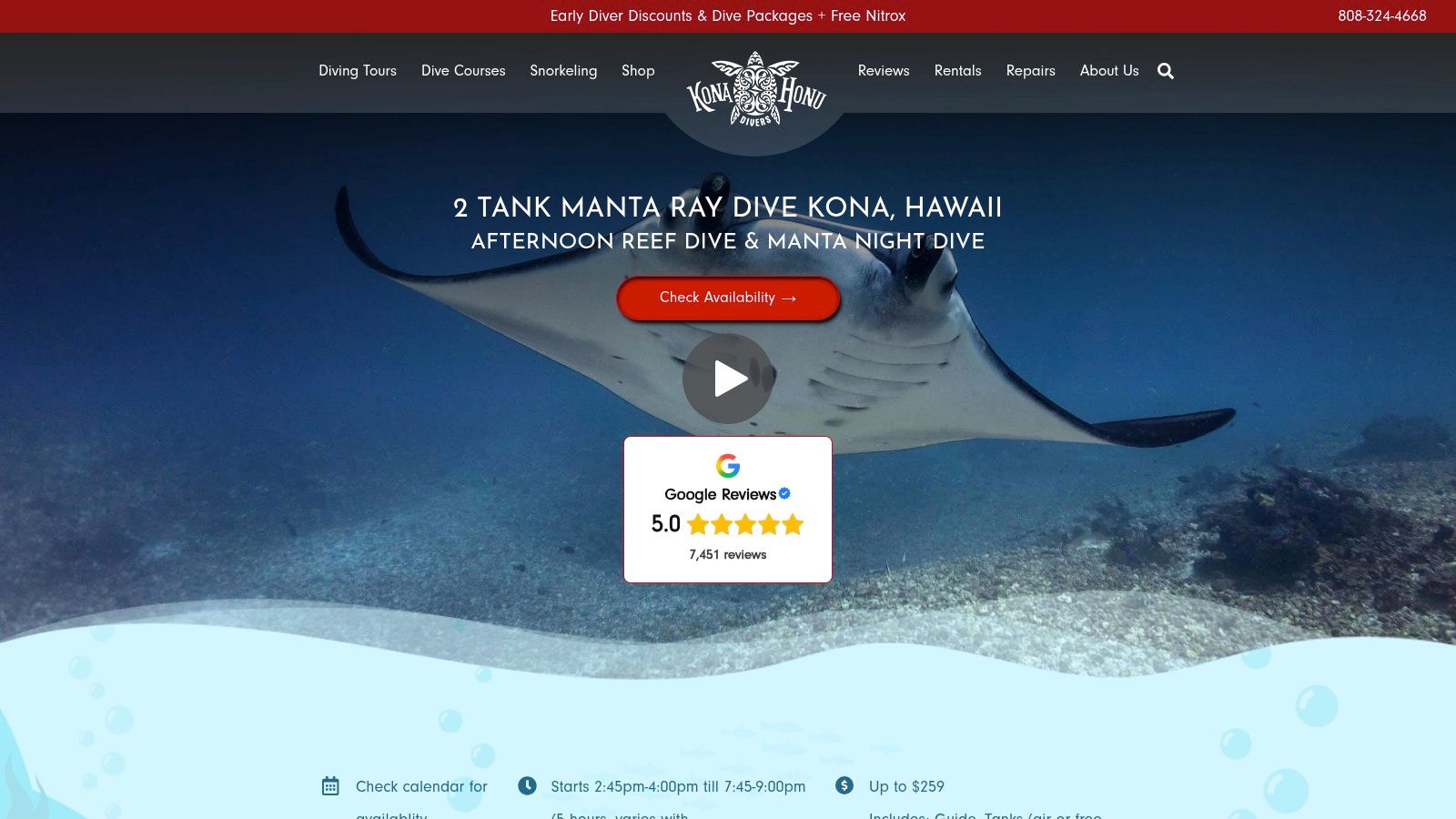
This dive stands apart because the behavior is consistent and the viewing setup is controlled. Divers kneel or sit on the bottom in relatively shallow water while lights draw in plankton, and the mantas do the rest. You are not chasing an animal through blue water. You are part of a feeding station that rewards good buoyancy, patience, and clean teamwork.
The trade-off is simple. Manta dives are usually easy by depth and profile, but they are less forgiving of poor habits than people expect. Divers who flutter above the group, swing lights around, or try to intercept the animals make the experience worse for everyone and can shut down close passes fast.
Why site choice matters more than first-time visitors realize
Kona has more than one manta location, and they do not feel the same underwater. Garden Eel Cove usually works better for a broad mix of divers because the layout gives crews room to organize the group, the bottom area is straightforward, and the pre-manta portion of the evening often adds real value instead of feeling like a wait for the main event.
That matters if you are booking for mixed experience levels. Newer divers usually do better when the descent, seating area, and exit are predictable. Experienced divers care about that too, especially on a night dive, but they also notice whether the first tank is worth doing or just transportation to the manta show.
Skills that make this dive better
A manta night dive does not demand advanced certification, but it does reward control.
- Buoyancy: You need to stay planted without crushing the bottom or drifting into the light field.
- Fin discipline: Short, careful kicks keep sand and silt out of everyone's view.
- Light awareness: Point your beam where the guide asks. Random light movement scatters attention and can disrupt the setup.
- Calm positioning: Mantas often come closest to divers who look the least interesting.
I tell divers the same thing at briefing every time. Stay low, keep your profile small, and let the rays choose the distance. That is how you get the barrel rolls right over your head.
Gear that actually helps
This is one of the few signature dives where less is often better. A standard single tank setup, a reliable primary light, and exposure protection that keeps you comfortable while mostly stationary are enough. Gloves are not for touching the bottom or the animals, and bulky camera rigs can become a nuisance if the diver carrying them cannot hold position cleanly.
For photographers, wide angle is the right call. For everyone else, skip the gadget pile and focus on trim, warmth, and a light with a dependable beam. If you are coordinating a mixed group of divers and snorkelers, the manta ray night swim guide gives a clear picture of how the evening is usually staged.
Booking it the smart way
A two-tank evening is often the better setup because it gives you a full dive outing instead of a quick drop onto the manta site. The first dive lets the group settle in, check weighting, and get comfortable in the dark before the main event starts. That is especially useful for divers who have not done much night diving, or who are rusty and want a little margin before the lights go on and the mantas arrive.
For families and mixed groups, this is one of the easiest shared ocean experiences on the island. Divers watch from below. Snorkelers watch from the surface light board. Everyone leaves talking about the same passes, the same close turns, and the same moment a twelve-foot wingspan appeared out of black water and filled the whole view.
Exploring Reefs Deep Dives and Blackwater Adventures
You see the difference on the boat before you ever hit the water. One diver is setting up for a relaxed reef dive with a standard single tank and no extra clutter. Another is checking lights, clipping backups cleanly, and making sure every hose route is tidy because the plan is deeper water or blackwater later in the day. Kona supports both, but the right choice depends on skill, comfort, and how much task loading you can handle without getting behind the dive.
Daytime reefs for divers who want terrain and behavior
Reef diving on the Big Island is where divers learn how this coastline really works. The underwater topography is built from lava, so the dive is less about following a pretty wall and more about reading structure. Ledges, fingers, swim-throughs, broken rock, and sand channels all hold life, but only if you slow down enough to see it.
Good reef divers usually have the best dives here.
Fast finning burns gas and skips the details. A patient diver will spot eels tucked into cracks, schools holding just off the rock, and the smaller critters that make Kona reefs feel alive between the bigger sightings. The practical skill here is buoyancy with purpose. You need enough control to inspect tight terrain without banging fins or knees into volcanic structure, and enough awareness to keep your buddy in sight when the reef folds in on itself.
A few trade-offs matter:
- Wide terrain rewards calm movement: Cover less ground and you usually see more.
- Volcanic structure can be awkward: Good trim keeps you off the rock and out of silty pockets.
- Simple gear works best: Reef dives are usually better with less drag, fewer clips, and no gadget pile swinging underneath you.
Deep profiles reward polished basics
Kona's deeper dives appeal to divers who already have their fundamentals wired. Once the bottom drops away, the dive gets less forgiving. Visual reference changes, gas planning matters more, and small buoyancy mistakes get bigger when you are working near depth instead of over a shallow reef.
Experience quickly becomes apparent. Divers who do well on these profiles stay stable during descents, hold depth without chasing the inflator, and can manage their computer, gas, and buddy spacing without turning the dive into a constant correction drill. Divers who are still sorting out weighting or trim usually enjoy the same sites more on a standard reef profile.
The reward is real. Bigger topography, more bluewater exposure, and a stronger sense of the Kona coast falling away beneath you.
If you are booking advanced diving, choose the trip only after an honest look at your recent diving, not the card in your wallet.
Blackwater requires a different kind of comfort
Blackwater is one of the most unusual dives you can do in Kona, and it has almost nothing in common with a reef night dive. You are suspended in open ocean at night, watching animals rise from the depths into the beam of your light. There is no reef to settle your eyes on and no terrain to orient around. For some divers, that is pure magic. For others, it is a long 45 minutes.
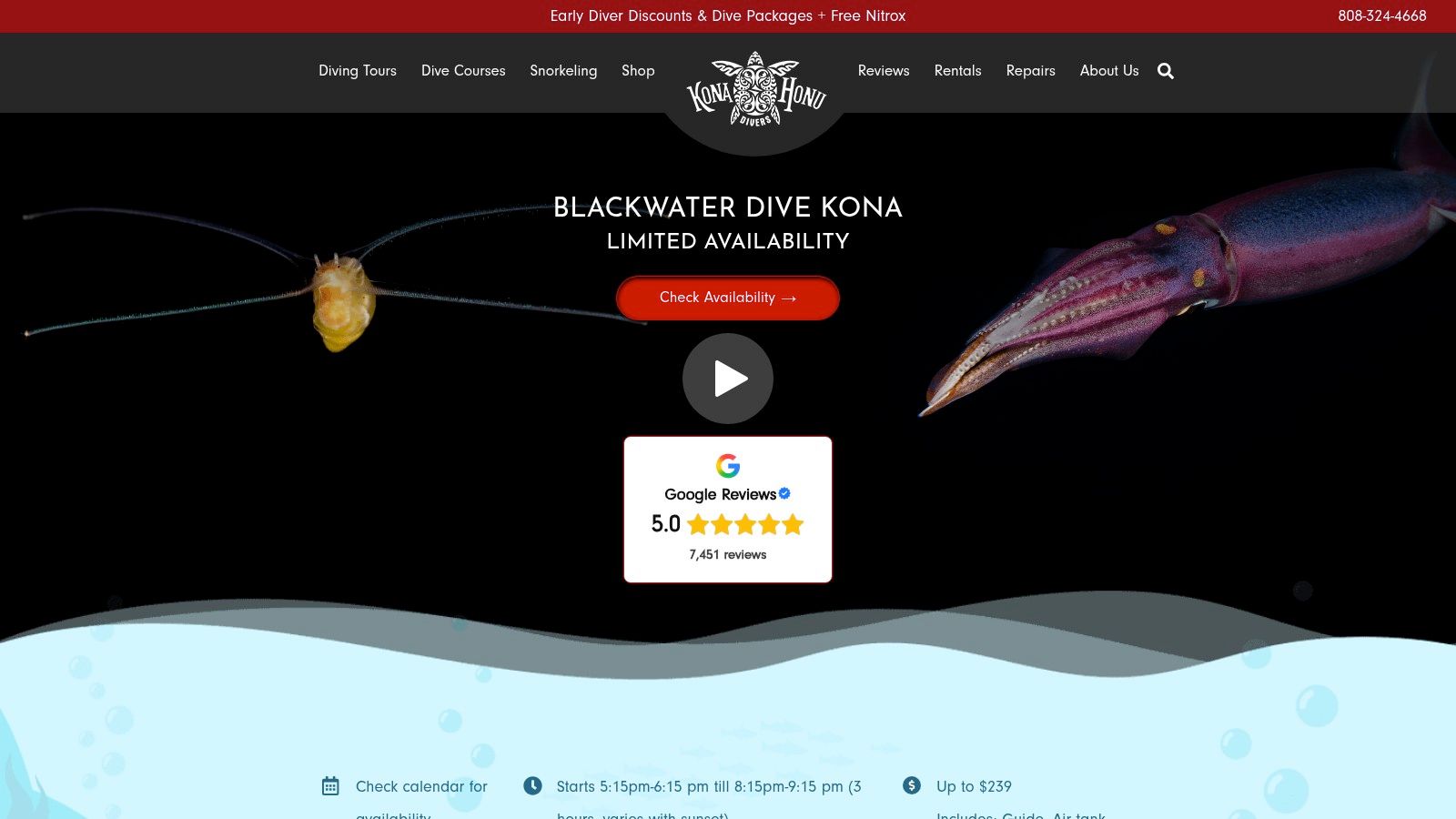
That is why blackwater has higher entry standards than ordinary boat dives. Kona operators commonly require Advanced Open Water level training, solid recent experience, and enough composure to manage darkness, depth control, and open-water positioning without a bottom reference. The dive itself is mechanically simple. The mental side is what catches people off guard.
Here is the honest skill match:
| Dive type | Best for | Main challenge | Reward |
|---|---|---|---|
| Reef boat dive | Certified divers who want relaxed exploration | Reading volcanic terrain and maintaining buoyancy near structure | Long, enjoyable wildlife-focused dives |
| Deeper advanced dive | Divers with consistent buoyancy and gas discipline | Reduced visual reference and increased task loading | Bigger structure and stronger bluewater feel |
| Blackwater | Advanced divers who are calm in darkness and open water | Psychological load, light discipline, and precise midwater control | Larval life, pelagic oddities, and one of Kona's most unusual dives |
The divers who love blackwater usually share a few traits. They are comfortable stopping in midwater without sculling. They do not get rattled by darkness. They can monitor depth, gas, and position while still paying attention to the animals in front of them. A backup light is smart. Clean clip placement matters. Bulky camera rigs are only worth bringing if you can already hold yourself still while using them.
For divers who know that profile fits them, the blackwater dive in Kona tour details lay out the logistics clearly. For everyone else, the smarter move is often a reef dive, another manta night, or an advanced daytime profile first. There is nothing timid about that call. Kona rewards divers who match the dive to their actual comfort level, not the story they want to tell on the boat ride out.
Your Dive Trip Checklist Certifications Safety and Gear
The trip usually goes sideways before the first descent. A diver books manta and blackwater on the same vacation, shows up under-rested, guesses at weighting, skips seasickness prevention, and spends day one fighting problems that were easy to solve at home. Kona is forgiving in some ways, but ocean diving still rewards preparation.
Start with an honest read on your current ability. The right itinerary depends less on ambition and more on control. Reef dives suit many certified divers. Manta requires calm buoyancy at night and the discipline to stay still around other divers and lights. More advanced profiles put a bigger load on gas management, awareness, and comfort in open water.
If you are not certified yet, or someone in your group wants proper training before booking boat dives, look at the Big Island open water certification course. Getting certified before the trip gives you time to build habits instead of trying to learn them on a tight vacation schedule.
Use this quick self-audit before you book:
- Buoyancy: Hold a safety stop without sculling or inflating and dumping every few seconds.
- Task loading: Be realistic about how you handle a camera, a light, and unfamiliar rental gear on the same dive.
- Night comfort: Darkness changes simple skills for some divers. Figure that out before you commit to multiple night trips.
- Surface stamina: Boat ladders, entries, and long days are easier when you are not coming in deconditioned.
Seasickness deserves more respect than it gets. I have seen strong divers call beautiful dives because they waited too long to treat it. If you know you are prone to motion sickness, take your preferred remedy before departure, not after the boat leaves the harbor. Eat light, hydrate early, stay out of the cabin if you start feeling off, and keep your eyes on the horizon.
A few practical options are common on Kona boats:
- Patch option: Ship-EEZ Seasickness Patch
- Classic tablet: Dramamine pills
- Meclizine option: Bonine pills
- Acupressure backup: Sea Band wristbands
- Non-medication support: Ginger chews
If symptoms still creep in, stay in fresh air and midship where the motion often feels less aggressive. Girls That Scuba's dive boat seasickness advice also gives a solid rundown of simple on-board fixes that help.
Gear choice matters more here than divers expect, especially on back-to-back boat days. Bring the mask that already fits your face. Bring your computer, because unfamiliar menus are annoying when the briefing is over and you are already kitted up. If your own fins and exposure setup keep your trim clean, pack them. Those personal items usually matter more than whether the BCD and reg are rental or personal.
For Kona-specific diving, I tell people to organize gear in three groups. Day boat gear. Night gear. Save-a-dive spares. That keeps your second dive and your night check-in from turning into a scavenger hunt on the dock.
A short packing list that pays off:
- Night kit in its own bag: Primary light, backup light, and any marker gear where you can grab it fast.
- Save-a-dive basics: Mask strap, fin strap, spare batteries, and a mouthpiece.
- Reef-safe habits: Good trim and controlled finning matter around lava structure and fragile coral heads.
- Weights sorted early: Get your ballast right on the first morning and write it down for the rest of the trip.
The best Kona dive plans connect the experience to the skill set and the equipment from the start. A newer diver might have a fantastic week with reef dives, a course, and one manta night. A diver with stronger buoyancy, good night awareness, and tidy gear setup can add more demanding profiles without turning the trip into work. That is the difference between checking boxes and enjoying Big Island scuba diving.
Why Choose Kona Honu Divers for Your Big Island Dives
Once you understand the range of diving here, operator choice becomes less about marketing language and more about fit. You want a crew that can handle very different diver profiles without turning the day chaotic. That means smooth deck flow, clear briefings, realistic site matching, and staff who know when to simplify things and when to let experienced divers dive.
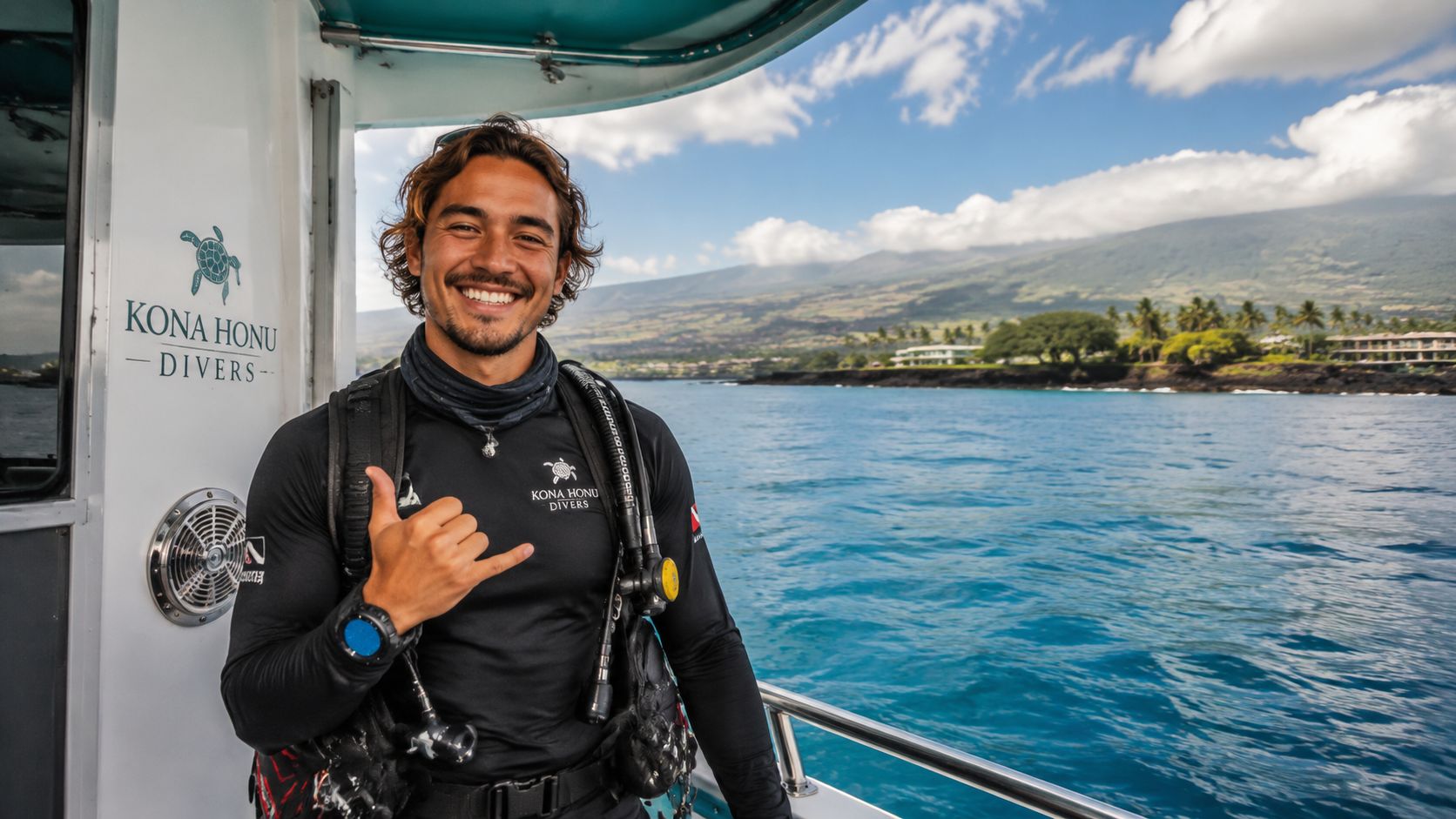
What a solid Kona operation should provide
The short list is practical.
- Reliable boats: Easy entries, sensible tank setup, and enough room that gearing up doesn't become a contact sport.
- Local judgment: The best crews know when to switch sites, when to cancel a bad idea, and when a diver needs a simpler plan.
- Range in the schedule: Reef dives, manta, training, and advanced options should all be available without making you shop around all week.
For divers comparing staff background and training philosophy, it's worth looking at the local diving team behind the operation before you book.
One operator that covers the full roadmap
For visitors trying to organize reef days, manta, education, and more advanced outings under one roof, Kona Honu Divers is one option that offers guided tours, courses, rental support, and specialty trips on the Big Island. The company also notes over 200 years of combined industry experience in its publisher information provided for this article.
That kind of breadth matters because big island scuba diving isn't one product. It's a collection of very different days. The operation that works for a simple morning reef charter also needs to be competent with low-light procedures, advanced diver screening, and the little details that keep vacation divers relaxed.
The right dive shop doesn't just take you to the water. It makes the whole week easier to organize.
Frequently Asked Questions About Kona Diving
What's the best time of year to dive the Big Island
If you want the calmest, warmest ocean conditions for stacking several boat dives, August through October is a strong window, as noted earlier. Outside that stretch, Kona still offers good diving. You just want to stay flexible and let the daily conditions drive the exact plan.
Can non-divers come along
Often, yes. That depends on the specific trip format and operator policy, but Kona is one of the easier places to coordinate mixed groups because snorkeling and manta-focused outings can overlap well with dive schedules. This is especially true on shared wildlife experiences like the manta trip.
What marine life might I see besides manta rays
Expect reef life, turtles, and a lot of classic Hawaiian reef activity. Larger animals can show up too, but the smart approach is to treat those as a bonus instead of a promise. The coast's real strength is that even a “regular” dive rarely feels empty.
Is blackwater worth it if I'm newly advanced
Maybe, but only if you're comfortable with darkness, task loading, and no bottom reference. A fresh card doesn't automatically mean you're ready. If the idea of hanging in open ocean at night feels more stressful than exciting, do more reef and standard night diving first.
Should I bring my own gear
Bring your own mask, computer, and any personal equipment that affects comfort or fit. Those items create the biggest difference in confidence. For the rest, many travelers rent without trouble.
Is the manta dive suitable for everyone
No. Divers need to be calm and controlled in low light, and snorkelers should already be comfortable in open water at night. If someone in your group is anxious in the ocean after dark, pick a daytime wildlife activity instead.
If you're ready to line up reef dives, a manta night, training, or a more advanced Kona itinerary, start with Kona Honu Divers. A good Big Island dive trip comes down to matching the right dives to your actual skill level, then booking with a crew that runs clean logistics and sound safety.