
Picture this: you're weightless, suspended in brilliant blue water, watching as ancient lava flows unfold into a dramatic underwater world. That's not a dream; it's just another day of scuba diving on the Big Island. The Kona coast, in particular, is legendary among divers for its unbelievable visibility, sheltered coves, and a concentration of marine life that's hard to beat anywhere on the planet.
Why Kona Is a World-Class Diving Destination
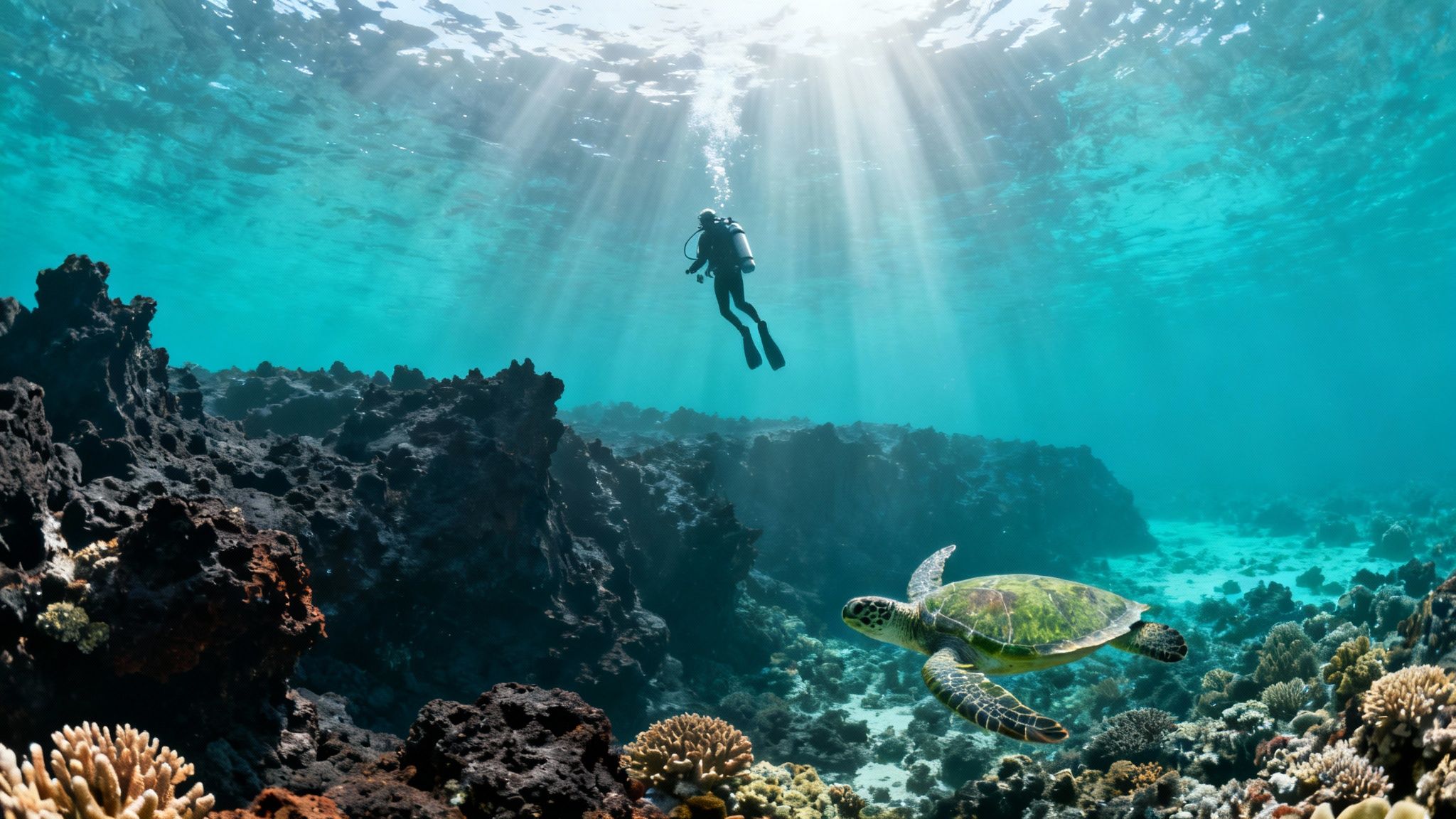
The secret to Kona's magic lies in its geology. The sheer size of the island's volcanoes, Hualālai and Mauna Loa, acts as a massive natural shield, blocking the gusty trade winds that batter other parts of Hawaii. The result is consistently calm, clear water pretty much all year round, with visibility that often pushes past 100 feet.
This protection isn't just great for divers; it's a blessing for the marine ecosystem. It allows some of Hawaii's most pristine and vibrant coral reefs to flourish. While other dive spots might be subject to harsh currents and choppy seas, Kona's gentle waters create a sanctuary. The underwater landscape itself is a masterpiece of volcanic creation, full of lava tubes, dramatic archways, and old craters just waiting to be explored.
An Underwater World of Wonders
But it's not just the calm conditions that draw people here. Diving in Kona is a full-immersion experience with a staggering variety of marine life. Those unique volcanic formations have become the perfect foundation for a complex and thriving ecosystem.
- Iconic Marine Life: Get ready to swim alongside Hawaiian green sea turtles (honu), watch pods of spinner dolphins cruise by, and encounter countless species of reef fish found only in Hawaiian waters.
- Unique Encounters: Kona is home to some truly world-famous experiences. Think of the surreal, ballet-like manta ray night dive or the otherworldly Kona blackwater dive—these are bucket-list dives you just can't do anywhere else.
It's no surprise that premium destinations like this are fueling a boom in dive travel. In fact, the U.S. diving tourism market is expected to hit USD 1,585 Million by 2035, driven by divers seeking these kinds of unforgettable adventures.
This guide is your map to it all. We’ll cover everything you need to know to make your Big Island scuba diving trip incredible, from the can't-miss sites to planning the perfect itinerary. You can learn more about the unique qualities of diving in Kona in our detailed article.
Exploring the Top Big Island Dive Sites
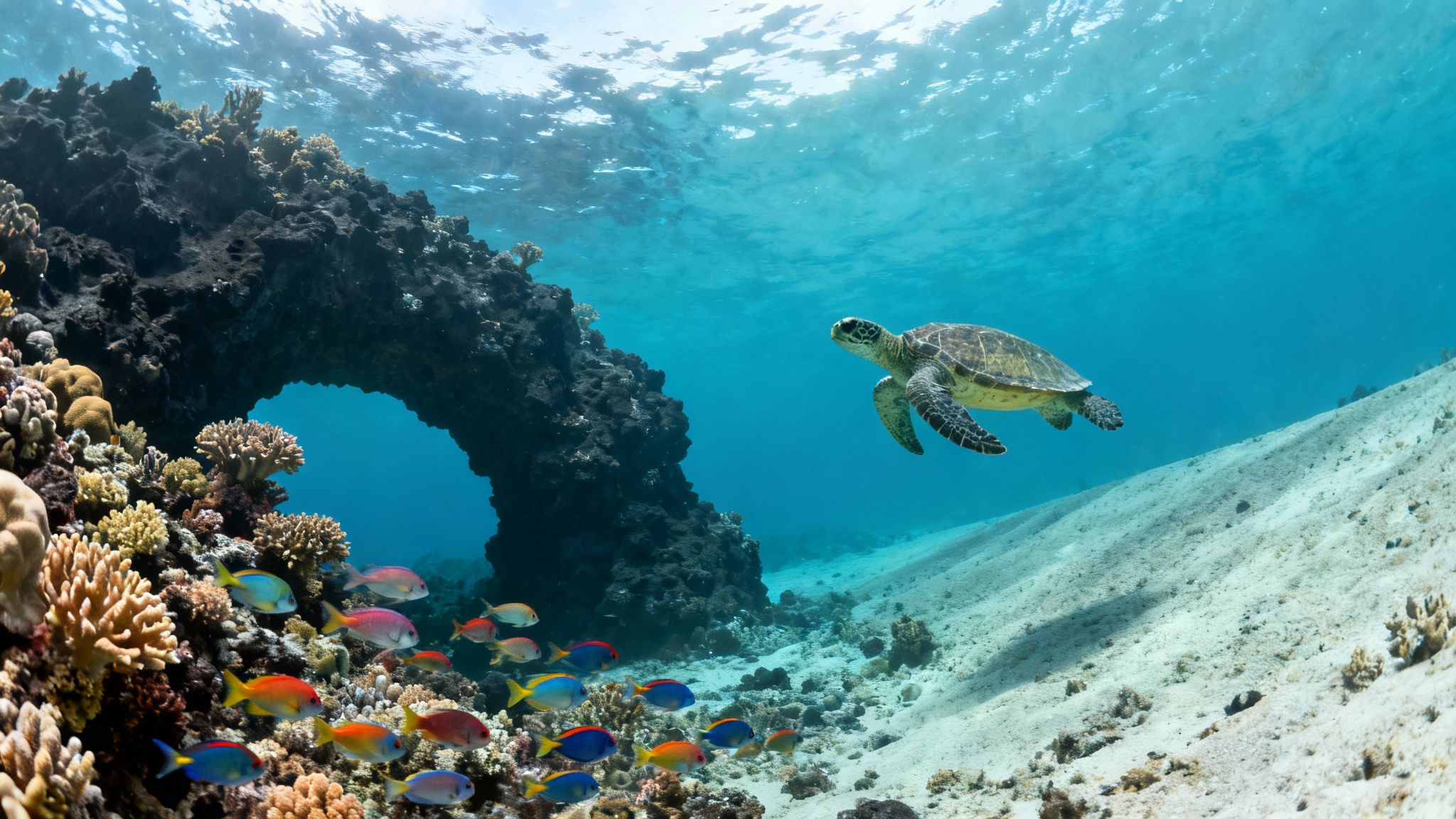
The Kona coast isn't just a destination; it's a diver's playground, carved from volcanic fire and teeming with life. Planning your Big Island scuba diving adventure means choosing from an incredible menu of world-class sites, each with its own distinct character.
One day you might be exploring a calm, protected bay brimming with colorful fish, and the next you could be navigating a maze of ancient lava tubes. This sheer variety is what keeps divers coming back to Kona, year after year, always discovering something new.
Kealakekua Bay: A Protected Sanctuary
You can't talk about Kona diving without starting with Kealakekua Bay. This isn't just another pretty spot—it's a legally protected Marine Life Conservation District, and you can feel the difference the moment you dip below the surface. The bay is a perfect example of what a healthy Hawaiian reef should look like.
Its calm, crystal-clear waters are a haven for immense fields of finger and cauliflower coral. Because fishing and collecting are restricted, the marine life here is bold and abundant. Fish populations are dense, and the animals are often curious, allowing for some truly memorable, up-close encounters. The visibility often tops 100 feet, making it a dream for photographers and anyone who just wants to soak in the vibrant ecosystem.
Lava Tubes and Arches: Dramatic Volcanic Formations
Beyond the pristine reefs, Kona’s volcanic heart is on full display underwater. Sites like Golden Arches are defined by the island's fiery origins, featuring a stunning underwater landscape of lava tubes, swim-throughs, and massive archways.
Gliding through these formations is like exploring a submerged cathedral. Sunlight streams through cracks in the ceilings of lava tubes, lighting up the dark passages and revealing the critters that call them home. Keep an eye out for reclusive whitemouth moray eels, spiny lobsters, and even whitetip reef sharks resting on the sandy floor.
One of the most unforgettable moments in Kona diving is emerging from the quiet dark of a lava tube back into the brilliant, sunlit blue of the open ocean. It's a powerful experience that connects you directly to the raw, creative energy of the island.
Turtle Pinnacle: A Classic Honu Encounter
Seeing a Hawaiian green sea turtle, or honu, is on almost everyone’s wish list. At Turtle Pinnacle, it’s practically a guarantee. This spot is a well-known “turtle cleaning station,” where turtles line up to let surgeonfish nibble away algae and parasites from their shells.
The main pinnacle rises from the seafloor, and divers can comfortably observe the action from the surrounding sand. It’s a front-row seat to one of nature's coolest symbiotic relationships.
But it’s not just about the turtles. The site is buzzing with life, from well-camouflaged frogfish to moray eels and huge schools of pyramid butterflyfish. It’s a must-do dive for photographers and turtle lovers alike.
To help you pick the perfect spot, here’s a quick rundown of some of our favorite and most popular dive sites along the Kona coast.
Comparing Popular Kona Dive Sites
| Dive Site | Best For | Typical Depth | Experience Level |
|---|---|---|---|
| Kealakekua Bay | Coral health, fish density, calm conditions | 40-80 ft | All Levels |
| Garden Eel Cove | Manta ray night dive, protected conditions | 30-45 ft | All Levels |
| Golden Arches | Lava tubes, arches, unique topography | 40-70 ft | Intermediate |
| Turtle Pinnacle | Seeing sea turtles (honu) | 35-60 ft | All Levels |
| Nai'a (aka "The Dome") | Caverns, reef sharks, pelagic sightings | 50-90 ft | Intermediate to Advanced |
This is just a taste of what Kona has to offer. Each site has its own magic, and the best way to experience it is to get in the water.
Ready to explore these underwater wonders? For a deeper dive into all the incredible locations we visit, check out our full guide to the top Big Island scuba diving sites.
The Manta Ray Night Dive: An Underwater Ballet
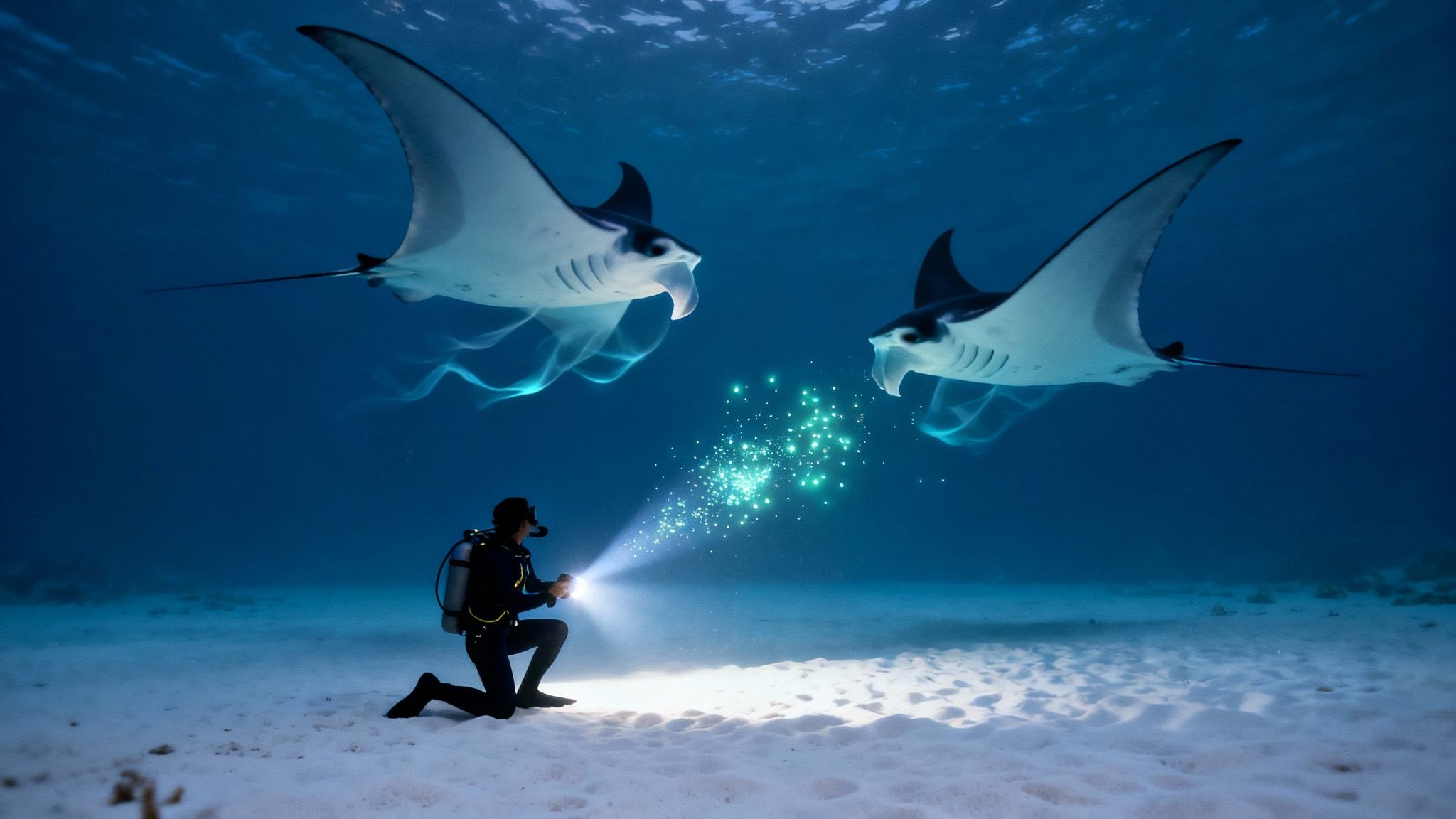
Out of all the incredible dives you can do on the Big Island, one experience consistently leaves divers speechless: the world-famous manta ray night dive. Calling it a "dive" doesn't quite do it justice. It's more like being a guest at an underwater ballet.
Imagine kneeling on the ocean floor as the sun sets, watching giant, graceful creatures with wingspans of over 12 feet glide inches above your head. They perform effortless barrel rolls through the beams of your dive lights, their movements both powerful and serene. It's a surreal, humbling, and absolutely magical encounter.
The whole production is elegantly simple. We set up powerful, stationary lights on the seabed, which act like a massive bug zapper for plankton. These lights attract huge clouds of the microscopic creatures—a favorite meal for manta rays. Before long, the stars of the show arrive for their nightly feast, putting on an unforgettable spectacle for the divers below.
Why Garden Eel Cove Is The Superior Choice
While there are a couple of spots to see the mantas, ask any seasoned local diver and they'll tell you that Garden Eel Cove is the superior choice for the dive tour. Its unique, protected location shields it from the open ocean swells, which means calmer, more comfortable conditions and fewer cancellations. This makes for a more reliable and pleasant experience.
Better yet, the topography at Garden Eel Cove creates a natural amphitheater with a better viewing area. This layout gives you a front-row seat to the action, allowing for a more intimate and respectful viewing experience as these magnificent animals put on their show over the better reefs.
The feeling of a manta ray’s shadow passing over you is something you just can't describe. There's this moment of pure awe as you watch these enormous, gentle animals move with such precision. It’s a core memory that stays with you long after you’ve surfaced.
And this isn't some rare, once-in-a-lifetime sighting. The manta congregations in Kona are so reliable that it's considered one of the most consistent large animal encounters on the planet. Operators report successful sightings on 85-90% of their dedicated night dives. You're not just hoping to see mantas; you're expecting them.
What to Expect on Your Manta Dive
Your adventure kicks off just before sunset with a scenic boat ride to the dive site. After a detailed briefing on how to interact safely and passively with the rays, you'll gear up and descend in the twilight to find your spot on the sandy bottom.
As darkness takes over, the lights switch on, and the performance begins.
- Your Role: You'll be stationary for most of the dive, either kneeling or lying on the sand. Your only job is to relax, breathe easy, and take it all in.
- The Experience: Manta rays will swoop and glide right over you, sometimes coming so close you feel like you could reach out and touch them (but remember, no touching is allowed!). It's like watching a perfectly choreographed dance unfold just for you.
- Safety First: The dive is carefully supervised and takes place in a relatively shallow area, typically around 30-45 feet. This makes it an accessible and safe experience for certified divers of all levels.
This isn’t just another dive to log; it’s a profound connection with the ocean’s gentle giants. If you're ready to see the ballet for yourself, you can book one of our unforgettable manta ray dive tours today.
Advanced and Unique Night Diving Adventures
Sure, the manta ray ballet is the star of the show, and for good reason. But for seasoned divers looking for something truly different, Kona's waters hold secrets that only come out long after the sun goes down. If you're ready for a new kind of thrill, there are night dives here that push the boundaries of what you thought was possible.
These aren't your typical reef tours. These dives reward your skill, your comfort in the dark, and your sense of adventure. It’s a chance to witness creatures and phenomena that most divers will never see, giving you a completely fresh perspective on Big Island scuba diving.
The Otherworldly Kona Blackwater Dive
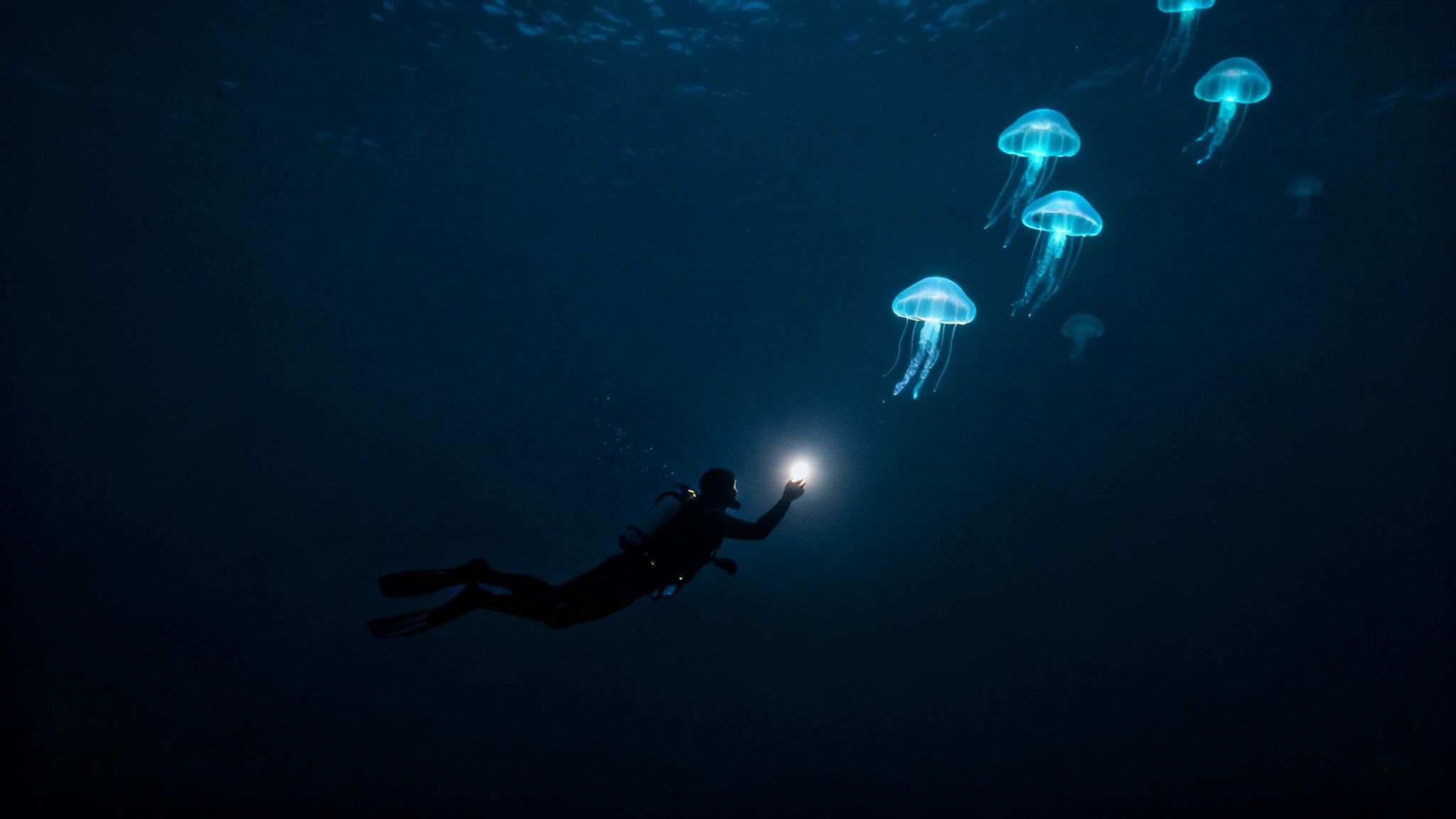
Picture this: you're drifting miles offshore in the pitch-black open ocean, with thousands of feet of water right below your fins. It feels less like diving and more like floating through deep space. This is the Kona Blackwater Dive, a surreal experience where you're tethered to the boat, suspended in the water column, watching bizarre creatures rise from the abyss.
These animals live hundreds, even thousands, of feet down during the day. But at night, they undertake the largest migration on Earth—the diel vertical migration—coming toward the surface to feed. You get a front-row seat to this incredible parade of life.
You'll see things that look like they were pulled straight from a sci-fi movie:
- Translucent Squids: Larval squids and octopuses are so clear you can see their internal organs.
- Bioluminescent Jellies: Ctenophores and other jellies pulse with their own light, like tiny alien spaceships drifting by.
- Strange Larval Fish: Many of the reef fish we know and love look completely alien in their early pelagic stages—often transparent, spiny, and weirdly beautiful.
The Kona Blackwater Dive is a truly humbling experience. It’s just you, your torch beam, and the sheer vastness of the ocean as a hidden world comes to life. There's nothing else like it on the planet.
This dive is definitely for the adventurous. It demands excellent buoyancy control and a calm mind. If you're ready to see it for yourself, check out the Blackwater Dive tour, where experts guide you through this unique exploration.
Advanced Reef and Lava Tube Exploration
Beyond the deep-water weirdness, Kona also offers incredible advanced diving for those who want to explore more complex underwater terrain. These aren't your standard, follow-the-leader reef tours; they're for experienced divers who want to see the parts of the island's underwater world that few others get to.
Think about navigating intricate lava tube systems, dropping down on deep offshore pinnacles, and seeking out sites known for attracting bigger marine life. These dives often mean dealing with greater depths, potential currents, and more challenging navigation—perfect for divers with advanced certifications looking to put their skills to use.
On these premium trips, you could find yourself:
- Exploring remote pinnacles: These underwater mountains act like magnets for marine life, often attracting eagle rays, huge schools of jacks, and the occasional shark.
- Navigating lava caverns: Get a firsthand look at the island's volcanic origins by exploring caverns and swim-throughs that demand precision buoyancy and a steady nerve.
- Searching for rare species: The deeper reefs are home to animals you just don't see in the shallows, offering a new challenge for photographers and seasoned divers.
For divers with the training and experience, these advanced trips forge a deeper, more intimate connection with the wild side of Kona's underwater world. Kona Honu Divers runs a Premium Advanced 2-Tank Trip designed specifically for divers seeking these kinds of rewarding challenges.
How to Choose the Best Dive Operator in Kona
Let’s be honest: the dive operator you choose can make or break your entire Big Island scuba diving trip. The right shop doesn't just ferry you to a dive site; they become part of the adventure. A great crew elevates everything through their expertise, safety-first attitude, and a genuine love for the ocean that’s completely contagious.
On the flip side, a bad experience can sour a trip before you even get wet. Think crowded boats, beat-up gear, rushed safety briefings, or a crew that just seems bored. That’s not what Kona diving is about. To make sure you get the amazing underwater adventure you're dreaming of, it pays to know what to look for.
What Separates the Best from the Rest?
When you’re weighing your options in Kona, look past the price tag. The best shops are defined by the quality of the experience they deliver, from the moment you book to the high-fives after a fantastic dive.
Here’s a quick mental checklist of what really matters:
- A Rock-Solid Safety Record: This is the absolute priority. You want an operator with a long-standing reputation for safety, experienced divemasters, and emergency plans that are second nature to them. No compromises here.
- Top-Notch Gear: Well-maintained, modern equipment isn't just a luxury; it’s a sign of a professional, safety-conscious operation. Little things, like offering complimentary Nitrox for certified divers, show they’re invested in giving you the best dive possible.
- Comfortable, Well-Equipped Boats: Your dive boat is your home base for the day. It should be clean, spacious, and have amenities that make a real difference—like freshwater rinses, plenty of shade, and the holy grail of post-dive comfort: a hot shower.
- A Knowledgeable and Passionate Crew: The best guides are so much more than just underwater tour leaders. They’re walking encyclopedias of marine life, incredible storytellers, and your safety net all in one. Their passion for the ocean is what turns a good dive into an unforgettable one.
Why We Think Kona Honu Divers Is the Top Choice
When you hold operators up to that checklist, Kona Honu Divers really shines. Their whole operation is built on decades of local experience, amazing customer service, and a deep, abiding respect for the underwater world they call home.
Their crew’s local knowledge is incredible—they don’t just take you to the famous spots, they show you the hidden nooks and crannies where the cool critters hang out. Plus, perks like free Nitrox for certified divers and a fleet designed for comfort (yes, including those amazing hot showers) just seal the deal.
But you don’t have to take our word for it. Hearing from other divers is the best way to get a feel for a shop.
Other Great Options in Kona
To give you the full picture, Kona is blessed with several excellent dive shops. While we’re partial to the experience Kona Honu Divers provides, it’s always smart to see what’s out there. Operators like Jack's Diving Locker and Big Island Divers have been part of the Kona diving scene for years and have built solid reputations.
Checking out reviews for each can help you spot the little differences in their boats, crew vibes, and overall service that might matter most to you.
Here are the reviews for Jack's Diving Locker:
And here are the reviews for Big Island Divers:
In the end, the best operator is the one that fits your vibe and priorities. Ready to see what world-class diving in Kona is all about? Check out the diving tours offered by Kona Honu Divers and find the perfect trip for you.
Planning Your Big Island Diving Trip
Putting together your dream Big Island scuba diving trip is more straightforward than you might think. With a bit of foresight, you can time your visit for perfect conditions, pick the dives that match your style, and build an itinerary that maximizes every moment you spend underwater.
One of the best things about diving here is that the Kona coast is a year-round destination. The water is always inviting, hovering around 76°F in the winter and reaching a warm 82°F in the summer. Even when winter brings bigger swells to other parts of Hawaii, Kona’s leeward coast stays remarkably calm and clear, giving us fantastic dive days pretty much any time you want to visit.
Boat Diving vs. Shore Diving
You might hear about a few spots you can access from the shore, but let's be honest: the real magic happens offshore. The most pristine, vibrant, and mind-blowing dive sites are only reachable by boat.
Getting on a dive boat isn't just about convenience—it's about access. It’s how you get to the healthier, more remote reefs and dramatic underwater lava formations that most people will never see. Plus, you have an experienced crew looking after you, top-notch safety gear on hand, and all the amenities that turn a good day of diving into a great one. For the full Kona experience, you really have to get on a boat.
Certifications and Sample Itineraries
It doesn’t matter if you have hundreds of dives under your belt or have never even tried on a mask—Kona has you covered. Local dive shops offer the full spectrum of PADI courses, from a simple introductory "Discover Scuba Diving" experience all the way to advanced specialties. There’s really no better place to learn or to push your skills to the next level.
To give you a better idea of what's possible, here are a couple of ways you could structure your time:
- The Perfect Dive Day: Kick things off with a two-tank morning boat charter to explore some of Kona's famous lava tubes and coral gardens. Grab some lunch, relax for a bit, and then get ready for the main event—the world-famous manta ray night dive. It’s a bucket-list dive for a reason.
- A 3-Day Dive Immersion: Spend your first day getting acquainted with the classic reef scene. On day two, step it up with a more advanced profile, maybe dropping down to a deep pinnacle. For your grand finale on day three, plunge into the weird and wonderful world of the Kona Blackwater Dive for an experience that is truly out of this world.
The best trips are all about variety. If you can, try to mix a classic reef dive with a unique night dive like the manta or blackwater experience. Doing both gives you a much richer picture of just how diverse life is here in Kona.
Ready to get in the water? Kona Honu Divers has a full lineup of diving tours for every skill level, from our classic morning trips to the can't-miss manta ray night dive. Your next great adventure is waiting.
Your Big Island Diving Questions, Answered
Planning a dive trip always brings up a few questions. To help you get everything sorted for your Kona adventure, here are answers to some of the things we hear most often.
What Is the Best Time of Year to Dive Here?
Honestly, any time is a great time to dive on the Big Island. The water is always inviting, hovering around a comfortable 76°F in the winter and warming up to a balmy 82°F in the summer.
While the winter months can sometimes bring bigger swells to other parts of the island, the Kona coast's unique geography keeps our dive sites remarkably protected. This means calm, clear water is the norm pretty much year-round. If you're looking for the absolute glassiest conditions, though, summer is tough to beat.
Do I Need to Be Certified to Scuba Dive?
Nope, you don't! If you've never dived before but want to see what all the fuss is about, we have a perfect option for you. Reputable dive shops offer introductory experiences, like the PADI Discover Scuba Diving program.
It’s a fantastic way to get in the water for the first time. You’ll be with a professional instructor every step of the way in a safe, shallow environment—no need to commit to a full certification course just to try it out.
Is the Manta Ray Night Dive Safe for Beginners?
Absolutely. The world-famous manta ray night dive is surprisingly accessible, even for divers who just got their certification. The whole thing happens in a calm, shallow, and protected bay, making it a very controlled and relaxed experience.
You won't be swimming around in the dark. Instead, you'll settle on the sandy bottom with a light that attracts plankton. Then, you just get to watch as the magnificent mantas glide and swoop right overhead. It's a truly unforgettable dive that's perfect for all certified divers.
What Other Marine Life Can I Expect to See?
Kona is so much more than just mantas! The reefs here are buzzing with an incredible amount of life. On almost any dive, you can expect to see Hawaiian green sea turtles (honu) munching on algae, pods of playful spinner dolphins cruising by, and cleverly camouflaged octopuses.
Of course, the reefs are also packed with a vibrant assortment of fish, from butterflyfish to parrotfish. Keep an eye out for different types of eels hiding in the rocks, and if you head a bit deeper, you might even be rewarded with a sighting of a majestic eagle ray or a reef shark.