
If you're looking for world-class scuba diving, the Big Island of Hawaii should be at the very top of your list. This isn't just another tropical getaway; it's a place where massive volcanoes have shaped an underwater world unlike any other on Earth. We're talking about a diver's paradise, especially along the Kona coast, which is naturally shielded from the wind, leaving the waters exceptionally calm and clear.
Your Underwater Adventure On The Big Island
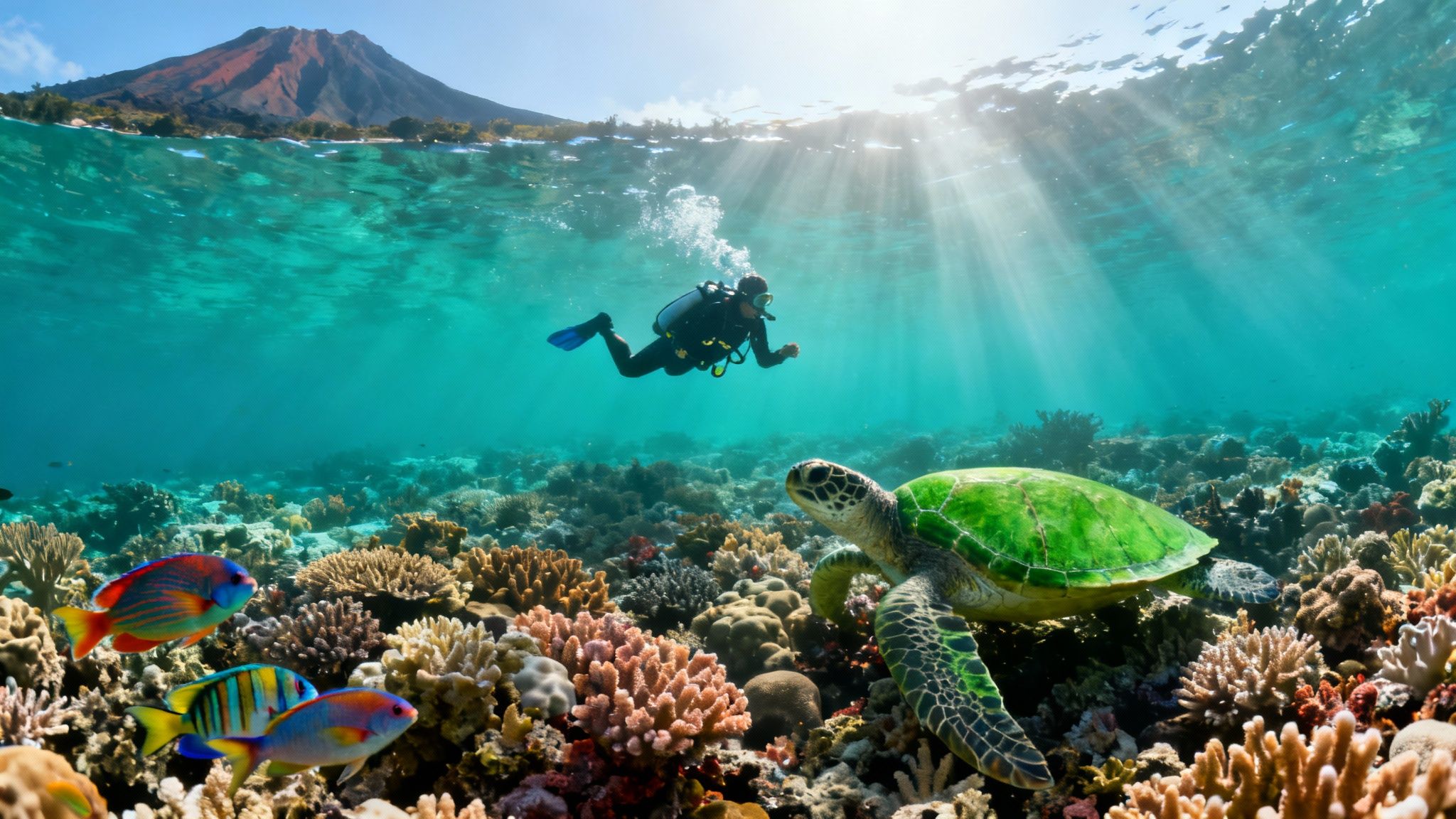
This guide will walk you through everything that makes Big Island scuba diving so special. We’ll cover the must-do dives, from the legendary Manta Ray Night Dive to the surreal Blackwater dives that feel like a trip to another planet. We'll also point you toward top-tier operators like Kona Honu Divers, who make these incredible experiences safe and unforgettable.
Think of this as the start of your journey. The Big Island is a playground sculpted by fire and sea, offering experiences you simply can't replicate anywhere else. From exploring ancient lava tubes to swimming through vibrant coral gardens, the sheer diversity is astounding.
What Makes Big Island Diving Special
So, what's the secret? It all comes down to the island's unique geology. The Kona coast sits in the shadow of two of the world's largest volcanoes, Mauna Loa and Hualalai. These massive peaks block the prevailing trade winds, creating a calm, protected lee where the ocean is often as flat as a lake.
This volcanic foundation has left behind a dramatic underwater landscape:
- Lava Tubes and Arches: Imagine swimming through intricate tunnels and arches formed by ancient lava flows, now home to a huge variety of marine critters.
- Healthy Coral Reefs: Because the island is geologically young, its reefs are still growing and are incredibly vibrant and full of life.
- Deep Drop-Offs: The coastline plunges dramatically into the abyss, which attracts large pelagic species like sharks, rays, and even whales surprisingly close to shore.
The Kona coast offers a rare combination of accessibility and wildness. You can be exploring a serene reef one moment and preparing for a deep-ocean blackwater dive the next, all within a few miles of the harbor.
Preparing for Your Dives
A little preparation goes a long way in making a good dive trip great. Of course, you’ll need your certification card and logbook, but thinking about the right gear will ensure you’re comfortable and safe in the water. For a detailed rundown on what to pack, from wetsuit thickness to the most useful accessories, check out our guide on the gear you will need for your Kona diving adventure.
Whether you're a seasoned pro or have never breathed underwater before, the island has something for you. The adventure is waiting, whether you're planning your first introductory dive or looking to take an advanced course to sharpen your skills.
Why Kona Offers Hawaii’s Premier Diving Experience
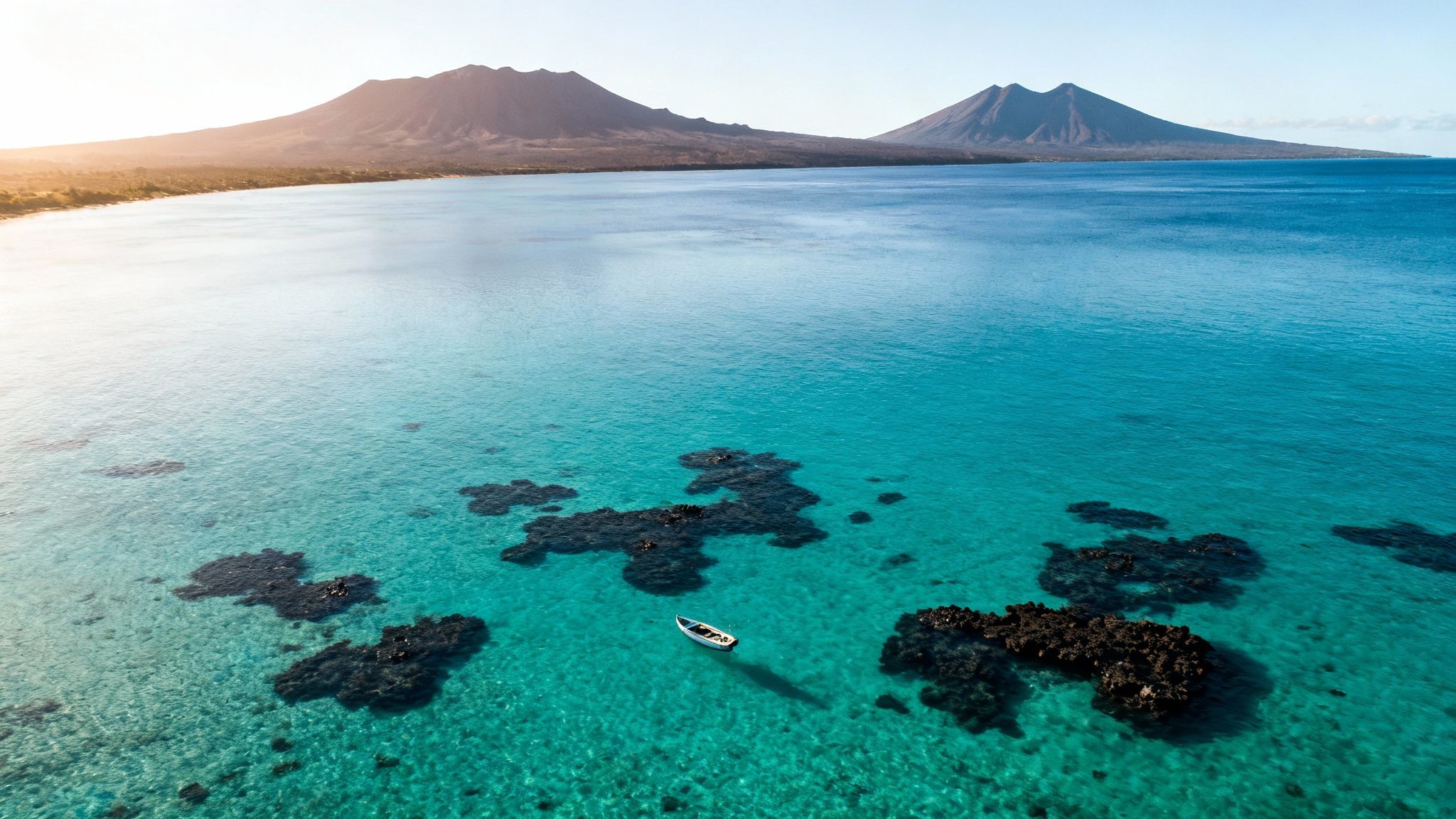
Ask any seasoned diver about the best spots in Hawaii, and you'll hear "the Big Island" over and over again. It’s not just hype. The Big Island scuba diving experience is a world apart, thanks to a perfect storm of geology, geography, and an explosion of marine life. And it all starts with the island’s massive volcanoes.
The Kona coast, tucked away on the western side of the island, is sheltered by the colossal shadows of Mauna Loa and Mauna Kea. These two giants act as a natural wall, blocking the powerful northeasterly trade winds that often whip up the seas around the other Hawaiian islands.
This creates a massive protected zone, or "lee," where the ocean stays remarkably calm. For divers, that’s gold. It means fewer canceled trips and more days spent in the water, enjoying conditions so smooth they're often described as "lake-like."
The Volcanic Underwater Playground
The island’s fiery past has shaped an underwater world that is anything but ordinary. Unlike the older, more weathered islands, the Big Island’s volcanic footprint is still fresh. Ancient lava flows have sculpted an incredible sub-aquatic landscape.
This isn't your typical sandy-bottom dive. Out here, you can explore a maze of structures you just don't find everywhere else:
- Lava Tubes: Imagine swimming through hollowed-out tunnels formed by molten rock, now home to countless reef creatures seeking shelter.
- Pinnacles and Archways: You’ll navigate dramatic underwater spires and swim through breathtaking natural arches carved by ancient volcanic forces.
- Vibrant Reefs on a Young Seafloor: The volcanic rock provides the perfect, rugged foundation for coral to take hold, resulting in healthy, thriving reef systems.
This dramatic terrain makes for a much more dynamic dive than the flatter seabeds found in many other tropical spots. To get a better sense of this unique environment, check out our guide on what makes Kona's underwater world so special.
Unmatched Visibility and Marine Life
Those calm waters do more than just make for a smooth boat ride. With less wind and wave action stirring things up, the water stays incredibly clear. The result is phenomenal visibility, often pushing past 100 feet. Everything is just sharper, brighter, and more immersive.
This clarity, combined with the island’s nutrient-rich currents, supports an astonishing amount of marine life. While other islands have beautiful reefs, the Kona coast acts as a magnet for animals big and small.
Kona's protected waters are like a massive safe harbor, attracting a density and diversity of marine life that is simply on another level. Seeing turtles, rays, and dolphins isn't a rare treat—it's just a normal day on the water here.
The Big Island is also a hotspot for unique species, with over 20% of Hawaii's endemic fish found here—creatures that exist nowhere else on Earth. From the iconic green sea turtles (honu) resting on the reef to the seasonal songs of humpback whales echoing through the water, the sheer abundance of life is what keeps divers coming back for more, year after year.
Exploring The Big Island’s Unforgettable Dives
Now that you have a feel for why the Kona coast is such a special place to dive, let's get into the main events. These are the signature experiences that truly define Big Island scuba diving—the ones people travel across the world for. We're not just talking about great dives; these are world-renowned underwater adventures that belong on every diver's bucket list.
We’ll kick things off with the most famous of all: the Manta Ray Night Dive. From there, we'll take a trip into the abyss with the Blackwater Dive, and then explore the incredible lava tubes and pinnacles that are a playground for more advanced divers. Each one offers a completely different, but equally mind-blowing, window into Hawaii's underwater magic.
The World-Famous Manta Ray Night Dive
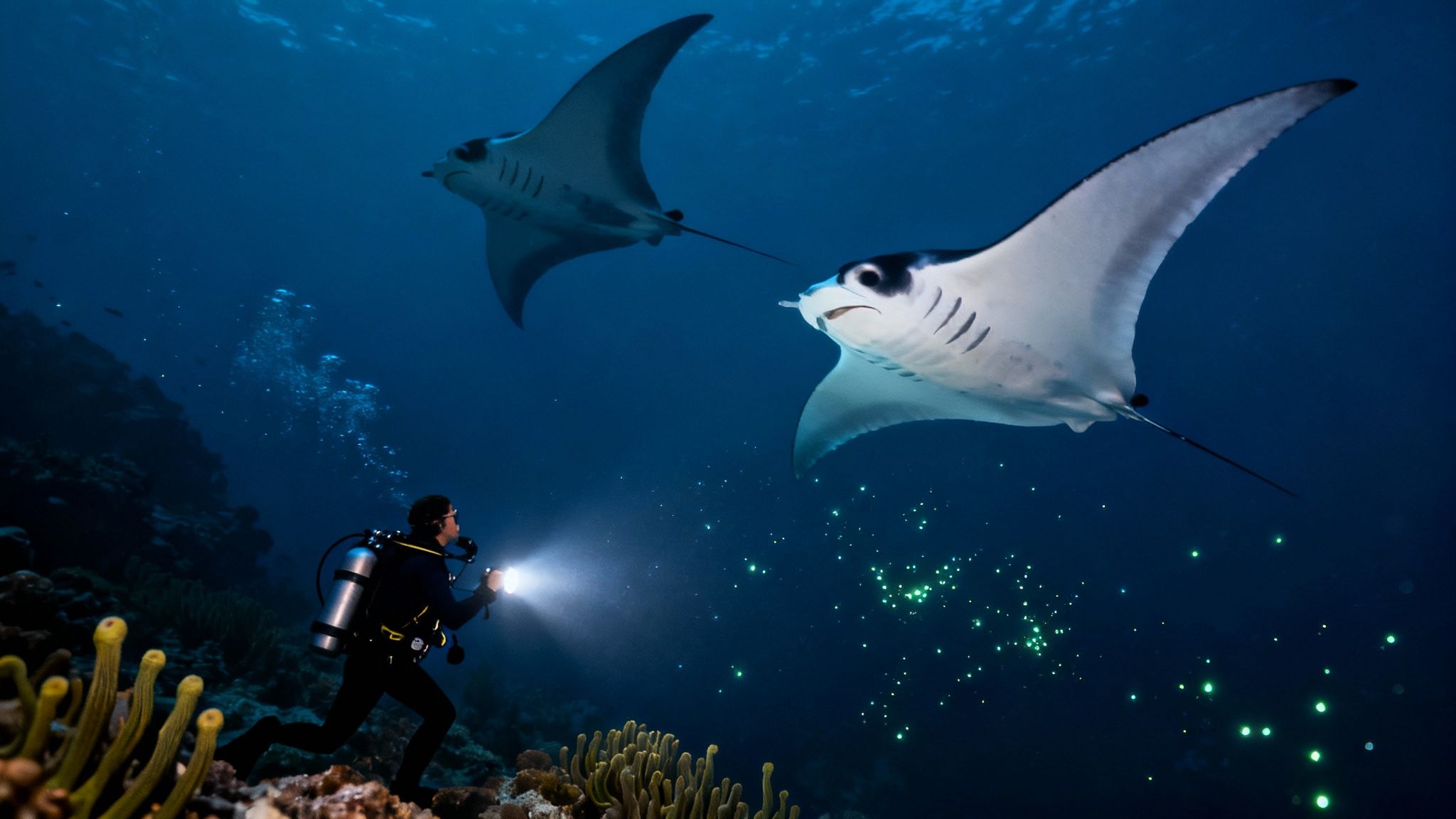
Picture this: you’re kneeling on the sandy ocean floor after dark, your dive light pointed straight up. Out of the blackness, a colossal, gentle giant with a wingspan of over 12 feet glides into view, swooping and barrel-rolling just inches above your head. This isn’t CGI. It’s the Manta Ray Night Dive, an experience that consistently lands on "best of" lists for night dives anywhere on the planet.
Here’s how it works. Dive operators create a "campfire" of powerful lights on the seafloor. This light attracts swarms of plankton, which just so happens to be the mantas' favorite meal. As the plankton cloud thickens, the mantas arrive for their nightly buffet, performing a silent, mesmerizing ballet as they glide through the light beams. It’s a peaceful, awe-inspiring encounter that puts you face-to-face with one of the ocean's most majestic animals.
The Kona coast is a global hotspot for this encounter, and the reliability is incredible. According to local manta reports, these gentle giants show up on 85-90% of night dives. It's that consistency that makes this a true bucket-list dive. You can even learn more about these incredible sighting statistics and manta reports from local operators.
Why Garden Eel Cove Is The Premier Manta Site
While you might hear about a couple of spots for the manta dive, Garden Eel Cove (also known as Manta Heaven) is the superior choice for the dive tour because of its protected location with a better viewing area and better reefs. The location itself gives it several key advantages that make for a better experience for everyone—divers and mantas included.
- Protected Location: Tucked into a cove, the site is naturally shielded from big ocean swells, which means calmer, more predictable conditions. That makes for a much more comfortable and safer dive.
- Better Viewing Area: The bottom at Garden Eel Cove is shaped like a natural "amphitheater." This lets divers get settled on the sand without kicking up silt or damaging coral, giving everyone an amazing, unobstructed view of the show.
- Better Reefs: The surrounding reefs are vibrant and packed with life. This means the first "dusk dive" you do before the main event is an incredible experience on its own. You really get two fantastic dives in one trip.
Choosing Garden Eel Cove means you're opting for a more serene and reliable encounter. The protected nature of the site ensures the focus remains entirely on the breathtaking performance of the manta rays.
The Otherworldly Kona Blackwater Dive
If you've got a taste for the truly unique and a bit more experience under your weight belt, the Kona Blackwater Dive is something you have to try. This isn’t a reef dive. It’s not even close. You head miles offshore where the ocean floor is thousands of feet down, descend to about 50 feet, and drift in the deep, dark water while tethered to the boat.
What you're there to see is one of the largest migrations on Earth: the nightly vertical migration of deep-sea creatures. Strange, bioluminescent organisms rise from the abyss to feed near the surface under the cover of darkness. You’ll see things that look like they’re straight out of a sci-fi movie—translucent squids, bizarre larval fish, and pulsating jellies, many of which glow with their own light. It’s a humbling and surreal experience that divers often describe as floating through outer space.
Advanced Diving: Lava Tubes and Deep Pinnacles
Beyond the famous night dives, the Big Island's volcanic geology has created an incredible underwater playground for more experienced divers. The seascape is a maze of dramatic structures that demand excellent buoyancy control and a solid sense of adventure. The best way to explore these spots safely is with an advanced dive tour.
Some of the highlights for advanced divers include:
- Lava Tubes: Imagine swimming through ancient, hollowed-out caverns formed by flowing lava. These tubes can be complex systems with "skylights" where the roof has collapsed and side tunnels filled with marine life seeking shelter.
- Deep Pinnacles: These are underwater spires that rise from the depths, acting as magnets for schools of fish and larger pelagic species. These sites often have stronger currents, so you need to be a confident diver to navigate them.
These dives are a challenge, but the reward is a much deeper appreciation for the raw, geological power that shaped this island, both above and below the waves.
A Guide To The Top Dive Sites In Kona
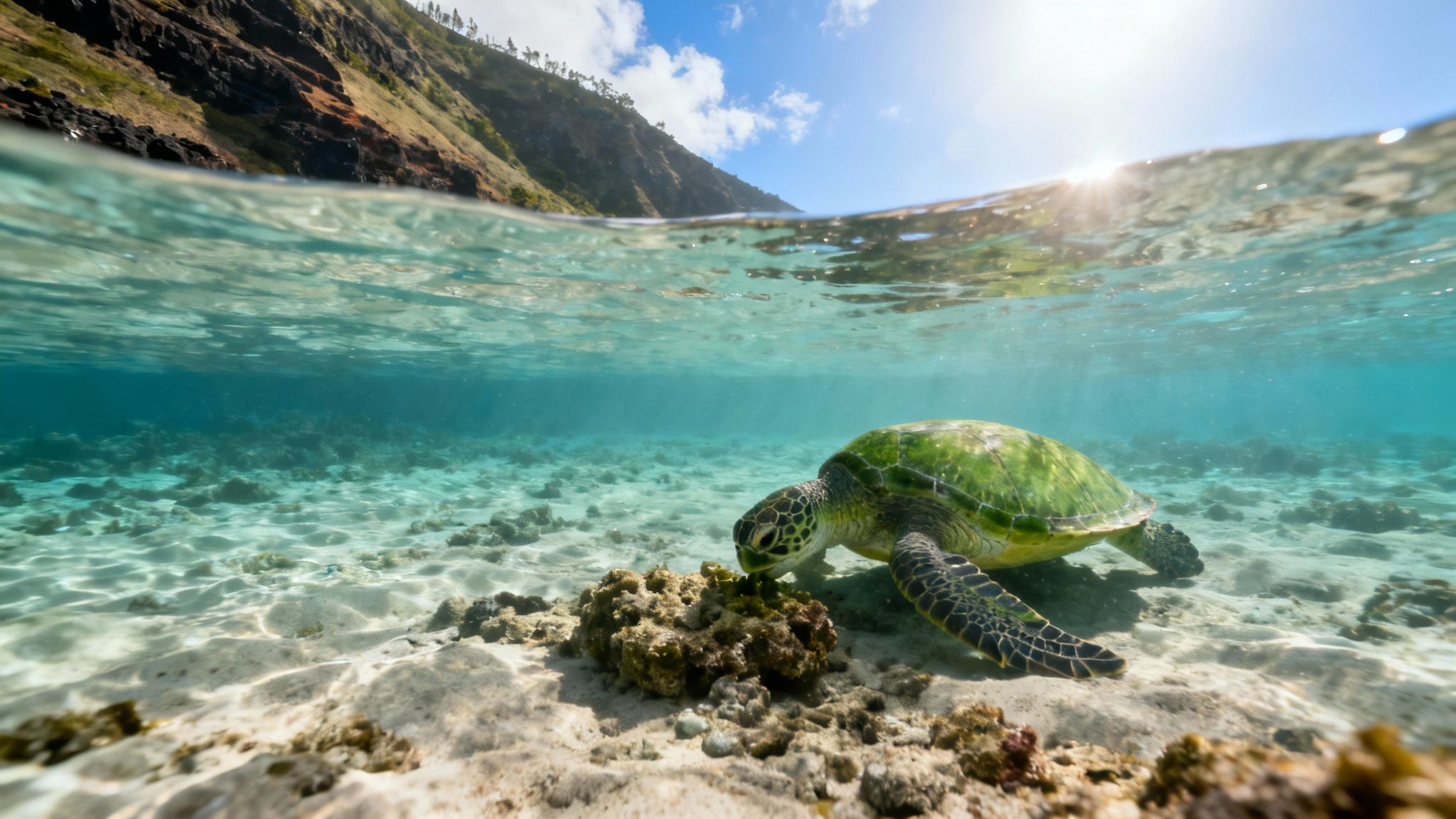
The Kona coast is basically an underwater treasure map, dotted with world-class dive sites that each offer a totally different window into the island’s marine world. You’ve got everything from calm, protected bays perfect for a chill afternoon dive to wild offshore pinnacles that’ll test the skills of even the most seasoned diver.
The real key to an amazing Big Island scuba diving trip is matching your dive plan to your comfort level and what you're hoping to see. Let's dive into some of the most legendary spots that put Kona on the map. These are the crown jewels, the places that almost always deliver those unforgettable moments we all dive for. You can experience many of these incredible locations on one of the many expertly guided Kona diving tours available.
Kealakekua Bay Marine Sanctuary
This place is special. Kealakekua Bay isn’t just steeped in Hawaiian history—it’s also a protected Marine Life Conservation District, which means the coral and fish populations are absolutely thriving. It's famous for the Captain Cook monument, marking where the explorer first landed, but the real story is underwater.
The reef here starts shallow and slopes gently before dropping off into the deep blue, all in calm, crystal-clear water. It’s a fantastic spot for everyone.
- What you'll see: Prepare for huge schools of bright yellow tang, spinner dolphins that often come into the bay to rest, and a kaleidoscope of colorful reef fish.
- Best for: Absolutely everyone. Beginners, advanced divers, and snorkelers will all have an amazing time.
- Typical Depth: 20-80 feet.
Honaunau Bay (Two Steps)
Everyone calls it "Two Steps" because of the two natural lava rock steps that make for one of the easiest shore entries you'll ever find. Honaunau Bay is a hands-down local and visitor favorite, whether you're diving from a boat or right from the shore. The bay is a whirlwind of activity, and because it’s so protected, the water is almost always flat and calm.
It's pretty much a guarantee you'll see Hawaiian green sea turtles (honu) here, often just chilling in the shallows. The reef has incredible topography with little caverns and swim-through arches to explore. It’s this mix of easy access and guaranteed wildlife that makes it a quintessential Kona experience. For a broader look, you can find more information about Hawaii's top-ranked dive sites and see how Kona stacks up.
Honaunau Bay is the classic Kona dive. The easy entry and near-certainty of seeing turtles make it a place you can happily spend the entire day, both below and above the water.
Puako Reef
Over on the Kohala Coast, Puako Reef is shore diving at its finest. What makes this spot so cool is its complex maze of lava tubes, arches, and caverns that create a playground for divers. You’re navigating an underwater landscape sculpted by volcanoes.
The reef is incredibly healthy and packed with life, from tiny, colorful nudibranchs for the macro-photographers to whitetip reef sharks napping under ledges. Since it's a shore dive, certified divers can explore at their own pace. Just be aware the entry can be tricky depending on the tide, so going with a guide or having prior experience is a good idea.
Offshore Pinnacles For Advanced Divers
Ready for a bigger adventure? For experienced divers looking for that next-level thrill, Kona's offshore pinnacles are calling. These are ancient, submerged volcanic spires that shoot up from the deep ocean floor, acting like magnets for larger marine life.
Diving here often means going deeper and dealing with potential currents, so it’s definitely reserved for advanced divers who are comfortable with those conditions. The payoff is huge: dramatic, sheer walls and encounters with pelagic species like sharks, massive schools of jacks, and majestic rays. The only way to get to these spots is by boat with a top-notch operator, especially those offering premium advanced dive trips designed for exactly this kind of diving.
Big Island Dive Site Snapshot
| Dive Site | Typical Depth | Best For | Key Marine Life |
|---|---|---|---|
| Kealakekua Bay | 20-80 ft | All Levels, Snorkelers | Spinner dolphins, Yellow Tang |
| Honaunau Bay (Two Steps) | 15-70 ft | All Levels, Shore Diving | Green sea turtles (Honu), Reef Fish |
| Puako Reef | 25-60 ft | Intermediate/Advanced | Lava Tubes, Whitetip Reef Sharks |
| Offshore Pinnacles | 60-130 ft | Advanced Divers Only | Pelagics (sharks, rays, jacks) |
Each of these sites offers a unique piece of the Big Island's underwater magic. Whether you’re looking for a relaxing reef tour or a deep-water adventure, Kona truly has it all.
How To Choose The Best Kona Dive Operator
Picking the right dive operator can make or break your trip to the Big Island. It’s the difference between a good dive and a truly unforgettable one. With so many choices, it’s easy to feel overwhelmed, but the best companies all share a few core principles: they put your safety and enjoyment first, handling all the details so you can just relax and take in the view.
Think of it this way: a great dive operator builds their entire business on a foundation of non-negotiables. You're looking for a flawless safety record, guides who know Kona's waters like the back of their hand, and boats and gear that are kept in pristine condition. These aren’t just nice-to-haves; they’re the absolute essentials for a safe, comfortable, and incredible day on the water.
The Anatomy Of A Top-Tier Dive Company
So, how do you spot the best of the best? It helps to have a mental checklist when you're sizing up the local dive shops. You're not just looking for a company that meets the basic requirements, but one that goes above and beyond. This is where an operator like Kona Honu Divers really sets the standard.
Here are the critical factors to look for:
- Real-World Experience: You want a crew with serious time in the water. For example, the staff at Kona Honu Divers brings over 200 years of combined professional diving experience to the table. That kind of deep knowledge means you're diving with people who can handle any situation and show you things you'd never find on your own.
- A First-Class Boat: Your dive boat is your home for the day. Is it clean, spacious, and well-maintained? Little comforts like hot freshwater showers after a dive or plenty of shade make a huge difference in your overall experience.
- Quality Gear and Gas: Nothing ruins a dive faster than faulty rental gear. Top-notch operators invest in high-quality, regularly serviced equipment. Plus, many of the best shops offer complimentary nitrox for certified divers, which can mean longer bottom times and more value for your money.
These are the kinds of details that separate an average shop from an exceptional one. If you want to see how the local companies stack up, this guide to the top 10 Kona diving companies ranked is a fantastic resource.
Critical Questions To Ask Before You Book
Don't be shy about asking some direct questions before you hand over your credit card. A professional shop will be happy to answer them, and their responses will tell you everything you need to know about their commitment to quality and safety.
Here’s a quick list of what to ask:
- What is your guide-to-diver ratio? Smaller groups are always better. It means more personal attention from your guide and a safer, more relaxed dive for everyone.
- What are your emergency protocols? Make sure their boats are equipped with emergency oxygen, first aid kits, and that the crew has a clear, practiced plan for any scenario.
- How often is your rental equipment serviced? A shop that takes pride in its gear is a shop that doesn't cut corners on safety.
- What is your commitment to marine conservation? The best operators are stewards of the ocean. They actively protect the reefs they visit and teach divers how to be responsible guests underwater.
Scuba diving on the Big Island isn't just a fun activity; it's a vital part of the local tourism economy. With the global dive tourism market expected to hit USD 18.5 billion by 2035, choosing a reputable operator helps ensure that this industry grows in a way that’s sustainable and healthy for our oceans. This is what allows companies like Kona Honu Divers to keep offering amazing trips—from morning reef dives to advanced pelagic adventures—while upholding the highest safety standards.
When it comes down to it, putting your trust in a proven operator with thousands of five-star reviews is the surest way to guarantee a phenomenal and safe adventure.
Your Big Island Diving Questions, Answered
Planning a dive trip always brings up a few questions. Getting the answers sorted out now means you can relax and look forward to the adventure ahead. I've heard just about every question there is, so let's walk through the most common ones to get you ready for your trip to Kona.
When Is The Best Time Of Year To Dive?
Honestly, any time is a good time. One of the best-kept secrets about the Kona coast is that it's a year-round dive destination. The massive volcanoes on the island act as a natural shield against the trade winds, which keeps the water remarkably calm and clear almost every single day.
That said, different seasons do have their own special perks:
- Winter (December – March): This is humpback whale season. You won't be diving with them, but hearing their songs echoing through the water on a dive is a truly magical, unforgettable experience.
- Summer (June – September): The water is at its warmest, often hitting the low 80s (°F), and the ocean is typically glass-calm. It's peak season for tourism, sure, but the conditions underwater are absolutely perfect.
So, the "best" time really just depends on what you're looking for. You can't go wrong either way.
Do I Need To Be Certified To Dive?
Great question! The short answer is no, you don't have to be certified to get in the water and experience scuba diving in Hawaii. The dive operators here are set up to welcome everyone, from seasoned pros to absolute beginners.
You can absolutely experience the magic of breathing underwater for the first time in Kona's calm, protected waters. Introductory programs are designed to make your first dive safe, comfortable, and unforgettable.
Here’s how it works:
- If You're Already Certified: Perfect! Just bring your certification card (Open Water or higher) and you're good to go. You can jump on any of our guided diving tours, from exploring the vibrant reefs to the world-famous Manta Ray Night Dive.
- If You're a Beginner: You can sign up for a "Discover Scuba Diving" experience. It’s a fantastic one-day program where an instructor teaches you the basics in a super safe spot (like a pool or a calm, shallow bay) before taking you on a real, shallow dive. It’s the perfect way to see if diving is for you without committing to the full course.
What Marine Life Will I See?
The Kona coast is absolutely buzzing with life. The reefs are healthy, the water is clear, and you're pretty much guaranteed to see something amazing. While nature never makes promises, there's a good chance you'll meet some of these locals.
Keep an eye out for:
- Hawaiian Green Sea Turtles (Honu): You'll see these guys everywhere. They're a fixture on Kona's reefs, often found munching on algae or just chilling out on the bottom.
- Giant Manta Rays: These are the superstars of the night dive. Seeing a creature with a 12-foot wingspan glide effortlessly overhead is something you'll never forget.
- Spinner Dolphins: We often spot pods of these acrobatic dolphins from the boat. If you’re lucky, they might even swim by during your dive.
- Colorful Reef Fish: The reefs are a kaleidoscope of endemic species you won't find anywhere else on the planet, like the bright Yellow Tang and all sorts of Butterflyfish.
- Whitetip Reef Sharks: Don't worry, these guys are incredibly docile. You'll often spot them resting under ledges during the day.
What Should I Pack For My Dive Trip?
Packing smart makes for a much smoother trip. Your dive shop provides tanks and weights, and you can always rent high-quality gear. But there are a few personal items you’ll be glad you brought along.
Here's a quick checklist of the essentials:
- Your C-Card & Logbook: This is the one thing you absolutely cannot forget. No card, no dive.
- Reef-Safe Sunscreen: Please, leave the regular stuff at home. The chemicals in it are terrible for our coral. Look for a mineral-based sunscreen with zinc oxide or titanium dioxide.
- Swimsuit & Towel: A quick-dry towel is a lifesaver on the boat.
- Reusable Water Bottle: Diving is thirsty work! Help us cut down on plastic waste by bringing your own bottle.
- Your Own Mask & Fins (Optional): If you have gear you love, bring it. Nothing beats the comfort of a mask that fits your face perfectly.
- Camera: You’re going to see some incredible things. Whether it's a GoPro or a full rig, you'll want to capture the memories.
- A Light Jacket or Windbreaker: It can get a little chilly on the boat ride back, especially after the sun goes down.
With these questions covered, you’re all set to start planning an incredible Big Island scuba diving adventure.