
Welcome to an underwater world shaped by fire and teeming with life. Scuba diving on the Big Island is a truly unique adventure, where ancient lava tubes become otherworldly swim-throughs and vibrant coral gardens thrive on volcanic slopes. This guide is your complete compass for exploring Kona's underwater paradise.
Your Essential Guide To Diving On The Big Island
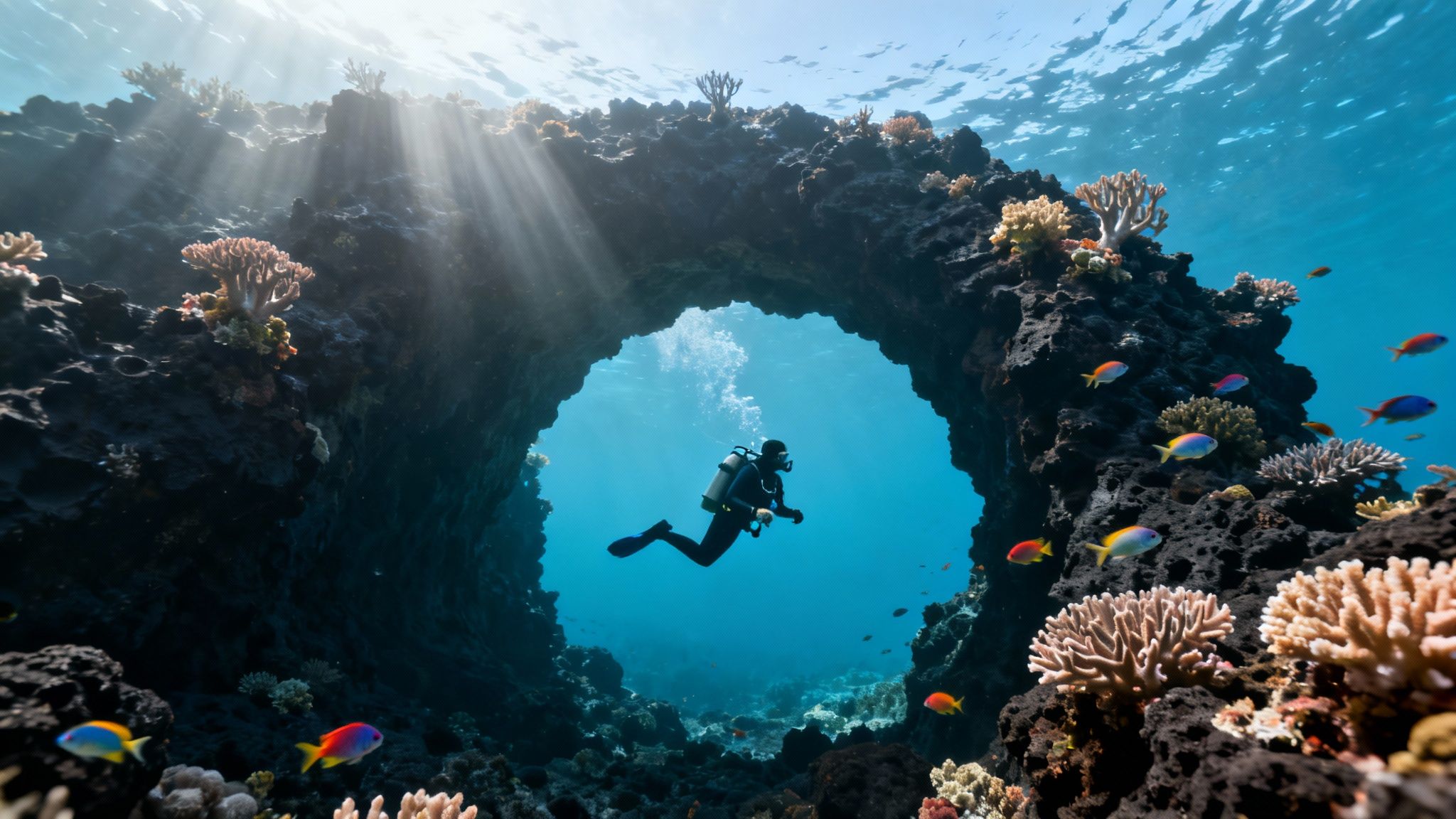
The Big Island of Hawaii offers a diving experience that you just won't find anywhere else. Forged by volcanoes, the underwater topography is a dramatic spectacle of arches, craters, and caverns just waiting to be explored. This geological foundation supports a stunningly diverse and healthy marine ecosystem.
This guide will walk you through everything that makes Kona a world-class diving destination. We'll cover the must-dos, from the world-famous Manta Ray Night Dive to the strange and wonderful Blackwater dives that bring creatures of the deep right to you.
Why Kona Is a Diver’s Paradise
The secret to Kona's incredible diving lies in its location. Shielded by the massive volcanoes of Mauna Loa and Hualalai, the Kona coast is protected from the powerful trade winds that batter other parts of the island. This natural barrier creates exceptionally calm and clear waters, with visibility often soaring past 100 feet year-round. These near-perfect conditions make for some seriously comfortable and breathtaking dives.
Here, the underwater world is defined by:
- Volcanic Landscapes: You'll get to explore intricate lava tubes, massive archways, and submerged craters that now provide shelter for countless marine species.
- Abundant Marine Life: Expect to encounter everything from Hawaiian green sea turtles (honu) and schools of colorful reef fish to majestic manta rays and even the occasional shark.
- Legendary Night Dives: Kona is home to two of the planet's most unique night dives—the Manta Ray ballet and the mysterious Blackwater dive.
As we go deeper, we’ll introduce you to Kona Honu Divers, a top-rated operator whose expert crew and dedication to safety make them an ideal choice for your adventure. Their deep local knowledge unlocks access to over 80 distinct dive sites along the coast. You can learn more about what makes the Big Island good for scuba diving in our detailed article.
Get ready to explore one of the most remarkable underwater environments on Earth.
Check Availability
What Makes The Big Island A World-Class Diving Destination
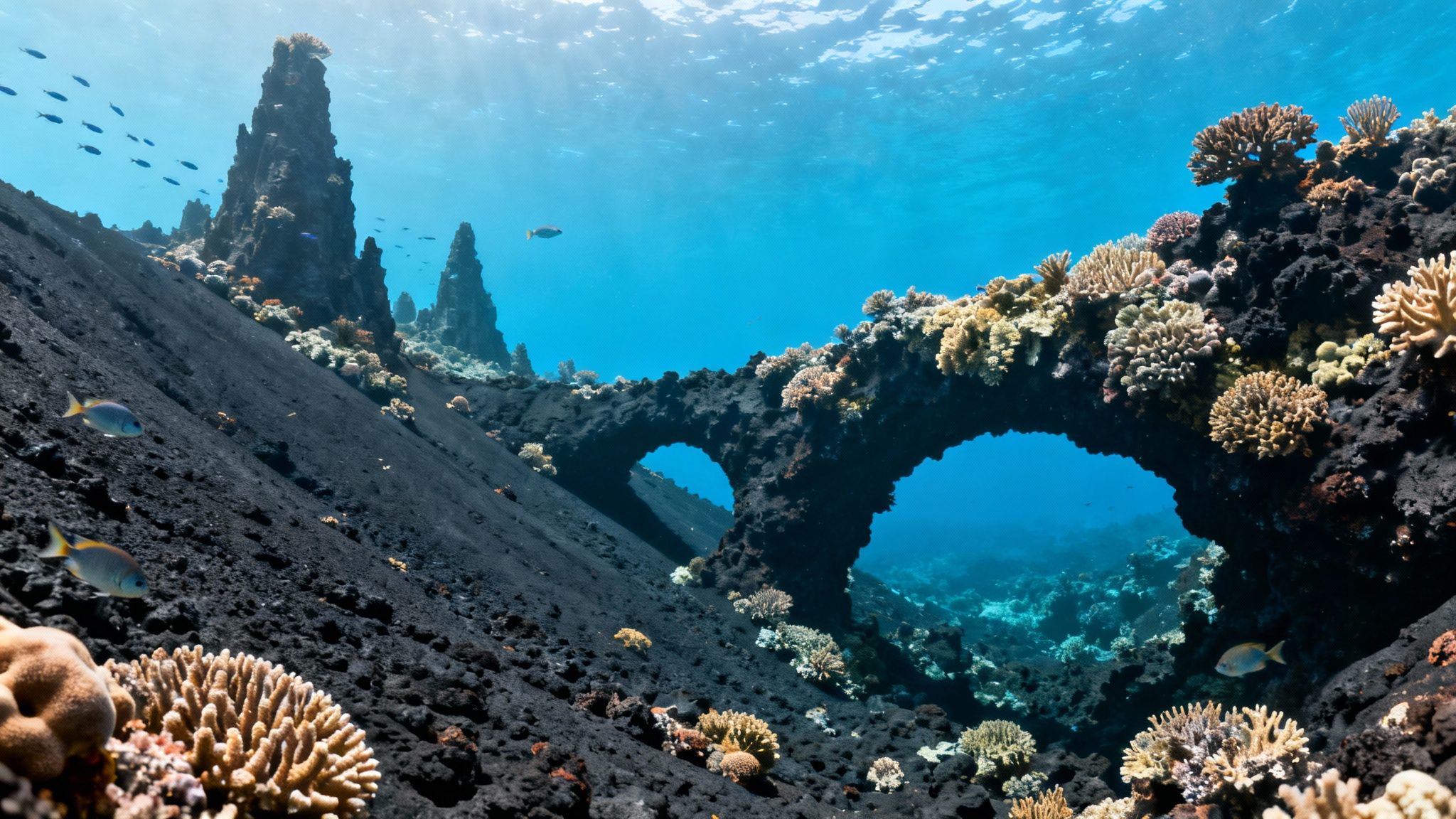
When you picture world-class diving, what comes to mind? For many, it's the Big Island, and for good reason. What sets Big Island scuba diving apart from other tropical hotspots isn't just one thing—it's a perfect storm of volcanic geology, unbelievable biodiversity, and consistently fantastic conditions.
The island's fiery past has shaped an underwater world that's simply unlike anywhere else. Imagine gliding through ancient lava tubes, navigating massive, coral-draped arches, and exploring submerged craters now teeming with life. This dramatic, volcanic seascape is the real magic of diving here.
Volcanic Topography and Pristine Reefs
Geologically, the Big Island is the baby of the Hawaiian island chain, and its youth is on full display below the surface. The underwater terrain is a diver's dream, packed with everything from intricate lava formations to deep-water pinnacles that seem to shoot up from the abyss.
All those nooks and crannies create the perfect real estate for one of the healthiest coral reef systems in Hawaii. Because the island is still growing, the fresh lava rock gives coral polyps a clean slate to build upon, resulting in a vibrant, flourishing underwater city.
The Kona Coast Advantage: Calm Waters and Crystal-Clear Visibility
The real secret weapon for Big Island diving is the Kona coast. Tucked away on the island's leeward (sheltered) side, it’s protected from the powerful trade winds by the sheer size of Mauna Loa and Hualalai.
This natural barrier creates exceptionally calm and clear water almost all year long. It’s not unusual for the visibility to push well past 100 feet, making you feel like you're flying through an underwater cathedral. These reliable conditions are a godsend for everyone, from beginners taking their first breaths underwater to seasoned photographers lining up that perfect shot.
You can get a deeper dive into what to expect by reading our guide to visibility in Big Island scuba diving.
This combination of stunning reefs and predictable conditions ensures every dive is a memorable one. Going with a seasoned operator who knows the area inside and out, like Kona Honu Divers, means you get access to the best of over 80 unique Big Island scuba diving sites, perfectly matched to the day’s conditions and your experience level.
You can see what other divers have to say about their experience below.
Check Availability
Exploring Two Legendary Night Dives in Kona
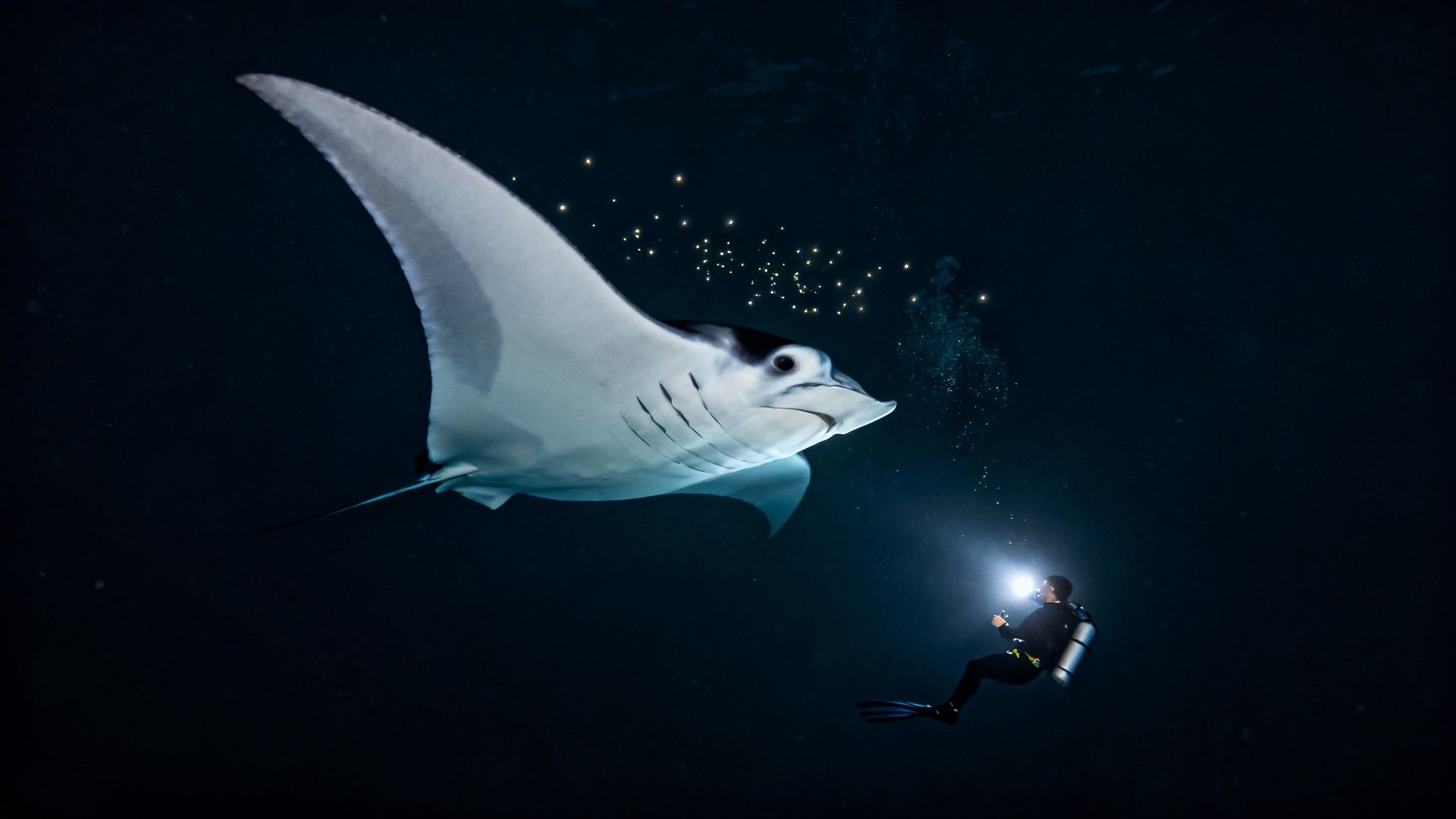
When the sun goes down, Big Island scuba diving completely transforms. The reefs you saw in daylight give way to a different world, and Kona is home to two of the most incredible night dives you’ll find anywhere on the planet. Each one offers a totally unique—and unforgettable—look into the ocean's after-dark mysteries.
The World-Famous Manta Ray Night Dive
First up is the dive that put Kona on the map: the Manta Ray Night Dive. Honestly, calling it just a "dive" doesn't do it justice. It's more like an underwater ballet where you have the best seat in the house.
After a short boat ride, you'll descend to a sandy spot on the ocean floor, get comfortable, and point your dive light straight up. That beam of light attracts a swarm of plankton, and the plankton, in turn, brings in the stars of the show.
Majestic manta rays, some with wingspans stretching 16 feet, glide in from the darkness to feed. They swoop, barrel-roll, and soar just inches above your head in a mesmerizing, silent dance. It's a peaceful, profound, and often emotional experience that tops bucket lists for divers worldwide.
Why Garden Eel Cove is the Premier Spot
While there are a couple of sites for this dive, Garden Eel Cove (also called Manta Heaven) is the superior choice because of its protected location, better viewing area, and healthier reefs. The cove is naturally shielded from the open ocean swell, which means calmer, safer, and more enjoyable conditions for everyone.
The site’s geography creates a natural "underwater amphitheater" that helps concentrate the action, giving you a front-row seat for more consistent and up-close manta encounters. Plus, the surrounding reefs are more vibrant, adding to the magic of the whole experience. This is why it's considered the premium location for the manta ray dive tour.
You can get a deeper look at this incredible adventure in our full guide to the manta ray night dive in Hawaii. At a prime location like this, success rates are phenomenal—we’re talking over 90%—with most trips seeing between 4 and 11 mantas a night.
The Kona Blackwater Dive: A Journey into the Abyss
For divers with solid skills and a taste for the extraordinary, Kona offers a second, much more surreal night dive: the Kona Blackwater Dive. This isn't a reef dive. Far from it. This is a journey into the deep, dark, open ocean, drifting over thousands of feet of water.
You’re tethered to the boat for safety as you hang suspended in the vast blackness. Your light illuminates a world that few people ever see. Every night, one of the planet's largest migrations happens as strange, wonderful, and often bizarre creatures rise from the abyss to feed near the surface.
This dive is the closest thing you’ll get to a spacewalk. You’ll see creatures that look truly alien—glass squids, larval fish that look nothing like their adult forms, and bioluminescent animals that glitter like constellations in the dark.
This is an advanced dive, no doubt about it. It demands excellent buoyancy control and a calm mind. But the payoff is an otherworldly glimpse into a hidden ecosystem that will change how you see the ocean.
Comparing Kona's Signature Night Dives
So, which one is right for you? Both dives are incredible, but they offer vastly different experiences. Here’s a quick breakdown to help you decide.
| Feature | Manta Ray Night Dive | Blackwater Dive |
|---|---|---|
| Experience Type | A mesmerizing, graceful ballet of giant mantas feeding. | A surreal "spacewalk" encountering bizarre deep-sea life. |
| Location | Shallow, sandy bottom near a reef (30-40 ft). | Deep open ocean, tethered to the boat (40-50 ft). |
| Main Attraction | Giant Pacific Manta Rays. | Bioluminescent and larval creatures from the abyss. |
| Skill Level | Open Water Divers & Snorkelers. | Advanced Divers Only. |
| Vibe | Awe-inspiring, peaceful, and majestic. | Thrilling, mysterious, and otherworldly. |
Ultimately, the choice comes down to what you’re looking for. The manta dive is a beautiful, accessible spectacle perfect for almost everyone. The blackwater dive is a true adventure for seasoned divers seeking to push the boundaries of their experience.
Either way, you’re in for a night you’ll be talking about for years to come.
Finding The Perfect Dive Site for Your Skill Level
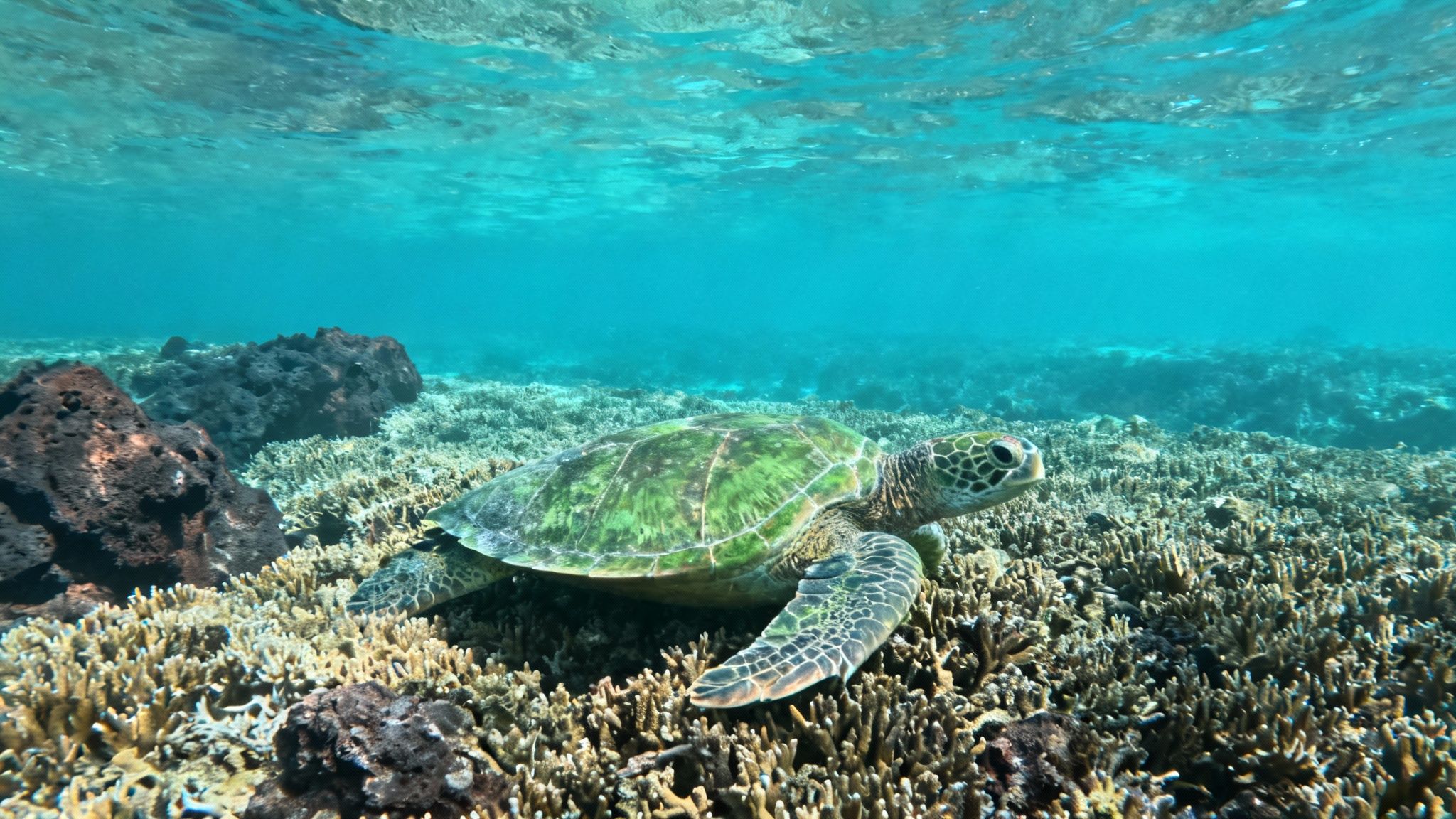
From serene, turtle-filled reefs to exhilarating deep-water pinnacles that vanish into the blue, the Kona coast has a perfect dive for every single certification level. One of the absolute best things about Big Island scuba diving is its incredible variety. It doesn’t matter if you’re about to take your first breath underwater or you’ve got thousands of dives in your logbook—there’s a site here that will feel like it was made just for you.
The key is matching your personal comfort and skill set to the right environment. This is where an experienced local operator like Kona Honu Divers truly shines. They are masters at tailoring their charters to suit a mix of divers, making sure everyone has a safe, incredible, and totally unforgettable day on the water.
Let's break down some of the top spots for each experience level.
Gentle Dives for Beginners
For anyone new to diving, Kona is an amazing underwater classroom. The conditions here are typically very forgiving, with little to no current and fantastic visibility, which makes it the perfect place to build confidence and really fall in love with the sport.
Many of the best beginner-friendly spots are tucked away in protected bays, where the water is shallow and absolutely buzzing with colorful marine life.
- Kealakekua Bay: This is a protected marine sanctuary, famous for its impossibly clear water and pristine coral gardens. It's totally normal to find yourself surrounded by huge schools of vibrant reef fish. Keep an eye out for spinner dolphins, too!
- Pawae Bay (Turtle Pinnacle): Just like the name implies, this is the spot to meet Hawaiian Green Sea Turtles (honu). The shallow reef here is a natural "cleaning station," a place where turtles hang out patiently while smaller fish nibble away algae from their shells.
These sites offer a calm, beautiful, and stress-free introduction to the underwater world, letting new divers focus on their breathing and buoyancy while soaking in the scenery.
Adventures for Intermediate Divers
Once you’ve got a good number of dives under your belt and feel at home in the water, a whole new side of Big Island scuba diving opens up. This is where you get to explore the dramatic underwater architecture that makes Kona’s volcanic coastline so unique.
These sites often have more complex layouts and slightly deeper profiles, rewarding divers with one-of-a-kind sights and marine encounters.
Get ready to explore a world of dramatic swim-throughs, massive arches, and intricate lava tubes. These formations aren't just cool to look at; they create complex habitats that shelter an incredible diversity of marine life, from shy octopuses to schools of soldierfish hiding in the shadows.
Sites like Golden Arches or Pu'uhonua O Honaunau (Place of Refuge) are perfect examples. You'll get to navigate stunning underwater structures and peek into caverns, seeing firsthand how much life thrives within these ancient volcanic formations. It’s an awesome next step that adds a true sense of exploration to your dives.
Challenges for Advanced Divers
For experienced divers looking for a real thrill, Kona absolutely delivers. We’re talking deep-water pinnacles, exciting drift dives, and specialized charters that offer a challenge for even the most seasoned adventurers. These dives demand excellent buoyancy, solid air management, and a high comfort level with deeper profiles and potential currents.
Kona Honu Divers runs specialized advanced dive tours that will take you to some of the most dynamic and pristine sites along the coast. On these trips, you might explore:
- Deep Pinnacles: These are submerged volcanic peaks that rise from the ocean floor, acting as magnets for big pelagic species.
- Drift Dives: Let the ocean's gentle currents do the work as you "fly" effortlessly over long stretches of beautiful reef.
- Shark Encounters: Head to sites known for frequent sightings of whitetip reef sharks, and if you’re lucky, maybe even scalloped hammerheads or Galapagos sharks.
These advanced charters are built for divers who are ready for a bigger adventure and want a chance to see the wilder side of Kona’s marine world. No matter your skill level, Kona has the perfect underwater playground waiting for you. Feel free to explore a full range of general diving tours to find the right trip for your next adventure.
Check Availability
How to Plan Your Big Island Dive Trip
A little bit of planning is what separates a good dive trip from an unforgettable one. Taking a few minutes to sort out the logistics for your Big Island scuba diving adventure means you can spend your vacation focused on the incredible world beneath the waves, not sweating the small stuff.
We’ll cover everything from the best season to visit to the unspoken rules of diving in Hawaii. Think of this as your pre-flight checklist for an amazing underwater experience.
When Is the Best Time of Year for Big Island Scuba Diving?
The short answer? Anytime. Kona’s real secret weapon is its geography. The massive volcanoes on the Big Island act as a natural shield, blocking the trade winds and leaving the western coast remarkably calm and clear almost all year.
That said, there are some subtle differences you’ll want to know about. The summer months, from about June through September, bring the warmest water—often a bath-like 80°F—and glassy seas. Winter, from December through March, sees the water temp dip into the low-to-mid 70s, but it comes with a huge bonus: it’s peak season for humpback whales. Hearing their songs underwater is something you’ll never forget.
To help you decide, here’s a quick snapshot of what the diving conditions look like throughout the year.
Big Island Diving Conditions Throughout The Year
This table breaks down the average conditions and marine life you can expect each season. While Kona offers world-class diving year-round, knowing these details can help you time your trip for exactly the experience you're looking for.
| Season | Water Temp (°F) | Avg. Visibility | Key Marine Life Sightings |
|---|---|---|---|
| Spring (Mar-May) | 74°F – 77°F | 80 – 100+ ft | Humpback whales (end of season), turtles, reef sharks, dolphins |
| Summer (Jun-Sep) | 77°F – 80°F | 100+ ft | Manta rays, eagle rays, huge schools of fish, calmest seas |
| Fall (Oct-Nov) | 76°F – 79°F | 80 – 100+ ft | Turtles, dolphins, occasional pelagic visitors |
| Winter (Dec-Feb) | 73°F – 76°F | 70 – 100 ft | Humpback whales (peak season!), manta rays, reef sharks |
No matter when you visit, you're in for a treat. The key is simply to pack the right exposure suit for the season so you stay comfortable on every dive.
Your Essential Packing Checklist
Packing smart makes all the difference. While we offer top-notch rental gear, most seasoned divers know the comfort of bringing a few key items from home.
- Your Personal "Big Three": If you bring nothing else, pack your own mask, snorkel, and dive computer. A mask that fits your face perfectly prevents annoying leaks, and you’re already familiar with your computer’s settings.
- Exposure Protection: A 3mm wetsuit is the go-to for most of the year. If you run cold or are planning winter or night dives, a 5mm wetsuit will keep you much more comfortable.
- Reef-Safe Sunscreen: This is non-negotiable. Hawaii has banned sunscreens with oxybenzone and octinoxate because they bleach coral. Look for mineral-based sunscreens with zinc oxide or titanium dioxide.
- Reusable Water Bottle: Hydration is critical for safe diving. Help us cut down on plastic by bringing a bottle you can refill on the boat.
- Dry Bag: A small dry bag is a lifesaver for keeping your phone, car keys, and a towel dry and sand-free on the boat.
Why You Should Be Diving with Nitrox
For any certified diver, using Enriched Air Nitrox is a game-changer for Big Island scuba diving. Simply put, Nitrox is a breathing gas that has more oxygen and less nitrogen than regular air (usually 32% oxygen instead of 21%).
So, what does that mean for you? The main benefit is longer bottom times. Because your body absorbs less nitrogen, you can stay at depth longer before hitting your no-decompression limits. More time means more opportunities to watch a turtle get cleaned, explore a lava tube, or just hang out and enjoy the view.
Pro Tip: At Kona Honu Divers, we believe in giving you the best dive possible. That's why we offer complimentary Nitrox for all certified Nitrox divers on our charters. It’s an incredible value that helps you maximize every minute underwater.
Boat Diving vs. Shore Diving
The Big Island has a few decent shore dives, but the absolute best, most vibrant, and most exciting sites are only accessible by boat. Choosing a boat charter isn't just a convenience—it's your ticket to the main event.
Our boats take you to offshore volcanic pinnacles, remote coastlines, and pristine reefs that are miles from any shore entry. This means healthier coral, more abundant fish life, and way fewer divers. Plus, with a professional crew handling the logistics and safety, all you have to do is relax and get ready for some world-class diving. Check out the different Kona diving tours we offer to see what's out there.
Diving Etiquette: Protecting Our Reefs
Being a guest in Hawaii’s underwater world comes with a responsibility to protect it. It’s all about being a mindful, low-impact diver.
- Hands-Off Policy: Never touch anything. This goes for coral (which is a living animal), turtles, and especially the manta rays. Your touch can remove their protective slime coating, making them sick.
- Master Your Buoyancy: Keep your fins, gauges, and body off the reef. A single misplaced fin kick can destroy decades of coral growth.
- Listen to the Briefing: Your dive guides know these sites inside and out. They'll give you crucial safety info and point out how to interact responsibly with the local environment.
- Streamline Your Gear: Make sure your gauges and alternate air source are tucked away and not dangling, where they can drag across the reef.
By following these simple rules, you’re doing your part to keep Kona’s reefs healthy for the next generation of divers.
Ready to dive in?
Check Availability
Your Big Island Scuba Questions, Answered
Even the most seasoned divers have questions when exploring a new destination. It's completely normal. To make sure you feel confident and ready for your underwater adventure in Kona, we've pulled together answers to some of the questions we hear most often.
Do I Need to Be Certified to Scuba Dive on The Big Island?
For almost all boat dives, yes, you'll need your certification. But if you're not certified, don't worry—you can still experience the magic of breathing underwater!
Here at Kona Honu Divers, we offer a "Discover Scuba Diving" program. Think of it as a test drive for scuba. An experienced instructor will walk you through the basics in a calm, controlled environment before guiding you on a shallow, fully supervised ocean dive. It’s the perfect way to see if diving is your thing without committing to a full course.
If you get hooked (and we find most people do!), you can roll right into an Open Water certification course, which usually takes just a few days to complete. For our other charters, like the famous Manta Ray Night Dive and our other incredible diving tours, you’ll need to show proof of certification from a recognized agency like PADI, NAUI, or SSI.
What Marine Life Can I Expect to See in Kona?
The waters off the Kona coast are teeming with life—every single dive is different. On a typical day dive, you're almost guaranteed to see Hawaiian Green Sea Turtles (honu) cruising by or resting on the reef. You'll be surrounded by vibrant schools of fish you can only find here, like colorful butterflyfish, triggerfish, and angelfish.
Always keep an eye out for moray eels poking their heads out of crevices or spotted eagle rays gliding effortlessly in the blue. Whitetip reef sharks are also a common sight, often found relaxing on sandy patches under ledges. And don't forget to look for the pods of playful spinner dolphins that frequently accompany the boat!
The real thrill of Kona is in the unexpected finds. Depending on the site, you might spot a rare frogfish perfectly camouflaged on a sponge, a shy octopus changing colors, or tiny, jewel-like nudibranchs. Big Island scuba diving is a treasure hunt every time you drop in.
And of course, some encounters are guaranteed. The Manta Ray Night Dive delivers on its promise of graceful reef mantas, while our special Kona Blackwater Dive reveals the bizarre and beautiful creatures that rise from the deep ocean each night.
Should I Bring My Own Dive Gear or Rent It?
This really comes down to personal preference. Many divers won't travel without their own mask, fins, and dive computer because they know they fit perfectly. Let's be honest, a leaky mask can ruin a dive, so having your own comfortable gear is a big plus.
That said, lugging a full set of gear with a BCD and regulators can be a pain, not to mention expensive with airline baggage fees. Kona Honu Divers provides high-quality, meticulously maintained rental equipment that makes the whole process hassle-free.
Here’s a huge perk of diving with us: we offer complimentary Nitrox for all certified Nitrox divers. This can help extend your bottom time and leave you feeling less tired between dives. For many, renting is the smart way to go—you get top-notch gear without the headache of packing it.
What Is the Best Dive on The Big Island?
"Best" is always in the eye of the beholder, but if there's one dive that consistently blows people away, it’s the Manta Ray Night Dive. It’s not just the best dive on the Big Island; it's often ranked as one of the top dives in the world.
There is nothing quite like kneeling on the seafloor in the dark and watching these gentle giants, with wingspans reaching up to 16 feet, swoop and glide in a silent ballet just inches over your head. It’s a powerful, almost spiritual experience that you’ll never forget.
Looking for a stunning daytime dive? The sites in the Kealakekua Bay Marine Life Conservation District are hard to beat, with their pristine coral gardens and massive schools of fish in crystal-clear water.
For more advanced divers, the deep pinnacles and thrilling drift dives along the coast offer a chance to see bigger pelagic animals and explore dramatic underwater lava formations. The "best" dive depends on what you're looking for, but for a truly iconic Big Island scuba diving experience, the Manta Ray Night Dive is an absolute must.
Check Availability