
Picture this: you descend into impossibly clear, turquoise water. Sunlight dances down from the surface, illuminating a breathtaking world carved by ancient volcanoes. This is what Big Island scuba diving is all about—an incredible mix of dramatic underwater landscapes and some of the most unique marine life encounters you'll find anywhere on Earth. The Kona coast, in particular, is a diver's dream, famous for its protected waters and stunning biodiversity.
Why Kona Is a World-Class Diving Destination
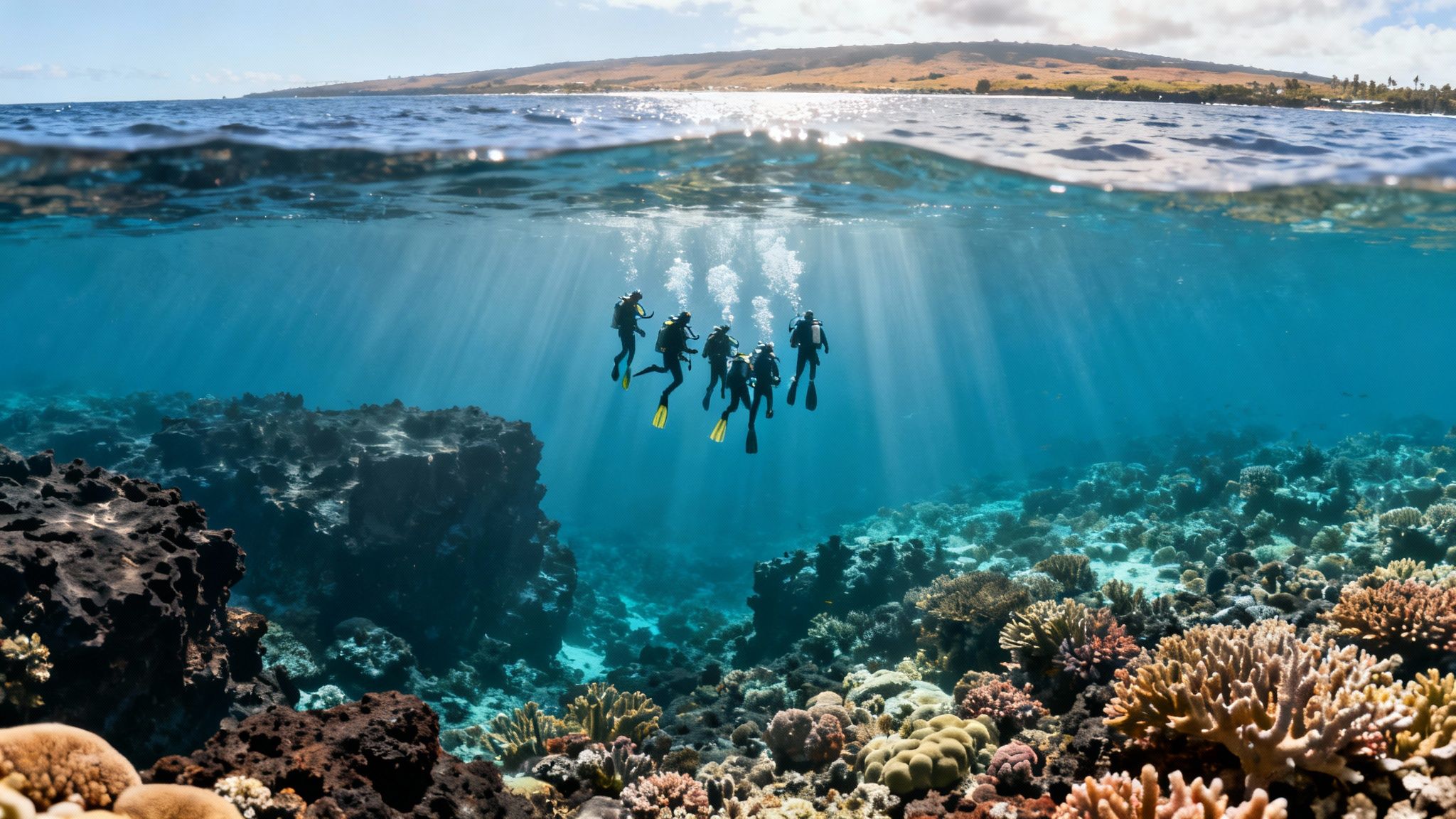
The Kona coast isn't just another dive spot; it’s legendary for good reason. Thanks to the colossal shields of the Mauna Loa and Hualalai volcanoes, the waters here are sheltered from the strong trade winds that buffet much of Hawaii. This natural barrier creates an underwater playground that's consistently calm, clear, and comfortable all year round.
This protected environment is bursting with life. The Big Island is home to over 1,100 species of fish swimming among its vibrant reefs—more than any other island in the Hawaiian chain. This incredible diversity thrives thanks to the island’s unique underwater terrain, featuring ancient lava tubes, dramatic pinnacles, and sheer drop-offs.
Unforgettable Underwater Adventures
Beyond the gorgeous reefs, Kona offers signature dives that are true bucket-list experiences, drawing adventurers from every corner of the globe. Two dives, in particular, define what it means to scuba on the Big Island:
- The Manta Ray Night Dive: A world-famous, almost magical underwater ballet. You'll watch gentle giants swoop and glide through beams of light as they feed on plankton right in front of you.
- The Blackwater Dive: A thrilling journey into the deep ocean's "midnight zone." You'll encounter the weird and wonderful creatures that migrate towards the surface only under the cover of darkness.
These once-in-a-lifetime encounters, combined with Kona’s pristine conditions, cement its status as a top-tier diving destination. If you're still curious about what makes the diving here so special, our guide on why the Big Island is great for scuba diving breaks it all down.
Of course, the key to a safe and amazing adventure is choosing the right guide. Here at Kona Honu Divers, we focus on small groups and bring decades of local expertise to every single trip. Our reputation is built on thousands of five-star reviews from divers who have experienced the Kona difference with us.
Ready to see Kona's underwater world for yourself? Check out our full range of award-winning diving tours and find the perfect adventure for your skill level.
Exploring Kona’s Signature Dive Experiences
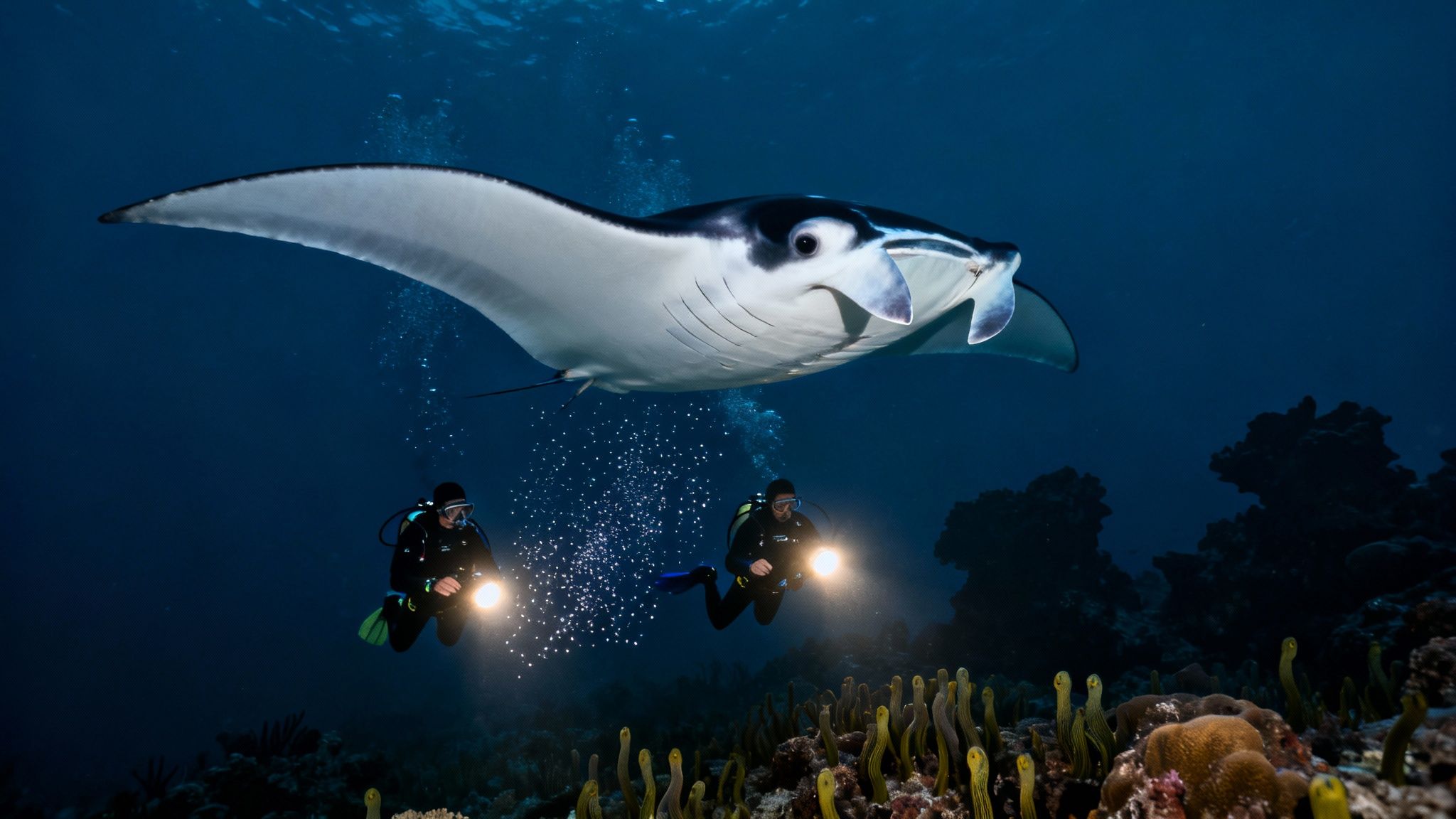
While you can’t go wrong with just about any dive along the Kona coast, there are three truly iconic experiences that every diver dreams of. These aren't just dives; they're the heart and soul of Big Island scuba diving.
Each one offers a completely different glimpse into the Pacific’s underwater world. From the silent, underwater ballet of gentle giants to the bizarre, alien-like creatures of the deep, these are the adventures that put Kona on the map.
The World-Famous Manta Ray Night Dive
Picture this: you're settled on the ocean floor as darkness falls, pointing your dive light up into the water column. Out of the black, a colossal, graceful shadow emerges. A manta ray, with a wingspan of up to 12 feet, glides effortlessly into the light, performing barrel rolls just inches above your head. This is the one and only Manta Ray Night Dive, an experience that consistently tops "best dive" lists around the globe.
So, what's the secret? Manta rays are filter feeders, and the powerful beams from our dive lights attract dense clouds of plankton—their favorite meal. We essentially create an underwater buffet, and the mantas show up to feast. It's a surreal, almost spiritual encounter that feels more like a scene from a sci-fi movie than a scuba dive. Check out our manta ray dive tours to book this unforgettable experience.
Why Garden Eel Cove Is The Superior Choice
You can see mantas at a couple of spots, but from our experience, Garden Eel Cove (also known as Manta Heaven) delivers a far more reliable and magical show. Located north of Kona, it's naturally sheltered from the southern swells that can churn up other sites, meaning calmer, clearer conditions more often.
The real game-changer at Garden Eel Cove is the setup. The site features a healthier reef and a natural, sandy amphitheater we call the "campfire." This allows our group to gather in one spot, concentrating our lights to attract more plankton. The result? A more intimate and spectacular performance with more mantas.
Being away from the more crowded southern sites means you get a front-row seat to one of nature’s greatest spectacles, witnessing these magnificent creatures in a respectful and organized way.
The Mysterious Blackwater Night Dive
Ready for something completely different? The Blackwater Night Dive is less of a dive and more of a journey into another dimension. This isn’t about reefs. We head miles offshore, over thousands of feet of inky black water, and drift while tethered to the boat. Suspended in the void, you simply wait for the deep ocean's secrets to rise and meet you.
Every night, one of the largest migrations on Earth takes place as countless tiny, strange creatures travel from the abyss toward the surface to feed. You'll see things that almost never see the light of day—glowing jellyfish, translucent larval fish, and bizarre cephalopods that look like they're from another planet. It truly feels like floating through outer space, surrounded by beautiful and alien life. For the experienced diver looking for a unique thrill, this is it.
Classic 2-Tank Morning Dives
The quintessential Big Island scuba diving trip is the classic 2-tank morning charter. This is your chance to explore the foundation of Kona’s incredible marine ecosystem: the vibrant reefs, dramatic lava tubes, and amazing wildlife. Mornings here typically bring calm seas and stunning visibility that often exceeds 100 feet, creating the perfect conditions for exploration.
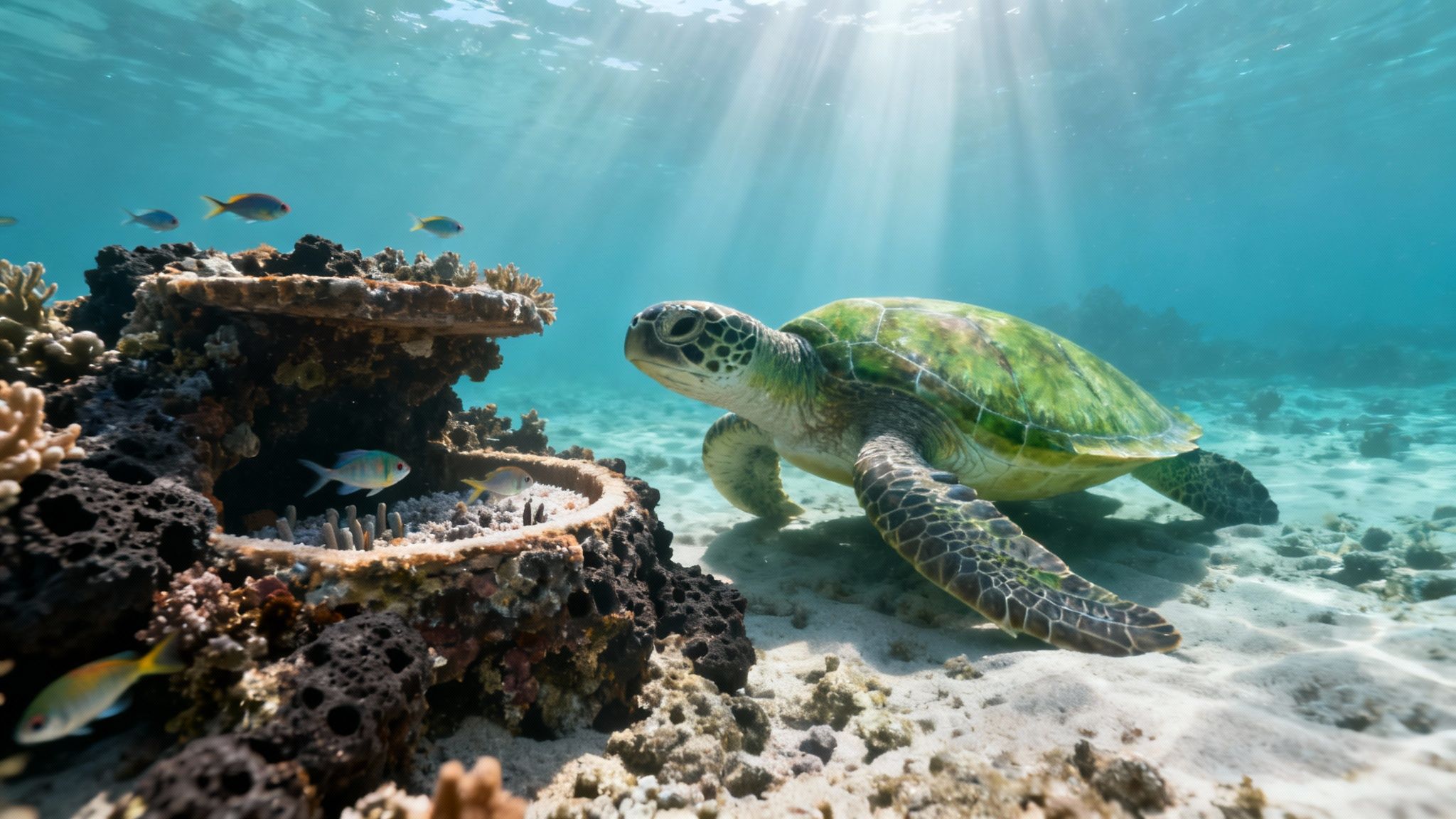
On these dives, we glide over pristine coral gardens, navigate through ancient volcanic archways, and swim alongside Hawaiian green sea turtles (honu) as they visit their "cleaning stations." It's common to find octopuses camouflaged on the reef, spot moray eels peering out from their dens, and get lost in massive schools of colorful fish. These trips are the perfect way to soak in the sheer diversity of Kona's underwater paradise.
Ready to book your signature Kona dive experience? We offer daily charters to these incredible sites, guided by the most experienced crew on the island. Secure your spot on an adventure you’ll never forget.
Discovering the Top Dive Sites Along the Kona Coast
The Kona coast is basically a treasure map for divers. It’s dotted with over 40 established mooring sites, each one a unique window into the island’s fiery volcanic past and its incredibly vibrant marine life. The sheer number of options means that choosing the right spot for Big Island scuba diving really comes down to the day's conditions, your comfort level, and what you’re hoping to see.
This is where having a seasoned crew makes all the difference. An experienced operator like Kona Honu Divers doesn't just stick to a rigid schedule. Instead, their captains read the ocean's mood each morning—checking the swell, wind, and currents—to pick the perfect sites. They have an almost sixth sense for finding the calmest coves and the most active reefs, ensuring every trip is safe, comfortable, and unforgettable.
Boat Diving to Premier Locations
To truly experience the best of Kona, you have to get on a boat. The premier dive sites are offshore, far from any beach access. This keeps them pristine and protected from heavy traffic, allowing the coral ecosystems to thrive. It’s out here that you'll find the most dramatic underwater landscapes and dense schools of fish.
Here are just a few of the all-star sites our charters visit all the time:
- Garden Eel Cove: This spot is legendary as the best location for the Manta Ray Night Dive, but it’s just as amazing during the day. The reef gently slopes down to a sandy patch where a massive colony of garden eels pops out of their burrows, swaying in the current like a field of grass.
- Turtle Pinnacle: Think of this site as a natural spa for Hawaiian green sea turtles, or honu. It’s a "cleaning station" where turtles line up to let smaller reef fish nibble away algae and parasites. It's an incredible, almost guaranteed way to see these gentle giants up close.
- Au Au Crater: Diving in a submerged volcanic crater is an experience you won't forget. This site is defined by its dramatic topography, with collapsed lava tubes and archways to explore. Keep an eye out for whitetip reef sharks resting on the sandy bottom and the occasional eagle ray gliding by in the blue.
Relying on a professional crew means you're not just getting a ride to a dive site; you're getting a curated experience. The team’s ability to read the ocean and adapt the day's plan ensures every dive is optimized for the best possible conditions and marine encounters.
To give you a better sense of the variety along the coast, here’s a quick rundown of some of our favorite spots.
Big Island Dive Site Highlights
| Dive Site | Primary Attraction | Depth Range | Experience Level |
|---|---|---|---|
| Manta Heaven | Manta Ray Night Dive | 25-40 ft | Open Water |
| Garden Eel Cove | Manta Rays & Garden Eels | 30-60 ft | Open Water |
| Turtle Pinnacle | Turtle Cleaning Station | 30-70 ft | Open Water |
| Au Au Crater | Lava Tubes & Swim-Throughs | 30-60 ft | Open Water |
| Suck 'em Up | Lava Tube Cavern | 35-50 ft | Advanced |
| Golden Arches | Arches & Reef Sharks | 40-70 ft | Open Water |
This is just a small sample, of course. The Kona coast is packed with dozens of incredible sites, each with its own personality and secrets to discover.
The Freedom of Shore Diving
While boat trips unlock the most dramatic sites, the Kona coast also has some fantastic shore diving. This approach gives certified divers a different kind of freedom, letting you gear up and explore on your own schedule. Without a doubt, the most famous shore dive here is Puʻuhonua o Hōnaunau, better known as "Two Step."
The entry is a natural lava rock ledge that lets you step right into a beautiful coral garden teeming with turtles and colorful reef fish. It’s an easy, accessible dive that perfectly showcases the beauty of Kona’s nearshore world. For those seeking a bit more adventure, other spots like Black Rock offer deep drop-offs to 70-80 feet just a short kick from shore, attracting everything from eagle rays to sharks. You can dive deeper into Hawaii's underwater world by reading PADI's guide to Hawaiian diving.
Whether you’re back-rolling off a boat into the deep blue or stepping off the lava rock into a shallow reef, the dive sites along the Kona coast are what make Big Island scuba diving a truly world-class experience.
Ready to Go Deeper? Advancing Your Skills in Kona
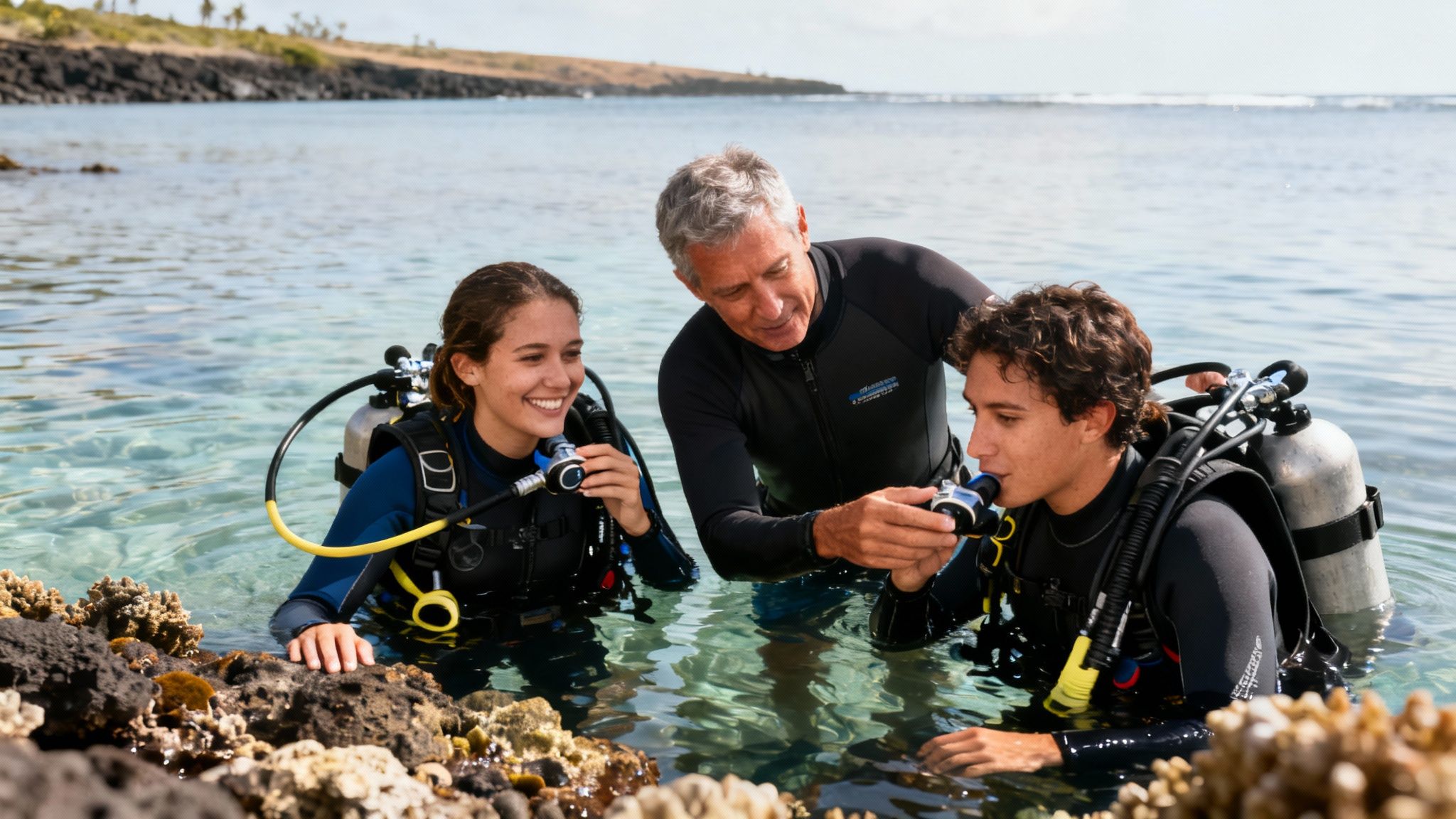
Whether you've never breathed underwater or you have hundreds of dives under your weight belt, Kona is the perfect place to level up your skills. The calm, warm, and crystal-clear waters of the Big Island aren't just beautiful—they create an ideal natural classroom for every stage of your Big Island scuba diving journey.
If you're just curious about the sport, the Discover Scuba Diving experience is the perfect first step. It’s a low-pressure way to try scuba in a shallow, controlled environment with an instructor right by your side. You get a real taste of the magic without having to commit to a full course.
Ready to make it official? The PADI Open Water Diver certification is your global passport to underwater adventure. Kona’s gentle conditions make the learning process fun and incredibly effective, giving you the skills to be a safe, confident diver anywhere in the world.
For Divers Who Are Already Certified
If you already have your Open Water card, this is where the real fun begins. Now’s your chance to move beyond the basics and unlock a whole new world of diving possibilities. Advanced courses are all about building on what you know, sharpening your abilities, and introducing you to specialized types of diving you couldn't do before.
Continuing your education can open up incredible new experiences:
- Deep Diving: Learn the techniques to safely explore amazing sites beyond the standard 60-foot limit of your Open Water certification.
- Underwater Navigation: Master your compass and learn to read natural reef formations so you can confidently lead your own dives.
- Night Diving: The reef completely transforms after sunset. This course gives you the skills to witness the nocturnal magic firsthand.
- Peak Performance Buoyancy: This is the secret to becoming a truly graceful diver. You’ll perfect your breathing and trim to hover effortlessly, conserve air, and protect the delicate marine life.
At Kona Honu Divers, our experienced instructors are ready to guide you through these specialties and many more. You can learn more about earning your Big Island scuba certification with us, from your very first bubbles to professional-level ratings.
The Advantage of Advanced and Premium Trips
Once you're an advanced diver, a whole new tier of dive sites opens up. We run exclusive premium advanced dive trips specifically for more experienced divers. These charters travel farther offshore to explore deeper reefs, dramatic lava tubes, and remote pinnacles that often attract bigger marine life.
These advanced trips aren't just about going deeper; they're about exploring the wilder, less-visited side of Kona’s underwater world. Imagine dropping in on a secluded shark cleaning station, navigating through an ancient lava tube, or drifting a current-swept wall where you might encounter anything from schooling hammerheads to a passing whale shark.
Scuba diving's popularity is surging worldwide—the market jumped from USD 4,552.8 million in 2023 and is on track to hit USD 8.8 billion by 2030. We meet that growing passion for adventure with specialized charters like our 2-tank advanced trips, blackwater dives, and long-range explorations for divers with 25 or more logged dives, ensuring there’s a perfect challenge for everyone.
The Nitrox Advantage: Kona Honu Divers provides complimentary Nitrox (enriched air) for all certified divers. Why is this a big deal? Diving with Nitrox means you absorb less nitrogen. This can give you longer bottom times, shorter surface intervals, and help you feel less tired after a day of diving—a huge plus when you're logging multiple dives over your vacation.
Improving your skills in Kona does more than just make you a better diver—it unlocks the absolute best that Big Island scuba diving has to offer. Whether it's your first time in the water or your five-hundredth, there's always a new adventure waiting just below the surface.
How to Plan Your Ultimate Scuba Diving Trip
Putting together your Big Island scuba diving adventure is almost as much fun as the trip itself. With a bit of planning, you can line up a vacation that hits all the right notes for your skill level, interests, and schedule. It all comes down to understanding the rhythm of the island and what to expect when you're here.
Kona’s diving is incredible year-round, but there are some subtle changes with the seasons. Timing your visit just right can be the difference between a great dive trip and one you’ll be talking about for years.
Choosing the Best Time to Visit
While you can’t go wrong any time of year, the seasons bring their own unique flavor. The water is warmest from August to October, hovering around a perfect 80°F (27°C). Things cool down a bit from January to March, but it's still a comfortable 75°F (24°C).
Visibility is almost always fantastic, often stretching past 100 feet. But the real magic happens in the winter.
From December through March, humpback whales make their way to Hawaiian waters to breed and give birth. While actually seeing one on a dive is incredibly rare, hearing their complex, haunting songs echo through the water is an experience that will absolutely stick with you.
So, the "best" time really depends on what you're after. If you want the warmest water possible, aim for late summer. If the idea of an underwater whale serenade gives you chills, book a winter trip.
What to Expect on a Top-Tier Dive Boat
The boat and crew you choose can make or break your dive day. Here at Kona Honu Divers, we think comfort and professionalism are everything. Our boats were designed with divers in mind, so every little detail is there to make your day on the water smooth and fun.
When you hop aboard with us, here’s what you'll find:
- A Real Pro Crew: Our team is made up of seasoned captains and PADI-certified instructors who are not only obsessed with safety but are also total geeks about marine life. They love to point things out!
- Room to Move: You’ll have plenty of space to set up your gear without bumping into everyone. We also have dedicated camera tables and rinse bins for all you photographers.
- Creature Comforts: A hot, freshwater shower after a dive feels amazing—it’s a small luxury that makes a big difference. You’ll also find plenty of shade and a proper marine head (restroom).
- Snacks and Drinks: We always have snacks, water, and other drinks on board to keep you fueled up and hydrated between dives.
It's this commitment to the whole experience that keeps divers coming back to us again and again.
Gear Up: Rent or Bring Your Own?
To pack or to rent? That is the question. Bringing your own gear is great because you know it fits and works just how you like it. The downside? Lugging it through airports, paying extra baggage fees, and then having to rinse and dry it all in your hotel room.
Renting from a professional shop like ours is the easy button. Our rental BCDs, regulators, wetsuits, and computers are all top-notch and meticulously maintained. You get to dive with reliable, high-performing equipment without any of the travel headaches. A lot of our regulars find a happy medium: they bring their own mask, fins, and computer, then rent the big, heavy stuff from us.
Sample 3-Day Big Island Diving Itinerary
To give you an idea of what’s possible, here’s a sample schedule that packs in Kona’s most iconic dives. This plan is all about maximizing your underwater time and showing you the incredible range of Big Island scuba diving.
- Day 1 Morning: 2-Tank Morning Dive. Ease into your trip by exploring our beautiful coral reefs and classic lava tube swim-throughs. It's the perfect way to get your fins wet and see staples like green sea turtles and huge schools of reef fish.
- Day 2 Evening: Manta Ray Night Dive. This is the main event! The world-famous night dive with the manta rays at Garden Eel Cove is an absolute must-do. There’s nothing else like it on the planet.
- Day 3 Morning: Premium Advanced 2-Tank Trip. Ready for something more? Head out on an advanced trip to more remote sites. These spots are known for their dramatic underwater landscapes and the chance to spot bigger pelagic animals.
This itinerary is a great mix of classic reef diving and truly world-class adventures. Ready to design your own perfect trip? Check out our full lineup of Kona diving tours and start planning.
Your Kona Diving Questions, Answered
Even the most seasoned travelers have questions before a big dive trip. We get it. To help you plan your Big Island scuba diving adventure with total confidence, we've pulled together answers to the questions we hear most often from divers just like you.
Let's clear up any lingering details so you can get back to dreaming about Kona's incredible underwater world.
What’s the Best Time of Year to Dive the Big Island?
Honestly, there’s no bad time. The Kona coast is blessed with calm, protected waters, making for fantastic diving all year round. That said, there are a few seasonal perks you might want to consider.
If you love warm water, aim for August through October, when temperatures sit at a blissful 80°F (27°C). The coolest months are January to March, but even then, the water is a very comfortable 75°F (24°C). The real bonus of winter diving? From December through March, you can often hear the incredible songs of humpback whales echoing underwater during their migration. Visibility is almost always great, frequently stretching beyond 100 feet.
Do I Need to Be an Advanced Diver for the Manta Ray Night Dive?
Not at all! This is one of the biggest misconceptions. The world-famous Manta Ray Night Dive is open to any certified Open Water diver.
While it is a night dive, it’s a very controlled and relatively shallow experience, usually around 35-40 feet. The sites, like Garden Eel Cove, are chosen specifically for their calm, easy conditions.
Our expert guides at Kona Honu Divers give a thorough safety briefing, and they’re right there with you in the water. For most of the dive, you’re stationary on a sandy bottom, simply watching the mantas do their thing. It’s a perfect, unforgettable first taste of night diving.
Besides Mantas, What Other Marine Life Will I See?
The Big Island is a hotspot for marine biodiversity, so get ready for a packed roster of underwater creatures. On a typical reef dive along the Kona coast, you'll almost certainly meet Hawaiian green sea turtles (honu), often found resting on the reef or getting a spa treatment at a cleaning station.
You can also count on seeing:
- Spinner dolphins playing in the boat's wake on your way to the dive site.
- Eels of all kinds, from morays and dragons to fields of garden eels.
- Clever octopuses trying (and sometimes failing) to blend in with the coral.
- A kaleidoscope of reef fish, including butterflyfish, angelfish, tangs, and the humuhumunukunukuāpuaʻa (triggerfish).
Depending on the site and a little luck, you might also spot whitetip reef sharks, elegant eagle rays, and maybe even larger pelagic visitors. And if you’re up for something totally different, the Blackwater Dive opens up a whole new world of strange and wonderful deep-sea creatures.
Can My Non-Diving Family Join the Boat Trips?
Absolutely! We know that not everyone in the family is a diver, and we love having them aboard. Many of our trips, especially the Manta Ray Night Dive and our 2-tank morning reef dives, are fantastic for snorkelers. At Kona Honu Divers, we always welcome riders and snorkelers, making it easy for everyone to share the ocean experience together.
On the manta trip, snorkelers get a front-row seat from the surface as these gentle giants swoop and barrel-roll just feet below. During the day, they'll see turtles, colorful fish, and beautiful coral gardens in the shallower parts of the reef. It’s a great way to make sure the entire family goes home with incredible memories.
Ready to find the perfect underwater adventure for your crew? We have everything from beginner courses to advanced charters and family snorkel trips. Explore our full range of Kona diving tours and let's get you in the water.