
Picture this: you descend into the warm, crystal-clear Pacific, sunbeams piercing the surface and lighting up a world carved by volcanoes. This isn't just another ocean dive. This is Big Island scuba diving, an unforgettable journey through underwater lava tubes, dramatic archways, and ancient craters that consistently puts Hawaii on the map as one of the world's best dive destinations.
Why Kona Is a World-Class Diving Destination
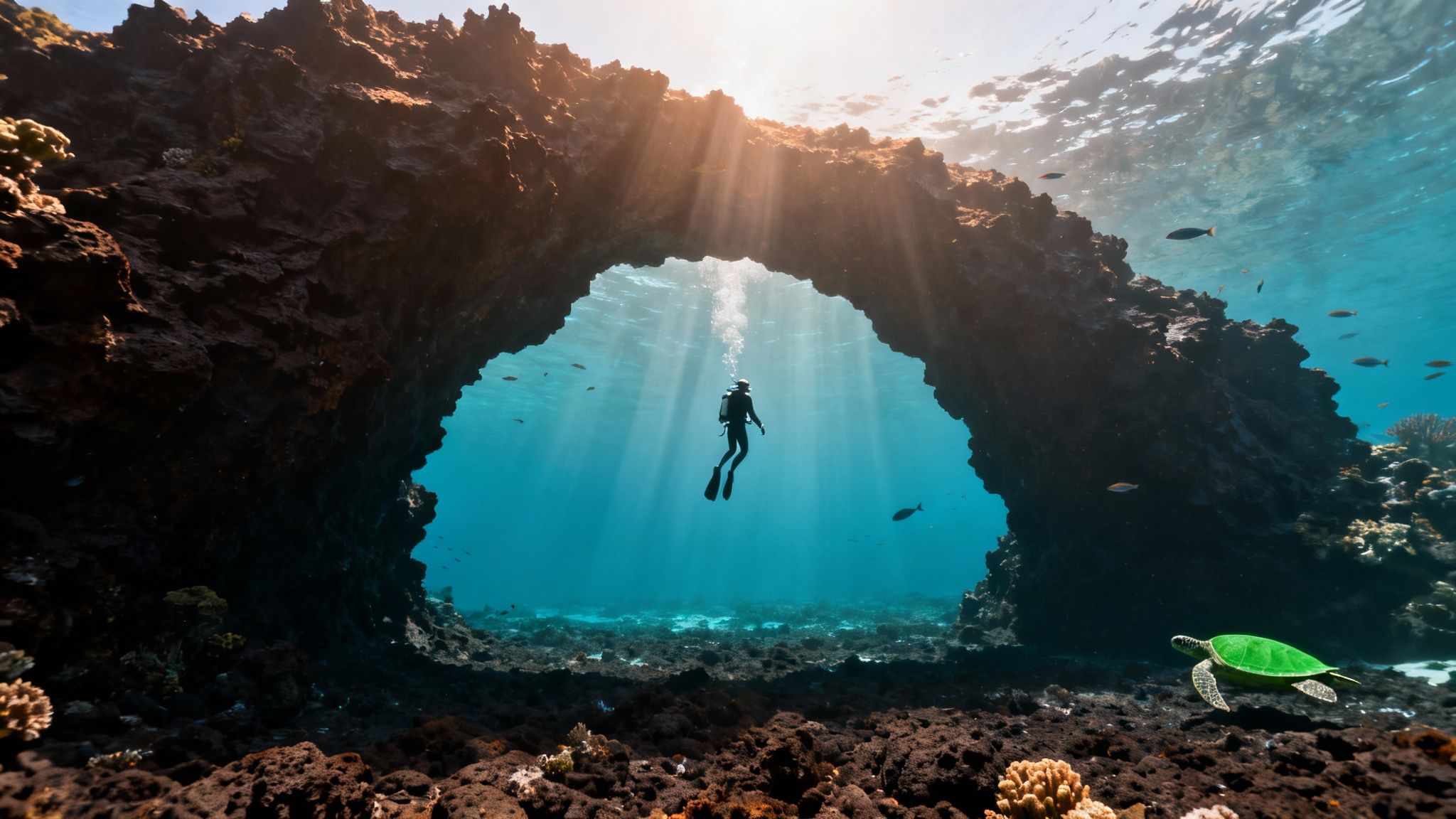
The secret to Kona's incredible diving lies in its geology. The sheer size of the Big Island's volcanoes, Mauna Loa and Mauna Kea, creates a massive natural barrier. They shield the Kona coast from the powerful trade winds that batter other parts of Hawaii, resulting in exceptionally calm, predictable waters with hardly any current.
Thanks to this protection, divers get to enjoy fantastic conditions pretty much year-round. It's not uncommon for visibility to stretch beyond 100 feet, giving you a front-row seat to the stunning underwater architecture and the bustling marine life that calls it home.
To give you a quick snapshot, here's what makes Kona diving so special:
Big Island Diving At A Glance
| Feature | Details |
|---|---|
| Unique Topography | Volcanic landscapes with lava tubes, arches, and pinnacles. |
| Calm Conditions | Sheltered from trade winds, offering minimal currents. |
| Excellent Visibility | Often exceeds 100 feet, revealing stunning detail. |
| Rich Biodiversity | Home to over 1,100 fish species and unique endemic life. |
| Iconic Encounters | World-famous for manta rays, plus turtles, dolphins, and more. |
| Year-Round Diving | Consistently warm water and great conditions throughout the year. |
This combination of geology and marine biology creates a truly world-class diving environment.
A Sanctuary for Diverse Marine Life
What really makes Kona stand out is the sheer variety of life. The underwater ecosystem here is a thriving metropolis, and a significant chunk of its residents can't be found anywhere else on the planet. With over 1,100 fish species teeming in its reefs, the Big Island boasts more diversity than any other Hawaiian island. You can learn more about what makes the Big Island's underwater world so incredible right on our site.
Every single dive is a chance to see something new. On any given day, you might encounter:
- Honu (Green Sea Turtles): These graceful creatures are a common sight, often seen resting on coral or gliding effortlessly past.
- Spinner Dolphins: Famous for their acrobatics, pods of these playful dolphins often cruise the coastline.
- Endemic Fish: Look out for a dazzling array of butterflyfish, angelfish, and wrasses found only in Hawaiian waters.
- Larger Pelagic Species: Depending on the site and season, you could spot eagle rays, sharks, or even migrating humpback whales in the distance.
The Kona Honu Divers Experience
Having access to this natural wonder is one thing, but exploring it with the right team makes all the difference. At Kona Honu Divers, our crew brings over 200 years of combined professional experience to every trip. These are experts who know Kona’s waters inside and out. Their passion for the ocean and unwavering commitment to safety mean both new and experienced divers can explore with total peace of mind.
We offer a huge range of Kona diving tours, from exploring vibrant reefs in the morning light to the world-famous manta ray night dive.
Exploring Kona’s Most Unforgettable Dives
Some dives just stick with you. Long after you’ve dried off your gear, the memories replay in your mind. The Big Island is loaded with these kinds of life-changing encounters. Along the Kona coast, you'll find a handful of signature experiences that aren't just dives; they're genuine adventures that pull people from all over the world to see what the buzz is about.
These aren't your average reef tours. We're talking about witnessing the silent, graceful dance of giants in the dark and exploring ancient volcanic formations. Each dive offers a completely different window into the raw power and beauty of the ocean, promising stories you'll be telling for years.
The World-Famous Manta Ray Night Dive
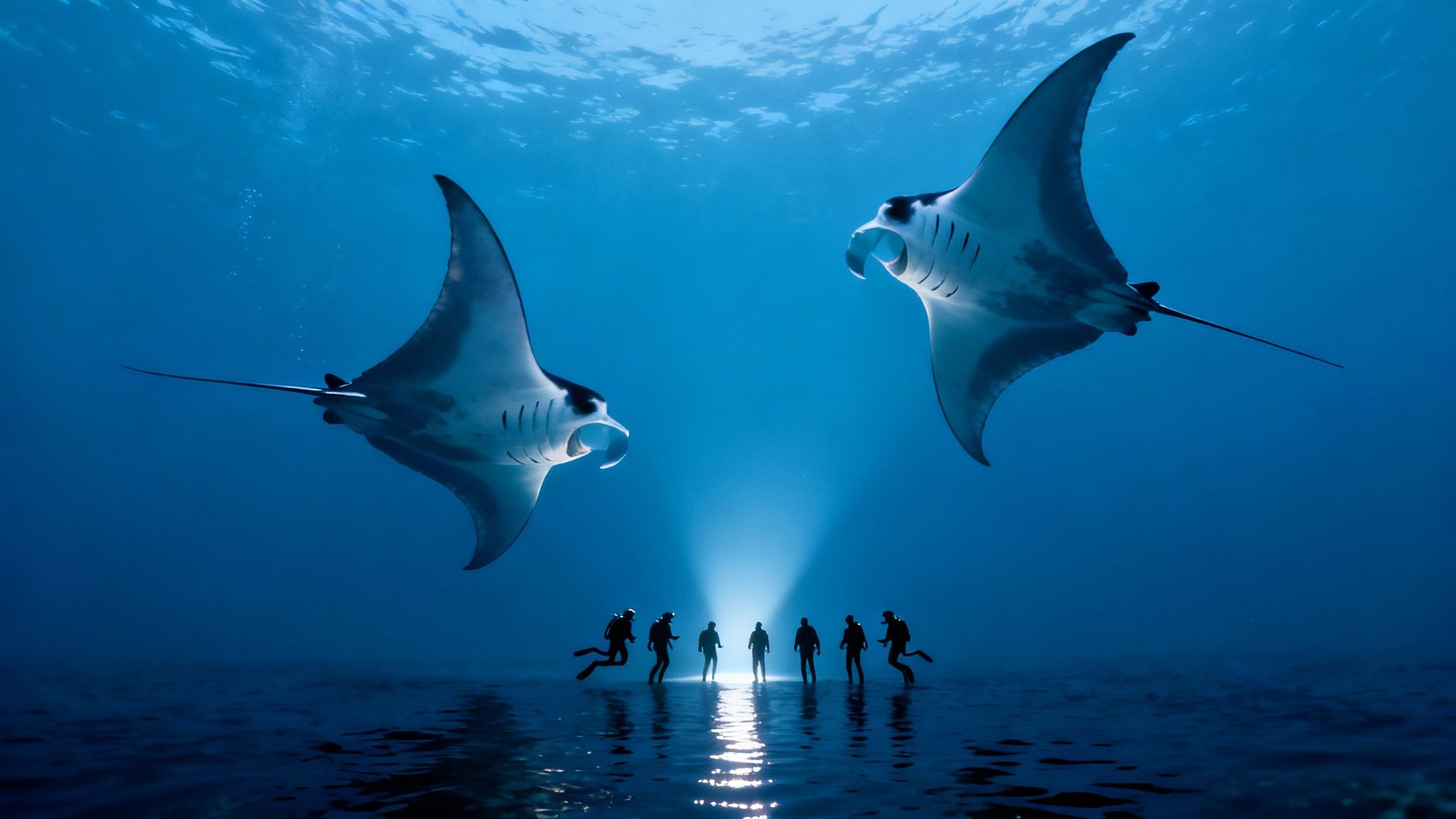
Picture this: you're kneeling on the sandy bottom as the last bit of sunlight fades from the water. Your guide switches on a powerful light, which soon attracts a swirling cloud of plankton. Then, the show truly begins. Out of the darkness, giant manta rays glide in, some with wingspans stretching over 12 feet.
They perform a mesmerizing, acrobatic ballet, barrel-rolling in slow motion right over your head, their huge mouths open to filter the feast. This is the Manta Ray Night Dive, and it’s consistently ranked as one of the best night dives on the planet for a reason. Being inches away from these gentle giants is a profoundly humbling experience that you can experience on our manta ray dive tours.
The Manta Ray Night Dive isn't just a dive; it's a performance. You have a front-row seat to an underwater ballet, witnessing one of nature's most graceful spectacles. It is, without a doubt, an unforgettable highlight of Big Island scuba diving.
For this dive, location is everything. While there are a few spots, Garden Eel Cove is the superior choice. It's far more protected from open-ocean swells, which means calmer, more comfortable conditions. The viewing area is also perfectly shaped, almost like a natural amphitheater, giving everyone a great, unobstructed view. On top of that, the surrounding reefs are healthier and more vibrant, making the twilight dive beforehand just as spectacular.
Plunging into the Abyss on a Blackwater Dive
If the manta dive is a beautiful ballet, then a Blackwater Dive is like a spacewalk into the deep ocean. This is easily one of the most unique and thrilling dives you can do anywhere on Earth. Under the cover of total darkness, you drift tethered to the boat miles offshore, suspended over thousands of feet of inky black water.
Your dive light slices through the darkness, illuminating a hidden world. This dive intercepts the largest migration on the planet, as countless bizarre, often bioluminescent, creatures rise from the depths to feed. You’ll see alien-like squid, strange jellies, and larval fish that look nothing like their adult forms. It’s a trip into the mysterious heart of the ocean for divers who crave something truly different.
Exploring Volcanic Undersea Architecture
The Big Island’s fiery origins are on full display below the surface. Millennia of volcanic activity have sculpted a spectacular underwater landscape of lava tubes, massive archways, and dramatic caverns that are a blast to explore.
Navigating a huge lava tube feels like swimming through an underwater cathedral, with shafts of light filtering down from cracks in the ceiling. When you glide through a towering archway, you can see exactly how the lava flows shaped the island.
But it’s not just about the cool topography. These structures are also prime real estate for marine life. You’ll find schools of fish seeking shelter, rare critters hiding in the crevices, and even sharks taking a nap inside the caverns. You can learn more about the incredible variety of these unique environments and other Big Island scuba diving sites to plan your adventure.
Finding the Perfect Dive Site for Your Skill Level
One of the greatest things about diving the Big Island is just how accessible it is. Whether you're about to take your very first breath underwater or you're a seasoned pro with a jam-packed logbook, the Kona coast has the perfect spot waiting for you.
The real trick is matching the site to your comfort and skill level. It's not about pushing your limits on every dive; it's about finding the right environment where you can relax and truly soak in the magic. We have everything from calm, shallow bays bursting with color to dramatic deep-water structures patrolled by big-ticket marine life. This variety is what lets divers build their confidence and skills at their own pace.
For Beginners and First-Timers
Just starting out? Or maybe it's been a while since you've been in the water. Kona is an incredible place to learn or refresh your skills. The conditions are almost always on your side—calm seas, little to no current, and fantastic visibility.
We choose beginner-friendly sites specifically to be shallow and protected. Think of a place like the beautiful coral gardens of Pawai Bay. It's a natural aquarium, sheltered from the open ocean and full of life. You'll be surrounded by schools of bright yellow tangs and curious butterflyfish, and the gentle slope means you can focus on your buoyancy and just enjoy the view without a single worry. It's the perfect, stress-free introduction to Big Island scuba diving.
For Intermediate Divers
Once you've got a handful of dives under your belt and are feeling comfortable, a whole new world of Kona diving opens up. These sites might be a little deeper or have more interesting topography like swim-throughs and lava tubes that require good buoyancy control.
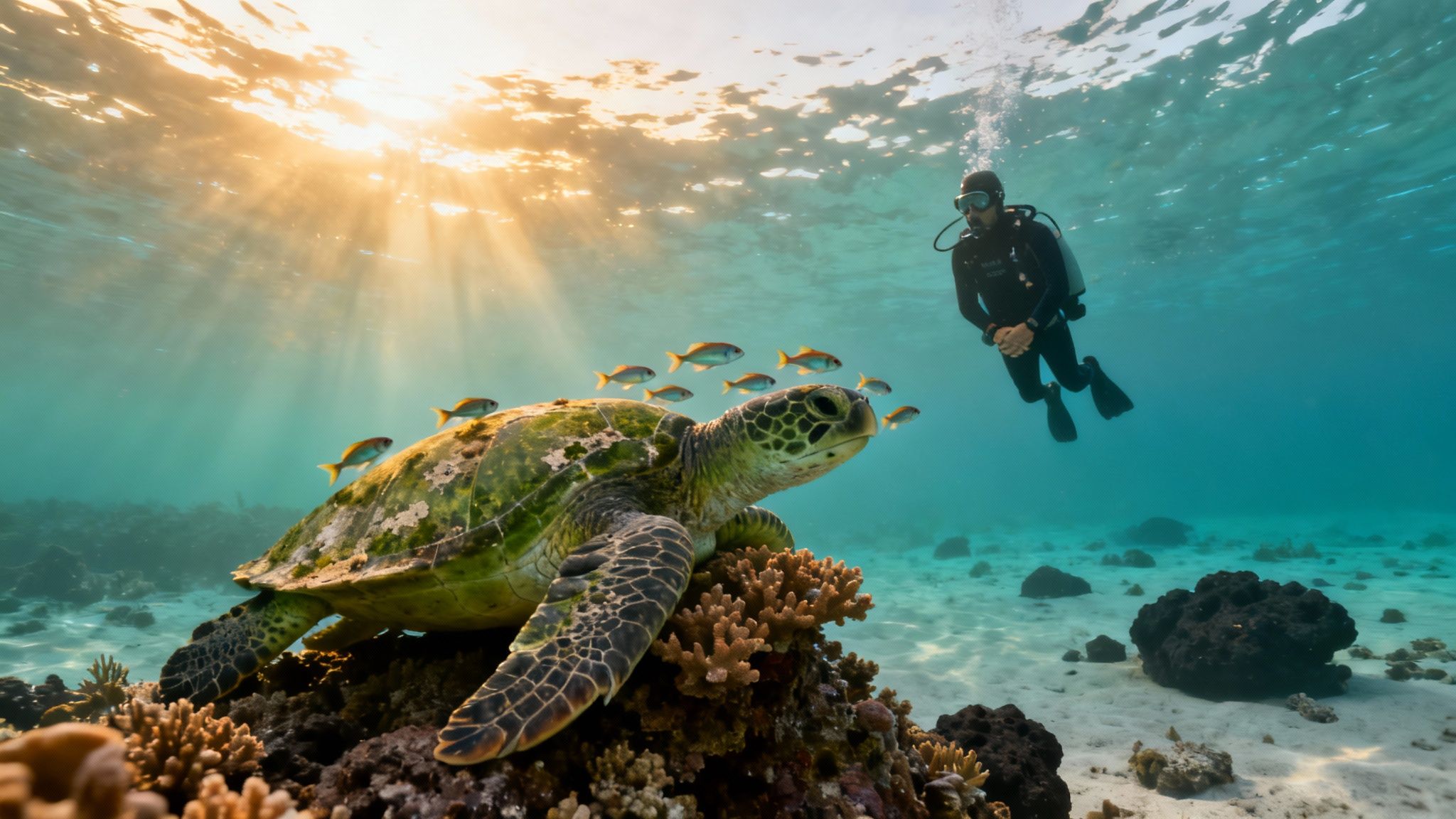
A classic intermediate dive is Turtle Pinnacle. This is a well-known "cleaning station" where Hawaiian green sea turtles, or honu, come to let small reef fish nibble parasites off their shells. It’s an absolutely mesmerizing sight, but it requires divers to be calm and controlled so we don't disturb the turtles. It’s a dive that rewards solid, fundamental skills with a truly unforgettable experience.
For Advanced and Experienced Divers
Ready for something a bit more challenging? For divers with plenty of experience, Kona delivers some seriously thrilling adventures that will put your skills to the test. These dives are often deeper, can have currents to manage, and feature dramatic underwater landscapes that demand sharp awareness.
Picture dropping in at a site like Au Au Crater, an ancient, collapsed volcanic cone. The walls plummet straight down into the deep blue, attracting larger pelagic animals. This is where you have a real shot at spotting eagle rays, reef sharks, and sometimes even hammerheads cruising by out in the open water. The dynamic conditions and potential for big encounters are what make advanced Big Island scuba diving so addictive, and we cater to these opportunities on our advanced dive tours.
Here at Kona Honu Divers, we have trips for absolutely every diver. From gentle reef explorations to heart-pumping deep dives, we know exactly where to go. You can explore our full lineup of Kona diving tours or, for our most seasoned guests, check out the specialized premium advanced dive trips.
How to Choose the Right Dive Operator in Kona
Let's be honest: the dive operator you choose can make or break your entire trip. The incredible underwater world of Kona sets the stage, but it's the crew and the boat that truly direct the experience. Picking the right team is the difference between just getting wet and having a seamless, unforgettable adventure into the heart of Big Island scuba diving.
So, what separates a good operator from a truly great one? It comes down to a few key things. Safety shouldn't just be a word on a website; it should be a core part of their culture, obvious in everything they do. The quality of your rental gear also matters—you want well-maintained, modern equipment that you can trust. And don't forget the boat! A comfortable vessel with things like hot showers, shade, and plenty of space makes the time between dives a relaxing part of the day, not just a necessary wait.
The Crew Makes the Difference
Ultimately, it’s the people who guide you that define the dive. A top-notch crew does more than just get you to the dive site. They bring the reef to life by pointing out creatures you’d otherwise miss, handle all the little details effortlessly, and build a real sense of community and confidence on board. With over 200+ years of combined staff experience, our team at Kona Honu Divers has a depth of local knowledge that’s hard to beat, and a genuine passion for the ocean that you'll feel from the moment you meet them.
You’ll see this expertise in action from the start. The boat briefing is more than just a safety talk; it's an engaging look into the dive plan and the amazing ecosystem you’re about to enter. We also include free nitrox for all certified divers, which is a huge plus for extending your bottom time and feeling less tired afterward. It’s this thoughtful approach to the whole experience that really matters. If you're weighing your options, we've put together a comprehensive guide on how to choose a Kona dive shop to help you out.
The Proof Is in the Experience
There's a reason the manta ray night dive is world-famous. Here in Kona, we see an incredible 90-100% success rate for sightings at the best spots. At Kona Honu Divers, we run advanced 2-tank trips for experienced divers (with at least 50 logged dives) to ensure everyone has a fantastic and safe encounter. Our commitment to a premium experience, from our well-maintained boats to our attentive service, is reflected in thousands of five-star reviews from divers who have been awestruck watching 10+ mantas glide just inches overhead.
But you don’t have to take our word for it. The experiences of thousands of divers say it all.
Getting Certified or Advancing Your Skills in Paradise
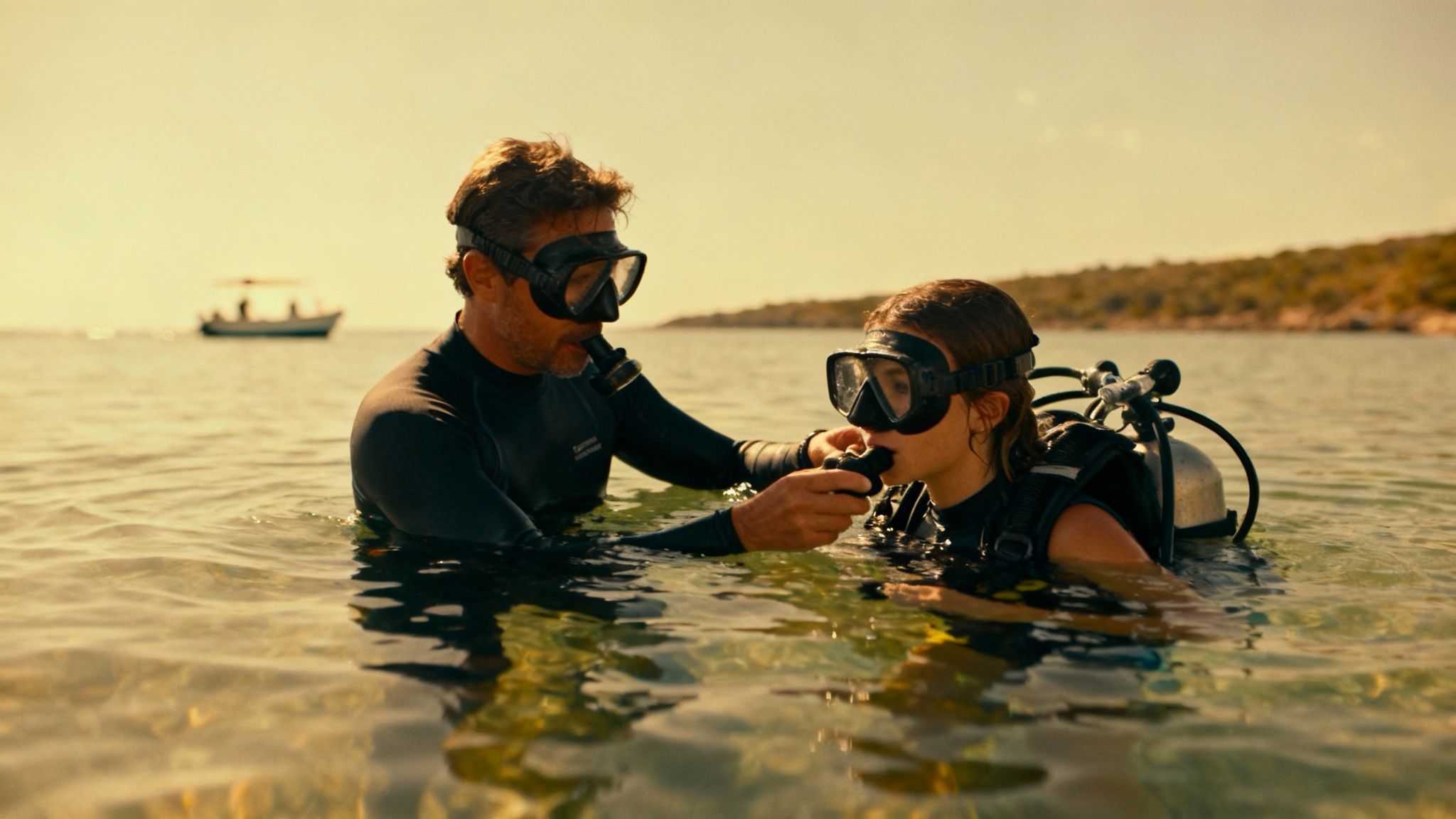
Let's be honest: why learn to dive in a cold, murky quarry when you could take your first breath underwater surrounded by vibrant coral and curious sea turtles? Getting certified here in Kona isn't just a course; it's an adventure from day one.
The warm, calm, and incredibly clear water is the perfect classroom. It makes mastering the essentials so much easier when you're distracted by the sheer beauty of the marine life swimming by.
Learning to dive in the actual ocean makes you a better, more confident diver, period. Instead of a concrete wall, your backdrop is a living reef. You learn to handle real-world conditions, read the underwater landscape, and manage your buoyancy among schools of colorful fish. It’s practical, hands-on learning that sticks with you for a lifetime of incredible dives.
Your Path to Underwater Exploration
Whether you're brand new to diving or a seasoned pro looking to level up, there's a course for you. Kona is an amazing place to expand your abilities and see more of what the ocean has to offer.
- Open Water Diver: This is your passport to the underwater world. You'll start with online learning, practice your skills in a calm, protected bay, and then complete four real open-water dives on Kona's stunning reefs.
- Advanced Open Water Diver: Already have your card? This course is all about honing your skills and trying new types of diving. It involves five adventure dives, like deep diving and underwater navigation, that open up a whole new range of dive sites.
- Refresher Course: If it’s been a while, a quick refresher is the smartest way to get back in the water. We'll review the key skills to make sure you're feeling comfortable and confident before you head out.
Taking Your Skills to the Next Level
For divers who are already certified, Kona is a playground for growth. Taking an Advanced Open Water course is your ticket to deeper pinnacles, exhilarating night dives, and more complex navigation through lava tubes. Just imagine descending on a deep wreck or exploring a cave at twilight—that’s what this training unlocks.
Want to see all the options? We break down everything you need to know in our guide to getting your Big Island scuba certification.
Here at Kona Honu Divers, we live and breathe this stuff. We’re all about creating a safe, supportive, and seriously fun environment for divers of every level. Our instructors are here to help you nail your diving goals while showing you the magic of Kona's underwater world.
Your Essential Big Island Dive Trip Planner
Alright, let's get down to planning your dream scuba trip to the Big Island. A little forethought is all it takes to turn a good dive trip into an unforgettable one, and this guide will walk you through everything you need to know, from the best time of year to dive to what to expect from the local safety culture.
One of the best things about Kona is that you can dive here any time of year. The water is almost always a comfortable 75-80°F (24-27°C), and the visibility is consistently fantastic.
That said, if you want a truly mind-blowing experience, aim for the winter months—December through March. That’s whale season. There is nothing quite like hearing the otherworldly songs of humpback whales echoing through the water while you’re exploring a reef. It’s pure magic.
Safety First A Kona Priority
The dive community in Kona takes safety very seriously. Local operators are all about running a tight ship with strict protocols, making sure every single dive is as safe as it is beautiful. A huge part of this is a deep respect for the ocean itself; touching coral or bothering marine life is a strict no-go to protect our fragile ecosystem.
Because the conditions here are so protected, Kona has become a hub for divers of all skill levels. To keep things safe for everyone, operators will ask for your open water certification and want to see you’ve been diving recently (usually within the last two years). If it’s been a while, no worries—they’ll just have you do a quick checkout dive to get you back in the groove.
This professional oversight is why, despite Hawaii reporting 187 resident ocean drownings from 2020-2024, scuba-related incidents are incredibly rare. It's a testament to the expertise of crews like the one at Kona Honu Divers. You can find more details about Hawaii's ocean safety standards.
Sample Big Island Dive Itineraries
To give you a better idea of what your trip could look like, here are a couple of sample itineraries that hit some of Kona’s best underwater highlights.
The 3-Day Kona Dive Classic:
- Day 1: Ease into it with a 2-tank morning charter on a gorgeous coral reef. It’s the perfect way to get your buoyancy dialed in while spotting turtles and exploring incredible lava formations.
- Day 2: Experience the world-famous Manta Ray Night Dive. Honestly, this is a must-do. You get a front-row seat to one of the most graceful and stunning shows in nature.
- Day 3: Change things up with a dive at a pinnacle or crater site. The topography gets more dramatic here, and you have a great shot at seeing some bigger marine life.
The 5-Day Ultimate Dive Adventure:
- Days 1-3: Kick things off with the "3-Day Classic" itinerary to hit all the essential Kona spots.
- Day 4: Ready for a thrill? Join an advanced trip to a more remote site, or take the plunge on the mysterious Kona Blackwater Dive for a truly unique experience.
- Day 5: Wind down with one last, relaxing morning reef dive to soak it all in. Or, you could use the day to take a refresher course and sharpen up your skills.
Just like this guide helps you map out your diving, good information is the key to any great travel experience. You can see more tips on creating comprehensive welcome books for visitors to make sure they have a perfect stay.
Your Big Island Diving Questions, Answered
Planning a dive trip always brings up a few questions. We've been asked just about everything over the years, so here are the straight-up answers to some of the most common things divers wonder about when coming to the Big Island.
When Is the Best Time of Year to Dive?
Honestly, any time is a great time to dive in Kona. The massive volcanoes on the island act as a natural shield for the coast, keeping the water remarkably calm pretty much year-round. You can expect water temperatures to hover between a very comfortable 75-80°F (24-27°C).
If you’re looking for something truly special, plan your trip for the winter months, from about December to March. That's when you have the incredible experience of hearing migrating humpback whales singing their songs while you're underwater. It’s absolutely unforgettable.
Do I Have to Be an Advanced Diver for the Manta Dive?
Not at all! This is one of the best things about the world-famous manta ray night dive. It takes place in relatively shallow, protected bays, making it perfectly suited for certified divers of any skill level.
The whole operation is designed to be safe and controlled. You'll settle in on the bottom, relax, and just watch the show unfold above you.
What’s the Difference Between the Manta and Blackwater Dives?
They're both night dives, but they are two completely different worlds. Think of it this way:
- Manta Ray Dive: You're a spectator in an underwater theater. You stay in one spot near a light source on the ocean floor, which attracts a buffet of plankton. This, in turn, brings in the giant manta rays for a graceful, up-close feeding ballet right over your head.
- Blackwater Dive: You're an astronaut exploring deep space. You’ll drift miles offshore over thousands of feet of water, tethered safely to the boat. In the pitch-black, you'll see tiny, bizarre, and often bioluminescent creatures rise from the depths—things you’d never see anywhere else.
Can My Non-Diving Family Come on the Boat?
Of course! We love it when the whole family gets to experience the ocean together. Most of our trips, especially the manta ray experience, are perfect for snorkelers and ride-alongs.
Here at Kona Honu Divers, we make sure everyone feels included. It’s a fantastic way for non-divers to be part of the adventure and share in the magic of what we do.