
When you think of scuba diving on the Big Island, you're picturing an underwater world unlike any other. It's a place shaped by fire and water, where dramatic volcanic landscapes plunge into the sea, creating a haven for vibrant coral reefs and unforgettable marine life, including the world-famous manta rays.
The Kona coast, in particular, is a diver's dream. Thanks to its position on the island, the waters here are almost always exceptionally calm and clear, making it an incredible year-round destination to explore the deep. Our diving tours are designed to showcase the very best of this unique environment.
Why Kona Is a World-Class Diving Destination
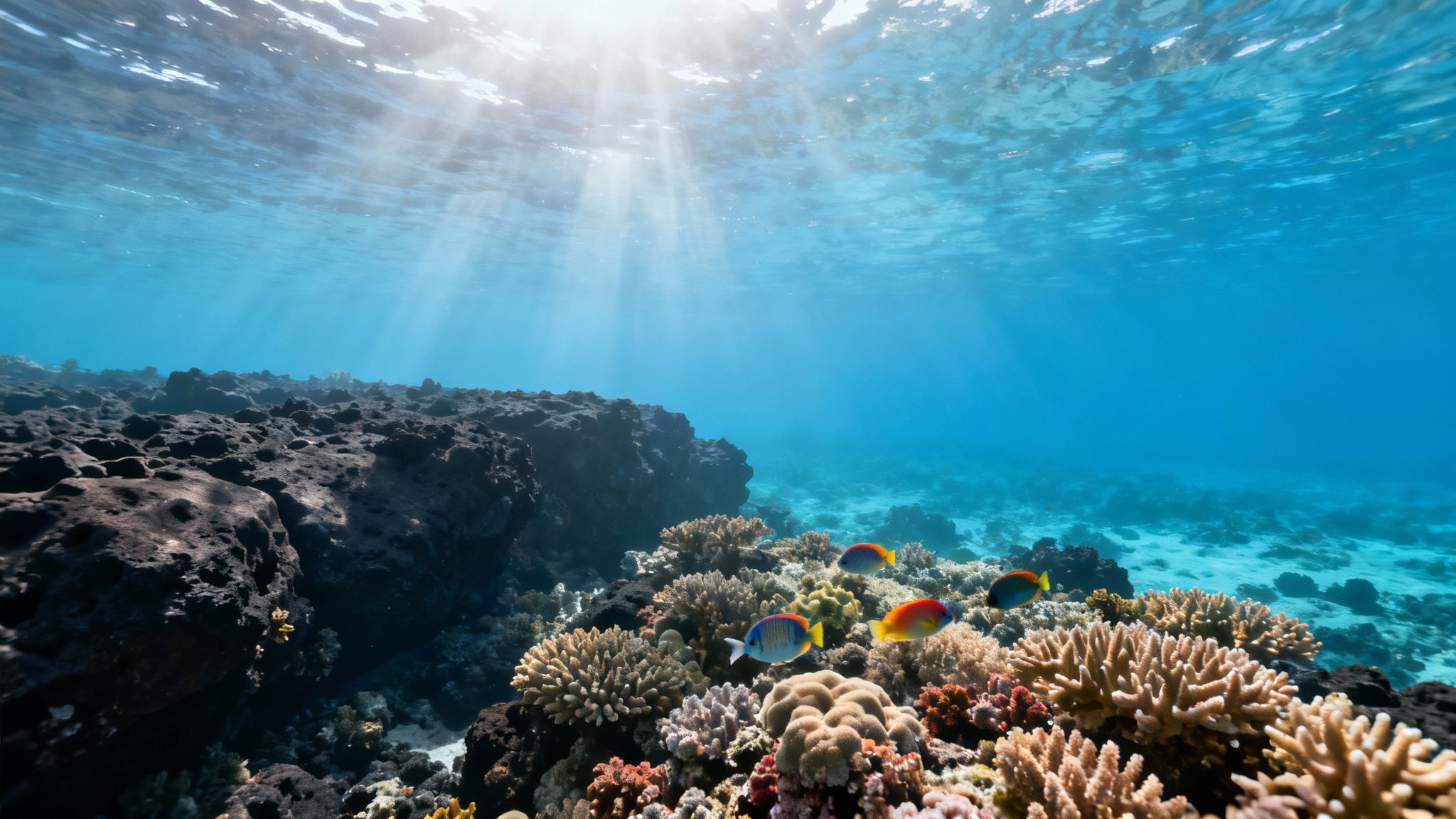
The Big Island isn't just another pretty spot to dive—it’s a geological and biological masterpiece. What truly makes Kona a bucket-list destination is a perfect storm of volcanic geology, incredible biodiversity, and consistently amazing ocean conditions.
Under the waves, ancient lava flows have sculpted a breathtaking underwater playground. As a diver, you get to navigate through intricate lava tubes, glide under massive archways, and drift along dramatic drop-offs, all formed by the same volcanic forces that are still shaping the island today. This unique topography is the perfect shelter for a staggering variety of marine life.
The Unique Underwater Ecosystem of Kona
The sheer diversity of life here is incredible. Marine surveys have cataloged around 1,100 different fish species in the island's waters, with about 129 endemic species you simply won't find anywhere else on Earth. This rich ecosystem thrives thanks to the island's prime location in the path of nutrient-rich ocean currents. You can dive deeper into what makes the marine environment so special in our article, What Is Unique About Diving in Kona.
The best Big Island scuba diving is concentrated along the western Kona coast, which sits in the lee of the island's colossal volcanoes. This natural barrier shields the coastline from the powerful northeasterly trade winds, blessing us with remarkably calm seas and fantastic visibility that often clears 100 feet.
To give you a quick snapshot, here’s a look at what to expect when planning your trip.
Big Island Diving At a Glance
| Aspect | Details |
|---|---|
| Water Temperature | A comfortable 75-80°F (24-27°C) year-round. |
| Visibility | Typically 80-100+ feet (24-30+ meters), especially on the Kona coast. |
| Marine Life | Manta rays, sea turtles, spinner dolphins, eels, and over 1,100 fish species. |
| Topography | Volcanic formations like lava tubes, archways, and dramatic drop-offs. |
| Best Season | Year-round, with calmer conditions often found in the summer months. |
This table just scratches the surface, but it highlights why Kona is such a reliable and rewarding place to dive.
Your Gateway to Kona Diving Adventures
Exploring this underwater world is an adventure, and the right guide makes all the difference. An experienced crew with deep local knowledge can safely get you to the best sites and put you in the right place at the right time for those truly unforgettable wildlife encounters.
At Kona Honu Divers, our passion is showing divers the very best of what the Big Island has to offer. From the magical Manta Ray Night Dive to peaceful daytime reef explorations, our tours are designed for a safe, personal, and breathtaking experience. Come see for yourself why divers choose to return to us year after year.
Ready to jump in? Check our availability and book your underwater journey today.
Experiencing the Famous Kona Manta Ray Night Dive
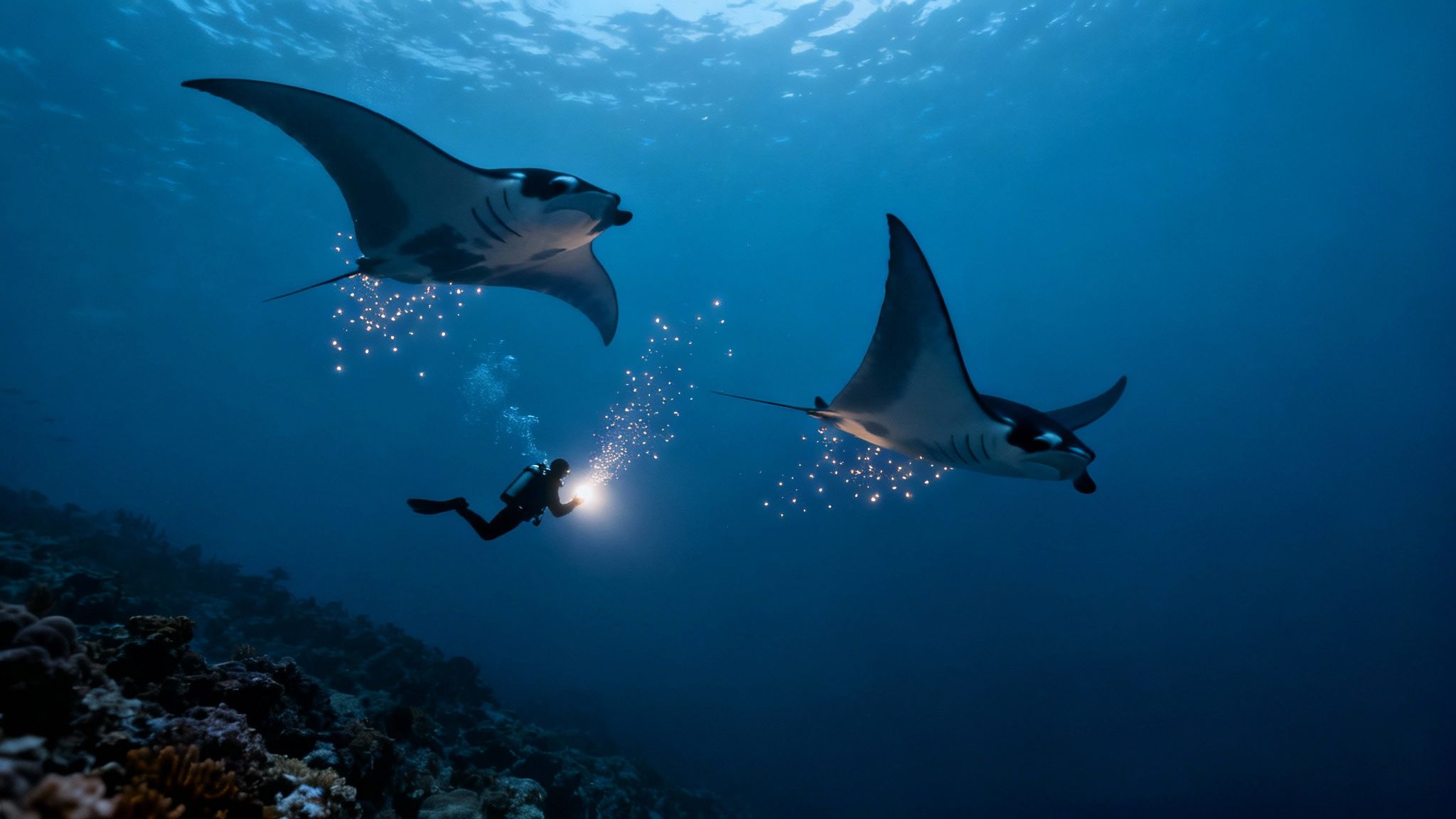
Of all the incredible things you can do while scuba diving on the Big Island, one experience is consistently hailed as pure magic: the Kona Manta Ray Night Dive. It’s earned a reputation as one of the best night dives on the planet, and for good reason. This isn't just another dive—it's like being invited to a front-row seat for an underwater ballet.
So, how does it work? The setup is ingenious. After the sun goes down, we set up powerful, upward-facing lights on the ocean floor. These lights act like a massive beacon for phytoplankton, the tiny organisms that are the foundation of the ocean's food chain.
This concentration of plankton rings the dinner bell for Kona's resident reef manta rays. They glide in from the darkness to feast on this easy buffet. You’ll watch these gentle giants, with wingspans that can stretch over 12 feet, perform graceful, looping barrel rolls just inches above the lights—and you.
Why Garden Eel Cove Is the Superior Choice
While there are a couple of places to see the mantas, Garden Eel Cove is the superior choice for the manta ray dive tour. Its protected location shelters it from open-ocean swells, which almost always means calmer, more comfortable conditions for everyone. The reef is healthier, and the bottom topography creates a natural amphitheater, offering a better, wider viewing area for divers to watch the show without disturbing the environment.
The Manta Ray Night Dive is the signature trip for nearly every operator in Kona, and it’s no wonder why. It’s an ethereal encounter that connects you with one of the ocean's most majestic creatures in a way you’ll never forget.
Here at Kona Honu Divers, we’ve made this our flagship adventure. Our crew knows these animals and this dive site inside and out. We focus on making sure you're safe and comfortable while sharing our deep respect for the mantas. We know just where to set up our "campfire" of lights to give you the most breathtaking view possible.
What to Expect on Your Manta Dive
Your adventure starts on the boat ride out as the sun sets. We’ll give you a thorough briefing covering the dive plan, safety protocols, and some fascinating facts about manta ray biology. A big part of this is explaining how to interact with them respectfully—the most important rule is no touching. It can damage their protective mucus coating. If you want to learn more about this beforehand, our guide on scuba diving with manta rays is a great resource.
Once you descend with your guide, you’ll be positioned in a designated spot on the sandy bottom. Then, it's simple: get comfortable, breathe, and watch. There are no words to fully capture the feeling of a massive, silent manta ray gliding directly over your head, so close you can see the unique spot patterns on its belly.
It’s an otherworldly experience. The darkness around the illuminated "stage" puts all your focus on the mantas as they dance in and out of the light beams. This is more than just a dive; it’s a memory that will stick with you for a lifetime.
Booking this bucket-list dive is an absolute must for any Big Island scuba diving trip. But you don't have to take our word for it—see what other divers have said about this unforgettable adventure with Kona Honu Divers.
Ready for the most mesmerizing dive of your life? Come spend an evening with Kona's gentle giants. You can learn more and book your spot on our dedicated Manta Ray Dive tour page.
Exploring Kona’s Most Spectacular Dive Sites
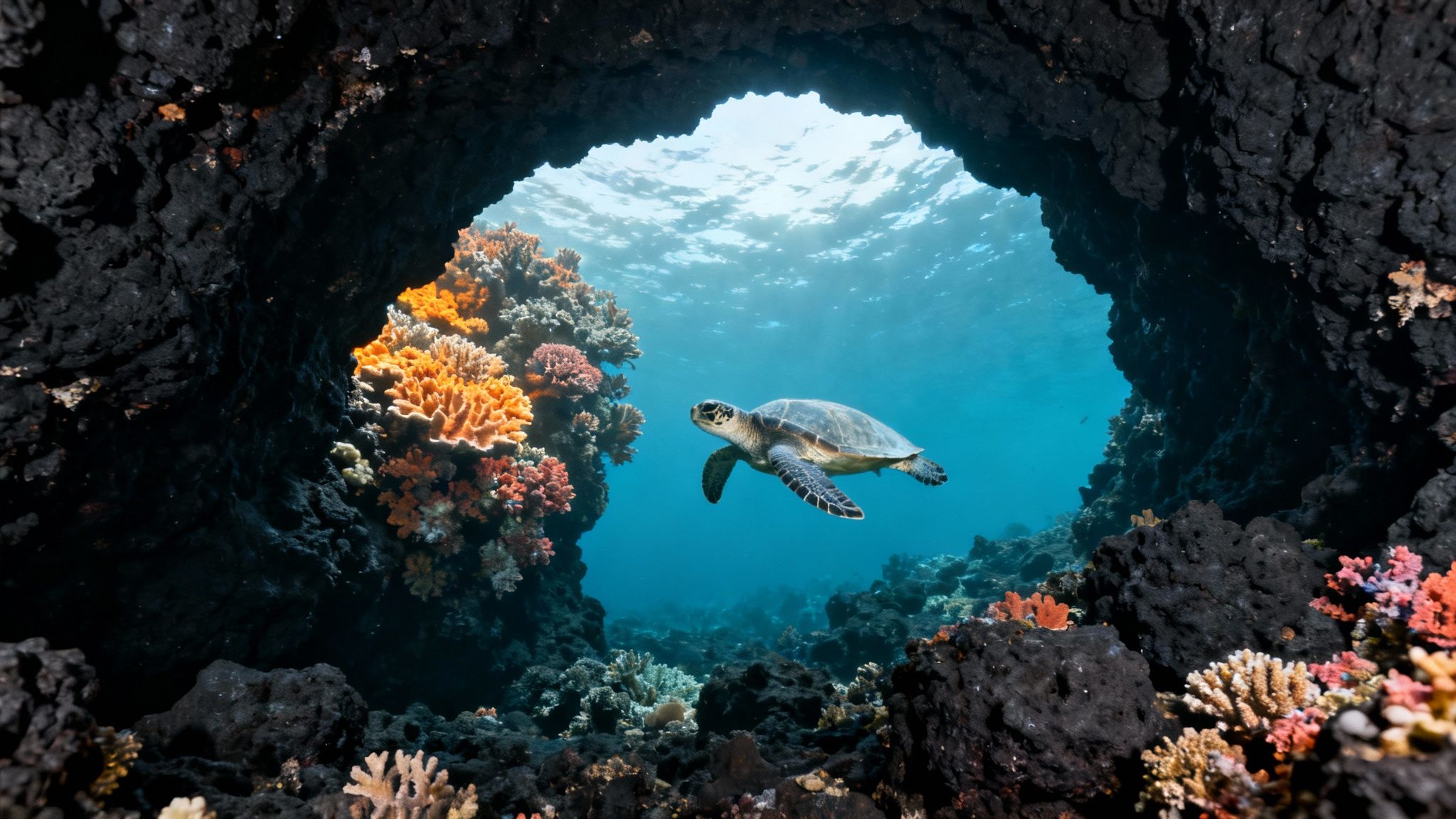
While the Manta Ray Night Dive gets most of the spotlight, and for good reason, the Kona coast is packed with incredible dive sites that make every single day an adventure. The underwater world here is a direct result of the island’s volcanic past, creating a dramatic playground of lava tubes, massive archways, and reefs bursting with life. There's truly something for every diver here, from your very first ocean dive to your hundredth.
Lots of our guests plan their whole trip around the manta dive. It's a massive draw, with boats from multiple companies heading out almost every night, and they often sell out well in advance. For us at Kona Honu Divers, it’s an experience we’re famous for, bringing in divers from all over the world. We often package it with our daytime reef dives to give people the full Big Island scuba diving experience. You can get a feel for just how popular diving is across the islands from PADI's comprehensive Hawaii guide.
But the magic doesn't end when the mantas go to sleep. When the sun comes up, Kona's reefs reveal a totally different, but just as mesmerizing, side of their personality.
Dive Sites for Every Experience Level
One of the best things about diving in Kona is the sheer variety. We can always find the perfect underwater playground, whether you're a brand-new diver or a seasoned pro.
- Vibrant Coral Gardens: Sites like Crescent Beach are perfect for new divers or anyone looking for a relaxed, shallow trip. These spots are drenched in sunlight, which lights up huge fields of healthy coral where you'll find tons of reef fish, moray eels, and octopuses hiding out.
- Dramatic Lava Formations: If you love exploring unique underwater landscapes, you have to see places like Golden Arches and Turtle Pinnacle. The underwater architecture is unreal—think massive lava arches you can swim right through and towering pinnacles that act as "cleaning stations" for our beloved green sea turtles (honu).
- Exciting Wall Dives: For our more experienced divers, nothing beats the thrill of a steep drop-off into the deep blue. These wall dives give you a chance to spot different species that hang out in deeper water and offer a humbling sense of scale as you drift along the immense volcanic cliffs. Our advanced dive tour page has options for those looking for a bigger challenge.
No matter where we go, the fantastic visibility and calm waters along the Kona coast make for a spectacular day. The real key is having a guide who knows these sites like the back of their hand and can point out all the hidden critters and secret spots.
Must-See Kona Dive Locations
Weather and ocean conditions always have the final say, but a few sites have rightfully earned their legendary status among the local dive community.
Crescent Beach: This is a fantastic spot for all skill levels. It's well-known for its beautiful coral gardens and is a reliable place to find turtles and eels. Because it's relatively shallow with easy navigation, we often make it our first stop of the day.
Golden Arches: Just like the name implies, this site is all about the breathtaking lava archways. Swimming through these natural structures feels like you're exploring some kind of ancient, submerged cathedral. Always remember to look in the sandy patches nearby—you might just spot whitetip reef sharks taking a nap.
Turtle Pinnacle: A true Kona classic! The "pinnacle" itself is a huge coral head that serves as a turtle cleaning station. You can watch as honu line up for their turn to have tiny fish nibble parasites off their shells. It's an incredible display of symbiosis and a photographer's dream.
The Ultimate Adventure: The Kona Blackwater Dive
For the truly adventurous and experienced divers out there, Kona offers an experience that is unlike anything else on the planet: the Kona Blackwater Dive.
Forget the reef. For this dive, we head miles offshore where the ocean floor is thousands of feet below. You'll drop down to about 50 feet and drift in the open, black ocean, safely tethered to the boat.
In the beam of your light, you'll witness the largest vertical migration of life on Earth. Strange, beautiful, and often bioluminescent creatures rise from the abyss to feed near the surface. It’s a surreal, almost psychedelic experience that many people compare to floating through outer space. Because of its unique challenges, this dive is strictly for divers with advanced certifications and rock-solid buoyancy control.
Whether you want to explore sunlit reefs, swim through ancient lava tubes, or brave the mysterious deep, Kona Honu Divers has the perfect trip for you. Take a look at our full range of diving tours.
How to Plan a Safe and Successful Dive Trip
A truly incredible dive trip to the Big Island doesn't just happen—it starts long before your fins ever touch the water. A little smart planning is all it takes to make sure your adventure is smooth, safe, and utterly unforgettable. The good news? The Kona coast makes it easy, with world-class diving conditions practically every day of the year.
People always ask, "When is the best time for Big Island scuba diving?" My answer is always the same: whenever you can get here! The water is consistently comfortable, hovering around 75°F (24°C) in the winter and warming up to a beautiful 80°F (27°C) by late summer. While conditions are generally fantastic, it’s always a good idea to see what the ocean is doing before you head out. We’ve put together a detailed guide on https://konahonudivers.com/how-to-check-ocean-conditions-for-the-big-island-hawaii/ that walks you through it.
Health, Certification, and Choosing Your Dives
Every great dive is built on a foundation of safety, and that starts with you. It’s crucial to be honest with yourself about your current health and fitness. Before you travel, take a look at the standard scuba medical questionnaire. If you have to answer "yes" to anything, a quick chat with your doctor is in order. And don't forget your certification cards! Every dive operator will need to see them before you can get on the boat.
Picking the right dives is just as important. Kona offers an incredible variety, from shallow, sun-drenched reefs that are perfect for new divers to deep lava tubes and challenging night dives for those with more experience. This is where diving with a top-tier, professional operator like Kona Honu Divers makes all the difference. Our crew has the expertise to match you with dives that fit your skill level, ensuring you’re always comfortable and never in over your head.
The Kona Honu Divers Commitment to Safety
The single most important decision you'll make for your trip is choosing the right dive company. At Kona Honu Divers, safety isn't just a box to check—it's woven into everything we do. Our captains and divemasters have spent years in these waters and know them like the back of their hands. They deliver thorough, site-specific briefings before every single dive. We also keep our groups small, which means you get personal attention both on the boat and under the waves.
Our commitment is to exceed the standards, not just meet them. This disciplined approach is especially important here in Hawaii. Statewide data unfortunately shows that unsupervised ocean activities can carry serious risks. Officials recorded 187 resident ocean drownings in a recent multi-year period, giving Hawaii the second-highest per-capita resident drowning rate in the nation. These numbers are a stark reminder of why a structured, professionally guided scuba dive—with formal briefings, expert guides, and conservative planning—is a much safer way to explore the underwater world.
When you dive with an established operator, you are directly addressing the main risk factors. You’re not just paying for a boat ride; you’re investing in local knowledge, emergency preparedness, and a team dedicated to your well-being.
Beyond the dive itself, it's always a good idea to have some general emergency knowledge. You can boost your overall readiness by understanding essential first aid techniques like the recovery position, a skill that’s invaluable in many different situations.
What to Pack for Your Dive Trip
Packing for a dive trip to Kona is pretty straightforward. The weather is warm year-round, but a few key items will make your experience that much better.
- Dive Gear: While we provide top-of-the-line rental equipment, most divers feel more comfortable with their own mask, fins, and computer.
- Exposure Suit: A 3mm or 5mm full wetsuit is the sweet spot for Kona’s water temperatures.
- Reef-Safe Sunscreen: Please help us protect our fragile coral by choosing a mineral-based sunscreen. It’s better for you and for the reefs!
- Layers for the Boat: A windbreaker or a cozy sweatshirt is great for surface intervals and the boat ride home, especially after a night dive when the air can feel a bit cool.
- Reusable Water Bottle: Staying hydrated is key to a good dive day, and bringing your own bottle helps us cut down on plastic waste.
With a little bit of prep and the right crew in your corner, your Big Island dive trip will be an adventure you’ll be talking about for years. We can't wait to show you the magic of Kona's underwater world.
Why Kona Honu Divers Is the Top Choice

Let's be honest, picking the right dive operator can make or break your trip. It’s probably the most important decision you’ll make when planning your Big Island scuba diving adventure. A great company doesn't just ferry you to a dive site; they turn a fun activity into a memory you’ll talk about for years.
Here at Kona Honu Divers, we've built our entire operation around one simple idea: treating our guests like fellow divers. It’s about focusing on the little things that add up to an exceptional day—from the moment you book with us to the stories you're swapping on the boat ride home. We know you have choices, so let's get into what really sets us apart.
Custom Boats Built for Divers, by Divers
You won’t find any cramped, repurposed fishing boats here. Our vessels, the Honu One and Honu Iki, were designed from the keel up with one purpose in mind: comfortable, hassle-free diving.
- Spacious Dive Decks: There’s nothing worse than gearing up while bumping elbows. We made sure you have plenty of personal space to get ready without feeling rushed or crowded.
- Easy Water Entry and Exit: Our boats feature wide swim steps and sturdy, easy-to-climb ladders. Getting in and out of the water, even with a full set of gear, is a breeze.
- Onboard Comforts: We know it's the small details that count. That’s why we have hot water showers for a post-dive rinse, clean marine heads (bathrooms), and plenty of shade to relax in between dives.
When your boat is built for the job, you can focus on what you came here for—the incredible underwater world—not on struggling with your gear.
A World-Class Crew That Lives and Breathes Diving
A great boat is just a platform; it's the crew that brings the experience to life. And frankly, ours is the best in the business. Our team brings a combined 200+ years of professional diving experience to every single trip. For them, this isn't just a job—it's a deep-seated passion.
Our divemasters and captains know Kona's waters like the back of their hand. They know which sites are firing on any given day and exactly where to look for that tiny, camouflaged nudibranch or the whitetip reef shark snoozing under a ledge. Their expertise is your safety net, and their welcoming attitude is what makes the whole day fun.
The difference between a good dive and an unforgettable one often comes down to the guide. A guide who can point out a perfectly camouflaged octopus or share a fascinating fact about a fish species transforms your dive from just sightseeing into a true learning experience.
Small Groups Mean a Better Dive for Everyone
We've all seen them—the "cattle boats" herding dozens of divers into the water. That’s just not our style. We are absolutely committed to keeping our dive groups small because it creates a fundamentally better, more personal experience.
With fewer divers, the reef is quieter, the marine life is less skittish, and you get a much more intimate encounter with the environment. It also means our guides can truly cater the dive to your group's interests and skill level. Whether you're a brand-new diver who wants a little extra support or a seasoned photographer hunting for the perfect shot, our team is right there with you.
But you don't have to take our word for it. Here’s what other divers are saying about their time with us.
When you're ready to experience the Kona Honu Divers difference for yourself, booking your adventure is simple. Take a look at our full lineup of diving tours and get ready for a trip you'll never forget.
Your Big Island Scuba Diving Questions, Answered
When you’re planning a trip to a world-class dive destination like the Big Island, a few questions are bound to pop up. We get it. As divers ourselves, we’ve been there. So, let's clear up some of the most common things people ask before they jump in the water with us.
When Is the Best Time of Year for Scuba Diving on the Big Island?
Honestly, there’s no bad time. One of the best things about diving here is that the Kona coast is great all year long. We're on the leeward side of the island, which means we’re naturally protected from the trade winds. That translates to consistently calm, clear water pretty much any day you want to go diving.
Water temperatures are always comfortable, hovering around a pleasant 75°F (24°C) in the winter (January-March) and warming up to a bath-like 80°F (27°C) by late summer (August-October). Visibility is often a dream, easily pushing past 100 feet. If you’re looking for a little something extra, winter diving has a unique soundtrack—you can often hear the incredible songs of migrating humpback whales echoing through the water.
Do I Need to Be an Advanced Diver to Dive in Kona?
Not at all! Kona is an amazing place for divers of every single skill level, from your very first ocean dive to your thousandth. The sheer variety of sites along the coast means there’s a perfect spot for everyone.
- For Beginners: We have plenty of shallow, protected reefs that are perfect for getting comfortable. These spots feature gentle slopes in the 20-40 foot range and are ideal for new divers or anyone finishing their Open Water certification dives in a beautiful, stress-free setting.
- For Experts: If you're after a thrill, Kona has you covered. We can take you exploring deep lava tubes, drifting along dramatic vertical walls, and even on the truly unique Kona Blackwater Dive for an experience you won't find anywhere else.
A good dive operator will always group people by experience, and that's something we take seriously at Kona Honu Divers. We make sure every dive is a perfect match for your comfort and skill.
What Marine Life Can I Expect to See on the Big Island?
The incredible biodiversity is what really makes Kona famous. The underwater world here is just bursting with life. On just about any given dive, you can count on seeing green sea turtles (honu), different kinds of moray eels peeking out from the reef, curious octopuses, and pods of playful spinner dolphins cruising by.
Our reefs are packed with a dazzling variety of fish, including many endemic species you'll only find in Hawaiian waters, like the Milletseed Butterflyfish. It's also common to spot whitetip reef sharks resting on the sand or see majestic eagle rays glide past in the blue. And, of course, the Kona coast is the most reliable place on the planet for an unforgettable face-to-face encounter with giant manta rays on the world-famous night dive.
The thing about Kona is that no two dives are ever the same. One day you’re watching a turtle getting its shell cleaned by tiny fish, and the next you’re surrounded by a massive, swirling school of fish. It's always an adventure.
Is Nitrox Available and Is It Worth Using in Kona?
Yes, Nitrox (enriched air) is readily available, and we believe in its benefits so much that Kona Honu Divers offers it for free to all certified Nitrox divers. We absolutely recommend it, especially since most of our trips involve multiple dives.
Using Nitrox lets you safely extend your bottom time, meaning more time exploring the reef and taking pictures. It also helps shorten your surface intervals, letting you get the most out of your dive day. On top of that, many divers find they feel less tired after a full day of diving with Nitrox. If you’re not certified yet, this is the perfect place to get your Nitrox certification.
With these questions answered, you're well on your way to planning the dive trip of a lifetime.
At Kona Honu Divers, we're all about providing a safe, personal, and unforgettable scuba diving experience. Our expert crew, custom-built boats, and commitment to small groups ensure you'll see the very best of Kona's underwater world. Explore all of our diving tours to find your perfect adventure.