
Scuba diving on the Big Island isn't just another trip—it's a world-class underwater adventure. What you find here is a dramatic landscape shaped by volcanoes, teeming with unique marine life, and blessed with unbelievably clear, calm waters. The Kona coast, in particular, is a global hotspot for divers, and for good reason. It’s protected from the elements and offers iconic experiences you won't find anywhere else, like the world-famous manta ray night dive.
It's one of those rare places where every single dive feels like a brand new discovery, whether you're exploring an ancient lava tube or spotting a fish that lives nowhere else on Earth.
Your Essential Guide to Big Island Scuba Diving
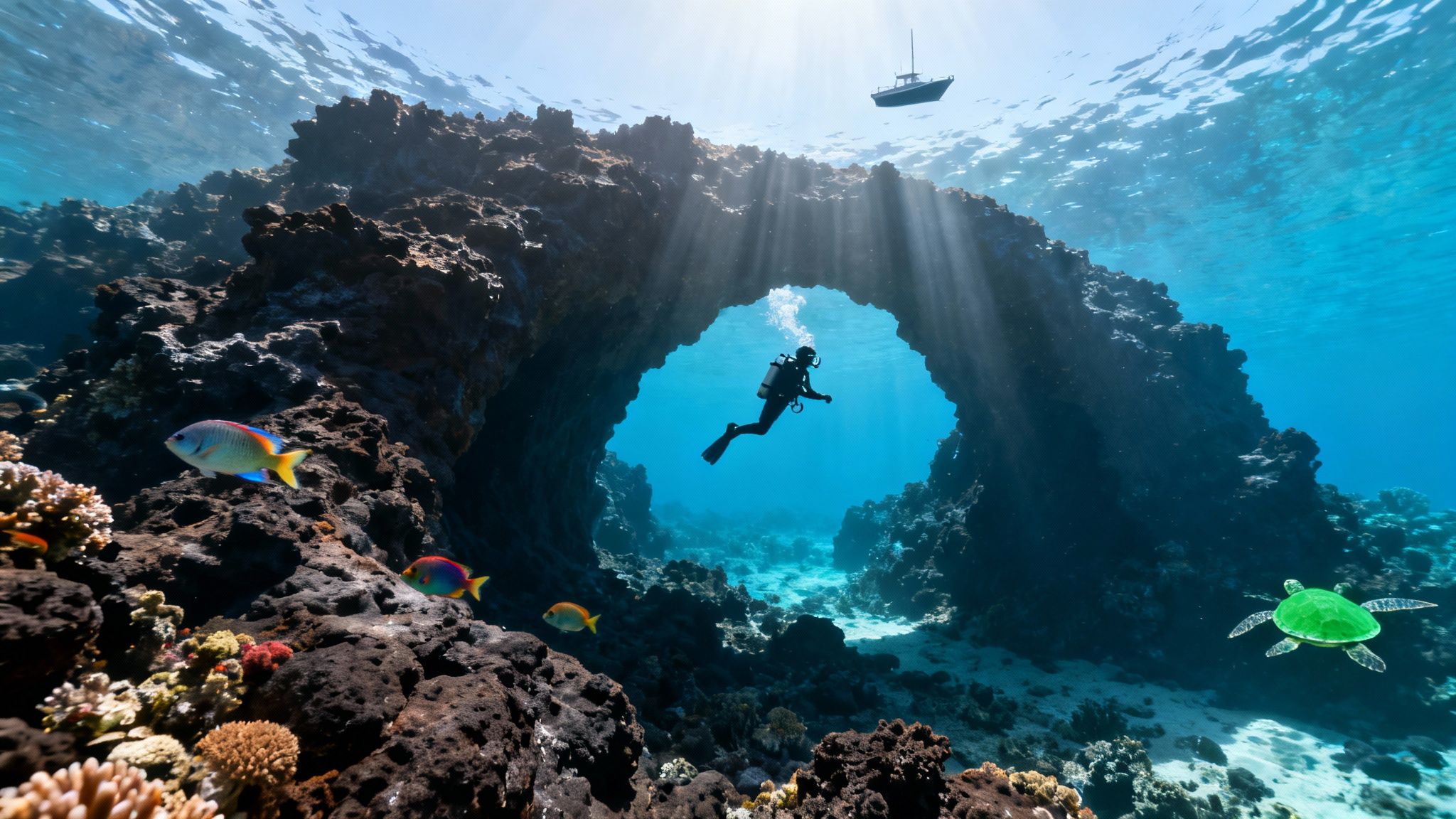
Welcome to your complete guide for exploring the underwater world of Hawaii’s Big Island. This place is more than just a destination; it's an aquatic playground sculpted by volcanic fire and brought to life by the vast Pacific Ocean. Thanks to its unique geography, the Kona coast is sheltered from the prevailing trade winds, creating a nearly perfect environment for divers of all experience levels.
What truly makes Kona stand out are its one-of-a-kind underwater geological formations. Just imagine gliding through ancient lava tubes, navigating intricate archways, and peering into submerged volcanic craters. These are otherworldly landscapes you simply won’t find anywhere else, and they’re home to a staggering array of marine life that makes every dive a genuine journey of discovery.
To give you a quick snapshot of what to expect, here's a high-level overview of diving on the Big Island.
Big Island Scuba Diving at a Glance
| Aspect | Details |
|---|---|
| Best Season | Year-round, but April-May and August-October offer the best surface conditions. |
| Water Temperature | A comfortable 75-80°F (24-27°C) throughout the year. |
| Visibility | Typically excellent, often exceeding 100 feet (30 meters). |
| Marine Life | Manta rays, sea turtles, spinner dolphins, reef sharks, and over 20% endemic fish species. |
| Dive Environment | Volcanic formations, lava tubes, vibrant coral reefs, and dramatic drop-offs. |
| Skill Level | Suitable for all levels, from beginner-friendly sites to advanced deep and night dives. |
This table just scratches the surface, but it gives you an idea of the fantastic conditions that await you here in Kona.
Why This Guide Is for You
This guide is designed to be your go-to resource, whether you're just getting certified or you're a seasoned diver looking for your next big adventure. We'll cover everything from the can't-miss dive sites to specialized trips like the legendary Manta Ray Night Dive. For a wider look at underwater activities, you might also find this diving and snorkeling category helpful.
Here’s a quick rundown of what makes Big Island diving so incredible:
- Unmatched Biodiversity: The reefs are packed with life, including many species found only in Hawaiian waters.
- Volcanic Topography: You get to explore lava tubes, arches, and craters that create a dynamic and unforgettable underwater environment.
- Ideal Conditions: Enjoy calm, clear waters where visibility often tops 100 feet.
- Iconic Dives: Experience truly memorable encounters, like swimming with gentle giants on the Manta Ray Night Dive or exploring the deep on a Blackwater Dive.
Here at Kona Honu Divers, we’re deeply passionate about sharing this incredible world with you. Our experienced team is dedicated to providing safe, memorable, and environmentally responsible diving tours on the Big Island.
Choosing the Best Big Island Dive Sites
The Kona coast is a diver's paradise, with a staggering list of over 80 named sites. Looking at a map, it can feel like a tough choice, but that’s the magic of big island scuba diving—there’s truly a perfect spot for everyone. It all comes down to matching a site’s personality (its depth, currents, and terrain) with your own experience level and what you want to see.
You'll find everything from shallow, sun-drenched reefs packed with colorful fish to dramatic, deep-water lava walls where bigger pelagic creatures cruise by. This incredible variety is what puts Kona on the map as a world-class destination. Every single dive here is a new adventure.
Let's break down some of the absolute must-see sites, organized by experience level.
Dive Sites for Beginners
Just getting your fins wet or looking for a calm, relaxing dive? Kona has some beautiful sites that are both incredibly safe and jaw-droppingly beautiful. These spots are usually tucked into protected bays with little to no current and shallow depths, so you can just relax, dial in your buoyancy, and soak it all in.
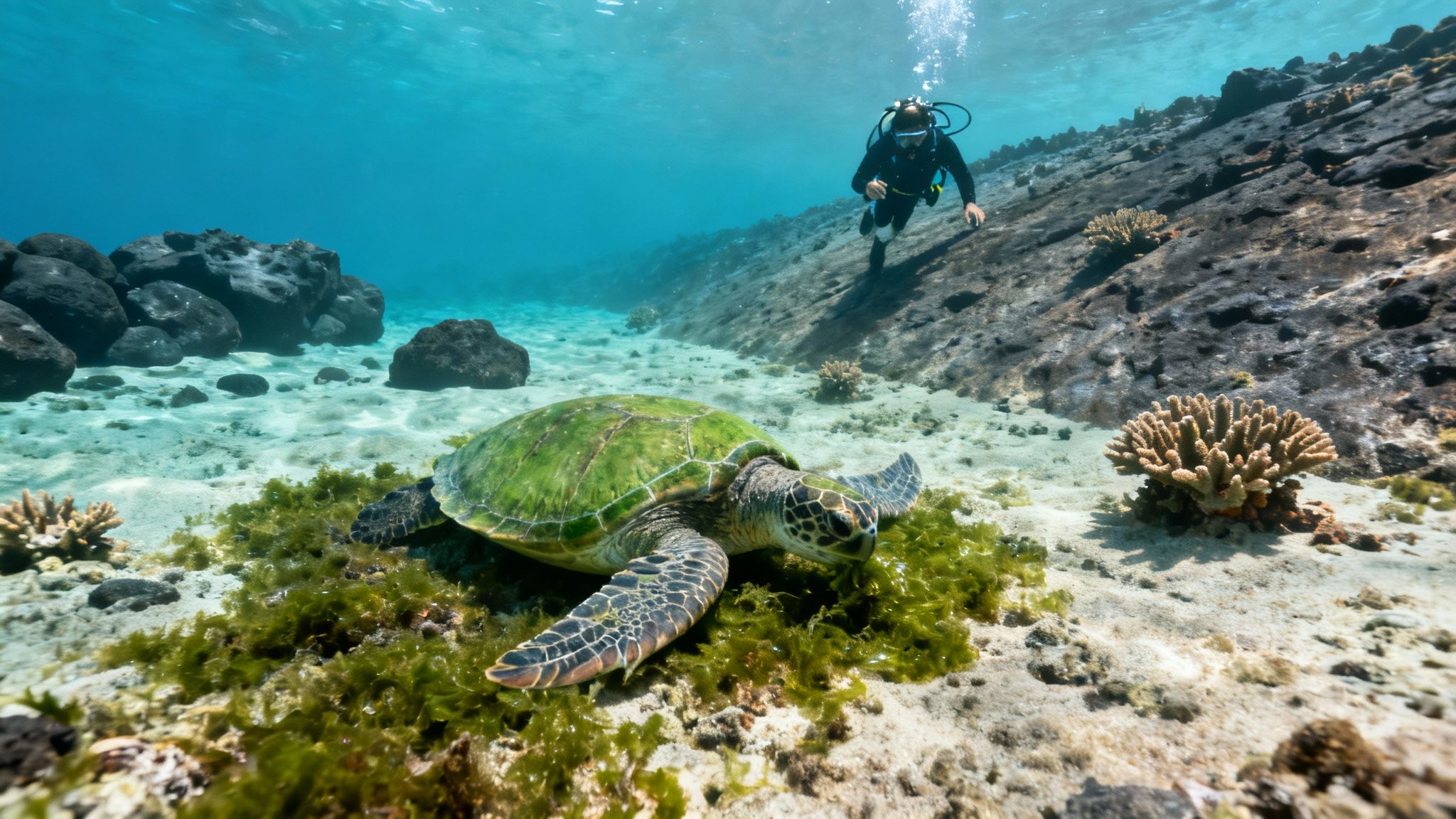
A local and visitor favorite is Two Step at Honaunau Bay. The entry is as easy as it gets—just walk down two natural lava rock "steps" and you're in. The reward is instant: a gorgeous coral garden unfolds before you. It's also a hotspot for Hawaiian green sea turtles (honu), and you can easily spend an entire dive watching them graze. With depths around 20-40 feet and crystal-clear water, it's a perfect first taste of Kona's underwater world.
Another fantastic spot is Kamakahonu Beach, which everyone just calls "King Kam." It's a sheltered cove right in Kailua-Kona with super calm water, making it a go-to for training dives and anyone wanting a stress-free experience.
Intermediate Dive Adventures
Once you've got a few dives in your logbook and you're feeling confident in the water, a whole new layer of Kona diving opens up. These intermediate sites often have more interesting topography, slightly deeper profiles, and an even wider range of marine life. They’re the perfect way to build your skills while seeing some seriously cool stuff.
You absolutely have to check out Golden Arches. The name says it all. You get to swim through a series of incredible lava rock arches that create this amazing, dramatic landscape. These formations are magnets for marine life, providing hideouts for moray eels, octopuses, and huge schools of reef fish. It's a fun, engaging dive and a photographer's dream.
Another can't-miss site is Turtle Pinnacle. It’s more than just a place to see turtles; it’s a living ecosystem at work. The pinnacle is an underwater lava formation that acts as a "cleaning station," where turtles line up to let surgeonfish pick parasites off their shells. Watching this natural symbiosis happen right in front of you is just incredible.
Advanced and Premium Dives
For the experienced diver looking for a real thrill, the Big Island does not disappoint. We're talking deep walls, ancient lava tubes, and encounters with the big guys. These sites demand solid buoyancy, good air management, and a comfort with depth, but the payoff is something you'll never forget.
A site like Au Au Crater is a perfect example. Here, you can dive inside a submerged volcanic crater—how cool is that? The steep walls are encrusted with coral, and the deep, blue water often attracts eagle rays and even sharks. It’s a powerful, humbling dive that showcases the raw, volcanic nature of big island scuba diving.
At Kona Honu Divers, we get a huge kick out of taking experienced divers to these special spots on our premium advanced dive trips. We hand-pick the best remote and challenging sites based on the day's conditions to give you an unforgettable adventure. To see the full range of incredible places we can take you, check out our comprehensive guide to Kona dive sites.
The World-Famous Manta Ray Night Dive
Out of all the phenomenal dives the Big Island has to offer, one experience truly stands apart from the rest: the Manta Ray Night Dive. It’s consistently voted one of the best dives on the planet, and once you’ve done it, you’ll understand why. This isn't just another dive; it's a front-row seat to an underwater ballet performed by some of the ocean's most graceful giants.
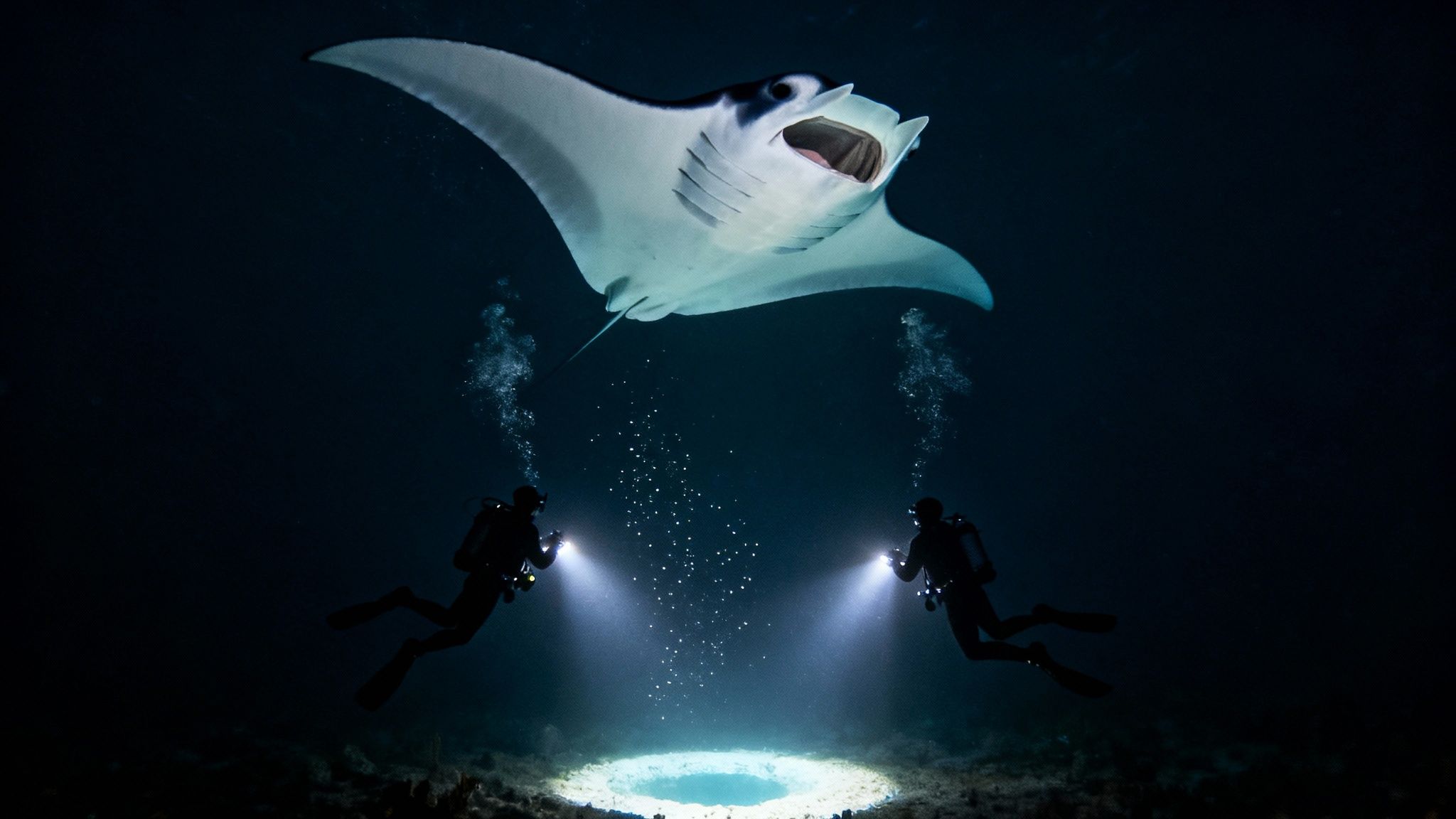
Picture this: you descend into the warm Pacific just as the last bits of sunlight fade from the sky. You find your spot on the sandy bottom, point your dive light straight up, and then you wait. Before long, enormous manta rays—some with wingspans stretching up to 16 feet—materialize out of the darkness. They glide, swoop, and perform effortless somersaults just inches above you. It’s a jaw-dropping spectacle that feels like you've been transported to another world.
The magic behind the encounter is beautifully simple. We use powerful dive lights to create beams that shoot up toward the surface. These lights attract massive clouds of plankton, which just so happens to be the manta rays' favorite meal. The mantas arrive for the all-you-can-eat buffet, opening their huge mouths to filter-feed in the spotlight you've helped create.
Why Garden Eel Cove Is The Premier Choice
While a few spots host this dive, we are convinced that Garden Eel Cove (also known as Manta Heaven) provides the absolute best experience. Its geography offers incredible natural protection from open ocean swells, which means the conditions are consistently calmer and safer for everyone in the water.
This sheltered cove isn't just better for divers; it supports a healthier marine ecosystem. The reefs surrounding the viewing area at Garden Eel Cove are more vibrant and full of life, making the whole dive more scenic. The main viewing spot itself is a wide, sandy patch that feels like a natural amphitheater, giving every diver a perfect view without anyone needing to get near the fragile coral.
The Manta Ray Night Dive is so much more than a simple wildlife sighting. It's a genuine connection with the ocean. Watching these gentle giants perform their nightly feeding ritual is a profoundly humbling experience that sticks with you forever.
This incredible dive has a rich history. The phenomenon really started taking off in the early 1990s and now draws thousands of divers and snorkelers every week. On any given night, visitors witness multiple rays gliding in to feed on plankton at a depth of about 35 feet. Decades of research have allowed scientists to identify individual mantas by the unique spot patterns on their bellies, which provides invaluable data for their global conservation.
Our Commitment To Responsible Encounters
What makes this dive truly sustainable is the community's deep commitment to responsible, ethical tourism. This is not an aquarium show. It’s a completely natural feeding behavior that we are simply lucky enough to witness. Strict, non-negotiable guidelines are in place to protect the well-being of the manta rays.
As a diver, your role is to be a respectful, passive observer. The rules are straightforward but essential:
- Stay on the bottom: This keeps the water column clear for the mantas to swim and feed without obstruction.
- No touching: Manta rays are covered in a protective mucous layer. Touching them can strip it away, leaving them vulnerable to dangerous infections.
- Shine your light up: Your light is the magnet for the plankton. Pointing it straight up creates the "dinner table" in the water above you.
By following these simple rules, we work together to ensure this amazing encounter remains a safe, sustainable, and ethical experience for generations of divers to come. It’s a perfect example of how tourism, when done right, can directly support conservation. To get a better feel for this one-of-a-kind dive, you can learn more about the Kona Manta Ray Night Dive.
Exploring Unique Blackwater and Advanced Dives
Sure, the coral gardens and lava tubes are spectacular, but the Big Island scuba diving scene has a wilder, more mysterious side for those looking to push their boundaries. If you're an experienced diver craving something truly different, Kona delivers.
We're talking about adventures that venture far from the sunlit reefs into the deep, dark, and untamed parts of the ocean. Two experiences stand out: the surreal Kona Blackwater Dive and premium advanced charters to the island's most rugged sites. One is like a spacewalk in inner space; the other is a true test of your skills against the raw power of the Pacific.
The Kona Blackwater Dive: An Otherworldly Experience
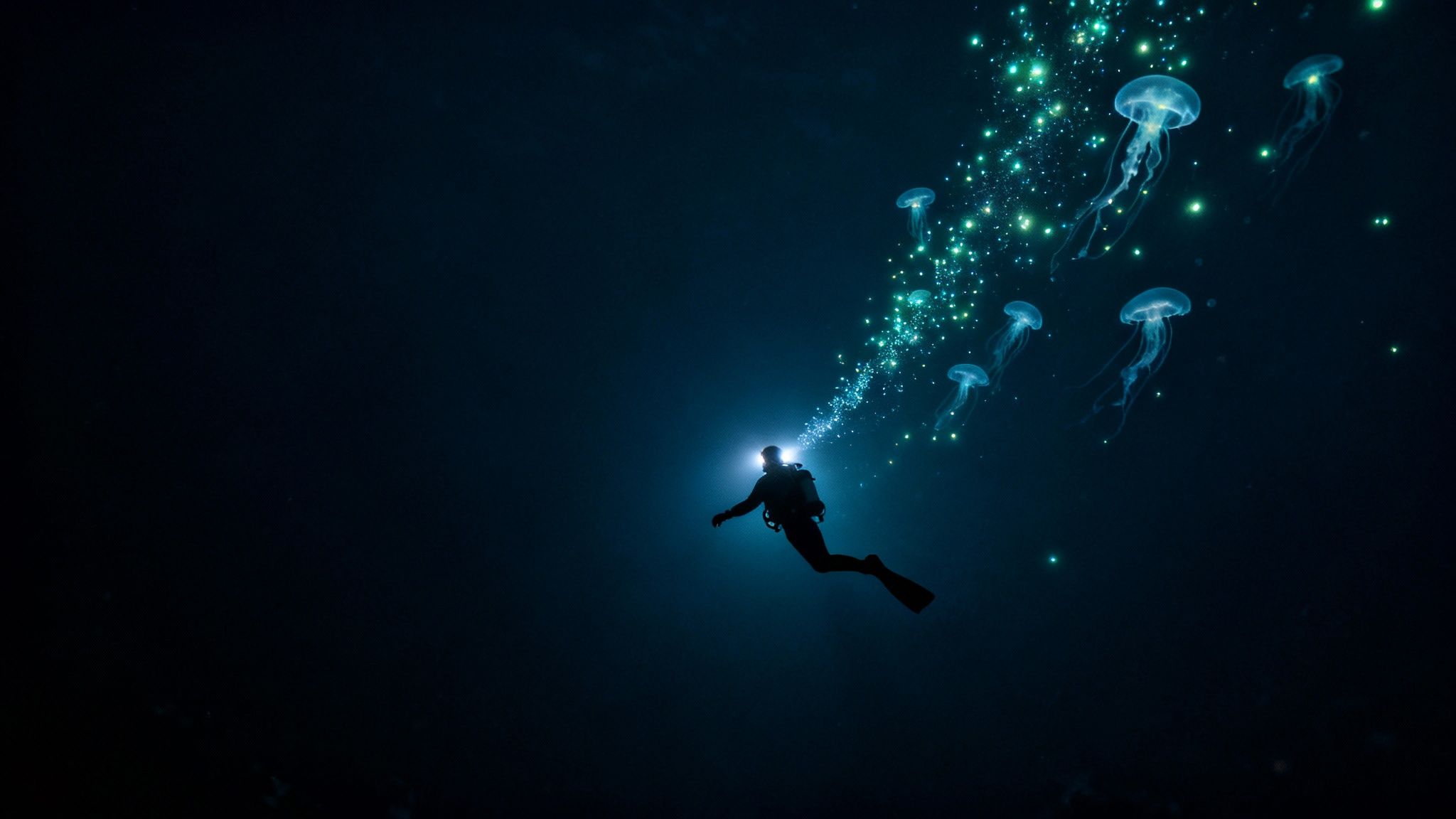
Picture this: you’re floating in absolute darkness, miles offshore, with thousands of feet of inky black water beneath you. This is the heart of the Kona Blackwater Dive, a trip that’s less about the reef and more about the strange, beautiful life that rises from the abyss every single night.
You’re safely tethered to the boat, but you’re essentially drifting in the open ocean to witness the planet's largest vertical migration. As you shine your light into the void, a silent parade of bizarre, often bioluminescent creatures drifts by.
The Blackwater Dive is a surreal journey into the unknown. It’s where you see life in its most primal and delicate forms—from iridescent comb jellies to larval fish that look like miniature works of art. It completely changes your perspective on what lives in the ocean.
You’ll see things you simply won’t find anywhere else:
- Pelagic Nudibranchs: Think of them as vibrant sea slugs that "fly" through the water column.
- Larval Creatures: You’ll spot the baby versions of crabs, eels, and fish, which often look nothing like their adult forms.
- Bizarre Jellyfish: An incredible variety of gelatinous animals, some trailing long, mesmerizing tentacles.
For underwater photographers and anyone fascinated by the stranger side of marine biology, this dive is an absolute must. To experience this hidden world for yourself, check out the dedicated Kona Blackwater Dive tour.
Pushing Boundaries with Advanced Dives
Got a packed logbook and a thirst for a real challenge? Kona's premium advanced dive trips are designed for seasoned divers ready to get off the beaten path. We head to more remote, demanding sites where the rewards are as big as the adventure.
These trips often mean stronger currents, deeper profiles, and wilder underwater landscapes. It’s in these untamed waters that you have the best chance of encountering larger pelagic species. We're talking scalloped hammerhead sharks, squadrons of spotted eagle rays, and maybe even a passing whale shark.
These dives are about more than just going deep; they're about embracing the raw, unpredictable nature of the ocean. Venturing into more remote waters also means being prepared. It's smart to understand safety equipment, and this EPIRB vs PLB: A New Zealand Safety Beacon Guide is a great resource for learning about vital emergency beacons.
If you feel you’re ready to level up your diving, the premium advanced 2-tank trip is the ultimate Kona adventure.
Why Choose Kona for Your Diving Adventure
Let's be honest, when you're planning a dive trip, the destination is everything. You can have the best gear and the perfect buddy, but if the location doesn't deliver, the trip falls flat. While countless places boast pretty reefs, Kona offers something truly special—a rare mix of ideal conditions, breathtaking biodiversity, and a world-class diving community that just gets it right.
The magic behind big island scuba diving really starts with its geography. Kona is tucked onto the island's western, or leeward, coast. This means it's shielded from the powerful trade winds by the colossal volcanoes, Mauna Loa and Hualalai. Think of them as giant bodyguards, creating a calm and protected slice of the ocean that’s almost always ready for divers.
This natural shelter translates to consistently incredible conditions. It’s not uncommon for visibility to push past 100 feet, letting you soak in every detail of the underwater world. The water itself is a welcoming 75-80°F (24-27°C) all year long, so you can forget about shivering and just enjoy the show. While you can dive here any day, the absolute flattest, calmest surface conditions tend to show up from August to October.
A Hotspot of Marine Biodiversity
Perfect conditions are one thing, but what you see down there is what you'll remember forever. Kona’s waters are a living treasure chest, an absolute bonanza of marine life. We're talking about reefs that are home to 1,100 species of fish, including 129 you won't find anywhere else on the planet. This makes the Big Island the most biodiverse of all the Hawaiian islands. Dive sites here are incredibly varied, from dramatic pinnacles where eagle rays soar to lava tube caves that whitetip reef sharks call home. For more on this, check out this great guide on ScubaDiving.com.
Every single dive is a fresh roll of the dice. Will you swim alongside a graceful green sea turtle? Spot a shy octopus camouflaged against the reef? Or will a pod of spinner dolphins show up to say hello? It’s this sheer density and variety of life that keeps us all coming back for more. We dive deep into this topic in our article about what makes diving in Kona so unique.
The Kona Honu Divers Difference
Picking the right spot is half the battle; picking the right dive operator is the other half. Here at Kona Honu Divers, we’re not just in the business of guiding dives—we're obsessed with sharing the wonder of Kona’s underwater world. For us, it’s all about safety, personal attention, and a deep-seated respect for the ocean.
We intentionally keep our groups small. This isn't just about safety; it's about creating a relaxed, personal experience where you never feel like just another number. Our guides are more than just navigators; they're passionate marine life geeks who get a genuine thrill from pointing out a rare nudibranch or sharing a cool fact about the local ecosystem. We treat the reef with the respect it deserves, because it's not just our playground—it's our office.
We believe a great dive is about more than just what you see. It's about feeling safe, connected, and completely inspired. Our mission is to make every diver feel like part of our 'ohana' (family) from the moment they step on the boat.
But don't just take our word for it. See what your fellow divers have to say about their adventures with us.
Ready to experience the best of big island scuba diving?
Your Big Island Diving Questions, Answered
Planning a dive trip always brings up a few questions. To help you get ready for your underwater adventure in Kona, we’ve put together answers to some of the most common things people ask. Think of this as your cheat sheet for planning the perfect Big Island dive trip.
We'll cover everything from the best seasons to dive to what you can expect to see, giving you the confidence to book your trip and get excited.
What’s the Best Time of Year to Dive the Big Island?
Here’s the great thing about Kona: the diving is incredible all year long. The water temperature is always a comfortable 75-80°F (24-27°C), so you’ll never be too cold to jump in.
That said, if you're chasing those perfect, glassy ocean days, the sweet spots are typically from April to May and again from August to October. During these months, the surface can be unbelievably calm, making for silky-smooth boat rides and visibility that often pushes past 100 feet.
Even in the winter, when other parts of Hawaii see bigger swells, Kona's coast stays protected and calm. Plus, winter is whale season! From December to March, you can often hear the haunting songs of humpback whales echoing through the water on your dives—an experience you'll never forget.
Do I Need to Be an Experienced Diver?
Absolutely not! Kona is one of the most welcoming dive destinations for all skill levels, whether you've logged a thousand dives or have never even put your face in the water. The sheer variety of dive sites means there's something perfect for everyone.
If you're a total beginner, you have some fantastic options:
- Try a Discover Scuba Dive: This is a no-pressure, non-certification dive where you're paired with an instructor the entire time. It’s the best way to see if you love diving without committing to a full course.
- Get Certified: If you're ready to take the plunge, Kona's calm, clear water is the perfect classroom for getting your PADI Open Water Diver certification.
- Take a Refresher: Been a while? A quick skills review with an instructor will get your confidence back up before you head out to the beautiful reefs.
With countless shallow, protected sites, new divers can feel safe while exploring a world of color. And for the more seasoned divers, there are plenty of deeper sites and unique challenges to keep you coming back for more.
What Kind of Marine Life Will I See?
Get ready to be amazed. Kona's reefs are teeming with life, partly because the island's isolation in the Pacific has led to some unique evolution. In fact, over 20% of the fish species here are found nowhere else on the planet.
Every dive is a new discovery, but here are some of the local celebrities you’re likely to meet:
- Hawaiian Green Sea Turtles (Honu): You're almost guaranteed to spot these gentle giants munching on algae or just relaxing on the reef.
- Spinner Dolphins: We often see them from the boat, and if you get really lucky, you might see a pod cruise by underwater.
- Manta Rays: These are the headliners of the world-famous night dive. Seeing them is a true bucket-list moment.
- Colorful Reef Fish: The reefs are a whirlwind of activity, with huge schools of yellow tang, butterflyfish, parrotfish, and Moorish idols.
- Moray Eels: Don’t forget to peek into the crevices! You’ll often find moray eels looking back at you from their rocky lairs.
- Reef Sharks: Whitetip reef sharks are very common and usually quite shy. You’ll often find them snoozing under ledges or in old lava tubes.
This incredible biodiversity is exactly what makes every single dive here so exciting. You just never know what you'll see next.
Is the Manta Ray Night Dive Really Safe?
Yes, it is an exceptionally safe and well-organized experience. Manta rays are gentle giants—they’re filter feeders that eat plankton, so they have no teeth or stingers. They're drawn to the dive lights, not the divers, so you're just part of the scenery for their nightly feast.
Local dive operators, including Kona Honu Divers, follow strict guidelines to protect both the mantas and the divers.
The setup is simple but brilliant. Divers are positioned on the sandy bottom in a central viewing area, almost like an underwater amphitheater. You just kneel or sit, point your flashlight up, and watch the ballet unfold above you. This passive approach ensures we don't disturb the animals.
Snorkelers are also kept safe on the surface, holding onto a custom-built float away from the divers below. Before you even get in the water, everyone gets a thorough briefing on proper etiquette—like the most important rule of all: no touching. With expert guides and proven safety protocols, all you have to do is relax and enjoy one of the most magical wildlife encounters on the planet.
Ready to dive into Kona's crystal-clear waters? At Kona Honu Divers, we offer a full range of diving tours designed to show you the very best of what the Big Island has to offer. From vibrant coral reefs to the legendary manta ray night dive, our expert team is here to guide you on an adventure you'll never forget.