
Picture this: you descend into warm, turquoise water so clear you can see for a hundred feet. All around you, ancient volcanic flows have created a surreal underwater world of vibrant coral reefs. This is what Big Island scuba diving is all about—a truly world-class experience where every dive feels like a brand-new adventure.
Why The Big Island Is a Diver’s Paradise
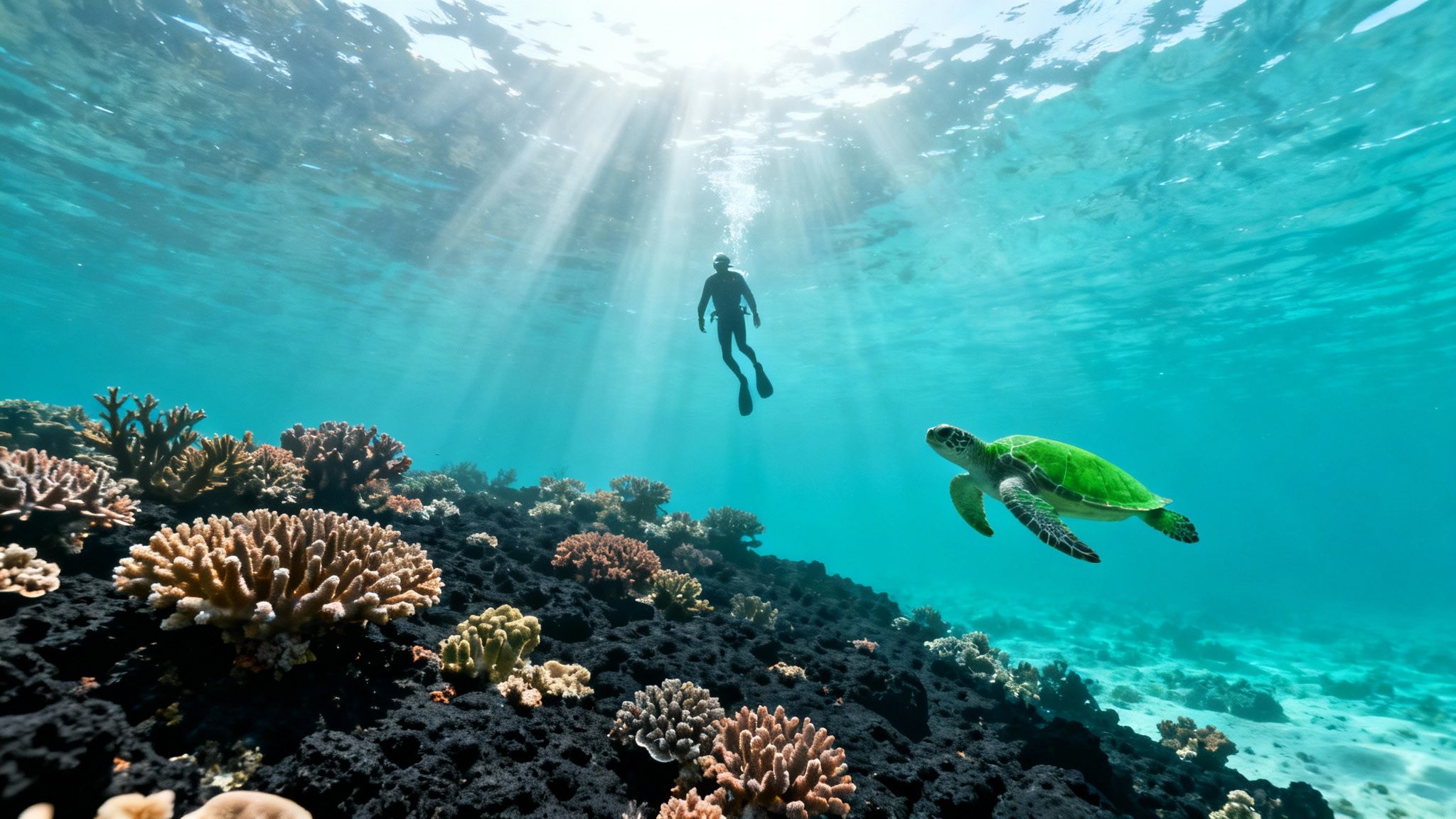
The Big Island isn't your average tropical dive destination. It's an underwater playground literally forged by fire. The island's volcanic past is responsible for its one-of-a-kind submarine landscape. Forget endless sandy bottoms; the Kona coast is defined by dramatic structures left behind by ancient lava flows.
This unique geology creates some of the most thrilling features you can dive. You'll get to explore intricate lava tubes, glide through majestic underwater arches, and navigate towering pinnacles that seem to shoot up from the abyss. It’s this incredible topography that makes every dive feel different from the last.
A Sanctuary for Marine Life
All those nooks and crannies in the volcanic rock create the perfect home for an astonishing amount of marine life. The Big Island is known globally for its biodiversity, with over 1,100 species of fish, 129 of which you can only find in the Hawaiian island chain. It's the richest aquatic ecosystem in all of Hawaii, offering a chance to see everything from raccoon butterflyfish to the endemic Hawaiian whitespotted pufferfish. You can dive deeper into the Big Island's unique marine life on scubadiving.com.
This sheer abundance of life means every single dive is packed with potential encounters. Some of the regulars you're almost guaranteed to meet include:
- Hawaiian Green Sea Turtles (Honu): You’ll find them gracefully swimming along the reefs or chilling out at "cleaning stations," letting smaller fish groom their shells.
- Spinner Dolphins: They love to play in the boat's wake on the way to the dive site and sometimes even make a curious appearance mid-dive.
- Whitetip Reef Sharks: These guys are often spotted resting in underwater caves or casually cruising along the reef's edge.
- Humpback Whales: If you’re here in the winter (December to March), you’ll often hear the haunting, beautiful songs of humpback whales echoing through the water on your dives.
It's this combination of rich biodiversity and stunning volcanic scenery that makes Big Island scuba diving an unforgettable experience. Whether you’re a brand-new diver or have logged thousands of dives, the Kona coast has an adventure waiting for you. The best way to see it all is with a local guide who knows where all the magic happens.
The World-Famous Manta Ray Night Dive
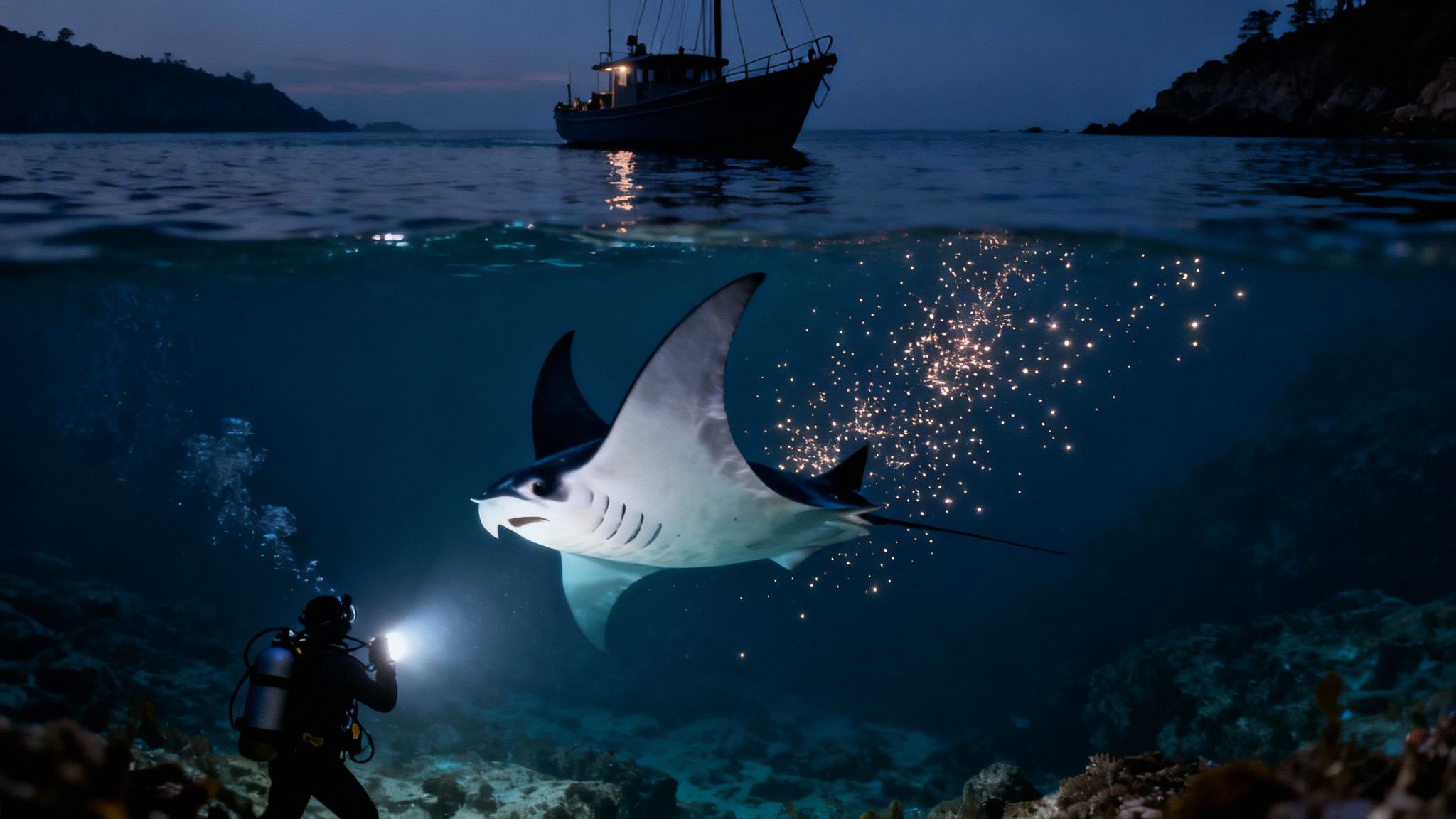
If there's one dive that puts the Big Island on every diver's bucket list, this is it. The manta ray night dive isn't just another dive; it's a genuine spectacle. Picture this: you're kneeling on the ocean floor after sunset, and suddenly, giant, silent shadows emerge from the dark, gliding effortlessly just inches above your head. It’s absolutely surreal.
The genius behind this encounter is surprisingly simple. Dive operators shine powerful lights up into the water column, creating what I like to call an "underwater bug zapper" for plankton. These massive clouds of tiny organisms are a favorite meal for manta rays, essentially ringing a dinner bell that draws them in from miles around.
Once the mantas arrive, the show begins. They perform a mesmerizing underwater ballet, swooping and barrel-rolling through the light beams to filter-feed. It's a raw, beautiful display of nature that feels both powerful and incredibly peaceful, making it a cornerstone of any true Big Island scuba diving trip.
Why Garden Eel Cove is the Premier Location
You can see the mantas at a couple of spots, but for my money, Garden Eel Cove (also called Manta Heaven) is the superior choice for your manta ray dive tour. It's tucked into a naturally protected location, which usually means calmer, more predictable conditions. A smooth ride and an easy dive make a world of difference.
What really sets Garden Eel Cove apart, though, is the viewing area and the quality of the reefs. The site is like a natural amphitheater. Divers get settled in a sandy patch, giving us front-row seats while the mantas have the entire water column above to do their thing. It means you get a clear, unobstructed view of the action.
Plus, the surrounding reef is just healthier and more vibrant here. That combination of a better protected location, a superior viewing area, and a thriving marine environment is why it's earned its reputation. If you want a full breakdown, you can learn more about the Kona manta ray night dive.
The manta ray night dive is more than just watching wildlife; it's an immersive connection with one of the ocean's most majestic animals. Seeing that grace up close is something that will stick with you forever.
This whole thing really took off in the early 1990s when operators started guiding trips near Keahole Point. Now, it's a nightly event with an incredible success rate—sightings are reported on about 85-90% of trips. On a truly epic night, you could be surrounded by more than 20 different mantas. It's a fantastic example of ecotourism done right.
Tips for a Respectful and Awe-Inspiring Encounter
To keep this amazing experience possible for years to come, we all have a part to play. The number one rule is simple: observe only, and never, ever touch the manta rays. Their skin is covered in a protective mucus layer, and touching them can strip it away, leaving them vulnerable to infections.
Here are a few other pointers to make the dive smooth and safe for everyone:
- Stay on the Bottom: Find your spot on the sand and stay put. This gives the mantas a clear, predictable space to maneuver safely above you.
- Nail Your Buoyancy: Good buoyancy control is key. You don't want to accidentally float up and bump into a manta, which can startle them and disrupt the dive for everyone.
- Shine Your Light Up: Your dive light is the plankton magnet. Keep it pointed straight up into the water column to help build the buffet that attracts the mantas.
By following these simple guidelines, you're not just having an incredible experience; you're helping protect it. You get to witness one of the most amazing shows on Earth while ensuring it remains for the next generation of divers.
Exploring Kona’s Top Dive Sites
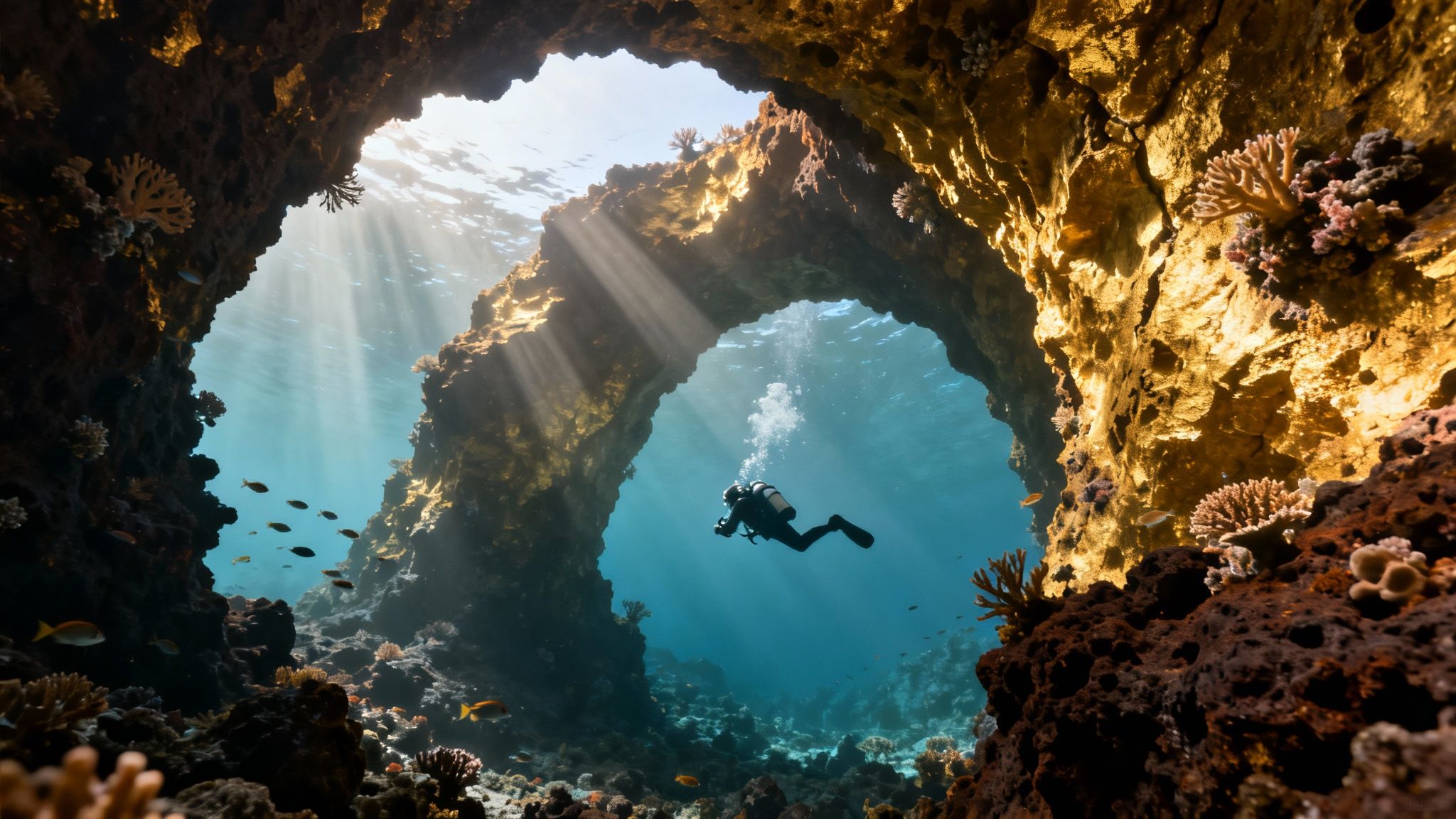
The Kona coast is absolutely packed with world-class dive sites, and each one gives you a totally different look into the Big Island’s volcanic soul. The sheer variety is staggering, which means there’s an underwater adventure waiting for you, whether you’re a brand-new diver or a seasoned pro.
What really sets Big Island scuba diving apart is the dramatic underwater landscape. You’re not just floating over sand here. You’re navigating a world sculpted by ancient lava flows, full of incredible arches, craters, and caverns that are just as impressive as the marine life calling them home.
Dive Sites For Beginners
If you’re newly certified or just want a chill, beautiful dive, Kona has you covered. Many spots are tucked away in calm bays with barely any current and amazing visibility, letting you relax and just soak in the scenery.
A perfect example is Pawai Bay, which is famous for its “turtle cleaning stations.” It’s an incredible sight—you can watch as Hawaiian green sea turtles, or honu, just hang out while tiny reef fish clean algae right off their shells. It’s a shallow, vibrant reef that makes for a perfect first ocean dive.
Intermediate Adventures
Once you’re comfortable in the water, a whole new set of sites opens up. These spots reward solid buoyancy control with some seriously cool experiences, like swimming through ancient lava tubes and exploring more complex reef systems.
Golden Arches is a must-do intermediate dive that shows off Kona’s geology. The name says it all—the site is defined by a series of huge lava rock arches you can actually swim through. When the sunlight streams through the openings, it’s pure magic. Definitely a spot to bring your camera.
Think of Kona's dive sites like chapters in a story. Each one reveals a different piece of the island's history, from the gentle slopes of beginner reefs to the deep, mysterious lava tubes. Every dive adds to the bigger picture.
Advanced And Thrill-Seeking Dives
For divers with the training and experience to push the limits, Kona delivers some of the most unique dives on the entire planet. These sites often mean going deeper or dealing with potential currents, but the payoff is something you’ll never forget. If you’re hunting for these kinds of more experienced diving opportunities, you can find plenty of charters that cater specifically to advanced divers, such as an advanced dive tour.
Au Au Crater, a submerged volcanic crater, feels like you’re diving on another world. The terrain is rugged and wild, with swim-throughs and ledges where you’re more likely to spot bigger animals like sharks and rays.
And then there's the legendary Kona Blackwater Dive. This isn’t a reef dive at all. It’s a drift dive in the pitch-black of night, miles offshore, suspended over thousands of feet of water. Tethered to the boat, you'll witness the planet's largest migration as bizarre, bioluminescent creatures rise from the abyss to feed. It’s weird, humbling, and an experience you can’t get anywhere else.
To help you get a sense of what’s out there, here’s a quick rundown of some of the top spots.
Kona Dive Site Guide At-A-Glance
| Dive Site Name | Best For | Max Depth | Key Marine Life |
|---|---|---|---|
| Pawai Bay | Beginners & Turtle Lovers | 40 ft | Green Sea Turtles, Eels, Reef Fish |
| Golden Arches | Intermediate & Photographers | 50 ft | Whitetip Sharks, Moray Eels, Butterflyfish |
| Au Au Crater | Advanced Divers | 80 ft | Manta Rays, Sharks, Jacks |
| Kona Blackwater | Advanced & Adventurous | 50 ft | Bioluminescent Pelagic Creatures |
This is just a small sample, of course. To truly appreciate the diversity here, you have to get in the water and see it for yourself. For a deeper dive into the underwater wonders awaiting you, check out this comprehensive list of Kona dive sites.
How to Choose a Great Dive Operator
Let’s be honest: the dive company you choose for your Big Island scuba diving trip can make or break the entire experience. It’s the difference between a good vacation and a truly unforgettable one. Think of your dive operator as more than just a boat captain—they're your guide, your safety net, and your key to unlocking the best of Kona's underwater world.
A great company doesn't just ferry you to a dive site. They share their passion, point out the shy octopus hiding in plain sight, and make sure every detail, from the pre-dive briefing to the post-dive snacks, is spot on. This is especially true here in Kona, where a rich dive history has set a high bar for excellence.
The Big Island scuba diving scene has come a long way since the early 1980s, when pioneers like Jack's Diving Locker (founded in 1981) first started showing people the magic beneath the waves. What began as a small, passionate community has blossomed into a world-class destination. Today, Big Island operators lead over 25,000 dives annually, a number that speaks volumes about their importance to both local tourism and marine protection. You can read more about the history of diving on the Big Island and its impact if you're curious.
Key Factors for Selecting a Dive Company
When you start looking at different dive charters, a few things should jump out as non-negotiables. These are the details that separate the okay from the outstanding and ensure your dive is safe, comfortable, and responsible.
- Small Group Sizes: This is a big one. Look for operators that keep their guide-to-diver ratio low. It means you get more personal attention, a less crowded reef, and a much more relaxed, intimate dive.
- Experienced Guides: A great divemaster is part biologist, part navigator, and part storyteller. Their deep knowledge of local currents, marine life, and secret spots turns a simple dive into a genuine adventure.
- Well-Maintained Boats and Gear: Your comfort and safety start long before you hit the water. Are the boats spacious? Is there shade? How about a hot-water shower for after the dive? Good rental gear should be modern and look like it's been cared for meticulously.
- A Real Commitment to Conservation: The best dive operators are stewards of the ocean. They should be vocal about passive wildlife interaction, follow local regulations to the letter, and actively participate in reef conservation. They don't just use the ocean; they protect it.
If you really want to get into the nitty-gritty, we've put together a full breakdown on how to choose a Kona dive shop that covers everything you need to think about.
Why Kona Honu Divers Stands Out
Kona Honu Divers has earned its stellar reputation by living and breathing these principles. They've built their entire operation around the diver's experience, and it shows. They are famous for their small group sizes, which means you’ll always feel looked after by their incredibly experienced and genuinely passionate crew.
Their boats are custom-built with divers in mind, offering a smooth ride and all the little comforts that make a huge difference. Most importantly, their commitment to ocean stewardship is woven into everything they do, from their thorough dive briefings to their hands-on work protecting Kona's precious reefs.
But don't just take our word for it. The best proof comes from the divers who have been out with them.
Picking an operator like Kona Honu Divers means your trip will be memorable for all the right reasons. You won't just see the best of the Big Island's underwater world—you'll do it with a team that truly cares about your safety, your fun, and the future of this incredible ocean paradise.
Getting Your Scuba Certification in Hawaii
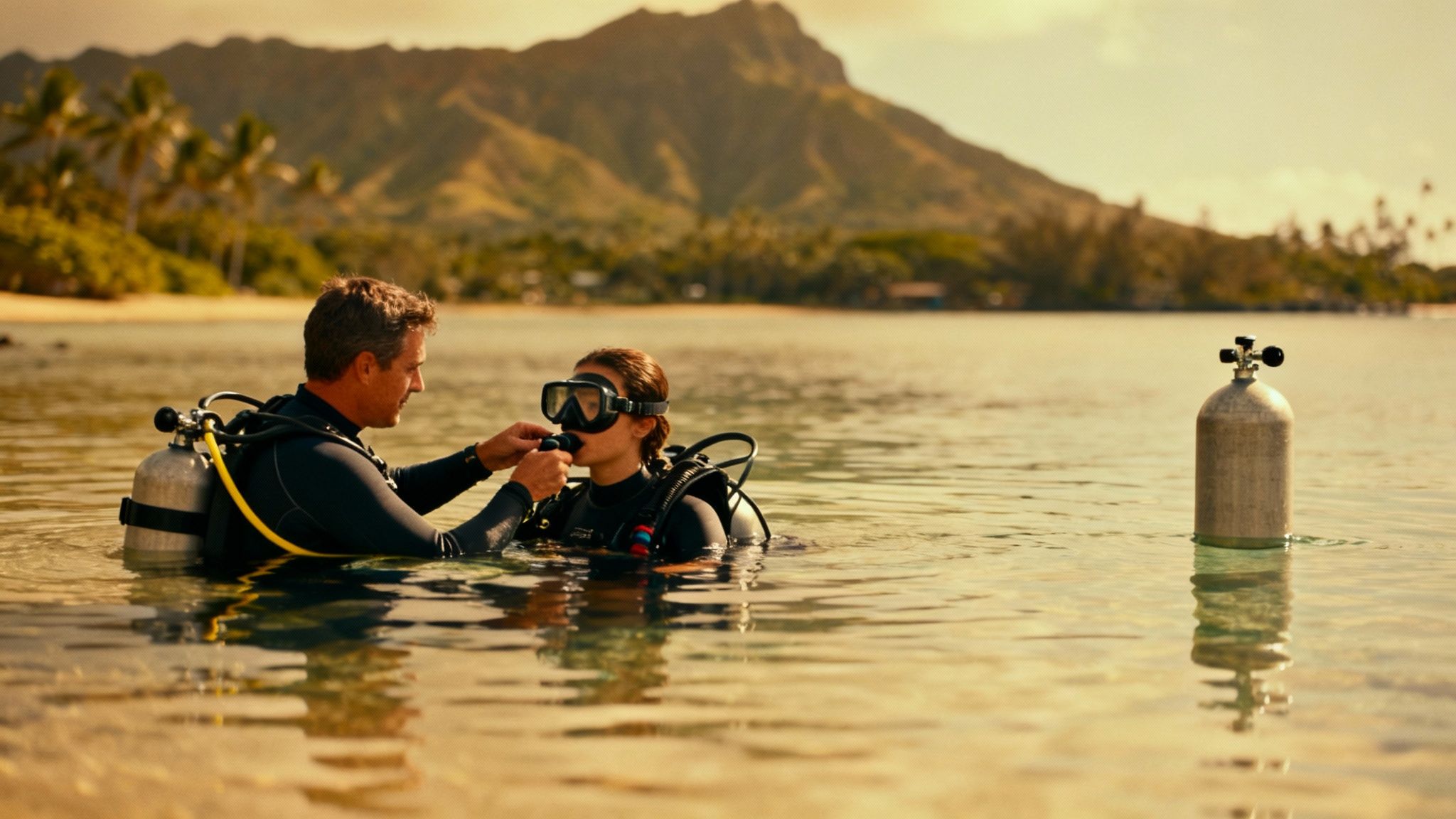
If you've ever found yourself mesmerized by a documentary, wishing you could be the one exploring those vibrant reefs, there's no better place to make it happen than the Big Island. The warm, clear water and thriving marine life create the perfect natural classroom for learning to dive.
Getting certified might seem intimidating, but the process is surprisingly fun and designed to fit right into your vacation. The gold standard for beginners is the Open Water Diver certification, a license that lasts a lifetime and opens up the underwater world. It’s all broken down into three simple, confidence-building parts.
The Three Steps to Becoming a Diver
The path to becoming a certified diver is designed to build your skills progressively, so you feel comfortable and in control every step of the way. It’s structured to get the "book work" out of the way so you can spend more of your precious vacation time in the ocean.
-
eLearning (The Theory): Before you even leave home, you can knock out the classroom portion online. This covers all the foundational knowledge—from how pressure affects your body to dive planning and safety—at your own pace. No need to spend a beautiful day in Hawaii indoors!
-
Confined Water Skills (Pool Time): This is where you get your fins wet for the first time. In a calm, pool-like environment right in the ocean, an instructor will guide you through all the essential hands-on skills. You'll learn to clear water from your mask, master your buoyancy, and practice sharing air with a dive buddy. It’s all about building muscle memory in a relaxed setting.
-
Open Water Checkout Dives (The Real Deal): Now for the main event. You’ll complete four actual dives on Kona's stunning reefs with your instructor right by your side. This is your chance to put everything together and truly experience the magic of Big Island scuba diving for yourself.
Think of it less like going back to school and more like an adventure camp. You're learning a fascinating new skill while surrounded by some of the most beautiful scenery on the planet—both above and below the surface.
What Comes After Certification?
Your Open Water card is really just a license to keep learning. For many divers, the next logical step is the Advanced Open Water Diver course. Don't let the name fool you; it’s not about doing technically difficult or dangerous dives. It's all about expanding your experience.
The course is built around five "Adventure Dives," each focused on a different area of diving. Two are mandatory—a deep dive and an underwater navigation dive—but you get to choose the other three. You could try a thrilling night dive, explore a wreck, or fine-tune your buoyancy control. This certification opens up a whole new world of dive sites and gives you the confidence to explore them.
Whether you're taking that very first breath underwater or you're ready to expand your skills, getting certified in Hawaii is an investment in a lifetime of adventure. To see what courses are available, take a look at the various diving tours on offer.
Your Big Island Diving Questions, Answered
As you get ready for your trip, you're bound to have a few questions. It’s only natural! Here are some straightforward answers to the things divers ask us most, so you can feel completely prepared for your underwater adventure.
What’s the Best Time of Year to Dive on the Big Island?
Honestly, any time is a great time to dive on the Big Island. That’s the beauty of this place. The Kona coast, where most of the diving happens, is tucked away on the leeward side of the island, which shields us from the stronger trade winds and keeps the waters incredibly calm and clear year-round.
Water temperatures are always comfortable. In the winter, you’re looking at a pleasant 75-77°F (24-25°C), and in the late summer, it warms up to a balmy 80-82°F (27-28°C). Visibility is another huge plus—it often stretches out past 100 feet, making for some truly stunning underwater views.
While the diving is always fantastic, a couple of seasons offer something extra special:
- Winter (December – March): This is humpback whale season. You might not see one underwater, but hearing their incredible songs echo through the water while you’re on a dive? That’s a truly humbling experience you'll never forget.
- Summer (June – August): These months usually bring the flattest, calmest seas. The water can be like glass, which makes for super smooth boat rides—perfect if you're a new diver or get a little queasy.
Do I Have to Be Certified to Scuba Dive in Hawaii?
To join one of the regular dive charters and explore the amazing reefs, yes, you'll need to be a certified diver from a recognized agency like PADI, SSI, or NAUI. Think of your C-card as your passport to the underwater world.
But what if you're not certified and just want to see what it's all about? You're in luck! You can sign up for a Discover Scuba Diving experience. It’s a fantastic one-day program where an instructor teaches you the absolute basics in a calm, safe spot.
Once you’re comfortable, they’ll take you on a real, guided dive on a beautiful coral reef, usually no deeper than 40 feet. It’s a completely supervised and exhilarating way to try diving without committing to the full course. Be warned, though—most people get hooked! If you do, you can easily roll that experience into an Open Water Diver course right here on your vacation.
What Kind of Marine Life Will I See?
The Big Island is famous for its incredible biodiversity. The underwater volcanic terrain has created the perfect nooks and crannies for all sorts of amazing creatures, so you never know what you'll find on any given dive.
On just about any dive along the Kona coast, you can pretty much count on seeing Hawaiian green sea turtles (honu) gliding by. You’ll also spot different kinds of colorful moray eels poking their heads out of crevices and octopuses (tako) doing their best to blend in with the rocks. The reefs are absolutely electric with schools of butterflyfish, parrotfish, and tangs.
The real magic of diving here is that you just never know. One minute you're watching a turtle munch on some algae, and the next, a majestic eagle ray might soar past, or you'll hear the clicks and whistles of spinner dolphins playing nearby.
And of course, the Big Island is home to world-renowned encounters like the manta ray night dive and the surreal blackwater dives, where you’ll see bizarre bioluminescent critters from the deep. With a bit of luck, you might also find whitetip reef sharks relaxing on the sand or even get a fly-by from a massive whale shark.
What Should I Pack for the Dive Boat?
A little preparation goes a long way in making your day on the water comfortable and fun. Any good dive operator, like Kona Honu Divers, will provide the heavy stuff like tanks and weights, plus some snacks and drinks. But there are a few personal items you’ll want to bring along.
You’ll either rent or bring your own main gear—BCD, regulator, wetsuit, mask, snorkel, and fins. Beyond that, here’s a quick checklist for your gear bag:
- Reef-safe sunscreen (to protect both your skin and our reefs)
- A towel and a dry change of clothes
- Sunglasses and a hat for the boat ride
- A reusable water bottle to stay hydrated
- Any personal medications, especially for motion sickness (be sure to take it before you leave the dock)
- Your certification card and logbook
- An underwater camera—you’ll want it!
Having these things with you will make sure your Big Island scuba diving trip is amazing from start to finish.
Ready to jump in? At Kona Honu Divers, we offer a whole range of world-class diving tours designed to show you the very best of Kona’s underwater world, from the vibrant daytime reefs to the legendary manta ray night dive.