
Picture this: you descend into warm, crystal-clear water, and the world below unfolds. Ancient lava flows have sculpted an incredible underwater playground. This is what Big Island scuba diving is all about. The Kona coast is uniquely sheltered, creating calm, gin-clear conditions where visibility often stretches past 100 feet all year long, cementing its status as Hawaii's best spot for diving.
Why The Big Island Offers World-Class Scuba Diving
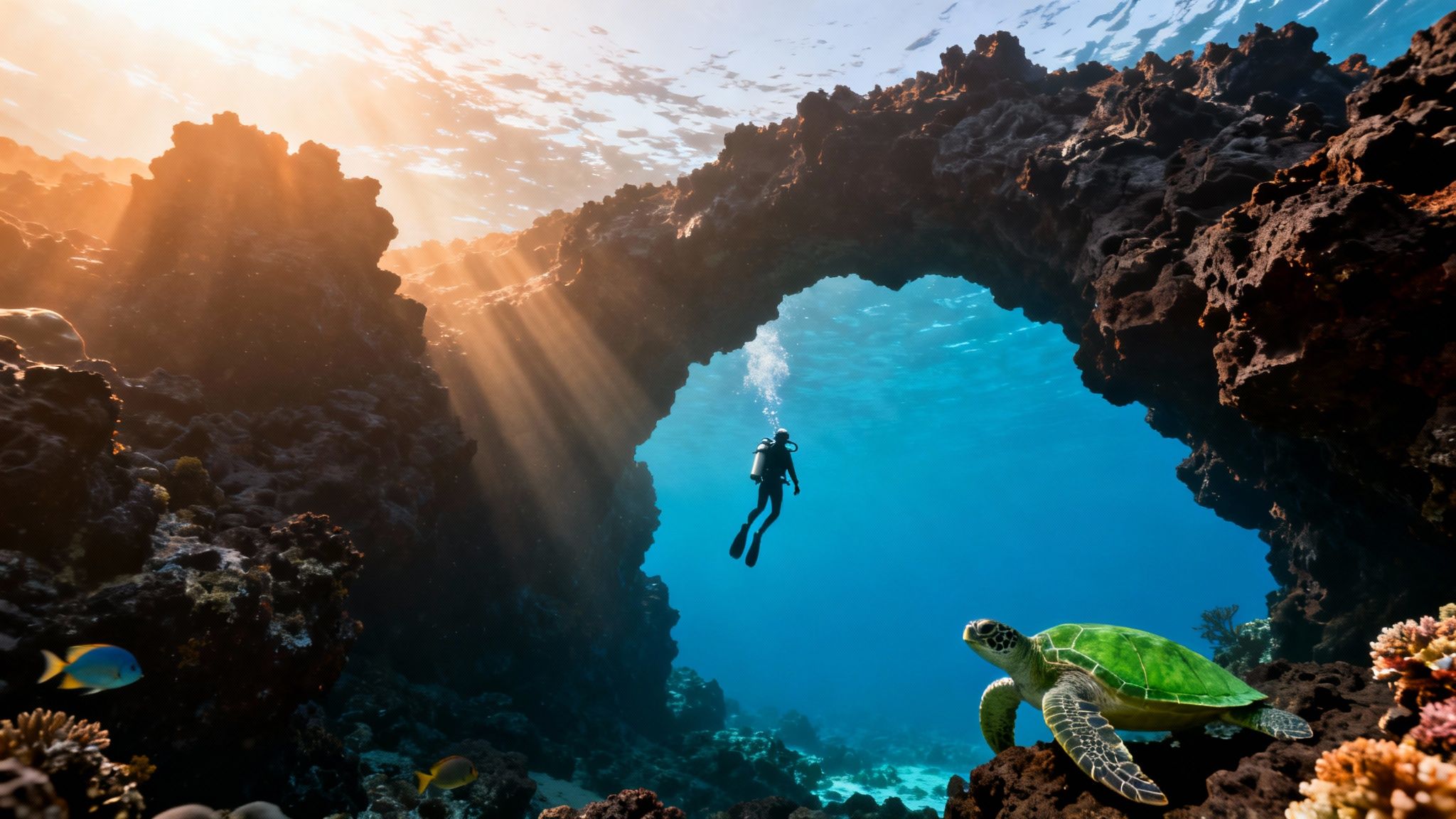
So, what's the secret to the Big Island's amazing diving? It all comes down to its volcanic roots. The island's enormous volcanoes, Mauna Loa and Hualalai, act as a massive shield, protecting the Kona coast from the strong trade winds. This natural barrier results in remarkably calm and predictable seas—perfect for divers of every experience level.
While many destinations are known for their coral, the Big Island's underwater landscape is truly defined by its dramatic volcanic shapes. Over thousands of years, lava has carved out a breathtaking seascape unlike any other.
You'll get to explore:
- Intricate Lava Tubes: Swim through ancient tunnels where molten rock once flowed, now teeming with fascinating marine life.
- Dramatic Archways and Pinnacles: Navigate stunning underwater formations that create a genuine sense of wonder.
- Pristine Coral Gardens: Healthy, vibrant reefs flourish on these old volcanic foundations, bursting with color and activity.
This unique geology is the foundation for an incredible amount of biodiversity. On almost any dive, you can expect to see Hawaiian green sea turtles (honu), pods of playful spinner dolphins, and countless species of colorful reef fish found nowhere else on Earth. It's this rich ecosystem that makes people ask if the Big Island is good for scuba diving, and the answer is always a firm "yes."
The dive industry here has grown up alongside the island's reputation. What started with just a few small shops in the 1960s has blossomed into a premier global destination. Today, the Big Island is home to over 50 dive charters that guide more than 150,000 dive tourists on roughly 100,000 certified dives each year. That kind of growth speaks volumes about the island’s reliable conditions and spectacular underwater world.
Whether you're about to take your first breath underwater or you're a seasoned pro with a full logbook, the Kona coast has an adventure waiting for you. The mix of easy shore access, gentle conditions, and jaw-dropping scenery solidifies the Big Island's reputation as a true global diving hotspot.
Experiencing The Legendary Manta Ray Night Dive
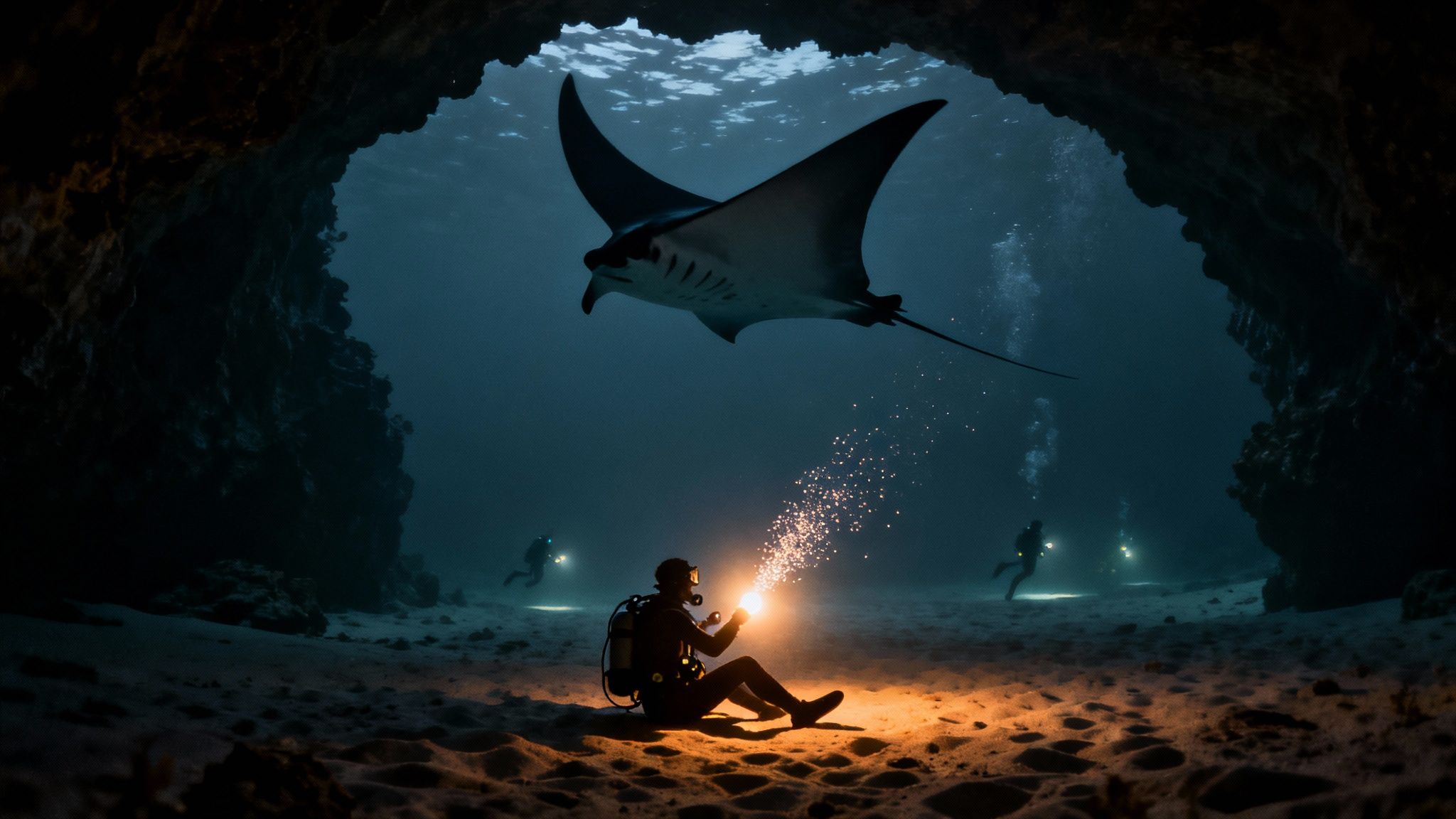
If there's one dive that defines the Big Island, it's the Manta Ray Night Dive. This isn't just another dive; it's a truly mesmerizing underwater ballet that has earned its global reputation. Picture this: you descend into the dark, warm Pacific, find your spot on the sandy bottom, and then just watch. Above you, gentle giants with wingspans stretching up to 18 feet begin to glide and dance in the beams of your light.
The whole setup is brilliantly simple. Divers and snorkelers create a "campfire" of light, pointing their torches up from the sea floor and down from the surface. This light acts as a magnet for plankton, the mantas' favorite meal. Before you know it, the area transforms into a massive buffet, and the mantas swoop in to feast, somersaulting just inches from your face.
Why Garden Eel Cove Is The Premier Choice
You might hear about a couple of different spots for this dive, but Garden Eel Cove (often called Manta Heaven) is consistently the superior choice for your manta ray dive tour. It's tucked away in a location that offers natural protection from ocean swells, which means a calmer, safer, and more enjoyable experience for everyone.
The site itself feels like it was designed for this very purpose. A large, sandy patch creates a natural, theater-like viewing area with better reefs surrounding it. This lets everyone settle in comfortably without the risk of damaging any delicate coral. You get an unobstructed, front-row seat to one of nature’s greatest shows.
A Legacy of Respectful Encounters
What started as a chance encounter back in 1981 has evolved into a cornerstone of Big Island conservation and tourism. Early pioneers began to understand the mantas' patterns, and over the decades, the dive has become a model for sustainable wildlife interaction. Researchers can now identify individual mantas by the unique spot patterns on their bellies, which provides invaluable data on their health, population, and behavior. It's incredible to know your dive is part of a much larger conservation story.
The Kona Honu Divers Difference
Your choice of dive operator makes all the difference. Kona Honu Divers has earned a stellar reputation for running these trips with a focus on safety, respect for the animals, and creating a truly magical experience. They keep their groups small and their guides are fantastic, ensuring you feel completely at ease while connecting with the incredible scene unfolding around you.
But you don’t have to take our word for it—the experiences of other divers say it all.
Participating in this dive means you're an active part of protecting these amazing creatures. The number one rule is to be a passive observer.
"Observe only: No touching. Resist the urge to 'pet' the mantas. This will rub off their protective mucus coating. Do not chase, grab, or try to take a ride on the mantas." – PADI Project AWARE
This core principle ensures the mantas remain safe and wild, allowing this incredible interaction to continue for generations to come. By simply following the rules, you become an ambassador for the ocean. If you’re ready to witness one of the planet's most breathtaking underwater events, you can find more details by reading about the Kona manta ray night dive.
Discovering The Best Big Island Dive Sites
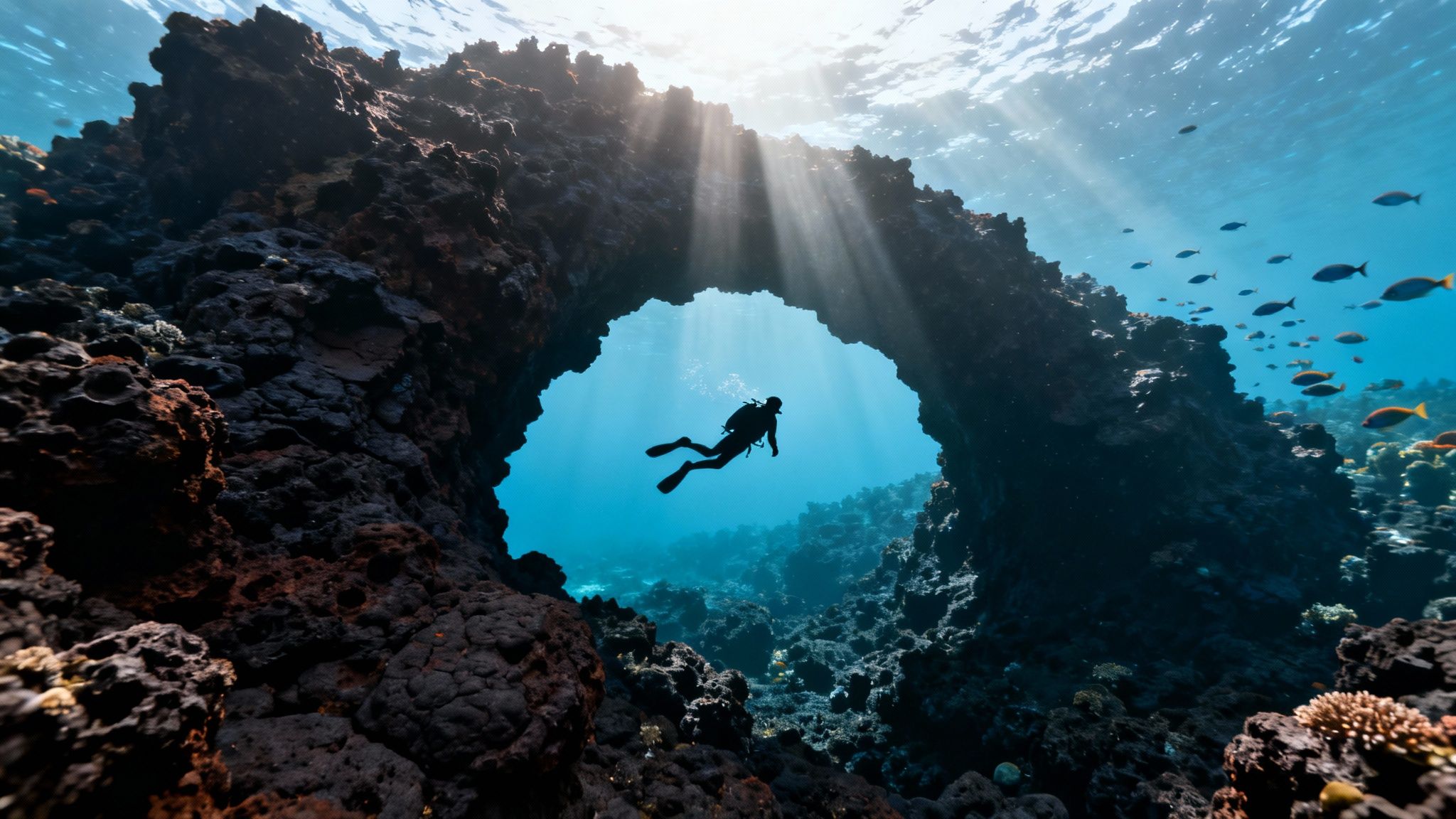
The Big Island's coastline is a diver's dream, a treasure map of incredible sites waiting to be explored. The same volcanic forces that forged the island’s dramatic landscapes didn't stop at the water's edge. They plunged right into the ocean, creating a stunning underwater world of arches, craters, and ancient lava tubes.
This isn't a destination with just one or two standout spots. Big Island scuba diving offers a stunning variety. Whether you’re looking for a shallow, sun-drenched reef for your first dive or a challenging deep-water drift, there’s an adventure here for you.
Dive Sites For Beginners
If you’re just starting out or simply craving a calm, beautiful dive, the Kona coast couldn't be more welcoming. Many sites have easy entries and are packed with marine life in protected, shallow waters.
A perfect example is Pu'uhonua O Honaunau, which everyone lovingly calls "Two Step." The name comes from the natural lava rock steps that make getting into the water a breeze. It's a beginner’s paradise, almost always blessed with calm conditions and crystal-clear visibility. You're also virtually guaranteed to spot Hawaiian green sea turtles (honu) gliding effortlessly over the healthy coral gardens.
Intermediate Adventures Through Lava Formations
Once you've got a few dives in your logbook, the Big Island really starts to reveal its wild side. This is where you get to explore the intricate, awe-inspiring lava formations that make Kona diving truly unique. These aren't just rocks; they're underwater architecture sculpted by volcanic fire.
Sites like Golden Arches are a must-do. You can actually swim through massive arches crusted in golden-hued corals, creating a visual spectacle that’s hard to forget. Weaving through these lava tubes and swim-throughs feels like exploring a submerged cathedral, with rays of sunlight piercing the blue from above. This is where you get a real feel for the island’s raw power. You can learn more about the incredible variety of Kona dive sites that local operators can take you to.
Advanced Dives Into The Abyss
For divers hunting for a serious thrill, the Big Island delivers some of the most unique advanced dives on the planet. These aren't your average deep reefs; they push the boundaries and offer encounters you'll be talking about for years.
The undisputed king of advanced dives here is the world-renowned Kona Blackwater Dive. This isn't a reef dive at all. It’s a pelagic drift in the deep ocean, miles offshore, in the pitch-black of night.
Tethered to the boat, you'll find yourself suspended in thousands of feet of water, witnessing one of the largest migrations on Earth. Every night, a bizarre and beautiful world of creatures rises from the depths to feed near the surface. Think bioluminescent jellies, alien-looking larval fish, and other strange critters you’d never see otherwise. It's a humbling, mind-blowing experience that's best described as a "spacewalk in the middle of the ocean."
To give you a clearer picture of the options, here’s a quick look at some of the most popular sites.
Big Island Dive Site Snapshot
| Dive Site | Experience Level | Max Depth | Key Features |
|---|---|---|---|
| Two Step | Beginner | 40 feet | Easy shore entry, calm waters, green sea turtles, vibrant coral gardens. |
| Golden Arches | Intermediate | 60 feet | Dramatic lava arches, swim-throughs, unique volcanic topography. |
| Kona Blackwater | Advanced | 50 feet (suspended) | Pelagic night dive, rare deep-sea creatures, bioluminescence. |
This table just scratches the surface, but it shows how Big Island scuba diving truly has something for everyone. From sunlit reefs to the mysterious deep, the underwater landscapes of Kona are just waiting to be explored.
How To Choose A Great Kona Dive Operator
Let's be honest, the sheer number of dive shops dotting the Kona coast can make your head spin. But picking the right one is arguably as important as picking the right dive site. Your choice of operator is what elevates a good day of Big Island scuba diving into a truly incredible memory.
So, what should you actually look for? It really boils down to a few key things that separate the great shops from the merely good ones.
First, and this is non-negotiable, check for their affiliations. You want to see logos from globally recognized agencies like PADI or SSI. This isn't just a fancy sticker; it's your assurance that they meet strict, international standards for training and safety.
Next, think about the experience itself. A top-notch operator invests in their boats and their people. Is the boat well-maintained? Does it have creature comforts like a hot shower or plenty of shade? These small details make a world of difference after a couple of hours in the water.
And perhaps most importantly, ask about group sizes. The best shops pride themselves on keeping groups small. This means you get more personalized attention from your divemaster, a less crowded reef, and a much better chance of seeing that elusive octopus or frogfish.
To give you a head start, we've highlighted a few of Kona's most respected and consistently praised dive operators.
Kona Honu Divers
Ask any seasoned Kona diver for a recommendation, and there's a good chance you'll hear the name Kona Honu Divers. They've built an incredible reputation for their professional and fun-loving crew, comfortable boats, and an almost fanatical dedication to customer service.
They are famous for their manta ray night dives, but they run amazing charters for divers of all skill levels. Their focus on smaller groups really makes you feel like a valued guest, not just another number on a manifest.
But don't just take my word for it. The diving community's feedback speaks for itself.
Other Top-Rated Kona Operators
While Kona Honu Divers is a fantastic pick, they're in good company. The Kona coast is home to several other world-class operators, each with its own unique vibe and strengths. Here are a couple more mainstays you should definitely check out.
Jack's Diving Locker
Jack's Diving Locker is a true Kona institution. They've been guiding divers here since 1981 and have become a pillar of the local community, known for their unwavering commitment to safety, education, and ocean conservation.
With a fleet of large, comfortable boats and some of the most experienced crew on the island, they're a rock-solid choice for everything from your very first discover scuba dive to highly specialized technical training.
Big Island Divers
Another long-standing favorite, Big Island Divers is known for its super friendly, high-energy staff who just genuinely love showing people the underwater world. They offer the full spectrum of Kona's greatest hits, from the manta night dive to daily charters exploring the vibrant reefs.
If you're looking for a fun, welcoming atmosphere where the passion for diving is contagious, Big Island Divers is an excellent choice.
Ultimately, the best operator for you depends on what you value most—be it a smaller, more intimate group, a larger boat with more amenities, or a particular shop's philosophy. By checking recent reviews and prioritizing operators with a proven track record, you'll be well on your way to booking the world-class Big Island scuba diving trip you've been dreaming of.
Understanding Dive Safety In Hawaii
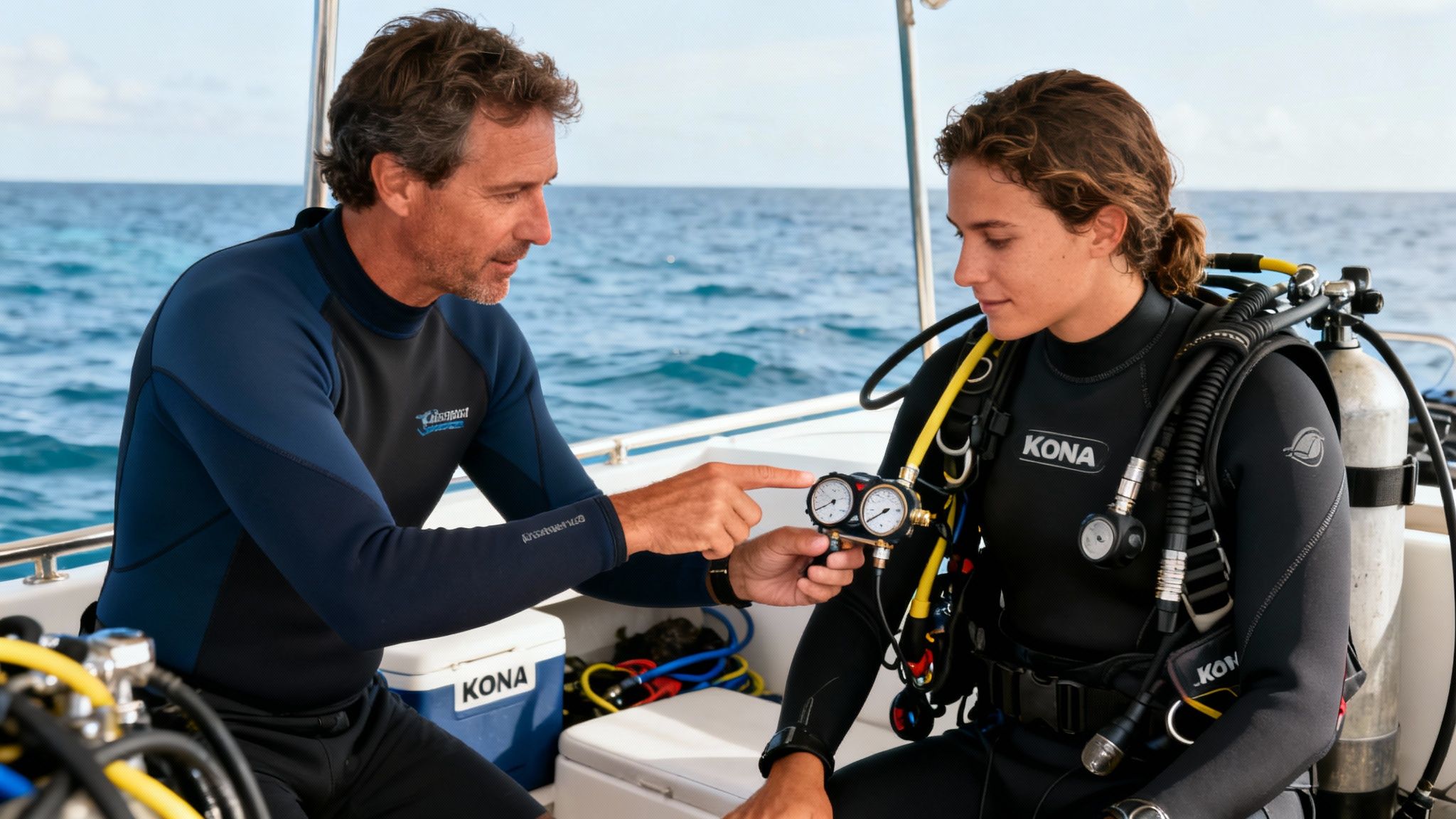
Let’s talk about safety, because it’s the most important part of any dive. The great news? Big Island scuba diving has a stellar safety record. When you go out with a certified professional, you’re not just going for a swim; you’re participating in a well-structured, supervised activity where your well-being is the top priority.
It might surprise you, but the numbers back this up. Diving with a guide in Kona is statistically far safer than many other ocean activities. Between 2009 and 2018, Hawaii recorded 206 snorkeling fatalities but only 28 scuba-related deaths in the same timeframe. While you can read more about the mystery of Hawaiian snorkeling deaths, this massive difference really underscores the value of professional training and supervision that comes with scuba.
Plus, the Kona coast gives us a huge head start. The water is typically calm and crystal clear, with visibility often stretching past 100 feet, which eliminates a lot of potential environmental hazards right off the bat. With over 50 professional dive shops all held to high standards, the local industry is deeply committed to safety. It's not uncommon for a single major operator to lead over 25,000 dives a year with a near-perfect record.
Key Principles for a Safe Dive
To make sure every dive is a good one, there are a few core habits we all live by. Think of them less as rules and more as the foundation for confident, responsible diving that lets you relax and just enjoy the show.
- Dive Within Your Limits: Be honest with yourself and your guide about your certification and experience. Kona has an incredible range of dive sites, and a good divemaster will always pick one that's a perfect match for your skill level.
- Listen to the Briefing: Pay close attention. The pre-dive briefing is where your divemaster lays out the game plan—critical info on the site, currents, how you’ll get in and out of the water, and what amazing creatures to keep an eye out for.
- Master Your Buoyancy: This is the secret sauce of great diving. Nailing your buoyancy control keeps you from accidentally bumping into the fragile reef, helps you conserve air, and lets you hover effortlessly to watch the marine life without spooking it.
Respecting Marine Life and Local Conditions
Staying safe also means understanding the environment you’re a guest in. Thankfully, Hawaii’s marine life is incredibly chill. Negative encounters are almost unheard of for scuba divers. State records show that incidents involving sharks and divers are incredibly rare compared to other water sports.
The trick is simply to be a quiet observer. Give the animals their space, and you'll get to see them behave naturally. They're used to divers and will carry on with their day if you're calm and respectful.
Remember, you're a visitor in their home. The "look, don't touch" rule is everything. Touching coral can damage or kill it, and touching marine animals can harm their protective slime coats and cause unnecessary stress.
By embracing these simple guidelines, you become part of a culture that values both safety and conservation. This approach is what ensures every Big Island scuba diving trip is not just a thrill, but a fundamentally safe adventure, freeing you up to focus on the magic unfolding all around you.
Your Big Island Diving Questions, Answered
Even seasoned divers have questions when planning a trip to a new spot. So, let's clear up some of the common queries about diving on the Big Island. Think of this as your personal cheat sheet for planning the perfect underwater adventure.
We'll cover everything from the best season to visit to whether you need to be certified. Getting these details sorted out ahead of time is the best way to make sure your trip is as smooth as the Kona coast on a calm summer morning.
What’s the Best Time of Year for Scuba Diving?
Honestly, one of the best things about diving here is that it’s fantastic all year round. The Kona coast is naturally sheltered, which means we get consistently calm conditions and great visibility almost any day you show up.
That said, if you want to be picky, the absolute calmest, warmest, and clearest conditions are typically in the late summer and early fall. From about August through October, the ocean can be as flat as glass, and the water is a balmy 80°F (27°C).
But winter brings its own kind of magic. From December to March, the humpback whales are here. It’s a truly unforgettable experience to be on a dive and hear their songs echoing through the water around you. It’s something you feel as much as you hear.
So, the real answer? There’s no bad time to dive in Kona. The best time to come is whenever you can get here.
Do I Have to Be Certified to Go Scuba Diving?
Not at all! If you’ve always wanted to try scuba but don't have a certification card, the Big Island is one of the best places in the world to give it a shot. Dive shops all over the island offer what’s called a “Discover Scuba Diving” experience. It’s designed specifically for first-timers.
Here’s a quick rundown of how it works:
- Quick Lesson: First, an instructor will walk you through the basics and a few essential skills in shallow water where you can stand up. No pressure.
- Guided Dive: Once you’re feeling good, that same instructor will take you on a real dive on a beautiful, shallow reef, staying by your side the entire time.
It’s an incredibly safe and fun way to see if diving is for you. And trust me, after you spend some time weightless, cruising over a coral reef, you'll probably be hooked. From there, you can sign up for a full Open Water certification course.
What’s the Water Temperature? What Kind of Wetsuit Will I Need?
Kona’s water is always pleasant, but the temperature does shift a few degrees between seasons.
- Summer & Fall (June – November): This is when it's warmest, with water temperatures sitting between 78-80°F (26-27°C). A lot of divers are perfectly happy in a 3mm shorty wetsuit, or even just a rash guard for a bit of sun protection.
- Winter & Spring (December – May): The water cools down just a bit to around 74-76°F (23-24°C). For these temps, a full-length 3mm wetsuit is a good idea to stay comfortable, especially if you're doing more than one dive.
Don't worry about packing one, though. Most operators, like us at Kona Honu Divers, have high-quality rental gear that’s well-maintained. A good wetsuit does more than keep you warm—it adds a little buoyancy and protects you from the sun and any accidental scrapes.
What Kind of Marine Life Can I Expect to See?
The Big Island’s underwater world is buzzing with life. The volcanic lava tubes, arches, and reefs have created the perfect home for an incredible variety of animals.
On pretty much any dive, you can expect to run into:
- Hawaiian Green Sea Turtles (Honu): Seeing these gentle giants is practically a guarantee. You’ll find them napping on the reef or cruising by with no care in the world.
- Spinner Dolphins: We almost always see pods of these acrobatic dolphins from the boat, and getting to see them underwater is a lucky and incredible treat.
- Endemic Reef Fish: A huge percentage of the fish here are found nowhere else on Earth. You'll be surrounded by guys like the Milletseed Butterflyfish and the Potter's Angelfish.
And, of course, the main event for many is the world-famous Manta Ray Night Dive. Beyond that, keep your eyes peeled for eagle rays, moray eels, octopus, and the occasional whitetip reef shark snoozing under a ledge.
Is Shore Diving a Big Thing on the Island?
Absolutely. Shore diving is hugely popular here, especially along the Kona coast. The water is generally so calm and accessible that you and a buddy can just gear up and walk right in from the beach to explore amazing reefs.
One of the most famous spots is Puʻuhonua o Hōnaunau, better known as Two Step, for its super-easy entry and abundance of turtles. But that's just the beginning—there are dozens of other sites, both well-known and secret, that offer world-class diving without a boat.
For certified divers who are comfortable with their navigation skills, renting tanks for a day of shore diving gives you an amazing sense of freedom. It’s the perfect way to explore at your own pace and a great complement to the guided boat dives that get you to those farther-out sites.
No matter what your experience level is, Kona Honu Divers has an adventure waiting for you. From your first breath underwater to advanced pelagic dives, their expert team is dedicated to providing a safe, fun, and unforgettable experience exploring the incredible waters of Hawaii. Find the perfect Big Island scuba diving tour for your trip today.