
Picture this: you’re sinking slowly into brilliantly clear, warm water. Sunlight streams down from the surface, illuminating a breathtaking volcanic landscape below, a world buzzing with life. That, right there, is the magic of Big Island scuba diving. It’s a world-class destination, and for good reason—it’s got dramatic underwater terrain, incredible marine life, and of course, the unforgettable manta ray night dive.
Thanks to the calm, clear waters along the Kona coast, the conditions are fantastic for divers of all skill levels, all year long.
Why the Big Island Is a Diver’s Paradise
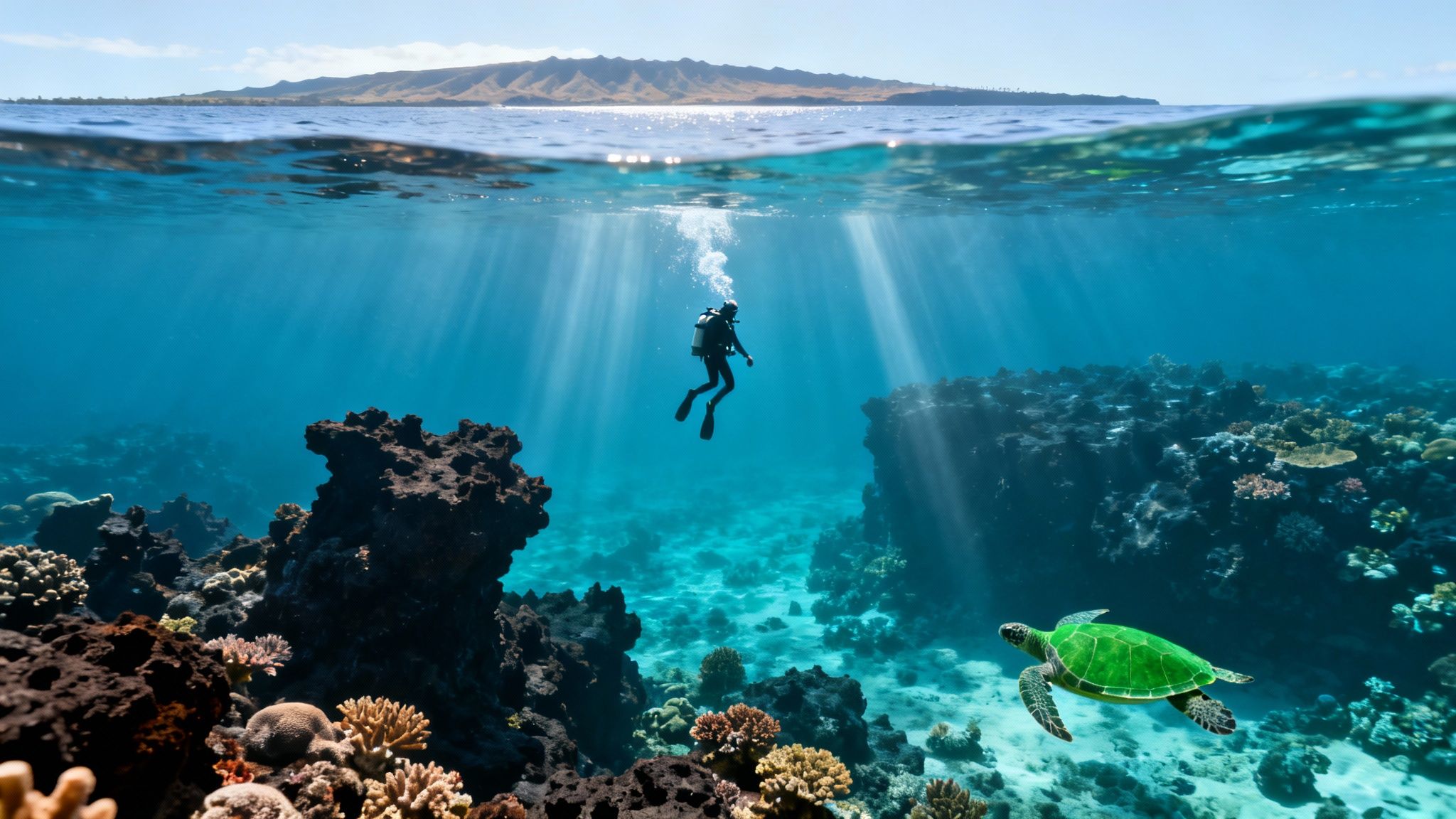
The Big Island isn't just another pretty spot to go diving; it’s a geological masterpiece shaped over millennia by volcanic forces. That fiery history has forged an underwater world you just won't find anywhere else. You'll be exploring intricate lava tubes, dropping over sheer walls, and swimming through massive archways—all carved from ancient lava flows. It’s this unique structure that creates the perfect home for a thriving ocean ecosystem.
And the best part? The diving here is consistently spectacular. While other destinations have their "on" and "off" seasons, the western Kona coast is sheltered from the wind by massive volcanoes. This creates incredibly calm, predictable waters that are perfect for everyone, from first-timers to seasoned pros. This protected coastline acts like a magnet for marine life, pulling in everything from tiny, colorful fish to majestic open-ocean visitors.
A Hub of Marine Biodiversity
The sheer amount of life here is jaw-dropping. The Hawaiian Islands host around 1,100 marine fish species, but what’s truly special is that about 129 of them are endemic—meaning you won't find them anywhere else on the planet. From deep-water pinnacles to shallow, sunlit caves, the varied underwater landscape concentrates this incredible biodiversity, making every single dive a fresh adventure.
The island’s reputation is no secret. Its popularity has fueled a vibrant dive industry; just one of Kona's top operators reported running over 25,000 dives per year. That number speaks volumes about the island's magnetic pull and highlights why responsible diving is so crucial here. Learn more about the Big Island's unique dive ecosystem and what makes it so fragile and beautiful.
To give you a better idea of what to expect, here's a quick rundown of the highlights.
Big Island Diving Highlights at a Glance
| Feature | What You Will Experience | Best For |
|---|---|---|
| Volcanic Topography | Exploring intricate lava tubes, dramatic walls, craters, and massive archways. | Divers who love unique underwater landscapes and swim-throughs. |
| Green Sea Turtles | Near-guaranteed sightings of honu (turtles), often at "cleaning stations." | Everyone! It’s a classic Hawaiian diving experience. |
| Endemic Marine Life | Spotting fish you can't see anywhere else, like the Milletseed Butterflyfish. | Underwater photographers and nature lovers. |
| Manta Ray Night Dive | An otherworldly, up-close encounter with gentle giants feeding on plankton. | Adventurous divers looking for a once-in-a-lifetime memory. |
This incredible underwater world is what makes diving here so special, and it's a world we're passionate about sharing.
At Kona Honu Divers, our experienced guides know these waters like the back of their hand. We are absolutely dedicated to providing safe, exciting, and unforgettable diving tours that will leave you with a deeper appreciation for this amazing place.
The World-Famous Manta Ray Night Dive
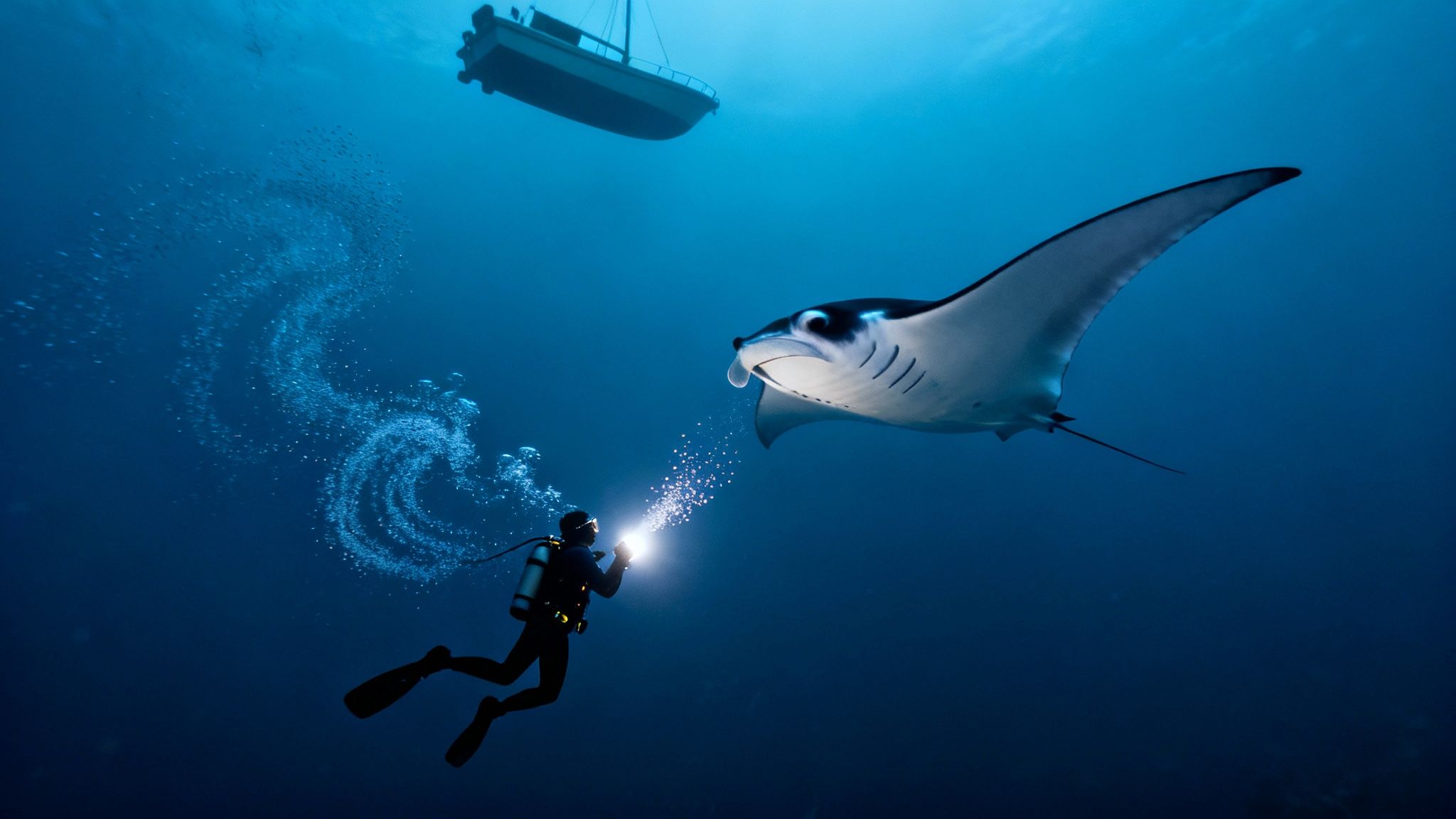
Let's be clear: this isn't just another dive. It’s an underwater ballet starring majestic, gentle giants, and it’s an experience that consistently ranks as one of the best night dives on the entire planet. If you're a diver visiting Hawaii, the Big Island's manta ray night dive is the one thing you absolutely cannot miss.
Picture this: you descend into the warm, dark Pacific as the last glow of sunset vanishes. You settle onto a sandy patch on the seafloor, point your dive light up, and wait. Before long, the beams from your group’s lights create a glowing column of plankton—an irresistible buffet. Then, the show begins.
Out of the darkness, they glide in. Manta rays, some with wingspans stretching over 12 feet, perform effortless barrel rolls just inches above your head. It’s a silent, hypnotic spectacle as they swoop in, mouths agape, to filter the plankton from the water. You're not just watching nature; you're in the middle of it.
Why Garden Eel Cove Is the Premier Manta Destination
While you can see mantas at a couple of spots around the island, most seasoned Big Island scuba diving pros will tell you that Garden Eel Cove is the superior choice for your dive tour. Often called Manta Heaven, this site just north of Kona has a key geographical advantage. It's tucked into a protected cove, which means it’s frequently shielded from ocean swells, making for much calmer, more predictable, and more comfortable conditions.
This protected geography creates a better viewing arena, too. The layout of the underwater “stage” lets divers get into a great position without disturbing the action, offering a better viewing area. Plus, the surrounding reefs are stunningly vibrant and healthier, so your first dive at dusk is a treat in itself. It's this combination of calm water, a prime viewing area, and a superior reef that makes the experience feel so intimate and magical.
The reliability of these encounters is what really sets Kona apart. What started as occasional encounters in the 1990s has evolved into a nightly spectacle. Operators now report manta sightings on roughly 85–90% of trips, and it’s not uncommon for a dozen or more to show up. Some nights, the logs have shown counts of over 30 mantas! You can explore more manta sighting data to see just how consistent these incredible encounters are.
What to Expect on Your Manta Ray Dive Tour
Going with a top-notch operator like Kona Honu Divers ensures your dive is safe, respectful, and completely unforgettable. A typical two-tank manta ray dive tour starts with a “dusk dive” on a beautiful nearby reef. This gets you comfortable in the water and lets you watch the reef transform as day turns to night.
After surfacing for snacks and a detailed briefing on proper manta etiquette, you'll gear up for the main event. Your guide will lead you to the designated viewing area where everyone gets settled for the show. The most important rule? Be a passive observer.
Responsible Observer Tip: Never touch, chase, or try to ride a manta ray. Your touch can rub off their protective mucus coating, which leaves them vulnerable to infections. Just find your spot, relax, and let them come to you. Trust me, they will!
Following these simple rules helps protect these incredible animals and ensures this world-class dive will be around for generations to come. To help plan your own trip, check out our guide on when to dive with manta rays in Kona.
Exploring Kona’s Top Dive Sites
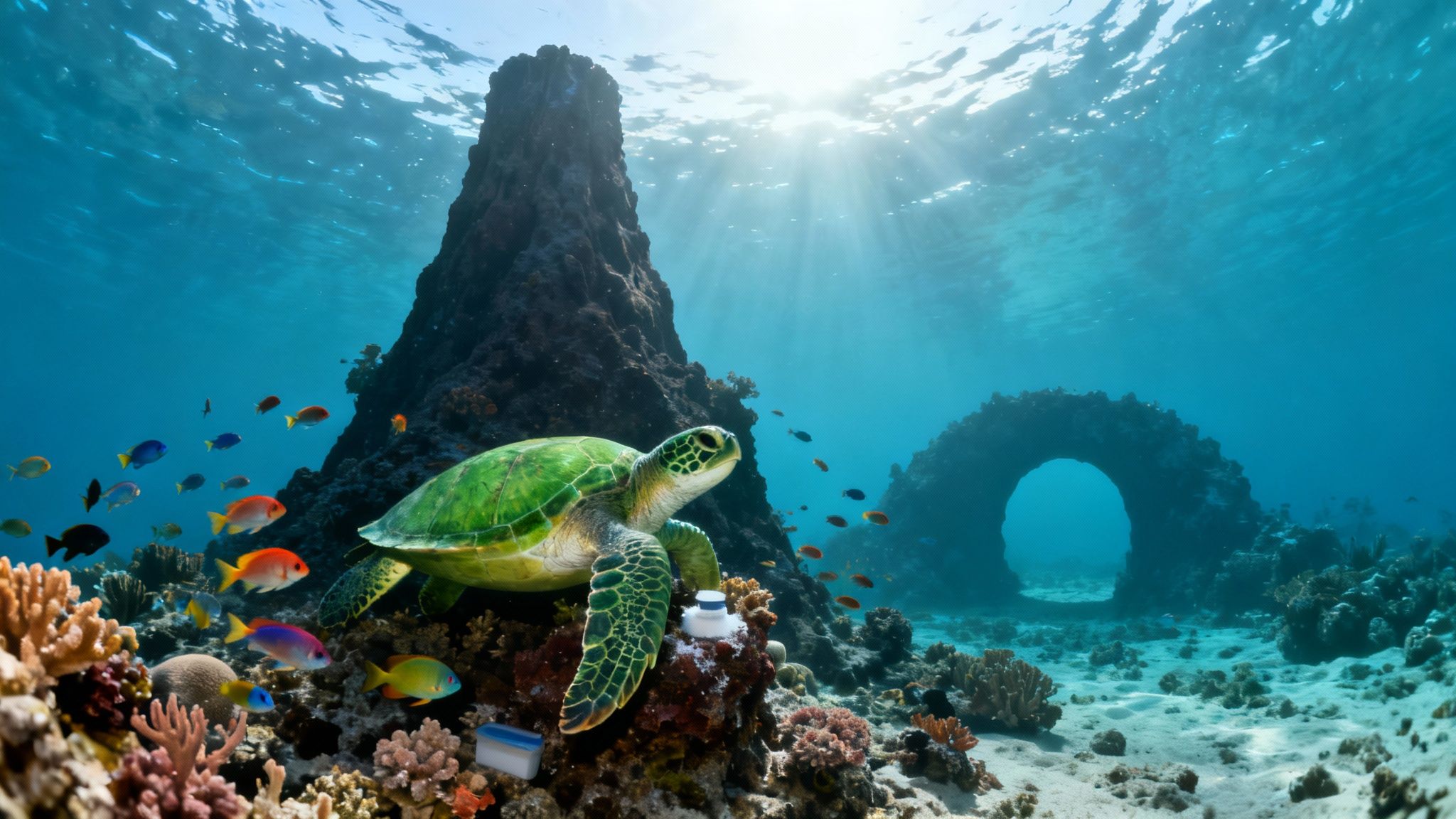
Sure, the manta ray night dive gets all the headlines, but the Kona coast is packed with more than 50 world-class dive sites, each a unique gateway into the Big Island's underwater world. This isn't just a flat reef; the island's volcanic past sculpted an incredible submerged playground. We're talking lava tubes you can swim through, dramatic arches, and ancient craters. It's the kind of place where no two dives are ever the same.
This is where having a great crew makes all the difference. The best operators don't just stick to a fixed schedule. Instead, the captains and divemasters at Kona Honu Divers start their morning by reading the ocean—checking the swell, the wind, and the clarity of the water. They hand-pick the best spots for that specific day. This flexible approach ensures everyone, from first-timers to seasoned pros, gets the safest and most spectacular experience possible.
Sites For Every Skill Level
One of the best things about diving in Kona is that there's truly something for everyone. The coastline offers a fantastic progression, whether you're just getting your fins wet or looking for a serious challenge.
- Beginner-Friendly Reefs: You’ll likely start in calm, protected coves with gentle slopes and vibrant coral gardens. These spots are typically between 25 to 60 feet deep and are buzzing with colorful reef fish, curious eels, and even the occasional octopus—a perfect setting to build confidence.
- Intermediate Adventures: Ready for more? The next step up involves sites with more interesting topography. Think swim-throughs, small caverns, and twisting lava tubes that add a real sense of exploration and often attract larger marine life.
- Advanced Explorations: For divers with experience under their belts, the deep walls and offshore pinnacles are where the real adventure lies. These spots can have stronger currents and require more precise dive planning, but the rewards are huge—sightings of pelagic species like sharks, majestic eagle rays, and sometimes even a whale shark.
Must-Visit Kona Dive Locations
While the "best" site is always the one with the best conditions on any given day, a few spots have rightfully earned their legendary status. Each one offers a different taste of what makes Kona diving so special.
Turtle Pinnacle
Just like the name says, this is the place to go for guaranteed turtle sightings. Turtle Pinnacle is a natural "cleaning station," where Hawaiian green sea turtles (honu) line up to let little reef fish pick algae and parasites off their shells. It's an incredible display of symbiosis. You can just hover over the nearby sand and watch these gentle giants patiently wait for their turn at the spa.
Au Au Crater
This is easily one of the most geologically stunning dive sites on the Big Island. It’s a massive, collapsed lava dome that forms a natural amphitheater, protecting it from currents and creating a haven for marine life. The crater's walls are draped in healthy coral, and exploring the rim is an unforgettable experience. You’ll find everything from tiny nudibranchs to big schools of fish here.
Crescent Beach (Kua Bay)
Famous for its mind-bending underwater architecture, Crescent Beach is a photographer's dream. It’s a maze of massive archways and intricate swim-throughs carved by ancient lava flows. The topography alone is breathtaking, but it’s also a favorite resting spot for whitetip reef sharks. Finding one tucked under an arch is a thrill you won't soon forget.
To see what else is out there, you can learn more about the dive sites Kona Honu Divers will take you to.
A Comparison of Kona's Best Dive Sites
To help you get a better sense of what to expect, here's a quick side-by-side look at these three iconic sites. Each offers a completely different experience.
| Dive Site | Max Depth | Key Features | Common Marine Life |
|---|---|---|---|
| Turtle Pinnacle | 70 ft | Natural turtle cleaning station, large coral heads. | Green sea turtles, butterflyfish, eels. |
| Au Au Crater | 60 ft | Unique collapsed lava dome, protected bowl shape. | Schooling fish, octopus, frogfish. |
| Crescent Beach | 50 ft | Dramatic archways and lava tube swim-throughs. | Whitetip reef sharks, eagle rays, parrotfish. |
As you can see, whether you want to drift through a lava tube, watch sea turtles go about their day, or just lose yourself in a thriving reef, Kona has a dive site waiting for you. The real secret is diving with a crew that knows how to read the ocean and get you to the right place at the right time.
Advanced and Specialty Diving Adventures
For divers with some serious bottom time under their weight belts, the real magic of the Big Island starts where the reef drops off into the deep blue. This is where you find the kind of dives that stick with you forever—the ones that are less about sightseeing and more about pure adventure.
If you’re looking for something beyond a standard reef tour, Kona’s specialty dives are where it’s at. These are not your average excursions. They demand solid skills, a cool head, and a deep respect for the open ocean, offering a peek into a wilder, untamed side of Hawaii.
The Legendary Kona Blackwater Dive
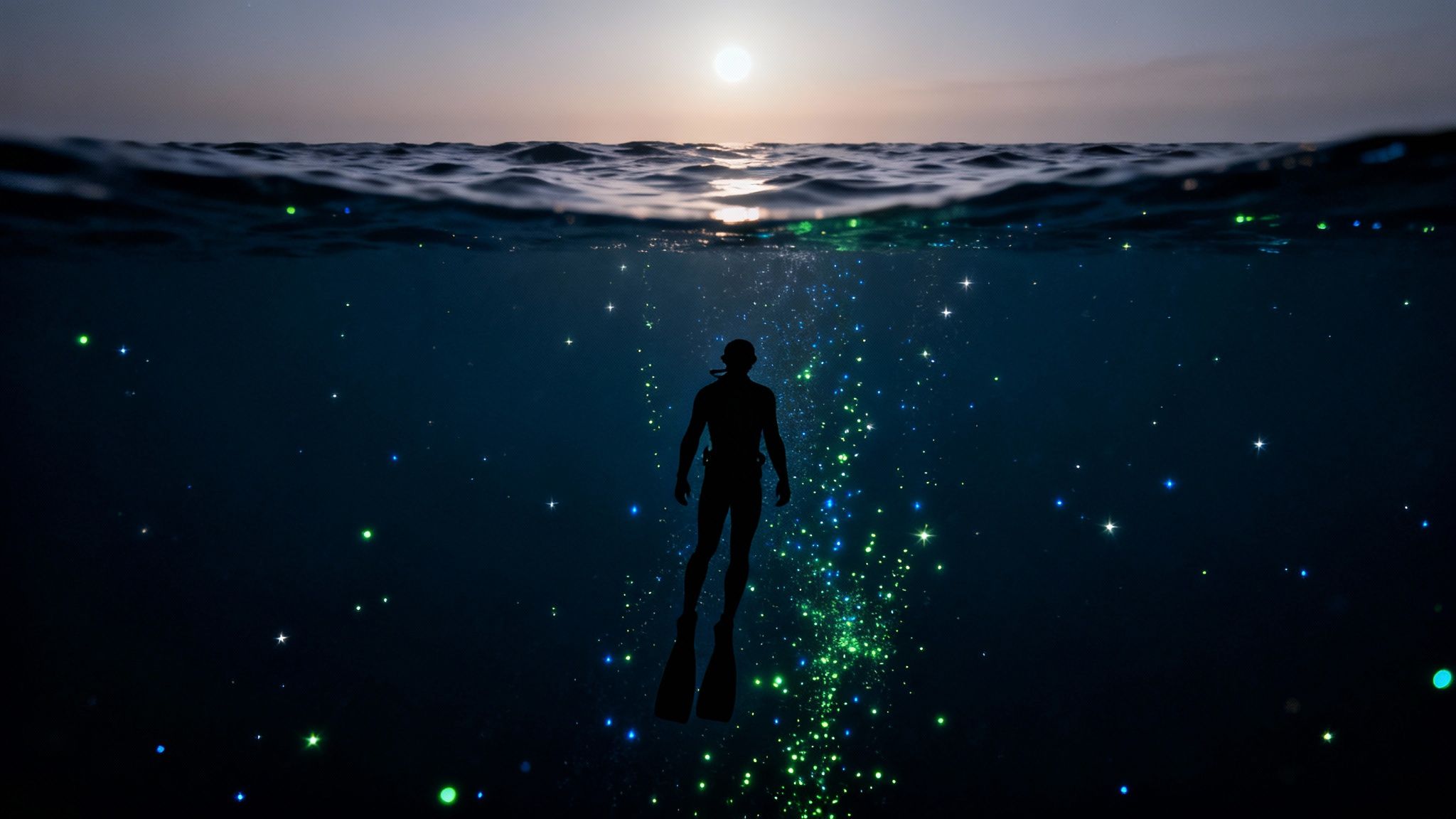
Picture this: you're floating in the vast, inky blackness of the open ocean, miles from shore, with thousands of feet of water separating you from the seafloor below. This is the Kona Blackwater Dive, and it’s hands-down one of the most surreal night dives on the planet.
This isn't like the manta dive where you wait for the action to come to you. Here, you become part of the action, drifting with the current to witness the largest nightly migration on Earth. Every single night, a universe of bizarre, otherworldly creatures rises from the abyss to feed near the surface. You'll see things that look like they're straight out of a sci-fi movie—glowing ctenophores, translucent larval fish, and pulsating, chain-like siphonophores. It honestly feels more like a spacewalk than a scuba dive.
For underwater photographers or anyone fascinated by the stranger side of marine biology, this dive is an absolute must. It will completely redefine your idea of what a night dive can be.
Ready for a trip into the void? You can get all the details on this unique experience over on the Blackwater Dive tour page.
Pushing the Limits on Advanced Dive Trips
The blackwater dive is just the beginning. Kona also has some truly challenging sites for experienced divers ready to handle more demanding conditions. These advanced dive tours head to remote spots that most charters can't reach, meaning deeper dives, stronger currents, and a real chance of spotting some incredible open-ocean animals.
These are the dives where you just might cross paths with:
- Scalloped Hammerheads: Seeing a school of these iconic sharks rise from the deep is a sight you'll never forget.
- Oceanic Whitetips and Tiger Sharks: While not a daily occurrence, encounters are possible out here in the blue.
- Whale Sharks: The ultimate prize. These gentle giants occasionally cruise the Kona coast, and these offshore sites are your best bet.
- Remote Pinnacles: We explore underwater mountains that act as magnets for marine life, attracting big schools of fish and the predators that hunt them.
These trips are for divers who are confident in their abilities and want to see something truly wild. Kona Honu Divers runs premium advanced dive tours that will get you to these exclusive sites for an adventure you won't find anywhere else.
The Nitrox Advantage: Extending Your Exploration
For any of these deeper or more involved dives, getting certified for Enriched Air Nitrox is a game-changer. Simply put, nitrox is just a breathing gas with a little more oxygen and a little less nitrogen than regular air.
So, what’s the big deal? By breathing less nitrogen, your body absorbs less of it, which allows you to safely extend your no-decompression limits. That translates directly into more bottom time—more time to explore a deep pinnacle or wait for that perfect shot of a hammerhead. As a bonus, many divers find they feel less tired after a day of diving on nitrox.
Kona Honu Divers provides free Nitrox for certified divers, making it easy to get the most out of every single dive.
Choosing the Right Dive Operator in Kona
Let's be honest, the dive shop you choose for your Big Island adventure will absolutely make or break your trip. A great operator doesn’t just shuttle you to a pin on a map. They’re the ones who can read the subtle cues of the ocean, know exactly where that elusive octopus likes to hide, and turn a pretty good dive into an unforgettable experience.
So, what’s the secret sauce? It really boils down to three things: small groups, genuinely experienced guides, and a rock-solid commitment to safety. Smaller groups mean you get more personalized attention underwater and we put less pressure on the fragile reef. And seasoned guides? They bring that priceless local knowledge, pointing out critters you’d swim right past and navigating Kona’s lava tubes like it’s their own backyard.
Why Kona Honu Divers Stands Out
This is where Kona Honu Divers really shines. They’ve built their entire reputation on amazing customer service, responsible, eco-friendly diving, and a true passion for Kona’s underwater world. It’s a formula that’s earned them literally thousands of five-star reviews from divers who have come from all over the globe to see what the hype is about.
You can see their dedication in the details—from their spacious, comfy dive boats designed for divers, to offering free Nitrox for anyone certified to use it. They don't just run tours; they curate incredible underwater adventures. For a more detailed breakdown of what separates the good from the great, check out this guide on how to choose a Kona dive shop.
Getting Certified in Paradise
If you've been thinking about getting certified or want to level up your skills, I can’t think of a better classroom than the warm, crystal-clear waters of Kona. Learning to dive here means your first breaths underwater will be surrounded by some of the most vibrant marine life on the planet. Talk about starting a lifelong passion on a high note!
Most top-tier operators offer a full slate of courses for any skill level.
- Discover Scuba Diving: Not certified? No problem. This is a one-day intro where an instructor shows you the ropes and then takes you on a real, shallow dive to experience the magic firsthand.
- Open Water Diver: This is the big one—your ticket to dive anywhere in the world. You’ll complete some online learning, practice skills in calm water, and then complete four amazing open water dives in the ocean.
- Advanced Open Water Diver: Already certified and ready for more? This course is all about expanding your skills. You’ll try out new things like deep diving and underwater navigation, all with a pro by your side.
When you get certified with a reputable shop, you're not just checking off skills. You're building a foundation of confidence and safe diving habits that will stay with you for the rest of your diving career.
Whether you're booking a few fun dives or taking your very first fin kicks toward certification, the right crew makes all the difference. The team at Kona Honu Divers is ready to show you the best the Big Island has to offer.
Planning Your Big Island Dive Vacation
Once you've got your incredible dives booked, a little bit of smart planning will make sure your Big Island dive trip goes off without a hitch. The great thing about Kona is just how consistent it is. The leeward coast serves up amazing diving conditions pretty much year-round.
Water temps are always comfortable, hovering around 75°F (24°C) in the winter and warming up to a balmy 81°F (27°C) in the summer. On top of that, visibility often stretches out past 100 feet. This means you can spend less energy trying to perfectly time your trip and more time getting ready for the adventure.
Your Essential Dive Trip Checklist
Packing for a dive trip isn't quite like packing for a regular beach vacation. Forgetting one small piece of gear can throw a wrench in your plans, so it pays to double-check your bags before heading to the airport.
Here’s a quick list of the absolute must-haves:
- Certification Cards: Don't leave home without them! Bring your primary cert card (Open Water, Advanced, etc.) and any specialty cards you have, like Nitrox. Having a digital copy on your phone is a fantastic backup.
- Dive Computer: This is non-negotiable safety equipment. Even if you plan on renting everything else, bringing your own computer that you're familiar with is always the best move.
- Reef-Safe Sunscreen: Hawaii is serious about protecting its incredible coral reefs and has banned sunscreens with oxybenzone and octinoxate. Do your part by choosing a mineral-based sunscreen.
- Logbook: Whether it's a trusty paper logbook or a digital app, you'll be glad you tracked your dives. It’s the best way to remember the cool sites you explored and all the amazing marine life you saw.
Staying Safe In and Out of the Water
Any good dive operator puts your safety first, but it's a team effort. Staying hydrated is one of the most important things you can do for yourself, as dehydration can significantly increase your risk of decompression sickness. Make sure you're drinking water all day long.
Another golden rule is to watch your time before you fly. The standard recommendation is to wait a minimum of 18 hours after your last dive before getting on a plane. Plan your diving schedule accordingly so your last day on the island is a "dry" one.
While diving is an incredibly safe sport when you follow the rules, it's normal to think about the risks. It helps to look at the data. An analysis of ocean recreation incidents in Hawaii from 2009–2018 found 206 snorkeling fatalities, compared to just 28 scuba-diving fatalities. This really shows that with professional guides and solid safety protocols, scuba has a fantastic safety record.
If you’re new to the sport and want to get a feel for it, you might want to look into introductory Discover Scuba Diving programs as a great first step.
Your Big Island Diving Questions, Answered
Got a few questions before you book? You're not alone. Here are the answers to some of the things we get asked most often, so you can finalize your plans and get ready to hit the water.
What’s the Best Time of Year to Dive in Kona?
The simple answer? Anytime! The Kona coast is a fantastic year-round dive destination. Because we're on the leeward (protected) side of the island, we don't get hammered by the major winds, which means our water stays consistently calm and clear.
You can expect water temps to hover around a comfortable 75°F (24°C) in the cooler months and warm up to a balmy 81°F (27°C) in the summer. While the humpback whales make a special appearance from December to March, all our famous residents—turtles, dolphins, and of course, the manta rays—are here to greet you 365 days a year.
Do I Have to Be Certified to Scuba Dive?
For any of our boat dives, yes, you'll need to have your scuba certification. But if you’ve never dived before and are just curious, you’re in the right place! We offer a Discover Scuba Diving program designed for complete beginners.
It’s a fantastic one-day experience where you learn some basic skills in the water with an instructor and then go on a real, shallow dive under their expert guidance. It's the perfect way to see if you love it without committing to the full certification course.
What Should I Pack for My Dive Trip?
Aside from your usual Hawaiian vacation gear, there are a few dive-specific items you won't want to forget.
- Dive Essentials: Your certification card (a digital copy on your phone works great!) and your logbook.
- Personal Gear: If you have your own mask, fins, or dive computer that you love, definitely bring them along. Otherwise, we have top-notch rental gear available.
- Island Comforts: Pack reef-safe sunscreen (this is a must to protect our coral), a reusable water bottle, sunglasses, a hat, and a light jacket for the boat ride home. It can get a little breezy once the sun starts to set.
How Far Ahead Should I Book My Dives?
I can't stress this enough: book as far in advance as you can, especially if you're visiting during the busy winter or summer months. Our most popular trips, like the Manta Ray Night Dive, often sell out weeks ahead of schedule.
Booking early just takes the stress out of it. You’ll lock in your spot on the boat, get the dates that fit your vacation schedule, and can spend less time planning and more time looking forward to the adventure.
Ready to see Hawaii's incredible underwater world for yourself? The team here at Kona Honu Divers lives and breathes this stuff, and we can't wait to show you around. Whether you're a seasoned pro or just starting out, we've got a trip for you. Take a look at our full lineup of Kona diving tours and book your adventure today.