
Picture this: you descend into the quiet, deep blue, and a dramatic volcanic landscape materializes below. That's what it’s like to scuba dive on the Big Island. This isn't just another dive spot; it's a world forged by fire and teeming with life, and frankly, it's the best diving in all of Hawaii.
What Makes Big Island Scuba Diving So Special?

The Big Island’s reputation as a world-class diving destination is no accident. It’s a direct result of its unique geology and the vibrant ecosystems that thrive here. The Kona coast, in particular, is sheltered from the big ocean swells, which means the water stays incredibly calm and clear nearly all year long.
This natural protection creates some of the best underwater visibility you'll find anywhere. It’s common for visibility to push past 100 feet, giving you the feeling of flying over underwater canyons, through ancient lava tubes, and across endless coral gardens. To top it off, the water stays a comfortable 75°F to 80°F, so you can leave the thick wetsuit behind and just enjoy the show.
You'll Meet Some Amazing Locals Underwater
The volcanic terrain is the stage, but the marine life are the real stars. The Big Island is a sanctuary for some of Hawaii's most incredible creatures.
- Hawaiian Green Sea Turtles ('Honu'): You’ll see these gentle giants everywhere, either gliding effortlessly through the water or relaxing on the reef at a "cleaning station."
- Majestic Manta Rays: The island is world-famous for its nighttime manta ray dives. Swimming with these graceful giants is an experience that stays with you forever.
- Endemic Fish Species: The reefs are a riot of color, full of fish you simply won't find anywhere else on the planet.
A great way to appreciate what makes this place so special is by visiting one of the signature dive sites. Take Turtle Pinnacle, for example. It’s a bustling cleaning station where Hawaiian green sea turtles—we call them ‘honu’—line up to get tidied up by smaller fish. These sites are usually at mellow depths, between 30 and 60 feet, making them perfect for divers of all levels to see this amazing natural behavior up close. You can read more about what makes Big Island diving so addictive and unique.
Here at Kona Honu Divers, we live and breathe this underwater world. Our experienced team knows these waters like the back of their hand, and our goal is to share this paradise with you safely and responsibly, making every single trip an adventure to remember.
Ready to see it for yourself? Check out our range of diving tours designed for everyone from beginners to seasoned pros.
Choosing Your Ideal Big Island Dive Adventure
The Big Island serves up a dizzying array of underwater adventures, each with its own special kind of magic. From gentle giants performing a silent ballet to mysterious creatures rising from the abyss, figuring out your ideal Big Island scuba diving experience is half the fun.
Let's walk through the options to find the perfect dive for you.
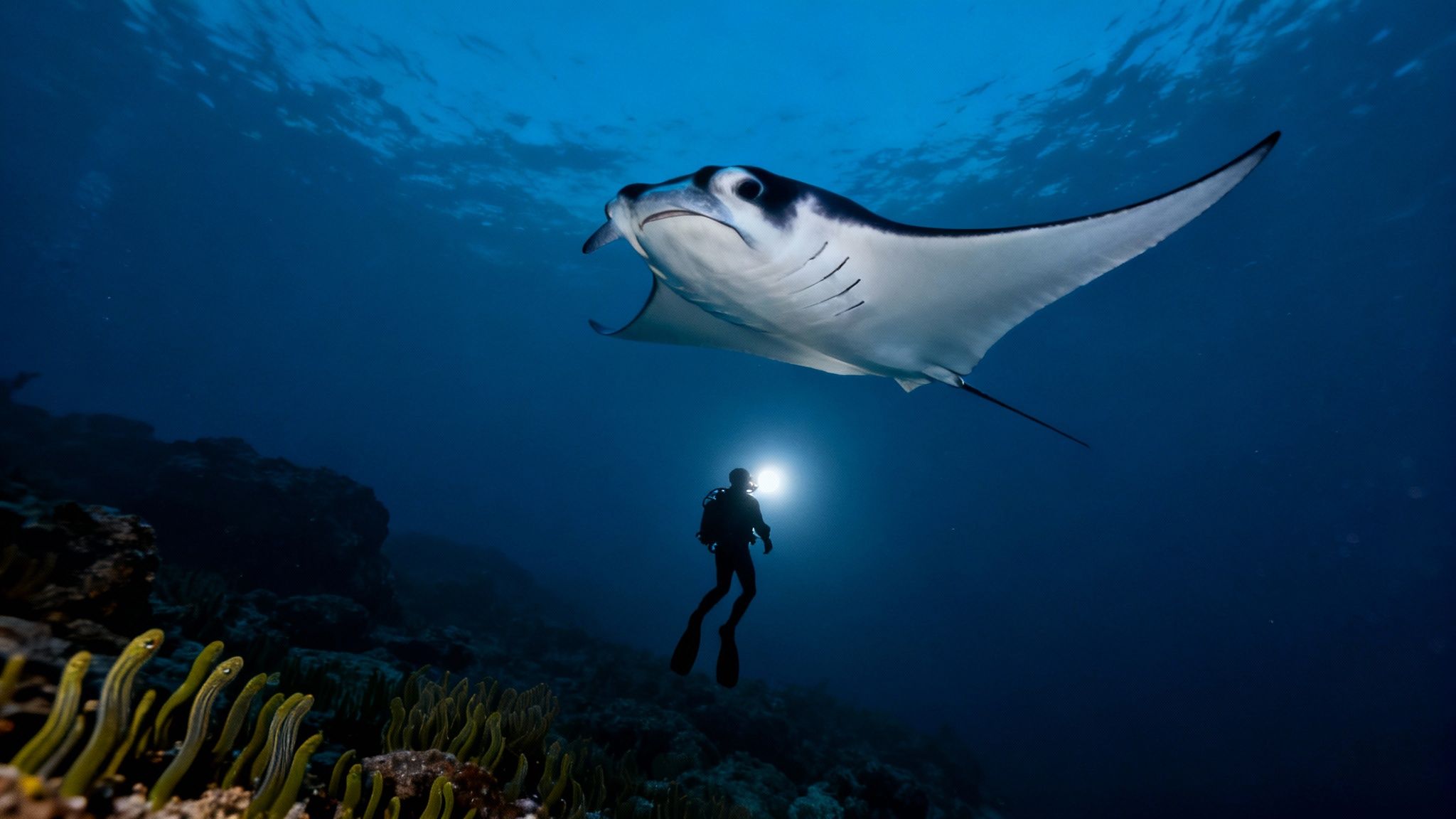
The World-Famous Manta Ray Night Dive
For most visitors, the journey begins and ends with Kona’s legendary Manta Ray Night Dive. This isn't just another dive; it's a true bucket-list spectacle that has put Kona on the map as one of the most incredible underwater encounters on the entire planet.
Here’s how it works: as the sun dips below the horizon, we submerge powerful lights that attract clouds of plankton. It doesn’t take long for the stars of the show to arrive. Giant manta rays, with wingspans stretching up to 15 feet, glide into the light to feed, performing effortless barrel rolls just inches from your mask.
It’s a surreal, humbling, and utterly unforgettable experience.
Why Garden Eel Cove is the Premier Manta Dive Site
While a couple of spots host the manta dive, we're convinced that Garden Eel Cove is the superior choice. This site, aptly nicknamed Manta Heaven, consistently delivers a more spectacular and intimate show for a few key reasons.
- A Protected Location: The cove is naturally sheltered from wind and swell, which means conditions are typically calmer and more predictable. That makes for a much more comfortable and enjoyable dive.
- A Better Viewing Area: The ocean floor at Garden Eel Cove creates a natural amphitheater. Divers can settle onto the sandy bottom, giving everyone a clear, unobstructed view as the mantas perform above.
- Healthier Reefs: The surrounding coral is vibrant and full of life. This healthier ecosystem supports a more robust food chain, which in turn attracts a greater number of mantas for a more dynamic and impressive show.
The Manta Ray Night Dive is a must-do, and we believe Garden Eel Cove provides the most spectacular and responsible encounter. Learn more and book your spot on our Manta Ray Dive Tour page.
The Enigmatic Kona Blackwater Dive
For the truly adventurous at heart, the Kona Blackwater Dive is a journey into the great unknown. Picture this: you're drifting in the dark, thousands of feet above the ocean floor, tethered to the boat. Your dive lights cut through the inky blackness, revealing a world of bizarre and beautiful creatures that rise from the depths every single night.
You’re essentially diving into the planet's largest migration. You'll come face-to-face with bioluminescent jellies, translucent larval fish, and otherworldly critters you won’t see anywhere else. Divers often describe it as floating through outer space—it’s a macro-photographer's dream and easily one of the most unique dives you will ever do.
Because this is an advanced dive in the open ocean at night, it requires a higher skill level and a very calm demeanor. It's an experience reserved for those comfortable pushing their boundaries. For a truly unique and otherworldly adventure, dare to explore the deep with our Kona Blackwater Dive.
Customized Adventures with Private Charters
Sometimes, the best adventure is the one you design yourself. A private charter gives you the ultimate in flexibility and personalized service. It’s perfect for families, photographers, or groups of experienced divers who want to explore specific sites on their own terms.
With a private boat, you call the shots. Want to spend extra time at a turtle cleaning station or search for a specific reef shark? A private charter makes it happen. This is the ideal option for anyone wanting a more intimate experience away from the crowds.
For seasoned divers looking for a challenge, our Advanced Dive Tour uses this charter format to explore deeper sites and more complex underwater terrain.
Comparing Popular Big Island Dive Tours
To help you decide, here’s a quick breakdown of the Big Island’s most popular scuba experiences.
| Dive Tour | Best For | Typical Depth | Key Marine Life | Skill Level |
|---|---|---|---|---|
| Manta Ray Night Dive | Unforgettable, up-close encounters | 30-40 ft | Giant Manta Rays, Eels, Jacks | All Levels (certified) |
| Kona Blackwater Dive | Adventurous divers, photographers | 40-50 ft | Pelagic Larval Creatures, Jellies | Advanced Only |
| Private/Advanced Charter | Groups, photographers, specific goals | Variable | Turtles, Sharks, Eels, Endemic Fish | Varies by Charter |
Each of these dives offers a completely different window into the underwater world of Kona. Whether you want a guaranteed spectacle, a journey into the abyss, or a day tailored just for you, the Big Island has an adventure waiting.
Exploring Top Dive Sites Along the Kona Coast

While the Manta Ray Night Dive and the Blackwater Dive get a lot of the spotlight, they're just two highlights of the incredible diving available every single day along the Kona coast. The ancient volcanic activity here didn't just shape the island; it created an underwater wonderland. This is your primer for planning the ultimate Big Island scuba diving trip.
Diving here feels like you're swimming through geologic history. You’ll glide over dramatic arches, peer into mysterious caverns, and explore massive reef systems, all sculpted by ancient lava flows. Every dive site tells a story, offering a unique glimpse into the island’s fiery past and its vibrant, living present.
If you’re planning on diving for a few days, knowing the different sites helps you understand the sheer variety we can show you. At Kona Honu Divers, we're constantly monitoring the conditions to pick the best spots for the day, making sure every single dive is as safe and spectacular as possible.
Turtle Pinnacle: A Bustling Cleaning Station
One of our most requested and beloved sites is Turtle Pinnacle. It's a fantastic real-world example of symbiosis. This isn’t just another pretty reef; it’s an active “cleaning station” where Hawaiian Green Sea Turtles, or ‘Honu,’ queue up for a little pampering.
You can watch as small reef fish, mostly Yellow Tangs, diligently peck away algae from the turtles' shells. It's an incredible behavior to witness up close. The site is also relatively shallow, usually between 30 and 60 feet, which makes it a comfortable and beautiful dive for all experience levels. It’s a photographer’s dream.
Crescent Beach: Dramatic Arches and Eagle Rays
If you love dramatic underwater landscapes, Crescent Beach is the spot for you. Also known as Kua Bay, this site is famous for its stunning lava rock arches and swim-throughs that form a sort of underwater cathedral.
Weaving through these formations is an absolute thrill. Sunlight streams through the openings, creating ethereal rays of light that dance in the crystal-clear water. But it’s not just about the rock formations. Crescent Beach is a fantastic place to spot Spotted Eagle Rays gliding elegantly through the blue. You never know when one might cruise by.
The sheer variety of dive sites along the Kona coast is what makes it a world-class destination. From shallow turtle havens to deep lava tubes, there's always something new to discover just a short boat ride away.
Golden Arches and Garden Eel Cove: Daytime Gems
Two other must-see sites really show off the health and beauty of Kona's reefs. Golden Arches gets its name from a large, picturesque archway, but it’s also known for its vibrant coral gardens. This is where you can find enormous, shimmering schools of Milletseed Butterflyfish.
Garden Eel Cove, the same site as our famous manta dive, is an equally amazing experience during the day. Its healthy finger coral reefs are a haven for countless fish species, moray eels, and octopuses. And yes, you’ll see the shy garden eels the site is named for, poking out of the sand and swaying in the current.
Each of these spots offers something completely different, from unique animal encounters to breathtaking geology. We've put together a more detailed guide to the incredible places we can take you. You can explore our complete list of Kona dive sites to get a better feel for the adventures waiting for you here.
Becoming a Certified Diver in Paradise
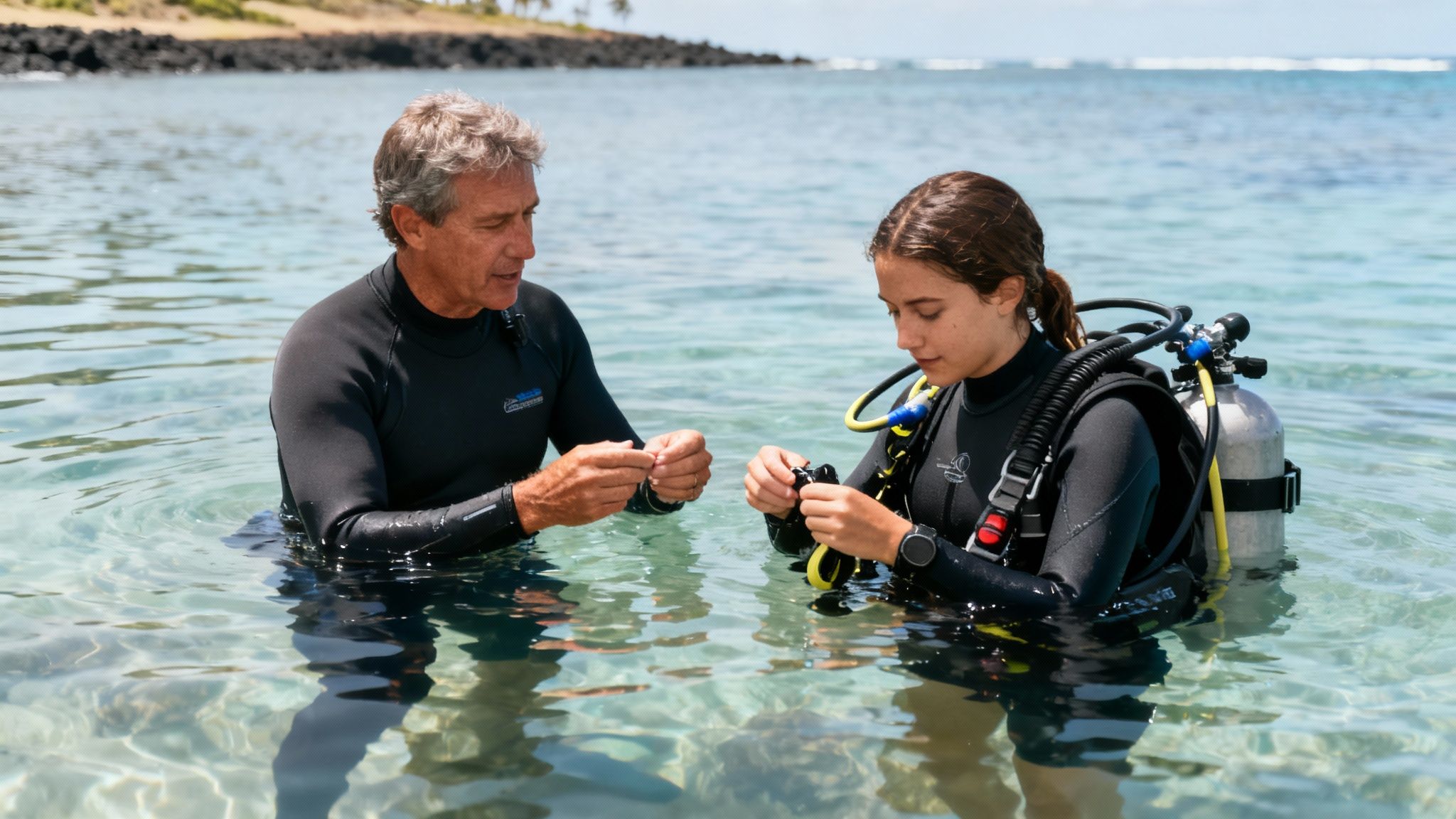
Can you imagine a better classroom than the warm, crystal-clear waters of the Kona coast? If you've ever dreamed of breathing underwater, getting certified while on vacation can turn a great trip into a lifelong passion. The conditions here are perfect for learning—calm seas, incredible visibility, and a vibrant underwater world that makes every training session feel like an adventure.
Starting your Big Island scuba diving certification is an unforgettable journey. Our professional, safety-focused instructors help you build skills and confidence in an environment that’s more playground than school. Forget cold swimming pools; your training dives will have you exploring real coral reefs alongside sea turtles and schools of tropical fish.
Your First Breath Underwater
Not quite ready to commit to a full course? The PADI Discover Scuba Diving experience is the perfect test run. It isn't a certification, but a closely supervised one-day adventure designed to let you try scuba diving in a calm, shallow reef environment.
You’ll cover the absolute basics—how to use the gear and breathe underwater—before an instructor guides you on a real dive. It's the best way to see if diving is for you without a major time commitment. Fair warning, though: most people get hooked right away and sign up for the full certification!
The Full PADI Open Water Certification
Ready to become a certified diver for life? The PADI Open Water Diver course is your passport to exploring the underwater world anywhere you go. It’s the planet's most popular and widely recognized scuba certification, and earning it here in Kona is something you’ll never forget.
The course usually takes about three days. It's a blend of theory (which you can do online before your trip), skill-building in a calm bay, and four amazing open-water dives on actual coral reefs.
- Knowledge Development: Learn the essential principles and safety concepts of scuba diving.
- Confined Water Dives: Practice your core scuba skills in shallow, protected water until you're comfortable.
- Open Water Dives: Put everything into practice as you explore the ocean under the watchful eye of your instructor.
Once you’ve completed the course, you'll be a certified diver, qualified to dive down to 60 feet with a buddy. To get the full breakdown, check out the details of our PADI Open Water certification course.
Taking Your Skills to the Next Level
Your diving education doesn't have to stop once you're certified. In fact, that's just the beginning! Kona is an ideal place to advance your training. The PADI Advanced Open Water Diver course builds on your foundation and introduces you to new adventures like deep diving and underwater navigation.
You can also dive deeper into your personal interests with specialty courses. Sharpen your skills with Peak Performance Buoyancy, learn the art of Underwater Photography, or get certified to dive with Enriched Air Nitrox for longer bottom times. Each course makes you a safer, more capable diver, opening up even more of the underwater world to explore.
The Pioneers Who Put Kona Diving on the Map
The world-class Big Island scuba diving scene we know and love didn't just appear out of thin air. It was built piece by piece by a handful of passionate divers who saw the magic hiding just beneath the waves and decided to share it with the world. Knowing their story adds a whole new layer to every dive, connecting you to a legacy of pure exploration.
The real turning point for diving in Kona came in the late 1960s and early 1970s. This was when training organizations like PADI and SSI started creating standardized certification courses, making the sport much safer and more approachable for everyday people. Suddenly, scuba wasn't just for a few hardcore adventurers; it was for everyone. And Hawaii was sitting right there, ready to become a premier destination.
The Visionaries of the Volcanic Coast
This newfound accessibility lit a fire under local exploration. The first dive operators began meticulously charting the Kona coast's underwater world, discovering the incredible lava tubes, vibrant reefs, and unique animal encounters that make the area so famous. They’re the ones who originally mapped out many of the dive sites we cherish today, laying the foundation for the thriving community we have now.
You can't talk about the history of diving on the Big Island without mentioning Jack Clothier. He opened Jack's Diving Locker in 1981, a small shop that would become an absolute legend in the diving world. Before Jack's, diving in Hawai'i was mostly a local affair, but his operation was one of the first to really put the island on the global map.
Tragically, Jack passed away only eight months after opening his doors. But his vision was kept alive by Jeff and Teri Leicher, who took the helm and built the shop into a world-renowned dive hub. You can dive deeper into the history of Kona's dive scene on Oceanographic Magazine. Their work, alongside others, mirrored the scuba boom happening across the country and cemented the Big Island’s reputation as a must-visit spot for divers.
A Legacy That Lives on Today
That same adventurous spirit from the early days is still very much alive in Kona’s professional dive community. Shops like Jack's Diving Locker are still pillars of the industry here, upholding that original commitment to safety, exploration, and a deep respect for the ocean. Their decades of experience have helped create the professional, responsible diving culture that every visitor gets to enjoy.
So, the next time you drop into Kona's crystal-clear water, remember you’re becoming part of that rich history. You're following in the wake of the visionaries who turned this rugged volcanic coastline into one of the most beloved diving destinations on Earth.
Essential Safety Tips for Hawaii Divers
The waters off the Big Island are stunningly beautiful, but they're also powerful. To make sure every dive is a great one, safety has to be your top priority. Following the right protocols isn't just about protecting yourself; it's about being a good steward of the incredible marine world you've come to see.
Good diving habits start long before you hit the water. Always, always do a full pre-dive safety check on your gear and your buddy's. And listen up during the dive briefing! Your divemaster is giving you the latest, most critical info about the site, from currents to what you might encounter. Paying close attention is non-negotiable.
Respecting the Underwater Environment
Once you're down there, your job is simple: be a quiet, respectful observer. I can't stress this enough—mastering neutral buoyancy is probably the single most important skill you can develop as a diver. It lets you float effortlessly, preventing you from accidentally bumping into fragile coral that can take decades to grow back after just one touch.
This hands-off approach applies to all marine life, too.
- Never Touch Marine Animals: It's tempting, I know, but you must resist the urge to touch sea turtles, manta rays, or anything else. Touching them can strip off their protective slime coat, which is like their immune system, leaving them wide open to infection.
- Maintain a Safe Distance: Give the animals their space. Chasing or cornering them causes a lot of stress and disrupts their natural behavior. Let them come to you.
- Secure Your Gear: Make sure your gauges and alternate air source are clipped in and not dangling. A dragging console can tear up the reef without you even noticing.
Following these simple rules helps keep this underwater paradise pristine for everyone who comes after us.
Understanding the Risks and Making Safe Choices
Diving is an incredibly safe sport when you do it right, but it’s helpful to understand the broader context of water safety here in Hawaii. It's an interesting and sobering fact that professionally guided scuba diving has a much stronger safety record than some other popular ocean activities.
Between 2009 and 2018, there were a shocking 189 snorkeling-related fatalities among tourists in Hawaii. That number was 10 times higher than for residents. By contrast, scuba diving accounted for only 28 fatalities in that same decade, a statistic that really speaks to the effectiveness of professional training and oversight. You can dig into more of this data on Hawaii's water safety statistics on Divernet.
The takeaway here is pretty clear: diving with a reputable, professional outfit like Kona Honu Divers dramatically reduces your risk. Our crew lives and breathes safety, managing every single detail so you can focus on the amazing experience.
Planning Your Post-Dive Travel
Finally, let's talk about what happens after the dive. A huge part of dive safety is planning your travel schedule correctly. Your body absorbs nitrogen under pressure, so you absolutely have to wait a certain amount of time before getting on a plane. Rushing to the airport can put you at serious risk for decompression sickness. We've got a whole guide that explains exactly why you can't fly right after diving.
By being a prepared, mindful, and respectful diver, you help maintain the culture of safety that keeps Big Island scuba diving a world-class adventure for all of us.
Your Big Island Scuba Questions Answered
Got questions about diving on the Big Island? You're not alone. Planning a dive trip, especially somewhere new, always brings up a few things—from the best time of year to visit to what gear you should lug across the ocean.
We get these questions all the time, so we've put together some straight-to-the-point answers to help you plan your underwater adventure with confidence.
What Is the Best Time of Year for Big Island Scuba Diving?
Honestly, any time is a good time to dive in Kona! We're incredibly lucky to have amazing conditions year-round, so there's really no "off-season." The water is always warm and inviting, staying in a comfortable range of 75°F to 80°F (24°C-27°C) no matter the month.
Visibility is another huge plus, often clearing 100 feet, giving you those crystal-clear views of our dramatic lava formations and vibrant reefs. While the summer tends to bring the flattest, calmest seas, the winter months (December through March) have their own special magic. It's during this time you can often hear the haunting songs of humpback whales echoing through the water on your dives—an unforgettable experience.
Do I Need to Be an Advanced Diver to See the Best Sites?
Not at all! One of the greatest things about diving here is that so many of our world-class sites are accessible to divers of all levels.
Many of Kona's most iconic spots, including the legendary Manta Ray Night Dive and beautiful reefs like Turtle Pinnacle, are in relatively shallow water, typically between 30 and 60 feet. This makes them perfect for Open Water certified divers. While we definitely have deeper, more challenging sites for the advanced crowd, you won't miss out on incredible scenery and marine life if you're a newer diver.
What Kind of Marine Life Can I Expect to See?
Get ready for an incredible show. The waters off the Big Island are teeming with life, and you're almost guaranteed to spot Hawaiian Green Sea Turtles (Honu) on any given dive, either gliding gracefully past or just relaxing on the reef.
Our reefs are packed with colorful fish you'll only find here, like bright Yellow Tangs, all sorts of Butterflyfish, and Hawaii's state fish, the Humuhumunukunukuāpuaʻa (try saying that three times fast!). You'll find moray eels peeking out from lava-rock crevices and, depending on the day, you might get lucky with a visit from playful Spinner Dolphins, elegant Eagle Rays, or even a few White Tip Reef Sharks.
And of course, there are the true stars of the show: the majestic Manta Rays on the night dive and the bizarre, otherworldly creatures you'll meet on a Blackwater Dive.
Should I Bring My Own Scuba Gear or Rent It?
This really comes down to what works best for you. If you prefer to travel light, you can rent everything you need right here. At Kona Honu Divers, we have a full lineup of high-quality, meticulously maintained BCDs, regulators, wetsuits, masks, and fins.
Choosing to rent is a super convenient, hassle-free option. Keep in mind that the price of our diving tours already includes tanks and weights.
That said, if you love your own gear and are comfortable with it, by all means, bring it along! Just let us know what you'll need when you book, and we'll make sure everything is squared away for your dives.