
Picture this: you're sinking slowly into calm, impossibly clear blue water. Sunlight dances down from the surface, illuminating ancient lava tubes and lighting up a coral reef that's buzzing with life. That’s the magic of Big Island scuba diving. It’s an experience that perfectly marries Hawaii's dramatic volcanic past with a breathtaking display of marine life, making the Kona coast a bucket-list destination for divers everywhere.
Why the Big Island Is a Diver’s Paradise

The Big Island isn’t just another pretty spot to go for a swim; it's a world-renowned hub for underwater adventure. The island's very geography creates some of the best diving conditions on the planet. The colossal volcanoes, Mauna Loa and Hualalai, stand as massive shields, protecting the Kona coast from the gusty trade winds that batter other parts of Hawaii.
This natural protection means the water is almost always calm and clear. It’s the perfect classroom for a brand-new diver getting certified and a thrilling playground for a seasoned pro ready to explore intricate underwater terrain.
Unrivaled Visibility and Volcanic Landscapes
One of the first things you'll notice about Kona diving is the mind-blowing visibility. It’s not uncommon for it to exceed 100 feet, which feels more like flying than swimming as you glide over the submerged world below.
But what really sets it apart is the landscape itself, shaped by raw volcanic power. Instead of just sand and coral, you’re diving through the direct results of ancient lava flows. This creates truly unique and dynamic dive sites you simply won’t find anywhere else on Earth.
You can expect to explore:
- Lava Tubes and Arches: Imagine swimming through huge, hollowed-out caverns and under graceful arches that were once rivers of molten rock.
- Pinnacles and Canyons: These dramatic vertical structures shoot up from the seafloor, creating underwater cliffs and valleys to navigate.
- Vibrant Coral Reefs: The solid volcanic rock provides the perfect anchor for some of Hawaii’s most lush and healthy coral gardens.
These geological wonders are more than just a pretty backdrop; they form complex habitats that support an incredible diversity of marine animals.
A Hub for Marine Biodiversity
The Big Island’s isolation in the middle of the Pacific has turned it into a magnet for marine life. The island hosts an estimated 100,000 certified scuba dives every year, a number that speaks for itself. Divers come from all over for the chance of reliable encounters with amazing creatures, from the iconic Hawaiian green sea turtle (honu) to the elegant and otherworldly manta ray.
With over 150,000 dive tourists visiting annually, the island has solidified its place as a top-tier destination. This reputation is upheld by local operators who know these waters like the back of their hand. Companies like Kona Honu Divers have perfected the art of leading safe, respectful, and unforgettable underwater diving tours.
Their expertise is your key to unlocking the very best of a Big Island scuba diving adventure. To truly understand the hype, you can learn more about what makes the Big Island so good for scuba diving and see why it’s a cut above the rest.
Exploring Kona’s Must-See Underwater Sites
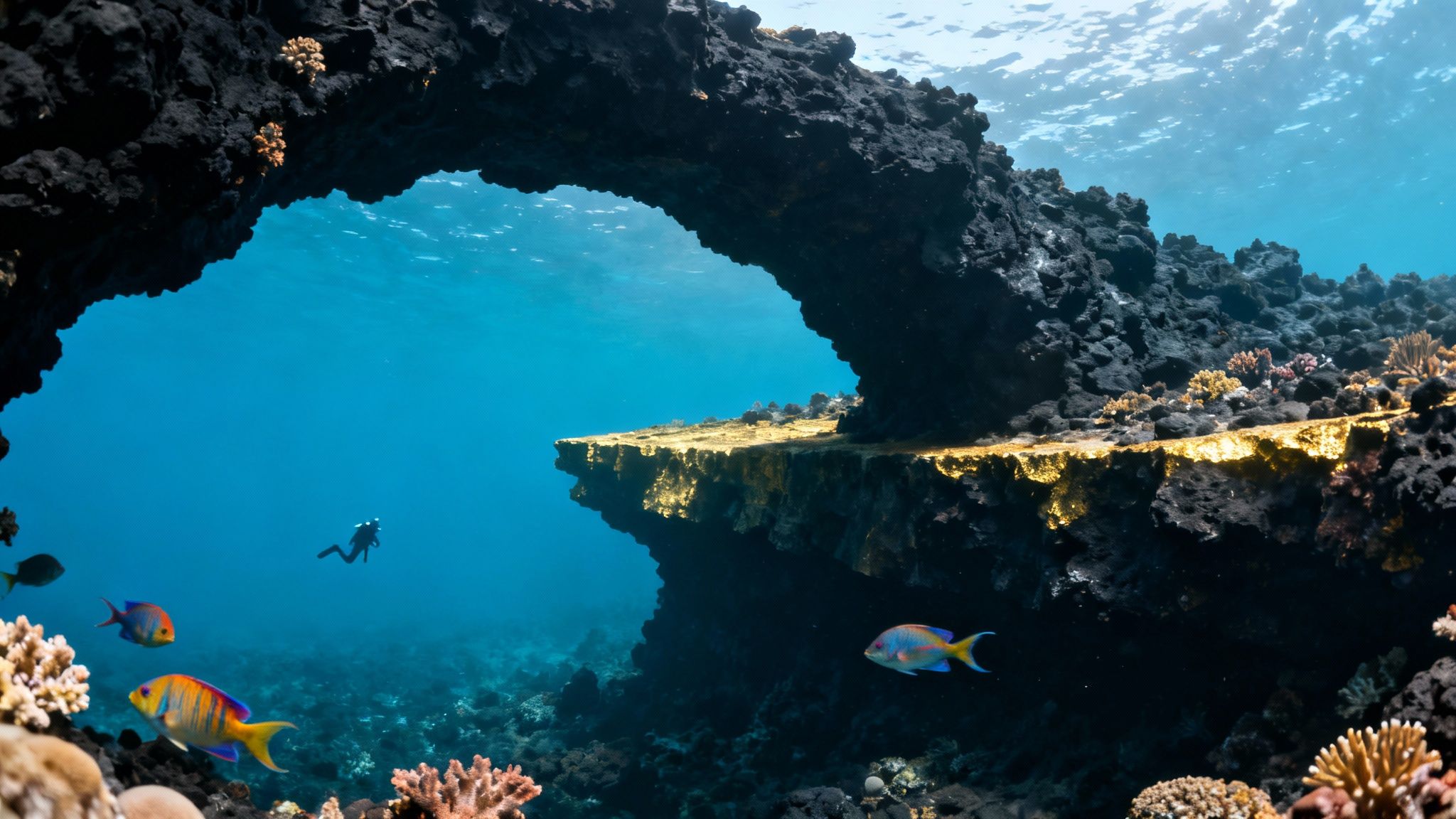
The Kona coast is basically an underwater treasure map, with each spot telling its own unique story. This is where the raw, creative power of volcanoes slammed right into the delicate beauty of the ocean, leaving behind an incredible playground of submerged landscapes for us to explore. Heading out with a local pro isn't just about safety—it’s about getting the inside scoop and unlocking the hidden secrets each site holds.
A guided Big Island scuba diving trip is the difference between just looking at a reef and actually understanding it. A good guide will point out the shy octopus you would have missed or navigate you through the most stunning lava formations. If you want a sneak peek at the adventures waiting for you, check out this detailed guide to Kona's top dive sites.
Dive Sites for Every Skill Level
Whether you’re about to take your first breath underwater or you’ve got hundreds of dives in your logbook, Kona has a site with your name on it. The sheer variety is what makes this place so special, with amazing spots just a quick boat ride from shore.
For new divers or anyone just wanting a super chill day, sites like Crescent Beach are perfect. It’s tucked away from the open ocean, so the conditions are calm and the depths are shallow. It’s the ideal spot to build confidence while swimming through clouds of colorful reef fish—think of it as a natural aquarium.
On the other hand, if you're an experienced diver looking for a bit more of a thrill, Kona delivers. More advanced sites often have stronger currents, which act like a magnet for bigger, more diverse marine life, making for an electrifying and dynamic advanced dive tour.
Dramatic Volcanic Topography
What really makes Kona diving stand out is the mind-blowing volcanic structure. You’re not just swimming over sand here; you’re exploring the aftermath of incredible geological events.
- Golden Arches: This is the quintessential Kona volcanic site, famous for its massive lava arches you can actually swim through. When the sunlight filters through the top, it creates this ethereal, cathedral-like vibe that photographers go crazy for.
- Lava Tubes and Caverns: So many sites are riddled with intricate networks of lava tubes. Slipping into these dark, hollowed-out passages feels like exploring another planet, and you’ll often find unique critters hiding out in the shadows.
- Pinnacles and Ledges: In other spots, the seafloor just plummets into the deep blue, creating these dramatic walls and ledges. This is where you have a better chance of spotting eagle rays, sharks, and other big pelagic animals cruising by in the distance.
The underwater geology of the Kona coast provides a solid, complex foundation for coral growth. This is why the reefs here are some of the most vibrant and healthy in the entire state, supporting an incredible density of marine life.
The Marine Life You Will Encounter
As cool as the lava formations are, it’s the local residents that completely steal the show. Because the Kona coast is so protected, a ridiculously rich and diverse ecosystem has been able to thrive here.
On pretty much any dive, you’ve got a great shot at seeing Hawaiian green sea turtles, or honu, either chilling on the reef or gliding past. You’ll spot moray eels peeking out from their rocky homes, octopuses doing their master-of-disguise thing against the volcanic rock, and huge schools of butterflyfish and yellow tang moving like colorful clouds. And always keep an eye out for spinner dolphins—they often travel in big pods and might just swing by to check out the divers.
Exploring these must-see underwater sites is what Big Island scuba diving is all about. Every single spot offers a new chapter in the story of Hawaii's fiery origins and its beautifully vibrant marine life.
Ready to explore these incredible underwater landscapes? The best way to experience Kona's top dive sites is with a professional guide who knows the local conditions and marine life.
Experiencing the Kona Manta Ray Night Dive
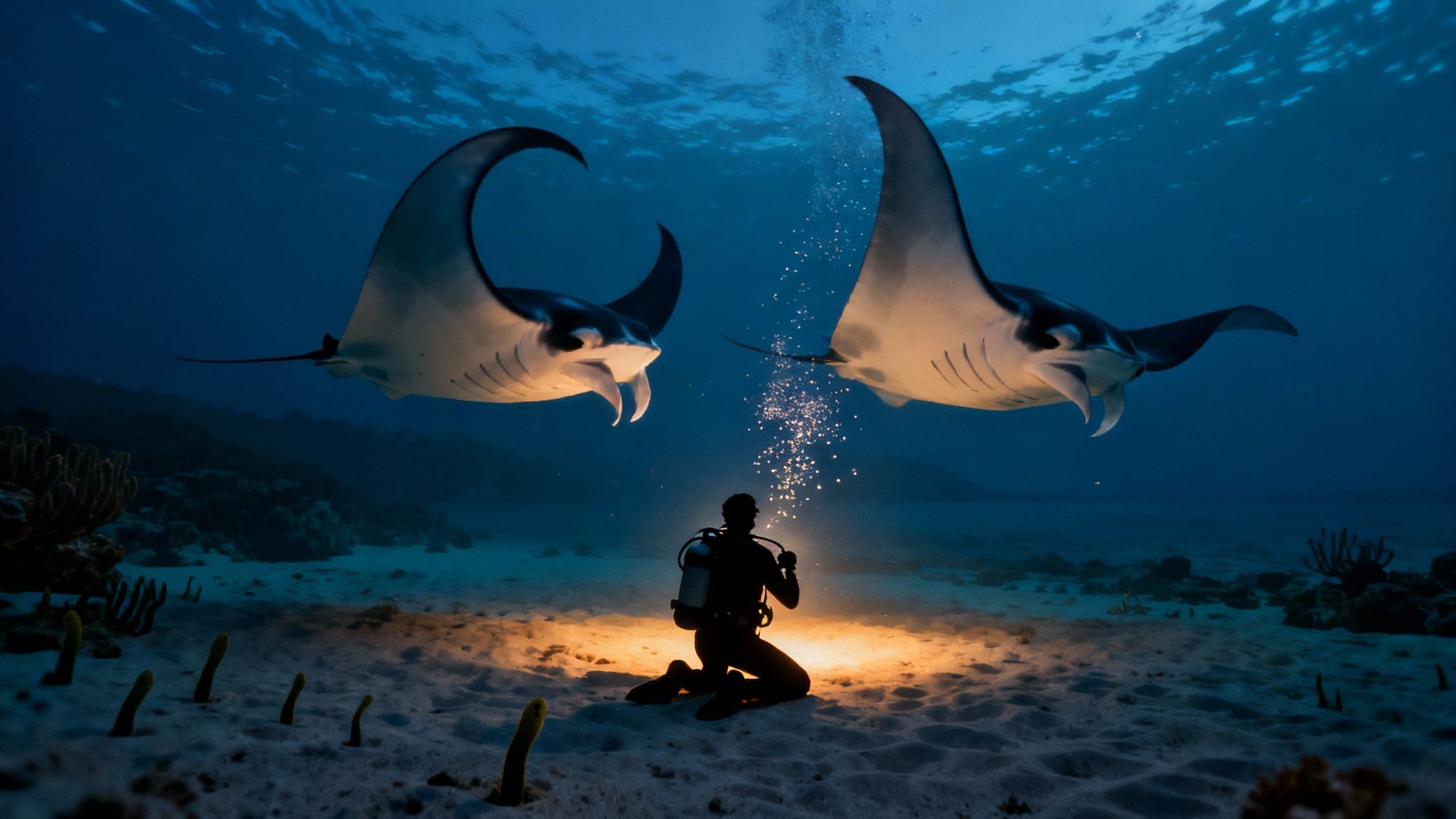
Some dives are beautiful, some are thrilling, but the Kona Manta Ray Night Dive is pure magic. It’s less of a dive and more of an underwater ballet—a world-famous spectacle that has become the absolute must-do for anyone planning a Big Island scuba diving trip.
Picture this: you’re kneeling on a sandy ocean floor in the dark. Suddenly, graceful giants with wingspans up to 16 feet appear, performing breathtaking barrel rolls just inches from your face. It's a surreal and humbling experience.
The concept is brilliantly simple. Powerful lights are set up on the ocean floor, pointing straight up. These light beams attract massive clouds of plankton, the manta rays' favorite meal. The mantas swoop in for a nighttime buffet, and you get a front-row seat to one of nature's most mesmerizing shows. You're not just watching from a distance; you're completely immersed in their world as they glide and dance through the light.
Why Garden Eel Cove Is The Premier Location
You'll see a couple of different locations offered for this dive, but trust us, Garden Eel Cove is the superior choice. It consistently delivers a safer, more comfortable, and more reliable encounter for a few key reasons.
First off, it’s tucked inside a protected bay. This means the water is almost always calm, which drastically reduces the chances of your once-in-a-lifetime trip getting canceled because of rough seas. This protected location creates a much better viewing area. At Garden Eel Cove, operators have set up a "campfire" where divers kneel in a circle around the lights on the sand. It’s a stable, organized setup that’s safe for both divers and the mantas. At other, more exposed sites, you might have to cling to rocks to fight the surge—which is not only uncomfortable but can also damage the fragile reef.
A Healthier Environment for a Better Dive
The calmer water is a huge plus, but the vibrant ecosystem and better reefs around Garden Eel Cove are what truly set it apart. The best manta ray dive tours, like the ones offered by Kona Honu Divers, are two-tank trips. The first dive is a beautiful reef tour at dusk. You get to watch the whole ecosystem come alive as day turns into night, which is a fantastic dive all on its own. It adds incredible value to the entire evening.
Choosing a top-notch operator that dives at Garden Eel Cove doesn't just mean a better, safer experience for you. It also supports the long-term well-being of the mantas and helps preserve this incredible marine environment.
Manta Ray Dive Site Comparison
To help you decide, let's break down the key differences between the main manta ray night dive spots on the Kona coast.
| Feature | Garden Eel Cove (Recommended) | Other Locations |
|---|---|---|
| Conditions | Calm & protected bay | Exposed to open ocean surge |
| Diver Position | Comfortable, sandy "campfire" bottom | Holding onto rocks; less stable |
| Trip Reliability | Very low cancellation rate | Higher chance of cancellation due to surf |
| Reef Health | Vibrant, healthy coral for the first dive | Reef quality can be less pristine |
| Overall Value | Often a 2-tank dive with a reef tour | May be a single-tank trip |
As you can see, Garden Eel Cove really is the superior choice for a predictable and truly awe-inspiring encounter.
Making the most of this bucket-list dive means going with a crew that puts safety and conservation first. Kona Honu Divers has earned its reputation with thousands of five-star reviews for a reason—their approach is professional, eco-conscious, and always respectful of these gentle giants.
Ultimately, the Kona Manta Ray Night Dive is an essential part of any Big Island scuba diving adventure. By choosing the right location and a responsible operator, you're set for an experience that's not just spectacular, but sustainable too. To get a closer look at this unique adventure, you can learn more about the Kona Manta Ray Night Dive and start planning an evening you'll never forget.
Unique Adventures for Experienced Divers
Sure, the vibrant reefs and graceful manta encounters are incredible. But for some of us, diving is about pushing boundaries and peeking into entirely different underwater worlds. If you've got your advanced certifications and a thirst for something more, a Big Island scuba diving trip can deliver excursions that go way beyond a standard reef tour.
These aren't your average dives. They demand rock-solid buoyancy, a cool head, and comfort in challenging conditions like open water or overhead environments. But for divers who are up for it, the payoff is a profound sense of discovery and a story you’ll be telling for years. The two most talked-about advanced dives in Kona are the surreal Pelagic Magic® Blackwater Dive and charters to deep, current-swept sites.
The Kona Blackwater Dive: An Otherworldly Experience
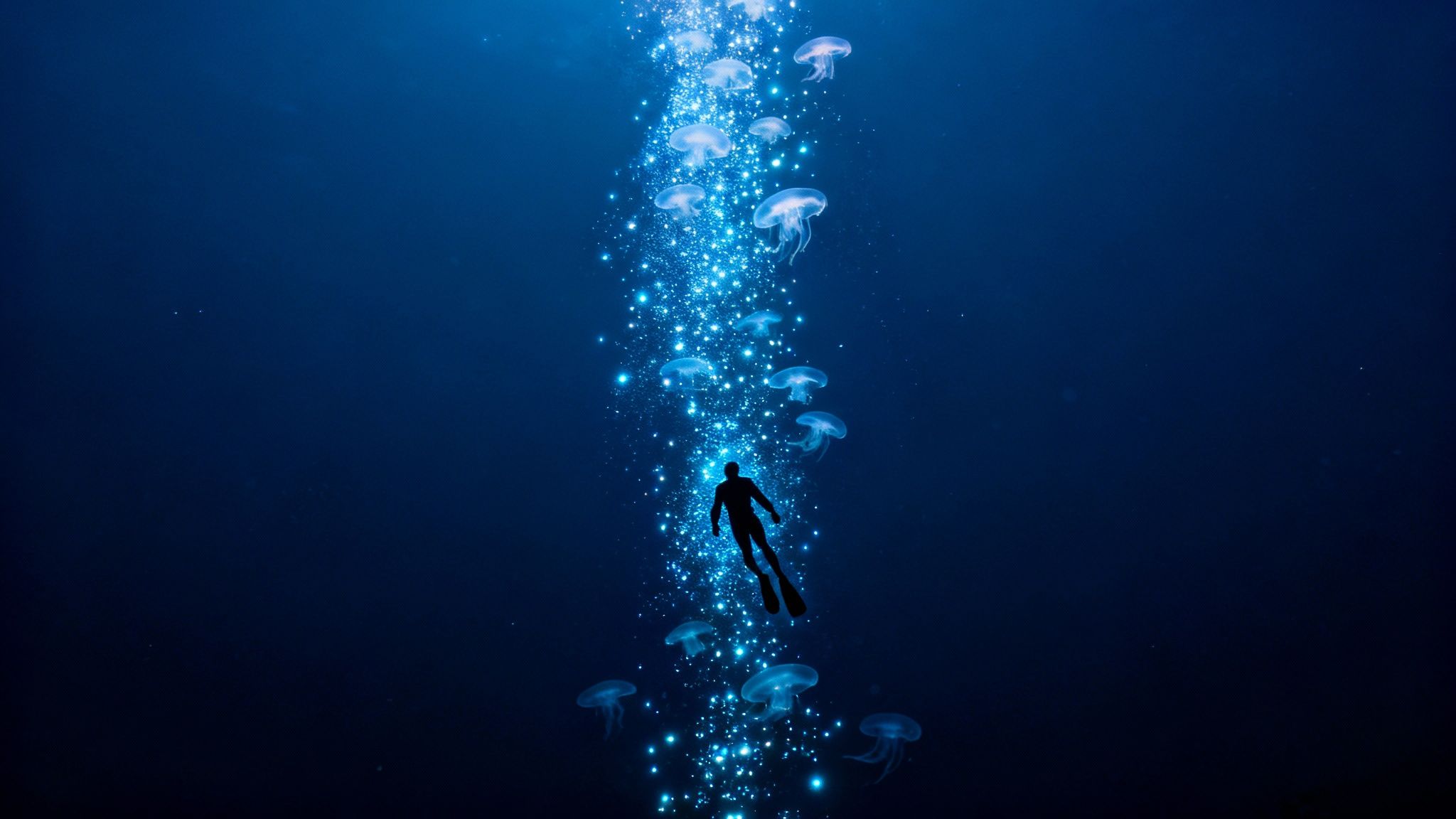
Picture this: you’re drifting in the pitch-black open ocean, miles from shore. The only thing connecting you to the world is a tether dropping into a 4,000-foot abyss below. This isn't a normal dive; it's the Kona Blackwater Dive, and it feels more like a spacewalk through inner space.
You're dropping right into the middle of the largest migration on Earth, where countless deep-water creatures swim toward the surface under the cover of night to feed. What you’ll see is stuff straight out of a sci-fi film.
- Larval Creatures: You’ll see the baby versions of familiar reef fish, but they look like tiny, transparent aliens.
- Bioluminescent Organisms: Jellies and siphonophores pulse with their own light, creating a living galaxy all around you.
- Deep-Sea Inhabitants: Get a rare glimpse of bizarre squids, pelagic seahorses, and other oddities on their nightly commute.
This dive is a serious test of your skills and composure, but the reward is an experience that is both humbling and absolutely unforgettable. It's a rare kind of adventure that very few places on the planet can offer.
The Kona Blackwater Dive is a highly specialized activity. It requires an expert crew that knows the open ocean inside and out. Going with a top-notch operator like Kona Honu Divers, famous for their safety standards, is non-negotiable for an excursion like this.
For those who chase these kinds of truly exceptional underwater moments, you might also be drawn to unique dive adventures in the Galapagos Islands.
Advanced Charters to Deeper Realms
Beyond the blackwater, experienced divers can hop on advanced charters that explore Kona's wilder side. These trips head to deeper sites, often more exposed to currents, with complex underwater terrain that will put your skills to the test. These demanding conditions are precisely what attracts bigger and more impressive marine life.
On these charters, you might explore:
- Intricate Lava Tube Systems: Navigate through ancient lava tubes that form incredible swim-throughs and overhead environments.
- Deep Volcanic Ledges: Drop down to ledges and drop-offs where you have a better shot at spotting sharks, eagle rays, and other pelagics.
- Current-Swept Pinnacles: Dive on offshore seamounts where strong currents bring in a buffet of nutrients, attracting huge schools of fish and the predators that hunt them.
These dives are perfect for certified divers ready to see what lies beyond the usual spots. It’s the raw, untamed side of Big Island scuba diving, where no two dives are ever the same.
If you're an experienced diver looking for a new challenge, an Advanced Dive Tour is your ticket to the next level. And for the ultimate thrill, the Kona Blackwater Dive is an unforgettable journey into the ocean's deepest mysteries.
How to Plan Your Ultimate Dive Vacation
A truly epic Big Island scuba diving trip is no accident. It’s born from a bit of smart planning upfront that pays off in a huge way, letting you spend less time worrying about logistics and more time soaking in that incredible underwater world. A few key decisions—from when you visit to who you dive with—will absolutely make or break your adventure.
Think of it as setting the stage. By aligning your own hopes for the trip with what the island delivers throughout the year, you’re guaranteeing you’ll be in the right place at the right time.
Choosing the Best Time to Visit
While you can have an amazing dive here any day of the year, some seasons definitely have their perks. The water is always inviting, hovering between a comfortable 75°F (24°C) in the winter and a downright balmy 80°F (27°C) in the summer.
- Summer (June-August): This is when you'll typically find the calmest, glassiest seas and the warmest water. It's an ideal time for pretty much everyone, but especially for new divers or anyone who just loves those smooth boat rides.
- Winter (December-March): The water might be a degree or two cooler, but winter offers something truly awe-inspiring: humpback whales. They migrate here every year to breed and give birth, and hearing their songs echo through the water during a dive is a powerful, unforgettable experience. It adds a whole other layer of magic to the trip.
Honestly, there’s no "bad" time for Big Island scuba diving. But if you have the chance to line up your visit with the whale season, it can turn a great vacation into the trip of a lifetime.
Selecting the Right Dive Operator
This is, without a doubt, the most important decision you'll make. A great dive operator does more than just drive the boat; they shape your entire experience with their expertise, commitment to safety, and genuine love for the ocean. As you research your options, here's what to zero in on.
A top-tier dive company gets one thing right above all else: small group sizes. It’s the difference between feeling like just another number and feeling like a valued guest. You get more personal attention, a less crowded boat, and a much more relaxed, intimate vibe underwater.
Look for operators that really deliver on:
- An Impeccable Safety Record: This is non-negotiable. Stick with established companies that have a proven history of safe operations and professional, well-rehearsed emergency plans.
- Comfortable, Well-Maintained Boats: You’ll spend a fair amount of time on the boat between dives. Little things like hot showers, plenty of shade, and an easy way to get in and out of the water make a world of difference to your overall enjoyment.
- A Commitment to Conservation: The best operators are stewards of the reef. They lead by example, promoting responsible diving practices like good buoyancy control and respecting marine life, helping to protect these beautiful sites for years to come.
- Stellar Reviews: See what fellow divers have to say. When a company like Kona Honu Divers has thousands of five-star reviews, it’s for a reason. That kind of consistent praise speaks volumes about their dedication to a safe, fun, and memorable customer experience.
Packing Your Dive Gear
It’s the classic diver’s dilemma: bring your own gear or rent on-site? The good news is that Kona has fantastic rental gear available, but nothing beats the comfort and confidence of using your own familiar equipment.
If you’re packing your own, the essentials are your mask, fins, snorkel, regulator, BCD, and dive computer. For Kona's water temps, a 3mm or 5mm wetsuit is perfect. Pro tip: even if you plan to rent the big stuff, I always recommend bringing your own mask and dive computer. A perfect fit and familiarity with your computer are huge for comfort and safety.
And don’t forget the non-dive essentials! Reef-safe sunscreen is a must, as is a reusable water bottle to stay hydrated. A little forethought here means you'll have everything you need for a smooth and incredible vacation.
Once you’ve got your dates picked out, locking in your spot with a top-rated, safety-focused dive operator is the next critical step. Take some time to explore the amazing variety of world-class diving tours they offer to find the perfect adventure for you.
Practicing Safe and Responsible Diving
The ocean is a wild, beautiful place, but it doesn't play games. It demands respect. Every single amazing dive you'll have on the Big Island boils down to two things: safety and conservation. Thinking about these isn't just a box-ticking exercise; it makes you a better diver and a guardian of the incredible world you’ve come to see.
This mindset starts well before your fins touch the water. It’s about running through your pre-dive checks meticulously, making sure every piece of your gear is in perfect working order. It’s also about being honest with yourself—know your limits and stick to them. If you’re tired, feeling off, or dehydrated, it’s not the day to push it. These little habits are what make for a lifetime of safe diving.
Why Professional Guidance Is Essential
Even though the Kona coast is famous for its calm, clear waters, the ocean can change in a heartbeat. That's why the single most important decision you can make is to dive with a professional, certified dive operator. These folks live and breathe these waters. They know the local weather patterns, the currents, and the hidden quirks of each dive site like the back of their hand.
The stats from Hawaii tell a sobering story. Between 2009 and 2018, there were 206 snorkeling-related deaths, and a shocking 189 of those were visitors. In that same timeframe, scuba diving saw 28 fatalities. Why the huge difference? It often comes down to the rigorous training, strict safety rules, and direct professional supervision that's built into scuba diving. It’s a stark reminder that even in calm-looking water, being in an unfamiliar environment has real risks. You can read more about these important Hawaiian water safety findings for a deeper look.
Your Role as a Marine Steward
Beyond looking out for yourself, you have a responsibility to protect the very ecosystem you're there to enjoy. The coral reefs are incredibly fragile, and your actions underwater have a real impact. It’s all about leaving the reef just as you found it, or even better.
Being a good steward of the ocean comes down to a few simple, but critical, habits:
- Perfect Your Buoyancy: This is your number one job. Learn to float effortlessly, like an astronaut in space, so you never accidentally bump, kick, or break the delicate coral structures below you.
- Look, Don't Touch: It’s tempting, but never touch, chase, or harass marine life. You’re a visitor in their home. Observing from a respectful distance lets them go about their business without stress.
- Choose Reef-Safe Sunscreen: Standard sunscreens often contain chemicals like oxybenzone that are poison to coral reefs. Always use a mineral-based, reef-safe formula before you get on the boat.
- Secure Your Gear: Make sure your gauges and alternate air source are clipped securely to your BCD. Nothing should be dangling or dragging behind you that could snag on the reef.
By making these practices second nature, you become part of the solution. Every responsible dive helps ensure that the magic of a Big Island scuba diving adventure will be here for future generations to experience.
Your Kona Diving Questions, Answered
Planning a scuba trip to the Big Island always brings up a few questions, whether you've logged a thousand dives or are just getting your fins wet. Getting these details sorted out beforehand is the key to a smooth, incredible vacation. Here are the answers to some of the most common things divers ask when gearing up for Kona.
Do I Have to Be Certified to Scuba Dive?
For almost any boat dive, yes, you'll need a scuba certification. But if you're not certified yet, don't worry—you can still experience Kona's underwater magic.
Look for a "Discover Scuba Diving" program. Great shops like Kona Honu Divers offer these introductory experiences, where an instructor guides you on a shallow, calm reef dive. It’s the perfect, low-pressure way to see if diving is for you. In fact, many people fall in love with it here and end up getting their full Open Water Diver certification in Kona’s amazing conditions.
What Kind of Marine Life Will I See?
The Kona coast is absolutely buzzing with life. On a typical dive, you can pretty much count on seeing Hawaiian green sea turtles (honu), different kinds of moray eels peeking out from rocks, and maybe even an octopus (tako) trying its best to blend in. The reefs are electric with colorful butterflyfish, parrotfish, and huge schools of yellow tang.
Keep your eyes peeled for spinner dolphins, eagle rays, and whitetip reef sharks cruising by. And if you’re here in the winter, you might just hear the haunting songs of humpback whales echoing through the water—an unforgettable experience. Of course, the real headliners are the manta rays, and a Manta Ray Night Dive guarantees you a front-row seat.
How Warm Is the Water?
You're in for a treat. Kona's water temperature is fantastic year-round, hovering between a comfortable 75°F (24°C) in the winter and a balmy 80°F (27°C) in the summer.
Most divers find a 3mm or 5mm full wetsuit is all they need to stay warm on a standard two-tank dive. For night dives, especially the manta dive where you’re not moving much, I'd strongly recommend a 5mm suit. That little bit of extra insulation makes a huge difference and keeps you focused on the show. Don't worry about packing one; the local shops all have quality rentals perfect for the conditions.
Ready to take the plunge? For a world-class experience exploring Kona’s underwater paradise with the pros, book your adventure with Kona Honu Divers.