
Welcome to the ultimate guide for Big Island scuba diving—an adventure that drops you right into one of the most vibrant underwater worlds on the planet. The Kona coast, in particular, is legendary among divers, a place where ancient volcanic landscapes slide into crystal-clear waters, creating a bucket-list destination for everyone from first-timers to seasoned pros.
Why Kona is a World-Class Diving Destination
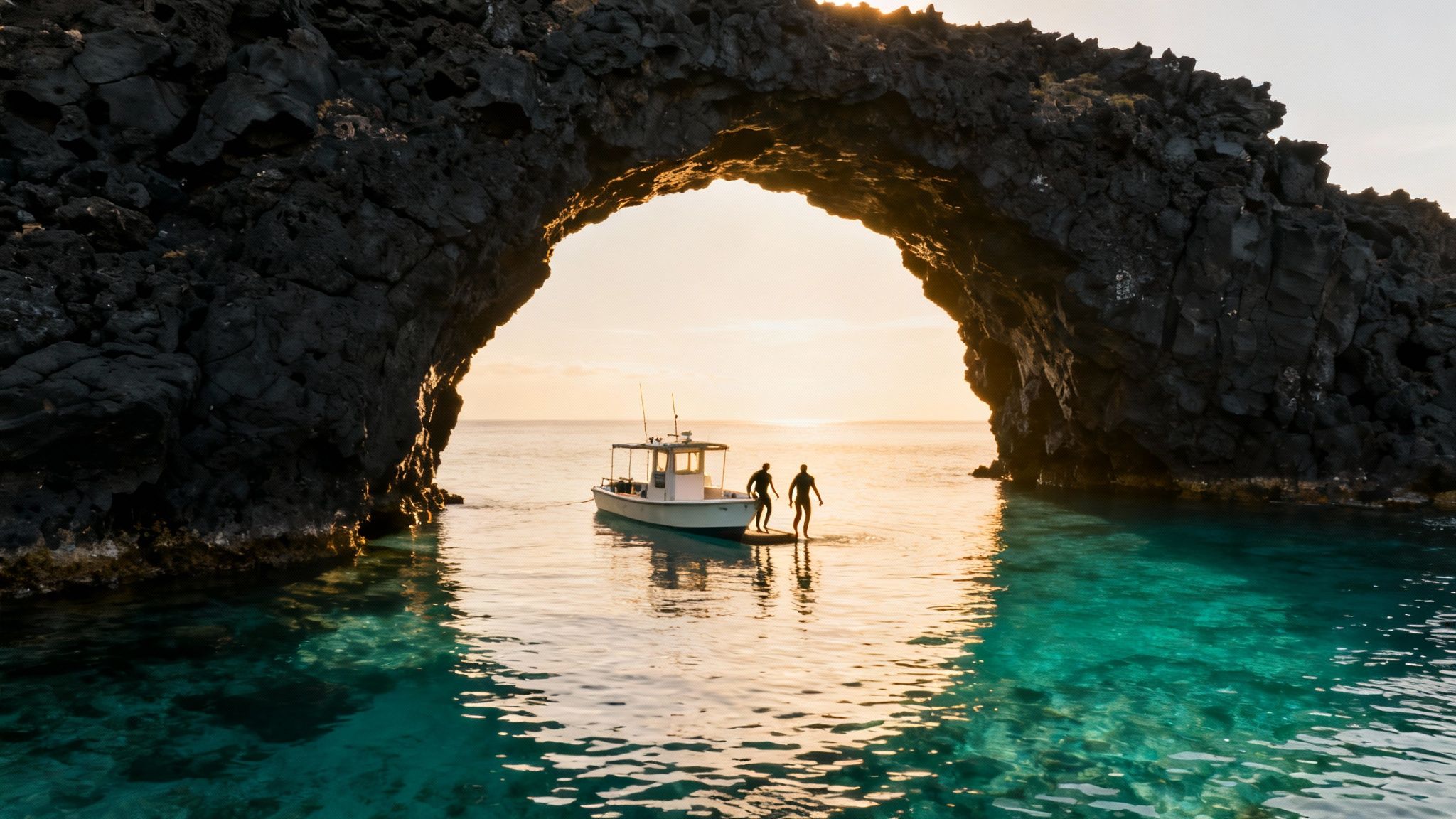
So, what makes Kona so special? It's not just another pretty spot in the tropics. The magic is in the island's unique geology. The massive volcanoes, Mauna Loa and Hualālai, stand as natural shields, protecting the western coast from the buffeting trade winds.
This natural barrier creates exceptionally calm and clear waters all year long, with visibility often stretching beyond 100 feet. It’s like diving in a giant, perfectly maintained aquarium.
Down below, the island's volcanic past is on full display. Ancient lava flows have sculpted a dramatic underwater playground full of arches, caverns, and intricate lava tubes just waiting to be explored. These formations are the ideal foundation for a thriving marine ecosystem, sheltering vibrant coral gardens and the countless critters that call them home.
A Sanctuary for Diverse Marine Life
Kona’s waters are absolutely brimming with life. On any given dive, you'll find yourself swimming alongside honu (Hawaiian green sea turtles), schools of brightly colored endemic fish you can't see anywhere else on Earth, and so much more. It’s the kind of place where every dive log entry is completely different from the last.
This rich biodiversity is the headliner for Kona’s most famous underwater shows. The Manta Ray Night Dive is a surreal, beautiful ballet where these gentle giants swoop in to feed on plankton. For the truly adventurous, the Kona Blackwater Dive is a peek into another dimension, revealing bizarre, bioluminescent creatures rising from the deep. These aren't just dives; they're experiences that will stick with you forever.
The island’s reputation as a diving mecca has grown steadily since the 1960s. Today, the Big Island welcomes over 150,000 dive tourists annually, who log around 100,000 certified dives each year—a huge testament to its incredible pull. Learn more about the history of Big Island diving here.
Of course, safely experiencing these wonders means choosing the right guide. A top-rated operator like Kona Honu Divers makes sure every trip is unforgettable, with experienced crews who know these waters like the back of their hand.
To get your planning started, here's a quick look at the must-do diving adventures on the Big Island and what makes each one so unique.
Big Island's Top Dive Experiences at a Glance
| Dive Experience | Best For | Key Marine Life |
|---|---|---|
| Morning Reef Dives | All skill levels, photographers | Turtles, reef sharks, eels, endemic fish |
| Manta Ray Night Dive | All certified divers, bucket-listers | Giant manta rays, planktonic organisms |
| Blackwater Night Dive | Experienced divers, thrill-seekers | Bioluminescent creatures, larval fish |
| Advanced Charter | Certified advanced divers | Pelagic species, unique topography |
Whether you're looking for a relaxed morning exploring the reefs or a once-in-a-lifetime night adventure, Kona has you covered. Explore our full range of diving tours to find the perfect underwater journey for you.
Exploring Kona’s Most Popular Dive Sites
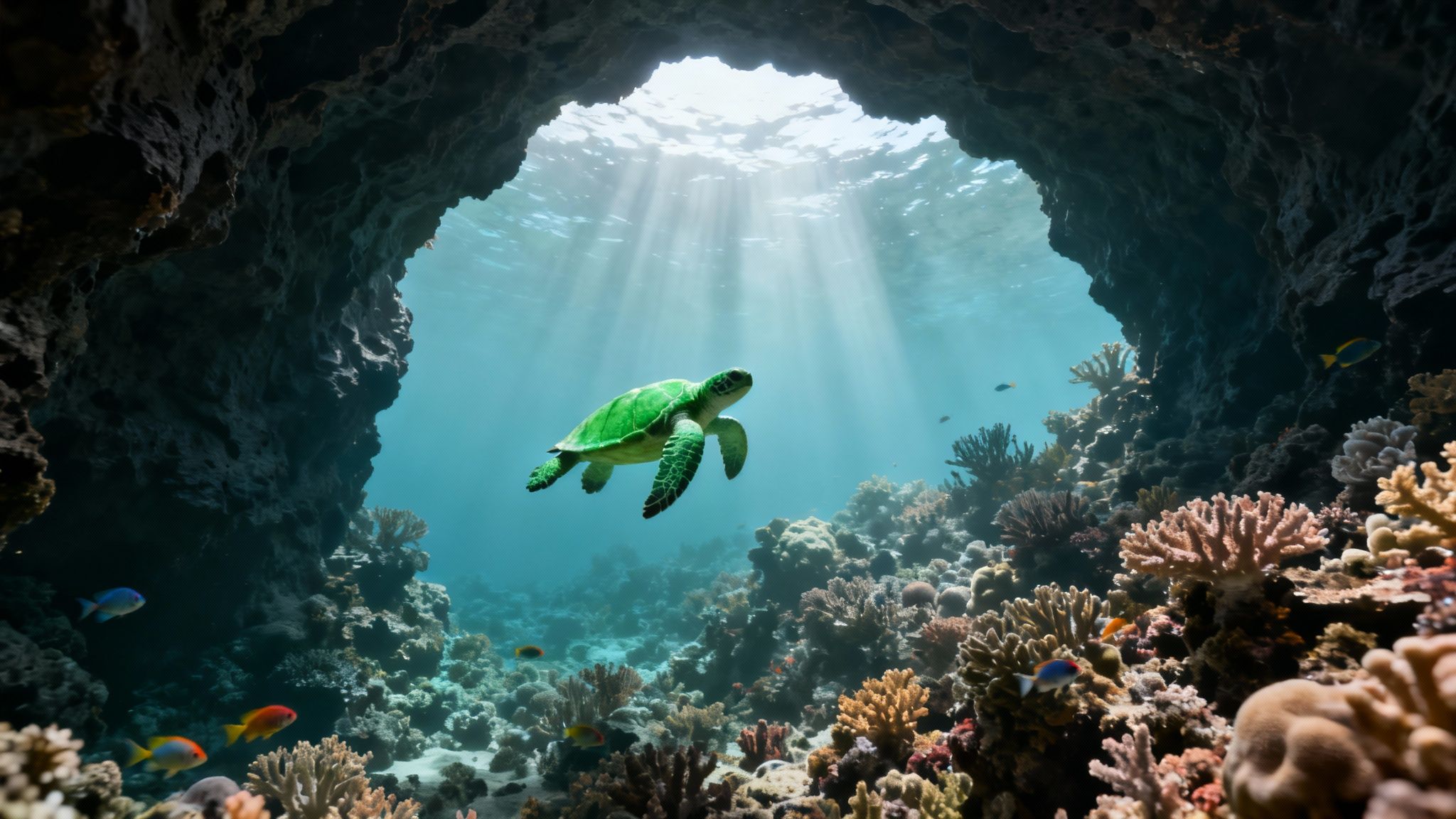
If you're a diver, the Kona coast is basically a treasure map. Every spot on it leads to a different kind of underwater gold, and there’s something for everyone, whether you’re just getting your fins wet or you’ve logged hundreds of dives. These aren't just pins on a map; they're living, breathing worlds shaped by ancient volcanoes.
Imagine dropping into a maze of dramatic lava tubes, massive archways, and vibrant coral gardens that seem to go on forever. The Big Island's volcanic origins created an underwater playground you won't find anywhere else on Earth. That’s the real heart of Big Island scuba diving—exploring a landscape that feels both primal and bursting with life.
This is where having a great guide, like the folks at Kona Honu Divers, makes all the difference. They know these sites like the back of their hand—where that elusive frogfish likes to hide, which cleaning station the turtles prefer, and how the currents are behaving today. That insider knowledge is what turns a good dive into an unforgettable one.
Must-Visit Dive Sites in Kona
While we have dozens of amazing spots, a few places consistently make every diver's "must-do" list. Each one tells a different story about the island's geology and the incredible animals that call it home.
- Crescent Bay (Nai'a): We call this one "Spinner Dolphin Bay" for a reason. This big, sheltered cove is a favorite resting spot for pods of spinner dolphins. While they're best enjoyed from the boat during your surface interval, seeing them is always a highlight. Underwater, the site's sandy bottom and finger corals are home to shy garden eels.
- Golden Arches: Just like the name suggests, the star of the show here is a massive lava rock archway covered in brilliant gold and orange cup corals. Swimming through it is a classic Kona experience and an incredible photo op. Keep an eye out for whitetip reef sharks napping on the sandy floor below.
- Turtle Pinnacle: This spot is a perfect example of a "cleaning station." You’ll see Hawaiian green sea turtles (honu) lining up for their turn, hovering patiently while smaller fish like the Hawaiian cleaner wrasse swim around them, picking off algae. It’s a front-row seat to one of nature's coolest partnerships.
Of course, this is just a small sample. Our crews on the morning and afternoon charters are pros at reading the daily conditions to pick the absolute best sites for the day, ensuring you have a safe and spectacular dive, every time.
The Marine Life You'll Encounter
The real magic of diving in Kona is meeting the locals. Because the Hawaiian islands are so isolated, a huge number of our marine species are endemic—you literally can't find them anywhere else on the planet.
A dive in Kona is like opening a living textbook of marine biology. You're not just seeing fish; you're witnessing unique evolutionary stories unfold in a protected, pristine environment. It’s a privilege every diver cherishes.
Besides the beloved honu, you'll meet a whole cast of characters. Look for moray eels, from the intimidating dragon moray to the patterned yellowmargin, peeking out from their rocky dens. Harmless whitetip reef sharks are a common sight, usually just chilling on the sand. The reefs themselves are a riot of color, packed with bright yellow tangs, delicate butterflyfish, and Hawaii's state fish, the Humuhumunukunukuāpuaʻa (try saying that three times fast!).
The incredible health of these reefs is no accident. It’s a direct result of Kona's protected waters and a community-wide dedication to conservation. We take care of our ocean home, so the wonders you see today will be here for divers to enjoy for generations to come.
The Unforgettable Manta Ray Night Dive

Let's be clear: this is the dive. It’s the one that gets splashed across magazine covers, tops bucket lists, and becomes the story you’ll tell for years. The Manta Ray Night Dive isn't just a highlight of Big Island scuba diving—it's a powerful, otherworldly experience that you simply have to see to believe.
The magic behind it all is beautifully simple. After sunset, powerful underwater lights are placed on the ocean floor. These lights act like a massive bug zapper in reverse, attracting swarms of microscopic plankton and creating a concentrated, all-you-can-eat buffet.
Then, the guests of honor make their entrance. Drawn in by the feast, giant manta rays with wingspans reaching over 16 feet emerge from the dark. What unfolds is a silent, acrobatic ballet. They swoop, soar, and barrel roll just inches over your head, mouths agape as they filter the plankton from the water.
Why Garden Eel Cove Is The Premier Location
While you can do this dive at a couple of spots, one place truly stands out: Garden Eel Cove. Located just north of the Kona airport, its geography gives it a huge advantage. The cove is naturally sheltered from the open ocean, which almost always means calmer surface conditions and a much more comfortable boat ride.
That protection continues below the surface. The main viewing area at Garden Eel Cove is a big sandy patch we affectionately call "the campfire." This setup allows divers to settle comfortably on the bottom without any risk of damaging fragile corals and provides a superior viewing area for the show.
There's a moment when you're kneeling on the ocean floor, watching these massive, elegant creatures glide effortlessly just above you, that is truly humbling. It’s a raw connection to the wild that few other experiences can match.
On top of that, the reefs surrounding Garden Eel Cove are healthier and more vibrant. This makes your pre-manta "dusk dive" a spectacular warm-up, showing off a thriving ecosystem as the sun goes down. You can get all the details on what makes this the world's #1 night dive and see why we're so passionate about it in our in-depth guide to the Kona Manta Ray Night Dive.
What To Expect On Your Manta Dive Adventure
Your trip kicks off with a detailed briefing from our experienced crew. We’ll cover everything from manta ray behavior and safety procedures to how to be a responsible guest in their home. The first dive is a beautiful tour of the reef at dusk, giving you a chance to watch the whole ecosystem shift from day to night.
After a quick surface interval back on the boat, it’s time for the main event. The feeling you get as you descend into the dark and find your spot around the lights is electric. And the first time a giant manta ray appears out of the black and soars right over you? It’s pure, unfiltered awe.
This experience is accessible to any certified Open Water diver. The most important skill you'll need is good buoyancy control so you can stay put on the sandy bottom and just enjoy the show. Our divemasters are always in the water with you, making sure everyone is safe, comfortable, and getting a front-row seat. This isn't just another dive; it's a core memory in the making.
Ready for the greatest show on earth? Book the unforgettable Manta Ray Night Dive today.
Advanced Diving and Blackwater Adventures
For certified divers whose logbooks are already filled with reef explorations, the Kona coast offers something truly next-level. These are the dives that demand a bit more experience and a calm confidence, but reward you with something genuinely unforgettable. This is where Big Island scuba diving goes from a beautiful hobby to a profound journey into the unknown.
Sure, the colorful reefs are spectacular. But some of the ocean's most mind-bending action happens far from shore, suspended in the deep, dark water column. Welcome to the world of advanced diving—and Kona is one of the best places on the planet to experience it.
These adventures are built for divers who are comfortable in their gear and ready to see what lies beyond the lava tubes and coral gardens.
The Kona Blackwater Dive: A Journey into the Abyss
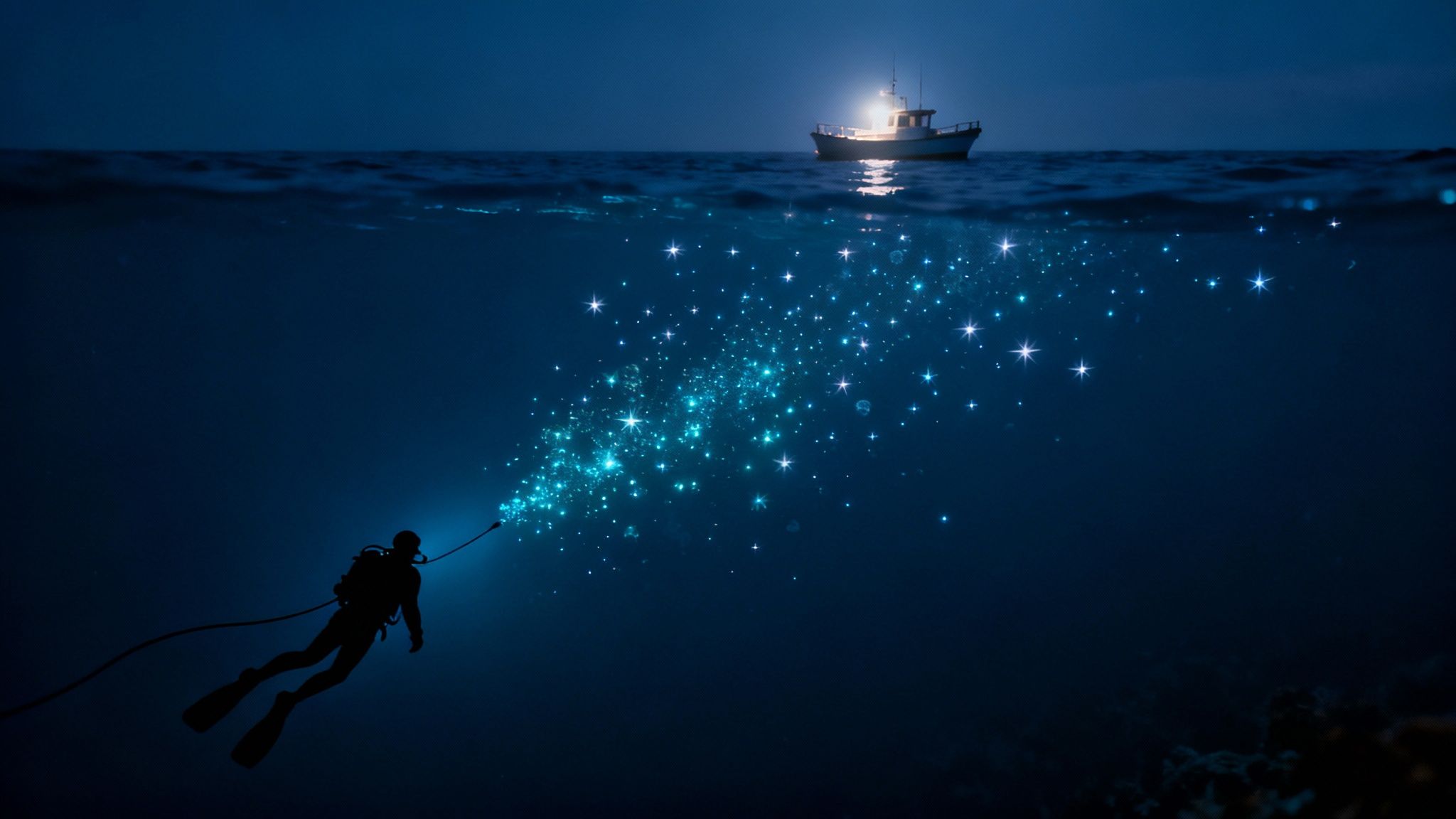
Picture this: you’re floating in the inky blackness of the open ocean. You’re miles from shore with thousands of feet of water below you, tethered to a line that drops from the boat into the deep. The only light comes from your torch, slicing through the darkness. This is the surreal, almost psychedelic world of the Kona Blackwater Dive.
Forget everything you know about reef diving. This is a drift dive at night, out in the open ocean, designed to put you front and center for the largest vertical migration of life on Earth. Every single night, countless strange and often bioluminescent creatures rise from the crushing depths to feed near the surface.
You’ll see things that look like they came straight out of a sci-fi movie:
- Larval Creatures: Witness the baby stages of familiar animals like eels and octopuses, which look nothing like their adult forms.
- Pteropods: Often called "sea butterflies," these are tiny, free-swimming snails with delicate, fluttering wings.
- Jellies and Siphonophores: You'll be surrounded by a stunning variety of glowing, gelatinous creatures drifting past your mask.
The Blackwater Dive isn't about exploring a place; it's about floating through a living galaxy. It’s a humbling, hypnotic experience that puts you in direct contact with the mysterious heart of the ocean.
This dive absolutely requires solid buoyancy control and a cool head, but with an experienced crew leading the way, it’s a safe and utterly mind-blowing adventure you’ll be talking about for the rest of your life.
Premium Adventures for Experienced Divers
Beyond the blackwater experience, Kona offers specialized charters for divers who want to explore more remote and challenging sites. These are the spots most day trips don't reach, offering untouched conditions and dramatic underwater landscapes.
Kona Honu Divers runs premium advanced dive trips for smaller groups of serious divers. This intimate approach means the crew can tailor the dive plan to the group's skill and interests, whether that means exploring deeper reefs, navigating intricate lava tube systems, or seeking out encounters with big pelagic species. When you're planning for advanced diving and blackwater adventures, it's wise to look into specialized adventure sports travel insurance for an extra layer of protection.
These exclusive charters are perfect for underwater photographers, tech divers, or anyone who just wants to get off the beaten path and see the wilder side of Kona's underwater world. It's your chance to add a truly unique chapter to your dive log.
Getting Certified and Renting Gear in Kona
New to the underwater world? Or maybe you’re a certified pro just traveling light? Either way, getting set up for Big Island scuba diving is a breeze. Kona’s warm, clear, and exceptionally calm waters are the perfect natural classroom, making it one of the best places on earth to learn or just rent some gear and hop in.
Whether you're just curious and want to dip a toe in, or you're ready to get the full certification, there's a path for you. The journey to becoming a certified diver is a rewarding one, and I can't think of a better backdrop for that life-changing experience than Kona.
Becoming a Certified Diver
If you’ve never breathed underwater before, the Discover Scuba Diving experience is the perfect first step. Think of it as a one-day intro course. An instructor will walk you through the basics in a super safe, controlled spot before taking you on a genuine, shallow ocean dive. You get all the thrill of diving without having to commit to the full course.
Ready to take the full plunge? The Open Water Diver course is your passport to exploring the underwater world anywhere you go. It's a comprehensive program that usually breaks down like this:
- eLearning: You can knock out the "book work" online, at your own pace, before you even pack your bags for Hawaii.
- Confined Water Dives: Here’s where you’ll get comfortable with the gear and practice all the essential skills in calm, shallow water with an instructor right by your side.
- Open Water Dives: This is the fun part! You’ll complete four dives out in the ocean, putting your new skills to use while exploring Kona's incredible reefs.
With conditions this amazing, getting your Open Water certification here means your very first logged dives will be in a world-class destination. Not a bad way to start your logbook!
Renting High-Quality Dive Gear
For those of us who are already certified, the idea of traveling without hauling bulky, heavy equipment is a dream. Reputable shops in Kona make renting gear simple and, most importantly, safe. Top-tier operators like Kona Honu Divers have complete, high-quality packages with everything you’ll need.
Renting gear from a trusted shop isn't just about convenience; it's about safety. Professionally maintained equipment, from regulators to dive computers, means you can focus on the incredible marine life around you without a single worry.
You can usually rent whatever you need individually or just grab a full kit. A typical setup includes:
- Buoyancy Control Device (BCD): The vest that helps you achieve that feeling of weightlessness.
- Regulator Set: The whole system that delivers air from your tank.
- Dive Computer: Your most important piece of safety gear for tracking depth, time, and no-decompression limits.
- Wetsuit: A 3mm or 5mm suit is plenty for Kona's bathtub-warm water temperatures.
While Kona Honu Divers provides proactively serviced, top-notch gear for all its divers, it’s always good to know the local landscape. Other well-regarded local operators like Jack's Diving Locker and Big Island Divers also offer fantastic rental services. Here’s what fellow divers have to say about them.
Planning Your Perfect Dive Trip to the Big Island
Alright, let's get down to the fun part: turning that dream dive trip into a reality. Planning an unforgettable Big Island scuba diving adventure really comes down to three things: good timing, smart packing, and picking the right crew to show you around underwater. A little prep work now means you can spend every moment of your trip just soaking in the incredible marine world.
The best part? Kona offers fantastic diving all year long. That said, different seasons bring their own unique flavor to the experience. For a really detailed look at what to expect month by month—from water temps to what critters are most active—check out our guide on the best months to scuba dive in Hawaii.
When to Visit and What to Pack
Hawaii’s dive conditions are famously stable, but here’s a quick breakdown to help you pick the perfect time for your trip:
- Summer (May-October): This is when you'll find the calmest seas and warmest water, often hitting a toasty 80-82°F (27-28°C). It’s prime time for glassy boat rides and long, comfortable dives where you might not even need a full wetsuit.
- Winter (November-April): The water cools down just a touch to a still-very-pleasant 75-77°F (24-25°C). The real magic of winter diving? Hearing the haunting songs of humpback whales echoing through the water as they visit their Hawaiian breeding grounds. It's an experience that will give you goosebumps.
Once you’ve settled on dates, packing is a breeze. Just don't forget the essentials:
- Certification Card & Logbook: Every shop will need to see proof of your cert, and your logbook is the best way to remember every amazing dive.
- Swimsuit & Towel: A quick-drying microfiber towel is a game-changer on a dive boat.
- Reef-Safe Sunscreen: This is a big one. It protects both your skin and Hawaii's fragile coral reefs.
- Reusable Water Bottle: Diving is thirsty work! Staying hydrated is crucial, and you’ll be helping to cut down on plastic waste.
Choosing the Right Dive Operator
Who you dive with can make or break your entire trip. A great dive operator doesn’t just take you out on a boat; they become your trusted guides, prioritizing your safety and making the whole experience better. Look for a shop with a stellar safety record, comfortable boats, and a crew that’s genuinely passionate about the ocean.
A great dive crew does more than just lead a tour; they share their deep knowledge of the local ecosystem, point out camouflaged critters you might otherwise miss, and foster a genuine respect for the marine environment.
Here at Kona Honu Divers, we’ve built our reputation on top-notch customer service, an unwavering commitment to safety, and a deep-seated love for marine conservation. Our experienced team makes sure every single diver, whether it’s their first time in the ocean or their thousandth, has a safe and unforgettable adventure.
But don't just take our word for it—see what other divers have to say about their experiences with us:
With your planning sorted, the only thing left to do is get excited. If you're looking for some general travel inspiration for what to do on your surface intervals, you can find some great ideas there. Now you’re ready to book your trip with confidence, knowing an incredible underwater journey is waiting for you.
Your Big Island Diving Questions, Answered
Heading to a new dive spot always sparks a few questions. We get it! To make sure you feel totally ready for your Big Island scuba diving trip, we've put together answers to the queries we hear most often. Think of this as the final briefing before your adventure begins.
What’s the Water Like in Kona?
The water in Kona is fantastic year-round. In the winter months (around November to April), expect the temperature to hover between a comfortable 75-77°F (24-25°C). Once summer rolls in (May to October), it warms up to a blissful 80-82°F (27-28°C).
For most people, a 3mm wetsuit is plenty for the summer. If you're diving in the winter or just tend to get cold, a 5mm suit will keep you perfectly cozy.
Do I Need a Ton of Experience for the Manta Ray Night Dive?
Not at all! That's one of the best parts about the world-famous Manta Ray Night Dive. As long as you have your Open Water certification, you're good to go. You don’t need an advanced cert or a thick logbook for this one.
The key skill here is solid buoyancy. You'll be settled on the sandy bottom, watching the show as the mantas swoop and glide just overhead. Your divemaster will walk you through everything in the briefing to make sure you're safe, comfortable, and ready for an incredible experience.
Besides Mantas and Turtles, What Else Will I See?
The Big Island is teeming with life, and while the manta rays and honu (our beloved green sea turtles) steal the show, the rest of the marine life is just as amazing. On almost any dive, you've got a great shot at spotting:
- Dolphins: We often see pods of spinner dolphins playing near the boat, and if you're lucky, you'll see them underwater.
- Sharks: Harmless whitetip reef sharks are a common sight, usually just chilling out on the sand.
- Eels: Keep an eye on the lava rock crevices for unique species like the elusive dragon moray or the yellowmargin moray.
- Endemic Fish: A huge percentage of the reef fish here, like the Hawaiian cleaner wrasse and Milletseed butterflyfish, are found nowhere else on the planet.
Is There a “Best” Time of Year to Dive?
Honestly, any time is a great time to dive in Kona. The summer brings the warmest water and the calmest, glassiest seas, which makes for beautiful boat rides.
But winter has its own kind of magic: it’s humpback whale season. There's nothing quite like being on a dive and hearing their haunting songs echo through the water. It’s a full-body experience that will give you goosebumps. No matter when you come, visibility is almost always fantastic, often clearing 100 feet.
Ready to jump in? The crew here at Kona Honu Divers can't wait to guide you through the best underwater spots the Big Island has to offer. Check out our full lineup of diving tours and book your adventure today!