
Picture this: you're sinking slowly into a world of brilliant blue, with sunlight dancing down from the surface to light up an incredible landscape carved by ancient volcanoes. That's the magic of Big Island scuba diving. The sheltered Kona coast is a true diver's paradise, boasting calm, clear conditions all year long that are perfect for everything from your very first dive to surreal Manta Ray Night Dives and otherworldly Blackwater adventures.
Why Kona Is a World-Class Diving Destination
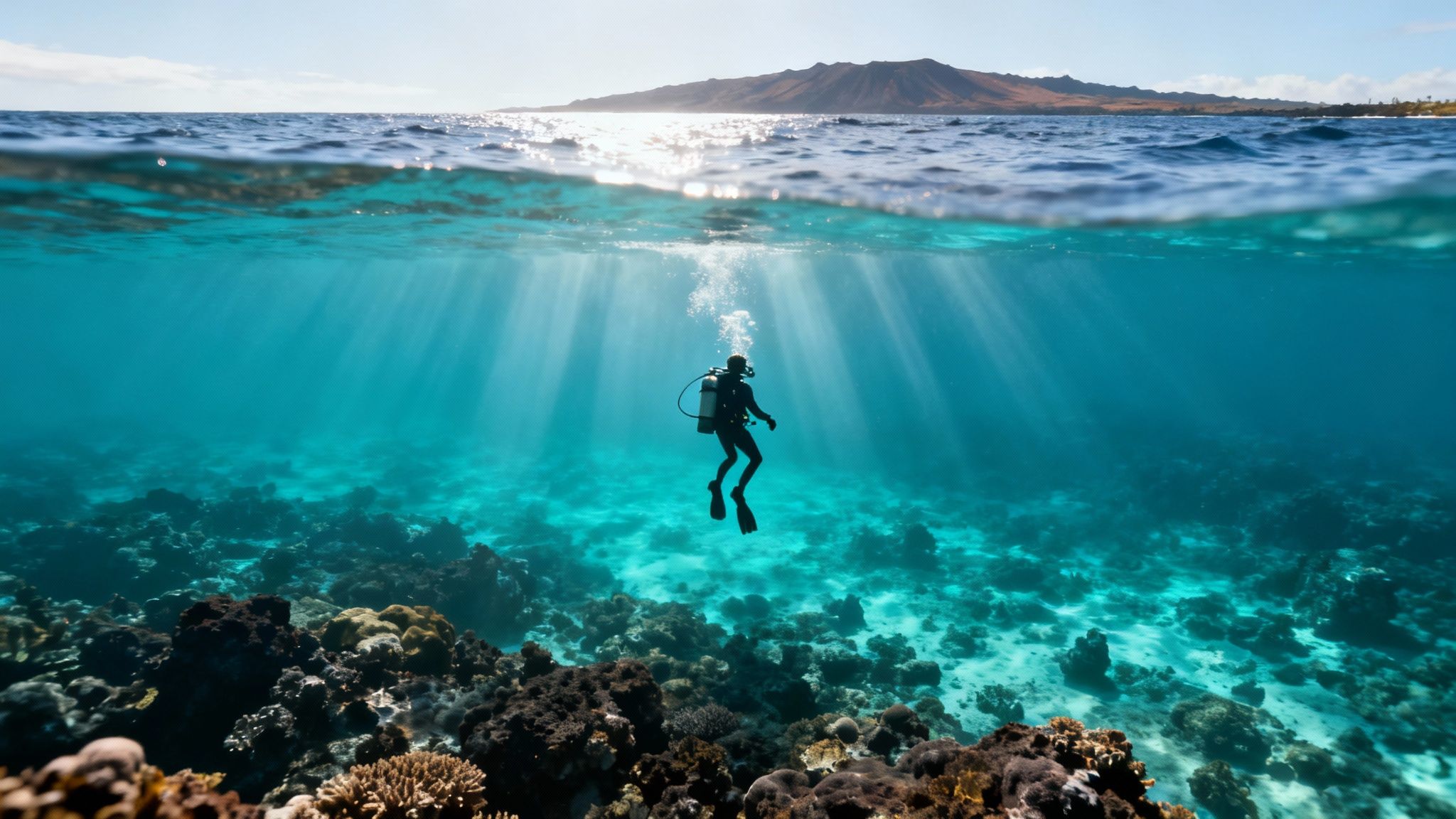
The Big Island isn't just another pretty spot to get in the water; it's a globally recognized hub for underwater exploration. The dive scene here has been booming since the 1980s, growing to support more than 50 dive shops and charters. It's no surprise that an estimated 150,000 dive tourists flock here every year to witness the island's unique volcanic topography and teeming marine life. You can dive deeper into the history of Big Island scuba diving to see how it all started.
What really gives Kona its edge is the island's geography. The sheer size of the Mauna Loa and Hualalai volcanoes creates a massive natural shield, protecting the entire western coastline from the blustery trade winds. The result? Exceptionally calm and clear waters, where visibility often hits an unbelievable 100 feet or more.
This unique setup means conditions are consistently fantastic for diving, no matter the season. You can book a trip any month of the year and be confident you'll have an incredible time underwater.
A Sanctuary for Unique Marine Life
The island's volcanic past doesn't stop at the shoreline. Below the waves, ancient lava flows have formed a dramatic underwater world of arches, caves, and intricate lava tubes. This complex, rugged terrain provides the perfect home for a breathtaking variety of marine creatures.
On any given dive, you can expect to see:
- Hawaiian Green Sea Turtles (Honu): You'll often find them snoozing on the reef or gliding gracefully past.
- Vibrant Reef Fish: The reefs are alive with color from huge schools of butterflyfish, parrotfish, and triggerfish.
- Unique Encounters: Manta rays, pods of spinner dolphins, and even whitetip reef sharks are common and incredible sights.
This amazing biodiversity, combined with near-perfect conditions, makes every single dive a new adventure. For anyone ready to jump in, Kona Honu Divers offers a fantastic lineup of professionally guided diving tours on the Big Island that cater to every experience level.
So, whether you're just starting your diving journey or you're a seasoned pro looking for your next big thrill, Kona has it all. From the world-famous night dives to deep blue pelagic adventures, the possibilities here are as vast as the ocean itself.
Experiencing the Famous Manta Ray Night Dive
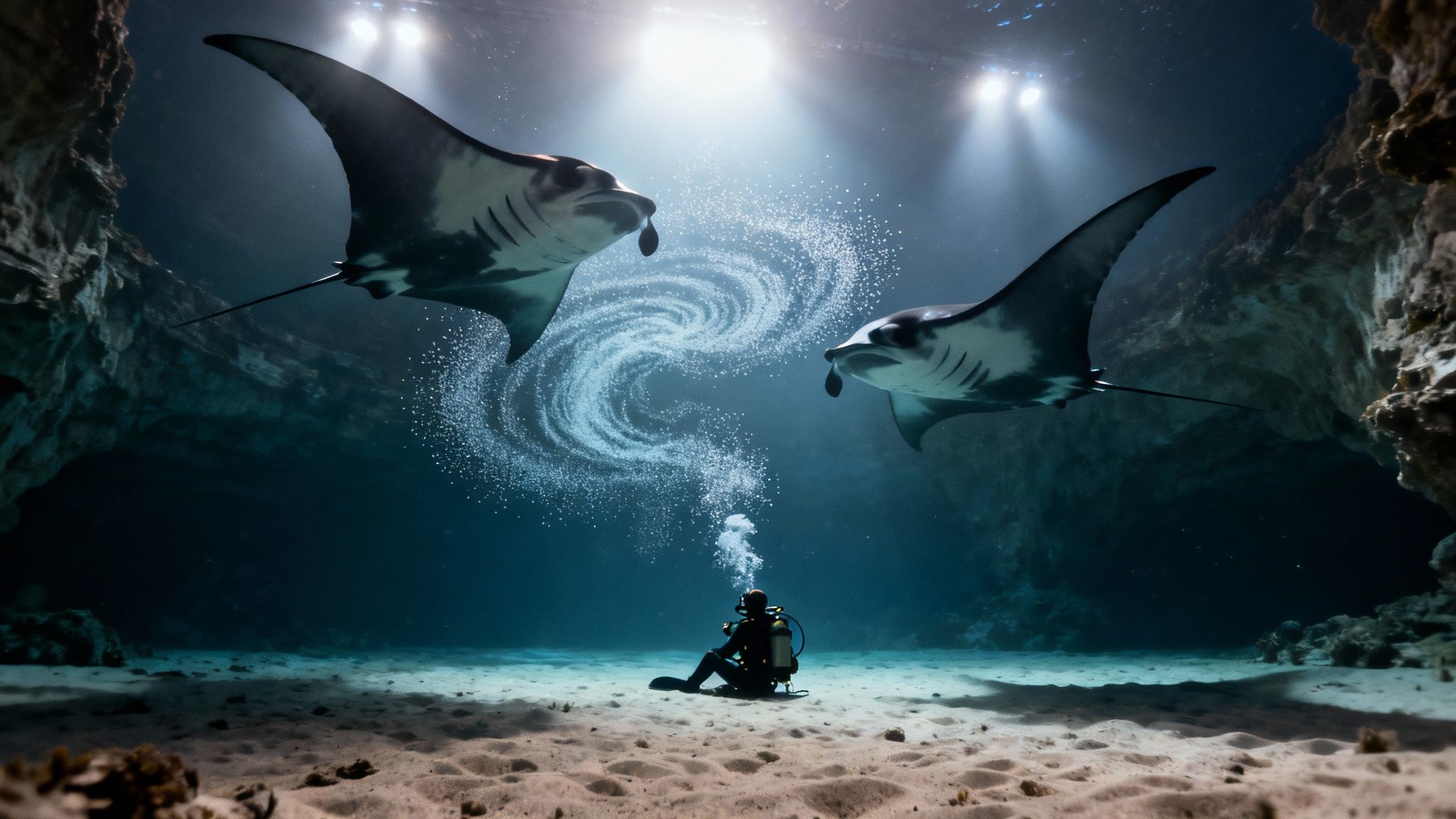
The Manta Ray Night Dive in Kona isn't just another dive; it's a world-famous underwater spectacle, and for very good reason. It’s an experience that lands on nearly every diver's bucket list.
Picture this: You descend just as the sun dips below the horizon, settling onto the sandy ocean floor in the twilight. Then, powerful lights flick on, cutting through the darkness. These beams attract swarms of microscopic plankton, creating a glowing, all-you-can-eat buffet. It doesn't take long for the stars of the show to arrive.
Giant manta rays, with wingspans that can stretch over 12 feet, glide into the light. They perform breathtaking barrel rolls just inches above your head, their massive mouths scooping up the plankton. It's a silent, graceful ballet that feels absolutely surreal.
Why Garden Eel Cove Is The Superior Choice
While you can see mantas at a couple of spots, Garden Eel Cove (also known as Manta Heaven) is hands-down the superior choice for your manta ray dive tour. Tucked away just north of the Kona airport, its protected location is shielded from the powerful southern swells, which means a calmer, more reliable, and more comfortable dive for everyone.
The setup at Garden Eel Cove is also perfect. The seafloor forms a natural amphitheater, creating a better viewing area where every diver gets a front-row seat. Add to that the vibrant, healthier reefs nearby, and you have the perfect stage for one of nature’s greatest performances. You can get a closer look at what makes this site so incredible through the Kona Manta Ray Night Dive experience.
The feeling of a massive, gentle giant gliding silently over you is impossible to describe. It's a mix of awe, wonder, and a deep connection to the ocean that stays with you long after you surface.
A Sustainable and Safe Encounter
One of the most beautiful parts of this dive is that it's a completely natural feeding event. The mantas aren't baited or trained; they are wild animals who have learned to show up for a reliable meal. The local dive community, led by operators like Kona Honu Divers, adheres to strict guidelines to keep the experience safe for both the mantas and the divers.
These responsible practices are key to the dive's success:
- Look, Don't Touch: Divers are always reminded never to touch the mantas. It can strip away their protective mucous coating, leaving them vulnerable to infection.
- Stay Put: You’ll be positioned on or near the sandy bottom. This gives the mantas a clear path above you to maneuver and feed without obstruction.
- Point the Lights Up: The dive lights are aimed upward into the water column, concentrating the plankton right where the mantas can easily swoop in.
This deep commitment to sustainability ensures the local manta population thrives and that divers can enjoy this incredible encounter for years to come. The whole operation is so well-managed that it's a safe and accessible adventure, even for newly certified divers.
Exploring Top Dive Sites Along the Kona Coast
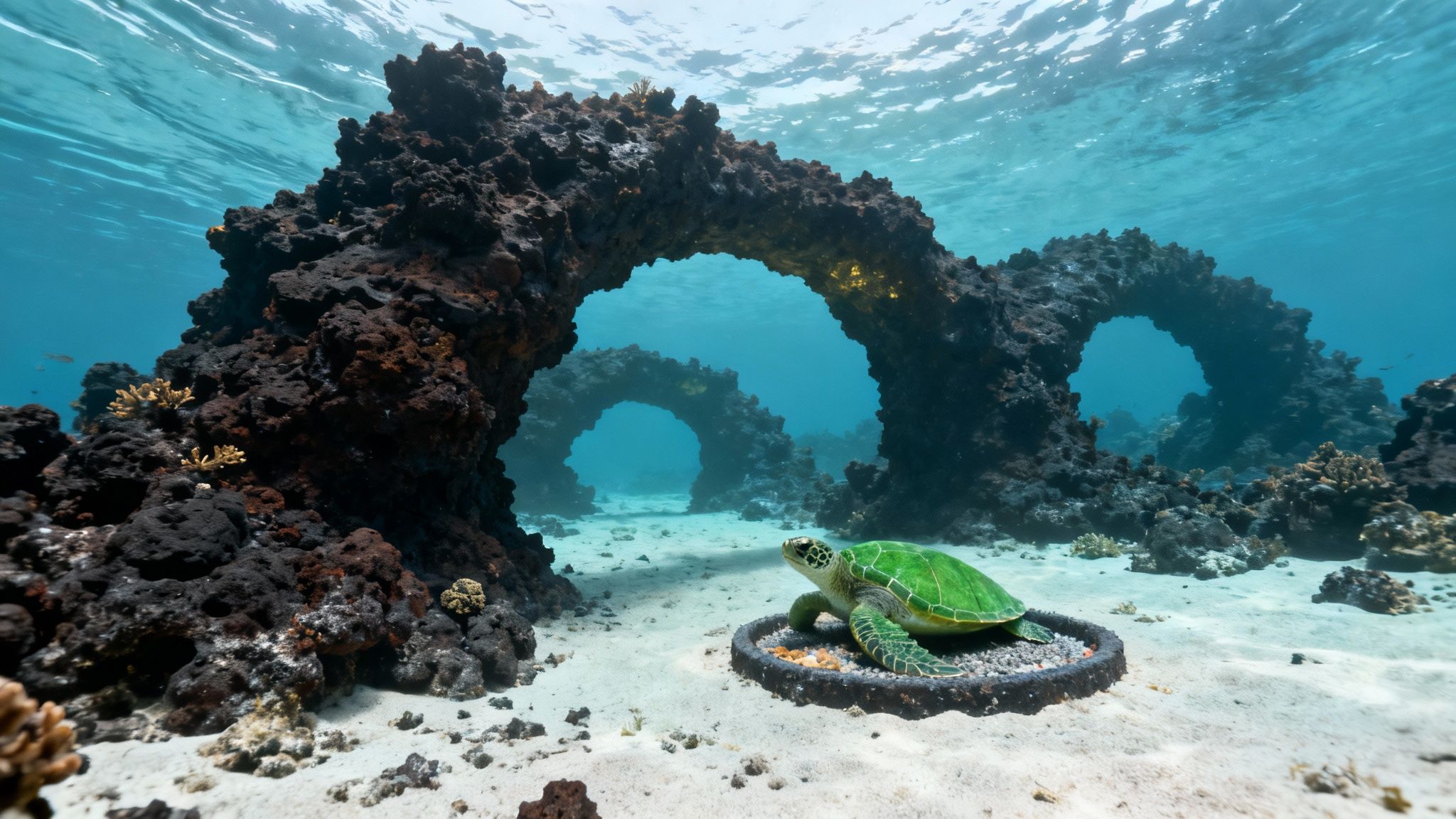
The Manta Ray Night Dive might be the star of the show, but it's really just the opening act for what the Big Island has to offer. The Kona coast is an absolute goldmine of dive sites, each one carved out by ancient volcanic flows. This means you get a spectacular underwater landscape you won't find anywhere else.
We're talking about everything from dramatic lava tubes and massive archways to calm, protected bays where sea turtles come to relax. It’s this incredible variety that makes Kona diving so special—there’s truly a perfect spot for every diver, no matter what you’re hoping to see.
Must-See Dive Sites for Every Diver
Some sites are just legendary, and for good reason. They are the spots that divers talk about long after they've dried off, combining jaw-dropping underwater scenery with consistent, incredible marine life. If you're building a dive plan, these should be right at the top of your list.
Here are a few iconic sites you absolutely can't miss:
- Golden Arches: Named for its magnificent lava arches, this spot is an underwater photographer's paradise. The way the sunlight filters through the arches creates these stunning, cathedral-like light rays that dance in the water. It's pure magic.
- Turtle Pinnacle: This is what's known as a "cleaning station," and it’s one of the best. You can hover and watch as Hawaiian green sea turtles (honu) patiently wait their turn for small reef fish to nibble algae and parasites off their shells. It's like a day spa for turtles.
- Au Au Crater: Imagine diving inside a submerged volcanic crater. That's exactly what you get here. The site is a unique crescent-shaped wall with fun swim-throughs. The protected inside acts as a nursery for young fish, while bigger visitors like eagle rays cruise by on the outside.
Exploring these spots is like swimming through a living geology lesson. Every lava formation tells a story of the island's fiery birth, now draped in vibrant coral and teeming with life.
To give you a better idea of what to expect, here's a quick rundown of some of Kona's most famous dive sites.
Kona Coast Premier Dive Sites Overview
| Dive Site Name | Key Feature | Common Marine Life | Experience Level |
|---|---|---|---|
| Golden Arches | Lava Tubes & Swim-throughs | Eels, Frogfish, Reef Sharks | Beginner to Intermediate |
| Turtle Pinnacle | Turtle Cleaning Station | Hawaiian Green Turtles, Wrasse | Beginner |
| Au Au Crater | Submerged Volcanic Crater | Eagle Rays, Schooling Fish | Intermediate |
| Suck 'em Up | Lava Tube Cavern (Surge) | Whitetip Reef Sharks, Eels | Advanced |
| Rainbow Reef | Vibrant Coral Gardens | Butterflyfish, Parrotfish, Octopus | Beginner |
This table is just a snapshot, but it shows the amazing diversity waiting for you. Whether you're looking for a relaxing reef tour or a more complex geological dive, Kona has you covered.
For the More Experienced Diver
If you’ve got a good number of dives logged and feel comfortable in the water, Kona opens up a whole new level of adventure. There are advanced sites that offer deeper profiles, stronger currents, and encounters with marine life you just won't see on the shallower reefs.
Drift dives are a fantastic way to experience this, letting you cruise effortlessly with the current over vast stretches of pristine reef. You just relax and let the ocean do the work. Other deeper sites feature dramatic walls that drop off into the deep blue, attracting bigger pelagic species.
For a comprehensive look at the sheer variety of underwater environments, you can explore the different Kona dive sites that local operators frequent. These trips, like a dedicated advanced dive tour, are designed to show you the best of what Kona has to offer, safely pushing your limits and rewarding you with unforgettable experiences.
The Mysterious Blackwater Pelagic Dive
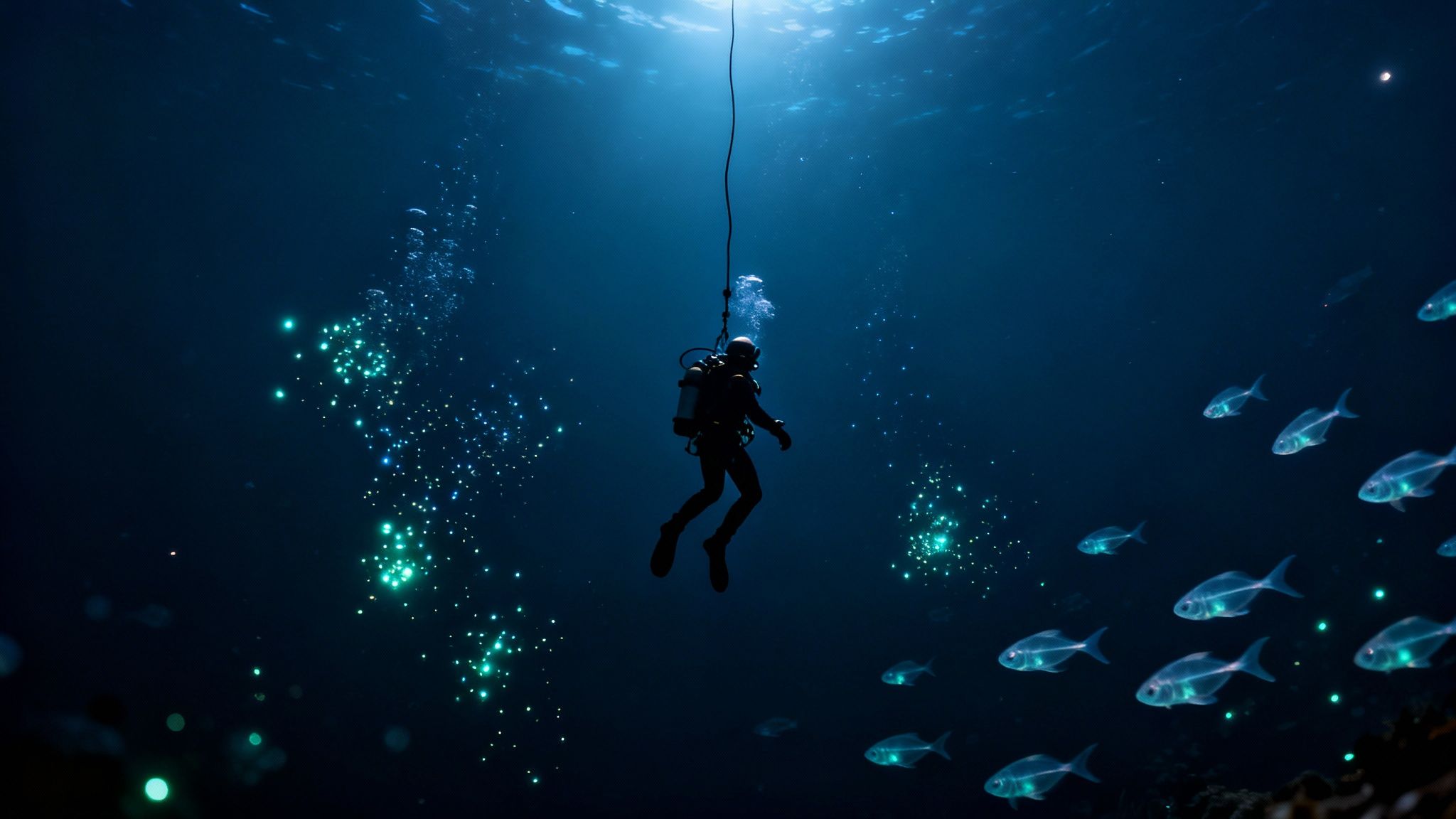
If you're looking for a truly mind-bending adventure, some of the most unique Big Island scuba diving happens miles offshore in the dead of night. They call it the blackwater pelagic dive, and it’s easily one of the most surreal and thrilling experiences a diver can have.
Picture this: you're tethered to a boat, floating in thousands of feet of inky black water. You’re not exploring a reef. Instead, you're a silent observer in the vast open ocean, witnessing the planet's largest nightly migration. Every single evening, countless bizarre and beautiful creatures rise from the crushing depths to feed near the surface, and you get a front-row seat.
This is nothing like your typical reef dive. It’s a journey into a hidden, alien world where the life forms look like they were pulled straight from a science fiction movie.
What You Will See in the Darkness
The creatures that materialize from the dark on a blackwater dive are things you simply won’t see during the day. Many are in their larval or juvenile stages, making them almost completely translucent. Others are true deep-water dwellers that only risk coming this close to the surface under the protective cloak of darkness.
You can expect to see things like:
- Bioluminescent Jellies: Drifting past like tiny, pulsating alien spaceships, glowing with their own internal light.
- Translucent Larval Fish: You can see right through the bodies of these developing fish, with their delicate skeletons and organs fully visible.
- Pelagic Cephalopods: Strange and wonderful squids and octopuses, often no bigger than your thumbnail, as they hunt in the water column.
- Venus Girdles: These shimmering, ribbon-like ctenophores can grow several feet long, catching the light as they undulate through the water.
This dive is often described as "floating in outer space." You're weightless in the dark, with strange, glowing life forms drifting past. It’s a sensory experience that completely redefines what you think ocean life looks like.
How The Blackwater Dive Works
On a highly specialized dive like this, safety is everything. You're miles from shore in incredibly deep water, so the entire operation is meticulously managed by expert crews who know these unique conditions inside and out.
The setup itself is brilliantly simple. The boat drifts on the surface while powerful lights are lowered into the water. Divers are connected by tethers to a central line, which keeps everyone together and at a controlled depth—usually around 50 feet. The lights create an illuminated oasis in the vast darkness, attracting the migrating creatures right to you.
This setup lets you relax and focus entirely on the incredible marine life materializing out of the black. It’s an advanced dive, for sure, best suited for divers who are already comfortable in the water and are looking for a one-of-a-kind challenge.
If you’re ready to peer into this mysterious deep-water world, Kona Honu Divers offers a professionally guided Kona Blackwater Dive tour that promises an unforgettable journey into the abyss.
Choosing the Right Dive Operator in Kona
Think of your dive operator as more than just a taxi service to the reef. They're your guides, your safety crew, and the folks who can turn a pretty good dive into an absolutely unforgettable one. Picking the right shop is probably the single most important decision you'll make for your Big Island diving adventure.
The best outfits live and breathe safety. We're talking meticulously maintained boats, top-notch rental gear that doesn't look like it's from the 90s, and a professional crew that knows their stuff. They also almost always run smaller groups, which means you get more personalized attention and don't feel like you're just another number on a crowded boat. It’s like hiring a skilled mountain guide—you want someone who knows the terrain inside and out and puts your well-being above everything else.
The quality of your dive operator directly impacts your safety and enjoyment. A great crew will not only show you amazing marine life but will also make you a more confident and knowledgeable diver.
What to Look for in a Kona Dive Shop
When you start digging into the options for Big Island scuba diving, it's easy to get overwhelmed. Before you pull out your credit card, take a few minutes to vet the company's reputation, safety record, and the little things that make a big difference.
Here’s a quick checklist of what really matters:
- Safety and Professionalism: Is the shop well-established with a solid reputation? Look for affiliations with training agencies like PADI, which means they're held to high international standards.
- Boat Comfort and Amenities: You'd be surprised how much the little details matter. Are the boats roomy with plenty of shade? Do they offer a hot freshwater rinse, snacks, or drinks? These small comforts are a godsend after an hour in the saltwater.
- Group Size: I can't stress this enough: smaller groups are almost always better. You get more personal time with your guide and a much better chance to see marine life without a dozen other divers kicking up sand.
- Gear Quality: Good shops invest in their rental gear. If the equipment looks old, worn, or poorly maintained, it’s a major red flag. This is non-negotiable for a safe, comfortable dive.
Top-Rated Dive Operators in Kona
To give you a head start, here are a few of Kona’s most respected dive companies. These operators consistently get top marks for their customer service, safety-first attitude, and deep local knowledge. The best intel always comes from fellow divers, so we've dropped in their live Google reviews below.
Jack's Diving Locker
A true Kona institution. Jack's Diving Locker has been around forever and is known for its impressive range of courses and big, comfortable boats. They're equipped to handle everyone from first-timers to serious tec divers.
Big Island Divers
Another local favorite, Big Island Divers gets rave reviews for its friendly, professional crew and super organized trips. They run a full schedule of daily charters, including the can't-miss Manta Ray Night Dive.
Kona Diving Company
If you value a little extra elbow room, check out Kona Diving Company. They're famous for their spacious boat and focus on customer comfort, and their crews are known for being incredibly enthusiastic and helpful.
At the end of the day, the "best" operator is the one that fits your diving style and comfort level. Do a little homework, read some recent reviews, and you'll be setting yourself up for an incredible time exploring Kona's underwater world.
What to Expect from Big Island Diving Conditions and Safety
One of the best things about diving on the Big Island is just how consistent it is. The massive volcanoes on the island act as a natural shield for the Kona coast, blocking the prevailing winds and keeping the ocean remarkably calm and clear. This makes it a fantastic year-round diving destination, so you can plan a trip for almost any month and count on having a great time in the water.
The water temperature is always inviting. In the summer (May-October), it hovers around a balmy 80°F (27°C), and in the winter (November-April), it only dips to a very comfortable 75°F (24°C). On top of that, visibility is often incredible, frequently stretching beyond 100 feet, giving you a crystal-clear view of Kona’s stunning underwater world.
Seasonal Highlights for Divers
While the diving is always excellent, each season brings its own unique flavor. Summer typically offers the flattest, calmest seas you can imagine. If you’re new to diving or get seasick easily, this is the perfect time to explore Kona’s intricate lava tubes and vibrant reefs in glassy conditions.
Winter, however, adds a touch of pure magic. This is when the humpback whales arrive. While you’ll often see them from the boat, the real treat is hearing them underwater. It’s an unforgettable experience to be exploring a reef while the hauntingly beautiful songs of migrating humpbacks echo all around you. If you're trying to pick the perfect time, you can learn more about the best months to scuba dive in Hawaii.
A Quick Word on Ocean Safety
On any ocean adventure, safety has to come first, and Kona's professional dive industry is built on a foundation of strict safety standards. This commitment is a world away from the risks people sometimes take with unguided ocean activities. In fact, many visitors are shocked when they see the safety stats comparing guided scuba diving to casual snorkeling.
Here’s a revealing look at data from Hawaii between 2009 and 2018: there were over 206 snorkeling-related deaths, but only 28 scuba diving fatalities in that same timeframe.
That huge difference really highlights the value of proper training and having a professional guide. The overwhelming majority of divers here are certified and led by experienced divemasters who know the local sites, emergency procedures, and safe diving practices inside and out. It’s a structured environment that dramatically cuts down on risk, especially for visitors unfamiliar with the ocean's power. You can discover more insights about Hawaiian ocean safety statistics on Divernet.com.
When you choose a reputable dive operator, you're not just booking a tour; you're ensuring you have a dedicated team focused on making your underwater experience both incredible and fundamentally safe.
Your Big Island Diving Questions, Answered
It's natural to have a lot of questions when you're planning a dive trip to a new place. Wondering about the best time of year to visit Kona? Or what you can expect to see beneath the waves?
Getting these details sorted out ahead of time makes the whole experience smoother. We've put together answers to the questions we hear most often from divers getting ready for their Big Island adventure.
What Is the Best Time of Year to Dive?
Honestly, there’s no bad time to dive in Kona. The island’s western coast is naturally sheltered, which means we get fantastic, diveable conditions pretty much year-round.
That said, there are a couple of seasonal quirks to keep in mind:
- Summer (May-October): This is when you'll find the flattest, calmest seas and the warmest water. Expect temperatures to be hovering around a balmy 80°F (27°C).
- Winter (November-April): The water dips slightly to about 75°F (24°C), but this is prime time for humpback whales. It's one thing to see them from the boat, but hearing their songs echoing through the water on a dive is something you'll never forget.
No matter when you come, visibility is almost always fantastic, often clearing 100 feet. You’re always in for a good show.
Do I Need to Be an Advanced Diver?
Definitely not! Kona is one of the best places to dive precisely because it offers something for everyone. We have plenty of calm, shallow reef sites that are perfect for newly certified divers, those who need a refresher, or even someone doing their very first open water dives. The gentle conditions are great for building confidence.
But if you're an experienced diver looking for a bigger thrill, Kona delivers. There are deep lava tubes to explore, exciting drop-offs, and totally unique experiences like the blackwater dive. The key is to just be upfront with your dive shop about your experience level. That way, they can get you on the right diving tour that’s both safe and exactly the kind of adventure you're looking for.
What Kind of Marine Life Can I See?
The sheer amount of life packed onto these reefs is mind-blowing. On a typical dive day, you're almost guaranteed to run into Hawaiian green sea turtles (we call them honu), moray eels peeking out of their dens, octopuses, and graceful eagle rays. The reefs are also buzzing with colorful fish like butterflyfish, triggerfish, and parrotfish.
And if you get lucky? You might be joined by a pod of spinner dolphins on the boat ride or spot whitetip reef sharks cruising along the bottom. Of course, the real headliners are the giant manta rays on the world-famous night dive and the strange, bioluminescent critters you’ll meet on a blackwater dive.
Is the Manta Ray Night Dive Safe for Beginners?
Yes, it's incredibly safe and a perfect "first" night dive for anyone with an Open Water certification. The whole operation is very controlled and well-managed.
The dive itself is stationary—you aren't swimming around. You’ll descend to a sandy patch in a relatively shallow spot, usually around 35-40 feet, find a spot to settle in, and just watch the show happen above you. The divemasters give a very detailed briefing before you get in the water and stay with the group the entire time, making sure everyone is comfortable. It's a truly unforgettable experience, and the pros make sure you can just relax and enjoy it.