
Picture this: you descend into warm, sapphire-blue water, floating weightlessly past ancient volcanic archways and coral gardens absolutely teeming with life. That’s what Big Island scuba diving is all about, an experience that easily ranks among the world's best. The island’s unique underwater geology, born from volcanic fire, has created a scuba playground unlike any other on the planet.
Exploring the Underwater Paradise of the Big Island
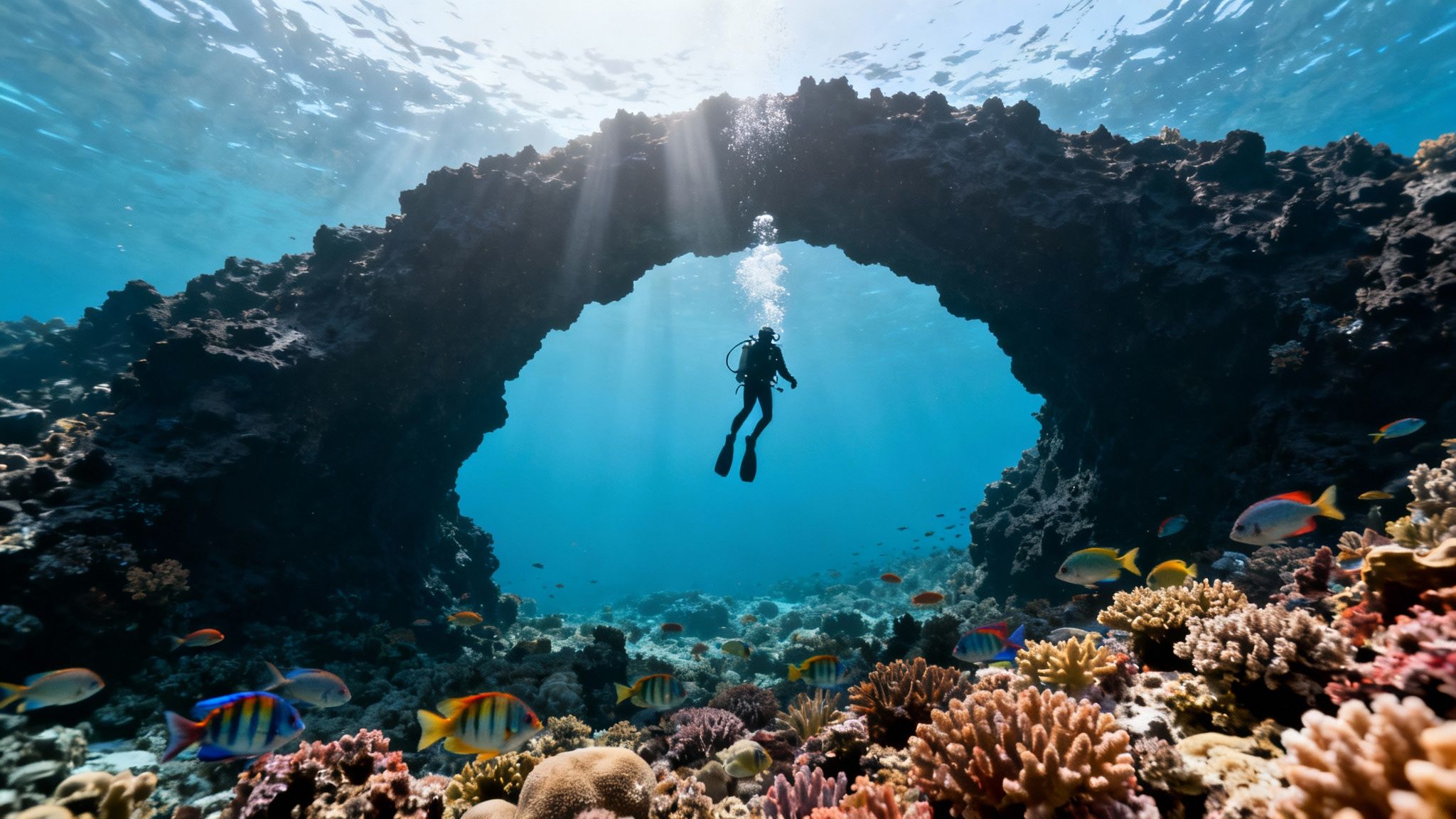
The Big Island of Hawaii is more than just a stunning tropical escape; its real magic is hiding just beneath the waves. The island’s volcanic past has sculpted a truly dramatic and breathtaking underwater world. It’s like exploring a submerged national park where every canyon, cavern, and archway was forged by flowing lava centuries ago.
This incredible geology is the perfect foundation for a rich and diverse marine ecosystem. The porous lava rock creates countless nooks and crannies, providing ideal homes for a staggering array of sea creatures. It's this complex structure that allows such a high density of marine life to thrive here.
A World Shaped by Volcanoes
What really makes Big Island diving so special is its volcanic topography. When you slip beneath the surface, you’re not just swimming over sand—you're navigating a world of:
- Lava Tubes: These are spectacular underwater caves and swim-throughs formed by cooling lava, creating thrilling passages for divers to explore.
- Pinnacles and Archways: Massive rock formations rocket up from the seafloor, creating dramatic structures that attract huge schools of fish.
- Craters: Submerged volcanic craters offer a completely different kind of dive, with unique ecosystems forming within their sheltered walls.
These formations provide a habitat that supports some of the most vibrant coral reefs in all of Hawaii. While other destinations might have flat, sandy bottoms, the Big Island offers a three-dimensional diving experience packed with texture, depth, and endless discovery.
A Sanctuary for Endemic Species
Beyond the stunning geology, the Big Island’s isolation in the middle of the Pacific Ocean has fostered a remarkable level of endemism. A huge percentage of the fish you'll see here can be found nowhere else on Earth.
The Hawaiian archipelago is one of the most isolated island groups in the world. As a result, approximately 25% of its reef fish species are endemic. This means a dive here is a truly unique encounter with wildlife you can’t see anywhere else.
From the brilliantly colored Milletseed Butterflyfish to the shy Potter's Angelfish, every single dive presents an opportunity for a rare sighting. This combination of one-of-a-kind underwater landscapes and exclusive marine life is what cements the Big Island’s reputation as a world-class diving destination. It's the adventure of exploring these ancient lava flows that keeps divers coming back year after year.
Why the Kona Coast Is a Diver’s Dream
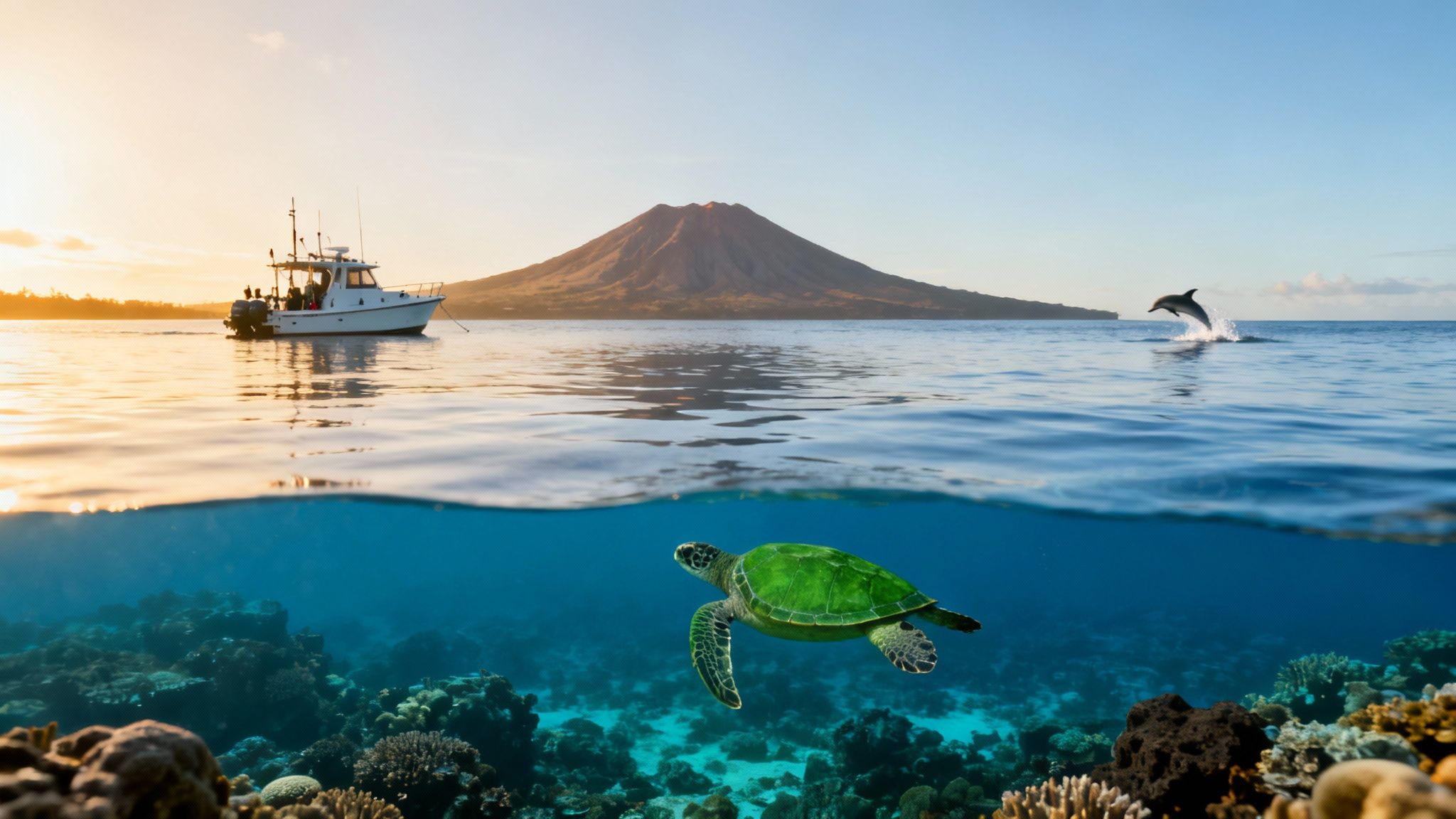
When people talk about Big Island scuba diving, what they’re almost always picturing is the Kona Coast. This slice of paradise is the absolute heart of Hawaii's underwater scene, and for good reason. The island's geography does us a huge favor here—massive volcanoes like Hualalai and Mauna Loa create a natural shield, protecting the western coastline from the powerful trade winds that batter other areas.
This volcanic barrier results in some of the most reliable and gentle dive conditions you could ask for. We're talking calm, predictable seas that are often as clear as glass. It's not uncommon for visibility to push well past 100 feet, making you feel like you're floating through a vast, high-definition aquarium.
A Vibrant Hub for Marine Life
Of course, calm water isn't just a treat for divers; it's a magnet for marine life. The Kona Coast is home to an incredible density of amazing creatures, turning every dive into a potential "best dive ever."
So, what might you bump into down there?
- Honu (Green Sea Turtles): You'll see these graceful reptiles everywhere. They cruise along the reefs and often stop at specific "turtle cleaning stations" where small fish help them stay pristine.
- Nai'a (Spinner Dolphins): It’s a classic Kona experience to see pods of spinner dolphins racing along the coast. From the boat, you might see their amazing acrobatics, and underwater, you can often hear their clicks and whistles.
- Whale Sharks and Humpback Whales: Depending on the season, your chances of a truly jaw-dropping encounter with larger pelagic animals increase. Seeing one of these gentle giants is an experience you'll never forget.
This perfect combination of clear, calm water and abundant wildlife has cemented Kona's reputation as a world-class diving destination. The secret's been out for a while, too. Since the first dive shops popped up in the early 1980s, Kona has become a global hub, now supporting over 50 dive charters and welcoming more than 150,000 divers each year. You can dive deeper into the history of Big Island diving on konahonudivers.com.
Your Gateway to Kona's Underwater World
The best way to experience this aquatic wonderland is with local guides who know every lava tube and coral garden like the back of their hand. A top-tier operator like Kona Honu Divers has the experience and safety record to help you get the most out of these incredible sites. They run a whole menu of trips designed for different skill levels and interests, making sure every diver has an amazing time.
A great dive shop does more than just take you out on a boat; they elevate the entire experience. Their deep local knowledge helps you find hidden gems and ensures every animal encounter is safe and respectful, turning a good dive into an extraordinary one.
Choosing the right guide is your first step toward the Kona dive you've been dreaming of. See what other divers are saying about their own experiences below.
Ready to see for yourself why Kona is a diver's dream? Check out the different diving tours available and find the perfect underwater adventure.
Signature Dives You Cannot Miss
While you'd be hard-pressed to find a bad dive along the Kona coast, a couple of experiences have truly earned their legendary status. These are the ones that land on bucket lists all over the world, defining what makes Big Island scuba diving so unique.
One is a silent, graceful ballet with gentle giants. The other is a journey into an inky black abyss, where life feels like it's from another planet. If you only do two dives here, make them these.
The World-Famous Manta Ray Night Dive
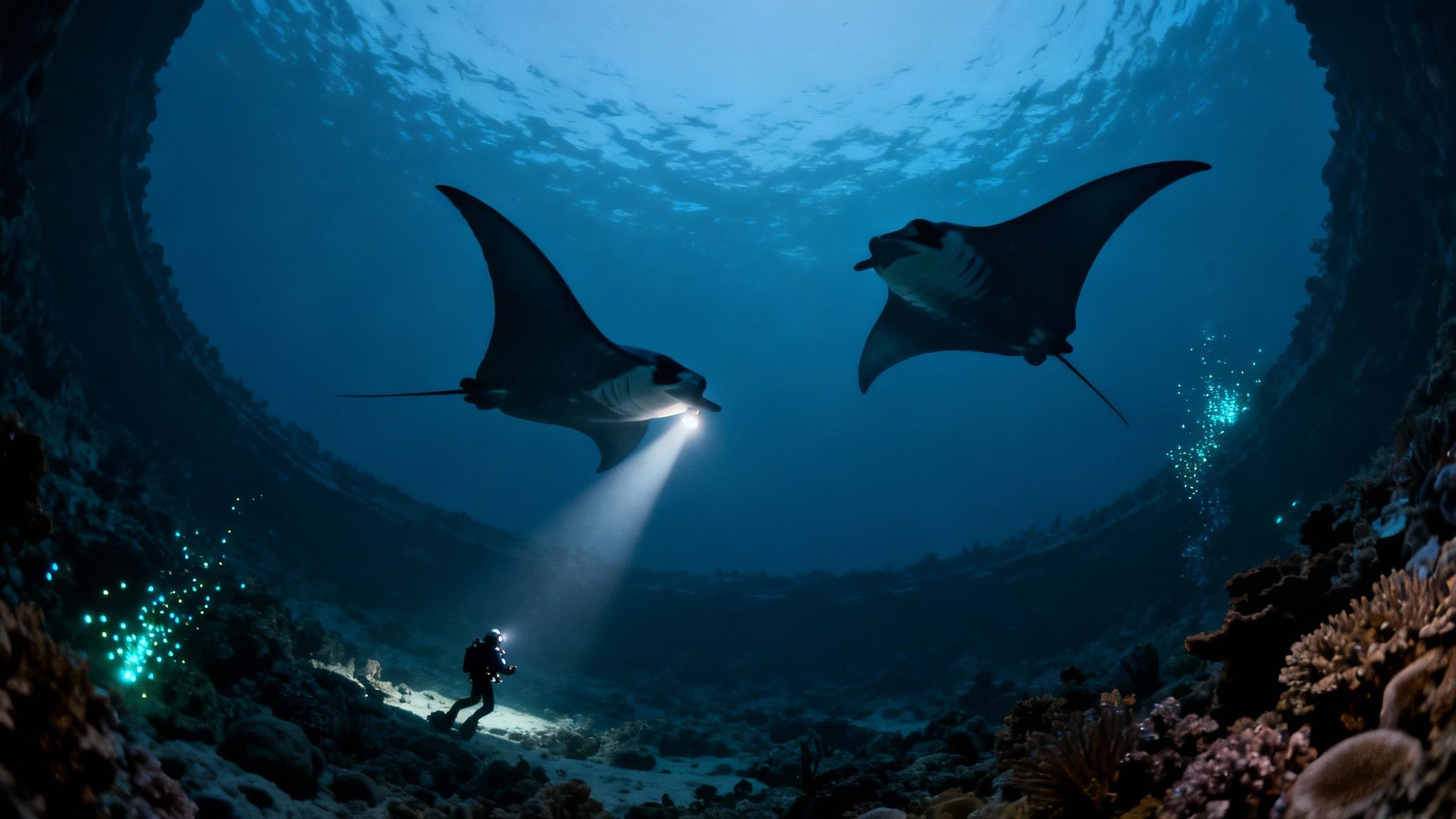
Picture this: you're kneeling on the ocean floor in the dark, your dive light pointed up toward the surface. Suddenly, a massive shadow blots out the lights from above as a gentle giant with a 12-foot wingspan glides into your beam. This is the Kona Manta Ray Night Dive, and it's rightfully called one of the top ten dives on the planet.
How does it work? Dive operators have set up underwater "campfires" of light that attract clouds of plankton—a manta ray's favorite meal. We divers gather on the bottom and shine our lights up, creating a massive buffet. In return, the mantas swoop, glide, and perform incredible barrel rolls just inches above our heads. To get the full picture, check out this ultimate guide to the Kona Manta Ray night snorkel/dive.
The Manta Ray Night Dive is more than just watching animals feed; it's a mesmerizing, interactive ballet. The mantas seem to perform for their audience, their movements hypnotic and serene, creating a profound connection between diver and marine life.
While there are a couple of spots for this dive, Garden Eel Cove (also known as Manta Heaven) is hands-down the superior choice. Its protected location provides calmer, more comfortable conditions for everyone. The layout at Garden Eel Cove is also like a natural amphitheater, offering a better viewing area with a wide, sandy space for divers to settle in for an unobstructed view of the show. Plus, the surrounding reefs are healthier, making the entire experience beautiful from the moment you hit the water. Get the full scoop on making the most of your Kona Manta Ray Night Dive experience.
The Kona Blackwater Dive
If the Manta Ray Dive is a beautiful ballet, the Kona Blackwater Dive is like taking a trip to another dimension. This isn't a reef dive. There's no bottom in sight. Instead, your boat will head miles offshore where the ocean floor is thousands of feet below.
You’ll descend to about 50 feet and drift in the deep, dark water, attached to the boat by a tether system. The whole point is to witness the largest migration on Earth: the nightly vertical migration, where countless strange and bioluminescent creatures rise from the depths to feed near the surface.
What you'll see down there is pure science fiction.
- Larval Creatures: See the tiny, translucent baby versions of octopus, eels, and fish that look nothing like their adult selves.
- Pteropods and Ctenophores: Gelatinous, ghost-like animals that drift past, many of them glowing with their own internal light.
- Bioluminescent Wonders: It's like floating through a galaxy as tiny organisms flash, glow, and sparkle all around you.
This dive is a sensory trip unlike anything else. It’s a rare chance to peek into a hidden world that few will ever see, full of creatures that look like they were designed for a Hollywood sci-fi movie. This is the dive for adventurers who crave the truly unknown, and you can learn more about the Kona Blackwater Dive tour here.
Finding the Perfect Dive Site for Your Skill Level
One of the best things about Big Island scuba diving is that it genuinely has something for everyone. It doesn't matter if you’re about to take your first breath underwater or if your logbook is overflowing with stamps from around the globe—the Kona coast has a dive site that will feel just right.
Think of it like a ski resort. You've got the gentle bunny slopes for learning, the exciting blue runs for building confidence, and the thrilling black diamonds for the seasoned pros. The key is knowing which trail to take.
Picking a site that matches your abilities isn’t just about safety; it’s about having an incredible time. A brand-new diver doesn't want to be fighting a tricky current, and an experienced one is probably looking for more than a shallow sand patch. Let's break down where to go based on your comfort level.
For the New Diver: Gentle and Inspiring Sites
Just starting out or maybe getting back in the water after a long break? No problem. Kona is loaded with calm, shallow, and visually stunning sites perfect for building confidence without any stress.
Pawai Bay is a fantastic example. It's a protected area known for its easy-going conditions, which makes it an ideal spot to get a feel for your gear and fine-tune your buoyancy.
- Turtle Cleaning Stations: The real showstopper at Pawai Bay are the "honu" (green sea turtle) cleaning stations. You can just hover and watch as turtles patiently line up for small reef fish to nibble algae off their shells. It's a magical sight.
- Shallow Depths: Most of the amazing stuff happens in just 30 to 40 feet of water. That means you get more time underwater and fantastic light for any photos you want to snap.
- Vibrant Reefs: The reefs here are buzzing with life. You'll see schools of colorful fish, moray eels peeking out from their homes, and all sorts of critters hiding among the lava rock formations.
These spots are perfect for your very first dive, your certification dives, or simply for anyone who wants a relaxed, beautiful day exploring an underwater garden.
For the Intermediate Diver: Exploring a Little Deeper
Once you've got a few dives under your belt and feel solid with your buoyancy, a whole new layer of Kona diving opens up. These sites introduce a bit more depth, more interesting landscapes, and a chance to spot some of the bigger marine animals that tend to hang out further from shore.
Turtle Pinnacle is a classic intermediate dive for a reason. It’s built around a huge volcanic pinnacle that rises from the seafloor, creating a massive apartment complex for marine life. You’ll spend your dive circling the structure, checking out the ledges and overhangs where all sorts of cool creatures love to hide.
Sites like Turtle Pinnacle are where you start to really feel the sheer scale of Kona's underwater world. The dramatic volcanic topography creates a three-dimensional playground that makes every turn a new discovery. It's a sense of exploration that you just can't get on a simple shallow reef.
For the Advanced Diver: Seeking a Thrill
If you're an experienced diver looking for a real adventure, the Big Island absolutely delivers. We're talking deep dives, dramatic underwater landscapes, and the chance for those unforgettable encounters with big pelagic animals. Of course, these sites demand excellent buoyancy, air management, and comfort with deeper profiles.
A truly top-tier advanced site is Au Au Crater. Dropping into this submerged volcanic crater is an experience you won't forget. The sheer walls and deep, ancient structure are magnets for larger animals. You can find massive schools of jacks, graceful eagle rays, and, if you're lucky, even sharks patrolling the crater's edge.
Dives like this are a serious reward for the skills you've built over the years. If you're ready to tackle the more remote and demanding sites Kona has to offer, your best bet is to join a trip specifically for experienced divers, like a premium advanced dive trip, to get to the really special spots.
Big Island Dive Site Comparison
To make it even easier to see what's out there, here’s a quick guide to some of the Big Island's most popular dive sites. This table breaks down what to expect so you can find the perfect match for your next underwater adventure.
| Dive Site | Experience Level | Max Depth | Key Features & Marine Life |
|---|---|---|---|
| Pawai Bay | Beginner | 45 feet | Turtle cleaning stations, easy navigation, vibrant reef fish. |
| Turtle Pinnacle | Intermediate | 80 feet | Large pinnacle, frogfish, eels, potential for eagle rays. |
| Au Au Crater | Advanced | 100+ feet | Submerged crater, dramatic walls, schooling jacks, sharks. |
Ultimately, no matter what your certification card says, there’s an incredible underwater world waiting for you here. The key is just knowing where to look.
How to Plan Your Ultimate Dive Vacation
Alright, let's turn that dream Big Island scuba diving trip into a reality. A little bit of smart planning goes a long way and makes the difference between a good trip and an unforgettable one. We’ll walk through the essentials so you can get everything sorted, from the best season to visit to what absolutely needs to be in your suitcase.
When you plan ahead, you get to skip the last-minute stress. That means more time relaxing and soaking in the magic of Kona’s underwater world from the moment your plane touches down.
Picking the Best Time to Visit
Here’s the great news: there’s really no bad time to dive in Kona. The water is always warm and the conditions are remarkably consistent, mostly because the massive volcanoes on the island shield the Kona coast from the worst of the weather. That said, there are a few subtle differences between the seasons.
- Summer (June – October): This is when the water hits its peak warmth, often reaching a balmy 80°F (27°C). The ocean is typically at its calmest, giving you glassy seas and incredibly smooth boat rides.
- Winter (November – May): The water cools down just a little, hovering around a very comfortable 75°F (24°C). The real highlight of winter diving? Humpback whales. You can often hear their songs echoing through the water on your dives—an absolutely magical experience.
So, when should you come? It really just depends on what you're looking for. If you want the full seasonal scoop, check out our guide to the best months to scuba dive in Hawaii.
Your Essential Packing List
Packing for a dive trip is about more than just tossing in a swimsuit and flip-flops. To make sure you’re ready for the boat and the water, here are a few things you definitely don’t want to leave at home:
- Reef-Safe Sunscreen: This is a big one. Standard sunscreens contain chemicals like oxybenzone that are devastating to our coral reefs. Please help us protect our underwater world by choosing a mineral-based, reef-safe formula.
- Appropriate Exposure Suit: For most people, a 3mm wetsuit is the sweet spot for Kona's water temperatures year-round. It gives you that perfect balance of warmth and flexibility.
- Certification Card & Logbook: Don't forget your C-card! Every dive shop will need to see proof of your certification before you can head out on the boat.
- Seasickness Medication: Even on the calmest days, it's a good idea to have some on hand if you're even slightly prone to motion sickness. It’s always better to have it and not need it than to need it and not have it.
Understanding Certification Requirements
To join us on a certified dive tour, you'll need an Open Water Diver certification (or higher) from a recognized agency like PADI, NAUI, or SSI. But if you're not certified yet, don't worry—the Big Island is one of the best places on the planet to learn.
Getting certified in Kona is an experience you'll never forget. You're not just learning in a pool; you're doing your very first dives in a warm, clear, tropical paradise surrounded by incredible marine life.
Nearly every reputable dive shop here offers a complete range of courses, from your first open water certification to advanced specialty training. You can do the entire course here or even get the bookwork done online before you arrive to maximize your time in the ocean.
Where to Stay for Easy Dive Access
If you want convenience, staying in or near Kailua-Kona is the way to go. This is the heart of the action and the home base for almost all the dive boats on the island.
Basing yourself here means you're just minutes from the harbors, dive shops, and all the best post-dive restaurants and bars. It cuts down on travel time and puts you right where you need to be.
Choosing the Right Kona Dive Operator
The dive operator you pick for your Big Island scuba diving trip can honestly make or break the entire experience. A great one is so much more than a boat captain; they’re your guide to a whole new world, your safety net, and your key to unlocking all the local secrets. Getting this choice right is probably the most important decision you'll make.
So, what should you actually be looking for? It really boils down to a few critical things that set the truly great shops apart from the rest.
What Really Matters in a Dive Shop
When you're comparing your options, try to look past the price tag. The best operators are focused on giving you an incredible, safe day on (and under) the water.
Here’s what you should be paying attention to:
- Small Group Sizes: This is huge. A smaller group means your guide can give you real, personal attention. You're not just another face in a crowd; you have a guide who can point out that elusive octopus, help you fine-tune your buoyancy, and make sure the dive is perfect for everyone's skill level.
- Experienced Guides: There's no substitute for local knowledge. Guides who have spent years diving these waters know all the hidden nooks and crannies. They know where to find the cool stuff and how to read the conditions like the back of their hand.
- Commitment to Safety: This one is absolutely non-negotiable. Look for a shop with a stellar safety record, boats and gear that are obviously well-cared-for, and clear, professional emergency plans. A shop that puts safety first is a shop you can relax and dive with.
Choosing a dive operator is like picking a hiking guide for an unfamiliar mountain. The right one not only keeps you safe but also shows you the hidden waterfalls and stunning viewpoints you would have otherwise walked right past.
We have a more detailed breakdown if you want to dig deeper. You can learn more about how to choose a Kona dive shop right here.
Hearing from Fellow Divers
One of the best ways to get a real feel for a company is to hear what other divers have to say. Raw, unedited reviews give you an honest glimpse into what you can expect. Below are a couple of Kona’s well-known dive shops, complete with their live Google Reviews. This lets you see what people are saying right now and helps you find the perfect fit.
Jack's Diving Locker
As one of the original shops on the island, Jack's Diving Locker is a long-standing operator in Kona with a well-established reputation.
Big Island Divers
Another popular choice, Big Island Divers is known for running a variety of tours that cater to different interests and skill levels.
Taking just a few minutes to read through recent feedback will give you the confidence you need to book an amazing underwater adventure.
Common Questions About Big Island Diving
Planning a Big Island scuba diving trip often comes with a handful of last-minute questions. It’s completely normal! Getting these details sorted out ahead of time means you can land in Kona feeling prepared and excited to get straight into the water. Let's go over some of the most common things people ask before they dive with us.
What Is the Water Temperature Like?
One of the absolute best things about diving in Kona is how incredibly consistent and pleasant the water is. We're lucky enough to dive here 365 days a year without ever getting too chilly.
- Summer (June-October): The water hits its peak warmth, hovering right around a balmy 80°F (27°C).
- Winter (November-May): Things cool down just a bit, but it’s still a comfortable 75°F (24°C).
For most people, a standard 3mm wetsuit is the perfect choice all year long.
Should I Tip the Dive Crew?
Tipping is a standard practice in the dive industry, just like you’d see in any other service-focused business. If your captain and divemasters gave you a safe, fun, and memorable experience, a tip is an excellent way to show your gratitude for their hard work.
A good rule of thumb is 15-20% of your charter price, but honestly, any gesture is always appreciated by the crew.
What if I Haven’t Dived in a While?
This is a great question. If it’s been a year or more since your last log entry, we strongly recommend a quick refresher course. It’s a simple, stress-free way to reacquaint yourself with your gear and run through the essential skills in a controlled setting before heading out on the open ocean.
Just about every reputable dive shop offers a refresher program designed to get you back in the water feeling safe and confident.
Safety is everything in diving. A refresher isn't just about checking a box; it’s about rebuilding your muscle memory so you can relax and truly enjoy the incredible underwater world without feeling rusty or anxious.
When you book with a top-rated operator like Kona Honu Divers, you know you're with a team that puts your safety and enjoyment first. They can easily set you up with a refresher or help you choose from their diving tours to find the perfect fit for your experience level.