
When people talk about world-class scuba diving, the Big Island always enters the conversation. It's earned that reputation. The water is impossibly clear, the underwater landscapes are straight out of a sci-fi movie, and the marine life is just spectacular. It's a diver's paradise, plain and simple.
The Kona coast, especially, is where the magic happens. Sheltered from the trade winds, its calm waters hide some of the most exciting and diverse underwater adventures you'll find anywhere on the planet. I'm talking about night dives with giant manta rays, exploring ancient lava tubes, and reefs that are just buzzing with life. These are the kinds of dives that stick with you forever.
Discovering Hawaii’s Premier Underwater Paradise
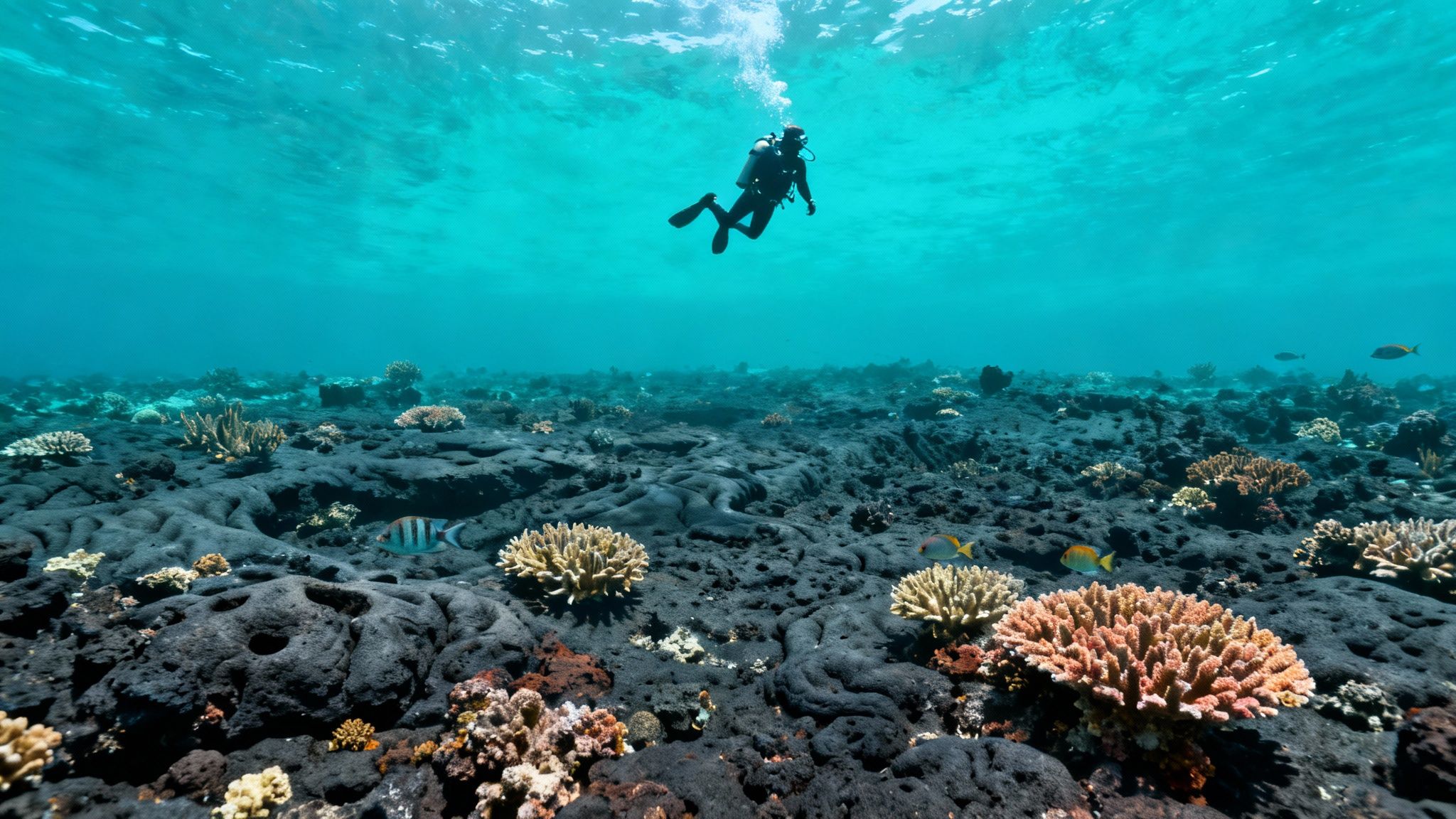
Think of this as your personal roadmap to exploring the Big Island's underwater world. The island’s volcanic origins have created something truly special beneath the waves—a submerged masterpiece of intricate lava tubes, vibrant coral gardens, and steep drop-offs that just beg to be explored.
This isn't a recent discovery, either. The Big Island's dive scene has been booming since the 1980s, and for good reason. Today, it draws around 150,000 dive tourists annually, who log more than 100,000 certified dives in the Kona area alone each year. That long history has cemented the Big Island's status as the top spot for scuba in Hawaii, a place where adventure and a deep respect for the ocean meet.
Big Island Scuba Diving At a Glance
Here’s a quick snapshot of what to expect when planning your dive trip to the Big Island.
| Feature | Details |
|---|---|
| Water Temperature | Averages 75-80°F (24-27°C) year-round. A 3mm wetsuit is usually perfect. |
| Visibility | Typically excellent, often exceeding 100 feet (30 meters). |
| Top Dive Sites | Garden Eel Cove (Manta Ray Night Dive), Two Step, Crescent Beach, Kealakekua Bay. |
| Key Marine Life | Manta rays, green sea turtles (Honu), spinner dolphins, reef sharks, and many endemic fish species. |
| Dive Conditions | The Kona coast is famously calm, making it ideal for divers of all skill levels. |
| Best Time to Dive | Diving is fantastic all year, but summer (May-October) offers the calmest seas. |
This table should give you a solid starting point, but the real magic is in experiencing it for yourself.
What Awaits Beneath The Waves
So, what really makes Big Island scuba diving a cut above the rest? It’s the sheer variety. It doesn’t matter if you’ve got thousands of dives under your belt or you’re just getting your fins wet for the first time—there’s an adventure here with your name on it.
Here’s a taste of what makes diving here so incredible:
- Exceptional Visibility: The water is so clear it often feels like you’re flying. Visibility regularly tops 100 feet, giving you jaw-dropping views of everything around you.
- Unique Volcanic Landscapes: You're not just swimming over reefs; you're exploring a world shaped by volcanoes. Picture yourself gliding through mesmerizing lava tubes, under dramatic arches, and around massive underwater pinnacles. It’s unlike anywhere else.
- Abundant Marine Life: The reefs are packed with life. You'll see everything from colorful fish found only in Hawaii to graceful sea turtles (honu) and pods of playful spinner dolphins.
This guide will be your compass for navigating the best dive sites and unforgettable encounters. And if you're trying to decide between islands, we've already laid out which Hawaii island is best for scuba diving to help you choose. Now, let’s get you ready for an adventure you won’t forget.
Exploring the Top Dive Sites Along the Kona Coast
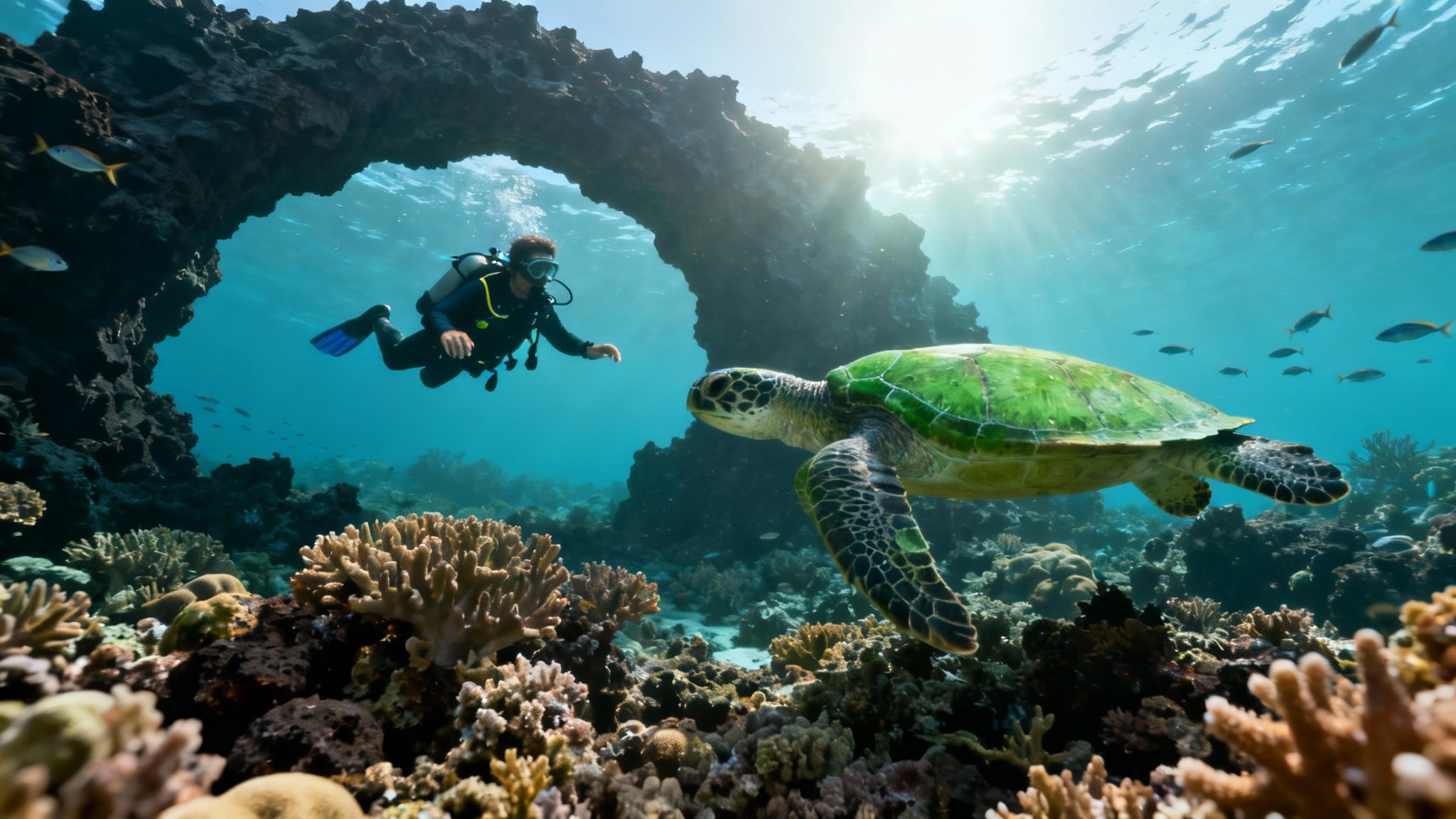
The Kona coast is what divers dream about. It’s a rugged shoreline, carved out by ancient volcanoes, that hides an unbelievable world just below the surface. Because it's sheltered from the trade winds, the water here is known for being incredibly calm and clear, giving us some of the best conditions for Big Island scuba diving pretty much all year. This is where you'll find the legendary spots that put Hawaii on the global diving map.
From massive lava arches to sprawling coral gardens, every single site has its own personality. The underwater landscape is a natural playground of swim-throughs, caves, and pinnacles, all packed with a vibrant cast of marine life. Imagine drifting alongside a majestic green sea turtle (we call them honu), watching schools of fish you can't find anywhere else on Earth, or having a pod of curious spinner dolphins pop in to say hello.
To really get the full picture, you've got to go with a local. The seasoned guides know all the secret nooks and crannies and can lead you to the most mind-blowing encounters. Honestly, jumping on one of the local diving tours is the smartest and safest way to soak in all the magic Kona's underwater world has to offer.
Check Availability
Iconic Kona Dive Sites for Every Skill Level
Whether you just got your certification card or you've got hundreds of dives under your belt, the Kona coast has a site with your name on it. The sheer variety is what keeps us coming back—every dive feels like a completely new adventure.
One spot that everyone loves is Two Step, right next to Pu'uhonua O Honaunau National Historical Park. It's famous for its super-easy entry and incredible biodiversity, making it a hotspot for divers and snorkelers alike. The shallow reefs are bursting with a kaleidoscope of tropical fish, eels, and octopus, and you can almost always count on a lazy sea turtle or two cruising by.
Another can't-miss site is Puako, known for its incredible network of underwater caverns and old lava tubes. Weaving through these ancient formations feels like you're exploring a sunken cathedral, especially when shafts of sunlight pierce the darkness and light up all the hidden critters. To get a better sense of just how different these underwater environments can be, you can see more of the dive sites Kona Honu Divers will take you to.
"Diving in Kona isn't just about what you see; it's about the feeling of being in a world shaped by raw, elemental forces. Every lava tube and coral garden is a testament to the island's dynamic creation."
Beyond Kona: The Uncrowded Reefs of Kohala
While Kona gets most of the fame, heading north to the Kohala coast is like being let in on a well-kept secret. It's a different, more tranquil experience. This area sees far fewer dive boats, which means you often get to have a pristine, untouched reef all to yourself.
So, what makes Kohala special?
- Pristine Coral Health: The reefs up here have some of the highest coral cover in the entire state. A healthy reef means a thriving, busy ecosystem.
- Unique Topography: Just like Kona, Kohala has its share of dramatic volcanic formations, with stunning arches and swim-throughs just waiting to be explored.
- Secluded Atmosphere: With only a handful of dive boats operating out of the nearby Kawaihae Harbor, the whole experience feels more personal and serene.
The same trade winds that can sometimes make the surface a bit choppy in Kohala actually have a huge benefit underwater: they help create phenomenal visibility, often pushing it well beyond 100 feet. The water is just crystal clear. This quieter corner of the island is a fantastic choice for divers who want to escape the crowds and connect with a wilder side of Hawaii's underwater paradise.
The Magic of the Manta Ray Night Dive
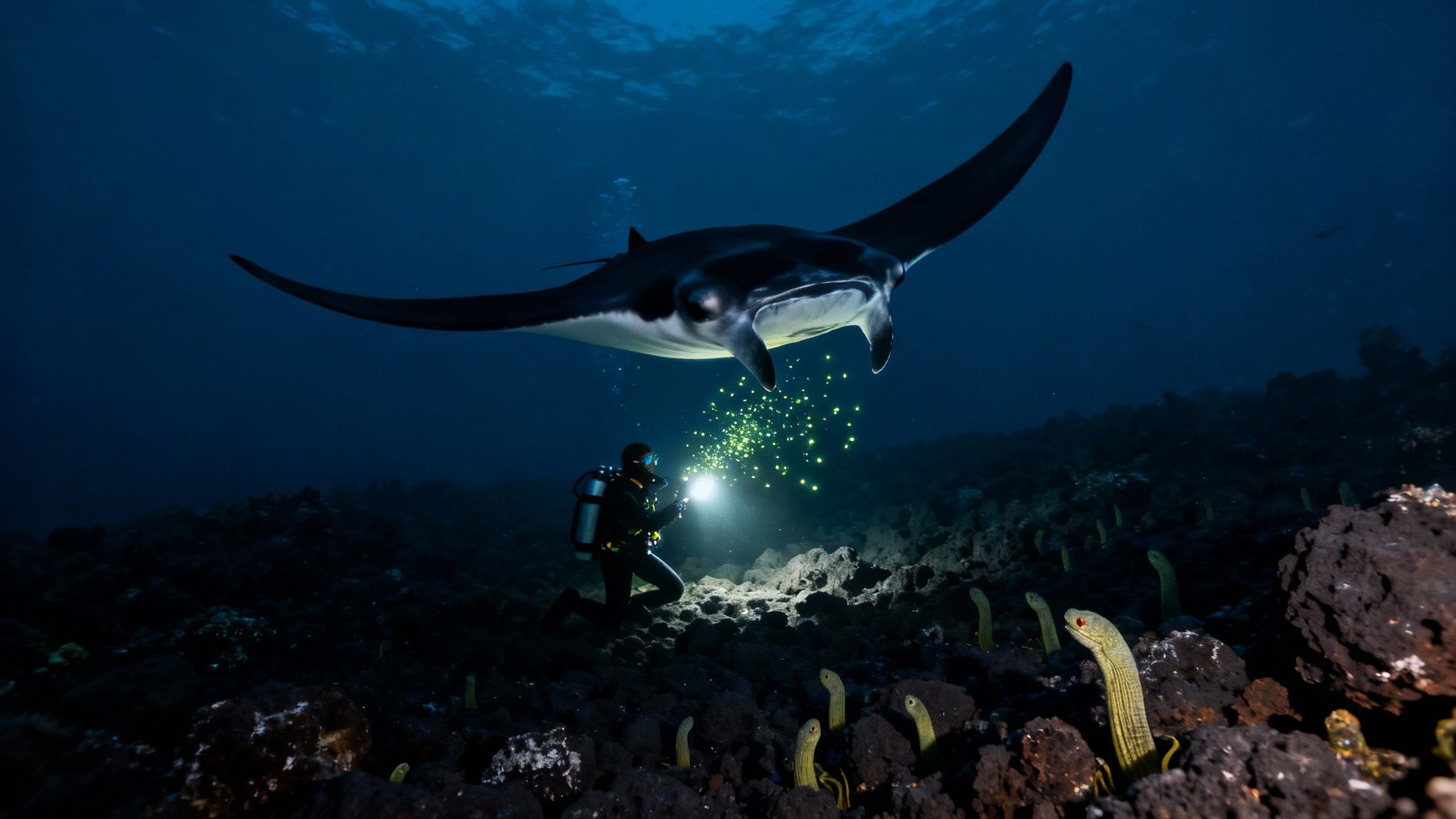
If there's one dive on the Big Island that everyone talks about, it's this one. The Manta Ray Night Dive is more than just another logbook entry; it’s a silent, underwater ballet that unfolds after the sun goes down. Many divers I’ve talked to over the years have called it life-changing, and honestly, I get it. This is the signature dive in Kona, a spectacle you won't soon forget.
The magic behind it all is actually quite simple. We set up powerful underwater lights on the ocean floor, which act like a giant bug zapper for microscopic plankton. This plankton cloud becomes an all-you-can-eat buffet, drawing in the stars of the show: Kona’s majestic reef manta rays.
Picture this: you're kneeling on the sand, and these gentle giants, with wingspans that can stretch up to 16 feet, are swooping and somersaulting just inches over your head. They move with an effortless grace, filter-feeding on the plankton in a way that feels both surreal and deeply moving. It’s this unique feeding behavior that makes the Big Island scuba diving encounter with mantas unlike any other in the world.
Why Garden Eel Cove is the Premier Choice
While you can see mantas at a few spots, one location consistently delivers the best experience: Garden Eel Cove. There are some very practical reasons why this site is hands-down the top choice for a respectful and awe-inspiring encounter.
For starters, the cove's geography naturally shields it from the big ocean swells. This means calmer, more predictable conditions—a huge plus for any night dive. Better conditions mean a safer, more comfortable dive for everyone, and it leads to better visibility. The layout of Garden Eel Cove is almost like a natural amphitheater, with a better viewing area that allows divers to settle in on the sandy bottom. This creates a wide-open "stage" for the mantas to glide through overhead without feeling hemmed in and fosters a far more responsible interaction.
The goal is to be a silent observer in their world. When you give the mantas space and respect, they reward you with a performance that feels truly personal and awe-inspiring.
The surrounding reefs here are also healthier and more vibrant than at other manta sites, adding another layer to the whole dive. You're surrounded by a thriving ecosystem long before the main event even begins. To get an even better feel for this amazing dive, check out our full guide to the Kona Manta Ray Night Dive.
Tips for a Safe and Memorable Dive
To really make the most of this bucket-list dive, it helps to be prepared. Following a few simple rules of etiquette will not only make your dive better but also helps protect the manta rays.
- Observe, Don't Touch: This is the golden rule, no exceptions. Manta rays have a delicate mucus coating on their skin that protects them from infection. Touching them can strip this away and cause serious harm.
- Stay Low: Find your spot on or near the sandy bottom. This keeps the water column clear, giving the mantas plenty of room to maneuver safely above you.
- Mind Your Bubbles: It's a small thing, but try to time your breathing so you aren't exhaling a stream of bubbles right into a manta's path as it glides overhead.
- Go with a Pro: Diving with a reputable operator is key. A good guide will give you a solid briefing, ensure everyone follows safety protocols, and share some fascinating facts about the mantas.
At Kona Honu Divers, our Manta Ray Dive tour takes you right to the heart of the action at Garden Eel Cove. Our experienced crew is all about safety and responsible tourism, ensuring your adventure is both ethical and unforgettable.
Check Availability
Advanced Dives for the Adventurous Spirit
Once you’ve got a good number of dives under your weight belt and you’re hungry for something more, the Big Island delivers. For certified divers looking to push their limits, the challenges here go way beyond the beautiful, sun-drenched reefs. This is where Big Island scuba diving gets really interesting, swapping the calm coral gardens for the deep, the dark, and the wild.
These dives aren't your average tour. They demand a higher level of skill, a cool head, and a deep respect for the ocean's raw power. Whether you're navigating a winding lava tube or dropping into the abyss at night, you need precision, solid awareness, and the confidence that comes with experience.
For those who are ready, the payoff is something you’ll never forget.
The Otherworldly Kona Blackwater Dive
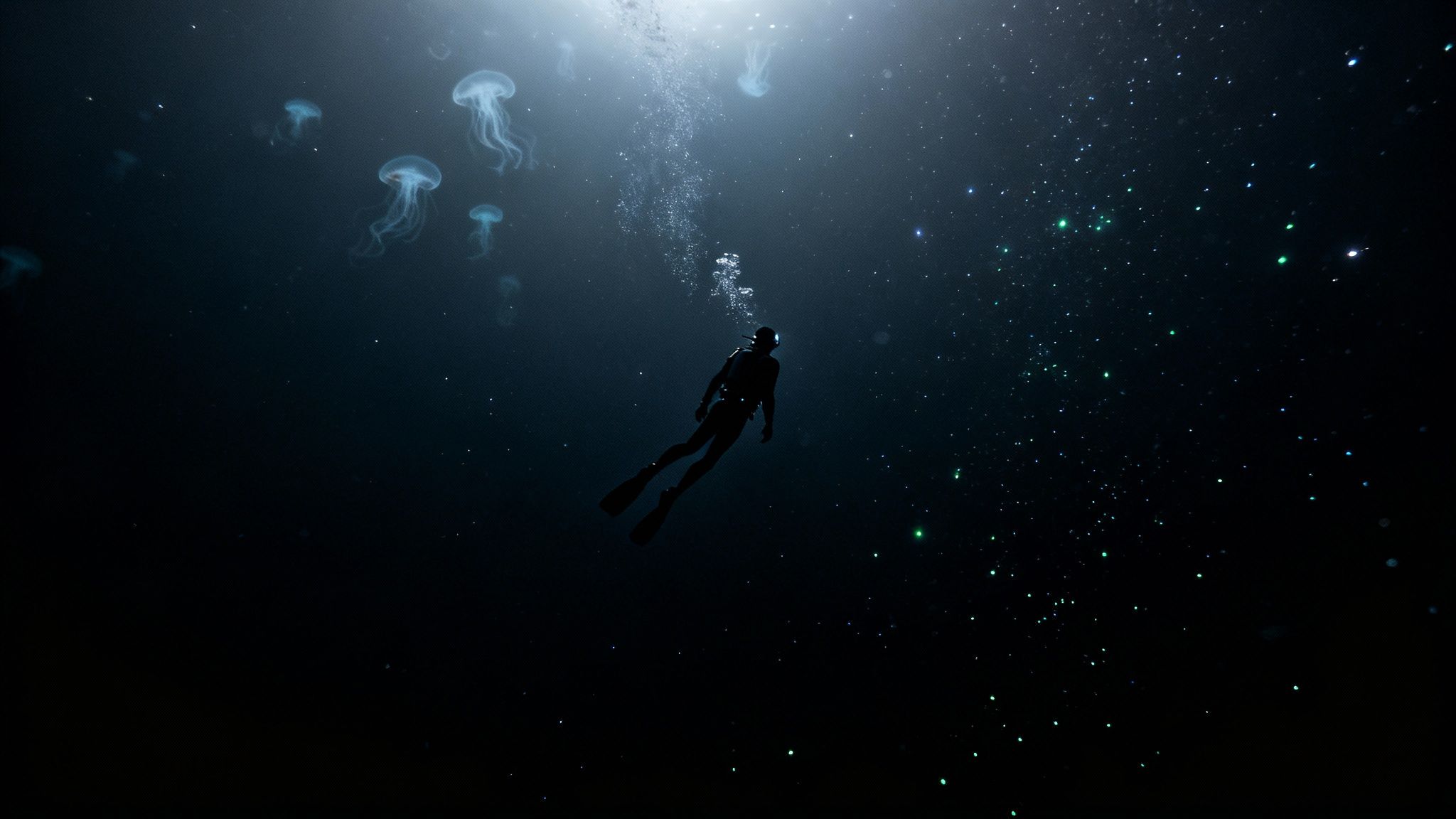
Picture this: you're floating in what feels like outer space, surrounded by a universe of tiny, bizarre, and beautiful creatures straight out of a sci-fi movie. That’s the Kona Blackwater Dive in a nutshell.
This is nothing like a reef dive. You’re taken miles offshore, where the ocean floor is thousands of feet below. Tethered to the boat, you descend into the pitch-black water and just drift. At night, one of the planet's largest migrations happens as countless bioluminescent creatures rise from the depths to feed.
What you see down there is almost indescribable. You’ll meet organisms that look like they belong on another planet—glowing jellies, see-through larval fish, and strange invertebrates in their earliest forms. It’s a surreal, humbling peek into a hidden ecosystem.
The Blackwater Dive is a powerful reminder of how much life exists in the deep ocean, far from the familiar reefs, and how little we truly know about our own planet.
Because you’re dealing with complete darkness, deep open water, and potential currents, this one is strictly for experienced divers. You need rock-solid buoyancy control and a calm mind. To experience this mind-blowing spectacle safely, it’s absolutely essential to go with a specialized Blackwater Dive tour led by a crew who knows the unique risks and rewards.
Navigating Lava Tubes and Stronger Currents
Beyond the blackwater experience, the Big Island’s volcanic heart offers other thrills for the advanced diver. The same eruptions that built these islands from the ocean floor also created a maze of underwater lava tubes, caverns, and swim-throughs. Exploring them is like being an adventurer in a submerged lost world, requiring careful fin kicks and a steady nerve.
Some spots, especially those facing the open ocean, can have some serious currents. While that makes for a more challenging dive, it’s also what brings in the big animals. The currents act like a highway for larger pelagic species cruising the Kona coast.
On these more demanding dives, you have a chance to see:
- Schools of Scalloped Hammerhead Sharks: These shy, magnificent sharks are sometimes spotted hanging out in the deeper, cooler water.
- Whale Sharks: Catching a glimpse of one of these gentle giants is rare, but it’s a true once-in-a-lifetime encounter when it happens.
- Other Pelagic Fish: Huge schools of big-eye jacks, amberjacks, and barracuda are often seen riding the currents.
These dives are not for the faint of heart and require real local knowledge. The only way to tackle them responsibly is with a charter that specializes in taking experienced divers to these spots. An Advanced Dive Tour gives you the expert guide and small group you need to safely explore these incredible sites and take your skills to the next level.
Ready for a dive that will test you and leave you with stories for years to come?
Check Availability
How to Choose the Right Kona Dive Operator
Let's be honest, picking a dive operator can make or break your entire Big Island scuba diving trip. It’s hands-down the most critical choice you’ll make. The Kona coast has a ton of dive shops, and it's easy to get overwhelmed. But the right crew will give you an amazing, safe experience you'll never forget, while the wrong one… well, let's just avoid that. Think of your operator as your underwater guide, your safety crew, and your local wildlife expert, all in one.
At the heart of any truly great dive operation is a deep, non-negotiable commitment to safety. This isn't just about having an oxygen kit on board. It’s about obsessive equipment maintenance, constant staff training, and crystal-clear dive briefings that leave no room for confusion. A top-notch operator always puts your well-being first, creating a relaxed atmosphere where you can just soak in the magic of the reef.
What to Look for in a Dive Shop
So, how do you sort the great from the just-okay? When you're looking at different operators, a few things should be at the top of your checklist.
- A Squeaky-Clean Safety Record: Reputation is everything. Dig into online reviews and see what other divers are saying. Do they mention feeling safe? Were the divemasters attentive and professional?
- Well-Cared-For Boats and Gear: A tidy, organized boat is a huge green flag. The same goes for their rental gear. You want to see modern equipment that looks like it’s serviced religiously, not something that’s been collecting dust since the 90s.
- Small, Personal Groups: Nothing's worse than being herded underwater like cattle. Diving in a small group is safer, more personal, and gives you a much better chance to see cool stuff without a cloud of bubbles scaring it away.
- Real Commitment to Ocean Health: The best operators are passionate about protecting the very environment they share with you. Look for shops that practice what they preach with responsible diving, guest education, and real involvement in local conservation.
The Kona Honu Divers Difference
If you’re looking for a company that nails all of the above, Kona Honu Divers is a name that comes up again and again for a reason. They've earned a stellar reputation not just for providing incredible dives, but for doing it with the highest safety and environmental standards. Their crew knows these waters like the back of their hand—from the subtle currents to exactly which ledge the resident frogfish likes to hang out on.
Their whole philosophy is built around diver safety and ocean conservation. Their boats are purpose-built for comfort, and their insistence on small groups means every single diver gets the attention they need. When you find an operator you can trust completely, you can finally relax and just enjoy the dive.
But don't just take our word for it. The experiences of countless happy divers say it all.
Getting to explore Kona's underwater world is a privilege. Partnering with a team that takes your safety as seriously as you do makes all the difference. When you're ready to dive in, check out the diving tours they have on offer.
Check Availability
Understanding the Importance of Dive Safety
Let’s be honest: heading into the open ocean is an incredible adventure, but safety should always be the top priority. While any activity in the water has its risks, you might be surprised to learn that a professionally guided Big Island scuba dive is one of the safest ways to explore what’s beneath the waves. It’s all thanks to a system built on solid training, reliable gear, and expert supervision.
The local statistics really put things into perspective. Between 2009 and 2018, Hawaii recorded a heartbreaking 206 snorkeling-related fatalities, with most of those being visitors. During that same ten-year stretch, there were only 28 fatalities among certified scuba divers. That massive difference isn't a coincidence; it highlights just how effective the safety protocols in diving are. You can dig deeper into these numbers in a detailed report on Hawaiian ocean recreation.
The Foundation of Scuba Safety
This isn't to frighten you away from the water, but to show you why you can feel so confident on a professional dive. The scuba industry's excellent safety record comes from a deliberate, layered approach designed to manage risk from start to finish.
Here's a quick breakdown of what makes a guided dive so secure:
- Mandatory Training and Certification: You can't just grab a tank and go. Every certified diver has gone through extensive training to learn how their equipment works, what to do in an emergency, and how to be a responsible buddy.
- Pre-Dive Safety Checks: Before you even dip a fin in the water, every dive starts with a comprehensive safety briefing. You and your guide will run through a meticulous check of your gear to make sure everything is in perfect working order.
- Constant Professional Oversight: This is a big one. You’ll always have a certified divemaster or instructor in the water with you. They’re constantly watching the conditions, keeping an eye on the group, and are trained to handle any situation that might pop up.
Your Safety with Kona Honu Divers
When you dive with a top-tier operator like Kona Honu Divers, you're not just a customer—you're under the care of seasoned professionals who live and breathe this stuff every single day. Their commitment to safety is uncompromising, covering everything from meticulously maintained boats to detailed emergency action plans.
This level of dedication allows you to let go of any worries and just soak in the incredible beauty of the Big Island’s coral reefs. Your only job is to be amazed. An adventure in the ocean should be about wonder, not worry, and a professional crew is what makes that possible.
Check Availability
Your Big Island Diving Questions Answered
As your trip gets closer, you've probably got a few last-minute questions bubbling up. Planning a Big Island scuba diving adventure has a lot of moving parts, and getting those final details sorted can turn a good trip into a great one.
This is your go-to spot for the most common questions we hear from divers. We'll cover everything from what happens on a tour to the best season for diving, making sure you're completely ready for an unforgettable time in the water.
What Happens If The Manta Rays Don't Show Up?
This is easily one of the most common—and fairest—questions we get. The good news is that manta ray sightings here are incredibly reliable, with a success rate well over 90%. That said, these are wild animals on their own schedule, and no one can ever make a 100% guarantee.
Because of this, most reputable operators have a policy in place. It's standard practice to offer you a spot on another night's tour, free of charge, if you don't see any mantas. My advice? Always double-check this policy when you book, and try to schedule your manta dive for one of your first nights on the island. That way, you have plenty of time to rebook without scrambling your vacation plans.
When Is The Best Time of Year to Dive?
Honestly, any time is a great time to dive in Kona. The water is always inviting, hovering between a comfortable 75-80°F (24-27°C) all year long. You really can't go wrong.
But if you're chasing perfection, the summer and early fall (roughly May through October) tend to have the calmest, glassiest seas and the warmest water. The tradeoff is that the winter months (December to March) offer something truly magical: the chance to hear the songs of migrating humpback whales echoing through the water on your dive. The surface can be a little choppier, but that experience is something you'll never forget.
Do I Need to Be Certified to Dive?
Yes, you absolutely do. To join any of our boat dives, whether it’s the Manta Ray Night Dive or the unique Blackwater Dive, you must be a certified scuba diver. It's all about safety—yours and the marine life's. Certification proves you have the fundamental skills and knowledge to handle yourself underwater.
Not certified yet? No problem! That doesn't mean you have to miss out. Most local dive shops, ourselves included, offer introductory "discovery" dives and full PADI certification courses to get you started. And if you have questions about your trip that aren't specific to diving, you can find great information in these general travel FAQs.
Ready to take the plunge? The experienced crew at Kona Honu Divers is excited to show you the best underwater spots the Big Island has to offer.
Check Availability