
Welcome to the real magic of Hawaii—the world that exists just below the waves. When it comes to Big Island scuba diving, you're looking at an underwater paradise literally forged by fire. The Kona coast, in particular, is a diver's dream, offering some of the most stunning and dependable diving conditions anywhere on Earth. It's a place that belongs on every diver's must-do list, no matter your experience level.
Ready to dive into a world of gentle giants and ancient lava tubes? Your adventure begins now.
Discovering Hawaii’s Premier Diving Paradise
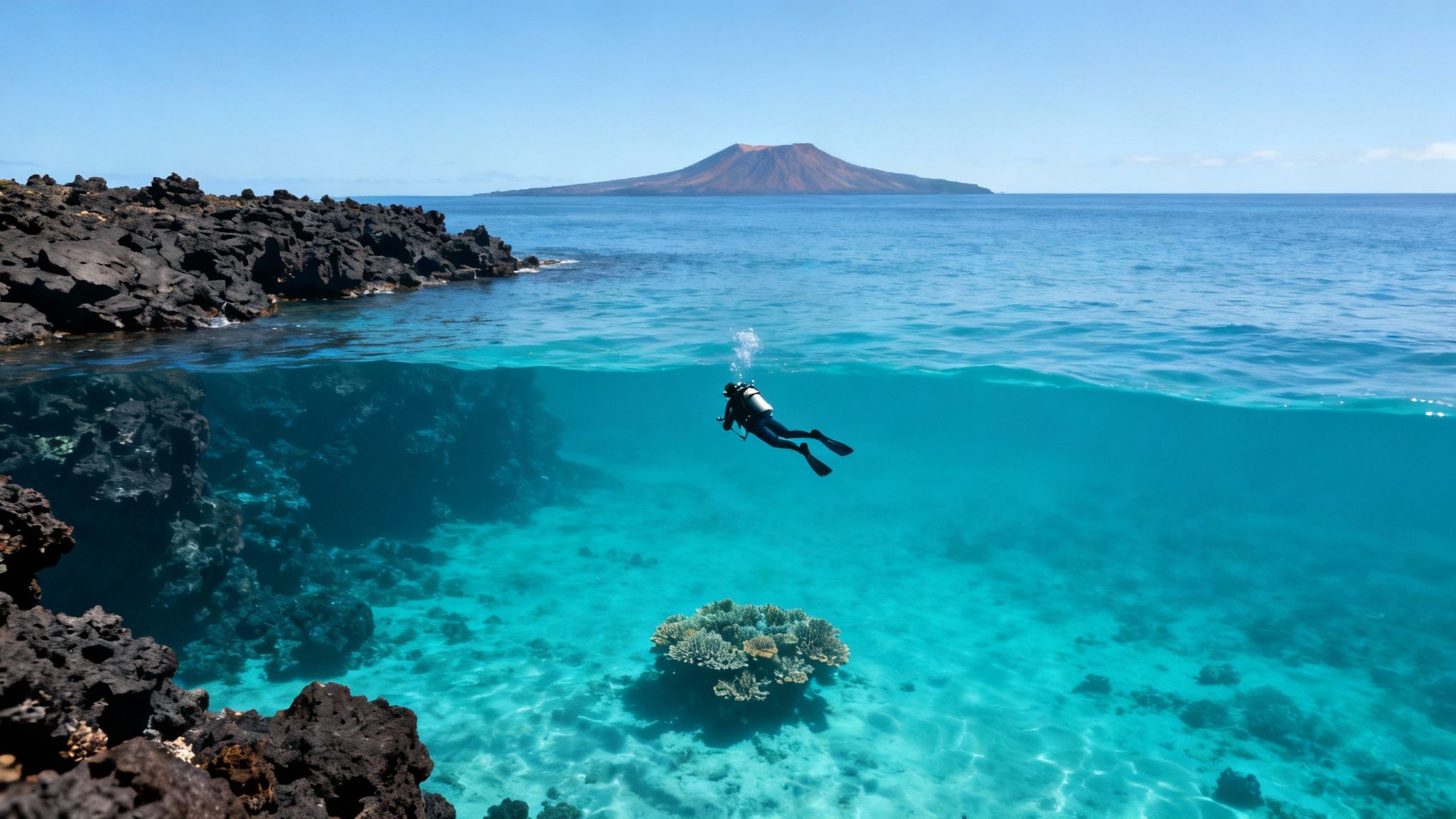
The Big Island is more than just a beautiful place to vacation; it's a world-class scuba destination shaped by raw, volcanic power. Over millennia, lava flows from the island's massive volcanoes sculpted a breathtaking underwater landscape of dramatic drop-offs, mysterious caverns, and intricate archways. This one-of-a-kind geology is the foundation for an experience you won't forget.
What really sets the Kona coast apart, though, is its water. It's remarkably clear and calm, with visibility often stretching beyond 100 feet. The island’s towering mountains, Mauna Loa and Hualalai, act as a natural shield against the strong trade winds, creating nearly perfect conditions day in and day out. This protection has allowed a rich and incredibly diverse ecosystem to thrive.
A Thriving Underwater World
Diving here is like dropping into a living kaleidoscope. The reefs pulse with color, home to a wild assortment of tropical fish, moray eels peeking from their dens, and cleverly camouflaged octopus. Venture a little further from the reef, and the deep blue water brings in larger pelagic species. Every single dive holds the promise of an incredible encounter.
This underwater playground is famous for a few local celebrities:
- Honu (Green Sea Turtles): You'll see these gentle, ancient mariners everywhere. They are a common and cherished sight, usually found munching on algae or just chilling out on the reef.
- Spinner Dolphins: Known for their breathtaking aerial shows, large pods of spinner dolphins often patrol the Kona coast, putting on a show for divers and snorkelers alike.
- Majestic Manta Rays: The island is legendary for its manta ray population, and nothing compares to meeting them on one of the iconic night dives.
From Niche Hobby to Global Destination
Word has definitely gotten out. Back in the 1960s, you could count the island's dive shops on one hand. Today, the Big Island is home to over 50 dive charters that welcome more than 150,000 dive tourists every single year, all coming to experience the magic for themselves. You can read more about the fascinating history of the Big Island diving industry and see just how much it has grown.
Whether you're gearing up for your very first breath underwater or you've got hundreds of dives in your logbook, the Big Island has an adventure waiting for you. From the world-famous Manta Ray Night Dive to the otherworldly Blackwater Dives, this guide will help you map out the perfect trip. Start by exploring all the incredible diving tours the Big Island has to offer.
Why Kona Is the Heart of Big Island Diving
When you hear people raving about Big Island scuba diving, nine times out of ten, they’re talking about Kona. It’s more than just a convenient spot on the map; it’s the undisputed center of Hawaii's underwater universe, and the reason is written in the island's very geology.
The same volcanoes that forged this island now act as its greatest protectors. The immense peaks of Mauna Loa and Hualalai create a massive natural shield, blocking the powerful trade winds that pound the rest of the island. This creates a calm "lee side," a sanctuary where the ocean is often as smooth and clear as glass. What that means for divers is incredibly consistent, amazing conditions all year long.
A Volcanic Underwater Playground
The seascape here is a direct result of its fiery birth. Ancient lava flows have sculpted a dramatic and intricate underwater world, full of lava tubes you can swim through and grand, cathedral-like archways. It's a rugged, beautiful landscape that you just don't find elsewhere.
These volcanic formations are now completely blanketed in vibrant coral, creating the perfect home for a staggering amount of marine life. You aren't just swimming over a reef; you're exploring the very bones of the island.
The calm, protected waters of Kona are the key. They allow for incredible reef development and provide a safe haven for marine life, which is why the biodiversity here is so rich and accessible to divers.
This unique setup allows for an explosion of life. Divers get a front-row seat to a constant parade of colorful reef fish, from schools of bright yellow tangs to delicate butterflyfish. It’s this one-two punch of dramatic topography and thriving sea life that sets Kona apart. You can learn more about the unique features of diving in Kona to really understand what makes it a world-class destination.
Where Marine Life Thrives
The reliably calm and clear water also makes Kona a magnet for Hawaii’s most famous marine animals. Encounters that are a once-in-a-lifetime event elsewhere can be an everyday thing here.
You can pretty much count on seeing:
- Honu (Green Sea Turtles): These graceful giants are everywhere. You’ll find them resting on the reef, getting a cleaning from other fish, or just cruising by you in the blue.
- Spinner Dolphins: It’s common to see huge pods of these acrobatic dolphins from the boat. Hearing their clicks and whistles underwater before you even see them is an experience you won't forget.
- Whale Sharks and Humpback Whales: While not a daily sight, the deep, clear waters off Kona attract bigger visitors. During the winter months (December-March), the songs of humpback whales become the soundtrack for your dives—a truly haunting and beautiful experience.
This incredible biodiversity, combined with the near-perfect conditions, is why dive operators like Kona Honu Divers have built a reputation for unforgettable trips. Their local expertise means they know exactly where to go to find the best of what Kona has to offer on any given day.
From easy, sun-drenched reef dives for new divers to thrilling explorations of deep lava tubes for the more experienced, Kona really does have it all. It is, without a doubt, the true heart of diving on the Big Island.
Exploring Hawaii’s Most Iconic Dives
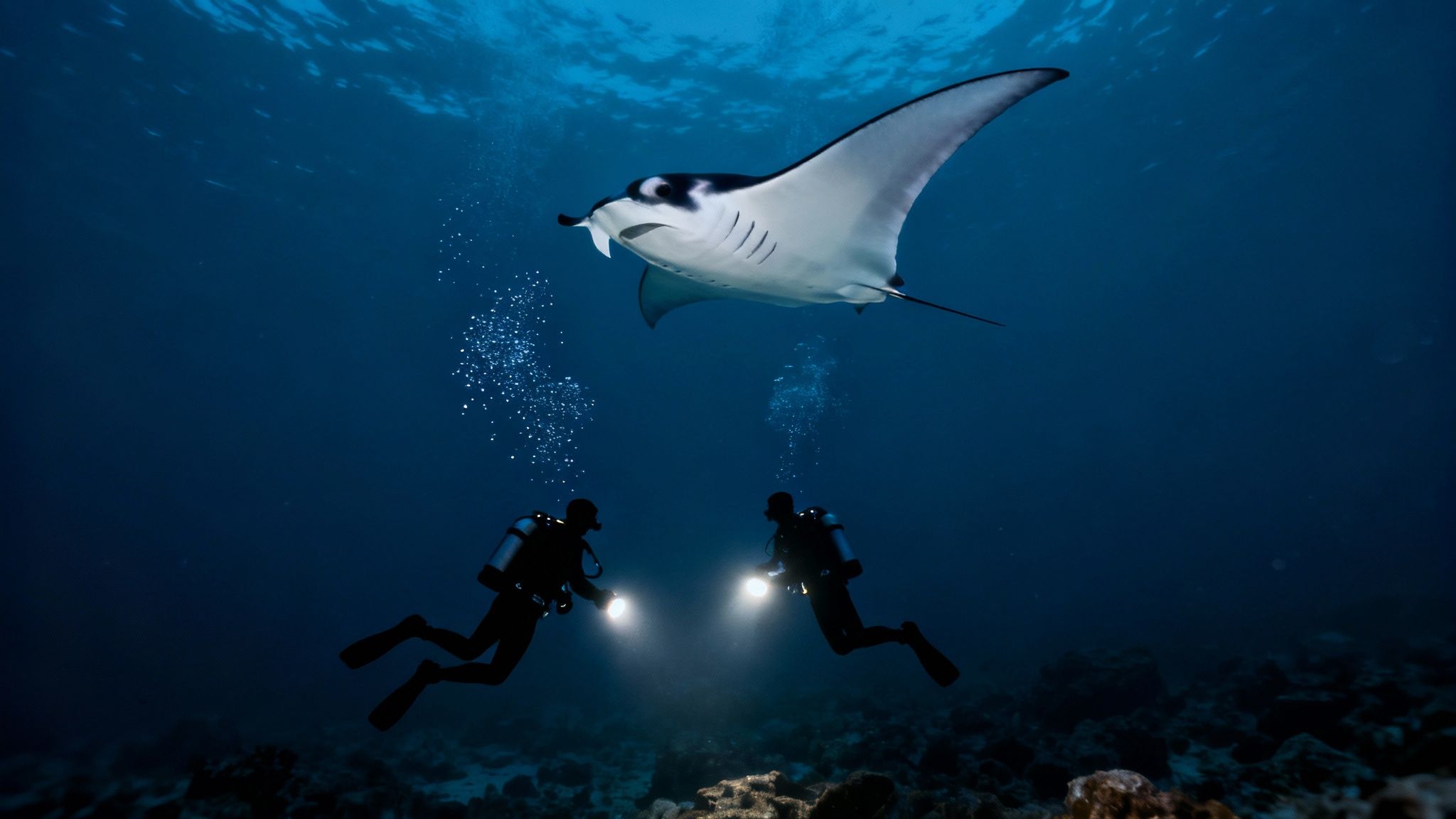
Sure, pretty much any dive off the Kona coast is going to be memorable. But there are two experiences that are so extraordinary, they've put Big Island scuba diving on the global map. These aren't just dives; they're genuine spectacles.
We're talking about the legendary Manta Ray Night Dive and the mysterious Kona Blackwater Dive. Each one pulls back the curtain on a world that feels completely alien and is, quite simply, magical. These are the kinds of dives people talk about for the rest of their lives.
The World-Famous Manta Ray Night Dive
Picture this: you're settled on the ocean floor in the pitch-dark, aiming your dive light up towards the surface. Out of the black, a colossal, shadowy figure with a wingspan of 12 feet or more materializes. It glides silently into your beam, performing an elegant, zero-gravity ballet just inches from your face. That's the Manta Ray Night Dive, and it is every bit as jaw-dropping as it sounds.
The "magic" is actually a bit of brilliant, simple science. Dive operators set up powerful, stationary lights on the seafloor—underwater campfires, if you will. These lights attract massive clouds of plankton, which just so happens to be a manta ray’s favorite meal. The gentle giants swoop in for the all-you-can-eat buffet, performing mesmerizing barrel rolls as they feed in the light.
Why Garden Eel Cove is the Premier Choice
You can do this dive at a couple of spots, but Garden Eel Cove (also known as Manta Heaven) is the superior choice for your dive tour. There are a few key reasons why it's the top choice.
- Protected Location: The cove is naturally sheltered from the open ocean, which usually means calmer conditions and a much more comfortable experience for everyone.
- Better Viewing Area: The site is shaped almost like a natural amphitheater. This layout lets divers spread out, giving everyone a front-row seat without feeling like you're piled on top of each other.
- Healthier Reefs: The reef surrounding the manta "stage" is absolutely vibrant. A daytime dive here is spectacular in its own right, so you get two amazing dives in one spot.
Choosing a Manta Ray Night Dive at Garden Eel Cove often means a more serene and intimate encounter. The site's topography and protection from swells create a perfect stage for one of nature's most graceful performances.
This isn't just about watching marine life; it’s an interactive performance where you become part of the scenery. If you're ready to see this underwater ballet for yourself, you can book one of the most highly-rated manta ray dive tours and get set for an unforgettable night.
The Kona Blackwater Dive: An Otherworldly Spacewalk
If the manta dive is a graceful ballet, the Kona Blackwater Dive is a trip to another planet. It’s often called an "underwater spacewalk," and for good reason—it’s one of the most unique and surreal experiences you can have with a tank on your back.
You descend into the inky blackness miles from shore, tethered to a boat that's floating above thousands of feet of open ocean. You’re essentially dangling in the middle of nowhere. It's a humbling, thrilling feeling.
Every night, the largest migration on Earth takes place as countless bizarre creatures rise from the crushing depths to feed near the surface. Your dive lights slice through the dark, illuminating a world of bioluminescent, translucent, and alien-like organisms that very few people will ever witness.
You never know what you'll see, but you might encounter things like:
- Pelagic Nudibranchs: Bizarrely beautiful sea slugs that appear to "fly" through the water column.
- Larval Eels and Fish: Tiny, transparent, ribbon-like versions of the creatures you see on the reef.
- Bioluminescent Jellies: Strange jellies pulsing with their own eerie, internal light.
This dive isn't about spotting big animals. It's about discovering the hidden, often microscopic universe that forms the very foundation of the ocean's food web. It’s a specialized dive for the truly adventurous, and there’s nothing else quite like floating in the abyss, watching life forms that look like they belong in a sci-fi movie drift by.
Ready for a trip to inner space? You can learn more about this unique adventure by checking out a Kona Blackwater Dive tour.
Finding Your Perfect Kona Dive Site
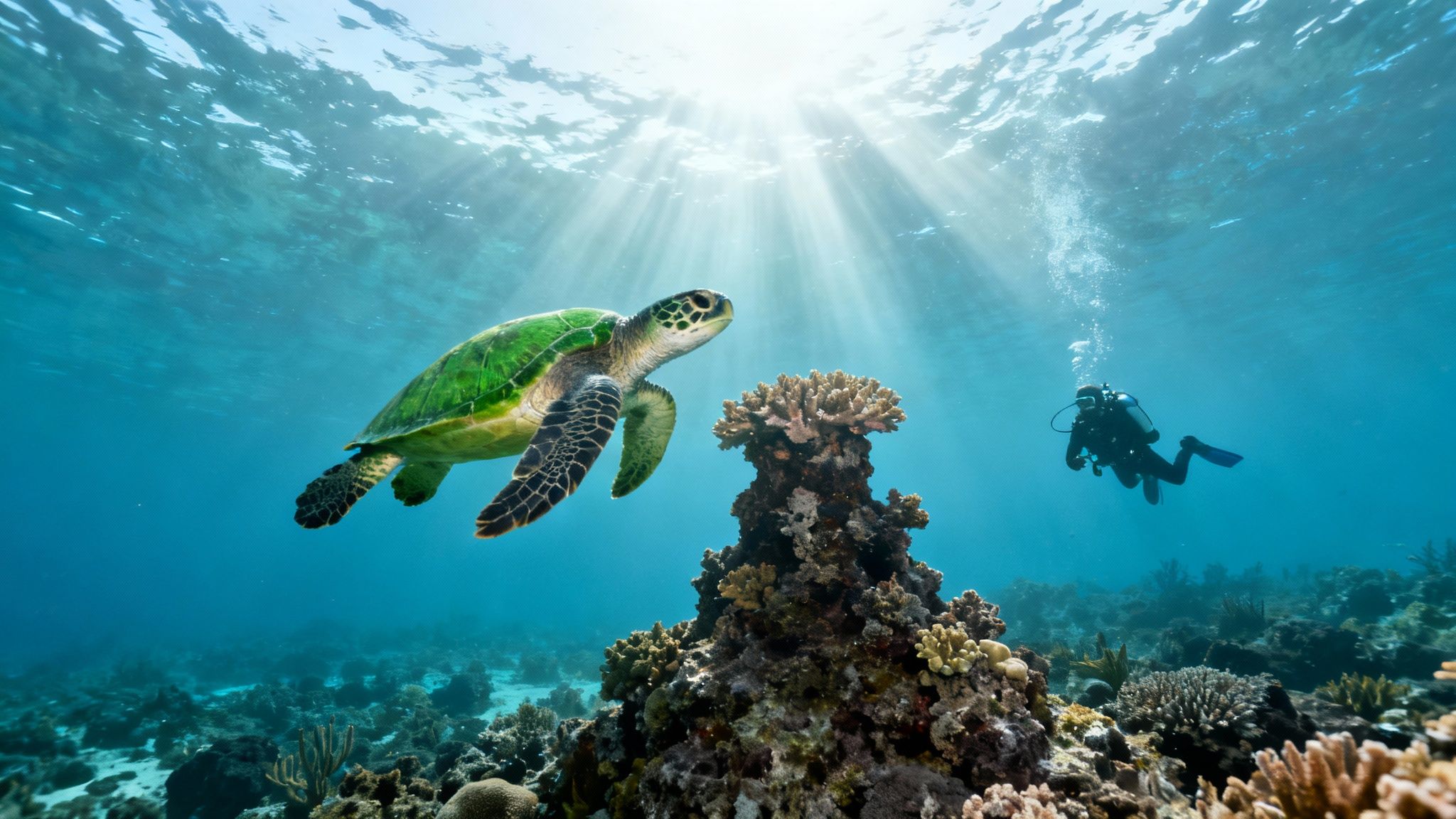
Trying to choose a dive site in Kona can feel a little overwhelming. The coastline is just packed with incredible spots. But here's the secret: there are no bad choices. The real key is matching the site to your skill level and your wish list. Doing that is what turns a good big island scuba diving trip into an unforgettable one.
Thanks to its volcanic origins, Kona's underwater landscape is a diver's dream. You'll find everything from gentle, sandy slopes perfect for a first-timer to dramatic, deep craters that will thrill even the most seasoned diver. Whether you just got your open-water certification or you have thousands of dives under your belt, there’s a place here that’s perfect for you.
For the New Diver: Calm Waters and Abundant Life
Just starting out or feeling a bit rusty? Kona has some of the most beautiful and forgiving entry-level dive sites you'll find anywhere. These spots are usually shallow, sheltered from any real current, and absolutely teeming with life. They're the perfect place to build your confidence while being completely surrounded by the magic of a Hawaiian reef.
A perfect example is Pawai Bay. Dive shops love this spot for introductory dives for a reason—it’s calm, clear, and fascinating. You get to explore shallow lava tubes and swim-throughs where the sunlight streams down, lighting up schools of colorful reef fish. It's a gentle, stress-free way to get comfortable with your gear and buoyancy while the scenery does all the work.
For the Intermediate Diver: Exploring Deeper Wonders
Once you’ve got your buoyancy dialed in and you're feeling solid in the water, a whole new world of Kona diving opens up. The intermediate sites often take you a bit deeper, introduce you to more complex underwater terrain, and increase your chances of spotting some of the bigger marine animals.
Turtle Pinnacle is a must-do dive that absolutely lives up to its name. Picture a submerged lava formation that acts as a "cleaning station" for Hawaiian green sea turtles, or honu. You can just hang back and watch as small fish come and clean the algae right off the turtles' shells. It’s an incredible natural behavior to witness up close. The site is also a hotspot for moray eels and the occasional eagle ray gliding by.
For the Seasoned Adventurer: Unique Challenges and Topography
If you have plenty of experience and advanced certifications, Kona serves up dives that will challenge your skills and leave you speechless. These sites might mean greater depths, stronger currents, or tricky navigation, but the reward is seeing the wild, untamed side of Hawaii's underwater world.
One of the most unique advanced sites has to be Au Au Crater. It’s a submerged volcanic crater, and there’s truly nothing else like it on the island. As you descend into the crater, you'll see dramatic walls and ledges that are often patrolled by whitetip reef sharks or visited by larger pelagic species coming in from the deep. It's one of those dives that reminds you just how powerful nature is and offers some of the best experienced diving opportunities around.
Choosing the right dive site is all about finding that perfect balance between adventure and comfort. Kona’s coastline offers this for every single diver, making sure each trip below the surface is just as incredible as the last.
No matter your experience, the perfect Kona dive is waiting for you. The trick is to go with a reputable local operator who knows these sites like the back of their hand. They'll help match you with an underwater adventure you'll be talking about for years.
To help you get started, here's a quick look at some of the most popular dive sites along the Kona coast and what makes each one special.
Kona Dive Sites At-a-Glance
| Dive Site | Skill Level | Max Depth | What You'll See |
|---|---|---|---|
| Garden Eel Cove | Beginner/Intermediate | 40 ft | Manta Rays (night), Garden Eels, Turtles |
| Pawai Bay | Beginner | 45 ft | Lava tubes, Reef Fish, Octopus |
| Turtle Pinnacle | Intermediate | 60 ft | Turtle cleaning stations, Eels, Eagle Rays |
| Au Au Crater | Advanced | 70 ft+ | Unique crater topography, Sharks, Pelagic fish |
| Kona Blackwater Site | Advanced | 50 ft (in open ocean) | Bioluminescent creatures, Pelagic Larvae |
This table is just a starting point, of course. Each site offers its own unique personality, and part of the fun is discovering them for yourself.
Getting Certified and Taking Your Skills to the Next Level
So, are you ready to take your first breath underwater? Or maybe you're already a diver and want to sharpen your skills? The Kona coast, with its calm, warm, and crystal-clear waters, is easily one of the best places in the world to do just that. This isn’t just about getting a certification card—it’s about building real confidence in a perfect underwater classroom, guided by pros who know these waters like the back of their hand.
Turning your Big Island vacation into a training opportunity is a fantastic idea. Whether you're a complete beginner or an old pro, the gentle conditions here take a lot of the usual stress out of learning. It lets you relax and focus on what matters: mastering your skills and soaking in the incredible scenery all around you.
Your First Dive: The PADI Open Water Course
If you've been dreaming of exploring the world beneath the waves, the PADI Open Water Diver course is your golden ticket. It's the most popular and recognized scuba certification on the planet, and honestly, there’s no better place to earn it than right here in Kona.
The course itself is broken down into three straightforward parts: building your knowledge, practicing skills in calm, shallow water (confined water dives), and then taking everything you've learned out into the ocean for your open water dives.
Kona’s sheltered bays act as a natural swimming pool for those first moments breathing underwater. Instead of a sterile chlorine pool, your classroom is a living, breathing reef, which makes the whole experience feel less like a test and more like an adventure. If you're ready to jump in, you can learn more about the Kona PADI Open Water certification and even get a head start on the theory online before you even pack your bags.
What Comes Next? Continuing Your Education
Trust me, getting your Open Water certification is just the beginning. The real fun kicks in when you start expanding your abilities and unlocking new kinds of diving experiences. Continuing education courses are all about making you a safer, more capable diver while introducing you to cool new skills that will make every future dive even better.
Here are a few of the most popular and practical courses to consider while you're in Kona:
- Advanced Open Water Diver: This one is all about getting out there and exploring. You'll do five different "adventure dives"—deep and navigation are required, but you get to pick the other three. It’s a great way to sample different specialties and figure out what really excites you.
- Peak Performance Buoyancy (PPB): I can't stress this enough: mastering your buoyancy is the most important skill you can develop as a diver. This specialty teaches you how to hover perfectly, fine-tune your breathing, and glide through the water with total control. You'll use less air and, more importantly, you'll learn how to protect the fragile coral reefs.
- Underwater Photography: With the kind of marine life we have here, you're going to want to take pictures. This course covers the basics of shooting underwater—from composition and lighting to camera settings—so you can go home with images that actually do your dives justice.
Specializing for Kona’s Signature Dives
Some skills are tailor-made for the best dives the Big Island has to offer. For example, if that world-famous manta ray night dive is on your must-do list, becoming a certified Night Diver is the absolute best way to prepare.
This course takes the mystery out of diving after sunset. You’ll learn how to handle dive lights, navigate when it's dark, and spot all the cool critters that only come out at night. It completely transforms any initial nerves about a night dive into pure, wide-eyed wonder.
Advancing your training is about so much more than just collecting cards. Every new skill you learn opens up a new part of the ocean, giving you the confidence to explore more challenging sites and appreciate the underwater world in a way you never thought possible.
Planning Your Dive Trip: What You Need to Know
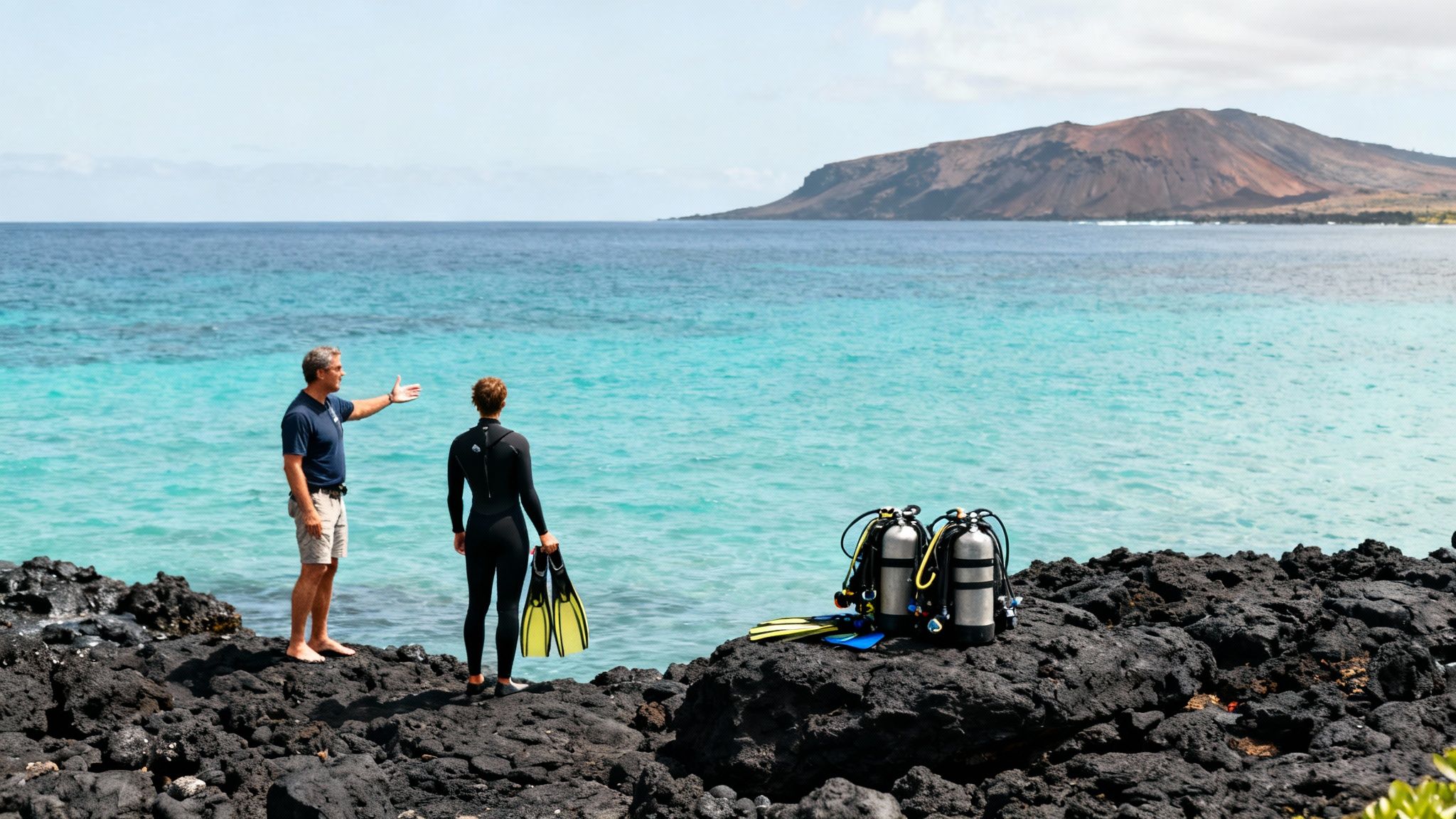
With so many incredible underwater adventures waiting for you, a little bit of planning goes a long way. Getting the logistics sorted out ahead of time—from picking the right season to finding the perfect crew—means you can spend less time worrying and more time soaking in the magic below the surface.
The good news is that Kona makes it pretty easy. The weather is famously consistent, the water stays warm, and the dive conditions are reliable pretty much all year. This means the "best" time to visit really just depends on your personal schedule and what kind of unique seasonal encounters you're hoping for.
When to Visit and What to Pack
One of the best things about diving in Kona is that there's truly no bad time to go. Water temperatures stay in that perfect sweet spot between 75-80°F (24-27°C), so you're comfortable no matter the season. The visibility is also consistently spectacular, often stretching out beyond 100 feet.
That said, if you visit during the winter months (think December through March), you get a truly unforgettable bonus: the sound of humpback whales. Their hauntingly beautiful songs become the underwater soundtrack to your dives. It's a soul-stirring experience you'll never forget. You can get a more detailed breakdown here: https://konahonudivers.com/what-are-the-best-months-to-scuba-dive-in-hawaii/
As for packing, you can always rent excellent gear, but most experienced divers like to bring a few key pieces of their own kit.
- Your Own Mask and Dive Computer: Nothing's worse than a leaky mask. Bringing one that fits your face perfectly is a game-changer. And using your own dive computer means you're already familiar with its display and functions, which is always a plus for safety.
- Essential Travel Items: Don't forget reef-safe sunscreen to help protect Hawaii’s fragile coral ecosystems. A reusable water bottle is a must for staying hydrated, and a light jacket or windbreaker is perfect for those breezy boat rides back to shore.
It's also a smart move to look into travel insurance before you leave. Having that peace of mind can make all the difference if any unexpected situations pop up during your trip.
Choosing the Right Dive Operator
This might be the single most important decision you make. A great dive operator doesn't just drive the boat; they shape your entire experience. They are your guides, your safety net, and your source of local knowledge. Look for companies that focus on small groups, have a stellar safety record, and run clean, comfortable boats.
Kona has a fantastic selection of top-notch dive shops, each with a solid reputation.
- Kona Honu Divers: These guys are famous for their phenomenal customer service and beautiful boats. They really focus on creating a personalized experience with small groups, which has earned them thousands of five-star reviews. They are a go-to for everything from the manta dive to advanced charters.
- Jack's Diving Locker: As one of the original Kona dive shops, Jack's has been around forever and has a well-earned reputation for excellent training. They offer a huge range of trips and courses that cater to divers of all levels.
- Big Island Divers: Another one of the main players on the Kona coast, Big Island Divers is known for having a super friendly and welcoming crew. They offer a full slate of tours, including the iconic Manta Ray Night Dive.
Ultimately, the best operator comes down to what you're looking for. I always recommend reading recent reviews, checking out photos of their boats, and even giving the shop a call. A quick chat can tell you a lot about their vibe and whether they're the right fit for your adventure.
Your Big Island Scuba Questions, Answered
It's natural to have a few questions when you're planning a dive trip to a new place. I've been diving these waters for years, and a few key questions always pop up.
Let's clear those up so you can focus on getting excited for your adventure. Here are some straightforward answers to the things divers ask most often.
When’s the Best Time of Year to Get in the Water?
Honestly, any time is a good time to dive Kona. That's the beauty of this place. The water stays in that perfect sweet spot of 75-80°F (24-27°C) year-round, and the coastline here is uniquely sheltered, giving us calm, predictable conditions most days.
But if you want something truly special, plan your trip for the winter months—think December through March. That’s humpback whale season. You won’t just see them from the boat; you’ll hear them on your dive. Their songs echo through the water, creating an underwater soundtrack you'll never forget. It adds a whole other layer of magic to the experience.
Do I Need a Ton of Experience to Dive Here?
Not at all. Kona is fantastic because it offers something for absolutely everyone. I’ve taken out brand-new divers fresh off their Open Water certification and veterans with thousands of dives logged, and nobody ever feels out of place.
We have everything from calm, shallow reefs that are perfect for getting comfortable in the water to more advanced adventures. Think deep dives, intricate lava tubes, and dramatic volcanic formations. No matter your skill level, you'll find a dive site that feels like it was made just for you.
What Makes a Great Manta Ray Night Dive Tour?
The Manta Ray Night Dive is the star of the show here, and choosing the right operator is key. My best advice? Find a tour that goes to Garden Eel Cove. It's a more protected site, which usually means calmer water and a better, less crowded viewing spot for the mantas.
Beyond the location, you want to look for an operator with a rock-solid safety record and a preference for small groups. A smaller group size makes the whole thing feel more intimate and less chaotic. A passionate, knowledgeable guide can take a good dive and turn it into the story you tell for the rest of your life, so check those reviews!
Can I Just Rent All My Gear When I Get There?
You sure can. Every reputable dive shop in Kona has full sets of well-maintained rental gear ready to go—regulators, BCDs, fins, computers, the works. It’s super convenient if you don’t want to lug your own equipment across the ocean.
That said, if you bring one thing, make it your own mask. There’s nothing worse than a leaky, ill-fitting mask ruining your view. A mask that fits your face perfectly is a small piece of gear that makes a massive difference in your comfort and overall enjoyment of the dive.