
Welcome to your complete guide for Big Island scuba diving—an underwater world born from volcanic fire and bursting with life. From its legendary clear waters to one-of-a-kind lava formations, Hawaii's largest island offers unforgettable year-round adventures for every diver. This isn't just another dive trip; it's a chance to explore a marine ecosystem unlike any other.
Why The Big Island Offers World-Class Diving
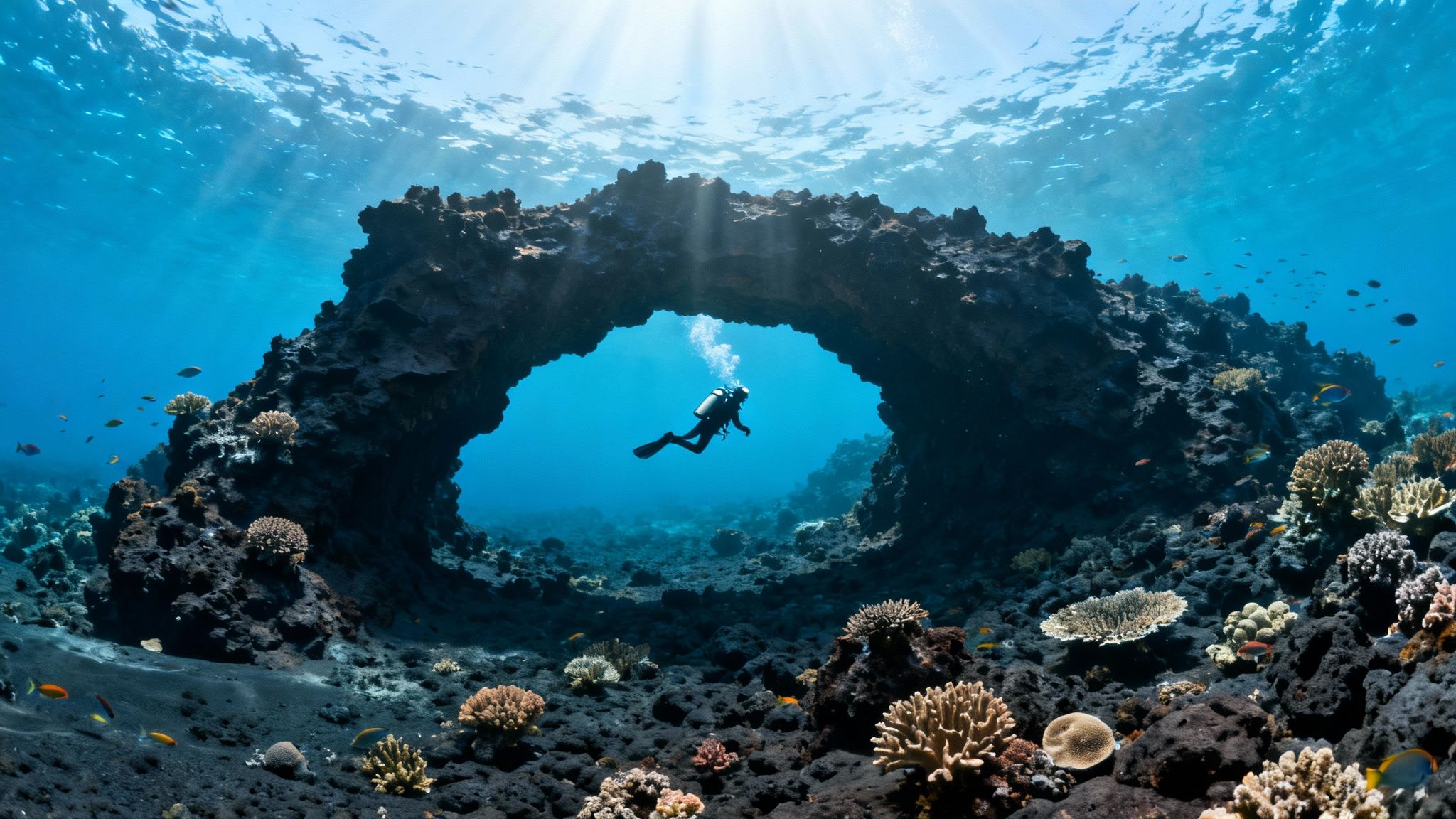
So, what makes the Big Island a bucket-list destination for divers across the globe? It really comes down to a few key ingredients that you just can't find anywhere else. The island's volcanic origins have sculpted a dramatic underwater landscape that feels truly prehistoric. You're not just swimming over reefs; you're exploring intricate lava tubes, gliding through majestic arches, and navigating canyons carved by ancient lava flows. It’s a breathtaking backdrop for every single dive.
Then there's the water. The clarity here is just phenomenal. The massive volcanoes of Mauna Loa and Hualalai act as a natural shield for the Kona coast, blocking the trade winds and creating incredibly calm seas. The result? Visibility that often pushes past 100 feet. Crystal-clear water like that turns a great dive into a spectacular one, letting you soak in every detail of the vibrant reefs.
A Sanctuary for Unique Marine Life
The island’s remote location in the vast Pacific has created a hotbed of biodiversity. A huge number of the marine species you'll see here are endemic, which means this is the only place on Earth you can find them. Every dive is a treasure hunt for rare and beautiful creatures.
You’ll want to keep your eyes peeled for some of our famous locals:
- Hawaiian Green Sea Turtles ('Honu'): We see them all the time, just chilling on the reef or gracefully swimming by.
- Spinner Dolphins: You'll often see them putting on a show from the boat, and if you're lucky, you might even get a pass-by underwater.
- Manta Rays: These gentle giants are the stars of our world-famous night dives, where they perform an unforgettable feeding ballet.
- Endemic Fish: Look for the vibrant Milletseed Butterflyfish and the stunning Potter's Angel fish, which bring a unique splash of color to our reefs.
This perfect combination of conditions and marine life has put the Big Island on the map. What started with a couple of small dive shops has blossomed into a premier destination that welcomes over 150,000 dive tourists every year.
Here's a quick look at what makes this place so special.
Big Island Diving Highlights at a Glance
| Feature | Description | Best For |
|---|---|---|
| Volcanic Topography | Underwater lava tubes, arches, and canyons. | Divers who love unique landscapes and exploration. |
| Exceptional Visibility | Frequently exceeds 100 feet due to calm, sheltered waters. | Underwater photographers and anyone who loves wide-open views. |
| Endemic Species | A high percentage of marine life found nowhere else. | Marine life enthusiasts and divers looking for rare encounters. |
| Year-Round Diving | Consistently great conditions no matter the season. | Planning a flexible dive trip without worrying about weather. |
This table just scratches the surface, but it gives you a good idea of why we're so passionate about diving here.
The Heart of Hawaii's Dive Scene
While the whole island has something to offer, the Kona coast is without a doubt the epicenter of the action. Its leeward position provides those calm, clear waters that make diving here so reliable and enjoyable. It's the perfect spot for everyone, from newly certified divers finding their fins to seasoned pros looking for their next big adventure.
That consistency means you can plan a trip any time of year and expect amazing conditions. For a deeper dive into what to expect season-by-season, check out our guide on the best months to scuba dive in Hawaii. It’s this blend of unique geology, pristine water, and incredible wildlife that puts the Big Island at the very top of every diver's list.
Experiencing The Kona Manta Ray Night Dive
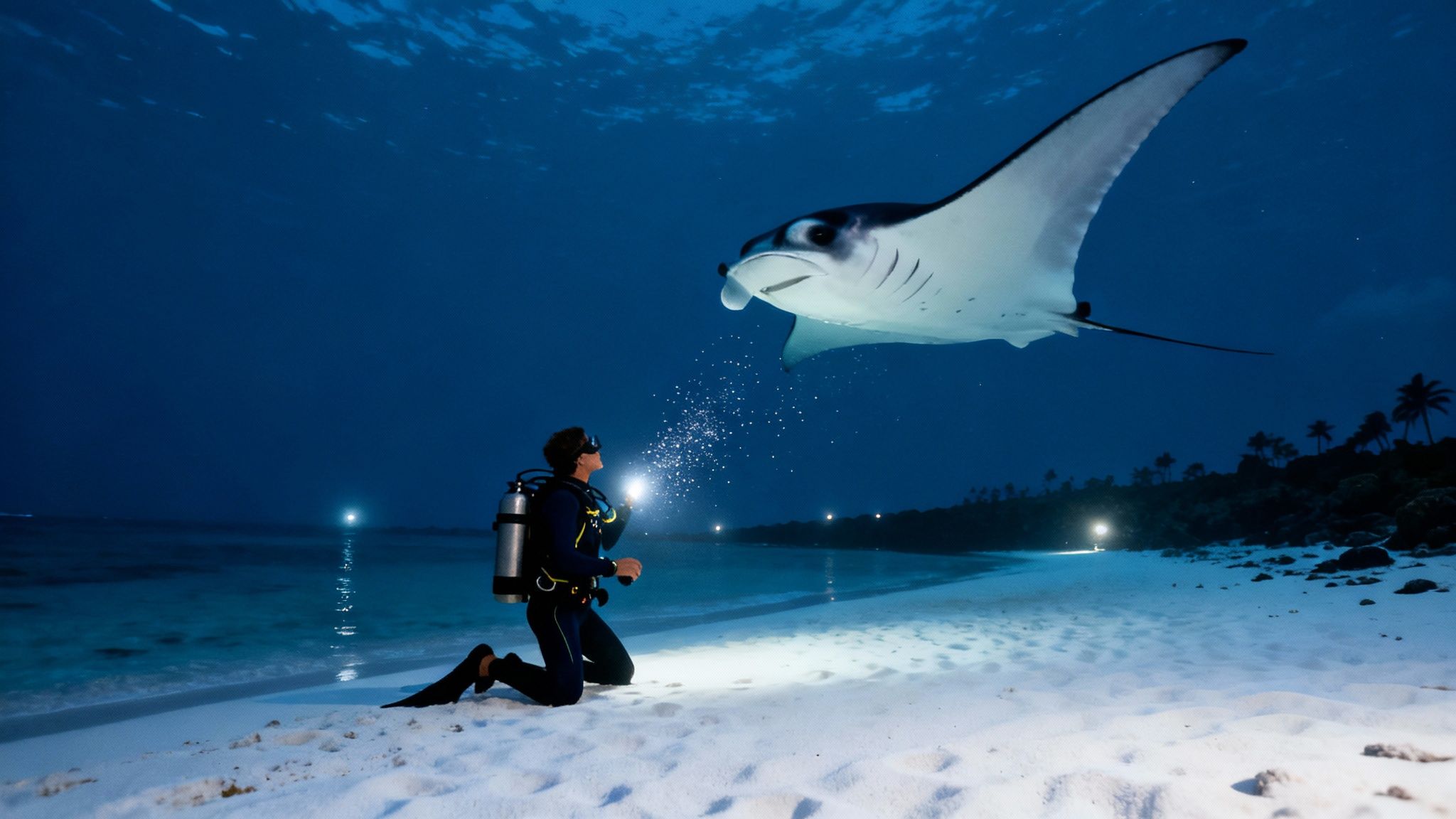
Of all the incredible dives the Big Island has to offer, one experience truly stands apart. It’s magical. It’s unforgettable. It’s the world-famous Kona Manta Ray Night Dive.
This isn’t just another dive—it’s a front-row seat to an incredible underwater spectacle. Imagine kneeling on the sandy ocean floor, watching majestic manta rays with wingspans up to 16 feet perform an effortless ballet just inches above your head.
The concept behind the dive is beautifully simple. We place powerful lights on the seafloor, which attract massive clouds of plankton—the mantas' favorite meal. Once the buffet is set, the gentle giants swoop in, gliding and barrel-rolling through the light beams in a mesmerizing show of grace and power.
It's no surprise this breathtaking encounter has become one of the most iconic attractions for anyone interested in big island scuba diving, drawing people from every corner of the globe.
Why Garden Eel Cove Is The Premier Location
While you can see mantas at a couple of spots, Garden Eel Cove (lovingly nicknamed Manta Heaven) is the superior choice for the dive tour because it consistently delivers the best show. A big reason is its unique geography. The site is tucked into a protected bay, which shields it from strong currents and open-ocean swell. The result? Calmer, more predictable conditions year-round, which makes for a much more comfortable and enjoyable dive for everyone.
Even more importantly, the whole setup at Garden Eel Cove is thoughtfully designed for a better viewing area and a superior encounter. Divers gather around a central "campfire" of lights on a sandy patch, creating a focused feeding area for the mantas.
This controlled environment allows the mantas to approach with confidence and gives divers an unparalleled, up-close view without disturbing the animals or the delicate surrounding reef. It’s an intimate and respectful way to observe these magnificent creatures in their natural habitat.
Plus, the reefs around the main viewing area are healthy and vibrant, making the descent and the swim back to the boat a fantastic dive in its own right. Choosing a manta ray dive tour to Garden Eel Cove simply maximizes your chances for a calm, safe, and truly unforgettable night.
A Legacy Of Conservation And Research
The manta ray night dive is so much more than a tourist attraction; it's a huge part of a long-standing conservation and research effort here in Kona. People have been diving with mantas on the Big Island for decades, with formal research kicking off way back in 1981.
Pioneering dive operators started collecting data, allowing researchers to identify individual rays by their unique belly spot patterns—they’re just like a human fingerprint. To learn more about how this dive became a worldwide phenomenon, you can explore the fascinating history of the Kona Manta Ray Night Dive.
This long-term monitoring has been priceless for tracking manta populations, understanding their behaviors, and pushing for their protection. The dive's rise in popularity since 1992 has helped fund these efforts and raise global awareness. When you join a responsible manta ray tour, you're directly contributing to the protection of these gentle giants.
Here at Kona Honu Divers, we’re absolutely committed to sharing this awe-inspiring experience while holding ourselves to the highest standards of safety and respect for the mantas.
Ready to witness the underwater ballet for yourself? Our expert guides will make sure you have a safe, comfortable, and utterly memorable night with these incredible animals.
Must-See Dive Sites Along The Kona Coast
Sure, the manta ray night dive gets all the headlines—and for good reason!—but it’s only the beginning of what Big Island scuba diving is all about. The Kona and Kohala coasts are loaded with an incredible variety of world-class dive spots, each telling a different story about the island’s fiery volcanic birth and the rich marine life that now calls it home.
The sheer diversity here is what hooks you. One morning, you could be watching turtles get pampered at a cleaning station, and that afternoon, you could be navigating a maze of ancient lava tubes. This is your guide to some of the spots that we think belong on every diver's must-see list.
Turtle Pinnacle (Nahuna Point)
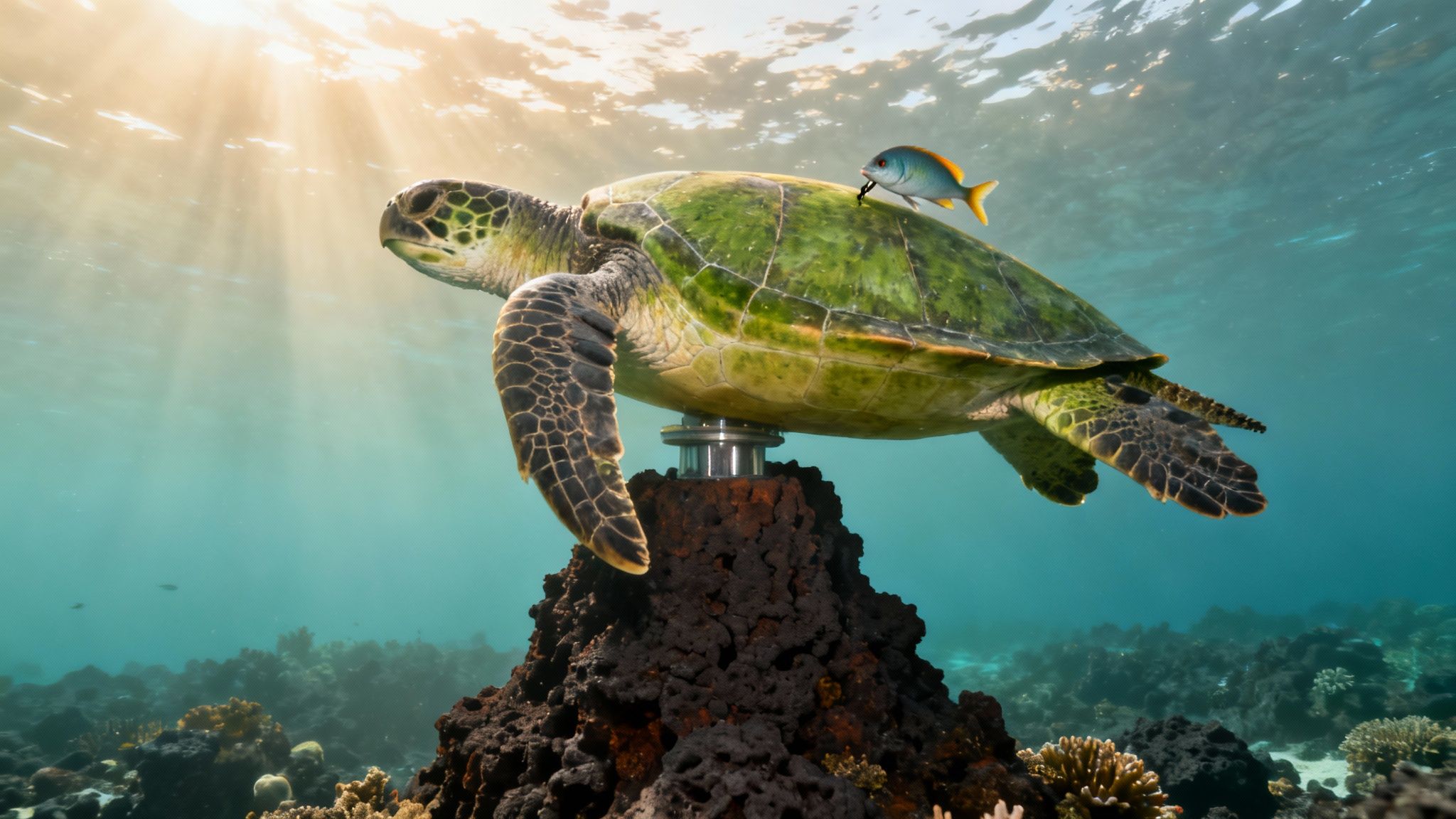
As you might guess from the name, Turtle Pinnacle is the place to go for guaranteed encounters with our beloved Hawaiian green sea turtles, or 'honu.' The site's main feature is a huge coral pinnacle that juts up from the seafloor, serving as a natural spa for the local turtles.
You can just hover and watch in awe as they line up, patiently waiting for endemic Hawaiian cleaner wrasse to swim all over them, picking off algae and parasites. It's a photographer's paradise.
- What You'll See: Besides turtles galore, keep an eye out for well-camouflaged frogfish, moray eels peering out from crevices, and big, shimmering schools of reef fish.
- Typical Depth: 30-60 feet (9-18 meters)
- Skill Level: Beginner to Intermediate
Golden Arches (Pu'u Ohau)
If you want a real taste of the Big Island’s dramatic underwater landscape, Golden Arches is a showstopper. The site is famous for a massive lava rock archway, completely covered in brilliant gold and orange cup corals that light up under your dive torch. Swimming through it really feels like you're passing through a gateway into another world.
The reef around the arch is just as stunning, filled with healthy coral gardens and bustling with life. It's a fantastic example of how volcanic geology creates the perfect, complex habitat for countless marine species.
Suck 'Em Up Cavern
Don't let the name spook you! Suck 'Em Up is genuinely one of the most unique and thrilling dives on the Kona coast. It’s a big underwater cavern that’s connected to the shoreline through a lava tube. As the ocean swell breathes in and out, it creates a gentle "sucking" and "blowing" sensation at the mouth of the cavern.
It's a wild feeling to ride that gentle surge. Once you’re inside, the way the light filters down through the entrances creates this beautiful, cathedral-like atmosphere. It’s a dive that really heightens all your senses.
Divers can hang out near the cavern entrance and explore the surrounding lava formations, which are home to spiny lobsters, shrimp, and other cool critters. Because of the overhead environment and the potential for surge, this one is best for divers who are confident in their buoyancy.
- What You'll See: Incredible light rays, tons of crustaceans, and that unforgettable feeling of the ocean breathing around you.
- Typical Depth: 40-50 feet (12-15 meters)
- Skill Level: Intermediate
Two Step (Honaunau Bay)
While most of Kona’s legendary sites are boat-access only, Two Step is the undisputed king of shore diving on the Big Island. It’s right next to the historic Pu'uhonua o Hōnaunau National Historical Park, and it gets its name from two natural lava rock "steps" that make getting into the water almost ridiculously easy.
The second you slip in, you’re greeted by a vibrant, shallow reef that’s perfect for both divers and snorkelers. The bay is naturally protected and usually very calm, with fantastic visibility. It's not uncommon to see spinner dolphins resting here, turtles munching on seaweed, and a whole kaleidoscope of colorful reef fish.
Crafting Your Perfect Dive Plan
These spots are just a handful of the gems the Kona coast holds. With well over 50 established dive sites, there is truly something for every diver and every mood. Here at Kona Honu Divers, our crew has spent years getting to know these waters. We take a lot of pride in picking the absolute best sites based on the day’s conditions and our guests’ comfort levels, making sure every single trip is safe, fun, and full of amazing discoveries.
Whether you're itching to explore lava tubes, chill with turtles, or just drift over a pristine coral reef, we can put together the perfect adventure for you. Take a look at all of our Big Island diving tours to see the full range of experiences we offer.
Advanced Dives For The Experienced Adventurer
So, you've logged your dives, nailed your buoyancy, and are comfortable in just about any conditions. Now you're hungry for something more. This is where Big Island scuba diving truly shines, offering challenges that go way beyond the beautiful, sun-drenched reefs. For the experienced diver, the real magic starts where the light fades and the reef drops away.
These aren't your average dives. We're talking about experiences designed to expand your skills and show you a side of the ocean most people never even know exists. Think navigating intricate volcanic formations or drifting in the open ocean after dark. This is about embracing the thrill of the unknown and seeing a completely different side of Hawaii's underwater world.
Ready to take the plunge? These dives will absolutely test your abilities, but the reward is a collection of underwater memories that will last a lifetime.
The Legendary Kona Blackwater Dive
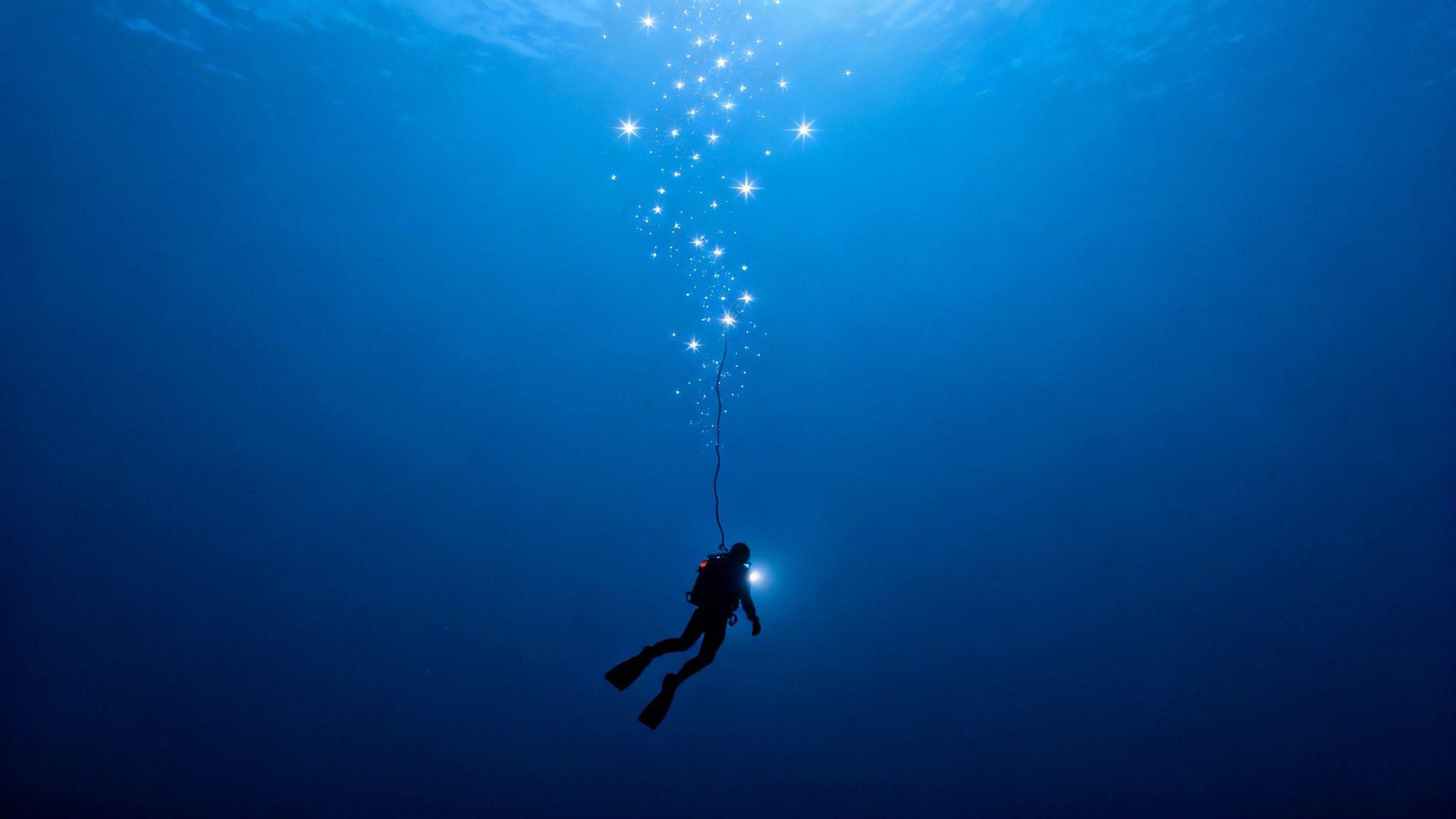
Picture this: you're suspended in pure blackness, miles from shore, with thousands of feet of water directly below you. All you see are the bizarre, beautiful, and often glowing creatures that drift past in the beam of your light. That's the Kona Blackwater Dive. It's often called an "inner-space walk," and frankly, that's the best way to describe it.
On this dive, we tether you to the boat and simply drift in the deep open ocean. The boat’s powerful lights attract an incredible array of life from the depths, organisms taking part in the largest vertical migration on the planet. Every night, they journey from the deep sea toward the surface to feed.
What you see is a parade of life that looks like it's straight out of a sci-fi movie. Bioluminescent jellies, alien-like squid in their larval stage, and creatures so strange you’ll wonder if they're even from this planet. It's a spectacle that will completely change the way you think about the ocean.
This isn't a reef dive. It’s a glimpse into the mysterious pelagic zone, the vast, open water where life takes on its most otherworldly forms. You can get all the details about this mind-bending adventure on our Kona Blackwater Dive tour page.
Pushing The Limits With Deeper Exploration
Beyond the famous blackwater experience, Kona's volcanic underwater landscape is a playground for skilled divers. The island’s dramatic drop-offs and ancient lava flows have sculpted deep reefs, towering pinnacles, and complex lava tube systems that require sharp skills and a cool head to explore.
These advanced dives offer a different kind of reward, one found far below the casual tour boats.
- Deep Reefs and Pinnacles: Dropping down to 100 feet or more is like entering another world. Down here, you might find schools of scalloped hammerheads cruising the deep, rare pelagic fish, and other critters that prefer the cooler, darker water.
- Lava Tube Navigation: If you have pinpoint buoyancy control and are comfortable in overhead environments, exploring a lava tube is an unforgettable experience. It feels like you're swimming through the very veins of the island, a geological wonder few get to see from the inside.
Dives like these demand a higher level of certification, more experience, and a genuine sense of adventure. They're perfect for anyone looking to challenge themselves and discover what lies beyond the sunlit coral gardens. At Kona Honu Divers, we run specialized premium advanced dive trips designed to get experienced divers to these exact kinds of deeper, more demanding sites.
How To Choose The Right Big Island Dive Operator
Let’s be honest, picking the right dive operator for your Big Island scuba diving trip is probably the most important decision you'll make. It’s the difference between a good dive and a truly unforgettable one. You’re not just booking a spot on a boat; you're trusting a crew with your safety and the quality of your underwater experience.
The best operators all have a few things in common, and they’re non-negotiable. An ironclad safety record comes first, always. Next, you want comfortable, well-maintained boats. Small dive groups are another huge factor—it means you get a more personal, relaxed, and attentive dive.
And the guides? The best ones aren't just there to lead the way. They're passionate marine experts who get genuinely excited to point out a rare nudibranch or explain the behavior of a passing manta ray.
What Sets The Best Dive Shops Apart
A truly great dive shop has a certain vibe, a culture built on excellence. They invest in top-notch rental gear and service it meticulously because they know your safety and enjoyment depend on it.
You'll also find they operate with a sense of ‘Pono,’ a Hawaiian value that embodies righteousness and respect. This isn’t just a buzzword; it means they practice responsible tourism, actively protecting the incredible marine environment you’ve traveled so far to see.
Kona Honu Divers lives and breathes this philosophy. Everything we do is built on a foundation of safety, conservation, and making sure our guests have an amazing time from the moment they book.
We keep our groups small for a reason. You’re never just another diver on a crowded boat. Instead, you get personalized guidance from pros who are truly passionate about sharing Kona's underwater world with you.
This approach ensures everyone, from a first-timer to a seasoned veteran, feels comfortable and gets the most out of every single minute underwater. For a deeper dive into what to look for, check out our guide on how to choose a Kona dive shop.
Making An Informed Decision
While we're incredibly proud of the experience we provide, the goal is for you to find the perfect match for your dive style and vacation. The Kona coast is home to several fantastic, highly respected dive operators who have been showing people the magic of these waters for years.
Here are a couple of other excellent choices worth looking into:
- Jack's Diving Locker: A cornerstone of the Kona dive community for decades, they're well-known for their comprehensive course selection and large, comfortable boats.
- Big Island Divers: Another long-standing operator with a stellar reputation, offering a wide variety of dive trips with a dedicated and experienced crew.
Take a little time to compare things like boat sizes, typical dive destinations, and the overall feel of each company. Finding the operator that clicks with you is the key to ensuring your exploration of Kona's underwater world is safe, memorable, and absolutely magical.
Ready to experience the best of Big Island scuba diving with an operator that puts you first?
Essential Safety Practices For Hawaii Diving
A great dive trip is a safe dive trip. That's the bottom line. Getting to experience the absolute magic of Big Island scuba diving means having a deep respect for the ocean and sticking to the safety protocols that keep us all coming back for more. These aren't just rules for rules' sake; they're practices that protect you, your buddy, and the incredible marine life we're there to see.
When you look at the numbers, Hawaii actually has a fantastic scuba safety record, especially when you stack it up against other ocean activities. This isn't by accident. It's the direct result of the high standards for training and safety that define the entire certified diving community.
The data really tells the story. Between 2009 and 2018, Hawaii saw 206 fatalities related to snorkeling. In that same timeframe, there were only 28 scuba diving fatalities. That huge difference speaks volumes about how proper training, well-maintained gear, and diving with professionals create a much safer way to explore the underwater world. You can find more Hawaiian ocean safety statistics on konahonudivers.com.
Your Pre-Dive Safety Checklist
Every successful dive starts long before you hit the water. A few simple checks are all it takes to set yourself up for a smooth, enjoyable experience. Any professional dive operator will always ensure their vessel meets every item on a comprehensive boat safety checklist before even leaving the harbor.
When it comes to your personal prep, these are the non-negotiables:
- Gear Check: Run through a full pre-dive check on your equipment, every single time. Does your BCD inflate and hold air? Does it dump properly? Is your regulator breathing easy? How's your tank pressure? Never skip this.
- Buddy System: Never, ever dive alone. Before you get in, talk through the dive plan with your buddy. Go over hand signals and agree on what to do if you get separated. Your buddy is your lifeline.
- Stay Hydrated: This one is huge. Being dehydrated dramatically increases your risk of decompression sickness. Make sure you're drinking plenty of water before you dive and after you get back on the boat.
In-Water Best Practices
Once you're in the water, it's all about awareness. Listen carefully to your divemaster's briefing—they'll clue you in on local conditions and any potential currents you need to know about.
Solid buoyancy control is more than just a way to protect the reef (though that's a huge reason to master it!). It’s a core safety skill. It helps you conserve air, stay calm, and maintain control throughout your dive.
And finally, always remember the fundamentals: ascend slowly, make your safety stop, and stick to the recommended no-fly times after your last dive. Following these essential practices allows you to dive with total confidence, knowing you’re doing your part to keep Hawaii's underwater world safe for everyone.
Your Big Island Diving Questions, Answered
Diving into a new spot always sparks a few questions. We get it. To help you get ready for an amazing Big Island scuba diving trip, here are some straight-up answers to the questions we hear most often from divers just like you.
What’s the Best Time of Year to Dive Here?
Honestly, any time is a great time to dive on the Big Island. The water is always inviting, hovering around a comfortable 75°F (24°C) in the cooler months and warming up to a balmy 82°F (28°C) in the summer. Visibility is often incredible, frequently stretching beyond 100 feet.
If you're here in the winter (December-March), you get a pretty magical bonus: the sound of humpback whale songs echoing through the water on your dives. Summer, on the other hand, usually brings the flattest, calmest seas, making for super smooth boat rides. It really just comes down to what you want to see and feel.
Do I Need to Be an Advanced Diver for Kona Dives?
Not at all! One of the best things about the Kona coast is the sheer variety of dive sites that cater to every skill level. Many of our most stunning, life-filled reefs are in calm, protected waters between 30-60 feet, perfect for beginners or those just getting certified.
A good dive crew will always pick spots that are a great fit for everyone on the boat. But if you are an experienced diver looking for more, we’ve got you covered. There are plenty of deep dives, winding lava tubes, and the truly unique Blackwater Dive to get your adrenaline pumping. Check out all the possibilities on our diving tours page.
What Kind of Marine Life Will I See?
Get ready for a crowd. The Big Island’s waters are packed with incredible animals. On almost any dive, you can expect to meet Hawaiian green sea turtles (our beloved 'honu'), several kinds of moray eels peeking out from rocks, octopus ('he'e'), and a kaleidoscope of colorful reef fish. Plus, a ton of the marine life here is endemic, meaning you can't find it anywhere else on the planet.
And depending on the day and a little bit of luck, you might also spot:
- Graceful eagle rays gliding by
- Playful spinner dolphins
- White-tip reef sharks resting on the seafloor
Of course, the star of the show for many is the majestic manta ray, and the world-famous night dive is the absolute best way to meet them.
What Should I Pack for My Dive Trip?
First things first: don't forget your certification card and logbook! Besides that, you’ll want reef-safe sunscreen, a reusable water bottle to stay hydrated, a good hat, and sunglasses. You'll either bring your own core gear (BCD, regulator, wetsuit, mask, fins) or rent it here. We always provide the weights. A 3mm wetsuit is usually enough for most people, but if you get cold easily, a 5mm is a good idea.
We’d also highly suggest an underwater camera—you’re going to want to relive these moments. A light jacket or windbreaker for the boat ride back is also a great call, especially after a night dive when the air can feel a bit brisk.
Your ultimate underwater adventure is waiting. Here at Kona Honu Divers, our whole mission is to share our love for this place through safe, personal, and unforgettable dives. Book your trip today and come see the magic of the Big Island for yourself.