
Scuba diving on the Big Island isn't just a sport; it's a front-row seat to an underwater world sculpted by volcanoes. Imagine exploring ancient lava tubes, swimming through pristine coral gardens, and having unforgettable encounters with gentle giants like manta rays. It’s a truly unique destination that has something for divers of every skill level.
Why The Big Island Offers World-Class Diving
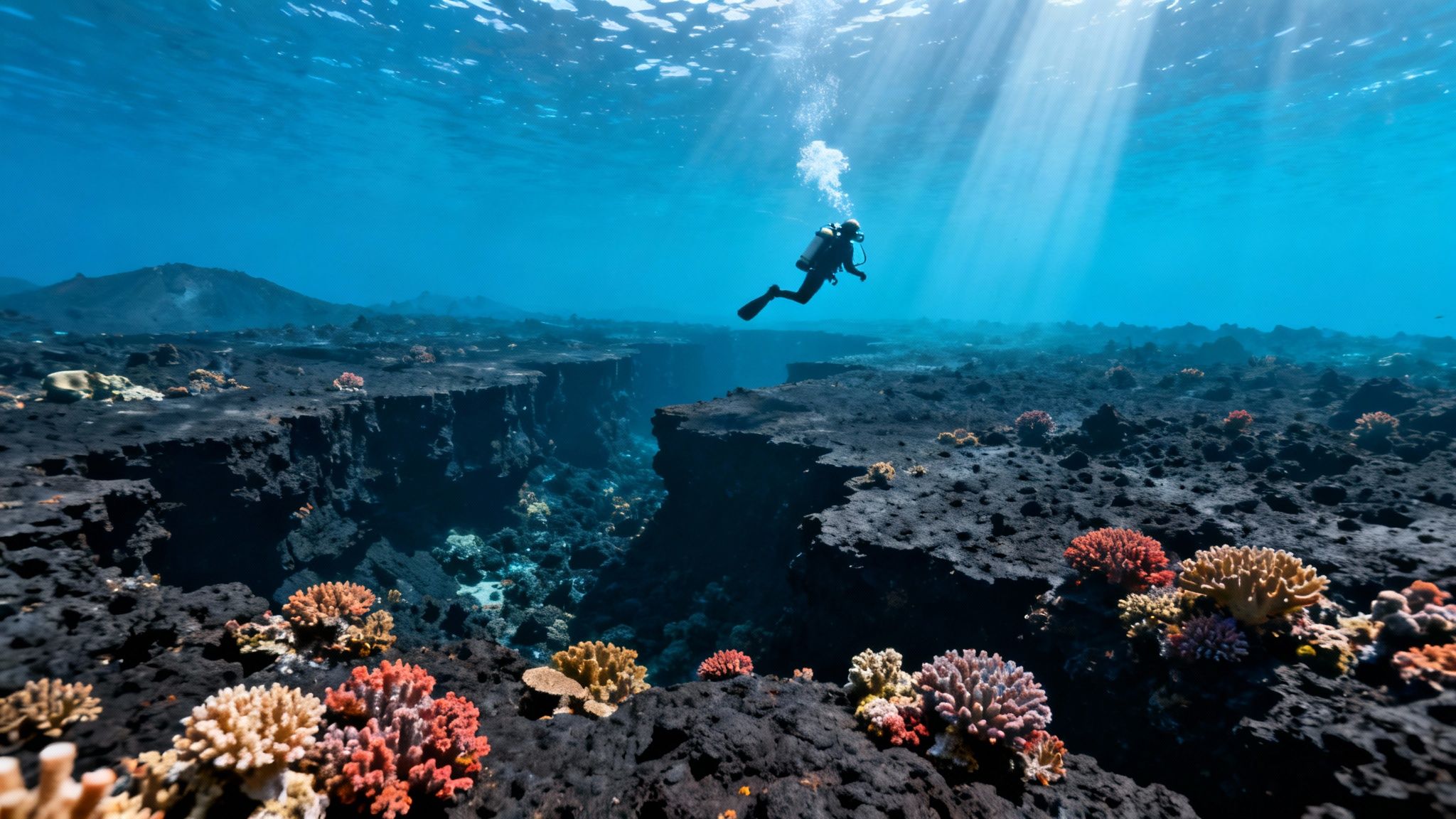
The Big Island is far from your average tropical paradise. It's a world forged by fire and then calmed by the sea. The Kona coast, in particular, is sheltered by the immense volcanoes of Mauna Loa and Hualalai, which block the trade winds and create astonishingly calm, clear conditions all year long. This natural protection is the secret behind our flourishing coral reefs and water visibility that often stretches beyond 100 feet.
This unique geology has given us an underwater playground unlike any other. You can descend through lava tubes that were once rivers of molten rock, navigate intricate archways, and explore submerged craters now teeming with life. Every dive site tells a piece of the island's volcanic story, offering a dramatic backdrop you simply won't find anywhere else.
An Unforgettable Marine Ecosystem
Of course, the underwater landscape is only half the story. The marine life here is just as impressive. The island's waters are a sanctuary for an incredible array of species, including some real local celebrities:
- Hawaiian Green Sea Turtles (Honu): Seeing these graceful creatures glide by is a quintessential Big Island experience.
- Spinner Dolphins: You'll often spot pods of them leaping and playing in the boat's wake—a perfect start to any dive day.
- Vibrant Reef Fish: A huge percentage of the fish here are endemic, meaning you are seeing creatures that exist nowhere else on Earth.
- Majestic Manta Rays: The island is world-famous for its manta ray encounters, especially the legendary Manta Ray Night Dive.
The island’s thriving dive scene now supports over 25,000 dives annually, a number that speaks volumes about how special this place is. It's evolved into a premier global destination for a reason. You can learn more about the Big Island's incredible diverse diving and snorkeling activities and see why it keeps divers coming back year after year.
Here’s a quick look at what makes diving here so special.
Big Island Diving At A Glance
| Feature | Description | Best For |
|---|---|---|
| Volcanic Topography | Explore underwater lava tubes, arches, and craters formed by ancient lava flows. | Adventure-seekers and underwater photographers. |
| Calm Conditions | The Kona coast is sheltered from trade winds, resulting in calm seas and minimal currents. | All skill levels, from beginners to seasoned pros. |
| Manta Ray Dives | World-famous night dives and snorkels offer close-up encounters with giant manta rays. | Anyone looking for a truly unforgettable wildlife experience. |
| High Endemic Species | A high percentage of marine life is unique to Hawaii, found nowhere else. | Marine life enthusiasts and underwater naturalists. |
| Excellent Visibility | Crystal-clear waters often provide visibility exceeding 100 feet (30+ meters). | Divers who appreciate stunning underwater vistas. |
This unique combination of features ensures every dive offers a chance to see something new and spectacular.
Experiencing The Legendary Manta Ray Night Dive
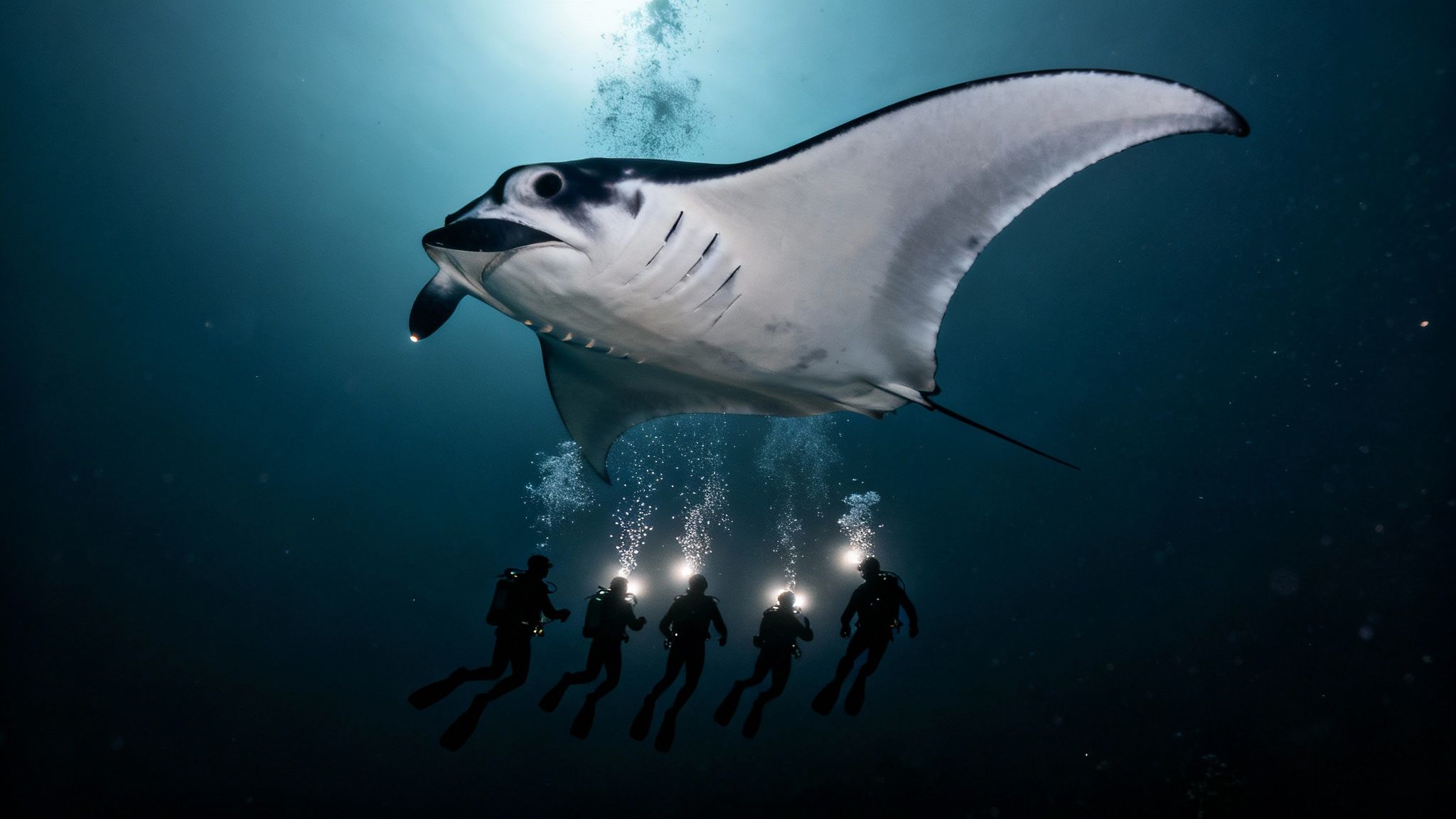
Picture this: you’re kneeling on the ocean floor in the quiet darkness, your dive light aimed up at the inky water above. Out of nowhere, a huge, graceful shadow emerges, gliding effortlessly through your beam of light. It's like watching an underwater ballet, and it’s an experience that consistently puts the Manta Ray Night Dive at the top of divers' bucket lists worldwide.
This isn't just a lucky encounter; it's a brilliant and simple use of marine biology. The powerful dive lights attract massive clouds of plankton—the manta rays' favorite meal. The mantas show up for the all-you-can-eat buffet, performing incredible barrel rolls and swooping just inches over your head. It’s a jaw-dropping, up-close meeting with one of the ocean's most majestic creatures.
The reef manta rays (Mobula alfredi) you'll see are true gentle giants. They have incredible wingspans, often reaching over 12 feet, but they are completely harmless filter feeders. No teeth, no barbs, no stingers. Just pure, peaceful grace.
Why Garden Eel Cove Is The Superior Choice
While you might hear about a couple of spots for this dive, they aren't all created equal. For the most reliable and genuinely breathtaking experience, Garden Eel Cove (also known as Manta Heaven) is hands-down the best choice for Big Island scuba diving. It is the superior choice because of its protected location, a better viewing area, and healthier reefs.
First off, its location is perfectly protected. Tucked away in a cove, the site is shielded from the stronger currents and swells you might find elsewhere. This means calmer, more comfortable conditions—a huge plus for a dive where you'll be stationary on the bottom for a while.
The real secret to Garden Eel Cove's magic is its shape. The sandy bottom forms a natural amphitheater, giving divers a perfect place to spread out and get an unobstructed front-row seat for the show.
This layout does more than just give you a better view. It gives the mantas a wide, open area to feed and glide without feeling crowded. The surrounding reefs are also healthier, which means a more robust ecosystem that keeps the manta population coming back night after night.
What To Expect On Your Dive
Your adventure starts with a boat trip out along the Kona coast as the sun begins to set. Before you hit the water, the crew will give you a detailed briefing on manta ray behavior and the rules for a safe, respectful interaction. The number one rule? Look, but don't touch. These are wild animals, and we're just visitors in their world.
Once you descend, you'll find your spot in the underwater "campfire" circle and point your light straight up. Then, the waiting game begins—but it's never a long one.
- Breathtaking Proximity: The mantas get so close you can see every detail, often gliding within inches of your mask. It creates a connection you have to feel to believe.
- Graceful Acrobatics: You’ll watch them perform effortless somersaults and barrel rolls, scooping up plankton with their giant mouths.
- Long Bottom Times: Because this is a relatively shallow and stationary dive, you get to spend a good long while just soaking in the incredible spectacle.
This is so much more than just another dive; it's a profound wildlife experience that will stick with you forever. To get a better sense of this unique adventure, you can learn more about the specifics of the Kona Manta Ray Night Dive and why it’s a non-negotiable part of any trip here.
Ready to see the giant manta ballet for yourself? This is a once-in-a-lifetime dive you don’t want to miss. See all of the available manta ray dive tours and book your spot.
Exploring Kona’s Most Spectacular Dive Sites
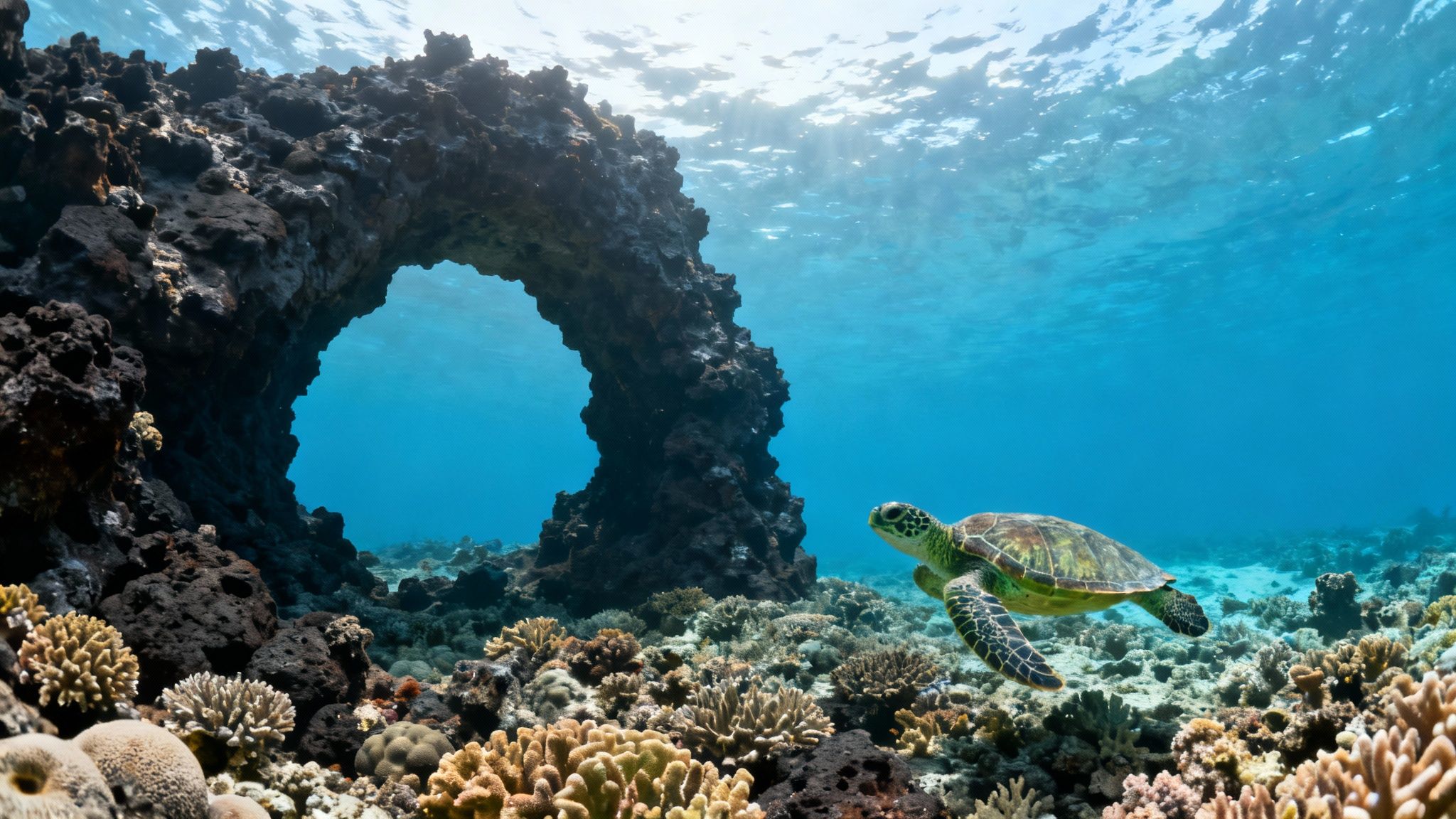
While the Manta Ray Night Dive is an absolute bucket-list experience, it’s really just the beginning of the story for Big Island scuba diving. The Kona coast is a submerged wonderland. Down here, ancient lava flows have sculpted a playground of dramatic arches, mysterious caverns, and vibrant reefs bursting with life.
Each dive site offers a totally unique adventure, showing off the raw, volcanic beauty that makes this place so special. It's a world shaped by fire and sea, providing shelter for an incredible community of marine creatures—from the tiniest nudibranchs to majestic sea turtles. This sheer variety is what keeps divers coming back, year after year, eager to explore another piece of Kona’s underwater puzzle.
Iconic Reefs and Volcanic Formations
Some dive spots along the Kona coast are legendary for their breathtaking topography and reliable marine life encounters. These are the places that perfectly capture the essence of Hawaii diving, blending incredible volcanic structures with thriving ecosystems.
A perfect example is Golden Arches, famous for its stunning swim-through lava arches. Gliding through these formations feels like exploring the ruins of a lost underwater city, with sunlight filtering through the volcanic rock in a truly magical way. The reef itself is a bustling neighborhood, home to countless endemic fish you won't find anywhere else.
Another must-do is Turtle Pinnacle, a classic Kona dive that almost always lives up to its name. This spot is a natural "cleaning station" where Hawaiian green sea turtles, or honu, congregate. They patiently wait as small reef fish nibble algae and parasites off their shells. It's an amazing chance to witness this symbiotic relationship up close and snap some incredible photos. For a closer look at these and other amazing spots, check out our guide to the most beautiful Kona diving sites.
The Thrill of the Kona Blackwater Dive
If you're an experienced diver looking for something completely out of this world, the Kona Blackwater Dive is it. This is nothing like a typical reef dive. You'll be floating miles offshore in the deep, open ocean, suspended in thousands of feet of inky black water. It’s a surreal, almost weightless feeling that’s hard to describe.
The concept is beautifully simple. We lower powerful lights into the deep, and they act like a magnet for tiny, often transparent creatures that migrate from the abyss to the surface to feed each night. Many of these organisms are the larval forms of more familiar reef dwellers, but at this stage, they look like alien beings with intricate, bioluminescent patterns.
This pelagic dive is often called an "underwater spacewalk." You're safely tethered to the boat, just drifting through the dark as a parade of otherworldly creatures floats right past your mask. It’s an advanced dive, for sure, but it offers a rare glimpse into a part of the ocean’s ecosystem few people ever get to see.
You'll encounter life forms that look like they belong on another planet:
- Ctenophores (Comb Jellies): Pulsating with mesmerizing, rainbow-like light.
- Pelagic Nudibranchs: Gracefully "flying" through the water column.
- Larval Eels and Fish: Often completely transparent and bizarrely shaped.
This unique adventure really highlights the incredible diversity of Big Island scuba diving and offers a fantastic challenge for even the most seasoned divers. If you’re ready to take the plunge into the abyss, you can book this incredible Blackwater Dive tour for a night you will never forget.
Ready to explore the wonders of the Kona coast? Check out the full range of diving tours available.
Choosing The Right Dive Operator In Kona
Picking a dive boat for your Kona adventure is one of the most important calls you'll make—it can honestly make or break your entire trip. It’s about so much more than just the price. The right crew sets the whole tone, ensuring you're not just safe and comfortable, but that you truly connect with the incredible world beneath the waves.
When you're planning your Big Island scuba diving vacation, you want a team that lives and breathes safety, offers personal attention, and genuinely respects the ocean. A passionate, experienced crew doesn't just take you to a dive site; they turn a good dive into an unforgettable one by showing you the hidden gems and sharing stories about the marine life you're seeing.
Why Small Groups And Expert Guides Matter
Picture this: you descend onto a pristine coral reef with just a handful of other divers, not a massive crowd. That’s the difference between feeling like just another tourist and feeling like a genuine explorer. Smaller groups mean your divemaster can give you more attention, you have less impact on the reef, and the whole experience just feels more relaxed and personal.
This is exactly the philosophy at Kona Honu Divers. They keep their groups small on purpose so that every diver, whether you just got your C-card or you have hundreds of dives logged, gets the support they need. Their guides are more than just tour leaders; they're marine life nerds who know precisely where to find a shy octopus hiding in its den or spot a perfectly camouflaged frogfish. That kind of expertise turns every single dive into a discovery.
On top of that, Kona Honu Divers runs a fleet of custom-built boats designed with divers in mind. Little things make a huge difference, like hot showers after a dive, plenty of shade, and an easy way to get in and out of the water. This attention to detail is what really sets them apart from the rest.
The Kona Honu Divers Difference
A dive shop’s reputation is everything, and it’s built one dive at a time. Kona Honu Divers has earned thousands of five-star reviews for a simple reason: they consistently deliver. They create a fun, welcoming vibe while always putting safety and the health of the reef first. You can feel their passion for diving in everything they do.
But don't just take our word for it—see what other divers are saying.
Ultimately, your choice of operator is the foundation of your dive trip. With a solid commitment to safety, small groups, and a world-class crew, Kona Honu Divers is a fantastic choice for exploring the underwater wonders of the Big Island.
Ready to book your dive with a top-rated crew?
How To Plan Your Big Island Dive Trip
A great dive trip to the Big Island doesn't just happen; it starts long before you ever zip up a wetsuit. A bit of thoughtful planning means you'll show up ready, confident, and able to squeeze every last drop of adventure out of your time in the water. From picking the right time of year to knowing your gear options, a little prep work pays off big time.
The fantastic news is there’s really no “bad” time to dive the Kona coast. The island’s enormous volcanoes act as a massive shield against the trade winds, which means we get beautifully calm and clear water almost all year round. That said, the seasons do have their own unique personalities.
- Summer (May – October): This is when the water is at its warmest, usually hovering between a balmy 78-82°F (25-28°C). The ocean is often as flat as glass, which makes for silky smooth boat rides and incredibly relaxing dives.
- Winter (November – April): The water temperature dips just a bit, down to 75-78°F (24-26°C), but this is also when the humpback whales arrive. While you might not see one on a dive, hearing their haunting songs echoing through the water is a truly magical, unforgettable experience.
No matter when you decide to visit, the visibility is almost always fantastic, frequently stretching beyond 100 feet. If you want to get into the nitty-gritty of what each month offers, check out our detailed guide on the best months to scuba dive in Hawaii.
What Gear to Pack vs. Rent
One of the most common questions we get is about gear. While we have top-notch rental equipment available, nothing beats the comfort and familiarity of your own stuff.
A good rule of thumb? Pack the personal items that have the biggest impact on your comfort and safety. This usually means your own mask (a leaky mask can ruin a dive!), your dive computer, and any wetsuit or rash guard you love. You can save a ton of luggage space and airline fees by renting the bigger, bulkier items like your BCD and regulators from a local shop. For Kona’s water, a 3mm or 5mm wetsuit will do the trick for most people.
Certifications and Taking Your Skills to the Next Level
Whether you're a seasoned pro with thousands of dives or have never even breathed through a regulator, the Big Island is the perfect underwater classroom.
For absolute beginners, getting your PADI Open Water certification here is an incredible way to start. Imagine learning in warm, crystal-clear water surrounded by curious fish and vibrant coral—it’s a world away from a cold community pool.
Already certified? Kona is an amazing place to level up your skills. An Advanced Open Water course, for instance, opens up deeper dive sites and lets you fine-tune specialties like underwater navigation. For experienced divers looking for a real challenge, we have some incredible opportunities to explore deep-water pinnacles and otherworldly volcanic formations. These advanced dive tours are for divers who have their buoyancy dialed in and are comfortable in more dynamic conditions.
It's not just about the thrill, either. Spending time in the ocean has real, measurable benefits. Marine tourism is a cornerstone of Hawaii's economy, and studies have shown that engaging with the underwater world, like scuba diving, can lead to a 21.3% reduction in stress levels per hour.
If you're visiting from outside the United States, make sure you have your travel documents sorted out well in advance. Depending on your country of origin, you may need to apply for an electronic authorization before your trip. You can find more details on ESTA requirements for USA travel to ensure everything goes smoothly.
Practicing Safe And Responsible Diving
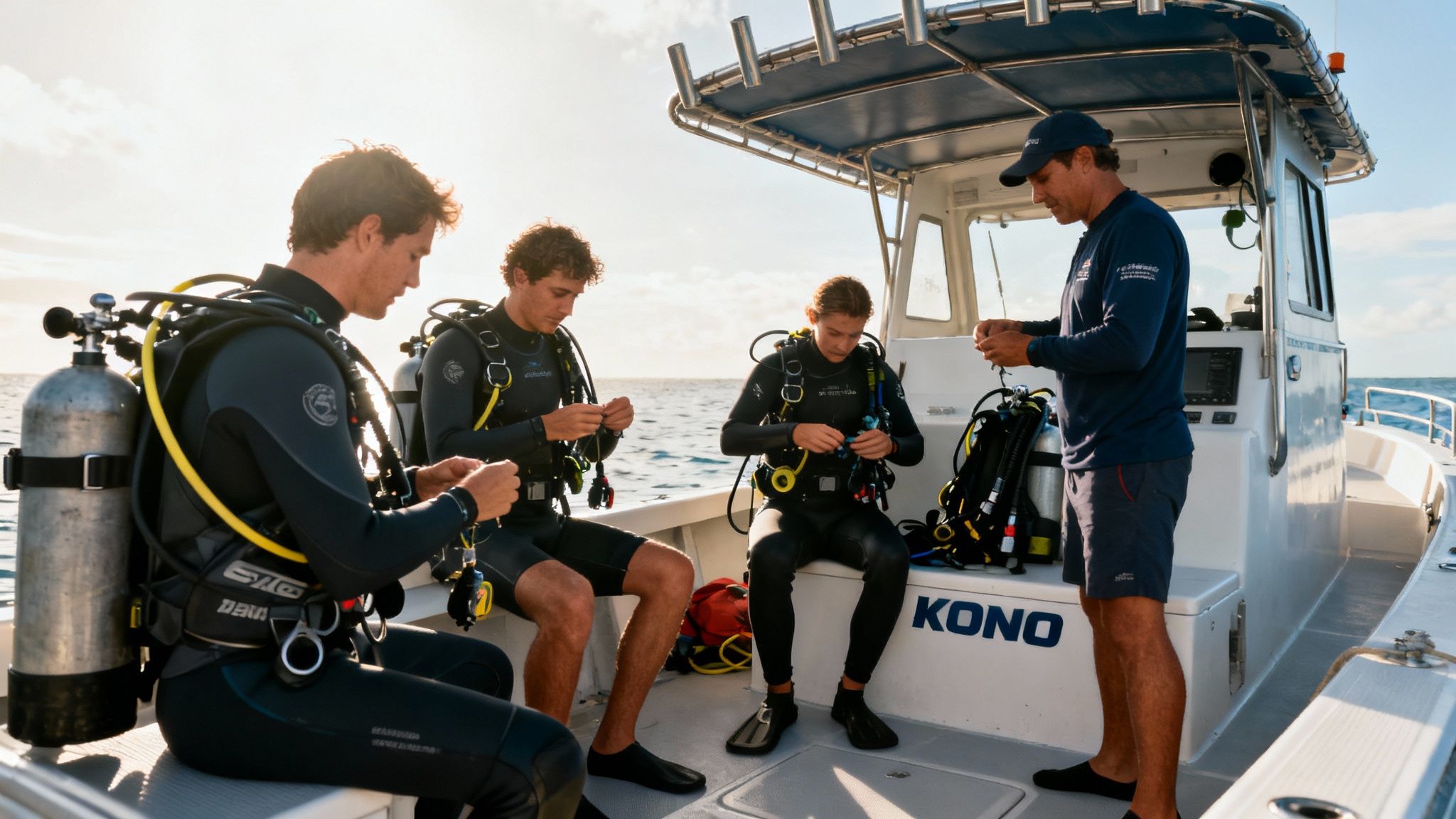
Diving into the Big Island's underwater world is an absolute thrill, but it’s a privilege that comes with a real responsibility. We're guests here, and our job is to protect ourselves and the incredible, fragile ecosystem we’ve come to see. Every great dive is built on a foundation of safe, responsible practices that keep Hawaii's reefs healthy for generations of divers to come.
Your safety mindset should kick in long before you even dip a toe in the water. It’s all about the fundamentals: running through your pre-dive checks, paying close attention to the dive briefing, and being honest with yourself about your limits. The ocean here is no joke—conditions can shift—so always go with a reputable dive shop and never let ego push you past your training.
It might surprise you, but professionally supervised scuba diving actually has a fantastic safety record. It's often much safer than other unguided water sports. Looking at data from Hawaii between 2009 and 2018, there were 206 snorkeling-related deaths, but only 28 fatalities from scuba diving in that same timeframe. That huge difference shows just how much professional training, proper gear, and an expert guide matter. You can read more about these regional water safety statistics to see why guided diving is such a smart choice.
How To Be A Good Guest Underwater
Once you descend, you’re not just a diver; you're an ambassador for the ocean. The golden rule is simple: look, but don't touch. This goes for everything, from the tiniest piece of coral to a massive sea turtle gliding past you.
We have a saying in the dive community: leave nothing but bubbles, take nothing but memories. Chasing or touching marine life stresses them out and interrupts their natural behavior. We're just visitors in their home, after all.
Here are a few key things to keep in mind to make sure your impact is minimal:
- Master Your Buoyancy: This is your number one job. Keep your fins, gauges, and hands well away from the reef. A single accidental bump can destroy coral polyps that took hundreds of years to grow.
- Tuck in Your Gear: Make sure your console and octopus regulator are clipped to your BCD, not dangling and dragging across the reef floor.
- Never Feed the Fish: It messes with their natural diet and makes them dependent on people, which is never a good thing.
- Shoot Photos with Respect: Don't kick up sand or coral to get a better angle. Be patient and let the perfect, natural shot come to you.
When you make these practices part of your Big Island scuba diving routine, you become part of the solution. Your mindful presence helps keep Kona's underwater world as stunning for the next diver as it was for you.
Your Big Island Diving Questions, Answered
Got questions about diving on the Big Island? You're not alone. We get asked these all the time by divers planning their trip, so we’ve put together some straight-to-the-point answers to help you get ready for an incredible underwater adventure.
When’s The Best Time Of Year To Dive Kona?
Honestly, there’s never a bad time to dive in Kona. The conditions are fantastic year-round.
The main difference comes down to the season. In the summer (May to October), you'll get the warmest water, usually a balmy 78-82°F (25-28°C). The seas tend to be flatter, making for glassy boat rides and super relaxing dives.
Come winter (November to April), the water cools down just a bit to 75-78°F (24-26°C). The real magic of winter diving, though, is the humpback whales. You can often hear their songs underwater, which is an absolutely unforgettable experience.
Do I Need A Scuba Certification To Dive?
Yes, if you want to join a boat dive, you'll need to be certified.
But if you're not certified yet, don't worry! You can still get in the water with a "Discover Scuba Diving" experience. It’s a fully supervised dive with an instructor in a calm, shallow spot. It's the perfect way to see what all the fuss is about without committing to a full course.
What Kind Of Marine Life Will I See?
The Big Island is teeming with life. On just about any dive, you’re almost guaranteed to see Hawaiian green sea turtles (honu), moray eels, and maybe even a pod of playful spinner dolphins cruising by. The reefs are also packed with colorful fish you can’t find anywhere else in the world.
Of course, the Manta Ray Night Dive is famous for a reason—you get front-row seats to these gentle giants. Depending on where you dive, you might also run into eagle rays, reef sharks, and other cool pelagic creatures.
Is The Manta Ray Night Dive Okay For Beginners?
Absolutely! It's one of the best dives a new diver can do.
This is a stationary dive, so you’re not swimming around or navigating a reef. You'll either hold onto a rock on the bottom or a float line at the surface while the show happens right in front of you. It's incredibly safe and a great confidence-builder for divers fresh out of their certification course.
Ready to see it all for yourself? Let Kona Honu Divers show you the best underwater spots the Big Island has to offer. Book your unforgettable diving tour today.