
Picture this: you’re sinking slowly into warm, unbelievably clear water. Sunlight streams down from the surface, lighting up ancient lava tubes and coral gardens bursting with color and life. That’s not a dream—it’s just another day of scuba diving on the Big Island, an experience that drops you right into one of the most incredible underwater worlds on the planet.
Why Kona is a World-Class Diving Destination
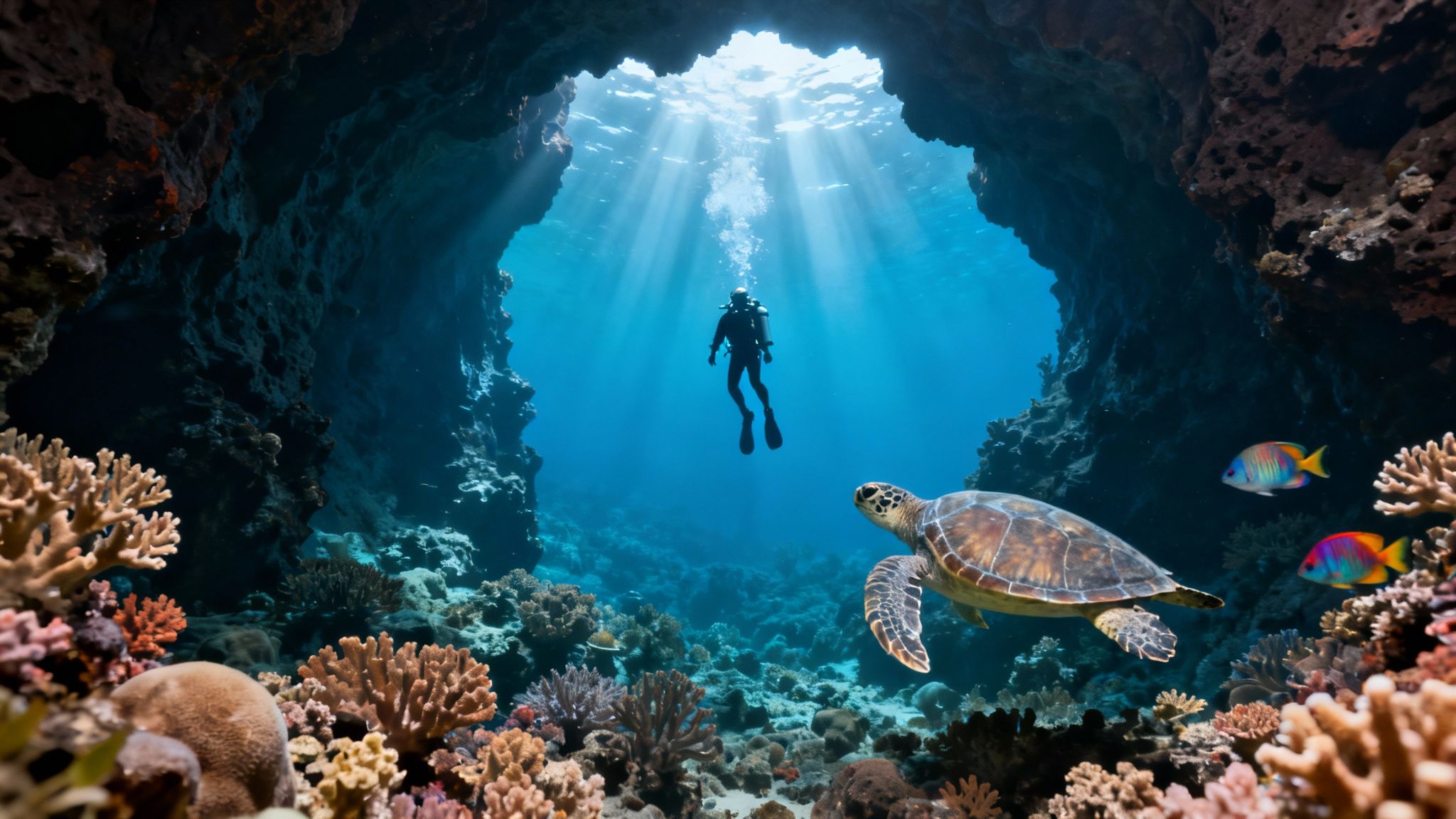
The Big Island, and the Kona Coast in particular, isn't just another pretty spot to dive. It's a top-tier destination shaped by volcanic fury and protected by Mother Nature. The enormous volcanoes, Mauna Loa and Hualalai, act as a natural shield, blocking the strong trade winds from reaching the island's western shores.
The result? Exceptionally calm and clear waters, perfect for diving any day of the year. This geographical fluke is the secret to Kona's famous visibility, which often stretches beyond 100 feet. It feels like you're flying.
This unique geology has given rise to a marine environment you won’t find anywhere else. The seafloor is a wild tapestry of lava tubes, dramatic archways, and submerged volcanic craters, all waiting to be explored. These structures have become the perfect foundation for a thriving, vibrant ecosystem.
What Makes the Underwater Experience So Special
Diving in Kona means becoming part of a world that is absolutely humming with activity. The reefs are home to a staggering number of fish, and over 20% of them are endemic to Hawaii—you literally can't see them anywhere else on Earth.
So, what’s the big deal? Here are a few things that make Big Island diving unforgettable:
- Unique Volcanic Topography: You get to explore intricate lava tubes, caves, and pinnacles sculpted by ancient lava flows. It's like a natural underwater playground.
- Abundant Marine Life: It’s common to see graceful green sea turtles at "cleaning stations," pods of playful spinner dolphins, and massive schools of colorful reef fish like yellow tangs and parrotfish.
- World-Famous Night Dives: The Big Island is legendary for its Manta Ray Night Dive. Imagine watching these gentle giants, with wingspans up to 20 feet, gracefully swoop and glide through illuminated water to feed on plankton. It’s pure magic.
The island's reputation is well-deserved, with around 100,000 certified scuba dives happening here every single year. That's a lot of happy divers.
To give you a clearer picture, here’s a quick breakdown of why this island should be at the top of your list.
Why Choose the Big Island for Your Next Scuba Adventure
| Feature | Description | Best Experienced On/At |
|---|---|---|
| Volcanic Landscapes | Explore a dramatic underwater world of lava tubes, arches, and caves formed by ancient volcanic activity. It's a truly unique diving environment. | Kona Coast dive sites |
| Exceptional Visibility | Thanks to the protection from volcanoes, the water is often crystal-clear, with visibility frequently exceeding 100 feet. | Year-round, especially on the Kona side |
| Endemic Marine Life | See species found nowhere else on Earth. Over 20% of Hawaii's reef fish are endemic, making every dive a potential new discovery. | Reefs along the entire west coast |
| Manta Ray Night Dive | Experience one of the planet's most iconic night dives, watching majestic manta rays feed just inches away from you. A true bucket-list adventure. | Manta Village or Garden Eel Cove |
| Calm, Protected Waters | The west coast is sheltered from trade winds, creating calm sea conditions that are ideal for divers of all skill levels, from beginners to experts. | The Kona and Kohala Coasts |
From shallow, sun-drenched coral gardens to deep volcanic ledges, the Kona Coast offers an extraordinary backdrop for any dive. If you want to learn more, you can get more insights about its unique characteristics to plan your trip.
Ready to see it for yourself?
Experience the Manta Ray Night Dive Spectacle
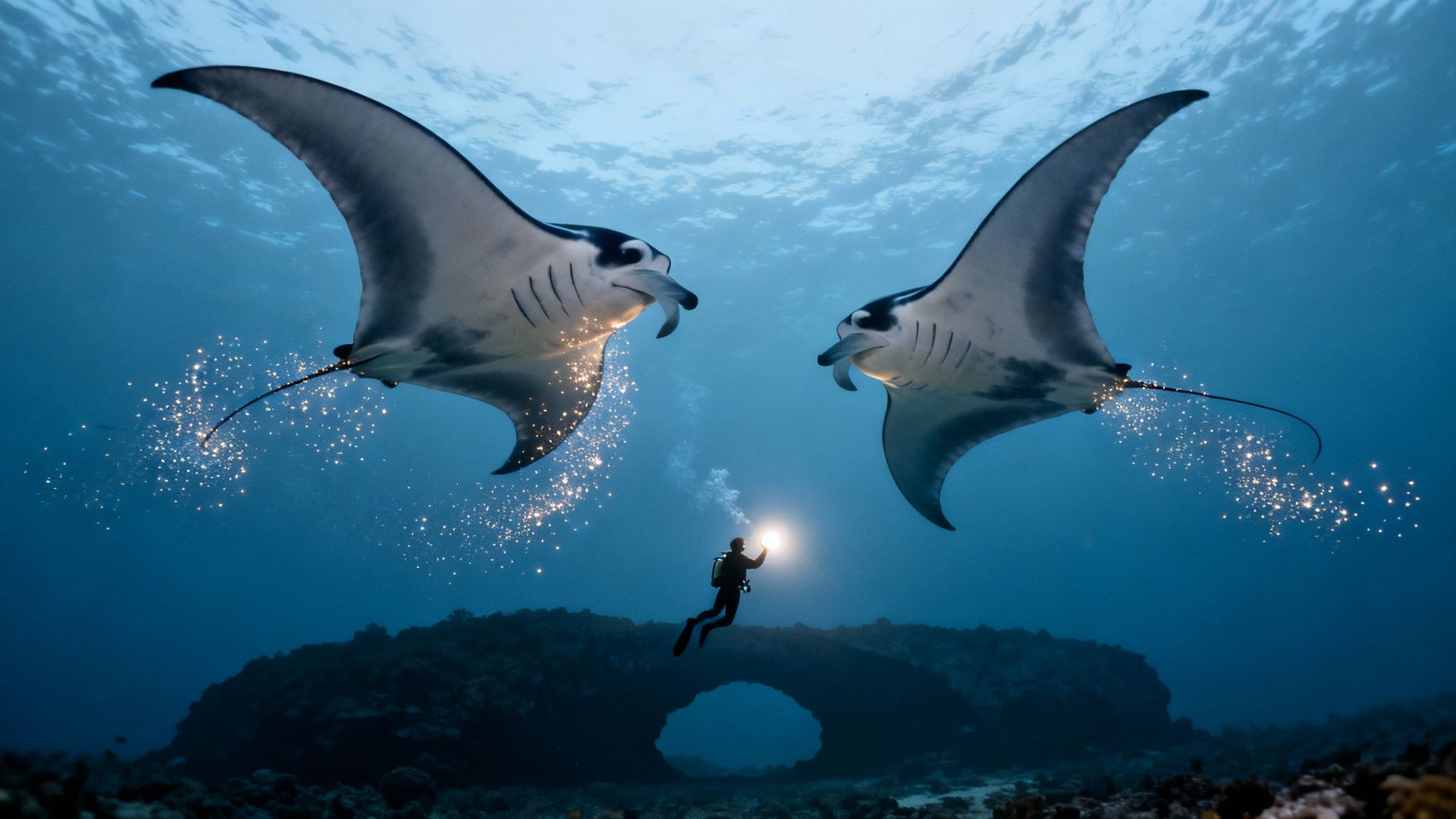
The Kona Manta Ray Night Dive isn't just another entry in your logbook. It’s a breathtaking underwater ballet that has rightfully earned its spot as one of the best dives on the planet. This world-famous encounter truly defines Big Island scuba diving and creates a magical experience you'll be talking about for years.
The whole setup is brilliantly simple. Once the sun goes down, powerful lights are placed on the ocean floor. These lights act like a magnet for clouds of plankton, which just so happens to be a manta ray’s favorite meal. Before you know it, these gentle giants emerge from the dark, gliding in to feast on the buffet.
You'll get to see them swoop, soar, and perform graceful barrel rolls just inches from your mask. With wingspans reaching up to 18 feet, it's an intimate, almost surreal performance where you feel like you're part of the show, not just watching it.
Why Garden Eel Cove Is the Premier Choice
While a couple of spots host this dive, they aren't all created equal. For the best, most comfortable experience, Garden Eel Cove (often called Manta Heaven) is hands-down the top choice. The site's geography naturally shields it from the big ocean swells, which means a much calmer and more predictable dive.
That protection makes a huge difference. The gentle water lets everyone settle comfortably on the sandy bottom, creating a perfect viewing area without having to fight a current. The superior viewing area allows for a better overall experience.
On top of that, the reefs at Garden Eel Cove are simply healthier and more vibrant. This makes the whole dive, from the moment you descend to the moment you surface, that much more interesting. Choosing the right spot is what separates a good dive from an unforgettable memory, and it's why the best dive operators head straight here.
The Big Island is lucky enough to have three reliable feeding sites for night-time manta encounters: Manta Village, Manta Heaven (Garden Eel Cove), and a third near Kawaihae Harbor. The success rate for seeing mantas at these locations is consistently over 90%.
Getting to know these amazing animals is part of the magic. For a deeper dive, check out our complete guide to the Kona Manta Ray Night Dive.
Preparing for Your Manta Encounter
To keep everyone—and every manta—safe, you'll get a thorough briefing before you hit the water. The number one rule is simple: look, but don't touch. Touching a manta ray can strip away its protective mucous coating, leaving it vulnerable to infections.
Here are the basic guidelines for the dive:
- Find Your Spot: Divers hang out on or near the sandy bottom, while snorkelers stay on the surface. This leaves the entire water column open for the mantas to do their thing.
- Lights Up: Point your dive light straight up. This draws the plankton toward the surface and creates a concentrated feeding zone right above you.
- Mind Your Bubbles: As a manta glides overhead, try to time your breathing so you aren't exhaling a stream of bubbles right into its face.
Following these simple rules ensures this incredible encounter remains sustainable for generations to come. To get a better feel for the experience, you can explore this guide on the unforgettable manta ray night snorkel in Hawaii experience.
Ready to witness this underwater spectacle for yourself? Explore our manta ray dive tours and book your spot.
Exploring the Top Kona Coast Dive Sites
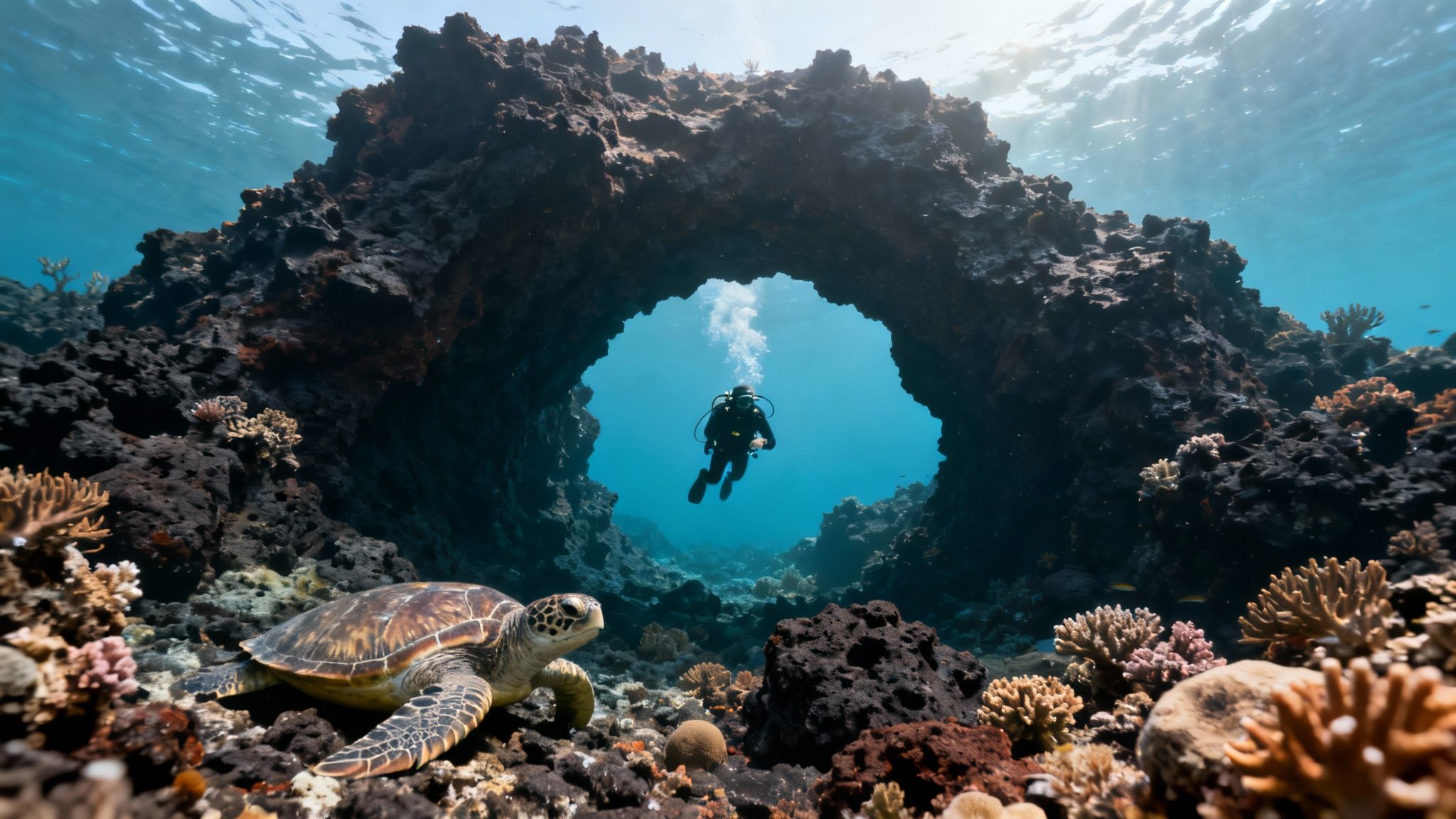
The Kona Coast is a diver's paradise, plain and simple. Sure, everyone knows about the world-famous manta ray night dive, but that's just scratching the surface. The island's volcanic past has left behind an incredible underwater playground of dramatic arches, winding lava tubes, and reefs that are bursting with life.
This is your guide to the can't-miss spots for big island scuba diving. We'll cover the classics and maybe a few hidden gems, giving you an insider's look at what makes Kona's underwater world so special.
Pawai Bay: A Sanctuary for Marine Life
If you ask a local diver for their favorite spot, there's a good chance they'll say Pawai Bay. It’s not just one site, but a whole collection of them tucked into a large, protected bay. The real claim to fame here? The "turtle cleaning stations."
It's an amazing sight. You can watch Hawaiian green sea turtles (honu) line up like they're waiting for a car wash, letting small reef fish pick algae right off their shells. Sites here, like Turtle Pinnacle, are teeming with life. We’re talking about some of the healthiest coral on the island, huge schools of butterflyfish, and maybe even a whitetip reef shark kicking back on the sand. The depths are forgiving, so it's a fantastic choice for divers of all stripes.
Crescent Beach: Calm Waters for Beginners
Just getting your fins wet or looking for a super chill dive? Crescent Beach is your spot. Tucked into a sheltered cove, the water is almost always calm and the visibility is fantastic. It’s the perfect, stress-free environment to nail down your buoyancy or simply drift along and enjoy the view.
The reef slopes gently away from shore and is absolutely loaded with colorful fish—think bright yellow tangs, parrotfish chomping on coral, and elegant Moorish idols. If you take your time and peek into the crevices, you might even spot a well-camouflaged octopus. Because it's so accessible and calm, it’s our go-to for first-time ocean dives and refresher courses.
Golden Arches: Exploring Lava Formations
Ready for a real adventure? Golden Arches shows off the wild volcanic landscape that makes big island scuba diving so unique. The name says it all—the site is a maze of incredible lava tube swim-throughs and massive arches. Gliding through these formations feels like exploring another world, especially when beams of sunlight cut through the openings from above.
You’ll want to have solid buoyancy control for this one, as you navigate the ancient rock. Inside the tubes and under the ledges, keep an eye out for spiny lobsters and other critters hiding in the shadows. Then, when you swim out of an archway, you're greeted by a vibrant, bustling reef. It’s the perfect mix of geology and biology.
One of the most remarkable aspects of Kona diving is the sheer variety of underwater landscapes. Within a few miles, you can go from a shallow, sandy-bottomed cove to a deep wall dive with complex volcanic architecture. This diversity is why so many divers return year after year.
This is just a small taste of what the Kona Coast has to offer. For a more comprehensive look, check out our full guide to the dive sites Kona Honu Divers will take you to. Each spot has its own unique personality just waiting to be explored.
Whether you’re after a relaxed tour of a beautiful reef or an adrenaline-pumping swim through ancient lava tubes, Kona has a dive site that will blow you away.
Advanced Diving for Thrill Seekers

Ready to move past the reef and really push your limits? For seasoned divers chasing a true adrenaline rush, the Big Island delivers some seriously unique challenges. These advanced dives leave the sunny coral gardens behind for the deep, dark, and dramatic side of Kona.
These aren't your average sightseeing tours. They're designed for certified divers with solid skills who are looking for something completely different. You’ll need to have your buoyancy, navigation, and comfort in deep or overhead environments dialed in. The payoff? An experience that very few people on Earth will ever have.
The Kona Blackwater Dive: A Trip to Inner Space
At the very top of any thrill-seeker's list has to be the Kona Blackwater Dive. I mean it when I say you should forget everything you think you know about night diving. This isn't about exploring a reef after dark—it's about dropping into the open-ocean abyss.
The dive happens miles offshore over thousands of feet of water. You descend into pure blackness, tethered to the boat, and just hang there in the void. It’s a completely mind-bending experience that feels a lot more like a spacewalk than a scuba dive.
While you drift, you become a spectator to one of the largest migrations on the planet. Strange, alien-like creatures, many of them glowing with their own light, rise from the crushing depths to feed. You’ll see things like translucent larval fish, pulsating squid, and jellyfish that look like they were designed for a sci-fi movie. It's a dive that will totally reset your definition of "weird."
The blackwater dive is a highly specialized activity, often called a "pelagic magic carpet ride." Divers are suspended in the mid-water column, watching a vertical migration of deep-sea organisms that is rarely seen by human eyes.
Because of how unique this dive is, you absolutely need to be comfortable in the water and have rock-solid buoyancy control. If that sounds like you, learn more about this unbelievable Kona Blackwater Dive tour.
Exploring Deeper Lava Tubes and Flying on a Drift Dive
Beyond the blackwater trip, advanced Big Island scuba diving has plenty more to offer. The island's volcanic origins have sculpted an underwater landscape filled with deep lava tubes and staggering vertical walls that are perfect for a thrilling drift dive.
Navigating these deeper, more complex lava tubes demands skill and confidence. You'll glide through ancient passages carved by molten rock, discovering hidden chambers and spotting marine life that thrives in the darkness. It’s a direct connection to the island’s fiery birth.
Drift diving along Kona's volcanic walls is another incredible feeling. You just relax and let the current do the work, carrying you along sheer drop-offs while you conserve air and cover a ton of ground. These walls are often plastered with rare corals and sponges, and you never know what might cruise by out in the blue.
The island’s reputation as a top-tier diving hub is nothing new. In fact, an industry study from the 1980s showed that operators were already using a wide range of sites to challenge experienced divers. You can actually discover more about Hawaii’s recreational dive industry history through this fascinating old research.
If you’re a certified diver ready to see a side of Kona that most visitors completely miss, these are the dives for you. Start planning your next challenge by exploring these advanced dive tour options.
How to Plan Your Ultimate Dive Trip
Let’s get your dream Big Island scuba diving trip off the drawing board and into the water. A little bit of smart planning now will pay off big time later, making sure your vacation is all about amazing dives and not last-minute stress. We'll walk through everything from picking the right time of year to booking your spot on the boat.
First things first: when should you come? The simple answer is, anytime! Diving in Kona is fantastic year-round. The water is always inviting, hovering around a comfortable 75°F in winter and climbing to a balmy 81°F in summer.
That said, some seasons have special perks. If you visit between December and March, you’ll be here during humpback whale season. There's nothing quite like hearing their haunting songs echo through the water while you’re exploring a reef. For a deeper dive into the seasonal highlights, check out our guide to the best months to scuba dive in Hawaii.
Location Logistics and Booking Your Tours
Here’s a crucial tip for planning your stay: base yourself on the Kona side of the island. This is where the action is. Nearly all of the best dive sites and charter boats operate out of here, so you'll spend less time in the car and more time blowing bubbles.
It's also a really good idea to book your dive trips well in advance. I can't stress this enough, especially for bucket-list dives like the Manta Ray Night Dive. These charters are world-famous and often sell out weeks, or even months, ahead of time—particularly during busy travel periods like summer vacation and the winter holidays.
Securing your spot early is just how things work for popular activities on the Big Island. On the off chance a manta tour is canceled (it’s rare), any good operator will get you rebooked for free. That’s why I always tell people to schedule their manta dive early in their trip—it gives you a buffer to reschedule if you need to.
Booking ahead means you won't miss out on the very reason you came all this way.
Packing Your Gear and Island Essentials
One of the most common questions I get is, "Should I bring my own gear or just rent?" Honestly, there’s no single right answer. It really comes down to what you value more: personal comfort or travel convenience.
- Bringing Your Own Gear: If you're dialed into the specific fit of your BCD and the performance of your regulator, then packing your own kit is the way to go. There’s a lot of confidence that comes from diving with equipment you know and trust.
- Renting Gear: Renting means you can skip the hassle of hauling a heavy gear bag through airports and paying those annoying extra fees. Any reputable dive shop keeps its rental gear in top shape, so you know you’ll be using well-maintained, reliable equipment.
No matter what you decide about the big stuff, a few smaller items are must-haves for every diver's bag:
- Dive Computer: This is your most important piece of safety equipment. Don't leave home without it.
- Mask and Snorkel: A mask that fits your face perfectly is the difference between a great dive and a frustrating one.
- Reef-Safe Sunscreen: Help us protect Hawaii's fragile coral reefs while protecting your skin.
- Reusable Water Bottle: Staying hydrated is key, and you’ll be doing your part to reduce plastic waste.
- A Light Jacket or Sweater: Trust me, that boat ride back to the harbor can feel pretty chilly after a night dive.
With your bags packed and your tours locked in, you’re all set for an incredible Big Island scuba diving adventure.
Common Questions About Big Island Scuba Diving
Planning a dive trip to the Big Island often brings up a few questions, especially if it's your first time exploring the Kona coast. We get it. To make your planning easier, here are some straight-up answers to the questions we hear most often from fellow divers.
Do I Need to Be a Certified Diver?
It depends on what you want to do. For the classic guided boat dives—like the famous Manta Ray Night Dive or exploring the deeper lava tubes—you absolutely need to be a certified diver.
But what if you're just curious? If you're not certified, you can still get a taste of the underwater world with a Discover Scuba Diving experience. It's a fantastic introductory program where an instructor guides you in a controlled, shallow-water environment, so you can see if diving is for you without committing to a full course.
What Is the Water Temperature Like?
One of the best parts about diving in Kona is the comfortable water temperature year-round. You really can't pick a bad season to visit.
- Summer (June-October): The water is warmest, hovering around a balmy 79°F to 81°F (26-27°C).
- Winter (November-May): Things cool down just a bit, with temperatures averaging 75°F to 77°F (24-25°C).
Most people find a 3mm or 5mm wetsuit is perfect, but it really boils down to your personal comfort.
What Happens if We Don't See Manta Rays on the Night Dive?
It's a fair question—these are wild animals, after all. The great news is that manta sightings are incredibly reliable, with a success rate well over 90%.
Still, nature is unpredictable. That's why most reputable dive shops offer a "manta guarantee." If you're on one of the rare trips where the mantas don't show, you can usually re-book for another night for free, as long as there's space. Pro tip: book your manta dive for early in your trip, just in case you need to use that second chance!
Should I Dive Kona or Kohala?
This really comes down to the kind of vibe you're looking for. Think of Kona as the heart of Big Island scuba diving—it's energetic, with plenty of dive operators and easy access to iconic sites like Manta Heaven.
The Kohala coast, on the other hand, offers a much quieter, more laid-back experience. You'll find fewer boats and divers, giving it a more remote and pristine feel. Both have spectacular volcanic landscapes and thriving reefs, so you can't lose either way.
Ready to take the plunge? Explore our world-class diving tours and find the perfect underwater adventure for your trip.