
Picture this: you're gently descending into a world of brilliant turquoise, the water so clear it feels like flying. Below you, ancient lava flows have been sculpted by the ocean into a dramatic underwater landscape. This is the heart and soul of Big Island scuba diving. Thanks to the calm, protected waters of the Kona coast, Hawaii delivers a truly world-class diving tours page experience, brimming with vibrant coral reefs, unique volcanic formations, and marine life that will leave you breathless.
Discovering Hawaii’s Premier Underwater Paradise
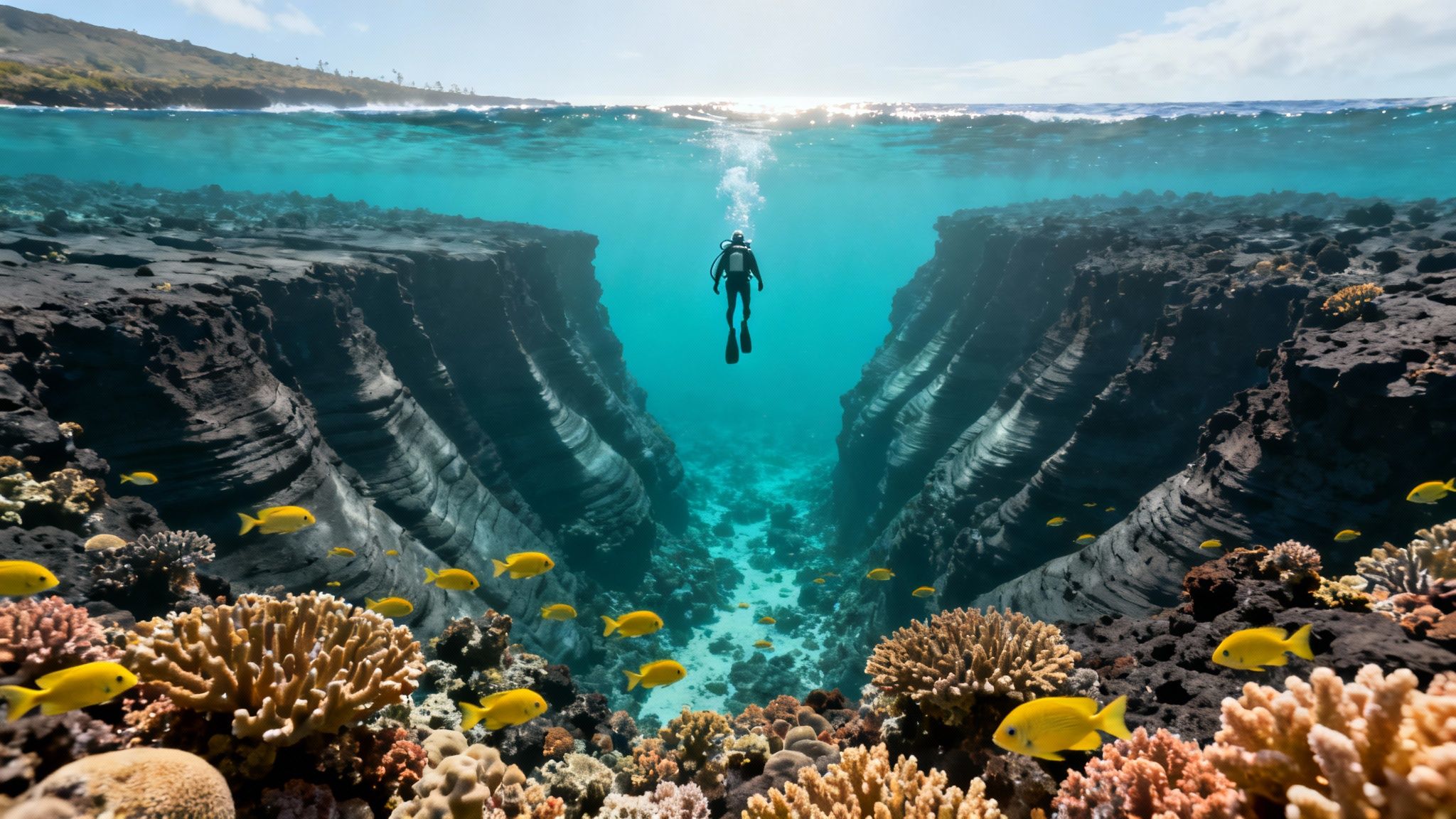
The Big Island is more than just another pretty spot in the tropics—it’s an underwater sanctuary forged by fire and sea. The Kona coast, tucked into the leeward side of massive volcanoes like Mauna Loa and Hualalai, is shielded from the powerful trade winds. The result? Some of the most consistently calm and clear water you'll find anywhere on the planet. It's not uncommon for visibility to exceed 100 feet, creating a perfect playground for divers of every experience level.
Think of this guide as your personal map to this aquatic wonderland. We’ll cover everything that puts Kona on every diver's bucket list, from the legendary Manta Ray Night Dive to hidden lava tubes and tranquil coral gardens. Whether you've logged hundreds of dives or you're just starting your journey, an unforgettable adventure is waiting for you here.
Why Kona Is a Diver's Dream
What really makes Kona special is the one-two punch of incredible biodiversity and geology you won't find anywhere else. The underwater terrain is a stunning tapestry of arches, canyons, and pinnacles—all created by ancient lava flows. This complex, dramatic structure creates the ideal habitat for a staggering variety of marine life.
Here’s a taste of what makes diving in Kona so incredible:
- Volcanic Topography: You can explore swim-throughs, caves, and lava tubes that make every dive feel like a true exploration.
- Abundant Marine Life: Get ready to meet Hawaiian green sea turtles, pods of spinner dolphins, reef sharks, and hundreds of species of colorful fish, many of which are endemic to these waters.
- Iconic Night Dives: The Manta Ray Night Dive isn't just a dive; it's a magical, world-renowned ballet that consistently tops lists of the best dives on Earth.
This thriving ecosystem has turned the island into a global destination for underwater exploration. Today, the Big Island sees around 100,000 certified scuba dives annually, a number that speaks for itself. What started as a handful of dive shops in the 1970s has blossomed into a vibrant community of over 50 operators welcoming divers from all over the world. You can learn more about the fascinating growth and unique history of Big Island diving.
For many of us, Kona represents the peak of our diving careers. It’s that rare combination of pristine conditions, unique volcanic seascapes, and reliable encounters with big marine animals that makes every single dive something special.
To get the most out of your trip, it's crucial to go with a local operator who truly knows the reefs. Kona Honu Divers is a top-rated company that has built its reputation on providing safe, respectful, and absolutely unforgettable dives. Their crew lives and breathes these waters, and their commitment to giving you a world-class experience is obvious from the moment you step on board.
So, let's gear up and start planning your ultimate underwater journey on the Kona coast. A good first step is to check out the different diving tours available with Kona Honu Divers to find the perfect fit for your adventure.
The Unforgettable Kona Manta Ray Night Dive

Some experiences are so unique they almost defy description, and the Kona Manta Ray Night Dive is absolutely one of them. It's often called one of the best night dives in the world, and for good reason—it’s a memory that will stick with you long after you’ve dried off. This isn't just a dive; it's a front-row seat to one of nature's most incredible performances.
The whole thing starts as the sun dips below the horizon. After a short boat ride, you'll gear up and descend with your guide to a sandy spot on the ocean floor. Once everyone is settled, the divemasters switch on powerful lights that beam up into the dark water, creating what we affectionately call "the campfire." This light acts as a magnet for tiny plankton, which in turn rings the dinner bell for the manta rays.
What follows is pure magic. Giant, graceful rays with wingspans reaching up to 16 feet appear out of the darkness, gliding and swooping right over your head. They perform effortless barrel rolls to scoop up the clouds of plankton, sometimes coming within inches of your mask. It’s a silent, mesmerizing ballet that is both humbling and utterly beautiful.
Why Garden Eel Cove Is the Superior Manta Experience
While there are a couple of spots to see the mantas, Garden Eel Cove stands out as the superior choice for the ultimate manta ray dive tour. This location isn’t just another dive site; it’s a naturally protected amphitheater that consistently delivers a safer, more comfortable, and more spectacular viewing experience.
Garden Eel Cove is tucked away in a bay, shielded from the open ocean's unpredictable swells and currents. This geography is key to a premium experience:
- Calmer Waters: The bay's natural protection means significantly less surge. You can relax and enjoy the show without being pushed around on the ocean floor.
- A Better Viewing Area: The stable conditions allow for an organized, comfortable setup on the bottom. This creates a perfect "front-row seat" for every diver, ensuring an unobstructed view of the mantas' graceful ballet.
- A Healthier Reef: The calmer, protected environment supports a more vibrant and resilient coral ecosystem. The beautiful reefs create a stunning backdrop for the main event.
- More Consistent Manta Sightings: This specific location has a long-standing reputation for attracting a large number of manta rays night after night, making for a more reliable encounter.
By choosing a tour that operates at Garden Eel Cove, you’re not just seeing the mantas; you’re seeing them in the best possible conditions, allowing you to focus on the magic of the moment. You can learn more about what makes this trip so special on our dedicated page for the Kona Manta Ray Night Dive.
The first time a 12-foot manta ray glides silently over you, silhouetted against the lights, is a moment that stops time. It’s a peaceful, powerful connection with one of the ocean's most majestic creatures.
Your Manta Ray Adventure with Kona Honu Divers
When you join us for a manta ray dive tour, you’re diving with a team that puts your safety and the animals' well-being first. We’ve fine-tuned the entire experience to be seamless and fun, from the detailed briefing on the boat to our expert guidance in the water. We make sure every diver understands how to observe the mantas passively so the encounter feels completely natural and unobtrusive.
This world-famous dive is more than just another logbook entry; it's a chance to witness a true natural wonder in one of the best places on Earth to see it. If you're ready for an experience you'll be talking about for years, check out the details and book your spot.
Exploring Kona’s Top Underwater Volcanic Landscapes
While the Manta Ray Night Dive is a true bucket-list experience, the underwater magic of Kona extends far beyond that single, spectacular encounter. The coastline is a diver’s playground, shaped by ancient volcanic eruptions that created a stunning and complex seascape. This section is your guide to some of the must-see dive sites that make Big Island scuba diving a truly diverse and thrilling adventure.
These sites are more than just beautiful reefs; they are geological wonders. Imagine swimming through majestic archways and ancient lava tubes, navigating along dramatic drop-offs, and exploring coral gardens bursting with life. Each spot has its own distinct personality, offering something new and exciting for every diver.
Pawai Arches (The Golden Arches)
Known to locals as the "Golden Arches," Pawai Arches is hands-down one of Kona's most iconic and photogenic dive sites. The main attraction is a series of massive, interconnected lava rock arches that form breathtaking swim-throughs and caverns. As you glide through, sunlight filters down from the surface, creating dramatic light rays that dance in the water.
It honestly feels like you're exploring a submerged cathedral. The site is a favorite for underwater photographers and is teeming with life, including schools of vibrant yellow tangs, saddleback butterflyfish, and the occasional whitetip reef shark resting on the sandy bottom. The main arch is huge, easily fitting several divers, which makes it a thrilling and accessible experience for most certified divers.
Turtle Pinnacle
As the name suggests, Turtle Pinnacle is your go-to spot for almost guaranteed encounters with Hawaiian green sea turtles, or honu. This site is a natural "cleaning station," a place where turtles gather to let smaller reef fish, like the Hawaiian cleaner wrasse, nibble away algae and parasites from their shells.
It's an incredible opportunity to observe these gentle giants in their element as they patiently hover, seeming totally unbothered by the divers around them. The pinnacle itself rises from the seafloor to about 35 feet below the surface, covered in healthy coral and attracting a huge variety of other marine life. It’s a calm, relatively shallow dive that's perfect for all skill levels.
There's a profound sense of peace that comes from watching a honu at a cleaning station. It's a perfect example of the intricate, symbiotic relationships that make Kona's reefs so special and alive.
Kaiwi Point (Suck 'em Up)
If you're looking for a bit more adventure, Kaiwi Point delivers. It offers a thrilling combination of a wall dive and a lava tube swim-through famously known as "Suck 'em Up." On an incoming tide, water surges through the tube, creating a gentle pull that adds a little kick to the dive. Once inside, the tube opens into a large cavern—the "lava dome"—where you can often spot resting sharks.
The wall outside the tube is a dramatic drop-off covered with corals and sponges. Here, you'll likely see moray eels peeking out from crevices and large schools of fish patrolling the reef edge. This site's unique geology makes it a dive you won't soon forget, especially if you have solid buoyancy control.
Kona Coast's Premier Dive Sites at a Glance
To help you get a sense of the variety here, we've put together a quick reference guide for some of the top spots along the Kona coast. Each one offers something unique.
| Dive Site | Key Features | Common Marine Life | Best For |
|---|---|---|---|
| Pawai Arches | Large lava rock arches, swim-throughs, light rays | Yellow tangs, butterflyfish, whitetip reef sharks | Underwater photography, exploring formations |
| Turtle Pinnacle | Natural turtle cleaning station, shallow pinnacle | Hawaiian green sea turtles (honu), cleaner wrasse | All skill levels, turtle encounters |
| Kaiwi Point | Wall dive, "Suck 'em Up" lava tube, large cavern | Moray eels, sharks (in cavern), schools of reef fish | Adventurous divers with good buoyancy |
This is just a small sample, of course. The diversity of sites is what really sets Kona apart—a legacy that began to take shape back in the 1980s as the dive industry grew. Early surveys noted the incredible range of underwater environments, laying the groundwork for the world-class dive community we have today. For a deeper dive into that history, you can read the original NOAA survey about Hawaii's recreational dive industry growth.
The Value of an Expert Guide
Exploring these incredible landscapes is one thing, but doing it with a knowledgeable guide takes the experience to another level. A local expert from Kona Honu Divers can turn your dive from a simple sightseeing tour into a genuine educational adventure. They know exactly where to find the hidden creatures—like an elusive frogfish or a camouflaged octopus—and can safely lead you through the most intricate lava tube systems.
Their deep understanding of the local ecosystem and their commitment to safety mean you can just relax and enjoy a seamless, fun, and enriching dive every single time. To see how you can explore these amazing sites, check out the full range of Kona Honu Divers diving tours.
Unique Adventures for Experienced Divers
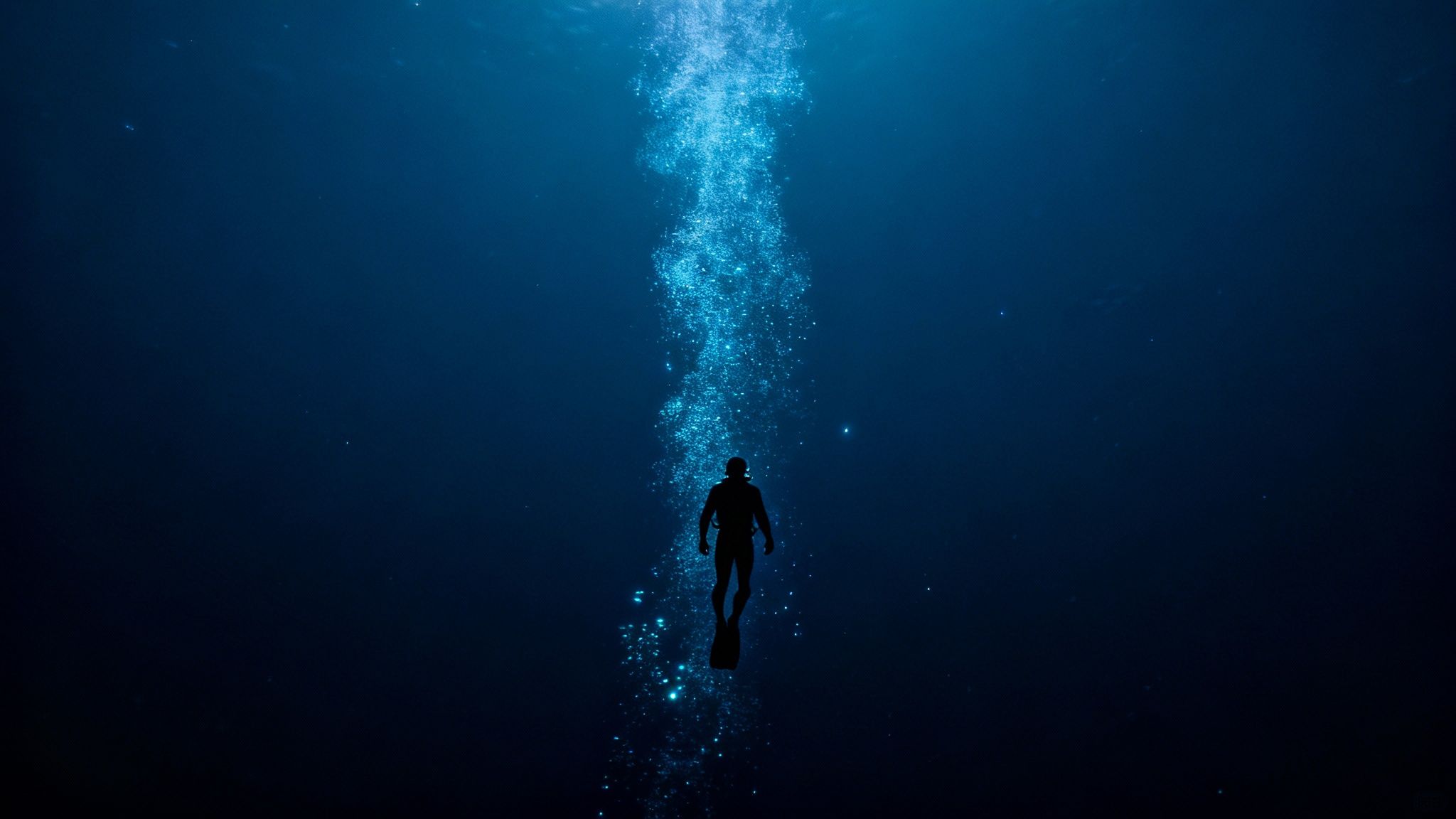
So, you’ve seen your share of colorful reefs and even danced with the giant mantas at night. You're a certified diver with a well-stamped logbook, and you're wondering, "What's next?" Well, Kona has some deeper, more thrilling secrets waiting for you.
Beyond the popular sites that dot the coast lies a world of big island scuba diving that pushes the boundaries of underwater exploration. These aren't your typical reef tours. They're specialized adventures built for divers with solid skills and a hunger for something truly extraordinary. If you’re ready to see a side of Hawaii’s marine ecosystem that most people never will, these are the more experienced diving opportunities you came for.
The Kona Pelagic Blackwater Dive
Picture this: you're suspended in the deep, inky black of the open ocean. Below you lies thousands of feet of water. You’re tethered to a boat, miles from shore, witnessing the largest migration of life on our planet. This is the Kona Pelagic Blackwater Dive, and it’s one of the most surreal experiences you can have underwater.
Every single night, an untold number of strange, often bioluminescent creatures rise from the abyss to feed near the surface. Floating in the dark, your dive light becomes a window into a hidden universe, revealing a parade of otherworldly organisms.
- Larval Creatures: You’ll see the infant stages of familiar animals, like tiny lobsters or eels, that look absolutely nothing like their adult selves.
- Pteropods and Ctenophores: Delicate, gelatinous beings drift past, many of them pulsing with their own internal light.
- Cephalopods: Keep an eye out for small, iridescent squid and octopuses hunting in the vast darkness.
This isn’t about spotting big animals; it's about discovering a microscopic, alien world that is both bizarre and breathtakingly beautiful. It demands excellent buoyancy and a cool head, making it the perfect challenge for a seasoned diver.
The Blackwater Dive is like floating through outer space. You're surrounded by tiny, glowing life forms that seem to come from another galaxy. It completely redefines what a night dive can be.
Here in Kona, Kona Honu Divers runs one of the most respected blackwater dives on the island. Their expert guides know exactly how to make this a safe, mind-blowing adventure into the deep.
Premium Advanced Charter Trips
When your logbook is already packed with deep dives and complex profiles, a standard reef tour just might not cut it anymore. You’re looking for a real challenge, and that’s where premium advanced charters come in. These trips are built from the ground up to take experienced divers to deeper, more remote sites that are off-limits to regular tours.
These exclusive charters target locations with more demanding conditions—think deep pinnacles, dramatic walls, and intricate lava tube systems. Because so few divers get to see these pristine environments, the coral is healthier and the marine life encounters can be truly unique. It’s all about giving skilled divers a chance to safely explore their limits while discovering the wild, untamed side of Kona’s underwater world.
The groups are smaller and filled with like-minded divers, so the pace is set by the team's skill level. This often means longer bottom times and more ambitious dive plans. Kona Honu Divers curates these adventures to be both challenging and incredibly rewarding. To see what’s on offer, check out their Premium Advanced 2-Tank Trip page.
Getting Your PADI Certification in Paradise
If you've ever imagined what it feels like to breathe underwater, there's no better classroom on earth than the calm, clear, and warm waters off the Kona coast. The conditions here are practically designed for building your confidence and mastering new skills. Earning your Big Island scuba diving certification isn't just a course; it's an unforgettable highlight of any trip to Hawaii.
This is where you go from being someone who just looks at the ocean to someone who explores it. Your journey starts by picking the right path for your schedule and comfort level.
Your First Steps Underwater
For anyone who's completely new to scuba, there are two fantastic ways to get your fins wet. Each one offers a different level of commitment, but both are designed to get you in the water safely and, most importantly, with a huge grin on your face.
- Discover Scuba Diving (DSD): Think of this as the perfect "try before you buy" adventure. A DSD is a one-day, fully supervised introduction to diving that requires absolutely zero prior experience. After a quick and easy lesson on safety basics, an instructor guides you on a real ocean dive. They handle all the gear, so you can just focus on the incredible sensation of breathing underwater and seeing the reef up close. It’s the fastest way to meet Kona's amazing marine life.
- PADI Open Water Diver Certification: Ready to become a fully certified diver? This is the one. It's the most popular and recognized scuba course in the world for a reason. Through a mix of online learning, skill-building sessions in confined water, and four incredible open-water dives, you'll learn everything you need to know to dive independently with a buddy. Earning your Open Water card is like getting a passport to a lifetime of underwater adventures.
Choosing the Right Dive Operator
I can't stress this enough: picking the right dive shop is the most critical decision you'll make when learning to dive. Your safety, how much you enjoy the experience, and the quality of your training all hang on this choice. A great operator doesn't just teach you skills; they spark a genuine, lifelong passion for the ocean.
When you're looking for a dive school, remember you're not just paying for a class—you're investing in your own safety and confidence. You want a team that insists on small groups, has obsessive safety standards, and employs instructors who are patient, experienced, and truly love what they do.
To make it easier, here's a practical checklist of what to look for:
- Impeccable Safety Record: This is the absolute bottom line. No compromises. Find a company with a long, proven history of safe diving.
- Experienced PADI Instructors: A great instructor is patient, an excellent communicator, and a pro at making you feel comfortable and confident.
- High-Quality, Well-Maintained Gear: Your equipment is your life support system. Make sure the operator uses modern gear that is serviced regularly and meticulously.
- Small Class Sizes: You'll get far more one-on-one attention and feel more relaxed in a smaller group. It makes a world of difference.
- Commitment to Conservation: Look for operators with a PADI Green Star award. It shows they're dedicated to protecting the beautiful environment you've come to see.
Learn with Kona Honu Divers
Kona Honu Divers doesn't just check these boxes—they set the standard. They've built their reputation on creating a supportive, fun, and exceptionally safe environment for new divers. The entire team is committed to giving you world-class instruction right here in paradise.
You can see exactly how they structure their programs for student success by checking out the details of their Kona scuba certification course.
Here's what other divers have to say about their experience:
Planning Your Ultimate Kona Dive Adventure
By now, you've probably got a pretty good idea of what makes Big Island scuba diving so special. It's an incredible mix of otherworldly experiences, from dancing with giant mantas at night to exploring the dramatic, volcanic architecture of the Kona coast. An unforgettable adventure is just waiting beneath the waves.
The last step is the most fun: turning those daydreams into a real dive plan. And that means choosing the right crew to take you out—a team that lives and breathes these waters, prioritizing not just your fun, but your safety and the health of the reef. We're biased, of course, but we believe that crew is Kona Honu Divers. Our team's passion is sharing this amazing place, and we do it right.
Turning Your Plan into Reality
So, with all these amazing options, how do you even begin to choose? Start by thinking about what truly gets your heart pumping.
- The Bucket-List Moment: If you’re here for that one, jaw-dropping experience you’ll talk about for years, the Manta Ray Night Dive is it. No question.
- The Underwater Explorer: Do you love navigating unique underwater landscapes? Make sure your itinerary includes sites known for their ancient lava tubes and stunning archways.
- The Seasoned Pro: For those seeking a different kind of thrill, the legendary Blackwater Dive or one of our advanced charters will give you the challenge and unique encounters you're looking for.
When you come also plays a part. Kona's diving is fantastic all year, but different seasons bring subtle changes. You can get the inside scoop on what to expect by reading our guide on the best months to scuba dive in Hawaii. And if a single day of diving just isn't enough, you can always explore liveaboard diving for a fully immersive trip.
The real magic of Kona is that there’s a perfect dive for every diver. The secret is finding a guide who knows how to unlock it for you.
There's no reason to wait. The underwater world of Hawaii is calling. Take a look at all of Kona Honu Divers' diving tours and find the adventure that’s a perfect fit for you.
Your Big Island Diving Questions, Answered
Thinking about diving the Big Island for the first time? You probably have a few questions. We get it. To help you get ready for an amazing trip, here are the straight-up answers to the questions we hear most often from divers just like you.
What’s the Best Time of Year to Dive the Big Island?
Honestly, any time is a good time. One of the best parts about diving in Kona is that the conditions are incredible year-round. Water temperatures hover in that sweet spot between 75-80°F (24-27°C), and visibility is often so clear you can see for over 100 feet. It’s hard to beat.
That said, different seasons do have their own special perks:
- Winter (December – March): Welcome to humpback whale season. You might not see these gentle giants on your dive, but hearing their songs echoing through the water is an experience you'll never forget. It’s a truly magical soundtrack for your underwater adventure.
- Summer (May – September): This is when the ocean tends to be at its calmest. If you're hoping for glassy seas and super smooth boat rides, summer is prime time. It’s perfect for new divers or anyone who gets a little seasick.
Can I Try Scuba Diving in Kona if I’m Not Certified?
You bet! If you've always wanted to see what it's like to breathe underwater, the PADI Discover Scuba Diving program is for you. It's a one-day experience, designed from the ground up to be safe and fun for complete beginners.
One of our experienced instructors will walk you through the basics, get you comfortable with the gear, and then guide you on a real ocean dive. We handle all the technical stuff, so you can just relax and take in the incredible marine life. It's the perfect way to test the waters without committing to a full course.
The most common thing we hear from first-timers is, "I can't believe I waited this long to try it!" The Discover Scuba program makes that first underwater breath safe, easy, and absolutely unforgettable.
What Will I See Besides Manta Rays?
The mantas are the rockstars, for sure, but the reefs along the Kona coast are absolutely teeming with other incredible marine life. The underwater volcanic landscape here creates the perfect home for all kinds of amazing creatures.
On any given dive, you'll likely spot Hawaiian green sea turtles (honu) cruising by, see playful spinner dolphins from the boat, or find moray eels peeking out of their rocky homes. Harmless whitetip reef sharks are often seen napping on sandy patches. On top of that, the reefs are covered in hundreds of species of vibrant tropical fish, many of which are endemic—meaning you can only find them right here in Hawaii.
What Should I Pack for a Dive Boat Trip?
Getting ready for your dive day is easy. As your dive operator, Kona Honu Divers provides all the heavy lifting—the tanks, weights, BCD, regulators, all of it. You just need to bring a few personal items to make your day comfortable.
Here’s our go-to list:
- A towel
- Reef-safe sunscreen (this is a big one for protecting our coral!)
- A hat and sunglasses for when you're on the surface
- A reusable water bottle to stay hydrated
Toss those in a bag, and you’re all set for a fantastic day of exploring Kona's underwater world.
Ready to see it all for yourself? Kona Honu Divers has a full lineup of diving tours for every diver, from beginner to expert.