
When people talk about the best scuba diving in the world, the Big Island of Hawaii always enters the conversation. It's famous for a trifecta of incredible conditions: stunningly clear water, wild volcanic underwater landscapes, and a mind-blowing amount of marine life.
The Kona coast, in particular, is a diver's dream. It offers calm, protected waters that make it a perfect spot for everyone, whether you're just getting certified or you’ve logged hundreds of dives.
Why Choose The Big Island For Your Next Dive Adventure
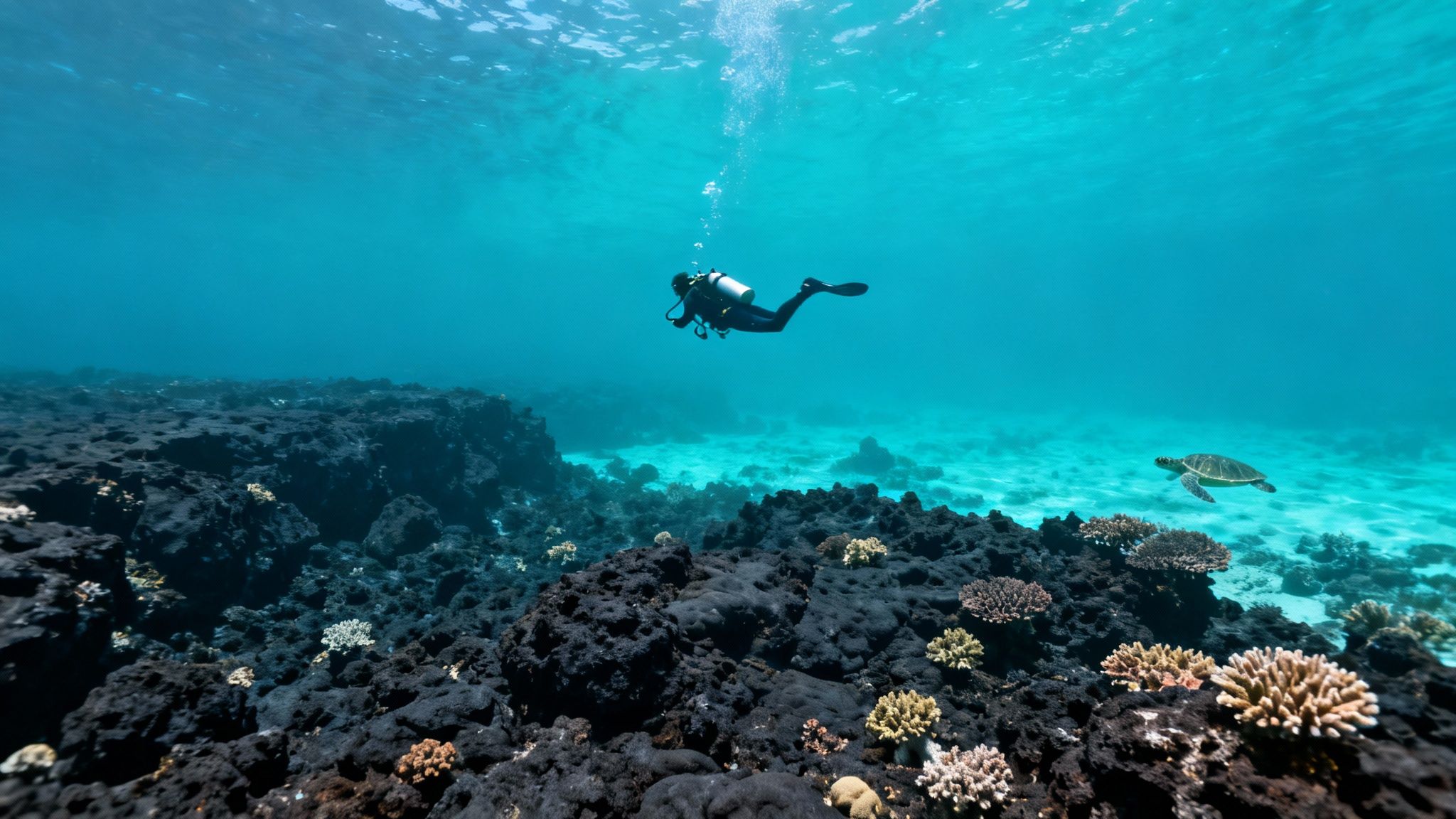
The Big Island is more than just another pretty place to dive; it’s an underwater world literally forged by volcanoes. That unique geology has carved out a dramatic subaquatic playground of lava tubes, arches, and ancient craters that are now bursting with life.
What really sets the Kona coast apart is how sheltered it is. The island's massive volcanoes block the prevailing trade winds, which means the seas are consistently calm and dive conditions are near-perfect almost every single day. This creates an environment with incredible biodiversity and visibility that often pushes past 100 feet. You're treated to healthy coral reef systems that are home to a ton of marine species, many of which you can't find anywhere else on the planet.
An Unforgettable Underwater Experience
Of all the amazing things to see here, the Manta Ray Night Dive is the island's star attraction. It’s a genuine, once-in-a-lifetime experience. With a sighting success rate of over 85-90%, you’re almost guaranteed to see anywhere from five to over 20 of these gentle giants gliding right over your head as they feed on plankton. It's a mesmerizing underwater ballet and an absolute must-do.
The combination of protected waters, volcanic topography, and iconic encounters like the Manta Ray Night Dive solidifies the Big Island's reputation as a premier global scuba destination.
Whether you're exploring vibrant reefs by day or witnessing the magic of the mantas at night, the underwater world here is truly special. Those consistent conditions also make it a fantastic place to get certified or take on advanced training. Figuring out what are the best months to scuba dive in Hawaii can help you time your trip just right.
Here’s a quick rundown of what makes Kona diving so unique:
- Year-Round Diving: Thanks to the leeward coast, you’ll find calm, clear water pretty much any time you visit.
- Unique Topography: You get to explore underwater lava tubes, caves, and ancient volcanic formations you won't see elsewhere.
- Rich Biodiversity: Expect to see Hawaiian green sea turtles, spinner dolphins, and hundreds of fish species that are native only to these waters.
- Signature Dives: It’s home to the world-famous Manta Ray Night Dive, a true bucket-list adventure.
Comparing The Top Big Island Dive Sites
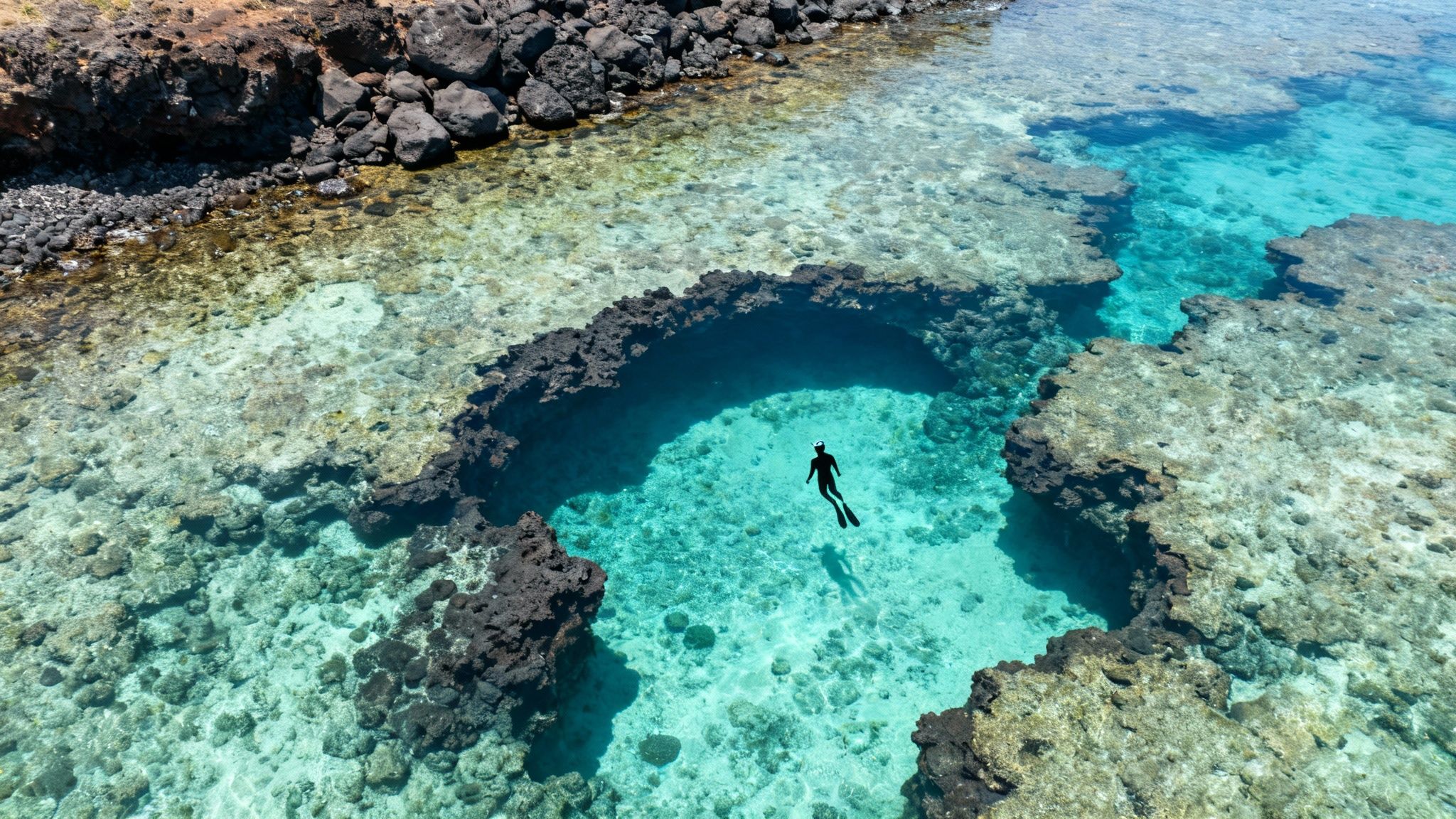
The Big Island’s Kona coast is a diver's dream, loaded with dozens of world-class sites. With so many options, picking the right spot can feel a bit daunting. The key is to match a site to what you want out of a dive—your skill level, your interests, and the kind of underwater world you want to see. Are you looking for easy, colorful reefs or dramatic, deep lava formations? There’s an adventure here for you.
What really makes big island scuba diving so special is the volcanic geology. You're not just swimming over sand; you're exploring ancient lava tubes, massive archways, and sheer walls buzzing with life. It’s this incredible variety that keeps divers coming back year after year. Let’s dive into a few of my favorite spots, all of which are staples on the itineraries of professional diving tours.
Kealakekua Bay (Captain Cook Monument)
Kealakekua Bay isn’t just another dive site; it’s the crown jewel of Kona. As a protected marine sanctuary, its ecosystem is bursting with life, and the water clarity is often out of this world, with visibility easily exceeding 100 feet. The "no-take" rules mean the fish populations are thriving and unafraid, creating a truly immersive experience. If you want to understand what makes this reef so vibrant, check out this comprehensive Big Island scuba diving guide.
This place is a photographer's paradise. The conditions are usually calm, the visibility is insane, and you’re surrounded by thick schools of fish. It's fantastic for everyone, from newly certified divers to old pros.
Look for the resident pods of spinner dolphins that come into the bay to rest. You'll also see plenty of Hawaiian green sea turtles, moray eels, and a stunning variety of reef fish you won't find anywhere else on Earth. The coral gardens are in fantastic shape, sloping gently from the shoreline into the deep blue.
Pu'uhonua O Honaunau (Two Step)
A short drive south of Kealakekua Bay brings you to Pu'uhonua O Honaunau, known to every local diver as "Two Step." The name comes from the two natural lava rock steps that make for one of the easiest shore entries on the island. This spot is all about the underwater terrain—it’s a playground of arches, small caverns, and swim-throughs carved by ancient lava flows.
The marine life is just as exciting, with turtle sightings practically guaranteed. Keep an eye out for octopuses cleverly camouflaged against the rock and huge schools of bright yellow tang. Two Step is amazing during the day, but it transforms into a completely different world on a night dive. That's when you can find turtles sleeping in crevices and nocturnal hunters on the prowl. The shallows are great for beginners, but the outer reef drops off, offering more complexity for advanced divers.
Golden Arches (Nai'a)
True to its name, Golden Arches features a massive lava arch that's big enough to swim through and makes for an unforgettable photo op. The arch is often packed with schools of soldierfish and squirrelfish, their red scales glowing in your dive light. It’s also a well-known cleaning station, a sort of day spa where turtles and larger fish line up to let smaller cleaner wrasse nibble away parasites.
Beyond the main attraction, the reef is healthy and vibrant. The sandy bottom nearby is a good place to spot garden eels or even whitetip reef sharks taking a nap. With its moderate depth and typically calm waters, this site is a perfect step up for divers who have their Open Water certification and are ready to explore more dynamic environments.
Comparison of Top Big Island Dive Sites
To help you choose your next underwater adventure, here's a quick-reference guide comparing the key features of these premier dive sites.
| Dive Site | Best For | Typical Depth | Marine Life Highlights | Required Skill Level |
|---|---|---|---|---|
| Kealakekua Bay | Photography & Calm Conditions | 20-80 ft (6-24 m) | Spinner Dolphins, Turtles, Endemic Fish | Beginner to Advanced |
| Two Step | Shore Diving & Lava Tubes | 15-70 ft (5-21 m) | Turtles, Octopus, Reef Fish, Caverns | Beginner to Advanced |
| Golden Arches | Arches & Cleaning Stations | 40-90 ft (12-27 m) | Turtles, Whitetip Reef Sharks, Eels | Intermediate |
No matter which site you pick, you're in for an incredible experience. The best way to truly appreciate the magic of big island scuba diving is to get out there and explore the incredible diversity the Kona coast has to offer.
The World-Famous Manta Ray Night Dive
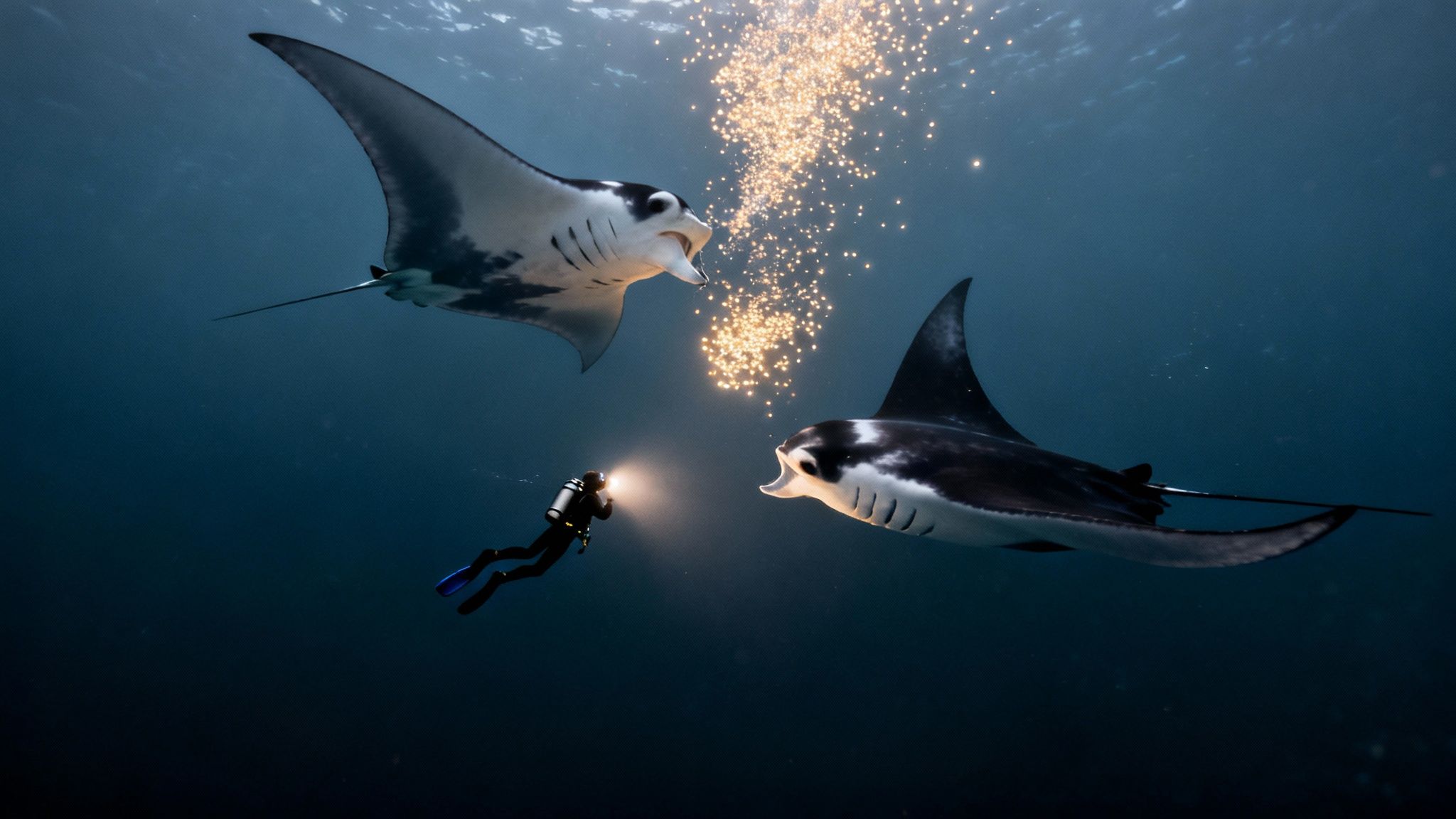
Of all the incredible dives Hawaii has to offer, one experience is legendary: the Manta Ray Night Dive. This isn't just another entry in your logbook; it’s a profound encounter that consistently lands on "world's best" lists. For anyone serious about Big Island scuba diving, this is the absolute pinnacle.
The magic of the dive is beautifully simple. After the sun goes down, dive operators submerge powerful lights onto the ocean floor. This light attracts swarms of plankton, and the plankton, in turn, attract the mantas. These gentle giants, with wingspans reaching over 12 feet, emerge from the dark to feast. They put on a graceful, silent ballet, soaring and somersaulting through the light beams.
Choosing The Best Manta Dive Location
While you can see mantas at a few spots along the Kona coast, the two main sites are Manta Village (near Keauhou Bay) and Garden Eel Cove (also known as Manta Heaven). Both have high success rates, but seasoned divers and operators know that Garden Eel Cove is the superior choice.
Why? It really comes down to conditions and comfort. Garden Eel Cove is tucked into a more protected bay, which means calmer water, less current, and a much more enjoyable experience. This shelter has also allowed a healthier, more vibrant reef to thrive, giving you a beautiful backdrop while you wait for the stars of the show. The viewing area itself is better, letting divers spread out and find their own space without feeling crowded. It just makes for a more relaxed and immersive experience.
The protected nature of Garden Eel Cove not only provides a more comfortable dive but also supports a richer marine ecosystem, enhancing the overall spectacle of the manta ray encounter.
What To Expect On Your Manta Ray Dive
Your adventure starts on the boat with a thorough briefing. The guides will walk you through the whole plan, emphasizing the most important rule: passive interaction. You're there to observe, not to touch. Touching a manta can damage the protective mucous coating on its skin, which is a big deal for its health. You'll learn everything you need for a safe and respectful Kona Manta Ray Night Dive. For the best experience, you can book a manta ray dive tour with a reputable operator.
Once in the water, you'll descend to a sandy patch on the bottom, usually around 30-40 feet deep. Here, everyone gets into a circle, points their dive lights up, and creates a "campfire" of light to draw in the plankton.
Then, you wait. Soon enough, dark shapes appear at the edge of the light, growing larger as the mantas glide in. They swoop just inches over your head, giant mouths agape as they filter the water for food. It’s a humbling, almost surreal feeling to be so close to these powerful, graceful animals. The only sounds are your own bubbles and the quiet gasps of your fellow divers. It’s an underwater performance you will never forget.
Choosing Your Big Island Dive Operator
Let’s be honest: the dive operator you choose can make or break your entire Big Island scuba diving trip. A great crew doesn’t just drive the boat and point you to a reef; they enhance the whole experience, turning a good dive into a truly unforgettable one. They're your guides, your safety net, and your local experts all rolled into one.
The Big Island has a fantastic and mature dive community, which is great news for you. You'll find everything from massive PADI 5-Star IDC centers that churn out certifications to smaller, boutique outfits focused on intimate charters for seasoned divers. This variety is a huge plus, but it also means you have to do a little homework to find the right fit.
What Really Matters When Picking a Dive Shop
It’s tempting to just compare prices, but that’s often the least important factor. Your first priority should always be safety and reputation. You want a company with seasoned, certified divemasters and captains who know these waters like the back of their hand—people who can read the currents and know exactly where the critters are hiding.
Another huge factor is the size of the dive group. I can't stress this enough. A smaller group means you get more personal attention from your guide, you're not bumping into a dozen other divers underwater, and the whole vibe is just more relaxed. It's the difference between feeling like just another number and feeling like a welcome guest.
When you're comparing shops, dig into these details:
- The Boat Itself: Is there shade? A proper marine head (restroom)? A sturdy ladder that’s easy to climb? Little things like a warm freshwater shower and decent snacks after a dive can feel like pure luxury.
- The Guides: Are they genuinely passionate about the ocean, or are they just going through the motions? A top-notch guide will point out camouflaged octopus and frogfish you’d swim right past.
- Rental Gear Condition: If you're renting, take a look at their equipment. Is it modern and well-maintained? Gear that's regularly serviced is a huge sign that a company takes safety seriously.
- Conservation Mindset: Does the operator actively practice what they preach? Look for a shop that respects the marine environment and insists on responsible dive practices.
Why We Think Kona Honu Divers Is a Cut Above
When divers ask for a top-tier recommendation, Kona Honu Divers is always at the top of the list, and for good reason. They've built their reputation on a solid foundation of safety, genuine conservation efforts, and fantastic customer service. They specialize in keeping their group sizes small, which ensures every diver gets the attention they deserve, both on deck and 60 feet down.
Their boats are built for diver comfort—spacious, plenty of shade, hot showers, and all the little amenities that make the day better. But what really sets them apart is the crew. They’re not just professional; they’re fun, engaging, and clearly love what they do. That passion for Hawaii's underwater world is infectious and makes every trip feel special. You don't have to take my word for it; their thousands of glowing reviews speak for themselves.
Ultimately, the right operator is more than a service—they're your partner in adventure. They give you the confidence to explore the incredible world of Big Island scuba diving safely. Taking a little extra time to choose wisely is the best investment you can make in your trip. Ready to see what’s out there? Take a look at the available diving tours and find the one that’s calling your name.
Advanced and Specialty Diving Opportunities
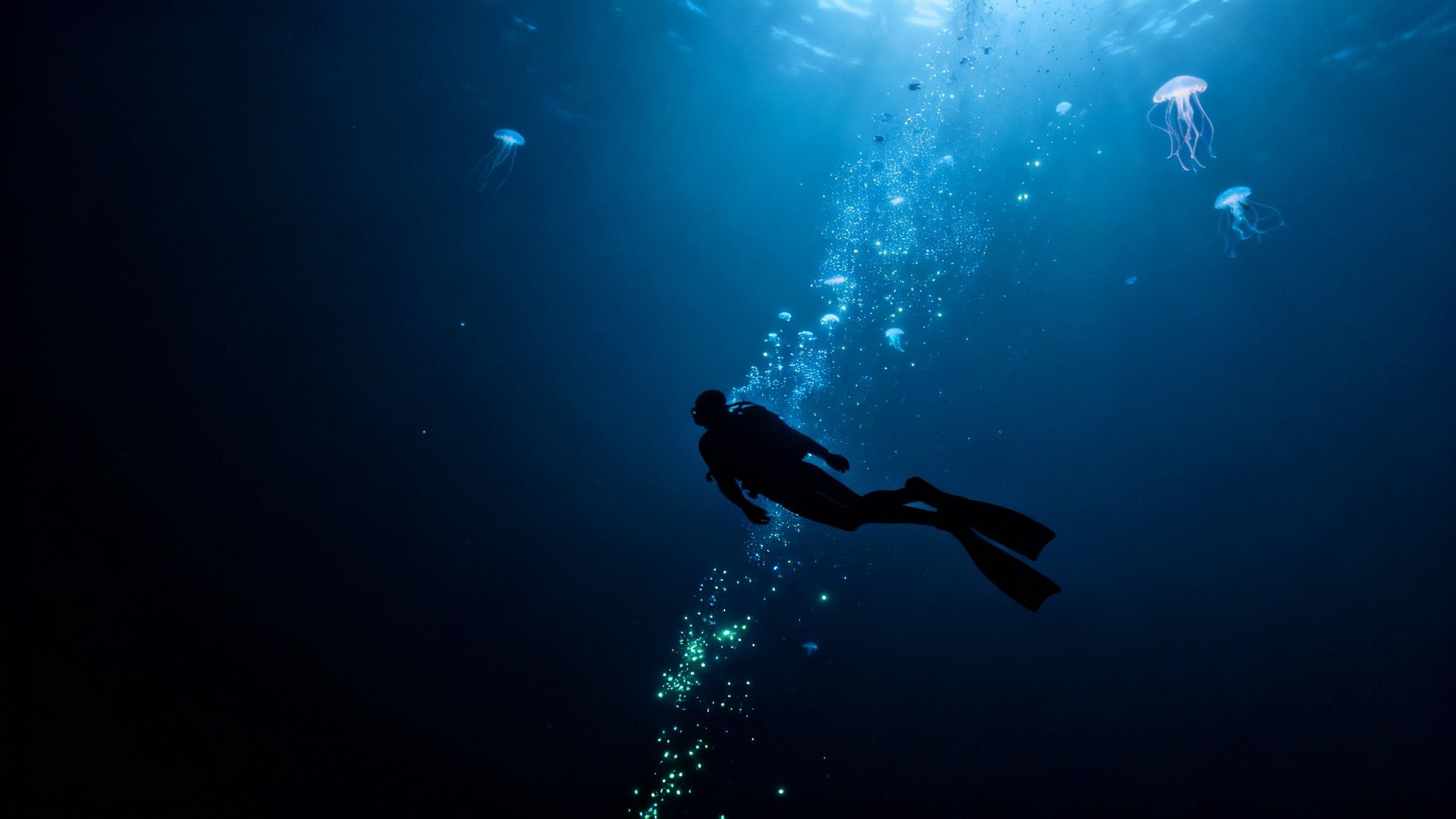
While the Big Island’s reefs are stunning for any diver, a whole other world opens up for those with the skills and nerve to go deeper. For experienced divers, the real magic of big island scuba diving is found in its advanced and specialty dives. These aren't your typical reef tours; they're demanding, highly specialized experiences that push the boundaries of underwater exploration.
From dropping down to deep volcanic pinnacles to navigating the winding passages of ancient lava tubes, these dives demand precision, confidence, and a healthy dose of adventure. It’s your ticket to see a side of Hawaii’s underwater world that very few people ever will. Down in the deeper, darker waters, the most fascinating encounters happen.
The Legendary Kona Blackwater Dive
The Kona Blackwater Dive is easily one of the most unique dives on the planet—a surreal nighttime drift into the open ocean. Forget the reef. On this dive, you're tethered to a boat, floating over thousands of feet of inky black water. The whole point is to witness one of the Earth's largest vertical migrations, where bizarre, alien-like creatures rise from the abyss under the cover of darkness.
You’ll see life forms that look like they're straight out of a sci-fi movie:
- Bioluminescent Jellies: Pulsating with an otherworldly glow.
- Translucent Squids: Their intricate inner workings are visible right through their skin.
- Larval Creatures: In their earliest, most bizarre-looking stages of life.
This pelagic dive is less about spotting big animals and more about discovering a hidden universe of macro life. It’s a highly controlled, technical dive that combines the thrill of the unknown with the precision of advanced diving procedures.
The experience is both humbling and completely mesmerizing. Just floating in that vast darkness, you feel like a visitor in a realm ruled by creatures of the deep. It’s an experience that will completely redefine what a night dive can be. To get a better idea of what this one-of-a-kind adventure involves, you can check out the details of the Blackwater Dive tour.
Exploring Deep Pinnacles and Lava Tubes
Beyond the blackwater experience, advanced big island scuba diving offers some incredible structural dives. Submerged volcanic spires, known as offshore pinnacles, jut up from the seafloor, creating cleaning stations that attract larger marine life like sharks and rays. These deeper dives require proper certification and sharp gas management skills, but they pay off with dramatic underwater landscapes and rare sightings.
Lava tubes present a completely different kind of challenge. These underwater caverns, carved out by ancient lava flows, create an overhead environment that demands excellent buoyancy control and specialized training. Exploring these dark passages with a dive light reveals unique critters that have adapted to life with little light. These dives are a true test of a diver's skill and composure.
For those certified for deeper exploration and complex environments, Kona Honu Divers offers a premium advanced 2-tank trip specifically designed to explore these rewarding sites. These trips are built for experienced divers who want to safely push their limits and see the more rugged, untamed side of Kona’s underwater world.
Your Big Island Scuba Diving Questions Answered
Planning a scuba trip to the Big Island can bring up a lot of questions, especially if it’s your first time diving here. To make sure you’re ready for an incredible underwater adventure, I've put together answers to some of the most common things divers ask before taking the plunge into Kona's famous waters.
This isn't just a generic FAQ. It's designed to clear up any final uncertainties so you can show up feeling confident, prepared, and excited. Let's get into it.
What Is The Best Time Of Year For Scuba Diving On The Big Island?
One of the truly great things about diving in Kona is that there’s really no "off-season." The island's huge volcanoes act as a natural shield for the Kona coast, blocking the trade winds and creating consistently calm, clear conditions all year long.
If you love warm water, the summer months from May to October are fantastic. You’ll find the flattest seas and water temperatures often hitting a balmy 80°F (27°C).
Winter, which runs from November to April, might bring a bit more ocean swell, but the diving is still top-notch. The water cools down slightly to a very comfortable 75°F (24°C). The real magic of winter diving? It’s humpback whale season. There's nothing quite like hearing their songs echoing through the water on a dive—it's an experience you'll never forget.
Do I Need To Be Certified To Go Scuba Diving In Hawaii?
Yes, if you want to join certified big island scuba diving charters and explore the deeper reefs, you'll need an Open Water Diver certification (or equivalent) from a recognized agency like PADI, SSI, or NAUI. Make sure you bring your certification card with you.
But what if you're not certified? You can still experience what it's like to breathe underwater. Nearly all reputable dive shops offer an introductory program, often called a Discover Scuba Dive. It's a fantastic, safe way to try diving. You'll go through a quick skills session with an instructor in shallow water before they guide you on an actual dive. It's the perfect way to see if diving is for you before committing to a full course.
What Kind Of Marine Life Can I Expect To See?
The sheer amount of marine life around the Big Island is just incredible. On pretty much any dive, you’re almost guaranteed to see Hawaiian green sea turtles (honu) resting on the lava rock or gliding past. You’ll also spot different kinds of moray eels peeking out from crevices, well-camouflaged octopus (he'e), and a stunning variety of reef fish—many of which you can only find here in Hawaii.
Depending on the dive site and a bit of luck, you might also run into:
- Pods of spinner dolphins playing in the bays
- Majestic eagle rays cruising through the blue
- Whitetip reef sharks napping on the sandy bottom
- Even larger pelagic species like tiger sharks or whale sharks on rare, thrilling occasions
And of course, the Manta Ray Night Dive offers guaranteed encounters with those gentle giants, while the Blackwater Dive introduces you to the weird and wonderful creatures that rise from the deep after dark. The best way to target specific animals is to explore the full range of available diving tours and pick the one that fits what you want to see.
What Should I Pack For My Big Island Dive Trip?
A little smart packing goes a long way in making your dive trip more comfortable. While great operators like Kona Honu Divers have excellent rental gear, nothing beats the fit and familiarity of your own equipment.
Here’s a quick checklist of what I recommend bringing:
- Your C-card and logbook: You absolutely cannot dive on a certified boat without them.
- Personal Gear: At the very least, bringing your own mask, fins, and dive computer makes a huge difference in comfort.
- Exposure Protection: A 3mm or 5mm wetsuit will keep you comfortable in the water temperatures here any time of year.
- Reef-Safe Sunscreen: Please help us protect Hawaii’s delicate coral. Always choose a mineral-based sunscreen.
- The Extras: A reusable water bottle, a good towel, and an underwater camera are always smart additions to your dive bag.
Finally, safety should always be your number one priority. It's a good idea for any diver to be educated on dive-related medical treatments. Knowing about things like What is Hyperbaric Oxygen Therapy (HBOT) is just part of being a prepared, responsible diver.
At Kona Honu Divers, our entire mission is to provide safe, fun, and truly unforgettable underwater adventures. Whether you're a seasoned pro with thousands of dives or you're just getting started, our experienced crew is here to show you the absolute best of Big Island scuba diving.