
Welcome to the underwater realm of Hawaii's Big Island, an absolute paradise for scuba divers. This isn't just another tropical dive spot; it’s a world forged by volcanic fire and shaped by the vast Pacific Ocean. From the legendary Manta Ray Night Dive to exploring ancient lava tubes, the Big Island serves up bucket-list adventures for divers of all stripes.
Think of this guide as your personal divemaster, here to help you plan an unforgettable trip into Hawaii's vibrant and dramatic underwater landscapes.
Check Availability
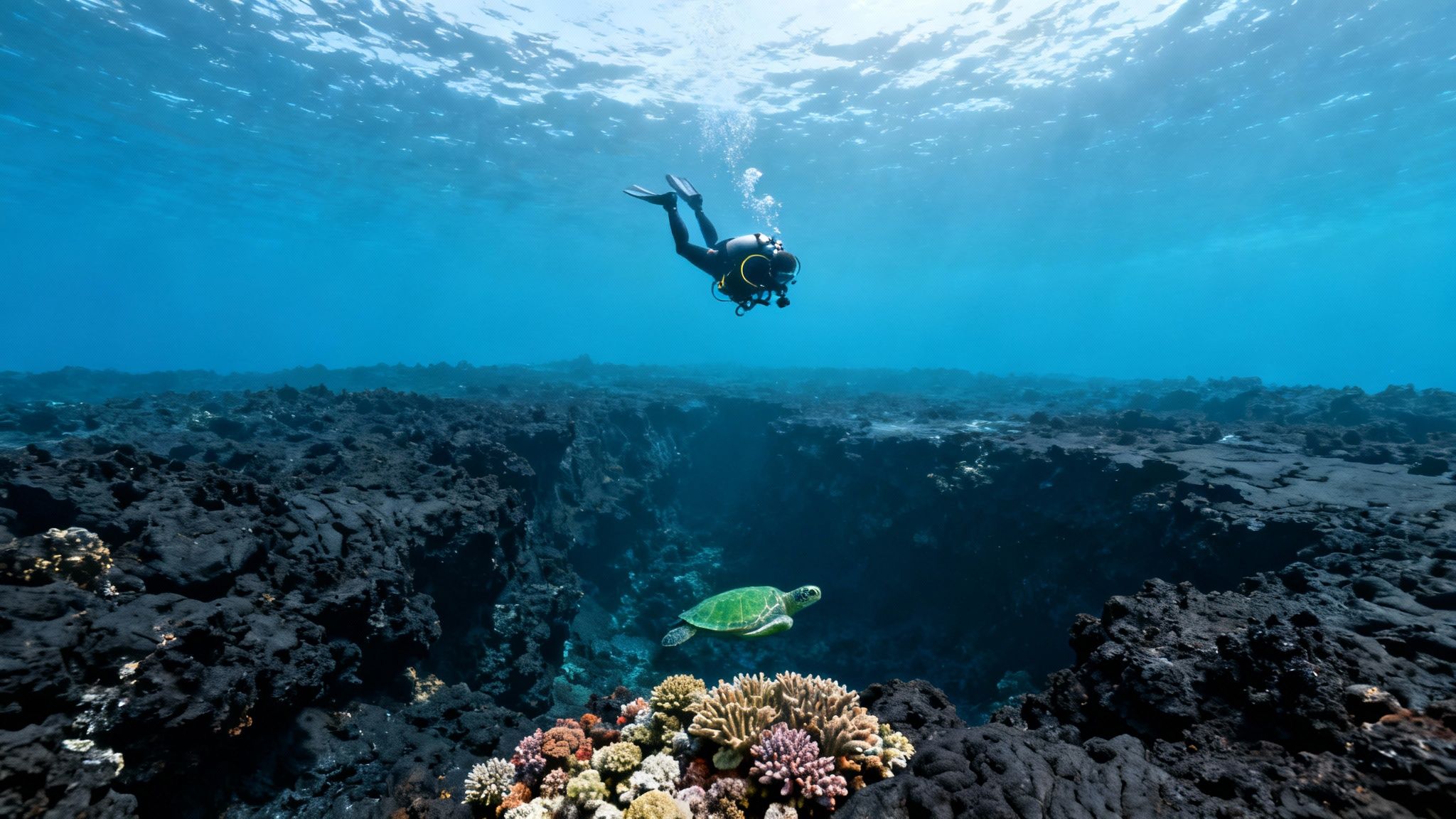
Your Essential Guide to Diving the Big Island
Diving on the Big Island is a truly unique experience. You're not just swimming over reefs; you're exploring an ecosystem built on the slopes of massive volcanoes. This geology has created an underwater playground of dramatic drop-offs, majestic arches, and intricate lava tubes that you simply won't find anywhere else.
It's this rugged, volcanic foundation that supports such an incredibly rich and diverse marine world. Every crack and crevice provides a home for something new and fascinating to discover.
A Thriving Underwater Metropolis
The Big Island’s diving scene has absolutely exploded over the years, growing from a quiet hobby into a major global attraction. Today, the island sees around 100,000 certified scuba dives every year. More than 50 dive shops and charter boats cater to over 150,000 visiting divers annually, making it a bustling hub of underwater activity.
The Kona coast is the undeniable heart of it all. Its leeward position means the waters are typically calm and incredibly clear, with visibility that often pushes past 100 feet. It’s also home to a high concentration of endemic species—creatures found nowhere else on Earth—thanks to Hawaii's isolation in the middle of the Pacific. Every dive is a genuine opportunity to see something rare and wonderful.
The real magic of diving here is the sheer variety. One day you're watching graceful manta rays perform an underwater ballet, and the next you're exploring a cavern where whitetip reef sharks rest. It’s a complete sensory experience.
To give you a quick snapshot, here’s a look at what makes this place so special.
Big Island Diving At a Glance
| Feature | Description | Best For |
|---|---|---|
| Volcanic Seafloor | Explore lava tubes, arches, and canyons formed by ancient lava flows. | Adventure divers and photographers. |
| Crystal-Clear Water | Visibility frequently exceeds 100 feet, especially on the Kona coast. | All divers, especially those who love wide-angle photography. |
| Signature Dives | Home to the world-famous Manta Ray Night Dive and Kona Blackwater Dive. | Thrill-seekers and divers looking for a unique experience. |
| Endemic Wildlife | A high percentage of marine life is found only in Hawaiian waters. | Marine biology enthusiasts and curious divers. |
| Year-Round Season | Water temps stay a comfortable 75°F to 82°F all year long. | Anyone looking to escape the cold and dive anytime. |
These key ingredients blend together to create a truly world-class diving destination unlike any other.
What Makes Big Island Diving Unique
So, what’s the secret sauce? A few key factors come together to set the Big Island apart from other top-tier dive locations around the globe.
- Volcanic Topography: This is the big one. The underwater landscape is a direct result of lava meeting the ocean. You get to explore incredible structures like arches, caves, and pinnacles that are not only fun to navigate but also provide perfect homes for marine life.
- Exceptional Visibility: Being on the leeward side of the island, the Kona coast is protected from the prevailing trade winds. This results in incredibly calm, clear conditions. It’s not uncommon for visibility to hit 100 feet or more, which feels like you're flying through an underwater cathedral.
- Iconic Marine Encounters: The Big Island is famous for a reason. Experiences like the Manta Ray Night Dive, where you watch giant mantas feed just inches from your face, are truly once-in-a-lifetime. Then there's the mysterious Kona Blackwater Dive, where you witness bizarre, bioluminescent creatures rising from the deep.
- Year-Round Diving: There's never a bad time to dive here. Water temperatures are always inviting, ranging from a pleasant 75°F in the winter to a balmy 82°F in the summer. No off-season means you can plan your underwater adventure for any time of year.
Why Kona Is Hawaii’s Diving Paradise
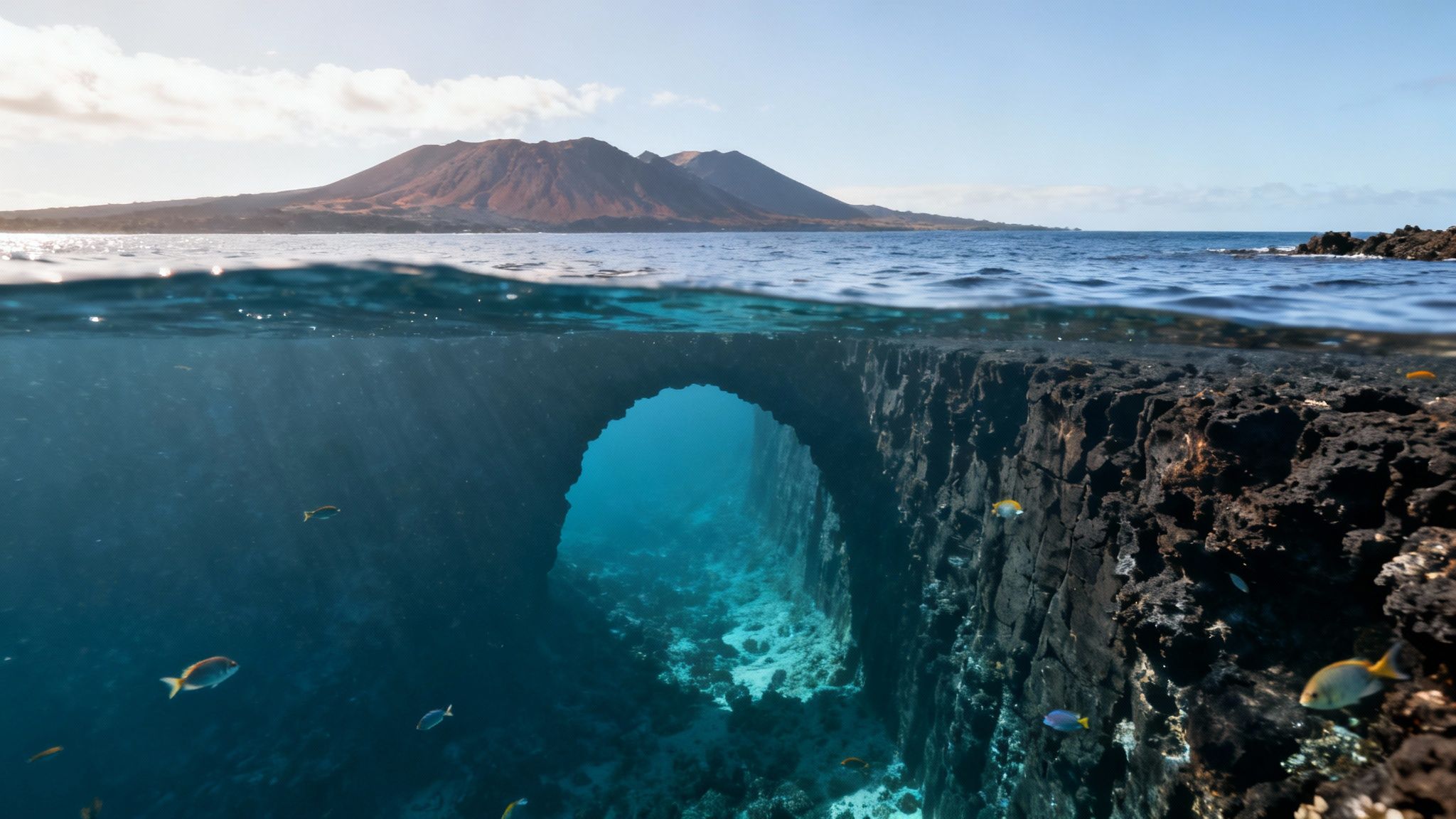
The entire Big Island is a geological masterpiece, but when it comes to world-class diving, all eyes are on the Kona coast. This isn’t just a lucky break; it’s a direct gift from the island's colossal volcanoes. The western shoreline sits in the protective shadow of the immense Mauna Loa and Hualalai.
Picture these volcanoes as a gigantic natural barrier. They rise so high that they effectively block the powerful Pacific trade winds that sweep in from the northeast. This phenomenon creates a "rain shadow," leaving the Kona coast exceptionally calm and dry almost year-round. For divers, this means one thing: some of the most consistently perfect conditions you'll find anywhere.
This incredible natural shelter is the secret sauce behind Kona's legendary water clarity. With hardly any wind to churn the surface, the water stays glassy and still, letting any sediment drift to the bottom. The result is jaw-dropping visibility that often pushes past 100 feet, giving you the feeling of flying through an infinite blue space.
The Volcanic Underwater Architecture
But the real show begins once you dip beneath that calm surface. Here, a dramatic world sculpted by eons of volcanic activity is waiting. Ancient lava flows have cooled into a breathtaking underwater landscape, forming a complex and beautiful playground that makes big island scuba diving so unique.
Forget about flat, sandy bottoms. The seafloor here is a dynamic tapestry of incredible features:
- Lava Tubes and Caverns: These winding tunnels were once fiery conduits for molten rock. Now, they're quiet grottos where reef sharks rest and schools of fish seek refuge.
- Dramatic Arches and Pinnacles: Massive arches and underwater towers (pinnacles) rise from the depths, creating spectacular swim-throughs and vertical walls draped in life.
- Canyons and Ledges: Deep grooves and staggered ledges carve up the reef, providing countless nooks and crannies for everything from tiny nudibranchs to camouflaged octopuses.
This rugged topography isn't just for show. It provides the perfect foundation for a thriving coral reef ecosystem. Every surface offers a place for coral to anchor and grow, which in turn attracts an unbelievable diversity of marine life looking for food and shelter.
Your Gateway to Kona’s Underwater World
Making sense of this intricate volcanic seascape takes real local knowledge. This is where a top-tier operator like Kona Honu Divers comes in. Their expert guides live and breathe these waters, and they know exactly where to find the most spectacular lava formations and memorable marine encounters.
With a deep understanding of the local dive sites, their crew ensures every trip is as safe as it is unforgettable. Exploring these underwater wonders with people who know them best is the only way to fully appreciate why Kona is Hawaii's true diving paradise. To see what they offer, take a look at their diving tours page.
Discovering the Top Kona Dive Sites
The Kona coast isn't just one dive destination; it's an entire underwater kingdom. Think of it less like a single spot and more like a real-life adventure novel, with dozens of unique sites that each tell their own story. One dive might have you gliding through a massive, ancient lava arch, while the next puts you face-to-face with Hawaiian green sea turtles getting their shells cleaned.
This isn't your typical reef-and-sand setup. The Big Island's volcanic heart has sculpted a dramatic seascape filled with lava tubes, towering archways, and sheltered coves. These formations create the perfect sanctuaries for marine life to thrive, which is precisely why Big Island scuba diving is famous around the world.
Let's dive into a few of Kona's most legendary spots.
Turtle Pinnacle: Where Honu Gather
Just like its name suggests, Turtle Pinnacle is a famous hangout for Hawaiian green sea turtles, or honu. The site is centered around a large underwater rock formation—a pinnacle—that acts as a natural "cleaning station." Here, turtles patiently line up to let surgeonfish and other small reef fish nibble away algae and parasites. It's their version of a spa day.
On a typical dive, it’s common to see a half-dozen or more turtles just chilling out, waiting their turn. It's a photographer's dream and an absolutely serene experience to just float and watch these ancient mariners go about their day. With a depth between 40 and 60 feet, it’s a fantastic dive for just about everyone.
Golden Arches: A Photographer's Playground
Picture this: you're swimming through a massive, sunlit underwater archway covered in golden cup corals. That's Golden Arches. It’s a perfect example of Kona's volcanic artistry, and the main arch is big enough for a small group of divers to cruise through together. The way the light filters down from the surface creates some truly spectacular photo ops.
But the arch is just the beginning. The reef all around it is buzzing with activity. You’ll want to keep an eye out for octopus camouflaged in plain sight, moray eels peeking out from rocky homes, and huge schools of colorful butterflyfish. The combination of unique topography and vibrant life makes this a diver favorite, no matter how many logbook entries you have.
The real magic of Kona's dive sites is the sheer biodiversity. The island's isolation in the middle of the Pacific created a hotspot for endemic species—which means a lot of the fish you see here can't be found anywhere else on Earth.
This incredible richness is a direct result of the island’s complex underwater terrain. The Big Island is the most fish-rich of all the Hawaiian Islands, home to a stunning concentration of approximately 1,100 fish species, including 129 that are exclusive to this island chain. The intricate network of caves, pinnacles, and lava-formed craters provides endless habitats for everything from sleeping whitetip reef sharks to graceful eagle rays. To learn more about this incredible biodiversity, discover more insights about Hawaii's marine life on ScubaDiving.com.
Exploring More Kona Treasures
While Turtle Pinnacle and Golden Arches are absolute must-sees, they're really just scratching the surface. The Kona coast is dotted with dozens of other world-class locations, each with its own vibe. Sites like Au Au Crater, Suck 'Em Up lava tube, and Pawai Bay offer even more opportunities to explore unique formations and meet rare marine life. From a perfectly camouflaged frogfish to a pod of playful spinner dolphins, every dive out here holds the promise of something new.
For a deeper look, you can explore a more extensive list by checking out our guide on some of the best dive sites Kona Honu Divers visits.
Ready to see it all for yourself?
The World-Famous Manta Ray Night Dive

Ask any diver about their all-time favorite dives, and you’ll hear this one mentioned over and over. The Big Island's manta ray night dive isn’t just another dive; it's a front-row seat to a breathtaking underwater ballet performed by some of the ocean's most graceful giants. This is the signature experience for Big Island scuba diving and one you absolutely cannot miss.
The science behind the show is actually quite simple. Dive operators set up powerful, stationary lights on the ocean floor, creating a vibrant stage in the dark water. This light attracts swarms of plankton—the manta rays' primary food source. Once the dinner bell rings, the mantas arrive to feast.
As a diver, you'll find a spot on the sand, point your light straight up, and simply watch the magic unfold. It's a truly humbling experience as these massive creatures, some with wingspans reaching up to 16 feet, glide, swoop, and perform barrel rolls just inches above your head. You really feel like you’ve been transported to another world.
Why Garden Eel Cove Is The Premier Choice
You can do this dive at a couple of spots, but one place consistently delivers the best experience: Garden Eel Cove. The reason is all about geography and viewing quality. The cove is naturally sheltered from the open ocean, which means the water is almost always much calmer and the surrounding reefs are healthier.
This protection makes a huge difference. Instead of fighting against the surge common at other sites, you can comfortably settle into a sandy viewing area, much like an underwater movie theater. This setup not only gives you a better, more stable view of the mantas but also protects the fragile coral reef from accidental bumps and kicks. It is simply the superior choice for this world-class encounter.
The sheer grace and proximity of the mantas is what makes this dive so profound. Watching these enormous, intelligent animals move so effortlessly through the water, often making eye contact, is a powerful reminder of the ocean's magic.
The whole operation is designed to be safe and respectful for both the divers and the mantas. It's an incredible opportunity to witness natural behavior up close without ever interfering. To get a better feel for the whole experience, you can find a great breakdown of the Kona manta ray night dive.
What To Expect On Your Manta Dive
Your adventure starts with a boat ride at sunset, watching the sky light up over the Kona coast. The crew will give you a detailed briefing on how the dive works and, more importantly, proper "manta etiquette." The number one rule? Stay on the bottom and let them come to you. Touching the mantas is strictly forbidden, as it can damage the protective mucous layer on their skin.
Once you’re in the water, it’s pure awe. The only sounds are your own bubbles and the muffled gasps of amazement from the other divers. As the manta rays feed, they glide in and out of the light beams, their cavernous mouths open to filter the plankton. It’s an experience that’s both exhilarating and deeply moving—one that will stick with you forever.
Ready to witness this underwater ballet? You can book one of the most incredible manta ray dive tours right on the Kona coast.
Exploring Advanced Diving Adventures
So, your logbook is full of colorful reef tours and you’ve explored your fair share of wrecks. You’re comfortable in the water and ready for something… more. The Big Island gets it, and it offers challenges that will genuinely push your diving skills to a new level.
If you’re ready to move beyond the familiar glow of a reef night dive, Kona has an experience that feels less like diving and more like a voyage to another planet: the legendary blackwater dive.
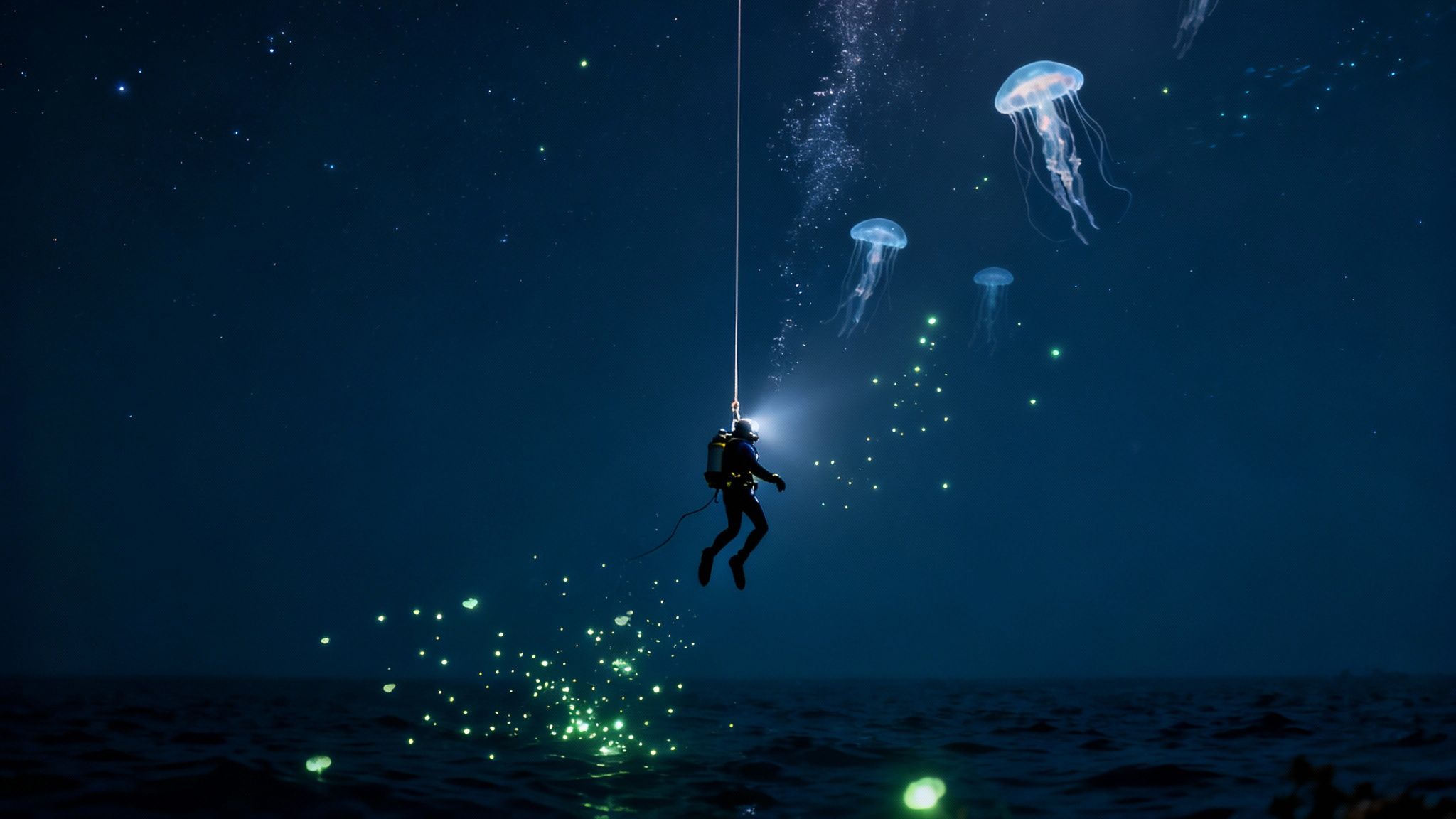
This is nothing like your typical night dive. Picture this: you’re floating in the immense, inky blackness of the open ocean, miles from shore. You’re tethered to a boat that’s bobbing above thousands of feet of water, and as you just hang there in the void, an unbelievable parade of life begins to rise from the abyss.
You’re literally dropping into the largest animal migration on Earth. Every night, a vertical trek of bizarre, often bioluminescent creatures ascends from the deep to feed. Many of these alien-like organisms are so strange and rare they’re seldom seen by human eyes, giving you a front-row seat to a world that’s almost completely unexplored.
The Kona Blackwater Dive: A Pelagic Safari
The Kona blackwater dive is a true pelagic safari, a highly specialized dive that demands skill, complete comfort in the dark, and a real sense of adventure. It’s your chance to see life forms that seem plucked straight out of a sci-fi film—think translucent squids with pulsing light organs, bizarre larval fish in their otherworldly infancy, and gelatinous siphonophores drifting by like living constellations.
What makes this dive so incredible is its focus on the weird and the wonderful. It’s a macro-photographer’s paradise and a marine biology enthusiast’s dream. You are truly just a visitor in a realm that belongs to the deep, watching a cycle of life that has been unfolding in absolute darkness for millennia.
The feeling of floating in that vast, dark expanse, illuminated only by your dive light and the strange glow of deep-sea creatures, is profoundly humbling. It’s a powerful reminder of how much of our planet’s ocean remains a mystery, waiting to be discovered.
Because of its advanced nature—requiring impeccable buoyancy and comfort with deep, open water at night—this dive is strictly for experienced divers. To embark on this surreal journey into the deep, you can explore the premier Blackwater Dive tour offered right on the Kona coast.
Beyond the Blackwater: Other Advanced Dives
While the blackwater dive might be the crown jewel of advanced big island scuba diving, it’s not the only challenge waiting for you. The island’s dramatic volcanic topography has created a whole playground of environments perfect for testing your skills and broadening your diving horizons.
- Deep Volcanic Pinnacles: Imagine exploring submerged volcanic spires that rocket up from the ocean floor. These structures are magnets for schools of pelagic fish and make for some breathtaking wall dives.
- Complex Lava Tube Systems: Ready to test your navigation? You can weave through intricate networks of ancient lava tubes, which requires precise buoyancy and serious dive planning to safely explore their hidden chambers.
- Drift Dives Along Current-Swept Ledges: Harness the ocean's power on an exhilarating drift dive. You'll fly along deep ledges where you’re much more likely to encounter larger marine life like sharks and rays.
These dives offer a different kind of thrill, one that’s focused on unique topography, sharp navigation, and encounters with species that hang out in deeper, more remote waters. They’re built for divers who are already comfortable with greater depths and more complex underwater environments. For those looking to push their limits, check out dedicated advanced dive tour opportunities.
Choosing Your Dive Operator and Getting Certified
Taking that first breath underwater or picking the right crew for your next dive is a huge part of any Big Island scuba diving trip. It’s a decision that can make the difference between a good dive and an absolutely unforgettable one. Getting it right ensures you’re not just having fun, but you're safe while doing it.
If you've never dived before, you couldn’t ask for a better classroom than Kona’s waters. They're calm, clear, and wonderfully warm. Most people start with a PADI Discover Scuba Dive, which is a brilliant way to dip your toes in without committing to a full course. You’ll learn the basics from an instructor and then go on a real dive in a shallow, protected reef—no certification needed.
Warning: it’s addictive. Once you’re hooked, the next step is the PADI Open Water Diver course. This is the certification that opens up the underwater world to you, and there's no better place to earn it than Kona. The course is a mix of online theory, skill practice in calm bays, and four proper ocean dives. By the end, you'll be a certified diver, ready to explore.
Selecting the Right Dive Operator
Already certified? Great. Now, the trick is finding a dive shop that matches your personal style. Trust me, not all operators are the same. When you're looking around, keep these things in mind:
- Safety First, Always: What’s their safety record? A top-notch operator will run smaller groups, give thorough pre-dive briefings, and you can just tell their gear is impeccably maintained.
- The Boat Matters: A good day of diving is so much better on a comfortable boat. Think about the little things: hot freshwater showers, a place to get out of the sun, enough room so you’re not tripping over tanks, and an easy way to get in and out of the water.
- Guardians of the Reef: A great operator doesn't just show you the ocean; they respect it. Look for shops that are genuinely passionate about protecting the reefs and teach divers how to be good stewards of the marine environment.
Think of your dive operator as more than just a taxi service to the reef. They're your guides, your safety crew, and your window into the local underwater ecosystem. A passionate, experienced divemaster who loves sharing what they know can completely transform your dive.
Top-Rated Dive Shops in Kona
To give you a head start, here are a few of Kona’s most respected and well-loved dive operators.
Kona Honu Divers
These guys are known for their incredible customer service and seriously nice boats. Kona Honu Divers is a fantastic choice whether you’re just starting out or looking for advanced technical dives. They consistently get rave reviews for their sharp, friendly staff and overall top-tier experience on all their diving tours.
Jack's Diving Locker
An absolute institution in Kona, Jack's Diving Locker has been sharing Hawaii’s underwater world with people for decades. They offer a huge variety of courses and charters and are well-known for their super experienced instructors and welcoming, family-friendly vibe.
Big Island Divers
If you're looking for a fun, personalized experience, Big Island Divers is another solid bet. They get a lot of praise for their friendly crews, well-kept equipment, and knack for making sure everyone, from newbie to veteran, feels comfortable and has an amazing time in the water.
Picking the right operator really sets the tone for your whole adventure.
Your Big Island Scuba Questions, Answered
It doesn’t matter how much you plan; a few questions always pop up before a big trip. To help you feel completely ready for your underwater adventure, here are some quick answers to the things we get asked most often about Big Island scuba diving.
What’s the Best Time of Year to Dive Here?
Honestly, there’s no bad time. The diving in Kona is spectacular all year long. Water temperatures are always comfortable, hovering around a pleasant 75°F (24°C) in the winter and warming up to a tropical 82°F (28°C) in the summer. Visibility is almost always fantastic.
The winter months, from December to March, do have a special kind of magic—you can often hear the haunting songs of humpback whales echoing through the water on your dives. That said, summer often delivers the calmest, glassiest surface conditions. To dig a little deeper, check out our guide on the best months to scuba dive in Hawaii.
Do I Have to Be Certified to Go Scuba Diving?
Not at all! If you’ve never dived before but want to give it a try, you absolutely can. Look for a "Discover Scuba Diving" experience offered by a professional dive shop. It’s a safe, introductory program where you’ll learn the essential skills from an instructor in a calm environment before heading out on a real dive under their direct supervision.
Besides Mantas and Turtles, What Will I See?
Oh, the reefs here are just buzzing with activity. While manta rays and our beloved Hawaiian green sea turtles are the headliners, the supporting cast is incredible. You'll be surrounded by schools of colorful reef fish, like bright yellow tangs and ornate butterflyfish.
Look closer in the cracks and crevices, and you’ll find moray eels peeking out, octopuses masterfully blending in, and maybe even a hard-to-spot frogfish. It's also common to see whitetip reef sharks resting on the sandy bottom. And if you’re really lucky, a graceful eagle ray or a playful pod of dolphins might just swim by.
What Should I Pack for My Dives?
Aside from your usual vacation gear, reef-safe sunscreen is a non-negotiable. We have to protect our beautiful coral. I'd also toss in a light jacket or windbreaker for the boat ride back—it can get a little breezy once you're out of the water.
Of course, bring your certification card and logbook. While every dive operator has excellent rental gear, nothing beats having your own well-fitting mask. And trust me on this one: bring an underwater camera. You're going to want it.