
When people talk about the best scuba diving spots in the world, the Big Island of Hawaii always enters the conversation. It's not just hype; the island consistently delivers some of the most spectacular and reliable diving tours you'll find anywhere on the planet.
From the moment you slip beneath the surface, you're greeted by a vibrant underwater world shaped by volcanic fire, teeming with life, and blessed with unbelievably clear water. It’s a paradise for divers of every experience level.
Why The Big Island Offers World-Class Diving
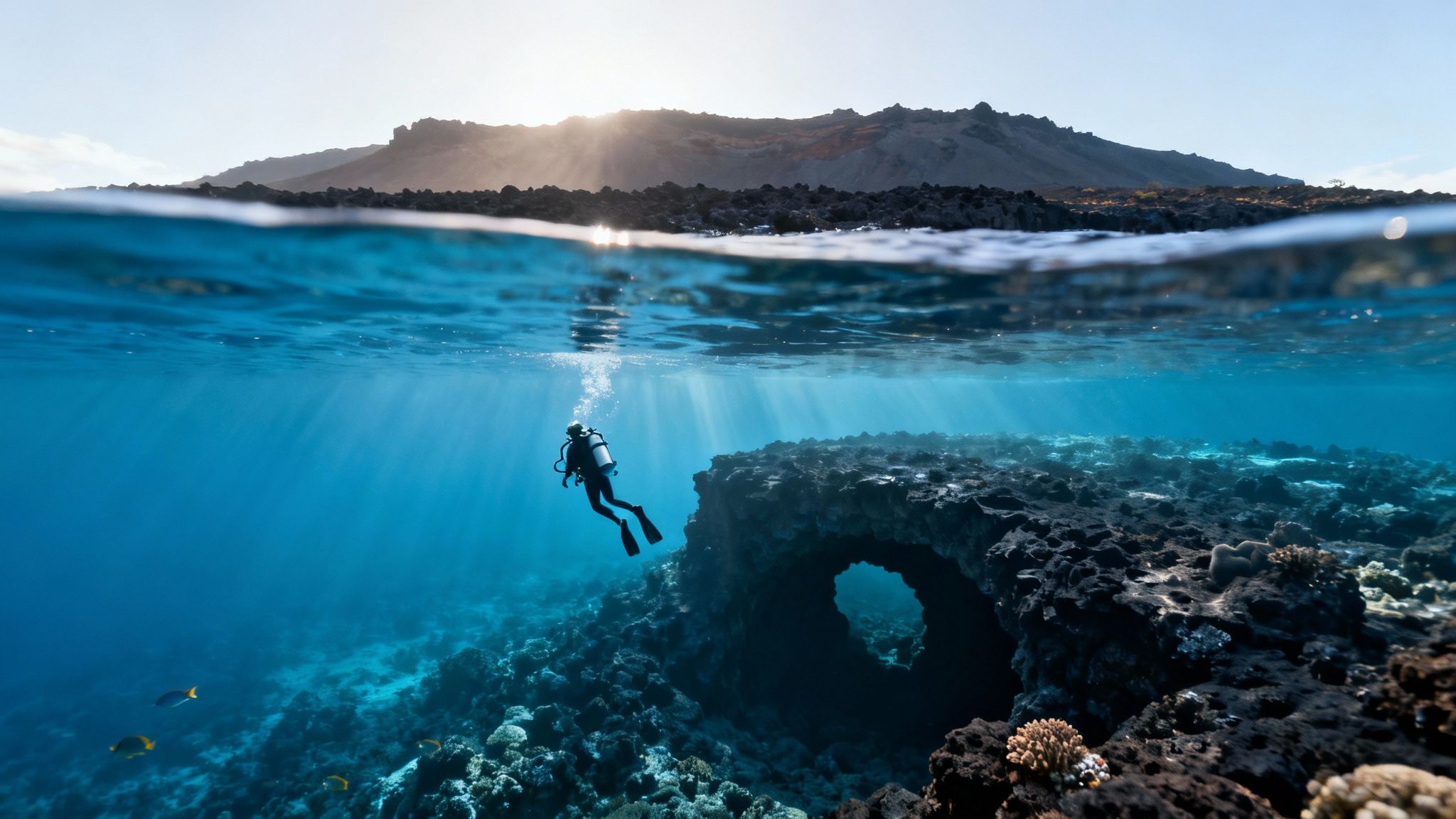
So, what’s the secret behind Big Island scuba diving? It all comes down to its unique geography. The colossal volcanoes of Mauna Loa and Hualalai serve as massive natural barriers, shielding the Kona coast from the gusty trade winds that batter other parts of Hawaii.
This geological gift results in remarkably calm and predictable ocean conditions all year long. For divers, this means the water is often incredibly clear, with visibility regularly soaring past 100 feet. That kind of clarity lets you soak in every detail of the dramatic underwater landscapes and the colorful creatures calling them home.
To give you a quick snapshot, here's what you can generally expect.
Big Island Diving at a Glance
| Feature | Details |
|---|---|
| Water Temperature | 75-80°F (24-27°C) year-round |
| Visibility | Excellent; often exceeds 100 feet (30m) |
| Marine Life | Manta rays, dolphins, sea turtles, sharks, and vibrant endemic fish species |
| Underwater Topography | Lava tubes, arches, craters, and dramatic volcanic drop-offs |
| Best For | Divers of all levels, from beginners to experienced technical divers |
These conditions create the perfect stage for the island's main attraction: its volcanic underwater playground.
A Volcanic Underwater Playground
The underwater environment here is a direct extension of the island’s fiery past. Instead of uniform, flat reefs, you get to explore a dynamic world sculpted by ancient lava flows. It’s a literal underwater amusement park featuring:
- Lava Tubes and Arches: Imagine swimming through natural tunnels and archways formed by molten rock, now encrusted with coral and sheltering countless fish.
- Submerged Craters: You can descend into ancient volcanic craters that have since blossomed into thriving, protected coral gardens.
- Pinnacles and Canyons: Get ready to navigate sheer drop-offs and dramatic rock formations that jut up from the deep ocean floor.
This incredible variety means there's always something new to discover on every single dive. The island's reputation as a top-tier dive destination has been growing since the 1980s, built on the foundation of these consistently amazing conditions.
It’s the combination of warm, calm seas and wild volcanic structures that has captivated divers for decades. Add in iconic experiences like the manta ray night dive—where sightings are documented in 85-90% of dives—and you can see why the island's legacy is so strong. To learn more about this history and conservation, check out the story from the team at Kona Honu Divers.
The Big Island isn’t just a place to dive; it’s an opportunity to witness the powerful intersection of geology and biology, where volcanic history creates a thriving, modern ecosystem.
Every descent is a trip through a living museum. The island's creation story is told through the lava formations and the incredible marine life that has adapted to thrive there. It’s this unique blend of perfect conditions, dramatic scenery, and rich biodiversity that makes Big Island scuba diving an unforgettable adventure you'll want to repeat time and time again.
Finding Your Perfect Big Island Dive Site
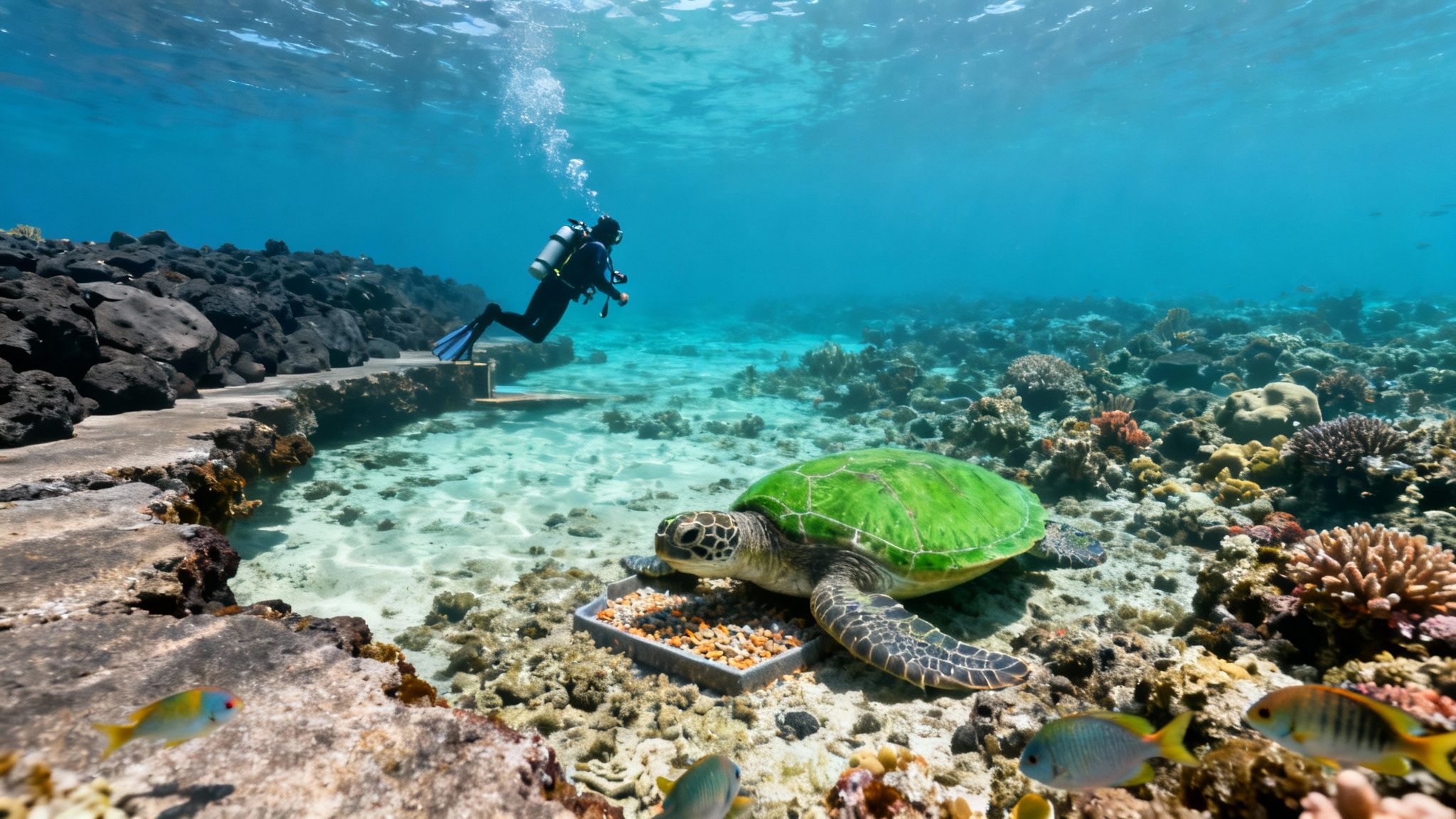
The Big Island’s coastline is a diver's dream, a treasure map dotted with sites for every skill level. Picking the right spot really comes down to your experience, how comfortable you feel in the water, and what you’re hoping to see. Whether you're about to take your first breath underwater or you're a seasoned pro, there's an incredible underwater world here waiting for you.
For anyone just starting their big island scuba diving adventure, the Kona coast is the perfect launchpad. It’s home to a ton of gentle, easy-to-reach sites. Think calm waters, shallow depths, and simple entry points—all designed to help you build confidence while surrounded by more fish than you can count. It's the ideal introduction to our volcanic underwater landscapes, minus the stress of deep water or strong currents.
This accessibility lets new divers really nail down the fundamentals, like buoyancy control, without having to worry about challenging conditions. It’s less about pushing your limits and more about just enjoying the sheer beauty of a healthy reef.
Gentle Dives for Beginners
If you’re new to the sport, two spots I always recommend are ‘Two Step’ and Pawae Bay. They’re forgiving, beautiful, and absolutely packed with life.
- Two Step (Honaunau Bay): This site is famous for its super-easy entry—a couple of natural lava rock "steps" lead you right into the water. It’s a snorkeler’s hot spot that’s also an amazing shallow dive. You’ll be exploring depths between 15-40 feet, drifting over vibrant coral gardens, and almost certainly meeting a few green sea turtles.
- Pawae Bay: Usually reached by boat, this sheltered bay is known for its calm conditions and sprawling reef. It's a fantastic place for a first dive, with intricate coral formations and tons of colorful reef fish like butterflyfish and parrotfish. The lack of current makes for a completely stress-free day of exploration.
These spots deliver a safe and unforgettable experience, making sure your first taste of diving on the Big Island gets you hooked for life.
Iconic Sites for Certified Divers
Once you’ve got your certification, the big island scuba diving scene truly opens up. Now you can explore the more complex underwater terrain and meet a whole new cast of characters at Kona's most famous sites.
These are the places that show off the dramatic lava formations the island is known for, creating a stunning backdrop for any dive. There's a reason these sites are the ones you see in magazines.
The true magic of Kona diving lies in its geological diversity. One dive might take you through a cathedral-like archway, while the next has you exploring a pinnacle swarming with life—all within a few miles of coastline.
For a classic Kona experience, you can't miss 'Golden Arches' and 'Turtle Pinnacle'.
- Golden Arches: Just like the name implies, this site features a breathtaking series of lava arches you can swim right through. It's a photographer's playground, with incredible lighting and structure. Expect to see schools of raccoon butterflyfish, moray eels peeking out from crevices, and maybe a whitetip reef shark chilling on the sandy bottom.
- Turtle Pinnacle: This is, without a doubt, one of the most reliable places to see Hawaiian green sea turtles (honu). The pinnacle is a natural "cleaning station" where turtles line up to let smaller fish nibble away algae and parasites. It’s an amazing piece of natural behavior to witness firsthand.
Advanced Dives for the Experienced
For advanced divers craving a bigger challenge and a shot at seeing large pelagic animals, the Big Island delivers. We’re talking deeper sites, intricate lava tubes, and offshore pinnacles that demand excellent buoyancy and air management.
These dives take you away from the busier reefs and into a wilder, more unpredictable ocean. This is where you might cross paths with eagle rays, spot hammerhead sharks, or even hear the songs of migrating humpback whales during the winter. These are the dives that stick with you forever.
If you’re ready for that next level, Kona Honu Divers runs incredible diving tours for all skill levels and offers dedicated advanced diving opportunities that showcase the absolute best of what Kona has to offer.
Experiencing the Kona Manta Ray Night Dive

Picture this: you're settled on the ocean floor in the dark of night, and enormous, graceful shadows begin swooping just inches above your head. That’s the Kona Manta Ray Night Dive, an experience so breathtaking it consistently tops "best of" lists for divers worldwide. It’s the signature dive for any Big Island scuba diving adventure for a reason—it's something you will never, ever forget.
The concept behind this world-famous encounter is brilliantly simple. We set up powerful, submerged lights on the ocean floor, which act like a massive bug zapper for plankton. These tiny organisms are drawn to the light, and the manta rays follow for an easy meal. What happens next is a mesmerizing feeding frenzy, with the mantas gliding, barrel-rolling, and dancing through the light beams. It’s a true underwater ballet.
This dive has been a fixture in Kona since the early 1990s, and it's a fantastic example of sustainable tourism. Because the encounters are so reliable, researchers have been able to identify hundreds of individual rays by the unique spot patterns on their bellies. This has led to decades of invaluable data on their behavior, migration, and life cycles. You can read more about the incredible history and research of this amazing manta spectacle.
Why Garden Eel Cove Is the Premier Location
While there are a few spots to see the mantas, Garden Eel Cove is hands-down the superior choice for this dive tour. The site’s protected location, better viewing area, and healthier reefs create a more reliable and awe-inspiring experience for everyone involved—divers and mantas alike.
Diving at Garden Eel Cove is like having front-row seats in a natural amphitheater. The layout of the site itself creates a perfect viewing area that just makes the entire encounter feel more epic.
The advantages of this specific spot are pretty clear:
- Natural Protection: The cove is tucked away from the open ocean, which means calmer, more predictable conditions. This makes for a much more pleasant and safer dive, especially if you’re new to night diving.
- Perfect Viewing "Arena": There's a big sandy patch right in the middle of the site. It’s the perfect place for divers to settle in without damaging any coral, creating a natural stage where everyone gets an amazing, unobstructed view.
- Healthier Reefs: The reefs surrounding Garden Eel Cove are simply more vibrant and full of life. A healthier ecosystem means a more robust food chain, which in turn leads to more consistent manta ray sightings.
A Safe and Respectful Encounter
When you join a manta ray night dive, you're not just a spectator; you're a guest in their world. That comes with a responsibility to protect these gentle giants. The most important rule is simple: look, don't touch. Mantas have a delicate mucus layer on their skin that protects them from infection, and our touch can easily damage it.
Good buoyancy control is also key. By staying low and still on the sandy bottom, we make the mantas feel safe enough to swim freely right over us. The whole idea is to be a quiet observer, blending into their environment without disrupting their natural feeding patterns. To get set up with a truly unforgettable tour, you can book a once-in-a-lifetime manta ray dive here.
This isn't just another tick on your dive log; it's a humbling connection with one of the ocean's most majestic creatures. For a deeper dive into all the specifics, check out our complete guide to the Kona Manta Ray Night Dive for more tips and details.
Discovering Unique Marine Life and Underwater Worlds
Sure, the manta rays get a lot of the limelight, and for good reason. But they're just the opening act. The waters off the Big Island are a living library of biodiversity, a vibrant ecosystem that’s just begging to be explored. Once you look past the famous night dive, you’ll find a world filled with one-of-a-kind creatures and stunning volcanic seascapes. This is where the real adventure of Big Island scuba diving truly begins.
The Hawaiian archipelago is what biologists call a "hotspot for endemism." In simple terms, it means a whole lot of the marine life here can't be found anywhere else on the planet. They evolved in isolation for millennia, resulting in some truly unique critters. As you drift over the reefs, keep your eyes peeled for the Hawaiian whitespotted pufferfish or the brilliantly colored ornate wrasse—species that paint the reef with patterns you won't see in any other ocean.
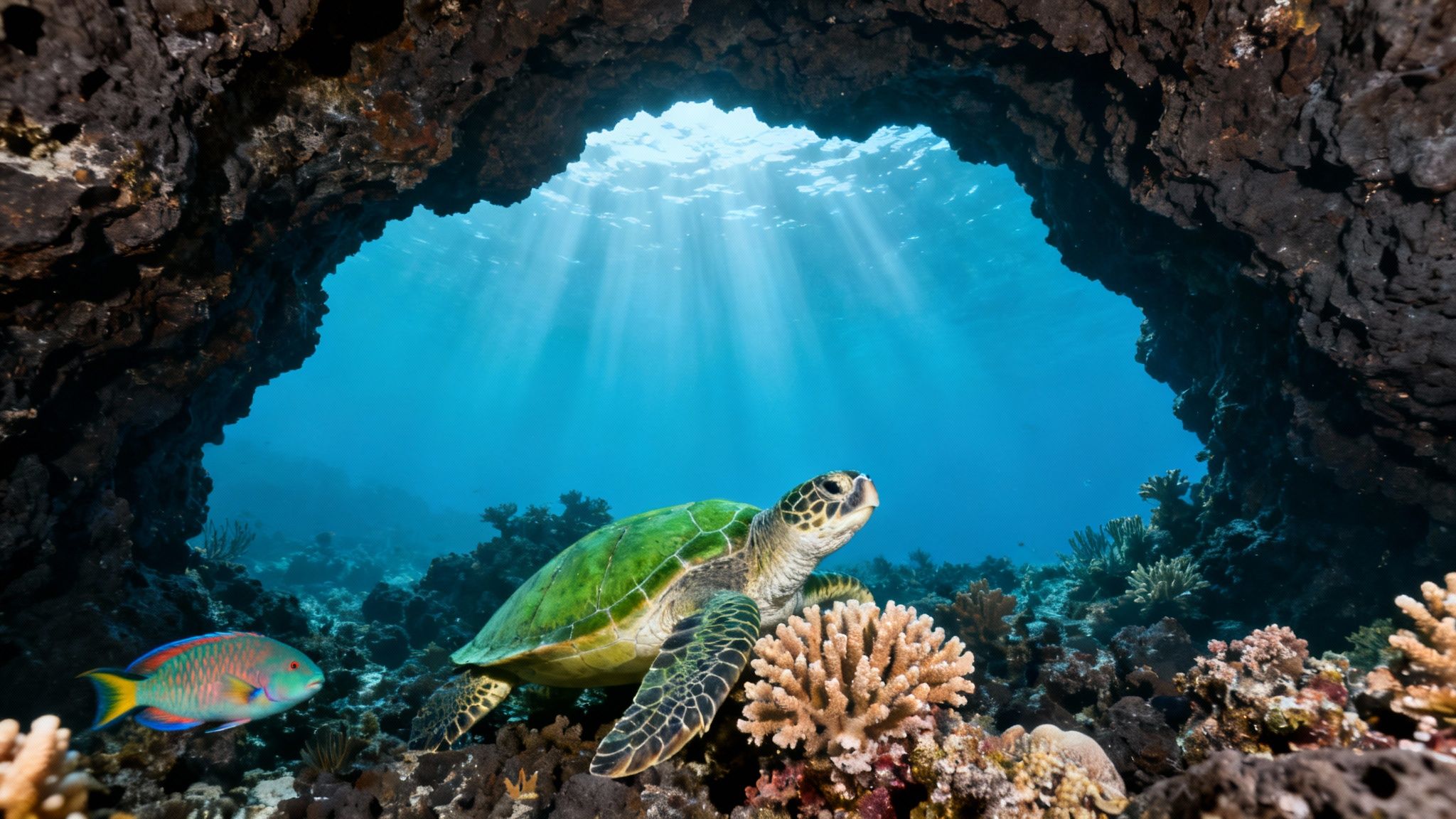
Of course, you’ll also run into a familiar and beloved cast of characters. You'd be hard-pressed to do a few dives without spotting a green sea turtle (honu) chilling out at a "cleaning station," letting smaller fish nibble away algae and parasites. Pods of spinner dolphins frequently put on a show, escorting dive boats to the site, and it’s not at all uncommon to see a majestic eagle ray glide by or a whitetip reef shark snoozing on the sand.
The Volcanic Underwater Architecture
The animals are only half of the story. The other half is the dramatic, and sometimes bizarre, underwater geology forged by millennia of volcanic activity. Diving here feels like you're exploring another planet.
You can navigate through ancient lava tubes—dark, winding tunnels that are now home to lobsters and shy fish. You'll swim through massive arches and drop into submerged craters that have since blossomed into thriving coral communities. This incredible variety in the underwater terrain is the very engine driving the island’s rich biodiversity. The waters here support over 1,100 species of fish, with a staggering 129 species endemic to Hawaii. You can learn more about the Big Island's underwater ecosystem on ScubaDiving.com.
Into the Abyss: The Kona Blackwater Dive
For those with a serious sense of adventure, there's a dive that goes far beyond the reef and into the deep, dark, open ocean. The Kona Blackwater Dive is a highly specialized night dive that gives you a front-row seat to one of the largest animal migrations on Earth.
This isn't about spotting sharks or turtles. The Blackwater Dive is a mind-bending journey into the ocean's "deep scattering layer," where you'll discover the bizarre, alien-like creatures that rise from the abyss each night to feed.
Here's how it works: you drift in the pitch-black, tethered to the boat, floating over thousands of feet of water. Using powerful handheld lights, you illuminate the water directly in front of you, which attracts tiny, often translucent and bioluminescent creatures rarely ever seen by human eyes.
You might encounter:
- Larval Fish and Squids: See familiar reef dwellers in their strange, otherworldly infant stages.
- Jellyfish and Siphonophores: Witness pulsating, glowing organisms that look like they were designed for a sci-fi movie.
- Bioluminescent Wonders: Observe animals that create their own light, twinkling and flashing in the darkness.
This experience is completely different from any other Big Island scuba diving adventure. It demands a calm mindset and a sharp eye, but the reward is a glimpse into a hidden world of impossibly weird and beautiful life forms. If you think you're ready for the ultimate night dive, check out the Kona Blackwater Dive tour and prepare to meet the unknown.
How to Choose the Best Dive Operator in Kona
Let’s be honest: the dive operator you choose can make or break your entire Big Island scuba diving trip. They're not just a taxi service to the reef. A truly great crew can turn a good dive into a mind-blowing experience, while a subpar one can leave you feeling rushed, ignored, or even unsafe.
Think of it as choosing a guide for an epic journey. You want someone who knows the hidden trails, prioritizes your safety, and genuinely loves what they do. The best operators in Kona get this. They keep their groups small, run boats that are clean and well-cared-for, and staff their teams with passionate local guides who know these waters better than anyone.
What Makes a Dive Company Stand Out?
When you start looking at different shops, it’s easy to get lost in websites and price lists. But the real value isn't just in the cost of a two-tank dive. You need to dig a little deeper to find out what you’re really getting.
Here’s what I always tell people to look for:
- An Obsession with Safety: This is non-negotiable. Do they have a perfect safety record? Are the boats stocked with emergency oxygen, first-aid kits, and proper communication gear? If safety isn't their absolute number one priority, walk away.
- Small, Personal Groups: Ever been on a dive boat that felt like a cattle car? It’s the worst. When an operator limits their group sizes, it means the guides can give you more personal attention, both on the boat and in the water.
- Guides Who Are True Experts: A great guide does more than just show you the way. They’re part fish, part biologist. They can spot a camouflaged frogfish from ten feet away and know the unique stories behind each lava tube and reef. Look for guides who are passionate instructors and marine life nerds.
- Top-Notch Boats and Gear: Little things on a boat make a huge difference—like a hot shower after a dive, plenty of shade, and an easy way to get in and out of the water. The same goes for their rental gear. It should be modern, well-maintained, and comfortable.
- A Real Commitment to Conservation: The best operators are stewards of the reef. They should be vocal about following strict guidelines, especially for sensitive sites like the manta ray night dive, and actively participate in protecting the ocean.
For a more detailed checklist, we've put together a full guide on how to choose a Kona dive shop.
Comparing the Top-Rated Kona Operators
Kona has a number of excellent, long-standing dive companies, but we believe Kona Honu Divers truly raises the bar. The focus on small groups and a highly personal touch means you feel like you're diving with friends. You can see the crew’s genuine passion for diving and ocean life in everything they do.
Of course, we want you to find the perfect fit for your trip. Here are a few other highly-regarded operators in the area so you can do your own research.
Jack's Diving Locker: An institution in Kona. They've been around forever and are widely respected, offering a huge variety of courses and charters.
Big Island Divers: Known for having a super friendly crew and a great mix of dive trips that work for divers of all experience levels.
Kona Diving Company: Another solid, professional operation offering daily boat dives and a full range of certification courses.
At the end of the day, the right choice comes down to what you value most. By focusing on safety, service, and a company that cares about our oceans, you're setting yourself up for an incredible underwater adventure in Kona.
Planning Your Big Island Dive Adventure
Okay, you're sold on the incredible dive sites and the amazing marine life. Now for the fun part: making it happen. A little bit of smart planning goes a long way toward ensuring your Big Island scuba diving trip is smooth sailing, letting you focus on what really matters—the underwater world.
The great news is that the Kona coast is tucked away on the leeward side of the island, which means we get fantastic, diveable conditions pretty much all year. Still, there are subtle shifts in water temperature and marine life sightings from season to season. If you really want to dial in the perfect time for your trip, we break it all down in our guide to the best months to scuba dive in Hawaii.
Your Essential Dive Trip Checklist
Figuring out what to pack is always a bit of a puzzle. You want your own trusted gear, but you also don't want to haul everything you own across the ocean. To help you get organized, we've put together a handy checklist.
Big Island Dive Trip Checklist
| Category | Items / Actions |
|---|---|
| Essential Documents | C-Card (your proof of certification!), logbook, passport or ID, and both travel and dive insurance. |
| Personal Dive Gear | Your mask, snorkel, fins, and dive computer. These are all about personal fit, so bringing your own is always the best move. |
| Exposure Suit | A 3mm or 5mm full wetsuit is the sweet spot for Kona. Water temps hover around 75°F in the winter and climb to a balmy 82°F in the summer. |
| Rental Considerations | BCDs and regulators are heavy and a pain to travel with. Quality shops (like ours!) have meticulously maintained rental gear, saving you the hassle and luggage fees. |
| General Items | Reef-safe sunscreen, sunglasses, a good hat, a reusable water bottle, and a light jacket for those breezy boat rides back to shore. |
| Pre-Trip Booking | Book your flights and places to stay well in advance. Crucially, book key dive tours like the manta ray night dive ahead of time—they fill up fast, especially during peak season. |
This checklist covers the big stuff. The key is to pack smart so you can focus on the diving, not what you forgot to bring.
Certification and Booking Tips
For most of our boat dives, you'll need at least an Open Water Diver certification. If you're not certified yet, don't worry—Kona is one of the best classrooms in the world to learn in!
Here's a pro tip: don't wait until you're on the island to book your dives. Those really popular, can't-miss charters sell out, sometimes weeks in advance. If you have your heart set on the world-famous manta ray night dive or another specialty trip, get it on the calendar early. A little planning now guarantees you won’t miss out on the very reason you came to the Big Island.
Ready to lock in your adventure?
Your Big Island Scuba Questions, Answered
Even after you've decided on the Big Island for your next dive trip, a few questions always pop up when you're sorting out the final details. Let's get those last-minute queries squared away so you can focus on the adventure ahead.
What Certification Do I Need to Dive in Kona?
For most of the boat dives here, an Open Water Diver certification is all you need to get in the water. The Kona coast is incredibly accommodating, with a huge variety of sites that are perfect for newly certified divers and seasoned pros alike.
That said, some of our more advanced sites—think deep lava tubes or remote offshore pinnacles—are reserved for divers with an Advanced Open Water certification or a solid number of logged dives. The best bet is always to have a quick chat with the dive shop when you book your diving tours to make sure the sites you want to see match your experience level.
Is the Manta Ray Night Dive Actually Safe?
Absolutely. The world-famous manta ray night dive is an incredibly safe and well-managed experience, as long as you go with a professional, reputable operator. Manta rays are true gentle giants. They're filter feeders, completely uninterested in divers, and they don't have stingers or barbs.
Every reputable company follows strict safety rules and gives a detailed briefing before anyone hits the water. These protocols, especially the "don't touch the mantas" rule, are there to protect both you and these magnificent animals, making sure the encounter is amazing for everyone involved.
What’s the Water Temperature Like?
One of the best things about diving in Kona is the warm, comfortable water all year long. You really can't pick a bad time to visit.
- In the winter, expect temperatures around 75°F to 78°F (24°C to 26°C).
- During the summer, the water warms up to a lovely 80°F to 82°F (27°C to 28°C).
For most people, a 3mm or 5mm wetsuit is perfect for staying comfortable, even if you’re doing multiple dives. That consistent warmth is a huge part of what makes Big Island scuba diving such a world-class experience.
Ready to book your underwater adventure?
For an unforgettable trip with a crew that puts safety, small groups, and a deep respect for the ocean first, come dive with us at Kona Honu Divers. Take a look at all our Big Island dive tours and see why we're Kona's top-rated dive company.