
Welcome to the underwater world of the Big Island, a place that genuinely earns its reputation as a global hotspot for scuba divers. This guide is your deep dive into what makes the Kona coast a world-class destination, from its one-of-a-kind volcanic lava tubes and impossibly clear water to the sheer abundance of marine life.
Discovering Hawaii’s Premier Scuba Diving Destination
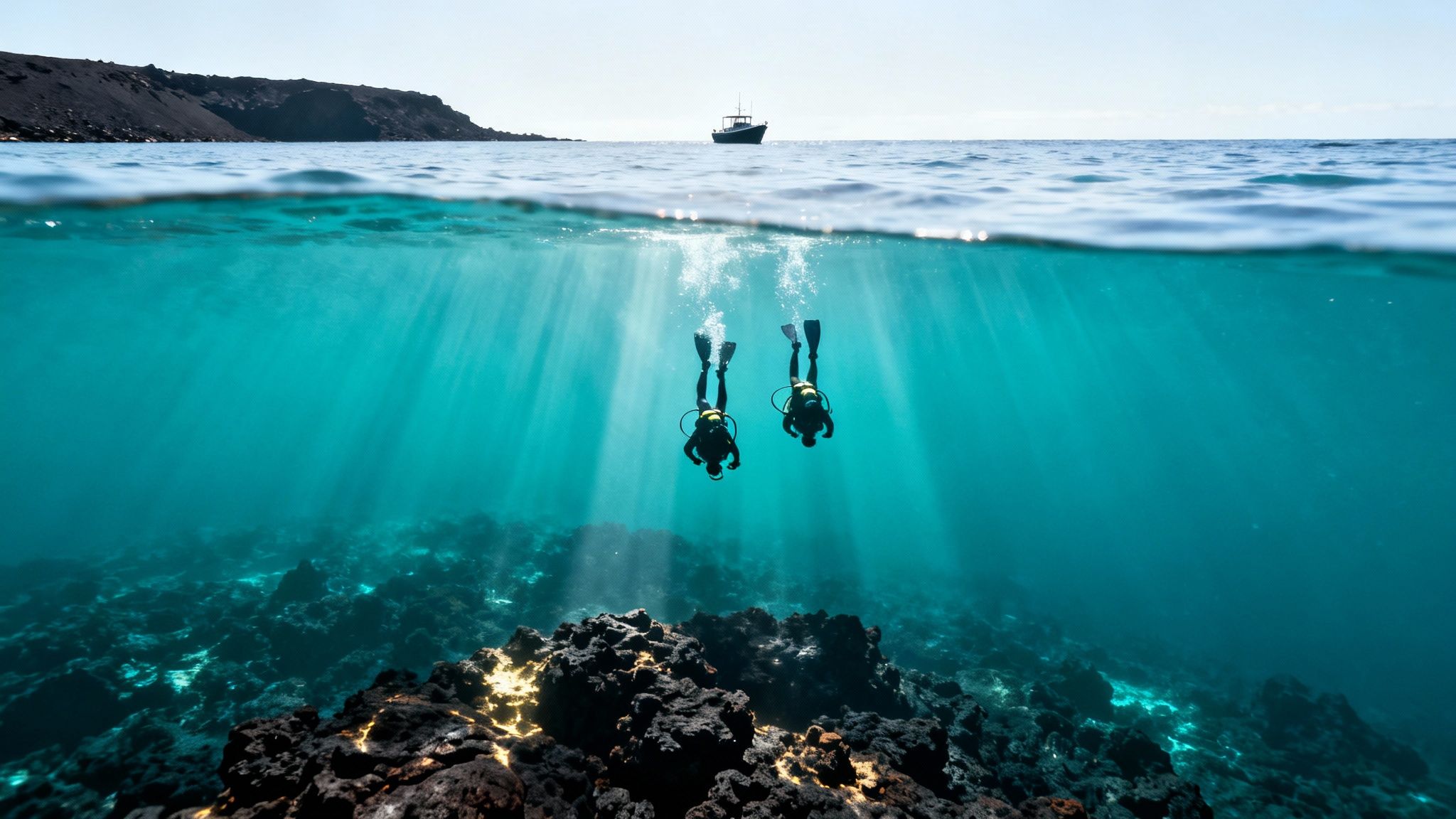
We'll break down the island's most legendary dives—including the bucket-list Manta Ray Night Dive and the mind-blowing Pelagic Blackwater Dive—giving you the insider knowledge you need to pick the perfect adventure. Think of this as your all-in-one playbook for an unforgettable underwater journey.
Ready to explore your options? Check out our full range of Kona diving tours.
Check Availability
While many Hawaiian islands offer fantastic diving, the Big Island is just different. Its unique geology and protected waters have created an environment where marine life thrives like nowhere else. You can get the full breakdown in our guide on which Hawaii island is best for scuba diving.
The Kona coast, in particular, benefits from a massive natural shield. The island's enormous volcanoes block the prevailing trade winds, leaving us with consistently calm, clear water. This incredible protection makes Kona a dream destination for divers year-round, no matter your skill level.
You'll find everything from shallow, sun-drenched coral gardens perfect for new divers to dramatic, deep-water drop-offs that will thrill even the most seasoned pros. The variety here is truly something special.
Why Kona’s Underwater World Is So Unique
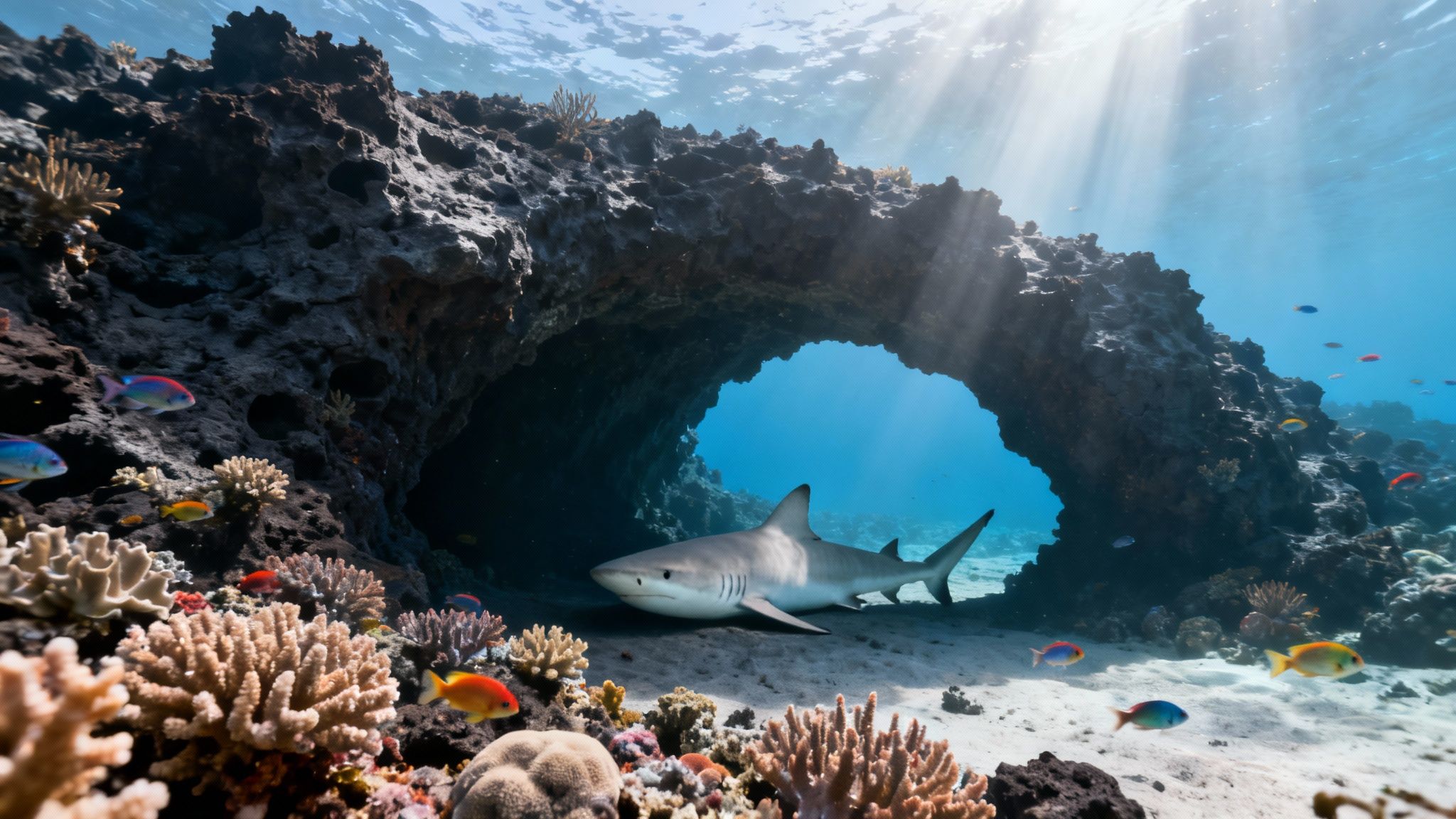
What really makes Big Island scuba diving a world-class experience is the dramatic underwater geology. The island’s volcanic past has left behind a stunning seascape of lava tubes, massive archways, and breathtaking drop-offs. But this isn't just for dramatic effect—these complex structures create the perfect habitats for an incredible density of marine life.
Forget the flat, sandy bottoms you might find in other tropical spots. Kona’s coastline is a maze of caves and overhangs, each one offering shelter and breeding grounds for a wild variety of species. It means every dive feels like a true exploration.
A Hotspot of Biodiversity
The Big Island is famous for its staggering biodiversity, boasting a higher concentration of marine species than any other island in the Hawaiian chain. The underwater topography is a playground of vast cave systems, tunnels, and steep walls that plunge to depths of 80 feet or more. These features are home to everything from sleeping whitetip reef sharks to huge pelagic visitors.
Kona is a living laboratory of evolution. The isolation of the Hawaiian archipelago has led to a high number of endemic species—creatures you simply won't find anywhere else on the planet.
This one-of-a-kind ecosystem supports over 1,100 species of fish, and an amazing 129 of them are endemic to this island chain. That means roughly one in four fish you see is uniquely Hawaiian, making every single dive a special encounter. You can dive deeper into the Big Island’s rich underwater habitats on scubadiving.com.
Once you grasp the connection between the volcanic landscape and the vibrant life it nurtures, you start to truly appreciate what awaits you here. It's not just about what you see, but understanding why it’s all here. Ready to see it for yourself?
Check Availability
Comparing the Top Big Island Dive Experiences
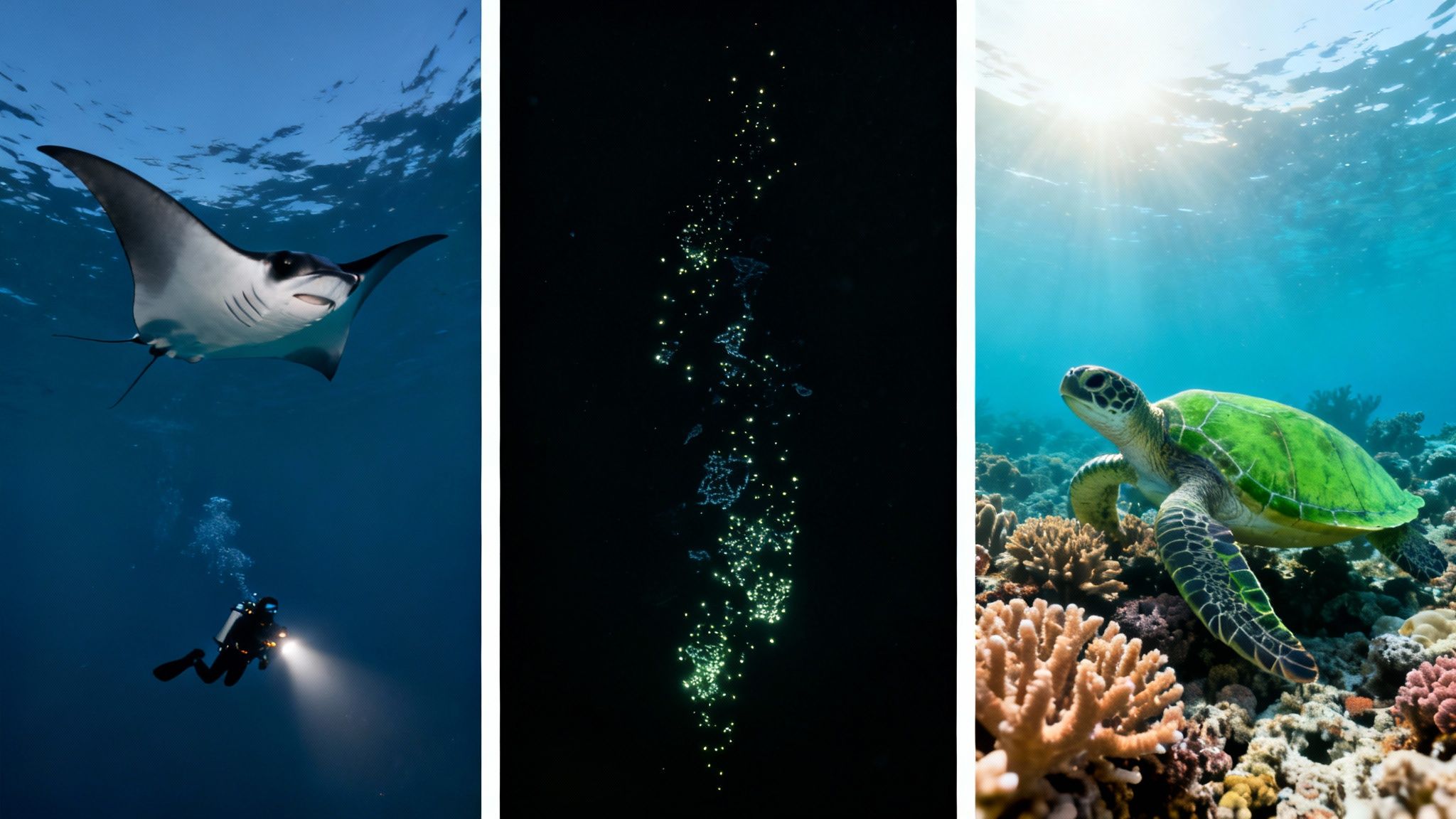
Alright, this is the fun part—picking your dives. The Big Island serves up a few world-class underwater experiences, and each one offers something completely different. The "big three" that everyone talks about are the legendary Manta Ray Night Dive, the intense Pelagic Blackwater Dive, and, of course, the classic daytime reef dives.
Let's break them down by what you'll see, the skills you'll need, and the overall vibe of each dive. This way, you can match the right adventure to your style.
The Iconic Manta Ray Night Dive
This is what put Kona on the global diving map. The Manta Ray Night Dive is a true spectacle. You descend in the dark, settle on a sandy patch on the ocean floor, and watch as giant manta rays swoop and glide right over your head, feeding on the plankton attracted to your guide's lights.
It’s less of an active "dive" and more of a front-row seat to one of nature's most incredible shows. The feeling is pure awe. As these gentle giants perform their silent ballet just inches away, you can't help but feel a profound sense of wonder. It’s a must-do for most certified divers.
The Thrilling Blackwater Dive
If you're an experienced diver looking for a real adrenaline rush, the Pelagic Blackwater Dive is your ticket. This is not your typical reef dive. You're taken miles offshore, tethered to a line, and dropped into the deep, inky-black open ocean.
The goal? To witness the largest migration on Earth, as bizarre, alien-like creatures rise from the abyss to feed near the surface. You'll see things that look like they're from another planet—tiny, translucent, and often bioluminescent critters. This dive requires excellent buoyancy and a calm mind, but the payoff is an experience very few people on Earth will ever have.
Classic Daytime Reef Exploration
Never underestimate the magic of a sunlit reef. Kona's daytime dives reveal a world of vibrant coral gardens, dramatic lava tubes, and ancient archways. These dives are fantastic for divers of all levels, from those just certified to veterans seeking an advanced reef dive through complex underwater terrain.
During the day, you can expect to cruise alongside Hawaiian green sea turtles (honu), spot well-camouflaged octopuses, and be surrounded by schools of colorful endemic fish. It’s all about exploration, underwater photography, and soaking in the incredible volcanic topography that makes Big Island scuba diving so unique.
To help you decide, here's a quick rundown of how these incredible dives stack up against each other.
Big Island Dive Experience Comparison
| Dive Experience | Best For | Key Sightings | Required Skill Level |
|---|---|---|---|
| Manta Ray Night Dive | Unforgettable wildlife encounters, photographers, most divers | Giant Manta Rays, plankton clouds, garden eels | Open Water Certified |
| Pelagic Blackwater Dive | Adrenaline junkies, experienced divers, marine biology enthusiasts | Larval fish, squid, jellies, bioluminescent creatures | Advanced, with excellent buoyancy control |
| Daytime Reef Dive | All divers, underwater photographers, exploring volcanic topography | Sea turtles, endemic fish, eels, octopuses, dolphins | Beginner to Advanced |
Ultimately, the best dive for you depends entirely on the experience you're after.
Your choice comes down to what you seek. The Manta Dive offers a shared, passive spectacle of grace. The Blackwater Dive is an active, solo-feeling challenge into the unknown. Daytime reef dives are about pure, classic exploration of a vibrant underwater world.
Ready to book your adventure?
Check Availability
A Deep Dive Into the Manta Ray Night Dive
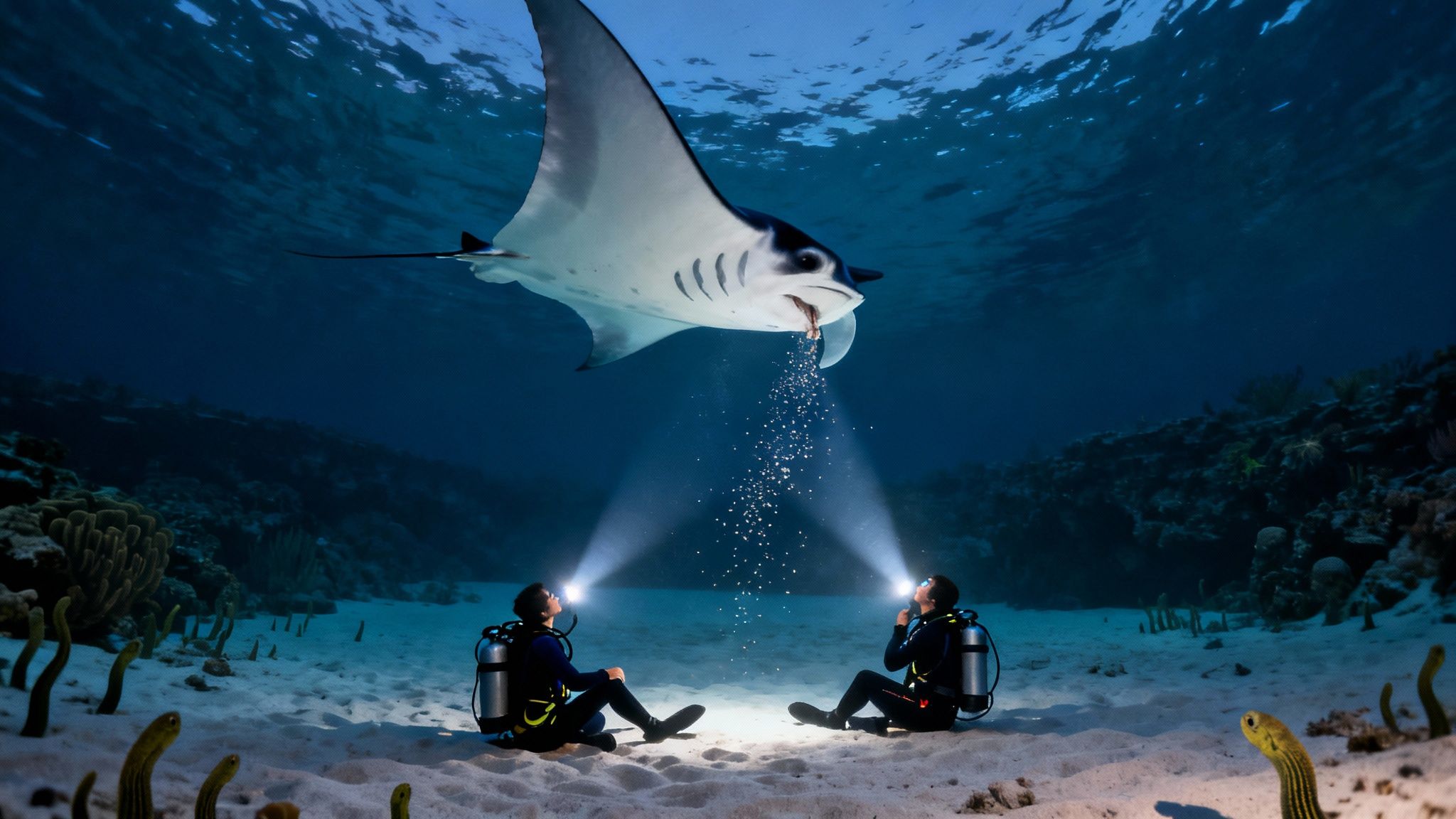
Let's be clear: the Manta Ray Night Dive isn't just another dive. It's the signature underwater experience that puts Big Island scuba diving on the map globally. Imagine an underwater ballet where you're a quiet spectator to one of nature's most incredible feeding events.
The setup is simple but brilliant. Dive operators place powerful lights on the ocean floor, which shoot beams up toward the surface. This light acts like a magnet for plankton, the manta rays' favorite meal, creating a dense, irresistible buffet. As a diver, your job is to get settled on the sand, point your own light upward, and simply watch the spectacle unfold.
And what a spectacle it is. Before you know it, giant mantas with wingspans of up to 16 feet emerge from the darkness, gliding and barrel-rolling through the columns of light. They swoop right over your head, mouths agape, filtering the plankton from the water. It’s an incredibly humbling and awe-inspiring experience. To truly grasp the wonder, you have to understand the magic of a Kona Manta Ray Night Snorkel.
Why Garden Eel Cove is the Superior Choice
While the manta ray dive is offered at a couple of locations, Garden Eel Cove stands out as the superior choice. Its location is more protected from open ocean swells, leading to consistently calmer conditions and fewer cancellations. This sheltered position makes for a more comfortable and reliable experience.
The viewing area at Garden Eel Cove is also better structured. The seafloor creates a natural amphitheater, allowing divers to position themselves for an unobstructed, front-row view of the action. This organized setup not only enhances the spectacle but also improves safety. On top of that, the surrounding reefs at Garden Eel Cove are healthier and more vibrant, making it the premier destination for this unforgettable dive tour.
You can find all the details about this one-of-a-kind dive in our complete guide to the Kona Manta Ray Night Dive.
How to Choose the Right Kona Dive Operator
Picking the right dive operator can make or break your trip—it’s just as important as choosing the dive site itself. The crew you dive with shapes your entire experience, from how safe you feel to what you actually see underwater.
When you're looking around, focus on a few key things: a serious commitment to safety, small group sizes, and gear that's clearly well taken care of. You also want knowledgeable guides who know the reefs like the back of their hand. A great guide can point out a camouflaged frogfish or a rare nudibranch you’d swim right past otherwise.
Finding a Top-Tier Operator
On the Big Island, one name you'll hear over and over is Kona Honu Divers. They've built a solid reputation for their professional crew, strict safety standards, and genuine passion for protecting the marine environment. They run tours that feel personal, making sure everyone from a first-timer to a seasoned pro has an amazing, safe time.
A top-notch dive operator does more than just get you in the water. They teach you something new about the ocean and show you why it’s worth protecting. That passion is what separates the good from the great.
The local dive industry is a big deal here, with operators leading over 25,000 dives every single year. It’s a huge part of the island's economy, and shops like Kona Honu Divers are at the heart of it, delivering the kind of world-class experiences that keep people coming back. You can dive deeper into the island's diving industry history on konahonudivers.com.
Everyone has different priorities, so it’s worth thinking about what matters most to you. To help you sort through the options, we put together a detailed guide on how to choose a Kona dive shop that covers all the important questions to ask.
Don't just take our word for it—here's what other divers have to say about their experiences with Kona Honu Divers.
Your Big Island Diving Questions, Answered
Planning a dive trip can bring up a lot of questions. To help you get everything sorted, I’ve put together answers to some of the most common things divers ask about hitting the water here on the Big Island.
What Is the Best Time of Year to Scuba Dive in Kona?
Honestly, there's no bad time to dive in Kona. The water is always inviting, hovering around a comfortable 75°F in winter and warming up to a balmy 82°F in summer.
The biggest difference is the surface conditions. Summer usually offers glassier, calmer seas, which is great for boat rides. Winter can bring bigger swells, but it's also prime time for whale season, so you might get a surface show you'll never forget.
What Certification Do I Need for the Manta Ray or Blackwater Dives?
For the world-famous Manta Ray Night Dive, you'll need at least your Open Water Diver certification. While not always mandatory, having a prior night dive under your belt will definitely make you more comfortable.
The Pelagic Blackwater Dive is a whole different ballgame. This is a true advanced dive in the open ocean over deep water. You'll need an Advanced Open Water certification, solid buoyancy control, and confidence in night diving procedures. It’s an incredible experience, but it’s definitely one for more experienced divers.
What Marine Life Can I Expect to See on a Typical Day Dive?
The Kona coast is absolutely buzzing with life. On just about any dive, you can expect to run into green sea turtles (we call them honu), playful spinner dolphins, octopuses, and moray eels peeking out from the reef. The schools of colorful reef fish—like butterflyfish, triggerfish, and wrasses—are everywhere.
Depending on the site and a bit of luck, you might also spot graceful eagle rays, whitetip reef sharks resting on the sand, or even a well-camouflaged frogfish. Every single dive here is a new adventure.
The bottom line is, no matter when you come or which dive you choose, the Kona coast delivers. A little preparation goes a long way, so if you have more questions, don't hesitate to ask a local dive pro.
Ready to see it for yourself? Take a look at our full lineup of professionally guided diving tours in Kona, Hawaii and find the perfect trip for your logbook.
Check Availability