
Picture this: you're sinking into warm, turquoise water, the sunlight dancing through the surface above you. Below, ancient lava tubes twist into breathtaking underwater cathedrals, and coral gardens burst with color. This isn't just any dive—this is Big Island scuba diving, an experience that easily earns its spot among the world's best.
What Makes Big Island Scuba Diving World-Class
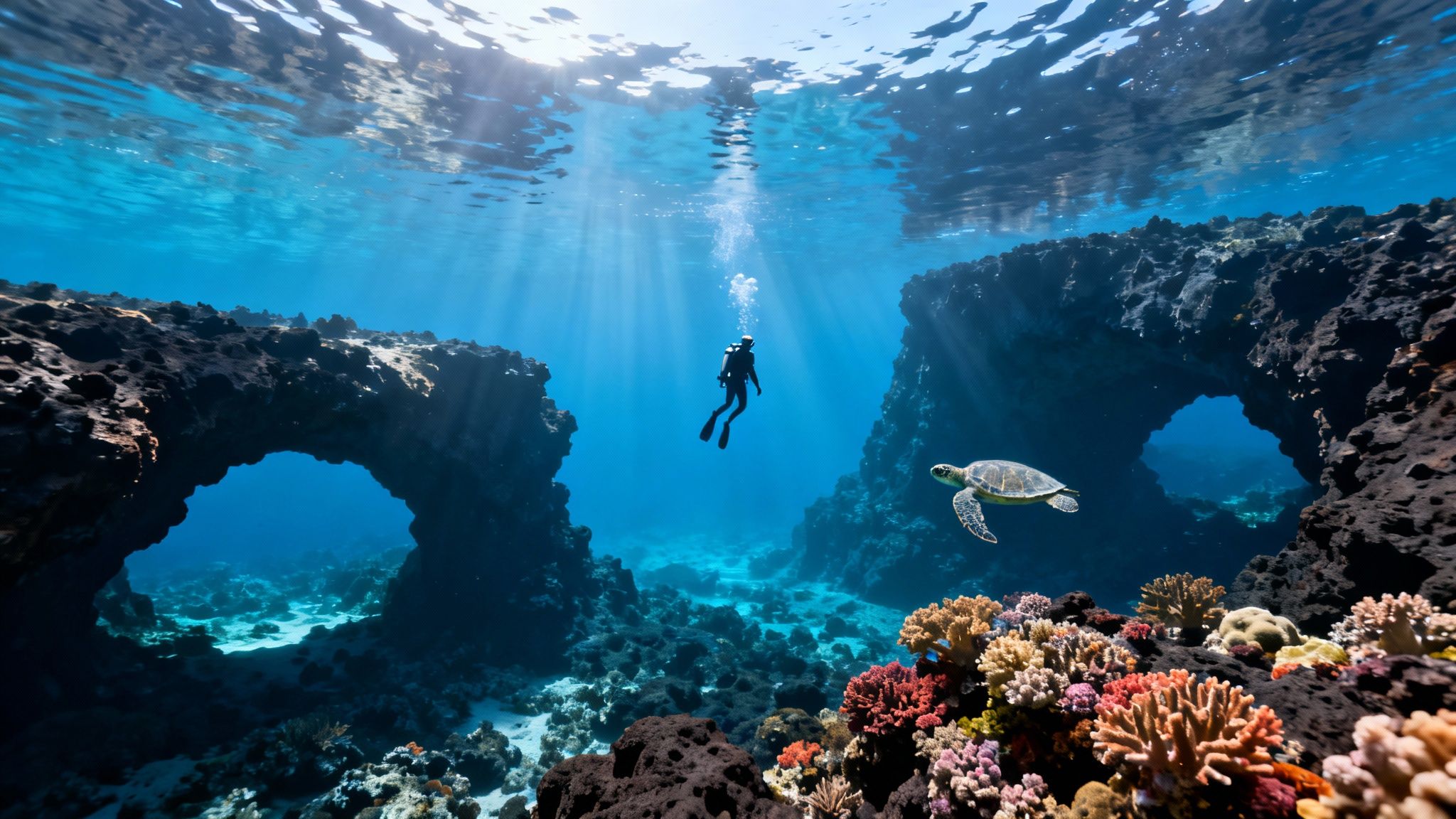
The Big Island's magic starts with its dramatic geology. As the youngest island in the Hawaiian chain, its volcanic origins are on full display, creating a submerged landscape you simply won't find anywhere else on the planet.
Forget flat, sandy bottoms. Here, you'll navigate through lava arches, peer into massive craters, and explore intricate tube systems carved by ancient flows. These formations aren't just incredible to look at; they create complex habitats that shelter a staggering amount of marine life. It’s this raw, volcanic character that gives every dive a true sense of adventure.
Pristine Conditions and Abundant Marine Life
The Kona coast is the island's sweet spot for divers. It's tucked into the leeward side, shielded by massive volcanoes from the gusty trade winds that hit other parts of Hawaii. The result? Incredibly calm, clear water. It’s not uncommon for visibility to exceed 100 feet, making it a dream for both sightseeing and underwater photography.
That gin-clear water lets you fully appreciate the vibrant ecosystem. The marine life here is truly special.
- Unique Inhabitants: A huge percentage of Hawaii's marine species are endemic, meaning you can't find them anywhere else in the world. Get ready to meet some rare fish.
- Turtle Town: You’ll almost certainly encounter honu, the beloved Hawaiian Green Sea Turtles. Seeing them glide gracefully past or rest on the reef is a core Big Island experience.
- The Big Guys: The deep offshore waters bring in larger pelagic species. Keep an eye out for pods of spinner dolphins, majestic eagle rays, and even migrating humpback whales during the winter months.
It’s no wonder the dive industry here is booming, with over 50 operators catering to 150,000 dive tourists annually. The Kona area alone sees around 100,000 certified dives each year—a testament to its global reputation.
Big Island Diving Highlights at a Glance
To put it all in perspective, here's a quick look at what sets the Big Island apart.
| Feature | Why It's Special | Best For |
|---|---|---|
| Volcanic Topography | Explore underwater lava tubes, arches, and craters formed by recent volcanic activity. | Divers seeking adventure and unique landscapes. |
| Exceptional Visibility | Calm, leeward coast conditions often provide 100+ feet of crystal-clear visibility. | Underwater photographers and new divers. |
| Rich Endemic Marine Life | A high percentage of fish and invertebrates are found only in Hawaiian waters. | Marine life enthusiasts and biologists. |
| Signature Night Dives | Home to the world-famous Manta Ray Night Dive and the surreal Blackwater Dive. | Thrill-seekers and experienced divers. |
| Reliable Conditions | Protected from trade winds, offering calm seas and comfortable diving year-round. | Divers of all skill levels, any time of year. |
These key elements combine to create a truly unforgettable underwater destination.
Iconic Underwater Adventures
Beyond the stunning reefs, the Big Island offers bucket-list dives that attract people from all over the world. The most famous, without a doubt, is the Manta Ray Night Dive. It’s a surreal, almost spiritual experience where you watch these gentle giants with massive wingspans swoop and barrel roll through your dive light's beam as they feed on plankton. It's consistently ranked as one of the best night dives on Earth for a reason.
Then there are other unique adventures, like the Blackwater Dive. On this dive, you drift over deep water at night and watch bizarre, bioluminescent creatures rise from the abyss. These are the kinds of dives that transform a great vacation into a once-in-a-lifetime memory. If you're curious, you can learn more about what makes diving in Kona so unique.
Exploring the Top Dive Sites Along the Kona Coast

The Kona coast is a scuba diver's dream, plain and simple. Just a quick boat ride from the harbor, you're dropping into a submerged volcanic world that feels both ancient and bursting with life. It's not just about pretty coral; it's about the dramatic lava tubes, massive arches, and sheer drop-offs that make this place so special.
Every site has its own personality, offering a completely different adventure. The one thing they all have in common? Incredible water clarity and a ton of marine life that has made these volcanic formations home.
Golden Arches
Living up to its name, Golden Arches is all about the stunning lava architecture. The main attraction is a series of massive arches you can easily and safely swim through. Picture the sunlight streaming down through the water, lighting up the underwater passageways—it's a photographer's paradise.
The reef here is just as impressive. It's covered in healthy coral and swarming with fish. You'll likely see huge schools of yellow tangs, bandit angelfish, and curious butterflyfish. This is a fantastic intermediate dive that really shows off the unique geology of Big Island scuba diving.
Turtle Pinnacle
If you’ve got your heart set on seeing Hawaiian Green Sea Turtles (we call them honu), this is your spot. Turtle Pinnacle is basically a spa day for turtles. A series of coral-covered rock formations rise up from the seafloor, acting as a natural "cleaning station."
You can watch as turtles line up to let smaller fish, like the Hawaiian cleaner wrasse, nibble algae and parasites right off their shells. It’s an amazing thing to witness. It's not uncommon to see several honu just chilling on the reef, making it one of the most reliable places to find them in Kona.
Eel Cove
Most people know this spot for the world-famous manta ray night dive, but Eel Cove (or Garden Eel Cove) is a fantastic dive during the day, too. It gets its name from a massive colony of Hawaiian garden eels living in the sandy bottom. They poke their heads out of the sand and sway in the current like a field of grass, pulling back into their burrows if you get too close.
Beyond the eels, the reef is buzzing with life. Keep an eye out for well-camouflaged frogfish, octopuses tucked into their dens, and all sorts of vibrant reef fish. Its calm, protected location makes it a great choice for divers of any skill level.
The real magic of the Kona coast is its sheer variety. You can dive a shallow, sunny coral garden in the morning and a deep, dramatic volcanic ledge in the afternoon. The underwater world is always changing, offering something new every time you get in the water.
Au Au Crater
For a dive that feels completely different from anything else, you have to check out Au Au Crater. It's a submerged volcanic crater that creates this incredible underwater amphitheater, with steep walls dropping down to a sandy bowl in the middle.
Dropping down into the crater is like entering another world entirely. The walls provide shelter for all kinds of marine life, including big schools of jacks, and we sometimes see eagle rays cruising by. Because of its depth and the potential for currents, this one is best for more experienced divers looking for something off the beaten path. For a deeper look into the possibilities, you can explore more about diving the Big Island.
Finding the Right Dive For You
With so many amazing options, just picking a site is half the fun. A good dive operator will always choose the day's locations based on the ocean conditions and the experience level of the divers on board. Safety and fun go hand-in-hand.
Whether you're itching to explore lava tubes, swim with turtles, or just kick back and enjoy the incredible coral reefs, the Kona coast has the perfect dive site waiting for you.
Experiencing the Kona Manta Ray Night Dive
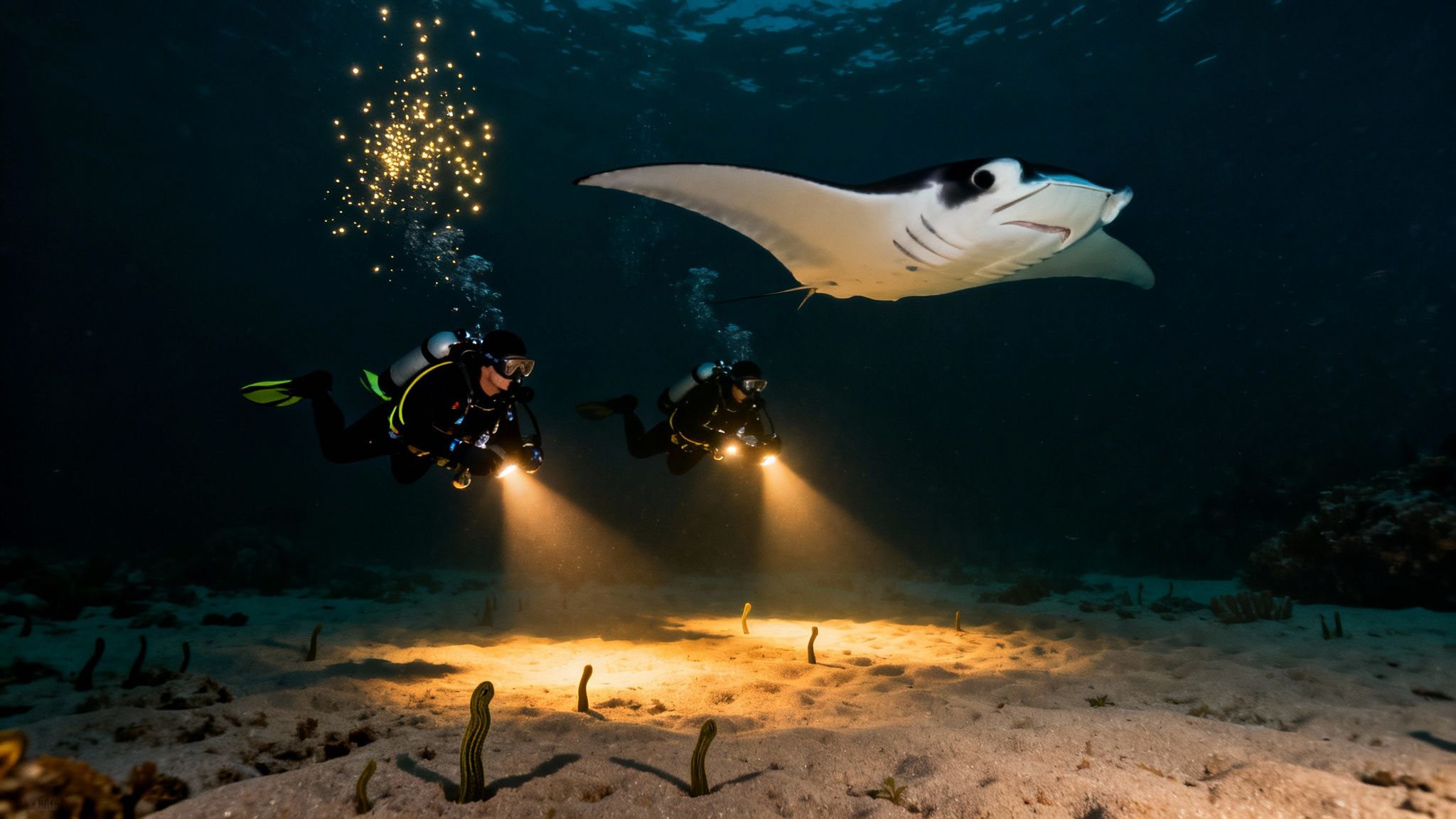
Some dives are fun. Others will stick with you for the rest of your life. The Kona Manta Ray Night Dive is absolutely one of the latter. It's consistently rated one of the most incredible underwater experiences on Earth, and once you do it, you'll understand why.
Picture this: you descend into the warm, dark Pacific, settle onto the sandy bottom, and watch as giant, otherworldly creatures perform a silent ballet just inches from your face. It's surreal, it's breathtaking, and it's an experience you just can't get anywhere else.
The idea behind this world-famous dive is surprisingly simple. Divers gather in a specific spot on the seafloor and shine their flashlights straight up. This column of light acts like a bug zapper for plankton, attracting huge clouds of the microscopic critters that manta rays love to eat.
What happens next is pure magic. Drawn in by the massive, all-you-can-eat buffet, majestic manta rays glide into the beams of light. Some of these gentle giants have wingspans over 12 feet across. They swoop, somersault, and barrel-roll with a grace that defies their size, filtering the plankton from the water. This isn't some choreographed show; it's a completely natural feeding behavior, respectfully facilitated by Kona's expert dive operators.
Why Garden Eel Cove is the Superior Choice
While a couple of sites host this experience, Garden Eel Cove (also known as Manta Heaven) is hands-down the best place to go. Its unique underwater landscape gives it a few key advantages that make the encounter better for everyone—divers and mantas included.
First off, the cove is naturally sheltered from the open ocean, which means the water is almost always calm. This is a huge plus on a night dive, where you want to be as comfortable and stable as possible. You can relax on the bottom without getting pushed around by the surge, letting you focus completely on the show above.
Garden Eel Cove also has a sort of natural "amphitheater." This layout gives divers a perfect viewing area on the sand, well away from the fragile reef. Everyone gets a front-row seat without causing any harm to the ecosystem. Plus, the surrounding reefs are healthier and more vibrant here, making the whole dive, even before the mantas arrive, that much more beautiful.
A Safe and Ethical Wildlife Encounter
It's completely normal to wonder if an encounter this close is good for the animals. Thankfully, the Kona dive community has worked for years to create strict guidelines that put the well-being of these gentle giants first. The number one rule is passive observation.
Divers are always instructed to stay on the bottom and never, ever touch, chase, or block the mantas. Touching a manta ray can strip off its protective mucus coating, which is like their immune system, leaving them vulnerable to nasty infections. The goal is to be a quiet, respectful visitor in their world.
This responsible approach has created an amazing relationship where the mantas see the lights as a dinner bell, not a threat. The result? Reliable sightings on over 90% of nights.
If you want to dig deeper, you can learn more about what the Manta Ray Night Dive is and the conservation work that makes it possible. It’s a truly moving experience that proves humans and wildlife can interact in a positive, sustainable way. This is your chance to witness one of nature's greatest spectacles on a premier Big Island scuba diving tour.
How to Choose the Best Dive Operator in Kona
The Kona coast is a world-class diving destination, so it's no surprise you'll find plenty of dive operators eager to get you in the water. While all that choice is great, it can make picking the right one feel a little overwhelming.
Remember, the dive operator you choose does more than just drive the boat. They are responsible for your safety, comfort, and ultimately, the quality of your entire underwater adventure. They can make the difference between a good dive and an absolutely unforgettable one.
What to Look for in a Top-Tier Dive Shop
So, how do you sort through the options? Not all dive operations are created equal, and the best ones share a few key qualities that go way beyond just the price tag. These are the details that separate a decent trip from a truly exceptional one.
- Small Group Sizes: This might be the single most important factor. Smaller groups mean more personalized attention from your guide, a less crowded boat, and a much more relaxed, intimate experience underwater. You'll feel like a valued guest, not just another number on a manifest.
- Experienced Crew and Divemasters: Look for a company that’s proud of its team. A seasoned divemaster knows these sites like the back of their hand. They know exactly where to find that elusive frogfish, which lava tube has the best light for photos, and how to read the currents to keep everyone safe. Their expertise is invaluable.
- Comfortable and Well-Maintained Boats: You’ll be spending a fair bit of time on the boat between dives, so comfort matters. Custom-built dive boats with perks like hot water showers, easy-to-use ladders, and plenty of shade show that a company has really invested in the guest experience.
- Commitment to Eco-Friendly Practices: A great operator has a deep respect for the very environment that makes their business possible. Look for shops that actively participate in conservation and teach divers about responsible practices, especially during sensitive encounters like the Manta Ray Night Dive.
When looking into different companies, it's also interesting to see how local businesses approach their marketing. Some of the most successful ones use specialized Hawaii search engine marketing for marine businesses to connect with divers like you.
A Prime Example of Excellence: Kona Honu Divers
One operator that consistently ticks all these boxes is Kona Honu Divers. They are a perfect example of what to look for when booking your big island scuba diving trip. They're well-known for their super experienced and friendly crew, who bring a ton of local knowledge and passion to every single dive.
They are committed to keeping group sizes small, which ensures every diver gets the attention they need and makes the whole trip feel more like a private charter. Plus, their custom-built boats are designed from the ground up with diver safety and comfort in mind, making the whole day a pleasure from start to finish. You can see this commitment reflected in their stellar reputation.
See what fellow divers have to say about their experiences:
Choosing an operator is about finding a team you trust. Your safety, enjoyment, and the health of the reef are all in their hands. A great crew doesn't just lead a dive; they enhance it with knowledge, passion, and a commitment to excellence.
By focusing on these key factors, you can confidently pick a dive company that will deliver an amazing experience. A little research upfront is the best way to ensure you have an unforgettable adventure exploring Kona's spectacular underwater world.
Ready to see the difference for yourself? You can book one of their top-rated diving tours and get ready for an incredible day on (and under) the water.
Advanced and Specialty Diving Adventures
If you're a certified diver and the usual reef tour just doesn't cut it anymore, you're in for a treat. Kona offers some truly next-level adventures for those with a taste for the extraordinary. These are the dives that become stories you tell for years.
We're talking about more than just pretty coral gardens. Think navigating through ancient lava tubes or drifting along deep volcanic walls. These dives demand more skill and a solid dose of confidence, but the payoff is an underwater experience few will ever have.
The Kona Blackwater Dive
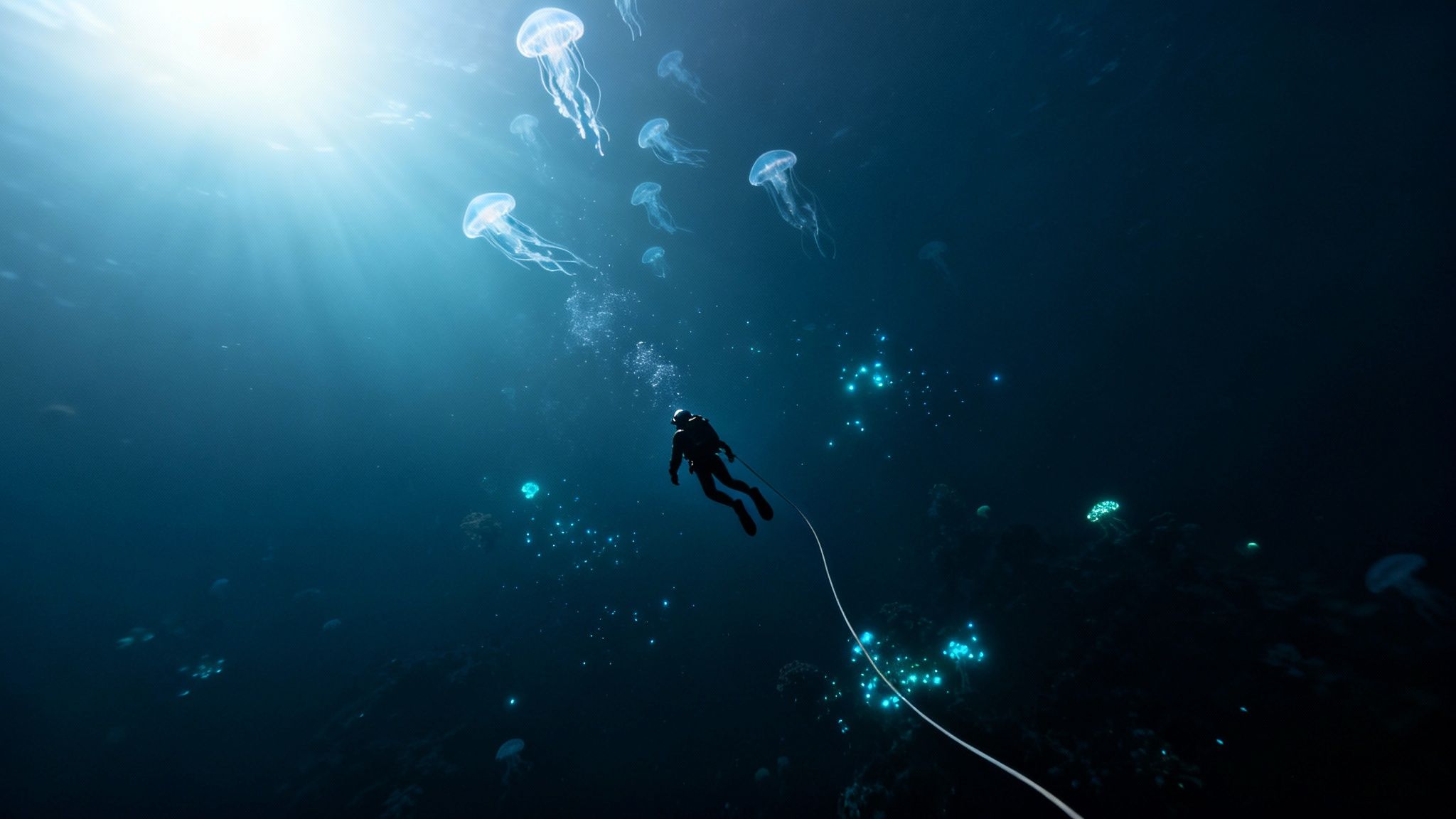
Picture this: you're miles offshore, floating in absolute darkness over thousands of feet of inky black water. The only light is the beam from your torch, slicing through the void. This isn't a scene from a sci-fi movie; it's the Kona Blackwater Dive, and it's easily one of the most unique night dives in the world.
On this dive, you’re tethered to the boat as it drifts with the current. Suspended in the deep, you become a silent spectator to the largest migration on our planet. Every single night, a countless menagerie of bizarre and beautiful creatures journeys up from the abyss to feed. Many are in their larval, nearly transparent stages.
You'll come face-to-face with a world of alien-like organisms, from shimmering comb jellies to tiny squid and strange, see-through fish. A surprising number of them are bioluminescent, creating their own light in a silent, mesmerizing underwater fireworks show. It feels less like diving and more like floating through deep space.
The Blackwater Dive is a surreal trip into a hidden world. It's a chance to see creatures that spend their entire lives in the deep ocean, critters most people don't even know exist. It’s both humbling and completely unforgettable.
This isn't a dive for the faint of heart. The open-ocean environment and total darkness mean it’s strictly for experienced divers with rock-solid buoyancy control. If you're ready for an adventure that will genuinely change your perspective, you can learn more about booking a Kona Blackwater Dive tour.
Exploring Lava Tubes and Deep Ledges
Beyond the legendary night dives, Kona's volcanic past has sculpted an underwater playground that's perfect for advanced daytime exploration. The island’s geology is on full display here, with dramatic structures that are a magnet for experienced divers.
Some of the most incredible advanced sites feature:
- Intricate Lava Tubes: Imagine swimming through ancient volcanic tunnels and caverns, some opening into vast underwater chambers or "cathedrals." These dives are a true test of precise buoyancy and situational awareness.
- Sheer Volcanic Walls: There's nothing quite like descending along a vertical drop-off that just disappears into the deep blue. These walls are often covered in rare corals and sponges, attracting larger pelagic species that cruise in from the open ocean.
- Deep Pinnacles: Exploring submerged volcanic spires that shoot up from the seafloor is a thrill. They act as underwater high-rises for schools of fish and all sorts of marine life.
These kinds of dives let you see a wilder, more untamed side of Kona’s underwater world. For those ready to take on the challenge, Kona Honu Divers runs specialized premium advanced dive trips specifically designed to explore these rewarding sites safely.
Planning Your Perfect Big Island Dive Trip
Alright, let's get down to the details of making your Big Island scuba diving adventure happen. A little bit of smart planning goes a long way, ensuring you spend less time stressing and more time logging unforgettable dives. We'll cover everything from the best season to visit to the logistics of where to stay and what to pack.
First off, the good news: there's really no bad time to dive here. Kona's leeward coast gives us amazing conditions pretty much year-round. The water temperature is surprisingly stable, sitting at a comfortable 75-77°F (24-25°C) in the winter and warming up to a lovely 79-81°F (26-27°C) in the summer.
Choosing the Best Season for Your Dive Trip
While diving is always on the table, certain seasons have their own special draw. What you want to see underwater might help you pick the perfect time to come.
- Summer (June – October): This is when you'll find the calmest, flattest seas and the warmest water. If you're hoping for glassy boat rides and plenty of sunshine, summer is a fantastic choice.
- Winter (December – March): This is humpback whale season, and it's absolutely magical. You're not likely to see one on a dive, but hearing their incredible songs echo through the water while you're exploring a reef? That’s an experience you’ll never, ever forget.
And don't worry about the mantas. They're here all year long, so that world-famous night dive is always an option, no matter when your plane lands.
Accommodations, Gear, and Getting Around
Sorting out the topside details is key to a smooth underwater experience. Here are a few things I always tell people to think about.
Where to Stay:
For pure convenience, you can't beat staying in or near Kailua-Kona. Most of the dive boats, including ours, leave from Honokohau Harbor, which is just a few minutes' drive from town. You’ll find everything from hotels to condos and vacation rentals, all perfectly positioned for easy access to the action.
What to Pack vs. Rent:
My advice? Pack your personal gear—the stuff that fits you perfectly, like your mask, fins, and dive computer. Don't bother lugging your heavy BCD and regulator across the Pacific. You can rent high-quality, well-maintained gear from any reputable shop here. As for exposure protection, a 3mm wetsuit is usually perfect for daytime dives, but you'll be much happier in a 5mm for the night dives.
If I can give you one non-negotiable piece of advice, it's this: book a rental car. The Big Island lives up to its name—it's huge. A car is your ticket to freedom, letting you explore everything from volcanoes to rainforests on your days off from diving.
Once you have these logistics locked down, you can focus on the fun part: the diving. Planning your dream itinerary is easy, letting you book everything from stunning reef dives to the can't-miss Manta Ray Night Dive all in one go.
Common Questions About Big Island Scuba Diving
As you get ready to pack your bags and head to Kona, a few last-minute questions are bound to pop up. Don't worry, that's completely normal! To make sure you feel confident and ready to hit the water, we’ve put together answers to the queries we hear most often from divers.
Do I Need to Be a Certified Diver?
The short answer is: it depends on what you want to do. To join a boat charter heading out to the island’s premier dive sites, you absolutely need to be certified.
But if you're new to diving, you're not out of luck. Most dive shops in Kona offer a "Discover Scuba Diving" program. It's a fantastic, low-pressure way to try diving for the first time under the direct supervision of a PADI instructor in calm, shallow water. It gives you a real taste of the magic without committing to a full course.
Keep in mind, though, that bucket-list dives like the Manta Ray Night Dive or other advanced charters require a full open-water certification at a minimum.
What Is the Water Temperature and What Wetsuit Should I Wear?
One of the best things about diving in Kona is the incredibly comfortable water temperature year-round. In the winter, you can expect the water to be around 75-77°F (24-25°C), and in the summer, it warms up to a balmy 79-81°F (26-27°C).
For most people on a daytime dive, a standard 3mm full wetsuit is plenty to stay comfortable. However, for night dives like the Manta or Blackwater dives, you'll be less active in the water. We strongly recommend a 5mm wetsuit for these to make sure you stay warm and can focus on the amazing show.
Are There Good Shore Diving Spots?
Absolutely! The Big Island boasts some world-class shore diving, particularly along the Kona and Kohala coasts. Spots like "Two Step" at Honaunau Bay are legendary for their easy entry and the stunning amount of marine life you can find just a short kick from shore.
Shore diving gives you a ton of freedom and is super convenient. That said, many of the most dramatic underwater landscapes—the cool lava tubes, arches, and deep-water pinnacles—are only accessible by boat. To really get the full Big Island experience, try to mix in a few boat dives with your shore diving adventures.
What Big Marine Animals Can I See Besides Manta Rays?
While the mantas get all the fame, the waters here are packed with other incredible large animals. You'd be hard-pressed to go on a dive and not see a Hawaiian green sea turtle, or honu, gracefully cruising by. They're everywhere!
From the dive boat, it’s common to see pods of acrobatic spinner dolphins leaping from the water, and sometimes you'll get lucky and have them swim past underwater. Depending on the site, you might also encounter majestic eagle rays gliding over the reef or find docile whitetip reef sharks resting on the sand.
If you're here in the winter months, from December through March, you're in for a special treat. You can often hear the haunting, beautiful songs of humpback whales echoing through the water while you dive. It’s an experience that will give you chills and turn an amazing dive into an unforgettable one.